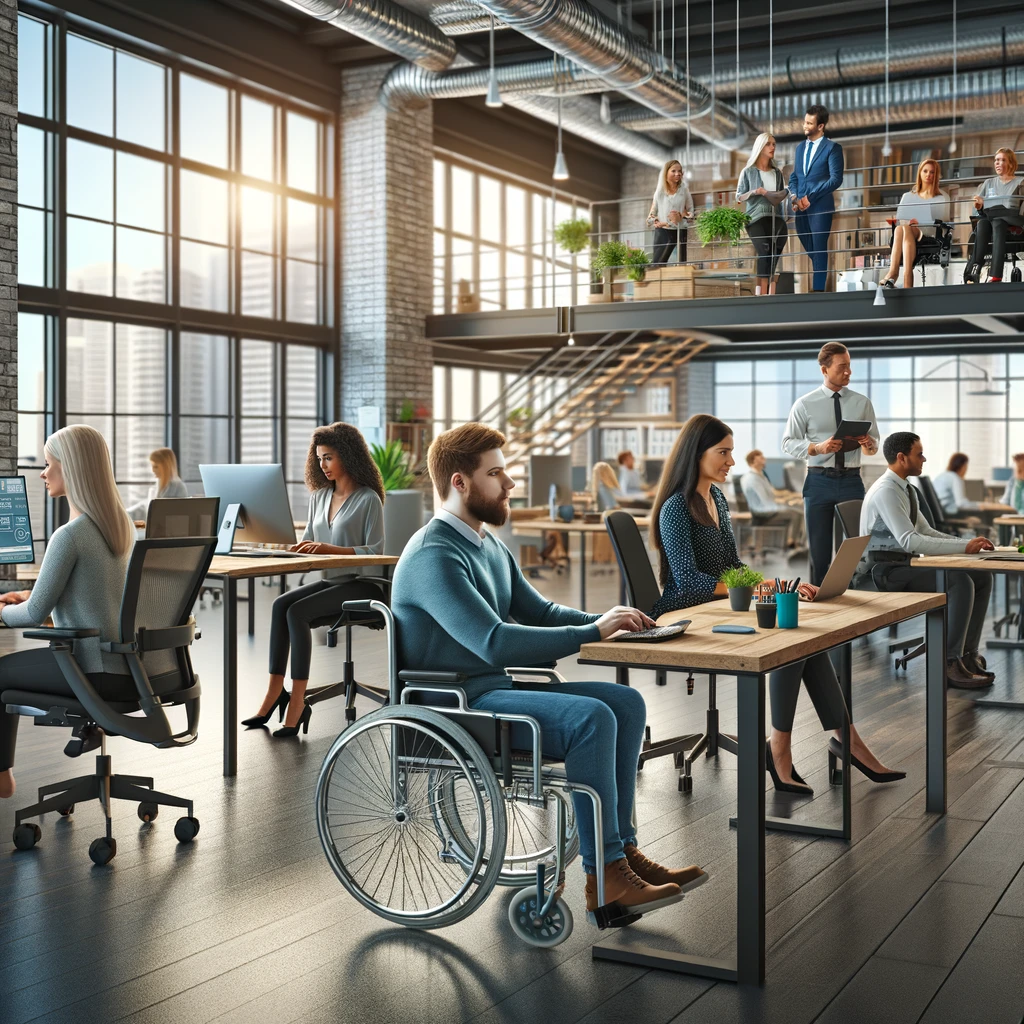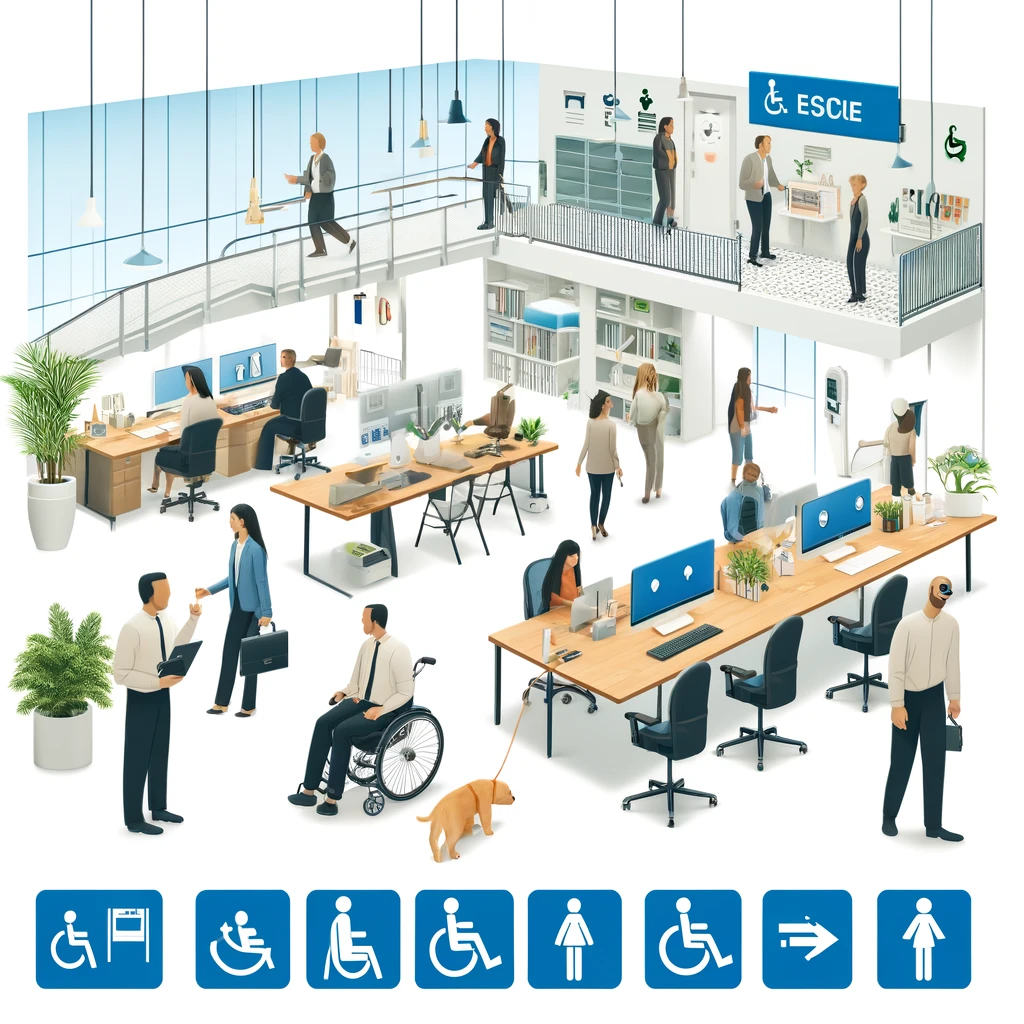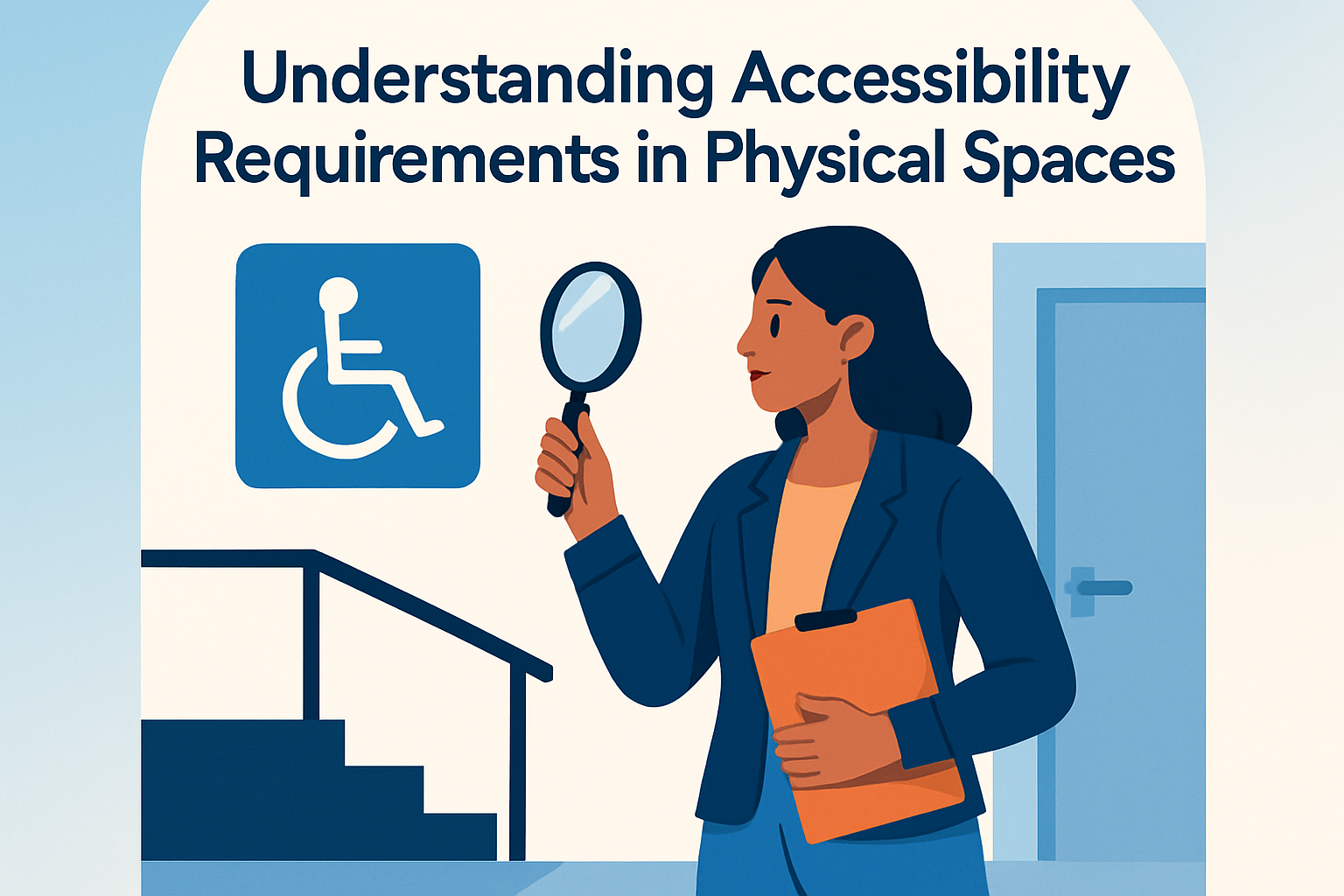
Accessibility requirements in physical spaces determine whether people with disabilities can enter, move through, use, and safely exit buildings and public environments with dignity and independence. In practice, the topic covers far more than wheelchair ramps. It includes door widths, parking layouts, restroom design, elevator controls, signage, lighting, acoustics, counter heights, emergency egress, and the way policies support the built environment. When I assess facilities, the biggest misunderstanding I see is treating accessibility as a checklist added at the end of a project. In reality, accessibility is a design obligation, an operational standard, and a risk management issue that affects customers, employees, students, patients, tenants, and visitors every day.
Understanding accessibility requirements matters because physical barriers can exclude people from basic civic, commercial, and social participation. A single step at an entrance can block a parent using a stroller, a traveler with luggage, or a person recovering from surgery, but it can completely prevent access for someone using a wheelchair. Poor contrast on signs can confuse visitors with low vision. Loud, reverberant lobbies can create serious communication barriers for people who are deaf, hard of hearing, autistic, or cognitively fatigued. Accessibility therefore supports compliance, usability, safety, and inclusion at the same time.
In most jurisdictions, accessibility requirements come from building codes, disability rights laws, technical standards, and local ordinances. In the United States, the Americans with Disabilities Act Standards for Accessible Design, often called the ADA Standards, are central for many public accommodations and commercial facilities. Other important references can include the International Building Code, ICC A117.1, the Fair Housing Act design requirements, Section 504 obligations, and state accessibility codes that may be stricter than federal rules. The exact rule set depends on building type, funding source, occupancy, and whether the project is new construction, an alteration, or an existing facility facing barrier removal obligations.
At its core, accessibility in physical spaces means designing for functional use, not symbolic compliance. A compliant parking space that leads to a steep curb without a curb ramp does not provide access. An accessible restroom stall used as storage is not accessible in operation. A beautifully designed reception desk fails if the lowered transaction surface is blocked by decor or lacks knee clearance. The key question is always straightforward: can a person with a disability arrive, perceive information, navigate the route, use the space, and leave safely without unnecessary dependence on others?
Core standards and the legal framework behind accessible design
The first step in understanding accessibility requirements is knowing which standards apply and how they interact. The ADA is a civil rights law, not merely a design handbook. Its standards establish technical criteria for accessible features, while the broader law prohibits discrimination in the use of facilities. Building codes, by contrast, regulate permits and construction approvals. In many projects I have reviewed, teams wrongly assume that passing a local inspection resolves all accessibility exposure. It does not. A building can satisfy a local code reviewer yet still create ADA liability if usable access is not provided in the real world.
New construction usually faces the highest expectation because accessible elements must be fully integrated where required. Alterations trigger obligations in the altered area and often along the path of travel serving it. Existing facilities may have an ongoing duty to remove barriers when doing so is readily achievable, a standard that depends on difficulty and expense. Housing introduces another layer: multifamily projects may fall under Fair Housing Act requirements focused on adaptable features in covered dwellings, while public housing and federally funded projects can invoke Section 504. For owners and architects, this means accessibility should be mapped early in planning, not deferred to punch lists or furniture installation.
Technical standards are highly specific because usability depends on dimensions, reach ranges, slopes, clearances, and operable force. A ramp is not simply “a sloped surface.” It has maximum slope limits, landing requirements, edge protection considerations, and handrail criteria depending on rise. Doors need sufficient clear width and maneuvering clearance. Accessible routes must connect key functions without abrupt level changes. Elevators require usable controls, audible and visible signals, and enough interior space for turning and entry. These details are measurable, and they are also deeply practical because small deviations can make independent use impossible.
Accessible routes, entrances, and circulation
An accessible route is the continuous path a person uses to approach, enter, and move through a site or building. This route should begin where people actually arrive, such as parking, passenger loading zones, sidewalks, transit stops, or public streets. One of the most common failures I find during site walks is a technically compliant entrance paired with an inaccessible route leading to it. Examples include decorative pavers with unstable joints, cross slopes that pull wheelchairs sideways, heavy vestibule doors, or security gates that narrow the clear opening too much.
Entrances deserve special attention because they set the tone for equal access. Accessible entrances should be on the same primary route whenever possible, not hidden at a service door or around the back. If power-operated doors are used, activation controls must be placed where users can reach them without backing into traffic. Revolving doors cannot be the only way in; an accessible swinging or sliding door must be available. Thresholds, weather mats, and floor transitions also matter. A quarter-inch lip may seem trivial to a designer, but for someone using a mobility device, cane, or walker, it can interrupt movement or create a trip hazard.
Inside the building, circulation extends to corridors, floor surfaces, turning spaces, elevator lobbies, stairs, and wayfinding. Carpets that are too thick increase rolling resistance. Display racks in retail aisles can reduce accessible width below minimums. In schools and hospitals, equipment parked in hallways can eliminate required clearance at exactly the time reliable access is most important. Good accessibility management therefore includes operations. Facility teams should regularly inspect routes, not just at opening day but throughout the life of the space.
Restrooms, service areas, and everyday usability
Restrooms are often treated as the symbol of accessibility, but they should be understood as one part of a broader usability system. Accessible restrooms require compliant stalls or rooms, turning space, grab bars in correct locations, lavatories with knee and toe clearance, insulated pipes, reachable accessories, and doors that users can operate without impossible maneuvers. In my experience, the most frequent field problems are misplaced toilet paper dispensers, trash bins blocking turning radius, mirrors mounted too high, and baby changing stations installed where they obstruct clear floor space. These are not cosmetic mistakes; they directly affect usability.
Service counters, dining surfaces, workstations, and transaction points are equally important. If the only check-in counter is standing height, many wheelchair users and people of short stature cannot complete a transaction comfortably or privately. In healthcare settings, lowered writing surfaces and accessible scales are essential for equitable care. In restaurants, an accessible route must connect seating areas, and a reasonable number of tables should provide usable knee clearance. Hotels need accessible guest rooms with features matched to reservation inventory and maintained in working order, including communication features for guests who are deaf or hard of hearing.
| Element | Common Requirement Focus | Frequent Real-World Failure | Practical Fix |
|---|---|---|---|
| Parking | Accessible space dimensions, access aisles, signage, route to entrance | Aisles used for cart storage or blocked by snow | Mark aisles clearly and include maintenance procedures |
| Entrance | Level access, door clearance, hardware, power assistance | Heavy doors and poorly placed push buttons | Adjust closers and relocate controls within reach |
| Restroom | Stall size, grab bars, turning space, accessory reach | Dispensers and bins mounted in clearance zones | Reinstall accessories based on measured layouts |
| Service Counter | Accessible height and clear floor space | Lowered section used for displays or equipment | Keep accessible portion permanently clear |
Communication access, signage, lighting, and sensory design
Physical accessibility is not limited to mobility. Buildings also need to communicate information effectively to people with sensory and cognitive disabilities. Signage should combine clear wording, consistent placement, high contrast, and where required, tactile characters and Braille. Room identification signs must be located so users can find them without standing in the path of a swinging door. Directional signs should reduce decision fatigue, especially in large venues such as airports, hospitals, and university campuses where confusion can quickly turn into exclusion.
Lighting and acoustics are often overlooked, yet they strongly affect access. Glare can wash out signs and make navigation difficult for people with low vision. Dim stairwells increase fall risk. Reverberant rooms make speech unintelligible even for hearing aid users with advanced devices. A well-designed meeting room may include assistive listening systems, balanced lighting on speakers’ faces, and seating layouts that preserve sightlines for lip reading and sign language interpretation. Emergency alarms should provide both audible and visible notification. This is a basic life safety issue, not an optional enhancement.
Sensory design also improves usability for neurodivergent occupants. Predictable layouts, calmer waiting areas, reduced echo, and spaces for retreat can make public environments more manageable for autistic users and people with anxiety, PTSD, or cognitive disabilities. Museums, libraries, and airports increasingly provide quiet rooms, visual maps, and low-stimulation periods because these measures reduce overload without harming anyone else’s experience. Inclusive design works best when it anticipates variation in human perception rather than assuming one mode of access fits all.
Planning, auditing, and maintaining compliance over time
Accessibility is sustained through process, not intention alone. The strongest organizations build accessibility into site selection, design review, procurement, construction administration, staff training, and preventive maintenance. During planning, I recommend documenting applicable standards, identifying priority accessible routes, and reviewing all user touchpoints from parking to egress. During design, teams should coordinate architecture, interiors, signage, lighting, and MEP systems so one trade does not compromise another. During construction, field verification matters because small installation errors often create the largest usability failures.
Audits are the practical bridge between standards and lived experience. A good accessibility audit combines dimensional measurements, photographic documentation, code analysis, and user-path testing. Tools such as digital levels for slope, door force gauges, laser measures, and annotated plan markups make findings credible and actionable. Just as important is involving disabled users or consultants with direct experience. Lived experience often reveals friction points that drawings miss, such as the difficulty of using an intercom in bright sun, reaching a card reader from a vehicle, or navigating a lobby during peak crowding.
Maintenance determines whether accessible features remain accessible. Automatic doors need servicing. Elevators need reliable uptime. Tactile signs should not be painted over. Snow removal plans must protect curb ramps, accessible parking, and access aisles first, not last. Staff should know that portable furniture, promotional displays, and cleaning carts cannot block required clearances. If you manage a physical space, the most effective next step is simple: walk your facility as a user would, measure critical elements, fix barriers in priority order, and make accessibility part of every future project decision.
Accessibility requirements in physical spaces are best understood as the rules and design practices that make buildings genuinely usable for people with diverse disabilities. They cover routes, entrances, doors, restrooms, signage, lighting, acoustics, service points, and emergency communication, all shaped by legal standards such as the ADA, ICC A117.1, and related codes. The central principle is functional access. People must be able to arrive, move independently, understand information, use services, and exit safely. When any one link in that chain fails, the space may be technically polished yet practically exclusionary.
The main benefit of understanding these requirements is that better access improves both compliance and everyday performance. Accessible spaces reduce legal risk, support customer service, expand workforce participation, and make environments easier to use for everyone, including older adults, injured people, parents with strollers, and visitors carrying bags. The best projects I have seen do not treat accessibility as a last-minute correction. They treat it as a baseline design value, verified through measurement, user testing, and ongoing maintenance.
If you own, design, or operate a building, start with an accessibility review of your highest-traffic routes and most critical user tasks. Check the path from arrival to entrance, restrooms, service counters, and emergency systems. Then build a correction plan with clear priorities, timelines, and accountability. That one step turns accessibility from an abstract requirement into a practical standard that people can feel the moment they enter your space.
Frequently Asked Questions
What do accessibility requirements in physical spaces actually include?
Accessibility requirements in physical spaces cover the full experience of how people enter, navigate, use, and exit a building or public environment. Many people immediately think of wheelchair ramps, but accessibility is much broader than that. It includes parking spaces that are properly sized and located, continuous accessible routes from arrival points to entrances, doorways wide enough for mobility devices, hardware that can be operated without tight grasping or twisting, and interior circulation paths that allow people to move safely and independently.
It also includes features that support people with a wide range of disabilities, not only mobility impairments. Restrooms must provide adequate turning space, grab bars, and accessible fixtures. Elevators need controls placed at usable heights and cues that help people with visual or hearing impairments. Signage should be readable, well placed, and in many cases include tactile characters and Braille. Lighting, contrast, acoustics, and wayfinding all matter because they affect whether a space can be understood and used comfortably. Service counters, seating areas, alarms, emergency egress plans, and even operational policies all play a role. In short, accessibility requirements are about removing barriers so people can use the built environment with dignity, safety, and independence.
Why is accessibility about more than just legal compliance?
Legal compliance is important, but accessibility should never be treated as a box-checking exercise. The purpose of accessibility standards is to make sure people with disabilities can participate in everyday life on equal terms. When a space technically meets minimum dimensions but is still difficult, confusing, or uncomfortable to use, the result may be legal compliance on paper but poor accessibility in practice. That gap is where many facility owners and managers run into problems.
Thinking beyond compliance leads to better outcomes for everyone. A clear route benefits a wheelchair user, a parent with a stroller, an older adult with balance issues, and someone carrying packages. Good lighting and legible signage help people with low vision, but they also improve safety and usability for all visitors. Thoughtful acoustics support people who are hard of hearing while making meetings and service interactions easier overall. Accessibility also affects customer experience, employee retention, public reputation, and risk management. Organizations that prioritize usable design from the start usually spend less on retrofits, avoid common complaints, and create spaces that feel welcoming instead of merely permissible.
What are the most common accessibility issues found in buildings and public spaces?
Some of the most common accessibility issues are surprisingly basic. Entrances may have steps but no compliant accessible route, or ramps that are too steep to use safely. Doors are often too heavy, too narrow, or equipped with hardware that is difficult to operate. Accessible parking spaces may exist, but if the access aisles are poorly marked, obstructed, or disconnected from the entrance by curbs or uneven surfaces, they do not function as intended. Inside buildings, narrow corridors, protruding objects, cluttered routes, and inaccessible service counters are frequent problems.
Restrooms are another major area of concern. A restroom may include an accessible stall, but the stall might not have enough maneuvering clearance, the grab bars may be installed incorrectly, or the accessories may be mounted out of reach. Elevators may lack usable controls, clear audible announcements, or visible indicators. Signage is often inconsistent or placed where it is hard to locate. Emergency systems can also be overlooked, especially when alarms rely only on sound or evacuation procedures do not account for people with mobility, sensory, or cognitive disabilities. In many assessments, the biggest misunderstanding is assuming that one visible feature, such as a ramp, makes the entire facility accessible. Real accessibility depends on every part of the user journey working together.
How can property owners or managers evaluate whether a space is truly accessible?
The best approach is to evaluate accessibility as a complete path of travel and use, not as a list of isolated features. Start where a visitor or employee starts: parking, transit drop-off, sidewalks, entry doors, reception, circulation routes, restrooms, service areas, meeting rooms, and exits. Ask whether a person with limited mobility, low vision, hearing loss, or other disabilities can use each part of the environment independently and safely. Measurements matter, but so does real-world usability. A technically compliant door is still a problem if it is routinely blocked open into the path of travel or requires excessive force to open.
An effective evaluation typically combines code and standards review, on-site inspection, and practical observation. Measure door clearances, turning spaces, slopes, reach ranges, mounting heights, and restroom layouts. Review signage, alarms, lighting, acoustics, and floor surface conditions. Examine policies too, such as how service is provided at counters, how maintenance staff keep routes clear, and how emergency procedures address disabled occupants. If possible, include input from people with disabilities or accessibility professionals who can identify barriers that are easy to miss. The goal is not only to find violations, but to understand how the environment performs in daily use and where improvements will have the greatest impact.
What are the best ways to improve accessibility in existing physical spaces?
Improving accessibility in existing spaces usually starts with prioritization. Some changes are low-cost and high-impact, such as adjusting door closers, lowering paper towel dispensers, improving signs, adding visual alarm devices where needed, rearranging furniture to maintain clear routes, or retraining staff on accessible service practices. These operational fixes can quickly remove barriers that affect daily access. Other improvements may involve modest renovation, such as upgrading restrooms, installing automatic door operators, correcting ramp slopes, modifying counters, or improving elevator communication features.
For older buildings or complex sites, it helps to create a phased accessibility plan. Address critical barriers first, especially those affecting entry, restroom access, emergency safety, and core services. Then build accessibility into future maintenance and capital projects so improvements are made systematically rather than reactively. It is also important to think inclusively rather than narrowly. Consider visual contrast, hearing support, intuitive wayfinding, seating options, and quiet areas in addition to mobility access. The most successful accessibility improvements come from viewing the physical environment and the policies around it as one system. When design decisions, maintenance practices, and staff procedures align, the result is a space that is not only more compliant, but genuinely more usable for everyone.