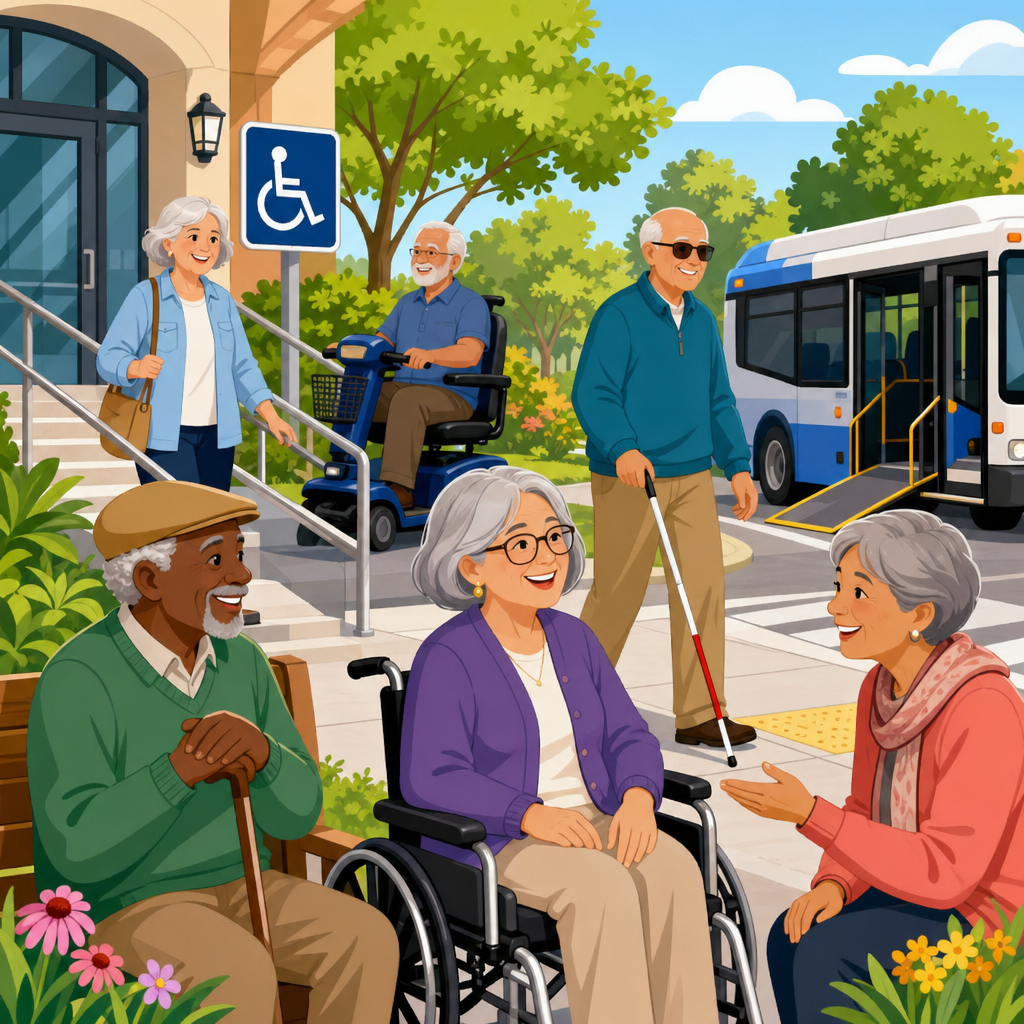
Aging populations are using the Americans with Disabilities Act in more ways than many families, employers, landlords, and service providers realize. As people live longer, age-related changes in mobility, hearing, vision, cognition, balance, stamina, and chronic health management increasingly intersect with disability law. The ADA is the federal civil rights law that prohibits discrimination against qualified individuals with disabilities in employment, state and local government services, public accommodations, transportation, and telecommunications. Aging itself is not a disability under the statute, but many conditions associated with aging can qualify when they substantially limit one or more major life activities. That distinction matters because it determines when legal protections attach, what accommodations may be required, and how rights can be enforced in daily life.
I have worked with ADA compliance reviews involving senior housing operators, municipal programs, healthcare-adjacent services, and employers managing return-to-work and leave requests for older workers. The same pattern appears repeatedly: people know the ADA exists, yet they often misunderstand how it works in practical settings. An older employee with arthritis assumes pain is simply part of aging and never requests an ergonomic adjustment. A patient with hearing loss misses critical discharge instructions because a clinic relies on shouted repetition instead of effective communication. A retiree who uses a walker finds the entrance to a recreation center technically open but functionally inaccessible because of heavy doors and no seating during intake. Rights fail not only through intentional exclusion, but through design choices, communication gaps, and rigid policies that ignore how disability presents later in life.
This hub article focuses on rights in action: case studies, recurring fact patterns, and real-world applications that show how aging populations can use ADA protections. It also serves as the organizing page for deeper articles in this subtopic, including employment accommodations, healthcare communication access, transportation barriers, local government services, digital access, and housing-adjacent issues where ADA, the Fair Housing Act, and Section 504 may overlap. The central question is straightforward: when age-related impairments affect equal access, what does the law require, and what outcomes are realistic? Answering that requires plain language, legal precision, and examples grounded in how complaints, accommodations, and compliance decisions actually unfold.
At a practical level, the ADA matters because the United States is aging rapidly. According to U.S. Census Bureau trends, adults sixty-five and older make up a growing share of the population, and disability prevalence rises significantly with age. That means more workplaces will handle accommodation requests from older employees, more cities will need accessible programs for older residents, and more businesses will need to serve customers with hearing, vision, or mobility impairments. For caregivers and advocates, understanding these protections is not abstract policy knowledge. It is a tool for getting an interpreter, securing a schedule adjustment, challenging inaccessible transportation, or making sure a civic program is available on equal terms.
How the ADA applies to older adults in everyday life
The ADA protects people with disabilities, including many older adults, across five main areas often encountered in ordinary routines. Title I covers employment and applies to employers with fifteen or more employees. Title II governs state and local government programs, services, and activities, from voting sites to parks departments and public hospitals. Title III applies to private businesses open to the public, such as restaurants, retail stores, medical offices, senior centers run by nonprofits, and hotels. Title IV addresses telecommunications relay services, which can be essential for older adults who are deaf, hard of hearing, or have speech disabilities. The law is broad, but rights depend on the setting and on whether the requested change is reasonable, effective, and legally required under that title.
For older adults, the threshold issue is usually whether a condition substantially limits a major life activity such as walking, standing, lifting, seeing, hearing, communicating, concentrating, or caring for oneself. After the ADA Amendments Act of 2008, that standard is interpreted more expansively than it once was. In practice, conditions such as macular degeneration, significant hearing loss, Parkinson’s disease, diabetes with complications, COPD, severe osteoarthritis, post-stroke limitations, and some cognitive impairments often qualify. Temporary minor conditions usually do not, but episodic and progressive conditions can still be covered if they would substantially limit major life activities when active. Employers, businesses, and public entities should not dismiss a request simply because the person is older and the issue looks like “normal aging.”
What the ADA generally requires is equal opportunity, effective communication, reasonable modification of policies, and removal of access barriers when readily achievable or otherwise mandated by applicable standards. It does not require every preferred solution, nor does it override legitimate safety requirements grounded in actual risk. But it does require individualized assessment. A city cannot deny a program participant a mobility device because staff are unfamiliar with it. A clinic cannot decide that written notes are always enough for patients with hearing loss. An employer cannot rely on assumptions that an older worker cannot adapt to assistive technology. Rights under the ADA turn on facts, not stereotypes.
Employment case studies: accommodation, performance, and retention
Employment disputes are among the most common real-world ADA issues affecting older adults because work often continues later in life for financial, professional, or personal reasons. In one recurring scenario, an experienced employee develops osteoarthritis and struggles with prolonged standing at a service counter. The employer sees declining speed and considers discipline. The ADA question is not whether the worker has become less efficient in the abstract; it is whether a reasonable accommodation can enable performance of essential functions. In practice, solutions may include an anti-fatigue mat, a sit-stand workstation, reassignment of marginal tasks, voice-recognition software, a modified break schedule, or temporary remote work for documentation duties. When employers engage in the interactive process early, retention outcomes improve and legal exposure drops.
Another frequent pattern involves hearing loss. I have seen older employees miss policy changes, safety updates, and team discussions because meetings were held in reverberant rooms with no captions, poor speaker discipline, and reliance on side comments. Effective accommodations can include real-time captioning, amplified phones, compatible headsets, video platforms with quality caption support, and written summaries of critical instructions. The Equal Employment Opportunity Commission consistently treats hearing-related accommodations as highly fact specific, but the principle is stable: communication must be effective enough for the employee to access the same information needed to do the job. Telling an employee to “sit closer” is not a compliance strategy.
Employers also mismanage situations involving cognition, fatigue, or medication side effects. A long-tenured worker returning after a stroke may need memory aids, structured training refreshers, reduced distractions, or a phased return schedule. These are often reasonable if they do not eliminate essential functions or create undue hardship. The best documented files I have reviewed pair medical support with job-specific analysis: what task is affected, what barrier exists, what accommodation addresses it, and how effectiveness will be evaluated. That framework prevents the two biggest mistakes in aging-related ADA cases: over-accommodation based on pity and denial based on assumptions.
Healthcare, public services, and effective communication in later life
Older adults often encounter the ADA most urgently in healthcare-adjacent settings and local government services. Although many medical providers are regulated under Title III if private or Title II if publicly operated, the compliance issue is often the same: can the person actually receive and understand the service? Consider an older patient with significant hearing loss attending an oncology consultation. Family members may try to interpret, but that is not reliably accurate for complex medical information. Depending on the circumstances, effective communication may require a qualified sign language interpreter, Communication Access Realtime Translation, assistive listening systems, or accessible written follow-up. The Department of Justice has repeatedly emphasized that the method used must match the nature, length, complexity, and context of the communication.
Local governments face similar obligations in senior programming, emergency management, and civic participation. A county emergency alert system that issues audio-only notices without text alternatives disadvantages older residents with hearing loss. A parks program for older adults that registers only through an inaccessible website may exclude people with low vision using screen readers. A public hearing held in a room with no accessible seating routes, no hearing loop, and poor microphones can effectively shut out participation even when the event is technically open to all. Under Title II, public entities must operate programs so that, when viewed in their entirety, they are readily accessible to and usable by individuals with disabilities.
Transportation examples are equally concrete. Fixed-route transit operators must maintain lift equipment, announce stops, and provide complementary paratransit under ADA rules when riders cannot use the fixed route because of disability. For aging riders, the difference between lawful access and functional exclusion often comes down to reliability. A bus stop without a connected sidewalk or a paratransit pickup window so broad that medical appointments are missed undermines equal access. The legal analysis can become technical, but the rights question remains simple: can the older adult use the service on terms genuinely comparable to others?
Businesses, digital access, and common public accommodation barriers
Private businesses open to the public create another large share of ADA problems for aging populations. The textbook examples are architectural barriers: steps at entrances, narrow aisles, inaccessible restrooms, and counters too high for wheelchair users. But many modern complaints involve policy and technology. A restaurant may have accessible parking yet present menus only through a tiny-font QR code. A bank may offer online appointment scheduling that is incompatible with screen readers. A pharmacy may call prescription numbers in a low-volume waiting area without visual display backup. For older adults with vision, hearing, or dexterity impairments, these barriers are not inconveniences. They are denials of equal access.
The ADA requires reasonable modifications to policies and practices when necessary to provide goods and services to people with disabilities, unless doing so would fundamentally alter the nature of the offering. That can mean allowing extra time to complete intake forms, reading key documents aloud, permitting a support person to assist with communication, or offering alternatives when a digital interface is inaccessible. The 2010 ADA Standards for Accessible Design remain foundational for physical features, while Web Content Accessibility Guidelines are widely used as the benchmark for digital accessibility even though the legal landscape for websites continues to evolve through regulation and case law. Businesses serving older consumers should not wait for a demand letter to address obvious barriers.
| Setting | Common barrier for older adults | Practical ADA-aligned response |
|---|---|---|
| Retail store | Narrow aisles and no seating during long waits | Maintain accessible routes and add integrated seating |
| Medical office | Speech-only intake and discharge instructions | Provide effective communication aids and written summaries |
| Employer | Rigid schedules despite fatigue or treatment needs | Assess modified hours, breaks, or remote tasks |
| City program | Registration available only on an inaccessible website | Offer accessible digital design and phone or in-person alternatives |
| Transit service | Unreliable lift operation or inaccessible stop access | Maintain equipment and fix route-access barriers |
One lesson from real enforcement matters is that small procedural fixes often prevent larger disputes. Staff training matters as much as ramps and captions. Frontline employees need to know how to respond when an older customer asks for a form in larger print, a quieter communication method, help navigating a kiosk, or permission to use a mobility device in a space where staff have never seen one before. Delay, embarrassment, and inconsistency are recurring themes in complaints. A clear accommodation pathway reduces all three.
Enforcement, overlapping laws, and how to use this hub
Using the ADA effectively starts with documentation and with choosing the right legal pathway. In employment matters, that often means making a clear accommodation request, preferably in writing, tying the request to a medical condition and specific job barriers. If the process breaks down, the EEOC is the primary federal enforcement agency, and state fair employment agencies may also have jurisdiction. For public services and public accommodations, complaints may go to the Department of Justice, the relevant federal agency, a state civil rights office, or directly into litigation depending on the facts. Good records matter: dates, names, policies cited, photos of barriers, screenshots, medical support where appropriate, and a concise explanation of what equal access would look like.
Older adults also need to know when the ADA is only part of the answer. Housing itself is generally addressed more directly by the Fair Housing Act, while federally funded programs may also trigger Section 504 of the Rehabilitation Act. Healthcare facilities can implicate additional patient-rights and nondiscrimination rules. Employment cases may overlap with the Age Discrimination in Employment Act when a worker is treated unfairly because of age stereotypes as well as disability. In practice, the strongest advocacy often comes from understanding these overlaps rather than forcing every problem into one statute.
As a hub for rights in action, this page points readers toward the next level of detail: workplace accommodation strategies, communication access in healthcare, accessibility in government programs, transportation rights, digital barriers, complaint documentation, and the interaction of disability law with housing and aging services. The main takeaway is clear. Older adults do not lose civil rights because impairments emerge gradually, appear common, or are misunderstood as ordinary aging. When an age-related condition substantially limits major life activities, the ADA can require access, accommodation, policy change, and accountability. Review the barriers you or your organization face, document them carefully, and use the appropriate enforcement channel before avoidable exclusion becomes the norm.
Frequently Asked Questions
1. Does the ADA protect older adults even if their limitations are related to aging rather than a specific diagnosis?
Yes. The ADA does not exclude someone simply because a limitation is associated with aging. What matters is whether the person has a physical or mental impairment that substantially limits one or more major life activities, has a record of such an impairment, or is regarded as having one. For many older adults, age-related changes in mobility, hearing, vision, balance, stamina, dexterity, cognition, or chronic health management may rise to the level of a disability under the law. Major life activities can include walking, standing, seeing, hearing, communicating, concentrating, lifting, caring for oneself, and working, among others. In practice, that means an older adult may be protected if arthritis limits walking, if macular degeneration affects reading and driving, if hearing loss interferes with communication, or if a heart condition substantially limits endurance.
It is also important to understand that the ADA is not a general anti-age-discrimination law. Age itself is not a disability, and different laws, such as the Age Discrimination in Employment Act, address age-based bias in certain employment settings. But when the effects of aging create functional limitations that meet the ADA’s definition of disability, the person may have enforceable rights. This distinction matters for families, employers, housing-related entities, healthcare-adjacent services, transportation providers, and public agencies that may mistakenly assume older adults are protected only by senior-focused programs. In reality, many older individuals have ADA rights that require equal access, non-discrimination, and reasonable modifications or accommodations.
2. What kinds of workplace protections does the ADA provide for aging employees?
In employment, the ADA generally applies to employers with 15 or more employees and protects qualified individuals with disabilities from discrimination in hiring, firing, pay, promotion, training, job assignments, and other terms and conditions of employment. For aging workers, this often becomes especially important when a long-time employee develops limitations tied to a chronic condition, reduced mobility, hearing loss, low vision, neuropathy, fatigue, or another health issue that affects job performance. If the employee can perform the essential functions of the job with or without a reasonable accommodation, the employer generally must consider accommodations rather than pushing the worker out, reducing responsibilities without discussion, or assuming retirement is the best option.
Reasonable accommodations can take many forms depending on the job and the limitation involved. Examples may include modified schedules for medical treatment or fatigue management, ergonomic workstations, assistive technology, captioned meetings, amplified phones, written instructions, screen magnification software, larger print materials, reassignment of marginal tasks, remote work where appropriate, accessible parking, or a temporary leave of absence if it helps the employee return to work. The law encourages an interactive process, meaning employer and employee should communicate in good faith about the limitation, the workplace barrier, and possible solutions. An employer does not have to provide the exact accommodation requested if another effective option exists, and it does not have to implement accommodations that would create an undue hardship. Still, blanket assumptions such as “this job is too demanding for someone your age” or “you should think about retiring” can raise serious legal concerns.
Confidentiality and medical inquiries are also important. Employers generally may request medical documentation when the disability or need for accommodation is not obvious, but they cannot demand unlimited medical information or disclose private health details broadly in the workplace. Retaliation is prohibited as well. An employee should not be punished for requesting an accommodation, asserting ADA rights, or participating in an investigation. For older employees balancing health changes and continued employment, the ADA can be a critical tool for staying in the workforce with dignity and equal opportunity.
3. How does the ADA help older adults access public services, transportation, businesses, and medical-related settings?
The ADA reaches far beyond employment. Title II covers state and local government services, programs, and activities, while Title III applies to places of public accommodation operated by private entities, such as retail stores, restaurants, hotels, theaters, professional offices, many healthcare offices, senior centers run by covered entities, and other public-facing businesses. For aging populations, these protections can be essential in daily life. Older adults may need accessible building entrances, ramps, elevators, effective communication supports, seating options, accessible restrooms, clear signage, paratransit access, service counters that can be used by someone seated, or policy adjustments that make services realistically usable. The law is designed to ensure people with disabilities are not excluded, segregated, or denied equal participation because an entity failed to remove barriers that should reasonably be addressed.
Effective communication is one area that is especially important for older adults with hearing or vision loss. Depending on the situation, covered entities may need to provide auxiliary aids and services such as qualified interpreters, real-time captioning, assistive listening devices, large print documents, accessible electronic information, or staff assistance with forms and navigation. A provider cannot simply speak louder and assume the obligation is met. The key legal standard is whether communication is as effective for the person with a disability as it is for others. In public transportation, ADA protections may include accessible buses, rail systems, stop announcements, lift or ramp access, priority seating policies, and complementary paratransit services for eligible individuals who cannot use fixed-route transportation because of a disability.
In medical-related environments, ADA obligations often overlap with other laws, but the basic principle remains the same: older adults with disabilities must have meaningful access. That can include accessible exam tables where required by policy and equipment availability, communication accommodations during appointments, extra assistance navigating facilities, and non-discriminatory treatment policies. A clinic, pharmacy, municipal office, or service provider cannot refuse service because assisting an older adult with a disability is inconvenient. Nor can a business rely on stereotypes, such as assuming someone with cognitive decline cannot make decisions, communicate preferences, or participate in services. The ADA requires individualized treatment and practical steps to remove barriers where the law applies.
4. Can the ADA help older adults in housing situations, nursing transitions, or when service providers refuse reasonable changes?
The ADA can play an important role in certain housing-related and community living situations, though it is not the only law that matters. Private housing discrimination is often addressed by the Fair Housing Act, which requires reasonable accommodations and modifications in many residential contexts. However, the ADA may apply when housing is operated by a public entity, when governmental housing programs are involved, or when services connected to housing are offered by covered public accommodations or state and local agencies. For older adults, this becomes especially relevant when someone needs a policy exception, accessible route, communication support, or equal access to services tied to residence, relocation, or community-based living programs.
For example, an older person may request a reserved accessible parking space near an apartment, permission for a service animal despite a no-pets rule, assistance with accessible communication about program requirements, or policy adjustments that allow equal use of a facility. In transitions involving rehabilitation centers, assisted living intake processes, adult day programs, public benefits offices, transportation systems, or local aging services, the ADA may require reasonable modifications to policies and practices unless doing so would fundamentally alter the nature of the program. Public entities also have obligations under the Supreme Court’s Olmstead decision, which interpreted the ADA to support services in the most integrated setting appropriate for qualified individuals with disabilities. That principle can matter when older adults are unnecessarily steered toward institutional settings instead of receiving appropriate services in the community.
When a service provider refuses to make a reasonable change, the legal question usually turns on whether the request is necessary because of disability and whether it is reasonable under the circumstances. A provider does not have to agree to every request, but it cannot reject accommodations automatically or based on stereotypes, budget preferences alone, or staff convenience. Older adults and their families should document requests, explain the disability-related need clearly, and ask for a written response if possible. In many situations, resolving the issue early through a direct, informed request can be effective, but formal complaints may also be available through federal agencies, state agencies, or the courts depending on the setting.
5. What should older adults and their families do if they believe ADA rights have been violated?
The first step is to identify the setting and the specific barrier. Was the problem in employment, public transportation, a city program, a doctor’s office, a business, or a housing-related public service? ADA rights and enforcement pathways can differ depending on which title of the law applies. Once that is clear, gather facts carefully. Keep records of dates, names, emails, letters, policy documents, photographs of inaccessible features, medical documentation if relevant to the accommodation request, and notes about what was said and by whom. If the issue involved a denied accommodation or modification, it helps to document exactly what was requested, why it was needed, and whether any alternative solutions were discussed. Specific, organized records can make a major difference in resolving the problem.
Often, a direct written request is the best next step. A calm letter or email can explain that the person has a disability under the ADA, describe the barrier, and request a reasonable accommodation, modification, or equal access solution. In employment matters, that may mean contacting human resources or a designated ADA coordinator. For government programs, it may involve the agency’s ADA office or grievance procedure. For businesses and service providers, management or compliance staff may be the right point of contact. If