The Americans with Disabilities Act reshaped daily life by establishing enforceable civil rights in the places people use every day, from restaurants and retail stores to hotels, stadiums, hospitals, and websites tied to physical locations. In public accommodations, ADA rights mean disabled people must have equal access to goods, services, facilities, privileges, advantages, and accommodations offered to the public. That principle sounds simple, but applying it in real settings requires understanding legal standards, practical barriers, and the difference between policy on paper and access in action.
Public accommodations are private businesses and nonprofit organizations that open their doors to the public. Title III of the ADA covers twelve broad categories, including lodging, food service, entertainment, sales, service establishments, public transportation depots, places of public display, recreation, education, social service centers, and gyms. Although state and local laws may add stronger protections, Title III sets the national baseline. It requires removal of architectural barriers where readily achievable, reasonable modifications to policies and practices, effective communication for people with hearing, vision, or speech disabilities, and equal participation unless a requested change would fundamentally alter the nature of the service or create an undue burden.
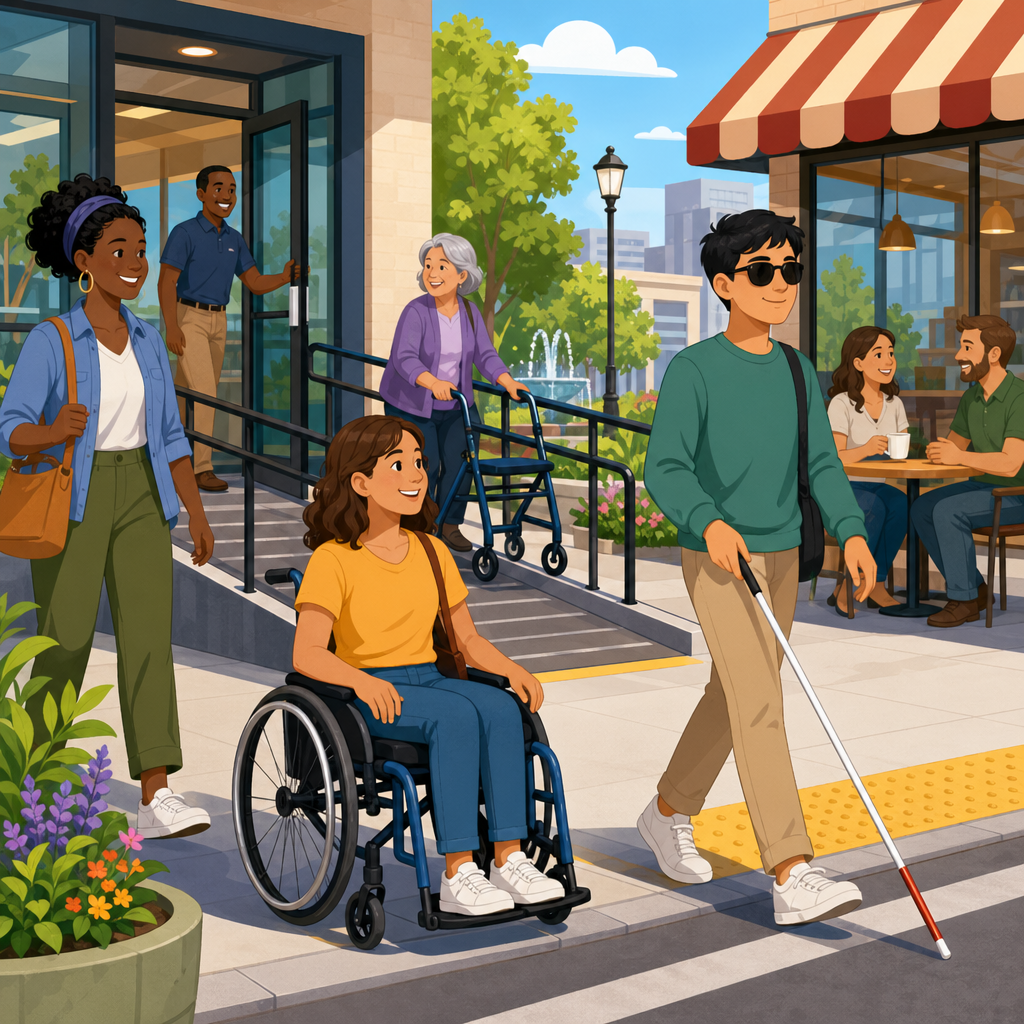
This matters because access failures are rarely abstract. I have seen how a single step at a café entrance turns a neighborhood business into a closed door, how a hotel with a so-called accessible room still fails when the shower lacks a bench, and how a clinic check-in kiosk without screen-reader compatibility delays care. The ADA is not only about ramps and parking spaces. It governs service animals, reservation systems, auxiliary aids, seating dispersion in assembly spaces, maintenance of accessible features, and digital touchpoints that affect entry to physical services. For readers focused on rights and protections, this hub explains how ADA rights work in real public accommodations, what common disputes look like, and how case studies clarify the law.
What ADA Rights in Public Accommodations Actually Require
At the core, ADA rights in public accommodations require equal opportunity, not identical treatment. A business must provide access in the most integrated setting appropriate and cannot screen out disabled patrons through unnecessary eligibility criteria. In practice, that means a movie theater cannot confine wheelchair users to only the front row if integrated seating is feasible, a restaurant cannot refuse entry to a service dog because of a no-pets policy, and a retailer cannot rely on staff assistance as a substitute for removing an easily fixable barrier such as a heavy inaccessible entry door.
Three concepts drive most real-world questions. First, barrier removal in existing facilities is required when it is readily achievable, meaning easily accomplishable without much difficulty or expense in light of the business’s resources and operations. Second, new construction and alterations must comply with the 2010 ADA Standards for Accessible Design, which impose technical scoping requirements for routes, restrooms, counters, seating, parking, and more. Third, communication must be effective. That may require qualified interpreters, captioning, accessible printed materials, or accessible electronic interfaces, depending on context. The right accommodation depends on what is necessary for equal access, not on what is most convenient for the business.
Businesses often misunderstand these duties as optional customer service choices. They are legal obligations. The Department of Justice enforces Title III, and private plaintiffs can sue for injunctive relief, attorneys’ fees, and in some jurisdictions damages under state law. Because this hub centers on rights in action, the useful question is not only what the statute says, but how enforcement and compliance play out in ordinary public life.
Rights in Action: Common Public Accommodation Scenarios
Case studies show how ADA rights are tested where physical design, staff training, and customer-facing policy meet. Restaurants are a frequent example. A restaurant may technically have an accessible entrance yet violate the ADA if tables are packed too tightly for wheelchair passage, the accessible restroom is used for storage, or staff refuse to read menu items aloud for a blind customer when no accessible format exists. The issue is cumulative access. Entry alone does not satisfy the law if the patron cannot use the restroom, order food, or move through the dining area.
Hotels create another high-stakes setting because accessibility starts before arrival. Reservation systems must identify accessible features in enough detail for a guest to assess whether a room meets their needs. I have seen disputes arise because listings said “ADA room” without specifying roll-in shower, transfer shower, visual alarms, bed height, or accessible route from parking. Those omissions matter. A guest who uses a shower chair needs different features than a guest who primarily needs visual notification devices. The ADA requires accurate, usable information, not generic labels.
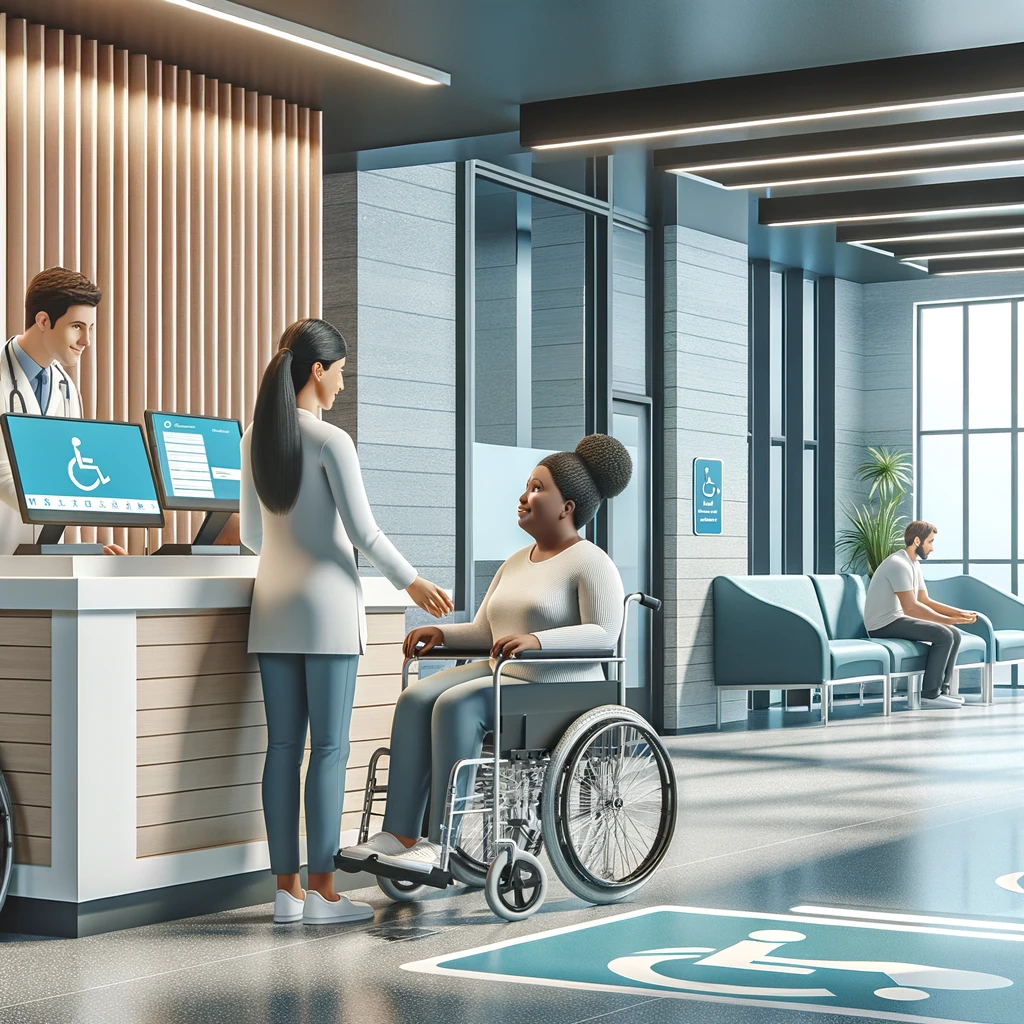
Retail stores and shopping centers often present a mix of old-building barriers and policy problems. Merchandise displays that narrow accessible routes, counters above accessible height, and self-checkout kiosks without tactile controls or speech output can all deny equal use. In healthcare offices, inaccessible examination tables and weight scales have drawn particular scrutiny because equal access to care requires more than admission to the building. The best compliance programs treat accessibility as part of operations, procurement, maintenance, and staff training, not as a one-time construction checklist.
| Setting | Common Barrier | ADA Right at Issue | Practical Fix |
|---|---|---|---|
| Restaurant | Outdoor patio only accessible by steps | Equal access to dining areas | Provide accessible route or equivalent integrated seating |
| Hotel | Vague booking description for accessible rooms | Accessible reservations | List exact features and hold rooms properly |
| Retail store | Aisles blocked by displays | Accessible route maintenance | Maintain clear width and staff checks |
| Medical clinic | No accessible exam table | Equal access to services | Acquire height-adjustable equipment |
| Theater | Wheelchair seating clustered in one area | Integrated, comparable seating choices | Disperse seating locations during design or alteration |
Case Studies That Explain How the Law Works
One of the most cited public accommodation cases is PGA Tour, Inc. v. Martin (2001). Casey Martin, a professional golfer with a circulatory disorder, requested use of a golf cart during tournaments. The PGA argued that walking was fundamental to competition. The Supreme Court held that allowing a cart was a reasonable modification and would not fundamentally alter the tournament in Martin’s circumstances. The case matters beyond sports because it shows the ADA requires individualized assessment. Businesses cannot rely on blanket rules when a reasonable modification would preserve equal participation.
Another important example is Spector v. Norwegian Cruise Line Ltd. (2005), where the Supreme Court recognized ADA coverage for cruise ships serving the public, even with some international-law limitations. The practical lesson is that businesses cannot evade accessibility duties simply because operations are complex or mobile. If a service is offered to the public and falls within covered categories, ADA analysis follows the service, not just the building shell.
Department of Justice settlements provide equally useful guidance. In actions involving medical providers, the DOJ has repeatedly emphasized that accessible diagnostic equipment, including height-adjustable exam tables and accessible weight scales, can be necessary for equal treatment. In cases involving hotels, regulators have required revised reservation practices, staff retraining, and better room-feature disclosures. These outcomes show that many disputes are solved not by dramatic structural overhauls but by targeted operational fixes backed by management accountability.
Real-world applications also reveal a pattern: maintenance failures create liability. An accessible parking space loses value when the access aisle is routinely blocked. An automatic door is not compliance if it remains broken for weeks. A captioning device in a theater does not ensure effective communication if staff do not know where it is or how to activate it. ADA rights therefore include reliable availability of accessible features, not merely their original installation.
Service Animals, Communication Access, and Policy Modifications
Some of the most common public accommodation disputes involve interactions between staff and patrons rather than building design. Service animal rules are a prime example. Under the ADA, a service animal is generally a dog individually trained to do work or perform tasks for a person with a disability. Staff may ask only two questions when the disability and task are not obvious: whether the dog is required because of a disability and what work or task the dog has been trained to perform. They cannot demand documentation, require the dog to demonstrate the task, or charge a pet fee. They may exclude the dog only if it is out of control and not effectively managed, or not housebroken.
Communication access is similarly specific. A hospital, theater, museum, or lecture venue must furnish appropriate auxiliary aids and services where necessary for effective communication, unless doing so would be an undue burden or fundamental alteration. The choice depends on context. For a complex medical discussion, a qualified sign language interpreter may be required; exchanging written notes may be inadequate. For a simple retail transaction, a different aid may suffice. The key legal standard is effectiveness, judged by the importance, length, complexity, and privacy of the communication.
Policy modifications can be just as important as physical access. A grocery store that normally requires customers to retrieve items themselves may need to assist a shopper whose disability prevents reaching shelves. A fitness center may need to adjust a no-outside-assistance rule to permit a personal aide. A museum may need to modify timed-entry procedures when a disability-related delay affects arrival. Not every request must be granted, but the business must assess whether the change is reasonable and whether denial is supported by a real operational or safety rationale, not assumption or discomfort.
How Businesses and Patrons Can Handle ADA Problems Effectively
When accessibility breaks down, the fastest solutions usually come from clear documentation and informed communication. For patrons, that means recording dates, locations, names of staff, photographs of barriers where appropriate, screenshots of inaccessible reservation or ticketing systems, and a concise description of how the barrier blocked equal access. Complaints are strongest when they connect the obstacle to a specific right: inaccessible entrance, ineffective communication, inaccessible website feature tied to in-person service, or refusal of reasonable policy modification.
For businesses, the most effective response is not defensiveness but structured remediation. In compliance reviews I have worked on, the best results came from combining an accessibility audit, a prioritized barrier-removal plan, staff training, and routine maintenance checks. Use the 2010 ADA Standards as the technical baseline for facilities, review reservation and intake workflows, test digital tools with assistive technology, and create an escalation path for accommodation requests. Frontline employees need scripts for service animal questions, communication access requests, and mobility-related assistance so they do not improvise unlawful responses under pressure.
Formal enforcement options include direct requests to management, complaints to the Department of Justice, state civil rights agencies, or litigation through private counsel. Many states, including California, New York, and Florida, layer additional accessibility obligations through state statutes and building codes. That overlap can increase remedies and raise the cost of noncompliance. For readers exploring related rights and protections topics, this hub connects the legal rule to practical applications: what barriers look like, how disputes develop, and what effective correction requires.
ADA rights in public accommodations are most powerful when understood as daily, usable protections rather than distant legal principles. Equal access means being able to enter, communicate, participate, and receive the same basic dignity and service offered to everyone else. The case studies and real-world applications across restaurants, hotels, stores, clinics, theaters, and service settings all point to one conclusion: compliance is achievable when organizations treat accessibility as part of ordinary operations, and rights are enforceable when patrons recognize what the law actually guarantees.
The main takeaway is straightforward. Public accommodations must remove readily achievable barriers, follow accessibility standards in new work, modify policies when reasonable, and ensure effective communication. Patrons should expect more than symbolic access, and businesses should aim for more than minimum paperwork. If you are building out your understanding of rights and protections, use this hub as the starting point for deeper articles on case law, complaint strategies, digital barriers, service animal disputes, and accessibility in specific industries. Review your spaces, policies, and customer journeys now, because ADA rights only matter when they work in practice.
Frequently Asked Questions
What does the ADA require from public accommodations?
The Americans with Disabilities Act requires public accommodations to provide people with disabilities equal access to the goods, services, facilities, privileges, advantages, and accommodations they offer to the public. In practical terms, that covers a wide range of businesses and organizations, including restaurants, stores, hotels, movie theaters, stadiums, doctors’ offices, hospitals, museums, schools operated by private entities, and many other places open to customers or visitors. Equal access does not mean a business must make every space identical for every person. It means disabled individuals must have a meaningful and comparable opportunity to use and enjoy what is being offered.
That obligation often includes removing architectural barriers when doing so is readily achievable, modifying policies and practices when necessary to serve disabled patrons, and providing effective communication for people with hearing, vision, or speech disabilities. For example, a business may need to install a ramp where feasible, allow a service animal even if pets are otherwise prohibited, or provide auxiliary aids and services such as interpreters or accessible written materials when required. The ADA also prohibits businesses from imposing unnecessary eligibility criteria that screen out disabled people and from offering separate or unequal services unless doing so is necessary to provide equally effective access. The core rule is straightforward: if a place serves the public, it generally must do so in a way that does not exclude disabled people.
Which places count as public accommodations under the ADA?
Public accommodations under the ADA include many privately owned businesses and nonprofit operations that are open to the public. The law identifies broad categories rather than just listing individual business types. These categories include lodging establishments like hotels and inns, food service businesses such as restaurants and bars, places of entertainment like theaters and stadiums, retail stores, service establishments such as banks, laundromats, salons, and pharmacies, public transportation terminals, museums and libraries, private schools and day care centers, gyms and health clubs, and health care providers including clinics and hospitals. If the location is generally open to the public and offers goods or services, it is often covered.
Coverage can also extend beyond the front door. In today’s world, many businesses provide online tools that are tightly connected to their physical operations, such as booking hotel rooms, ordering food for pickup, viewing menus, scheduling medical appointments, purchasing tickets, or accessing store services. When a website or mobile feature is closely tied to a physical public-facing business, accessibility concerns may implicate ADA rights as well. At the same time, the exact scope of coverage can depend on the facts, especially for digital platforms, membership-based operations, religious entities, or government-run facilities, which may fall under different legal rules. Still, for most everyday businesses serving the public, the safest and most accurate assumption is that ADA obligations are part of doing business.
What kinds of accommodations or changes must a business make for disabled customers?
The ADA does not impose a one-size-fits-all checklist. Instead, it requires reasonable steps to ensure equal access, and those steps depend on the business, the space, and the customer’s disability-related needs. Common examples include accessible entrances, routes, restrooms, seating, counters, parking, and service areas; policy changes such as permitting service animals or assisting someone who cannot stand in a long line; and communication-related supports such as captioning, interpreters, written notes, screen-reader-friendly digital content, or alternative formats for important information. Staff may also need training so they understand how to interact appropriately and how to respond when someone requests an accommodation.
For existing facilities, businesses must remove barriers when removal is readily achievable, meaning easily accomplishable without much difficulty or expense in light of the business’s resources and operations. For new construction and alterations, stricter accessibility standards usually apply. Businesses may also need to make reasonable modifications to normal rules or procedures unless doing so would fundamentally alter the nature of the goods or services offered. They are not generally required to provide personal devices or services of a personal nature, such as wheelchairs, personal attendants, or individually prescribed items. The key question is whether the business is taking effective, realistic steps to ensure disabled people can access what others can access, rather than forcing them to accept second-class participation.
Can a business refuse an ADA request because it is too difficult or expensive?
Sometimes a business can lawfully decline a specific request, but it cannot reject accommodations casually or based on assumptions. The ADA recognizes limits, including situations where a requested change would create an undue burden or fundamentally alter the nature of the business’s services. An undue burden usually refers to significant difficulty or expense when viewed in context, including the size, financial resources, and structure of the business. A fundamental alteration means the requested modification would change the essential nature of what is being provided. These are legal standards, not convenient excuses, and businesses are expected to assess them carefully rather than relying on generalized claims that accessibility is “too hard.”
Even when one requested accommodation is not required, the analysis should not stop there. Businesses should consider whether another effective alternative can provide access. For instance, if a structural change cannot be made immediately, there may be another way to deliver the same service, at least temporarily, without excluding the customer. The ADA favors practical problem-solving. It also does not permit safety justifications based on stereotypes or discomfort. Any claimed safety concern must be based on actual risk, not speculation, and the business should look for ways to reduce the risk through reasonable modifications. In short, the law gives businesses some flexibility, but that flexibility exists within a strong civil rights framework centered on inclusion and equal opportunity.
What should someone do if they believe their ADA rights were violated in a public space?
If someone believes a public accommodation denied equal access, the first step is often to document what happened as clearly as possible. Helpful details include the date, time, location, names of employees involved, the barrier encountered, what was requested, how the business responded, and whether there were witnesses, photos, screenshots, receipts, or other supporting records. In some situations, raising the issue directly with a manager or owner can lead to a quick resolution, especially when the problem stems from staff misunderstanding rather than an intentional refusal. A calm, specific explanation of the barrier and the accommodation needed can be effective, particularly when paired with a request for a follow-up plan.
If the issue is not resolved, the person may consider filing a complaint with the U.S. Department of Justice or seeking legal advice from an attorney or disability rights organization. Depending on the circumstances, state or local civil rights laws may also provide additional protections or enforcement options beyond the ADA. Acting promptly can matter, especially if the barrier is ongoing or if legal deadlines may apply. Most importantly, people should remember that accessibility is not a favor. It is a civil right. Public accommodations are expected to serve disabled individuals on equal terms, and when they fail to do so, there are formal avenues to challenge exclusion and push for meaningful change.