Overcoming obstacles in sports and fitness centers starts with understanding how disability rights law applies to gyms, pools, recreation programs, stadiums, and wellness facilities that many people use every day. ADA rights in sports and fitness centers refer to the legal protections that require equal access, reasonable policy modifications, effective communication, and removal of architectural barriers where readily achievable. In practice, that means a member using a wheelchair must be able to enter and navigate key spaces, a deaf athlete may need auxiliary aids for classes or coaching, and a person with a service animal cannot be excluded simply because a facility has a no-pets rule. I have worked with access reviews for fitness businesses and community recreation programs, and the same pattern appears repeatedly: many operators want to comply, but they misunderstand what access requires beyond a ramp at the front door. This matters because sports and exercise are not optional luxuries. They affect health, rehabilitation, social participation, and economic opportunity, and exclusion from these spaces can deepen isolation and worsen health outcomes.
This hub article provides a focused exploration of ADA rights across the sports and fitness environment, from physical access and locker rooms to websites, ticketing, classes, and complaint options. It is designed as a central resource within the broader Rights and Protections topic, connecting the major rules and recurring problem areas that shape real access. The Americans with Disabilities Act is the primary federal law here, but it interacts with Section 504, state accessibility codes, local building rules, and facility-specific safety standards. Different titles of the law can apply depending on whether the program is run by a private gym, a public park district, a city recreation center, a public school, or a college athletic department. The core principle remains consistent: people with disabilities must have an equal opportunity to participate, benefit, and enjoy the services offered. Knowing the scope of those rights helps members, athletes, parents, coaches, and facility operators solve problems early and identify when a denial crosses from inconvenience into unlawful discrimination.
Where ADA rights apply in sports and fitness settings
ADA rights apply broadly across the places where people exercise, train, compete, and spectate. Private gyms, yoga studios, martial arts schools, climbing gyms, bowling alleys, skating rinks, golf courses, health clubs, and sports complexes are generally covered as public accommodations. Public recreation centers, municipal pools, park programs, school athletic facilities open to the public, and community leagues may also be covered through public entity obligations. The distinction matters because coverage can affect complaint routes and technical standards, but for users the practical question is simpler: can a person with a disability access the same service in a meaningful way? If the answer is no, the facility must examine physical barriers, communication barriers, and restrictive policies. For example, a spin studio that only offers app-based check-in without a screen-reader-accessible platform may be denying equal access before the customer even reaches the class. A stadium that sells accessible seating only by phone while standard seats are available online creates a parallel service problem. Access begins at first contact, not at the doorway.
Coverage also extends beyond members and athletes to spectators, parents, personal care attendants, and companions. A child attending adaptive swim lessons may need an accessible family changing room and a parent may need clear communication about program modifications. A wheelchair basketball athlete may have access to the court but still face discrimination if team travel, locker room use, or registration policies exclude needed supports. In my experience, rights disputes in these settings often arise from fragmented decision-making: the architect handles entrances, the operations team writes policies, the trainer manages class participation, and nobody reviews the full user journey. That is why a hub approach is useful. Sports and fitness access is not one issue; it is a chain of obligations that includes parking, routes, equipment spacing, pool lifts, captioned video content, emergency procedures, waiver forms, and staff training. A facility can satisfy one element and still fail overall if the person cannot use the program with dignity and substantial equivalence.
Physical access, equipment, and usable facilities
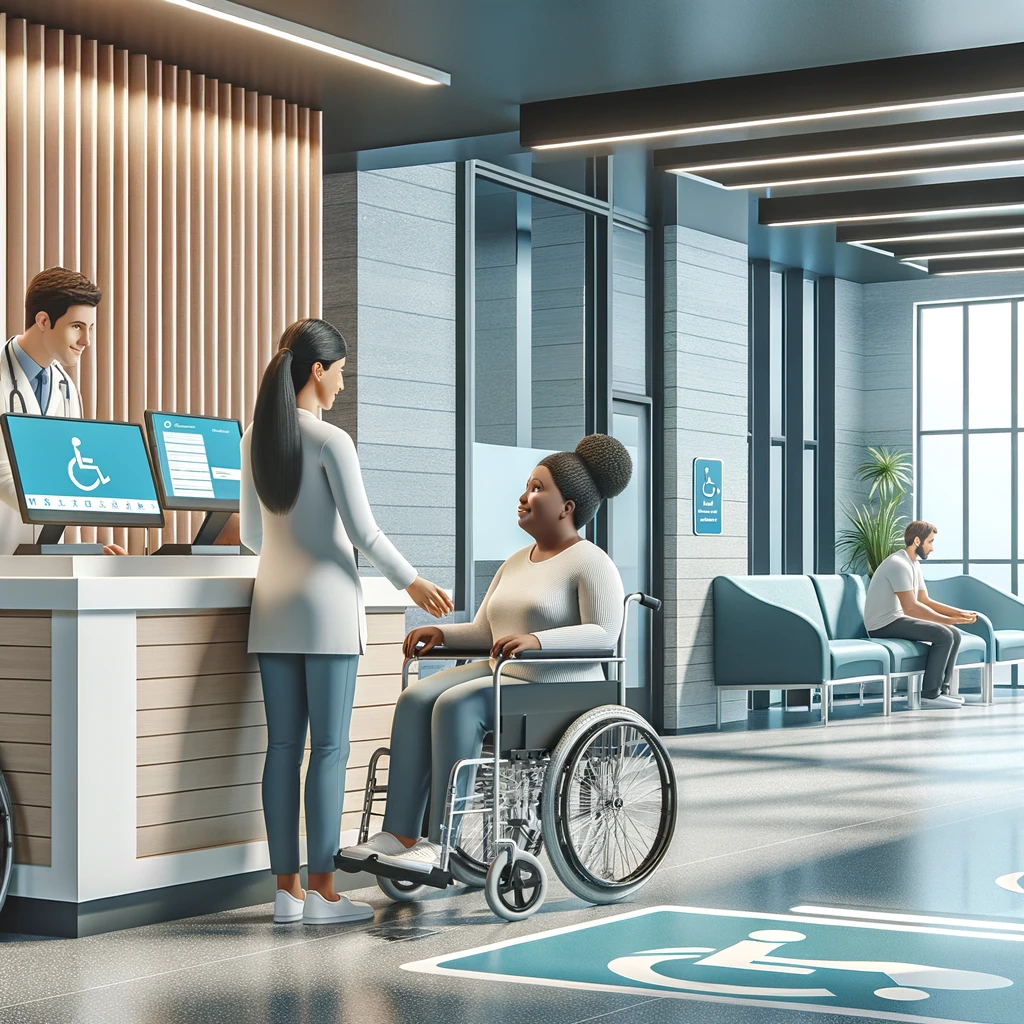
Physical access in sports and fitness centers starts with an accessible route from parking or transit to the entrance, but it does not end there. The route must continue to reception desks, exercise rooms, studios, courts, locker rooms, showers, restrooms, spectator areas, and emergency exits. Door hardware, turning space, counter height, protruding objects, and floor surfaces all affect whether a person can independently use the facility. Older buildings do not automatically escape responsibility. Existing facilities generally must remove barriers when doing so is readily achievable, meaning easily accomplishable without much difficulty or expense in light of the business and resources involved. That can include installing lever hardware, adjusting door closers, lowering accessories, restriping parking, or reconfiguring furniture. New construction and alterations face stricter technical requirements under recognized accessibility standards. A common mistake is assuming compliance with a local building inspection settles the issue. It does not always address operational access, maintenance failures, or federal nondiscrimination duties.
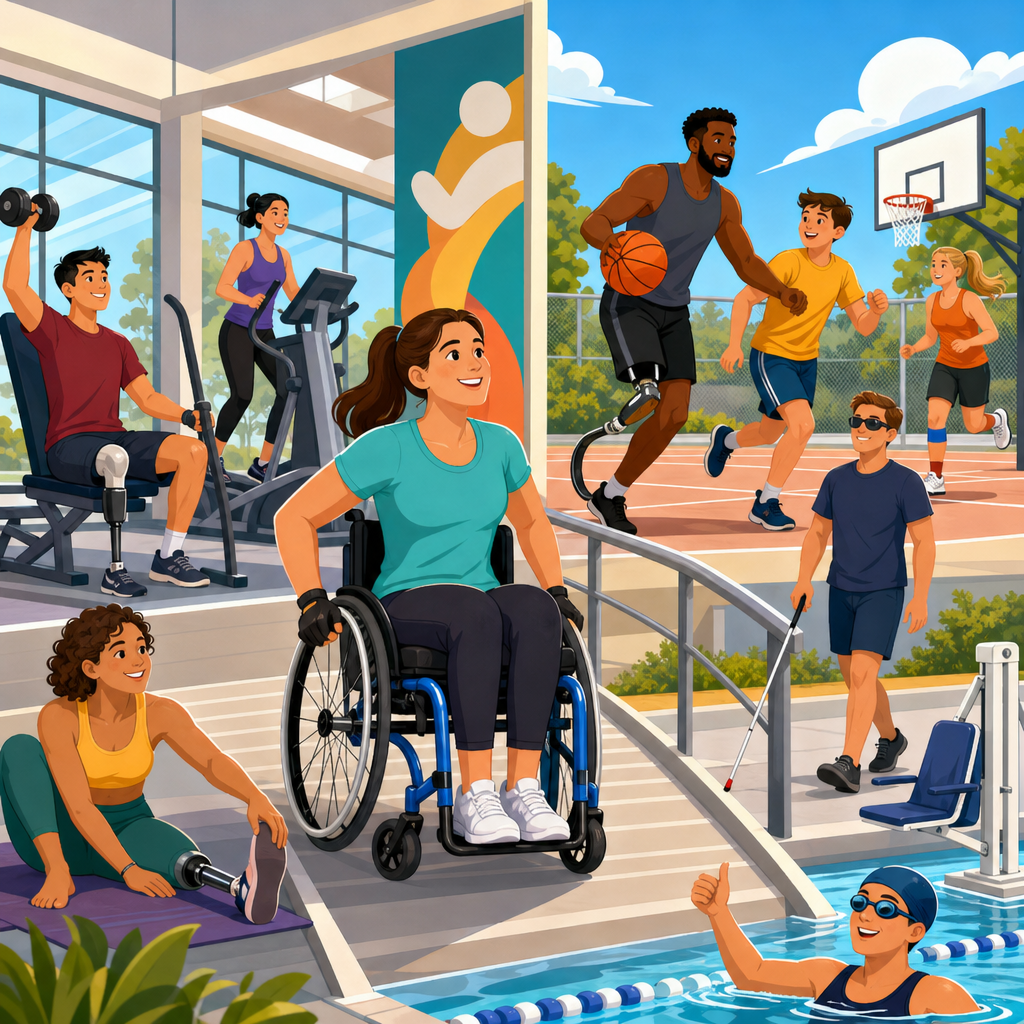
Fitness equipment raises a related but distinct issue. The law does not always require every machine to be universally designed, yet facilities must provide equal opportunity to exercise and benefit from programs. In practice, that means keeping clear floor space around equipment, selecting some machines usable by people with mobility impairments, and ensuring disabled members can receive the same orientation, spotting assistance, or program design support offered to others. A gym that places all accessible equipment in a back corner used for storage is not providing meaningful access. Pools and aquatic centers require especially careful review. Depending on size and configuration, accessible means of entry such as fixed pool lifts, sloped entries, transfer walls, or transfer systems may be required. The lift must be operable and available during pool hours, not dead-battery equipment covered with a tarp. I have seen facilities claim a lift exists while staff cannot locate the key or have never been trained to use it. From a rights perspective, inaccessible maintenance is still inaccessibility.
| Area | Common Barrier | What Access Usually Requires |
|---|---|---|
| Entrance and reception | Steps, heavy doors, high counters | Accessible route, usable door hardware, lowered service point |
| Workout floor | Tight spacing and blocked clear floor space | Layout that permits wheelchair approach and safe movement |
| Locker rooms | Narrow aisles, inaccessible benches, no roll-in shower | Accessible changing area, shower option, reachable lockers and controls |
| Aquatics | Pool lift unavailable or inoperable | Required accessible entry maintained and ready for independent use |
| Spectator seating | Accessible seats isolated or poor sight lines | Integrated seating choices with comparable views and companion seats |
Programs, policies, and reasonable modifications
Many access disputes in sports settings are caused less by architecture than by rigid rules. The ADA often requires reasonable modifications to policies, practices, and procedures when necessary to afford access, unless the change would fundamentally alter the nature of the service or create a direct threat that cannot be mitigated. That standard is nuanced but workable. A fitness center may need to allow a personal care assistant to accompany a member, permit extra time for transitions in a class, modify a no-food rule for diabetes management, or allow the use of a service animal in areas where animals are otherwise barred. It may also need to adjust how a person checks in, signs waivers, or receives instruction. What it usually does not have to do is waive legitimate safety requirements or transform an advanced competitive program into a different service entirely. The analysis should be individualized, evidence-based, and tied to the actual activity, not stereotypes about disability.
Consider common examples. A boxing gym cannot exclude a blind participant from conditioning classes simply because staff assume the person cannot follow drills; the gym should assess whether verbal cueing, tactile orientation, and a modified station setup provide access. A community soccer league may need to adjust registration deadlines or communication methods for an athlete with an intellectual disability who uses supported decision-making. A yoga studio may have to permit a service dog and train staff not to question it beyond the limited inquiries allowed by law. On the other hand, if a requested change would remove the essential nature of a timed competitive event, the organization can analyze whether the modification remains reasonable. The key is process. Facilities that document requests, consider alternatives, and explain decisions clearly reduce legal risk and improve user trust. Blanket rules are where organizations get into trouble, especially when staff say, “We have never done that before,” as though past exclusion proves present legality.
Communication access, digital access, and membership systems
Effective communication is a central disability right in sports and fitness centers, and it extends well beyond printed brochures. Facilities must communicate with people with disabilities as effectively as with others, which may require auxiliary aids and services. Depending on context, that can include qualified interpreters for complex interactions, captioning for instructional videos, accessible electronic documents, large-print schedules, assistive listening systems, or staff who know how to relay safety instructions in plain language. The choice of aid depends on the communication setting, length, complexity, and the person’s normal method of communication. A brief check-in question is different from a detailed personal training assessment or a rules meeting for a league. Too many facilities treat accessibility as optional customer service rather than a legal requirement. If a deaf member cannot understand emergency announcements, class instruction, or contract terms, the service is not equally usable.
Digital systems now control much of the customer experience, so website and app accessibility have become core rights issues. Many gyms require online membership signup, digital waivers, class reservations, QR-code check-in, and app-based coach messaging. If those tools are incompatible with screen readers, keyboard navigation, voice control, or color contrast needs, the barrier is real even when the physical building is accessible. I routinely advise organizations to test digital workflows using recognized accessibility guidelines and actual users, because automated scans miss critical failures such as unlabeled buttons, inaccessible calendars, and time-out problems. Video workout libraries should include captions and, where needed, audio description or clear verbalization of visual cues. Online ticketing for sporting events must also provide comparable access to accessible seating and companion seats. A person should not have to endure a more burdensome process just because they need an accommodation. In modern recreation, digital exclusion can shut the door long before a member reaches the treadmill or court.
Spectators, athletes, schools, and enforcement options
ADA rights in sports and fitness centers also cover the broader ecosystem around participation. Spectators need accessible parking, routes, restrooms, concessions, and integrated seating with lines of sight over standing patrons where required. Parents attending youth events may need accessible team areas or communication supports. Student athletes in schools and colleges can have overlapping protections under disability law, education law, and athletic association rules. That may affect conditioning requirements, housing during travel, medical documentation practices, and access to auxiliary aids in team meetings. Enforcement can happen informally or through formal channels. The best first step is often a written request that states the barrier, the needed modification, and the date access is required. When that fails, people may file internal grievances with public entities, submit complaints to the U.S. Department of Justice, involve the Department of Education in school-related matters, or seek legal counsel. State human rights agencies can also play an important role depending on jurisdiction.
As a hub for focused explorations of ADA rights, this page should guide readers toward deeper articles on service animals in gyms, accessible locker rooms and showers, pool lift rules, adaptive equipment, interpreter requests, accessible websites and apps, stadium seating, youth sports accommodations, and how to document discrimination effectively. The main takeaway is straightforward: equal access in sports and fitness is not a courtesy. It is a civil right that applies to buildings, policies, communication, and digital systems together. Facilities that plan access proactively create safer, more usable environments for everyone and avoid the cycle of complaint-driven fixes. Individuals who know their rights can ask better questions, make precise requests, and recognize when “policy” is being used as a substitute for lawful analysis. Use this hub as your starting point, then review the related articles that match your situation so you can take the next practical step with confidence and clear information.
Frequently Asked Questions
What ADA rights do people with disabilities have in gyms, fitness centers, and other sports facilities?
People with disabilities have the right to equal access to sports and fitness environments under the Americans with Disabilities Act, and that protection applies broadly to places such as gyms, health clubs, pools, yoga studios, recreation centers, stadiums, and similar facilities that serve the public. In practical terms, these rights are not limited to simply entering the building. They include the right to access the programs, services, equipment areas, locker rooms, seating areas, restrooms, and communication methods that a facility offers to other members or guests. A person with a mobility disability, for example, should be able to reach key areas through accessible routes and use amenities that are provided in a way that does not unfairly exclude them.
The ADA also requires reasonable modifications to policies, practices, and procedures when necessary to give a person with a disability an equal opportunity to participate, unless doing so would fundamentally alter the nature of the service. That can include adjustments such as allowing a support person where a general policy would otherwise restrict access, permitting adaptive techniques, or changing how a class is administered so the individual can participate. Facilities may also have duties to remove architectural barriers when doing so is readily achievable, meaning easily accomplishable without much difficulty or expense. In addition, they must provide effective communication for people with hearing, vision, or speech disabilities, which may include auxiliary aids and services depending on the circumstances. Altogether, ADA rights in sports and fitness centers are about meaningful access, not just technical compliance.
Does a gym or fitness center have to make its equipment and physical space accessible?
Yes, to a significant extent. The ADA expects public-facing sports and fitness facilities to address physical barriers so people with disabilities can access the goods and services being offered. That includes accessible entrances, routes through the facility, restrooms, locker rooms, service counters, and, where applicable, pool access, seating, and parking. Whether a facility must make a specific structural change often depends on factors such as when the building was built or altered and whether barrier removal is readily achievable. New construction and alterations generally must meet more specific accessibility standards, while older facilities still have ongoing obligations to remove barriers when doing so is feasible.
Equipment accessibility can be more nuanced, but the overall obligation remains the same: a business cannot operate in a way that denies equal opportunity. If equipment is arranged so tightly that a wheelchair user cannot reach machines, that may present an access issue even if the machines themselves are not specially designed. If all classes take place on an inaccessible level with no alternative access, that may also violate the law. Some facilities improve access by widening routes, adjusting layouts, adding transfer space around machines, obtaining accessible or adaptive equipment, lowering counters, or modifying how staff assist members. The key question is whether the person with a disability can meaningfully use the facility’s services and programs in a way comparable to others. Access should be considered in real-world terms, not only by checking off a building-code list.
What are reasonable modifications in sports and fitness centers, and when can a facility say no?
Reasonable modifications are changes to rules, policies, or usual practices that help ensure a person with a disability can participate fully. In a sports or fitness setting, this can cover a wide range of situations. A recreation program might modify a strict no-outside-assistance rule to allow a personal aide. A fitness instructor might adjust class format, pacing, or movement expectations so a participant with a disability can engage safely and effectively. A facility may need to allow adaptive devices, reconsider inflexible check-in procedures, or make exceptions to policies that unintentionally block equal access.
That said, the ADA does not require every requested change in every situation. A facility may deny a request if it would fundamentally alter the nature of the program or service, create a direct threat that cannot be reduced through reasonable measures, or in some cases impose an undue burden, particularly in the context of communication aids and services. Those exceptions are not supposed to be used casually or based on assumptions, stereotypes, or generalized concerns. A gym cannot simply say a modification is inconvenient or unfamiliar and stop there. It should conduct an individualized assessment and, when possible, explore alternative ways to provide access. Often the most legally sound and customer-friendly approach is to engage in a practical dialogue with the member, identify the actual barrier, and find a workable solution that preserves both safety and equal participation.
How does the ADA apply to communication barriers, classes, and membership policies at fitness and recreation facilities?
The ADA protects against more than physical barriers. It also requires effective communication and equal participation in the way information is delivered and programs are administered. For members or guests who are deaf, hard of hearing, blind, have low vision, or have speech-related disabilities, a facility may need to provide appropriate auxiliary aids and services unless doing so would cause an undue burden or fundamentally alter the service. Depending on the situation, that might include written materials in accessible formats, captioning, qualified interpreters for important interactions, clear visual signage, or staff communication methods that are accessible and respectful. The appropriate aid depends on the nature of the communication and the complexity of the information being shared.
These communication duties can affect everything from membership contracts and waiver explanations to class instruction, safety rules, scheduling updates, and emergency procedures. Membership policies must also be administered in a nondiscriminatory way. For example, a facility should not impose extra fees on a person with a disability because they need a reasonable modification, and it should not apply neutral policies in a way that effectively excludes disabled members when a reasonable adjustment is available. Group classes, leagues, swim programs, and wellness offerings should be reviewed not only for physical access but also for whether the rules and communication methods allow disabled participants a fair opportunity to join and benefit. True ADA compliance means people can understand, navigate, and participate in the entire experience.
What should someone do if they believe a gym, pool, stadium, or recreation center is violating their ADA rights?
If someone believes their ADA rights are being denied in a sports or fitness setting, the first step is often to document the problem clearly and specifically. It helps to note what barrier or policy is causing the issue, when it happened, who was involved, and how it limited access. Photos, copies of policies, screenshots of online communications, and written records of conversations can be useful. In many cases, raising the concern directly with a manager or owner can lead to a prompt resolution, especially if the issue involves a fixable policy, inaccessible layout, or communication problem that the business has not fully considered. A calm but detailed request explaining what access is needed and why can sometimes be enough to start a constructive response.
If the facility does not respond appropriately, stronger next steps may be available. A person may file a complaint with the U.S. Department of Justice in situations involving public accommodations, and they may also wish to consult an attorney knowledgeable about disability rights law to evaluate legal options. State and local disability rights agencies may provide additional avenues for complaints or enforcement depending on the jurisdiction. Importantly, businesses are expected to comply with the ADA proactively, not only after a formal complaint is made. When a gym, pool, stadium, or wellness center refuses reasonable modifications, fails to address readily achievable barriers, or does not provide effective communication, the issue may rise from poor customer service to unlawful discrimination. Understanding these rights empowers individuals to advocate for equal access and helps facilities recognize that inclusion is a legal obligation as well as a best practice.