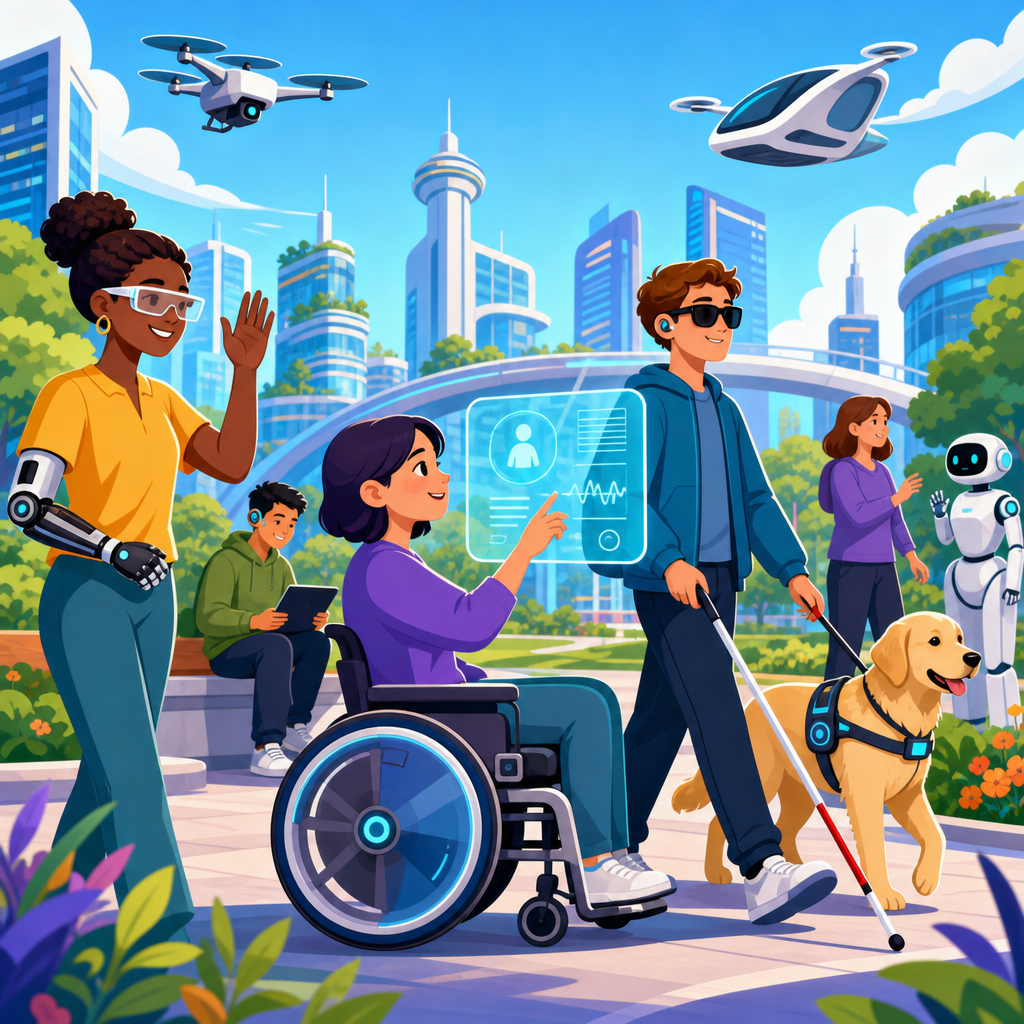
Accessibility is moving from a niche compliance concern to a core design principle, and that shift is reshaping the future of technology and accessibility across software, devices, workplaces, education, and public services. In practical terms, accessibility means designing products and environments so people with disabilities can perceive, understand, navigate, and interact with them effectively. It covers visual, hearing, motor, cognitive, speech, and neurodiversity-related needs, but it also benefits older adults, temporary impairments, multilingual users, and anyone using technology under constraints such as glare, noise, or one-handed operation.
I have seen this change firsthand in product teams that once treated accessibility as a final audit item and now build it into discovery, design systems, quality assurance, and procurement. That evolution matters because more than one billion people globally live with some form of disability, according to the World Health Organization, and digital services now mediate work, banking, healthcare, transport, and civic participation. When an app lacks keyboard support, captions, plain language, or screen reader structure, it excludes users from essential parts of daily life. When it is accessible, it increases reach, reduces support costs, improves usability, and lowers legal risk.
The next phase is especially important because emerging technologies can either narrow access gaps or widen them at scale. Artificial intelligence can generate captions, alt text, and personalized interfaces, yet it can also automate bias and produce unusable descriptions. Extended reality can create immersive learning and remote assistance, yet it can introduce motion sensitivity, inaccessible controls, and visual overload. Biometrics can simplify authentication for some users while excluding others whose bodies or speech do not match training data. Understanding these tradeoffs is central to making better decisions.
This article serves as a hub for the future of technology and accessibility. It explains the main trends shaping accessible technology, the standards and tools guiding implementation, and the practical questions decision-makers should ask. If you are planning product roadmaps, digital transformation, procurement policies, or content strategies, these are the developments that will matter most over the next several years.
Artificial intelligence is becoming the accessibility layer
Artificial intelligence is the most important accessibility trend because it can adapt interfaces in real time, automate labor-intensive tasks, and support multimodal interaction. In current products, AI already powers live captioning, speech-to-text dictation, image description, noise suppression, predictive text, and translation. Microsoft, Google, Apple, Adobe, and Zoom have all embedded these functions into mainstream tools, which means accessibility features are no longer confined to specialist software.
The clearest benefit is speed and scale. I have worked with content teams that previously wrote alt text manually for thousands of images and could never keep up. AI image description now creates first drafts instantly, allowing human review to focus on accuracy and context. The same pattern applies to captions. Automatic speech recognition has improved sharply through transformer-based models, and while it still makes mistakes with accents, specialist terminology, and crosstalk, it has dramatically reduced the time required to publish accessible video.
Personalization is the next frontier. AI systems can detect when a user consistently increases text size, slows animation, prefers simplified layouts, or relies on voice input, then adapt settings automatically. This matters for cognitive accessibility, where reducing clutter, summarizing content, and sequencing tasks clearly can make digital experiences far easier to use. The strongest implementations let users control these adaptations rather than forcing hidden automation.
There are real risks. Generative models can hallucinate image descriptions, misgender speakers, or simplify text so aggressively that meaning is lost. Voice systems often perform worse for users with speech disabilities. That is why accessible AI needs human oversight, representative training data, and testing with disabled users. Used well, AI does not replace accessibility practice; it becomes the delivery mechanism for it.
Voice, multimodal interfaces, and ambient computing
Interfaces are expanding beyond screens and keyboards into voice assistants, wearables, smart home systems, in-car platforms, and context-aware devices. This shift is significant because accessibility improves when users can choose the input and output method that suits their situation. A blind user may combine screen reader feedback, haptic cues, and voice commands. A user with limited dexterity may prefer switch access, eye tracking, or dictation. A deaf user may rely on text, visual alerts, and vibration instead of audio prompts.
Multimodal design recognizes that no single mode works for everyone. On well-designed systems, tasks can be started in one way and completed in another. For example, a user might ask a smart speaker to start a grocery list, review it on a phone with enlarged text, and complete checkout using saved preferences and keyboard navigation. This flexibility reduces friction and supports situational impairments, such as driving, carrying a child, or working in a loud environment.
Ambient computing adds another layer by making technology more responsive to context. Devices can detect proximity, background noise, motion, and lighting conditions, then adjust interaction patterns. In accessibility terms, that can mean increasing contrast outdoors, replacing spoken feedback with text in noisy places, or triggering reminders through vibration rather than sound. The challenge is control. Systems that adapt without transparency can confuse users, especially those with cognitive disabilities. Clear settings, reversibility, and predictable behavior are essential.
Wearables, assistive devices, and the convergence of consumer and specialist technology
One of the biggest changes I have seen is the collapse of the old boundary between assistive technology and mainstream consumer hardware. Features that once required expensive specialist tools now appear in phones, watches, earbuds, and laptops. Hearing support is a strong example. Wireless earbuds increasingly offer conversation enhancement, environmental amplification, and personalized audio profiles. Over-the-counter hearing aid regulation in the United States has accelerated this category, making hearing support more visible and more affordable for many users.
Wearables are also expanding access through discreet, always-available support. Smartwatches deliver haptic navigation cues, medication reminders, fall detection, irregular heart rhythm alerts, and emergency contact features. For some users with cognitive impairments or chronic conditions, that blend of health monitoring and accessibility support can improve independence. Meanwhile, smart glasses and camera-based systems can read text aloud, identify products, and support wayfinding. Tools such as Be My Eyes and Seeing AI show how computer vision can turn a phone camera into a practical daily aid.
Specialist devices remain vital. Refreshable braille displays, alternative keyboards, head trackers, switch systems, and augmentative and alternative communication devices still solve needs that mainstream products do not address well enough. The future is not replacement but interoperability. The most useful ecosystems expose APIs, Bluetooth support, standard input methods, and cloud synchronization so users can move between devices without rebuilding their setup.
Accessibility in immersive technology, robotics, and future interfaces
Virtual reality, augmented reality, robotics, and brain-computer interface research are often presented as futuristic, but accessibility decisions are being made now. In enterprise training, remote support, and education, immersive technology can offer hands-on simulation and spatial guidance that traditional interfaces cannot. A technician wearing AR glasses can receive step-by-step overlays while keeping both hands free. A student with mobility limitations can explore virtual labs or historical sites remotely. These are meaningful gains when designed correctly.
The risks are equally concrete. VR systems frequently depend on precise hand controllers, standing movement, visual cues, and fast reaction times. That excludes many users unless alternatives are built in, such as seated modes, one-handed controls, subtitles, audio description, adjustable field of view, and motion sensitivity settings. I have reviewed XR prototypes where developers focused on realism and ignored basic orientation cues, making the experience disorienting even for non-disabled testers.
Robotics has similar promise. Service robots can support independent living, warehouse work, rehabilitation, and communication. Exoskeletons and robotic prosthetics continue to advance through better sensors and control systems. Brain-computer interfaces remain early-stage, but they may eventually provide new pathways for communication and device control for people with severe motor impairments. The near-term lesson is simple: future interfaces should not be evaluated only for novelty. They must be measured by reliability, fatigue, learnability, safety, and compatibility with established accessibility needs.
Standards, regulation, and what organizations should build next
Technology trends matter only when organizations can implement them responsibly, and that requires standards, policy, and disciplined execution. The most widely used digital accessibility benchmark remains the Web Content Accessibility Guidelines, now at version 2.2, published by the World Wide Web Consortium. In Europe, EN 301 549 sets accessibility requirements for ICT procurement. In the United States, the Americans with Disabilities Act, Section 508, and state-level rules increasingly shape digital expectations. These frameworks do not solve every emerging issue, but they provide the baseline organizations should already meet.
Leading teams go further by integrating accessibility into product operations. That means inclusive research, component-based design systems, semantic code, keyboard testing, screen reader testing, captioning workflows, plain-language content standards, and procurement reviews for third-party tools. It also means measuring what matters. Automated scanners such as axe, WAVE, and Lighthouse catch some issues quickly, but they cannot judge task clarity, focus order quality, alt text usefulness, or the lived experience of assistive technology users.
| Priority area | What strong teams do | Why it matters |
|---|---|---|
| Design systems | Ship accessible components, tokens, and patterns by default | Prevents repeated errors across products |
| Testing | Combine automation with keyboard, screen reader, and user testing | Finds issues tools miss |
| Content | Use captions, transcripts, plain language, and meaningful alt text | Improves comprehension and media access |
| Procurement | Review VPATs and verify claims in real environments | Reduces risk from inaccessible vendors |
| Governance | Assign owners, training, budgets, and release criteria | Makes accessibility sustainable |
Organizations planning for the future of technology and accessibility should focus on five actions. First, build accessibility into strategy, not remediation. Second, test emerging AI and XR features with disabled users before launch. Third, require interoperability with assistive technology. Fourth, treat personalization controls as product features, not hidden settings. Fifth, document decisions so teams can learn from failures and scale what works. Accessibility maturity grows through systems, not slogans.
The future of accessibility will be defined less by a single breakthrough than by whether technology becomes adaptable, interoperable, and accountable. AI will continue to automate captions, descriptions, summaries, and interface adjustments. Wearables and smart environments will expand continuous support. Immersive tools, robotics, and new input methods will open fresh possibilities for communication, work, and independence. But none of these advances are inherently inclusive. They help only when disabled people are involved in research, design, testing, policy, and leadership.
For organizations, the practical takeaway is clear. Start with standards, then design beyond minimum compliance. Invest in accessible design systems, multimodal interaction, plain-language content, and real user testing. Audit vendors as closely as you audit internal products. Treat personalization, captions, keyboard access, speech options, and assistive technology compatibility as core product quality indicators. The teams doing this well are not waiting for regulation to force action; they are using accessibility to build better technology for everyone.
If this article is your entry point into the future of technology and accessibility, use it as a roadmap. Review your current digital experiences, identify the barriers users face today, and prioritize the emerging technologies that can remove them responsibly. The future is not about adding accessibility later. It is about building technology that expects human difference from the start.
Frequently Asked Questions
1. Why is accessibility becoming a core technology priority instead of just a compliance requirement?
Accessibility is increasingly viewed as a foundational part of good design because organizations now recognize that inclusive products work better for everyone, not only for people with disabilities. In the past, accessibility was often treated as a legal checklist tied to standards such as WCAG or disability regulations. While compliance still matters, the bigger shift is strategic: businesses, schools, governments, and technology providers are realizing that accessible design improves usability, reduces friction, expands audience reach, and strengthens brand trust. Features like captions, voice control, keyboard navigation, readable interfaces, and clear content structures help a wide range of users, including older adults, people with temporary injuries, users in noisy or low-light environments, and those with different learning or communication preferences.
This broader perspective is reshaping the future of technology and accessibility. Accessibility is now being integrated earlier in product development, procurement, workplace planning, and digital transformation efforts. Instead of asking how to “fix” exclusion after launch, leading teams are asking how to prevent barriers from being created in the first place. That shift supports more resilient systems, better customer experiences, and more equitable participation in work, education, healthcare, and public life. In short, accessibility is becoming a core priority because it is both the right thing to do and a smart way to build technology that reflects the real diversity of human needs.
2. Which emerging technologies are expected to have the biggest impact on accessibility in the coming years?
Several emerging technologies are poised to significantly improve accessibility, especially when they are designed responsibly. Artificial intelligence is one of the biggest drivers. AI can support real-time captioning, image descriptions, speech recognition, language simplification, predictive text, personalized interfaces, and assistive communication tools. For users who are blind or have low vision, computer vision can help identify objects, read signage, or describe visual content. For users who are deaf or hard of hearing, automated transcription and captioning tools are becoming faster and more accurate. For people with motor disabilities, AI-powered voice interfaces, eye tracking, and adaptive input systems can reduce reliance on traditional keyboards and touchscreens.
Wearables, smart home systems, augmented reality, virtual reality, robotics, and brain-computer interface research are also worth watching. Wearables can provide haptic navigation cues, health alerts, and environmental feedback. Smart home technology can increase independence by allowing users to control lighting, doors, appliances, and security systems through voice, switches, or mobile interfaces. AR and VR, when built with accessibility in mind, can support immersive learning, spatial guidance, workplace training, and therapy. Robotics may assist with mobility, communication, or repetitive physical tasks. At the same time, the impact of these technologies will depend on inclusive design choices, affordability, interoperability, and whether disabled users are meaningfully involved in development and testing.
3. How is artificial intelligence changing accessibility, and what are the risks?
Artificial intelligence is rapidly changing accessibility by making digital and physical environments more adaptable. It can convert speech to text, text to speech, generate alt text for images, summarize complex information, translate content, power screen reader enhancements, and personalize user experiences based on individual needs. In education, AI can help students access materials in multiple formats and provide support for reading, writing, and communication. In workplaces, it can improve meeting accessibility through live captions and transcripts, streamline document remediation, and enable more flexible interaction with software. In customer service and public services, AI can make information easier to access at scale.
However, AI also introduces real risks if it is treated as a substitute for thoughtful accessibility practice. Automated captions can misinterpret speech. AI-generated image descriptions may be vague, inaccurate, or misleading. Speech recognition systems can struggle with accents, speech disabilities, or background noise. Algorithmic bias may exclude users whose communication styles, bodies, or behaviors were underrepresented in training data. There are also privacy concerns, especially when accessibility tools process voice, biometric, location, or health-related information. The most effective approach is to treat AI as a support layer, not a complete solution. Human oversight, transparent testing, disabled user feedback, and strong privacy safeguards are essential to ensure AI actually improves accessibility rather than creating new barriers.
4. What does the future of accessibility look like in workplaces, education, and public services?
The future of accessibility in these sectors is likely to be far more integrated, proactive, and personalized. In workplaces, accessibility will increasingly shape hiring systems, collaboration platforms, office design, remote work tools, training programs, and digital documents. Employers are moving toward more flexible environments where employees can choose the interaction methods and accommodations that work best for them, whether that means captions in meetings, adjustable workstations, screen reader-friendly software, alternative communication tools, or quiet and sensory-considerate spaces. As hybrid work continues, accessible digital collaboration will be just as important as physical accessibility.
In education, accessibility is becoming central to digital learning design rather than an afterthought. Schools, universities, and training providers are adopting more inclusive learning materials, multimedia content with captions and transcripts, accessible learning management systems, and tools that support multiple ways of reading, listening, writing, and participating. This trend also benefits students with different cognitive styles, language backgrounds, and attention needs. In public services, accessibility is moving beyond ramps and compliance statements toward more usable websites, accessible kiosks, multilingual and plain-language communication, mobile-first service delivery, and inclusive emergency information systems. Across all three areas, the common trend is clear: accessibility will increasingly be built into systems from the start, making participation more equal, efficient, and dignified.
5. What should organizations do now to prepare for the future of accessibility?
Organizations should start by treating accessibility as an ongoing strategy, not a one-time project. That means embedding it into leadership goals, design standards, procurement policies, development workflows, content creation, and quality assurance. Teams should align with recognized accessibility standards, but they should also look beyond minimum compliance and focus on real user experience. A strong starting point includes accessible design systems, regular audits, keyboard and screen reader testing, captioning and transcript workflows, plain-language content practices, and accessible document and multimedia production. Just as important, accessibility should be considered when evaluating new technologies such as AI tools, workplace software, customer platforms, and connected devices.
Preparation also requires direct engagement with disabled people. Organizations that involve users with disabilities in research, testing, hiring, and decision-making are better equipped to identify barriers early and build solutions that work in real life. Training is another critical investment. Designers, developers, content teams, HR leaders, educators, and procurement staff all need a working understanding of accessibility. Finally, organizations should measure progress with meaningful metrics, such as task completion, usability outcomes, accommodation response times, and user satisfaction, rather than relying only on technical pass-fail checks. The future of accessibility will belong to organizations that build inclusion into their culture, processes, and innovation plans now, instead of trying to retrofit it later.