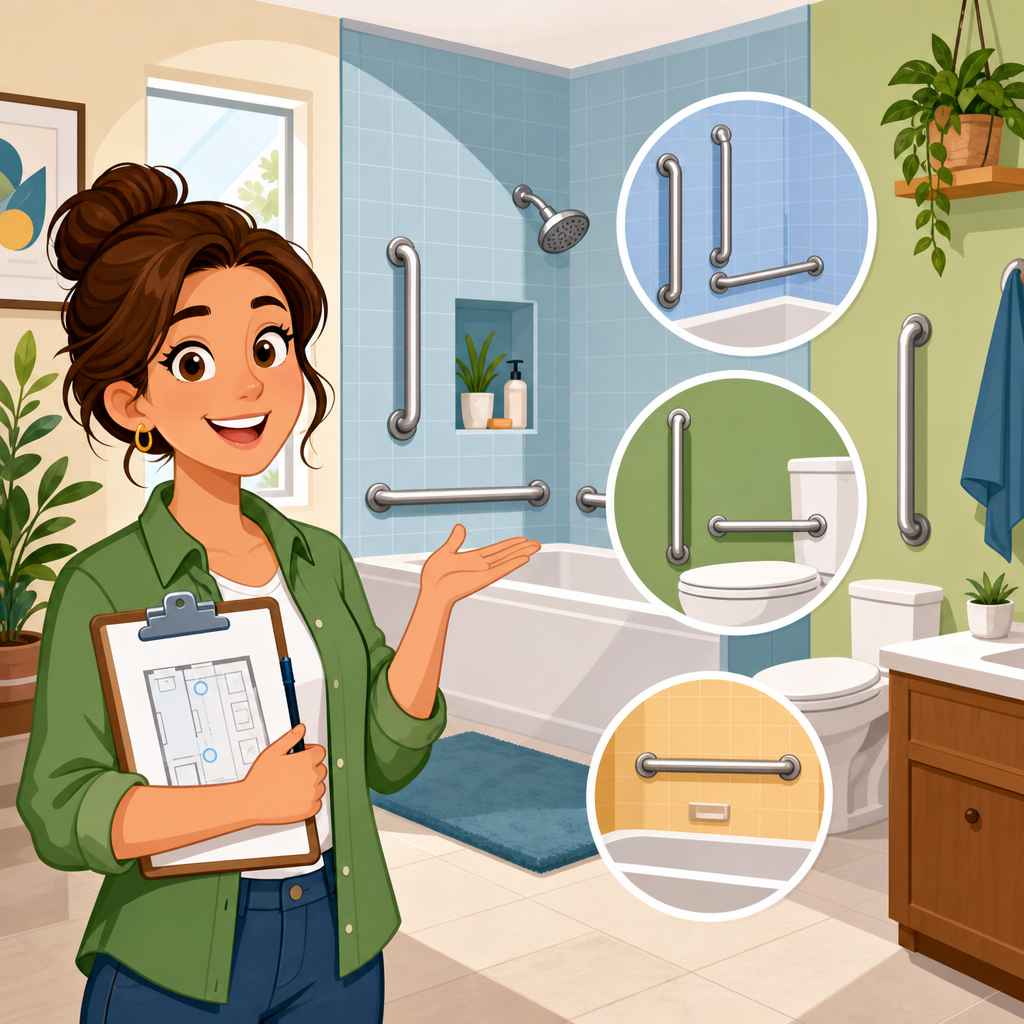
Grab bar placement rules shape whether a bathroom, shower room, or toilet compartment is merely updated or truly usable. In accessibility work, I have seen attractive remodels fail inspection because the bars were mounted a few inches off, blocked by dispensers, or chosen without regard to wall strength, transfer space, or user reach. The result is not a minor punch-list item. A misplaced grab bar can undermine safety, trigger expensive rework, and leave a project out of compliance with the plumbing element requirements that govern accessible toilet facilities, bathing rooms, lavatories, sinks, drinking fountains, and related fixtures.
At the center of this topic is Chapter 6: Plumbing Elements and Facilities, the portion of accessibility standards that covers the built-in elements people use for toileting, washing, drinking, and bathing. It works together with scoping provisions that determine when and how many accessible elements are required, while Chapter 6 itself addresses the technical rules: clear floor space, knee and toe clearance, faucet operation, mirror height, shower controls, water closet location, and, critically, grab bar placement. A grab bar is a rigid, securely mounted bar designed to support balance, assist transfers, and reduce fall risk. Placement rules define where the bar must be located, how long it must be, how high it sits above the finished floor, and how much space must remain between the bar and adjacent surfaces.
This matters because plumbing rooms are where slips, awkward transfers, and reach difficulties happen most often. The Centers for Disease Control and Prevention has long identified bathrooms as high-risk environments for falls, especially among older adults and people with mobility limitations. In public projects, hotels, multifamily common areas, healthcare facilities, schools, and workplaces, poor placement also creates legal exposure. Inspectors do not evaluate grab bars in isolation. They look at the whole use condition: can a person approach the fixture, position a wheelchair, operate controls with one hand, and use the bar without obstruction? For remodel teams, this article serves as the hub for Chapter 6, showing where grab bar rules fit within the larger plumbing accessibility framework and what every renovation should verify before walls close and finishes go in.
How Chapter 6 Organizes Accessible Plumbing Requirements
Chapter 6 is broad, but it becomes manageable when you group it by user task. Water closets and toilet compartments address positioning and transfers. Lavatories and sinks focus on approach, knee clearance, insulated pipes, and operable parts. Bathing facilities cover showers, bathtubs, seats, controls, and spray units. Drinking fountains and water coolers add standing and wheelchair access considerations. Accessories such as mirrors, soap dispensers, hand dryers, and paper towel units are often regulated in related sections because a compliant fixture can still become unusable if the surrounding reach range is blocked.
In practice, grab bars are most tightly associated with water closets, bathtubs, transfer showers, and roll-in showers. Yet the decision to place them correctly depends on earlier planning choices. I routinely review remodel drawings where the toilet centerline, partition depth, or valve wall layout forces the grab bar into a technically impossible position. That is why Chapter 6 should be checked as a coordinated system, not as isolated dimensions copied from a detail sheet. The dimensions for one element often depend on another. For example, the side-wall grab bar at a water closet only works if the toilet is correctly located from the side wall and if the required clearances around the fixture remain open.
The key takeaway is simple: Chapter 6 combines safety, reach, and maneuvering requirements into one technical package. Grab bars are among the most visible elements, but they are only compliant when the underlying fixture geometry and surrounding clear spaces are also correct.
Water Closets and Toilet Compartments: The Core Grab Bar Rules
The most commonly checked grab bar installation in Chapter 6 is at the accessible water closet. In standard wheelchair-accessible toilet compartments and single-user toilet rooms, two bars are typically required: one on the side wall closest to the water closet and one on the rear wall. The side-wall bar must be at least 42 inches long and mounted 12 inches maximum from the rear wall, extending at least 54 inches minimum from the rear wall. The rear-wall bar must be at least 36 inches long and extend from the toilet centerline 12 inches minimum on one side and 24 inches minimum on the other. In both locations, the top of the gripping surface is generally installed 33 to 36 inches above the finished floor.
Those numbers matter because they support the two main transfer patterns: lateral stabilization and controlled descent or rise. On site, I often explain that the side-wall bar is the user’s primary leverage point, while the rear bar helps with balance and repositioning. If the side bar starts too far forward, the transfer becomes weaker. If dispensers, coat hooks, or baby-changing stations intrude into the gripping zone, a compliant dimension on paper can still fail in use.
There are also nuanced conditions. Alternate toilet compartments, ambulatory accessible compartments, and certain residential adaptations may use different configurations. In ambulatory compartments, grab bars are required on both side walls because users typically walk in rather than transfer from a wheelchair and need bilateral support. Remodelers should never assume one toilet room detail fits every room type. Occupancy type, scoping, and room size determine which compartment standard applies.
Another point often missed is structural backing. Accessibility standards tell you where the bar must be, but durable installation depends on proper reinforcement behind finished walls. Hollow-wall anchors that are acceptable for light accessories are not acceptable for a life-safety support device. Most project manuals align with manufacturer instructions, local building codes, and best practice by requiring wood or steel backing placed during framing. If backing is off by even a few inches, crews may improvise in the field and create a noncompliant installation.
Showers and Tubs: Placement Changes by Bathing Type
Bathing rooms create more variation than toilet rooms, so this is where many remodels go wrong. Transfer showers, standard roll-in showers, alternate roll-in showers, and bathtubs each have distinct grab bar patterns. In transfer showers, bars are typically required on the control wall and back wall, with optional placement on the entry wall depending on configuration. The dimensions are tied to the shower compartment size, seat position, and control location. A transfer shower is designed for someone to move from a wheelchair onto a seat, so bars must support that pivot and stabilize the user while operating controls.
Roll-in showers work differently. Because a wheelchair can enter the compartment, the required bars are arranged to support movement within a larger clear area. Standard roll-in showers and alternate roll-in showers do not use identical layouts. I have seen contractors install bars based on a generic “ADA shower” sketch, only to learn during inspection that the built shower type required a different wall coverage pattern. Controls and hand shower units also have to be within reach ranges from the seat or from the shower opening, depending on the design.
Bathtubs have their own rules. Where required, grab bars must be mounted on the back wall and control end wall, with additional detail depending on whether a permanent seat is provided. The bars are intended to support entering, exiting, and repositioning in the tub. In hospitality remodels, this is a recurring failure point because decorative tub surrounds and tile patterns are prioritized before verifying backing and bar lengths.
| Fixture type | Typical required grab bar locations | Why placement matters |
|---|---|---|
| Accessible water closet | Side wall and rear wall | Supports transfers, balance, and standing assistance |
| Ambulatory compartment | Both side walls | Provides support for users walking with limited balance |
| Transfer shower | Control wall and back wall | Helps seated transfer and access to controls |
| Roll-in shower | Varies by standard or alternate type | Supports movement inside larger shower footprint |
| Accessible bathtub | Back wall and control end wall | Assists entry, exit, and repositioning at the seat area |
The practical lesson is to identify the bathing fixture type before detailing anything. Once the type is fixed, the seat, controls, shower spray unit, thresholds, and grab bars can be coordinated correctly. Changing the fixture type late in construction nearly always causes a chain reaction of accessibility conflicts.
Lavatories, Sinks, Mirrors, and Drinking Fountains: The Supporting Fixtures Around the Bars
Chapter 6 is not only about locations where grab bars are installed. It also covers the surrounding plumbing elements that determine whether the room functions as an accessible whole. Lavatories and sinks must provide adequate clear floor space and knee and toe clearance for forward approach, with pipe protection or insulation to prevent contact burns or abrasions. Faucets must be operable with one hand and should not require tight grasping, pinching, or twisting of the wrist. Sensor faucets can work well, but they must activate reliably within the user’s reach and time cycle.
Mirrors are another common miss. The reflecting surface must be mounted low enough for seated users to see themselves, and full-length alternatives must truly serve the same function. In renovations, teams sometimes keep an existing decorative mirror above a new accessible lavatory and assume the sink upgrade solves the issue. It does not. The mirror height has to be checked independently.
Drinking fountains require either dual-height units or a combination strategy that serves both wheelchair users and standing users, depending on the applicable standard. Spout location, water flow, and clear floor space are all relevant. If a fountain projects into a circulation path without cane-detectable protection, it can create a hazard even when the bowl height is otherwise correct.
These fixtures matter to grab bar planning because accessibility is evaluated room by room and route by route. A compliant toilet bar does not cure an inaccessible lavatory approach, and a compliant shower bar does not excuse unreachable towel dispensers. Remodel teams should treat Chapter 6 as an integrated checklist, especially in restrooms where every inch is contested.
Critical Dimensions, Mounting Details, and Field Verification
The fastest way to avoid rework is to check dimensions in the field, not just on submittals. For grab bars, the recurring technical points are height above finished floor, bar length, distance from adjacent walls, diameter or gripping surface profile, and required clearance between the bar and wall. Finish thickness matters. Tile, wall panels, and waterproofing build-up can shift final dimensions enough to create a failure if framing was laid out too tightly.
Bar ends also matter. They must return smoothly to the wall, floor, or post, or otherwise avoid sharp or hazardous protrusions. In high-use commercial settings, peened or welded concealed-flange bars often outperform exposed-flange models because they resist loosening and are easier to clean, but the correct choice depends on maintenance capacity and substrate conditions. Stainless steel remains the industry standard for durability, especially in wet environments, while powder-coated bars can improve contrast for low-vision users if the coating is robust and cleanable.
Field verification should include more than tape measurements. Siting matters. Can a person actually grip the full length of the bar, or is the toilet paper dispenser mounted directly in the way? Is the side-wall bar centered where the user reaches during transfer? Are shower controls within range from the seat and not behind the user in a dangerous position? On healthcare and senior living projects, I walk the room with maintenance staff and end users when possible because operational insight catches issues drawings miss.
Documentation helps too. Keep dimensioned elevations, manufacturer cut sheets, and wall backing shop drawings together. If an inspector questions placement, clear records shorten the conversation and reduce costly tear-out.
Common Remodel Mistakes and How to Prevent Them
The most frequent mistake is treating grab bars as accessories added after finishes are complete. By then, backing may be missing, tile joints may force awkward flange placement, and other fixtures may already occupy the required space. The second mistake is relying on a single generic detail across all toilet and bathing room types. Water closets, tubs, and showers have different technical requirements, and ambulatory compartments are not interchangeable with wheelchair-accessible rooms.
Another repeated error is ignoring related accessories. Toilet paper dispensers, soap units, shelves, and robe hooks are often installed in the bar’s usable gripping area. The room may look complete, but the bar no longer performs as intended. I also see measurement errors caused by taking dimensions from framing rather than finished surfaces. Accessibility dimensions are generally based on the finished condition, so a half-inch of tile and mortar can become the difference between passing and failing.
Prevention is straightforward: identify the exact fixture type, confirm scoping, coordinate backing before rough-in, dimension from finished surfaces, and perform a pre-finish accessibility walk. On complex projects, build one mockup restroom or bathing room and verify every Chapter 6 item before repeating the layout. That small step saves substantial money and protects the schedule.
Grab bar placement rules are not isolated hardware notes; they are one part of the larger Chapter 6 framework governing plumbing elements and facilities. When remodel teams understand that framework, the requirements become logical. Water closets need bars that align with transfer geometry. Showers and tubs need patterns that match the bathing fixture type, seat, and control location. Lavatories, mirrors, sinks, and drinking fountains must support approachable, operable use throughout the room. Compliance comes from coordination, not guesswork.
The biggest benefit of getting this right is practical usability. Properly placed grab bars reduce falls, support independent use, and make a remodeled space safer for a wider range of people, including wheelchair users, ambulatory users, older adults, and anyone recovering from injury. They also reduce inspection failures, change orders, and liability exposure. In my experience, the projects that perform best are the ones that verify dimensions early, install solid backing, and review each room as a complete user scenario rather than a set of disconnected products.
If this page is your hub for Chapter 6, use it as the starting checklist for every restroom, shower room, and bathing area in your remodel. Confirm the fixture type, map the clearances, place the grab bars by rule, and then validate every supporting plumbing element around them. That disciplined review is what turns accessibility standards into spaces people can actually use.
Frequently Asked Questions
What are the most important grab bar placement rules to verify during a remodel?
The most important rule is that grab bars must be located by the governing accessibility standard for the specific fixture and room layout, not by guesswork or visual preference. In practical terms, that means checking the required wall, the required length, the mounting height, and the relationship of the bar to the toilet, shower seat, or transfer space before tile, blocking, and finish accessories are installed. For example, toilet compartments commonly require a side-wall grab bar and a rear-wall grab bar in specific positions, while showers and tubs have their own distinct placement rules depending on whether the unit is transfer type, roll-in type, or a standard bathtub. A few inches in the wrong direction can be enough to fail inspection.
Height is another critical checkpoint. Grab bars are typically mounted within a prescribed range measured to the top of the gripping surface, and that measurement must be taken consistently from the finished floor, not from rough framing or an unfinished substrate. Just as important, clear space around the bar has to be maintained so a user can actually grasp it. If soap dispensers, toilet paper holders, ledges, trim, glass enclosures, or other accessories crowd the grab bar, the installation may not function as intended even if the bar is technically present. Remodels also need to confirm that the wall can support the required load and that the bar diameter, wall clearance, and gripping surface meet applicable accessibility criteria. In short, the rules are not only about where the bar goes, but also whether it can be reached, grasped, and trusted under real-world use.
Why do grab bars so often fail inspection even in otherwise high-end bathroom remodels?
They fail because grab bar compliance is detail-driven, and remodel teams often treat the bars as a late-stage accessory rather than a structural and code-sensitive element. Designers may focus on symmetry, finish selection, or visual alignment with tile joints, while installers may mount bars where blocking happens to be available instead of where the standard requires them. On elegant projects, it is surprisingly common to see bars shifted to avoid stone veining, recessed niches, plumbing walls, or frameless shower hardware. Those changes may look minor on the surface, but accessibility inspections are not based on appearance. They are based on exact dimensions and usability.
Another common reason is poor coordination among trades. If the framer, plumber, tile installer, and accessory installer are not working from the same layout, the final result can be compromised by conflicts that were avoidable. A dispenser may intrude into the required gripping area, a toilet may end up slightly off centerline, a fold-down seat may change the usable transfer space, or a decorative wall panel may prevent proper anchoring. In renovation work, existing conditions add another layer of risk because walls may not be plumb, dimensions may be tighter than expected, and concealed conditions may limit anchor placement. The lesson is simple: grab bars should be planned early, dimensioned carefully, and field-verified after finishes but before sign-off. That is how attractive remodels avoid becoming expensive punch-list corrections.
How do grab bar rules differ between toilets, showers, and bathtubs?
The rules differ because each setting involves different user movements, balance needs, and transfer patterns. At toilets, grab bars are intended to support sitting, standing, and lateral stability, so placement usually centers on the side wall and rear wall around the water closet. Those bars must be located in relation to the toilet’s centerline and surrounding clearances, and the exact requirements can vary depending on whether the room is a single-user restroom or a larger accessible compartment. The goal is to give the user a dependable support surface where body weight naturally shifts during transfer and repositioning.
In showers, the requirements depend heavily on shower type. A transfer shower has one set of bar locations intended to assist a user moving from a wheelchair onto a seat, while a roll-in shower has another arrangement that supports entry, turning, and bathing access from within the shower footprint. Bathtubs are different again, because the bars must support stepping in and out, lowering onto a seat if provided, and maintaining stability near the control end and back wall. Because of these differences, there is no universal “good spot” for a grab bar. The bar that works in a tub may be wrong in a roll-in shower, and the bar that seems logical beside a toilet may still be noncompliant if it does not match the required dimensions. That is why fixture-specific layout review is essential before any rough-in or finish work is considered complete.
What should a remodeler check beyond the measurements to make sure grab bars are actually safe and usable?
Measurements are only the starting point. A grab bar can be dimensionally correct and still perform poorly if the wall assembly is weak, the bar is hard to grasp, or the surrounding space is obstructed. Every remodel should confirm that the mounting substrate and fasteners meet the required load capacity and manufacturer instructions. In many failures, the bar itself is fine but the anchorage is not. Tile over inadequate backing, decorative panels without reinforcement, or anchors selected for convenience instead of engineering can all create a serious safety problem. A bar is only useful if it remains rigid under force.
Usability also depends on reach, clearance, and finish coordination. The user needs enough space between the bar and the wall to grip it securely, and enough open area around the ends and along the length of the bar to approach it naturally. Sharp trim profiles, oversized escutcheons, shelves, and poorly placed accessories can interfere with the hand path. Surface finish matters too. A bar should offer a secure, nonhazardous gripping surface without becoming slippery or abrasive in wet conditions. Finally, remodelers should verify that the installation supports the intended user pathway: getting to the toilet, transferring into the shower, reaching the controls, and exiting safely. When you review grab bars through that full user sequence rather than as isolated hardware, hidden problems become much easier to catch before inspection.
When in the remodeling process should grab bar placement be planned and verified?
Grab bar placement should be planned at the very beginning of design and then verified at multiple stages of construction. The first review should happen when the fixture layout is being established, because toilet location, shower type, seat placement, door swing, partition depth, and accessory planning all influence where compliant bars can go. If grab bars are left until the end, the project team may discover that the required wall length is unavailable, the glass enclosure conflicts with the gripping area, or there is no proper backing where the standard requires the bar to be mounted. Early planning prevents those expensive chain reactions.
Verification should continue through framing, rough-in, finish installation, and final accessory placement. During framing, confirm blocking and wall reinforcement at the precise required locations, not just “somewhere nearby.” After plumbing and fixture rough-in, check that centerlines and clearances still match the approved layout. After tile or wall finishes are complete, field-measure again from the finished floor and finished wall surfaces, because those are the dimensions inspectors and users rely on. Before final completion, confirm that dispensers, controls, seats, partitions, and doors do not interfere with gripping space or transfer access. The best practice is to treat grab bars like any other critical accessibility element: design them early, coordinate them across trades, and verify them with the same rigor you would apply to plumbing clearances or egress requirements.