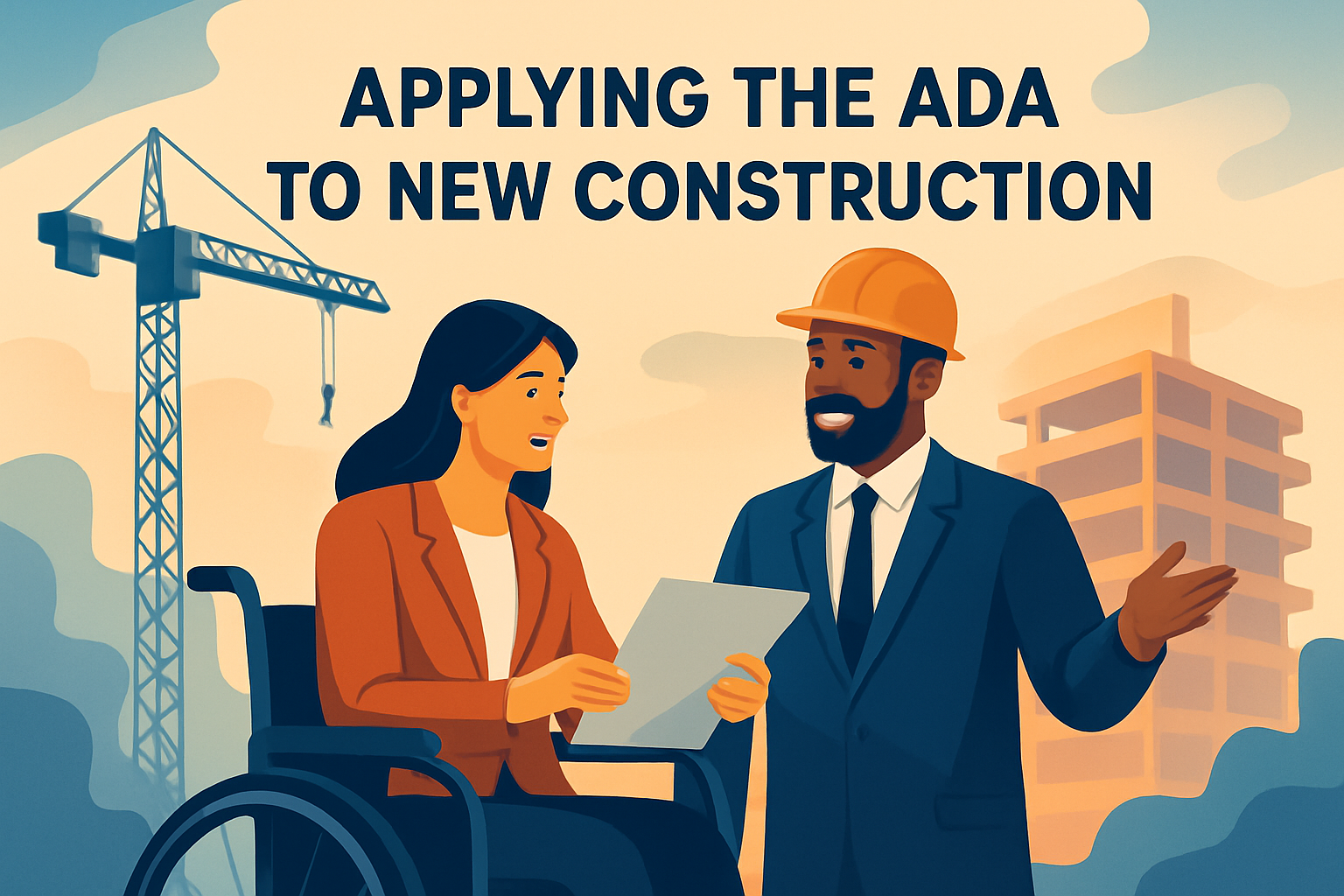
Introduction to ADA and Its Importance
The Americans with Disabilities Act (ADA) is a landmark civil rights law that prohibits discrimination against individuals with disabilities in all areas of public life, including jobs, schools, transportation, and all public and private places open to the general public. This comprehensive legislation ensures that people with disabilities have the same rights and opportunities as everyone else. For those involved in construction and design, applying the ADA to new construction projects is not just a matter of legal compliance but a vital step in promoting accessibility and inclusivity in the built environment.
Key terms related to the ADA include “accessibility,” “reasonable accommodation,” and “universal design.” Accessibility refers to the design of spaces that can be used by all individuals, regardless of their abilities or disabilities. Reasonable accommodation means adjustments or modifications provided to enable people with disabilities to have equal opportunities. Universal design entails creating environments that are inherently accessible to all people, without the need for adaptation or specialized design.
The application of the ADA to new construction is crucial for several reasons. Firstly, it ensures that buildings and spaces are usable by a larger segment of the population, thereby increasing their functionality and desirability. Secondly, failing to comply with ADA requirements can lead to legal challenges and penalties, affecting both financial standing and reputation. Finally, embracing ADA principles reflects a commitment to social responsibility and respect for diversity. These reasons underscore why understanding and implementing the ADA in new construction is both an ethical obligation and a strategic advantage.
Understanding ADA Guidelines for New Construction
When a new construction project is initiated, adherence to ADA guidelines is a critical consideration during the design and planning stages. ADA guidelines specify the physical characteristics and dimensions of buildings, facilities, and public spaces that must be met to ensure accessibility. Key areas covered by these guidelines include entrances, paths of travel, restrooms, and communication features. Meeting ADA standards in these areas ensures that facilities are usable by individuals with a wide range of disabilities, including those using mobility aids, those who are visually or hearing impaired, and individuals with cognitive disabilities.
For example, consider a new shopping mall under construction. ADA compliance in this scenario means ensuring all entrances are accessible, paths within the mall are wide enough for wheelchair access, restrooms are equipped with appropriate grab bars and space for mobility device maneuverability, and directories or information kiosks are available in Braille or audio formats. By embedding these features into the design plans from the outset, construction companies can avoid costly modifications after the fact and create a more inclusive environment from day one.
Inclusive Design Features in New Buildings
Inclusive design aims to serve the needs of all users, including those with disabilities. Features of inclusive design often go beyond minimum ADA requirements and might include simple, yet thoughtful enhancements to usability. For instance, in residential buildings, this might consist of wider hallways and doorways to accommodate wheelchairs, installing lower countertops for ease of access, and using contrasting colors or textures on fixtures to assist those with visual impairments.
An office building serving a tech company is a good example of a project that successfully applied inclusive design principles alongside ADA compliance. Besides meeting ADA restroom and entrance standards, the building incorporated adjustable-height desks, seamless entry points with automatic doors, and sound dampening materials to enhance focus and accessibility for both hearing-impaired and neurodiverse employees. Such an approach not only fulfills legal responsibilities but also enhances employee productivity and satisfaction by creating a more comfortable and adaptable workspace.
Challenges and Solutions in ADA Implementation
Despite the clear-cut benefits, implementing ADA guidelines in new construction comes with its challenges. These can include budget constraints, design limitations, and the complexity of retrofitting structures originally not designed with accessibility in mind. However, forward-thinking planning and innovative design strategies can mitigate these issues effectively.
For instance, a municipal government constructing a new public library might face budgetary limitations that make comprehensive ADA compliance seem daunting. However, by prioritizing essential ADA features and utilizing cost-effective materials and designs that do not compromise accessibility, the library can be both compliant and fiscally responsible. Solutions such as multi-function ramped access that also serves as seating or gathering areas, and the integration of public computers with assistive technology, ensure the facility serves the widest range of users possible without excessive expenditure.
The Role of Technology in Enhancing ADA Compliance
In recent years, technology has played a pivotal role in enhancing ADA compliance in new constructions. With advancements in building technologies and materials, developers can incorporate innovative solutions that both comply with ADA guidelines and enhance the overall user experience. Automated doors, voice-activated elevators, and dynamic wayfinding apps are some examples where technology can provide both compliance and convenience.
A newly built sports complex serves as an ideal example of technology-enhanced ADA compliance. In addition to meeting all required physical accessibility standards, the facility includes a mobile app that provides real-time navigation assistance, helps locate accessible seating, and offers alternative formats for event information. By leveraging technology, the sports complex not only ensures ADA compliance but also elevates the experience for all visitors, highlighting how technology-driven solutions can enhance accessibility.
| Technology | ADA Benefit | Example |
|---|---|---|
| Automated Doors | Facilitates easy entry for physically impaired individuals | Shopping malls with sensor-activated entrances |
| Voice-Activated Elevators | Assists visually impaired with independently accessing floors | Office buildings with multi-story access |
| Wayfinding Apps | Provides navigation assistance inside large venues | Sports arenas and convention centers |
Legal Compliance and Risk Management
A major impetus for correctly applying the ADA to new construction is the avoidance of legal pitfalls. Failure to adhere to these requirements can result in significant legal challenges, penalties, and damages that can tarnish the reputation of a business or public entity. Ensuring that a construction project meets ADA criteria from the outset can serve as a strong foundation for risk management strategies.
Consider a scenario where a hotel chain is expanding in multiple locations. If any of these new properties fail to address ADA compliance properly, the company could face lawsuits that lead to monetary losses and damage to its brand image. To manage this risk, engaging ADA consultants during the design and build phases can ensure that all relevant standards are met, and ongoing audits can confirm continued compliance. This proactive approach not only prevents legal issues but also demonstrates a commitment to diversity and inclusion.
Summary and Next Steps
In conclusion, applying the ADA to new construction is a multifaceted endeavor that combines legal, practical, and ethical considerations. Key takeaways include understanding the critical elements of ADA compliance, recognizing the benefits of inclusive design, addressing challenges creatively, and leveraging technology to enhance access. By focusing on these areas, construction managers, architects, and developers can create environments that are accessible, inclusive, and welcoming to all.
The main benefit to the reader is the understanding of how critical ADA compliance is in modern construction projects, not just from a legal standpoint but as a means of promoting broader societal equity and inclusion. To move forward, those involved in construction should prioritize ADA considerations in pre-construction meetings, remain updated on technological advances that support accessibility, and seek expert advice where necessary. The call-to-action for the industry is clear: embrace accessibility as an integral part of the development process and contribute to a world where everyone, regardless of ability, can participate fully and equally.
In practice, this means conducting thorough ADA training for your design and construction teams, setting aside specific budget allocations for accessibility features, and embedding ADA compliance checks into your project’s quality assurance processes. By implementing these steps, you foster goodwill, community respect, and long-term success in an increasingly accessibility-aware world.
Frequently Asked Questions
1. What are the main ADA requirements for new construction projects?
When planning new construction, it’s crucial to incorporate ADA requirements from the very beginning. The ADA primarily requires that new buildings and facilities be designed and constructed to be readily accessible to and usable by individuals with disabilities. The primary goal is to ensure equal access without creating unnecessary barriers. This involves considering a variety of detailed specifications covered under the 2010 Standards for Accessible Design. Areas that typically require special attention include, but are not limited to, entrances, accessible routes (pathways), parking spaces, elevators, restrooms, and signage.
Specifically, entrances should be wheelchair accessible, often involving ramp installations, automatic doors, or other assistive elements. Accessible routes need to connect all parts of the building, including parking spaces, restrooms, and various facilities like cafeterias or auditoriums. Elevators are essential in multi-story buildings, with requirements for specific controls and signage. Restrooms, typically, need to accommodate wheelchair users with appropriate stall dimensions, sinks, and grab bars. Even signage needs to adhere to ADA guidelines, using braille and high-contrast colors to aid those with visual impairments.
2. How can architects and builders ensure compliance with ADA standards during the design phase of new projects?
The design phase is a critical time to incorporate ADA compliance, as it saves time and resources by avoiding the need for modifications later on. Architects and builders should begin by familiarizing themselves with the ADA Standards for Accessible Design, a document that outlines detailed compliance criteria. They must carefully apply these standards in their designs, from the conceptual stages through final planning.
One effective approach is to engage an ADA specialist or consultant from the outset. These professionals can provide insights and advice on designing spaces that meet ADA requirements, helping to avoid costly redesigns. Regular training for the team involved in the design and construction process is also crucial, ensuring everyone is up-to-date with the latest standards and best practices. Furthermore, utilizing software tools designed to analyze and ensure compliance of design blueprints can streamline the process, offering a virtual check of how well proposed spaces meet ADA guidelines before physical construction begins.
3. What types of accommodations are typically required for different areas in new buildings?
Accommodations vary depending on the area of the building, but they generally aim to ensure accessibility and usability for individuals with a range of disabilities. In entrances and exits, automatic doors and ramps are standard to assist those using wheelchairs or mobility aids. Accessible routes ensure that all areas of the building can be reached by those with reduced mobility, often requiring wide hallways, paths with tactile indicators for the visually impaired, and avoidance of steep grades.
Parking facilities require a specific number of accessible spaces, designated close to the building entrance, with sufficient room for loading and unloading assistive devices. Interior spaces such as restrooms require particular attention to stall dimensions, the height of sinks and fixtures, and the installation of grab bars. In public seating areas, there needs to be a range of accessible seating options, arranged to ensure visibility and usability without separating patrons with disabilities from others. For meeting rooms and offices, adjustable furniture and desks can be crucial to accommodate a diverse range of users and workers. Lastly, signage is a critical detail, where use of braille and high-contrast color schemes help those with visual impairments navigate independently.
4. Why is it important to integrate ADA compliance in the initial stages of construction planning?
Integrating ADA compliance at the beginning of construction planning is not only a legal requirement but a wise business decision. It helps avoid potential legal challenges and associated penalties that can arise from non-compliance. More importantly, it showcases an organization’s commitment to inclusivity and equality, improving its public image and potentially expanding its customer base by being accessible to everyone.
From a practical standpoint, incorporating ADA specifications early helps prevent costly adjustments or retrofits to structures post-construction. By envisioning the entire construction project through the lens of accessibility from the outset, designers and builders can identify and solve potential barriers and design flaws before they become entrenched, complex, or expensive problems. This foresight also facilitates a better integration of ADA requirements into the architectural aesthetics and functional organization of the space. Ultimately, early integration of ADA compliance ensures a smoother construction process, budget management, and an end product that fully complies with all relevant codes and standards.
5. What resources are available for professionals to learn more about ADA requirements and best practices in new construction?
There is a wealth of resources available for professionals seeking to enhance their understanding and implementation of ADA compliance in new construction. The main resource is the ADA Standards for Accessible Design, which provides comprehensive specifications and guidelines. Besides the text of the ADA itself, professionals can also explore the guidelines published by the United States Access Board, a federal agency committed to advancing accessibility and providing technical assistance.
Industry associations and professional organizations, such as the American Institute of Architects (AIA) and the International Code Council (ICC), often provide training sessions, webinars, and certification programs centered on ADA compliance. Additionally, many organizations offer online courses and workshops focused on universal design principles that naturally incorporate ADA requirements. Engaging with experienced ADA consultants or specialists can also provide practical, project-specific insights. Forums, discussion groups, and local government agencies are other handy sources of support and information, offering networking opportunities with others in the field working toward the common goal of accessible, inclusive environments.