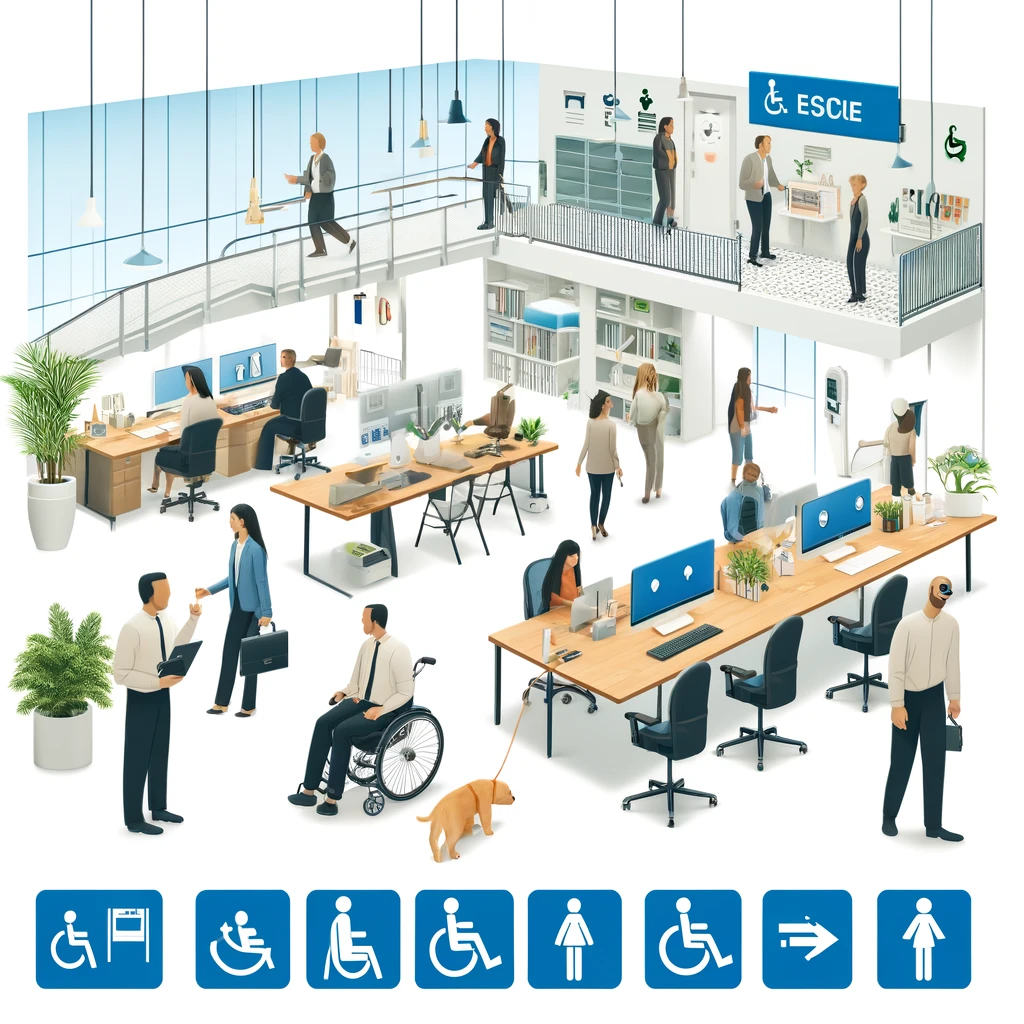
Barrier removal sequencing determines the order in which accessibility barriers, safety hazards, or compliance gaps should be fixed so an organization reduces the most risk with the least delay. In compliance and implementation work, sequencing is not a cosmetic planning exercise; it is the mechanism that connects limited budgets, legal duties, operational constraints, and real user harm. Teams often know they have dozens or hundreds of issues, yet they struggle with the central question: which fixes deliver the most risk reduction first?
In practice, the answer depends on how risk is defined and measured. Risk usually combines three variables: likelihood that a barrier will cause failure, severity of impact when it does, and exposure, meaning how often people encounter it. In accessibility programs, a broken keyboard path on a checkout page may carry more risk than a mislabeled decorative image because it blocks a core transaction for many users. In broader compliance programs, a missing evacuation route sign in a high-traffic facility can outrank a low-use documentation defect because the consequence of failure is far more serious.
I have seen organizations lose months by chasing the easiest fixes instead of the most material ones. They closed long lists of minor defects while unresolved high-friction barriers continued to generate complaints, failed audits, support costs, and legal exposure. Effective barrier removal sequencing reverses that pattern. It starts with a defensible methodology, aligns teams around critical user journeys, and ties remediation order to measurable reduction in legal, operational, financial, and human risk.
This article serves as a hub for advanced compliance strategies and case studies within compliance and implementation. It explains how to rank fixes, what evidence to use, when quick wins help, where they distract, and how mature teams govern sequencing across design, engineering, operations, and audit functions. It also sets up the deeper topics that supporting articles under this sub-pillar should explore, including remediation roadmaps, risk scoring models, exception handling, documentation controls, procurement leverage, and post-fix validation. If your program needs a clear basis for deciding what to fix first, this is the framework to use.
Define Risk Reduction Before You Prioritize
The first step in barrier removal sequencing is defining what counts as meaningful risk reduction in your environment. Many teams use a generic severity label such as low, medium, or high, but that is rarely enough for implementation planning. A stronger model scores each issue against at least five dimensions: user impact, transaction criticality, legal or regulatory exposure, frequency of occurrence, and remediation complexity. This produces a more accurate picture than severity alone because not every severe issue is widely encountered, and not every common issue creates material harm.
For example, in a digital accessibility program aligned to WCAG 2.2 and ADA risk management, a form error that prevents account creation may be encountered by thousands of users each week and directly block revenue. A carousel control with imperfect focus styling may still matter, but the first issue is the higher-priority barrier because it combines high exposure and high consequence. In building and workplace compliance, the same logic applies: a narrow door on a primary entrance route generally outranks a noncompliant feature in a rarely used storage area.
The practical lesson is simple: define risk in business terms. Ask which barriers stop access, cause safety incidents, trigger discrimination claims, interrupt regulated processes, or undermine evidence of due diligence. Once leadership agrees on those factors, prioritization becomes less political and more repeatable. That shared definition is the foundation for every advanced compliance strategy discussed in this hub.
Sequence Fixes by Journey, Not by Department
One of the most effective advanced compliance strategies is to prioritize barriers along end-to-end user journeys instead of assigning rank based only on departmental ownership. Departments naturally see their own backlog first. Engineering may focus on code defects, facilities on physical infrastructure, legal on policy gaps, and procurement on vendor terms. But users do not experience compliance in silos. They experience it as a journey: enter the building, reach the service desk, complete the form, receive the product, request support, and exit safely.
When I have mapped barriers to journeys, hidden priority patterns emerge quickly. A healthcare provider may discover that the biggest risk is not a single severe defect but a chain of smaller barriers across appointment scheduling, intake forms, waiting room announcements, and discharge instructions. Each issue alone appears manageable. Together, they create a predictable exclusion point for patients with disabilities or limited English proficiency. Sequencing should therefore target the journey segments with the highest abandonment, complaint volume, or safety consequence.
This journey-based approach also improves internal linking between compliance workstreams. The remediation roadmap for digital forms should connect to related guidance on document accessibility, third-party platform governance, and customer support accommodation. In a sub-pillar hub, those related articles deepen each component, but the central principle stays the same: fix the sequence of barriers that blocks the mission-critical journey first.
Use a Weighted Model for Advanced Compliance Decisions
Advanced compliance programs move beyond ad hoc triage and use a weighted prioritization model. A typical scoring formula might assign 30 percent to severity of harm, 25 percent to exposure volume, 20 percent to legal trigger probability, 15 percent to business criticality, and 10 percent to effort or dependency. The exact weights should reflect your industry and risk appetite. A public-sector agency may weight legal obligation and equitable access more heavily. An ecommerce company may emphasize revenue-critical paths without ignoring legal baseline requirements.
What matters is consistency and evidence. Scores should come from observed data where possible: analytics, audit findings, complaint logs, session recordings, help-desk contacts, incident reports, conversion drop-off, or facility usage patterns. If a barrier appears on a page visited by 60 percent of customers, that fact should influence sequencing. If a noncompliant control affects only a legacy page with minimal traffic and a planned decommission date, the remediation order may reasonably be lower, provided the interim risk is documented and accepted.
| Fix category | Typical risk profile | Why it often goes first | Example |
|---|---|---|---|
| Blocked core task | High severity, high exposure | Prevents essential access or transaction completion | Keyboard users cannot submit checkout form |
| Safety or emergency barrier | Very high severity, variable exposure | Potential for injury, delayed evacuation, or denied assistance | Accessible exit route signage missing in main corridor |
| Systemic template defect | Moderate to high severity, broad exposure | One fix removes repeated barriers across many assets | Improper heading structure in shared component library |
| Evidence and control gap | Moderate direct impact, high audit risk | Weakens proof of due diligence and repeatability | No documented testing protocol for releases |
| Low-use isolated issue | Low exposure, limited impact | Can follow after higher-value remediation | Noncritical PDF archived on rarely visited page |
A weighted model also helps defend decisions to auditors, regulators, executives, and plaintiffs’ counsel. If you can show that your order of operations was based on documented criteria and validated impacts, your remediation plan looks disciplined rather than reactive. That difference matters in settlement discussions, board reporting, and ongoing program governance.
Prioritize Systemic Fixes Over Repetitive Ticket Closures
The highest-value barrier removal sequencing often comes from fixing systems, templates, and procurement inputs instead of closing one-off defects individually. This is where advanced compliance strategies produce compounding returns. If a design system component generates inaccessible modal dialogs across 140 pages, remediating the component can eliminate a large class of failures at once. If vendor contracts omit accessibility conformance requirements, every new tool introduced into the environment may recreate the same risks. Addressing the control point reduces future defect creation as well as current exposure.
I have repeatedly found that organizations underestimate the risk reduction from upstream fixes because the defects themselves are logged downstream. Teams see hundreds of tickets and assume each must be handled separately. A better question is whether those tickets share a root cause: component misuse, missing acceptance criteria, absent training, weak content governance, or flawed procurement language. Root-cause remediation is often slower to start but faster to scale. It also creates cleaner audit evidence because the organization can show prevention, not just patching.
This hub should connect readers to deeper case studies on design system governance, supplier compliance clauses, content operations, and automated testing in CI/CD. Those topics are not side issues. They determine whether sequencing reduces risk temporarily or permanently.
Balance Quick Wins With Defensible Long-Term Remediation
Quick wins have value, but they should never become the strategy. Leaders like visible progress, and small fixes can build momentum. Updating alt text, correcting heading levels, improving color contrast, or replacing inaccessible PDFs with HTML can reduce immediate friction. However, a compliance program that celebrates only easy tickets may leave high-risk barriers untouched because they involve architecture changes, contract negotiations, staffing, or capital expenditure.
The right balance is to pair quick wins with a clearly documented tranche of high-impact remediation. For instance, a university can rapidly improve common content errors across public pages while simultaneously funding replacement of an inaccessible course registration platform. The first track shows action; the second track addresses the material exposure. Without both, the program either stalls politically or remains performative.
Defensible sequencing therefore includes timeline logic. State what can be fixed in thirty days, what requires ninety days, what belongs in the next release cycle, and what needs a longer capital plan. Tie each horizon to risk acceptance, interim accommodations, and ownership. When a barrier cannot be removed immediately, provide an alternative access method and document it. That does not erase the need to remediate, but it can reduce near-term harm while the durable fix is underway.
Case Studies: What High-Performing Teams Fix First
Real-world case studies show that the best sequencing decisions are rarely the most obvious ones on a defect list. In one retail environment, the team initially focused on homepage issues because the homepage had the most traffic. After journey analysis, they moved checkout, account login, and store locator barriers to the top because those points generated the highest abandonment and complaint rates. Conversion improved after keyboard traps, unlabeled payment fields, and inaccessible address validation were fixed. The homepage still mattered, but it was not the first place to spend scarce engineering time.
In a hospital network, physical and digital barriers were prioritized together. Leadership first assumed the largest compliance risk was old building infrastructure. The audit showed a more urgent cluster: inaccessible online pre-registration, poorly captioned telehealth content, and intake kiosks that failed basic screen reader support. These issues affected more patients, more often, than several lower-use physical barriers. The organization still planned capital upgrades, but immediate risk reduction came from the patient access journey.
A third case involved a manufacturer managing compliance across plants. Rather than ranking findings only by severity labels from inspections, the company overlaid incident history, worker route data, and maintenance dependency. The result changed the sequence substantially. A medium-rated barrier on a frequently used accessible route moved ahead of several high-rated findings in low-traffic areas because exposure multiplied the practical risk. That is the core lesson: frequency and consequence together determine what should move first.
Governance, Metrics, and Evidence of Due Diligence
Barrier removal sequencing succeeds only when governance converts priorities into accountable delivery. Every high-risk item should have an owner, target date, dependency map, validation method, and escalation path. Mature teams run a remediation steering group that includes compliance, operations, product, legal, and finance so tradeoffs are visible early. If a fix depends on a vendor release, procurement and contract teams must be involved. If capital work is required, facilities and finance need a documented business case linked to risk reduction.
Metrics should measure both output and outcome. Output metrics include defects closed, templates updated, suppliers assessed, or pages remediated. Outcome metrics are more important: reduced complaint volume, lower abandonment on critical journeys, fewer support contacts, improved task completion, better audit scores, and faster accommodation response times. These are the indicators that sequencing is delivering real risk reduction rather than administrative activity.
Documentation matters just as much as execution. Keep audit trails of issue discovery, scoring rationale, remediation decisions, testing evidence, exception approvals, and revalidation. Use recognized tools where relevant, such as Jira for tracking, axe DevTools or WAVE for digital testing support, PAC for PDF checks, and structured inspection protocols for physical environments. None of these tools replaces expert review, but they strengthen consistency and evidence. In any advanced compliance strategy, proof of method is part of the protection.
Barrier removal sequencing works when organizations rank fixes by measurable harm, exposure, and business criticality instead of convenience. The most effective programs define risk clearly, map barriers to real user journeys, use weighted scoring, and favor systemic fixes that remove entire classes of failure. They also balance quick wins with longer remediation efforts, document interim accommodations, and validate results with outcome-based metrics.
As the hub for advanced compliance strategies and case studies under compliance and implementation, this page establishes the decision framework that supporting articles should extend. Readers who need deeper guidance should next explore remediation roadmaps, exception management, vendor accountability, testing governance, and journey-specific case studies. Together, those topics turn prioritization from a one-time exercise into an operating model.
If your team is deciding what to fix first, start with the barriers that block essential access, recur across systems, or create the greatest legal and operational exposure. Build the scoring model, publish the roadmap, and review it regularly. The fastest way to reduce compliance risk is not to fix everything at once. It is to sequence the right fixes in the right order.
Frequently Asked Questions
What is barrier removal sequencing, and why does it matter so much for risk reduction?
Barrier removal sequencing is the process of deciding the order in which accessibility barriers, safety hazards, usability failures, or compliance gaps should be corrected so the organization reduces the greatest amount of risk as quickly as possible. It matters because most teams do not have unlimited budget, staffing, downtime, or technical flexibility. In practice, they are managing a backlog of issues that vary widely in severity, frequency, legal exposure, and operational impact. Without sequencing, organizations often default to fixing what is easiest, most visible, or most recently reported. That approach can leave high-harm conditions in place while lower-value work consumes resources.
A strong sequencing strategy connects remediation activity to actual risk. It asks which barriers create the greatest likelihood of user harm, which failures block core tasks, which defects expose the organization to enforcement or litigation, and which fixes unlock wider downstream improvements. For example, repairing a single system-level issue that affects navigation, emergency egress, transaction completion, or access to critical services may reduce more risk than resolving multiple isolated cosmetic defects. Sequencing also helps leadership make defensible decisions. When a team can show that it prioritized severe, high-frequency, legally significant barriers first, it demonstrates diligence, reasonableness, and governance rather than arbitrary remediation.
Just as important, sequencing turns compliance from a checklist into a decision framework. It recognizes that barriers are not all equal. Some create inconvenience, while others prevent access to healthcare, education, employment, payments, communications, or emergency response. The central purpose of sequencing is to direct effort toward fixes that reduce the most user harm and organizational exposure first, instead of spreading resources thinly across low-impact work.
How do organizations determine which fixes will deliver the most risk reduction first?
Organizations usually get the best results by using a structured prioritization model rather than relying on intuition alone. The first step is to assess each barrier against a defined set of factors. Common factors include severity of harm, number of affected users, whether the issue blocks a critical task, legal or regulatory significance, frequency of occurrence, availability of workarounds, technical complexity, time to remediate, and whether the fix addresses a root cause that affects multiple systems or locations. When these factors are reviewed together, teams can distinguish between issues that are merely inconvenient and those that create concentrated risk.
In most environments, the highest-priority fixes are those that combine high severity with high exposure. Examples include barriers that prevent users from completing payments, submitting forms, accessing essential services, safely navigating facilities, receiving time-sensitive information, or using assistive technologies to perform core actions. Similarly, hazards that could lead to injury, discrimination claims, service denial, or repeated compliance failure typically move to the top of the list. If a single defect appears across many templates, products, or physical locations, it often deserves earlier attention because one remediation effort can reduce risk at scale.
Many teams formalize this process through a scoring matrix. Each issue receives weighted scores for impact, likelihood, legal sensitivity, operational dependency, and remediation effort. The purpose is not to create false precision, but to support consistent decision-making. A high-risk, moderate-effort fix usually outranks a low-risk, low-effort fix if the goal is meaningful reduction in harm. At the same time, organizations should reserve room for “quick wins” when they produce immediate visible improvement without delaying critical work. The most effective sequencing models combine quantitative scoring with expert review so that legal, technical, operational, and user-experience perspectives are all represented.
Should teams fix the most severe barriers first, or should they start with the easiest quick wins?
The best answer is usually neither extreme. Teams should generally address the most severe and consequential barriers first, but they should do so within a practical plan that also captures selected quick wins when those wins do not distract from major risk reduction. Severity should lead the strategy because the purpose of sequencing is to reduce harm, not simply increase the number of completed tickets. If a barrier prevents access to a critical workflow, creates a serious safety concern, or exposes the organization to immediate legal risk, it should not be deferred just because it is harder to fix than several minor issues.
That said, quick wins can still play an important role. Small, fast fixes may improve user trust, demonstrate momentum to stakeholders, and reduce noise in the backlog. They can also be valuable when they remove recurring irritants that affect many people or when they are prerequisites for broader remediation. The mistake is allowing quick wins to become the entire program. An organization can close dozens of low-impact defects and still leave the most damaging barriers untouched. That creates the appearance of progress without meaningful reduction in risk.
A balanced approach works best. Critical blockers, severe hazards, and legally sensitive failures should be placed on an accelerated path. Alongside that work, teams can bundle easy, low-effort fixes that improve the same workflow, product area, or location. This creates efficient implementation while preserving focus on what matters most. In other words, quick wins are useful when they support the main risk-reduction strategy, not when they replace it. Decision-makers should continually ask whether the current sequence is reducing real user harm and organizational exposure, or simply producing activity that looks productive on paper.
What factors are most often overlooked when prioritizing accessibility, safety, or compliance barriers?
One commonly overlooked factor is task criticality. Teams sometimes rate issues based on how noticeable they are rather than on what they prevent people from doing. A minor defect on a highly visible page may receive attention before a less obvious barrier that blocks account access, medical scheduling, benefit enrollment, reporting of incidents, or emergency communication. The right question is not just “How bad does this issue look?” but “What essential action becomes impossible or unsafe because of it?”
Another missed factor is cumulative impact. A barrier that seems minor in isolation can create major risk when it appears across many pages, devices, business units, or facilities. Repeated failures multiply harm, support costs, user frustration, and enforcement exposure. Root-cause defects in design systems, code libraries, signage standards, procurement specifications, or maintenance practices are especially important because one upstream fix can eliminate many downstream barriers. Organizations that prioritize only individual defects often miss these leverage points.
Teams also underestimate the role of affected population and context. A barrier may disproportionately impact users with specific disabilities, language needs, mobility limitations, or time-sensitive responsibilities. Similarly, the same defect can carry different risk depending on the environment. A navigation problem in a low-stakes internal tool is not equivalent to a navigation problem in a public emergency service portal. A floor condition in a low-traffic storage room is not the same as the same condition in a main entrance or evacuation route. Context changes risk.
Finally, organizations often overlook dependency and implementation timing. Some fixes unlock other repairs, while others are likely to be reworked if handled too early. Good sequencing considers release cycles, vendor constraints, construction windows, contract obligations, and change management demands. The highest-value plan is not just the one with the best theoretical priority list; it is the one that delivers the greatest real-world reduction in risk as fast as possible under actual operational conditions.
How can an organization document and defend its barrier removal sequence to leadership, regulators, or legal stakeholders?
An organization can defend its sequencing decisions by showing that the order of remediation was based on a rational, repeatable, evidence-driven process tied to risk reduction. That starts with a documented inventory of identified barriers, including where they occur, who is affected, what laws, standards, or policies may apply, and what harm or service disruption may result if the issue remains unresolved. From there, each issue should be assessed using consistent prioritization criteria such as severity, frequency, task criticality, user impact, legal exposure, feasibility, and time to implement. Written scoring rules or priority definitions are extremely helpful because they show that decisions were made systematically rather than selectively.
Leadership and regulators are also more likely to accept a sequence when it is paired with a clear remediation roadmap. That roadmap should identify immediate actions for critical risks, short-term work for high-value improvements, medium-term structural changes, responsible owners, resource needs, and target dates. If constraints exist, such as vendor limitations, capital project schedules, or system dependencies, those should be stated openly. Transparency matters. A defensible plan does not require instant perfection, but it does require evidence that the organization understood the risks, prioritized the most serious issues, and moved with reasonable speed.
It is equally important to capture interim measures and progress tracking. If a high-risk barrier cannot be fully removed immediately, the organization should document temporary controls, alternative access methods, communications to affected users, and the timeline for permanent correction. Progress reports, audit updates, testing results, user feedback, and executive review records all strengthen the organization’s position. They show active governance rather than passive awareness. In legal or regulatory settings, the strongest defense is often not that no barriers existed, but that the organization had a credible process for identifying them, ranking them by actual risk, and addressing the highest-risk conditions first in a disciplined and measurable way.