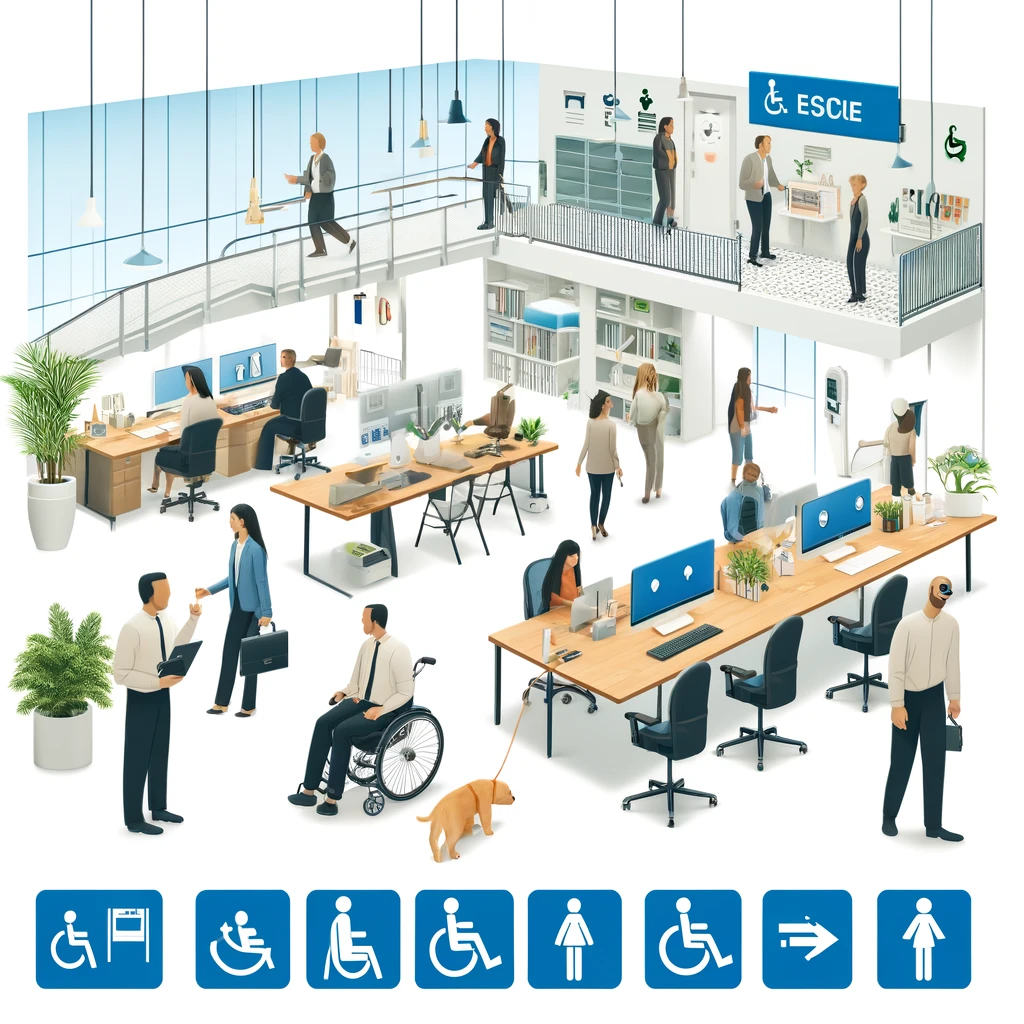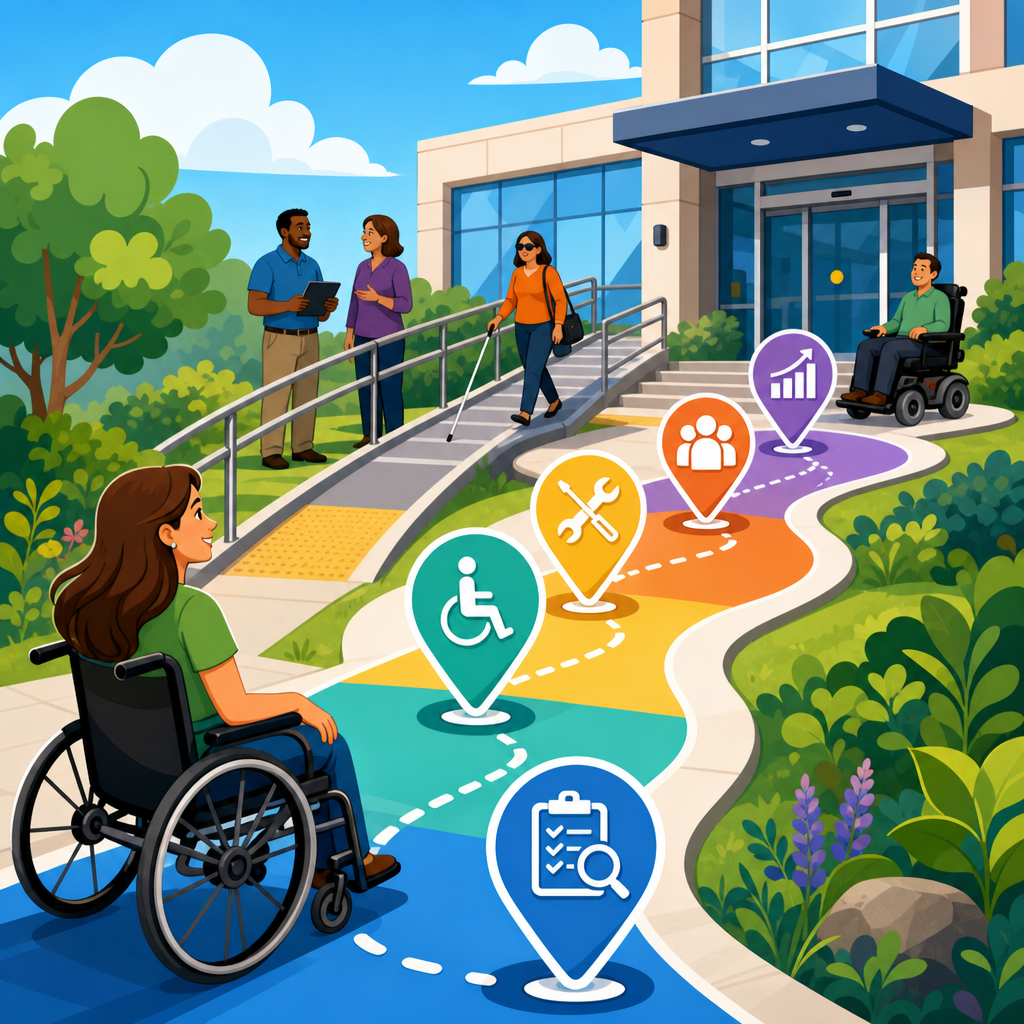
An effective ADA settlement implementation roadmap turns a legal obligation into a governed, measurable accessibility program with deadlines, owners, evidence, and executive oversight. In practice, that means moving beyond a vague promise to “fix issues” and building a structured plan that satisfies settlement terms, reduces repeat complaints, and improves access for customers, employees, students, or patients. I have worked with organizations after demand letters, structured negotiations, consent decrees, and private settlements, and the pattern is consistent: the groups that succeed treat implementation as an enterprise transformation, not a patching exercise. They define scope, map obligations to teams, establish remediation standards, verify outcomes with disabled users, and document every decision. That is what a good ADA settlement implementation roadmap looks like.
For this topic, “ADA settlement” usually refers to a negotiated agreement resolving alleged violations of the Americans with Disabilities Act or closely related state law claims. “Implementation roadmap” means the operational plan used to achieve compliance commitments over time. In advanced compliance work, the roadmap must bridge legal language and day-to-day execution. A settlement may require accessibility audits, policy changes, staff training, procurement reforms, timelines for digital remediation, physical barrier removal, reporting to plaintiffs’ counsel, or appointment of a coordinator. None of those items completes itself. Without a roadmap, organizations miss dates, fix the wrong issues first, overlook vendors, and struggle to prove good-faith progress.
This matters because ADA exposure rarely comes from a single broken page or one inaccessible entrance. It comes from systems that repeatedly produce barriers: design processes without accessibility gates, procurement without contractual standards, content publishing without review, and facilities maintenance without inspection routines. A strong roadmap addresses root causes. It also protects credibility. Judges, regulators, plaintiffs’ attorneys, and advocacy groups look for evidence that leadership is serious, that deadlines are realistic, and that improvements are durable. As a hub for advanced compliance strategies and case studies, this article explains the elements, governance model, sequencing, metrics, and common failure points that determine whether settlement implementation actually works.
Start with a binding obligations matrix, not a generic project plan
The first step is to convert every settlement requirement into an obligations matrix. This is more rigorous than a standard project plan. Each clause should be translated into a row containing the requirement, legal source, deadline, business owner, dependencies, evidence needed, risk if missed, and review cadence. If the settlement references standards such as WCAG 2.1 AA, the 2010 ADA Standards for Accessible Design, Section 508 techniques, or state building code provisions, cite them explicitly. In my experience, ambiguity at this stage causes most implementation disputes later. A clause requiring “accessible online services” is not actionable until it is mapped to login, account creation, payments, PDFs, third-party widgets, mobile applications, and customer support alternatives.
The matrix should also distinguish one-time deliverables from operational controls. A one-time deliverable might be an independent accessibility audit completed within ninety days. An operational control might be a permanent content publishing checklist or quarterly facility inspection process. Organizations often close the first and neglect the second, which is why issues recur after the settlement term ends. Good roadmaps define acceptance criteria. For example, “training delivered” should mean role-based training completed, attendance recorded, materials retained, and post-training knowledge checks administered. “Website remediated” should mean priority templates fixed, regression testing completed, assistive technology validation performed, and defect backlog below a defined threshold.
Because this article serves as a hub for advanced compliance strategies and case studies, the matrix should link internally to supporting workstreams. Digital teams may need detailed guidance on audit methodology, PDF remediation, captioning, and procurement controls. Facilities teams may need barrier prioritization methods and alteration rules. HR may need accommodation procedures and training standards. The settlement roadmap becomes the central spine connecting those subtopics, allowing leadership to see how separate compliance articles, playbooks, and case studies fit into one enforceable operating model.
Build governance that can make decisions across legal, operations, digital, and facilities
Most ADA settlements fail in execution because no one has real authority across departments. A good roadmap establishes a formal governance structure on day one. At minimum, that includes an executive sponsor, legal lead, accessibility program manager, workstream owners, and a steering committee that meets on a fixed schedule. The executive sponsor resolves resource conflicts. Legal interprets settlement language and manages reporting obligations. The program manager maintains the roadmap, risk register, evidence repository, and status reporting. Workstream owners deliver remediation in their domains, whether digital products, built environment, communications, HR, or procurement.
Decision rights must be explicit. If a third-party reservation platform is inaccessible, who decides whether to remediate, replace, or provide an equivalent facilitation path? If an entrance upgrade requires capital approval and permits, who can re-baseline the schedule and notify opposing counsel? In mature programs, those rules are written into a RACI model and supported by escalation paths. I recommend a weekly operating review and a monthly steering committee. The weekly meeting handles blockers, dependencies, and defect trends. The monthly meeting reviews risk, budget, policy adoption, and upcoming reporting milestones. This cadence keeps implementation from drifting between legal urgency and operational reality.
Good governance also includes a document control system. Settlement work generates audits, screenshots, issue logs, architectural drawings, invoices, training rosters, and correspondence. If those records sit in personal inboxes, the organization cannot prove performance. Use a controlled repository with versioning and retention rules. Many teams manage this in Microsoft 365, SharePoint, Smartsheet, Jira, or a governance platform, but the tool matters less than disciplined evidence capture. When plaintiffs’ counsel asks how a problem was resolved, the answer should be traceable in minutes, not reconstructed from memory.
Prioritize remediation by legal exposure, user impact, and dependency chains
Not every issue should be fixed in the order it was discovered. A strong roadmap uses a risk-based prioritization model balancing legal exposure, severity for disabled users, frequency of use, and technical dependencies. For digital properties, high-priority items usually include blocked user journeys such as account access, checkout, appointment scheduling, admissions forms, bill pay, and password reset. For facilities, priorities often include accessible routes, parking, entrances, service counters, restrooms, and signage affecting independent access. If a barrier prevents basic participation, it belongs near the top of the queue even if lower-severity defects are more numerous.
Dependency management is equally important. A common mistake is assigning dozens of page-level fixes before updating the design system, component library, or CMS templates that keep recreating those errors. Another is remediating PDF libraries without first establishing document intake rules and accessible source templates in Word, PowerPoint, or InDesign. In facilities work, teams sometimes replace door hardware before confirming maneuvering clearances and route continuity, creating partial improvements that still fail usability. Good roadmaps sequence foundational fixes first, then broad rollout, then regression prevention.
| Priority factor | What to assess | Typical example | Roadmap action |
|---|---|---|---|
| User impact | Does the issue block a core task for disabled users? | Checkout button unusable by keyboard | Fix immediately and validate with assistive technology |
| Legal exposure | Is the item named in the complaint or settlement? | Missing accessible entrance route | Assign owner, funding, and target date with counsel review |
| Volume | How many pages, locations, or documents inherit the defect? | Noncompliant form field pattern in design system | Repair source component before page-level cleanup |
| Dependency | Will other fixes fail without this prerequisite? | No captioning workflow for new videos | Implement process and vendor support first |
Case studies repeatedly show that organizations move faster when they define remediation waves. Wave one addresses barriers named in pleadings and blocked core journeys. Wave two fixes systemic patterns across templates, components, and recurring facility conditions. Wave three addresses long-tail content, archived documents, and lower-use locations. This approach is defensible because it aligns scarce resources with impact and demonstrates reasoned prioritization rather than random effort.
Use recognized standards, independent testing, and disabled-user validation
A roadmap without standards is ungovernable. Every workstream needs a declared benchmark and test method. In digital accessibility, settlements often reference WCAG 2.1 AA, and some newer agreements move toward WCAG 2.2 AA for updated focus appearance, dragging, target size, and authentication guidance. Teams should combine automated scanning with expert manual testing because automation alone catches only part of the problem. Tools such as axe DevTools, WAVE, Accessibility Insights, Siteimprove, and Deque WorldSpace can identify patterns, but they cannot fully evaluate keyboard traps, meaningful sequence, robust labels, alt text quality, or screen reader usability. Manual testing with JAWS, NVDA, VoiceOver, TalkBack, keyboard-only navigation, zoom, and reflow is essential.
For built environment obligations, the benchmark may be the 2010 ADA Standards, applicable state code, ANSI references where relevant, and architectural best practices. Field verification should be done by qualified accessibility specialists or architects who understand tolerances, alteration triggers, and equivalent facilitation. Measurements must be documented carefully. I have seen expensive rework caused by relying on informal walkthroughs that missed slope, reach range, or hardware force problems. In communications, standards may involve caption accuracy, audio description decisions, plain language, effective communication obligations, and relay accessibility for customer service channels.
The strongest implementation roadmaps include disabled-user validation before closing major milestones. That can mean usability sessions with blind, low-vision, deaf, hard-of-hearing, mobility-impaired, neurodivergent, or speech-disabled participants, depending on the service. This is not performative testing. It reveals whether technical compliance translates into usable access. For example, a checkout flow may technically expose form labels but still create confusion with poorly announced error states and session timeouts. A renovated entrance may meet dimensional requirements but remain difficult because of opening force, glare, or confusing wayfinding. User validation catches those last-mile failures and strengthens the organization’s proof of meaningful remediation.
Institutionalize policy, training, procurement, and monitoring so problems do not return
Settlement implementation is not complete when the last punch-list item closes. The real measure is whether the organization can sustain compliance after external oversight ends. That requires institutional controls. Policies should define accessibility commitments, applicable standards, exception handling, and roles. Training should be role-based rather than generic. Developers need semantic markup, ARIA usage, focus management, and testing skills. Designers need color contrast, focus indicators, component states, reading order, and content structure guidance. Content authors need heading hierarchy, link purpose, alt text, tables, and accessible document practices. Facilities teams need inspection criteria and maintenance triggers. Procurement staff need contract language requiring accessibility conformance reports, remediation obligations, indemnities where appropriate, and testing rights before acceptance.
Vendor management deserves special attention because many settlements are jeopardized by inaccessible third-party tools. Reservation engines, chatbots, payment platforms, applicant tracking systems, kiosks, learning tools, and telehealth services often sit outside direct engineering control. A good roadmap inventories every third-party dependency, ranks risk, and sets a treatment plan: remediate with vendor, replace, constrain use, or provide an effective alternative. Procurement should require current accessibility conformance documentation, but teams should not rely solely on self-attestations. Validate critical products independently before renewal or launch.
Monitoring closes the loop. Mature programs use dashboards that track defects by severity, aging, property, owner, and recurrence. They monitor training completion, policy exceptions, vendor status, and audit outcomes. They also measure service indicators such as caption turnaround time, accommodation response time, and complaint resolution time. These metrics tell leadership whether accessibility is becoming part of normal operations. A settlement should leave behind a management system, not a stack of old reports. When that system exists, future audits become faster, complaints drop, and teams respond with evidence instead of improvisation.
Learn from case patterns: what separates durable success from repeat exposure
Across advanced compliance case studies, the same success factors appear again and again. First, leadership funds the roadmap realistically. If a settlement requires enterprise web remediation, training, and external auditing, assigning one overstretched manager without budget guarantees delay. Second, the organization narrows ambiguity early. It confirms scope, covered properties, standards versions, and reporting formats with counsel rather than arguing later. Third, it fixes source systems, not just symptoms. A university that remediates a thousand PDFs but never changes its document publishing workflow will recreate the problem next semester. A retailer that fixes product page labels but leaves its design system unchanged will regress on the next site release.
Failure patterns are equally predictable. Some organizations over-focus on automated scan scores and underinvest in real usability. Others underestimate content volume, especially legacy documents, video libraries, and microsites. Facilities teams sometimes miss temporary conditions such as blocked routes, broken openers, or maintenance-related obstructions that undermine otherwise compliant spaces. Another common problem is treating settlement reporting as a legal memo rather than an operational artifact. Good status reports show completed actions, open risks, revised dates, evidence references, and next steps. Weak reports use broad statements like “substantial progress made,” which satisfy no one when details are requested.
The most resilient roadmaps also account for change. Websites relaunch, leases end, products are acquired, and standards evolve. Build a change-control process so any material modification to scope, systems, or deadlines is reviewed for settlement impact. This is especially important for mergers, platform migrations, and capital projects. Accessibility must be integrated into those transitions from the start. Otherwise, teams spend months remediating an old environment while a new inaccessible one goes live. Advanced compliance is less about heroic cleanup and more about disciplined governance that survives normal business change.
A good ADA settlement implementation roadmap is clear, governed, evidence-based, and built to last beyond the settlement term. It begins with an obligations matrix that translates legal commitments into owners, deadlines, standards, and proof. It depends on governance strong enough to coordinate legal, digital, facilities, HR, communications, and procurement. It prioritizes work by user impact, legal exposure, and dependencies instead of chasing random defects. It uses recognized standards, independent testing, and disabled-user validation so remediation is both technically sound and practically usable. Most important, it institutionalizes policy, training, vendor controls, and monitoring so barriers do not return.
As the hub for advanced compliance strategies and case studies under Compliance and Implementation, this topic should guide every related effort: digital audits, facility barrier removal, procurement reform, training design, reporting discipline, and long-term monitoring. The central benefit of a strong roadmap is not simply avoiding breach of settlement terms. It is building an operating model that delivers consistent access and reduces future risk. If you are shaping or reviewing a settlement response, start by drafting the obligations matrix, naming accountable owners, and setting a review cadence. That first step will reveal whether your organization has a real roadmap or only a list of intentions.
Frequently Asked Questions
What is an ADA settlement implementation roadmap, and why is it so important after a settlement is signed?
An ADA settlement implementation roadmap is the operational plan that turns legal settlement language into specific, trackable action. A settlement may require accessibility improvements, policy updates, training, testing, reporting, and ongoing oversight, but those obligations only become real when they are assigned to owners, tied to deadlines, documented with evidence, and reviewed at the executive level. Without a roadmap, organizations often default to a vague commitment to “fix accessibility issues,” which is rarely enough to satisfy the terms of the agreement or to prevent the same problems from happening again.
A strong roadmap matters because it creates structure. It identifies exactly what must be remediated, in what order, by whom, using what standards, and on what timetable. It also establishes how progress will be measured and how proof of compliance will be maintained. That evidence can include audit reports, remediation logs, procurement updates, training records, policy approvals, accessibility statements, testing results, and status reports. If questions later arise from plaintiff’s counsel, regulators, leadership, or internal stakeholders, the organization can point to a documented implementation record rather than relying on informal assurances.
Just as importantly, a roadmap shifts the organization from one-time legal response to repeatable governance. It helps reduce the risk of recurring complaints by embedding accessibility into design, development, procurement, content publishing, and quality assurance processes. In other words, the best ADA settlement implementation roadmaps are not just about closing old issues. They are about building a measurable accessibility program that makes future noncompliance less likely and access more consistent for customers, employees, students, patients, or any other affected audience.
What are the core elements of a good ADA settlement implementation roadmap?
A good ADA settlement implementation roadmap usually includes several foundational elements working together. First, it starts with a clear inventory of obligations. That means translating the settlement into plain operational requirements: what systems, websites, apps, documents, kiosks, forms, communications, or policies are in scope; what accessibility standard applies; what deliverables are required; and what deadlines cannot be missed. This translation step is critical because legal language is often broad, while implementation must be precise.
Second, the roadmap should define governance and accountability. Every major workstream needs an owner, and that ownership needs to be realistic. Legal may oversee settlement interpretation, but IT, product, digital, HR, procurement, marketing, student services, patient services, or facilities may each have implementation responsibility depending on the environment. Strong roadmaps also identify an executive sponsor and a central accessibility lead or program manager who can coordinate across departments, escalate blockers, and keep the work aligned with deadlines and reporting requirements.
Third, the plan should prioritize remediation based on both settlement commitments and user impact. High-traffic, high-risk, or business-critical barriers usually need to move first, especially when they affect essential tasks such as applying, paying, registering, scheduling, learning, receiving care, or accessing employment-related information. Prioritization should be transparent and documented so that stakeholders understand why certain fixes happen earlier and how sequencing supports compliance.
Fourth, a good roadmap includes measurable milestones and evidence requirements. It is not enough to state that audits will occur or that fixes will be made. The roadmap should specify target dates for baseline assessments, remediation phases, validation testing, training completion, policy rollouts, reporting submissions, and follow-up reviews. It should also define what counts as completion and what documentation must be retained. This turns the roadmap into something that can be audited internally and defended externally.
Finally, the roadmap should include sustainability measures. These often include accessibility training by role, updated development and content workflows, procurement requirements for third-party technology, repeat testing cycles, issue intake processes, and regular executive reporting. Those are the controls that help prevent a settlement from becoming a temporary clean-up effort followed by regression. The most effective roadmaps do not stop at remediation; they institutionalize accessibility.
How should an organization prioritize deadlines, owners, and remediation work under an ADA settlement?
The best way to prioritize work under an ADA settlement is to balance legal commitments, user impact, technical complexity, and operational dependencies. Start by mapping every settlement obligation to a concrete task list. Then separate the work into categories such as immediate risk reduction, foundational program setup, technical remediation, policy and training changes, third-party coordination, and validation or reporting. This creates a manageable structure instead of one long undifferentiated list of accessibility tasks.
Owners should be assigned based on actual control over the work, not just departmental hierarchy. For example, a web development team may own code changes, but content teams may own PDFs and editorial updates, procurement may own vendor requirements, HR may own employee training, and legal or compliance may own reporting obligations under the settlement. A common mistake is assigning broad accountability to one team that does not control the systems causing the barriers. A stronger approach is to create named owners for each workstream, then hold them accountable through a central program manager or steering committee.
Deadlines should also be broken into phases. Rather than aiming only at a final settlement date, organizations should establish internal milestones for baseline auditing, issue triage, design decisions, code remediation, user testing, regression testing, policy approval, and evidence collection. Internal deadlines should usually come before formal reporting dates to allow time for validation and correction. If a settlement requires progress reports, those dates should be treated as governance checkpoints, not last-minute documentation exercises.
For remediation itself, priority should usually go first to barriers that block access to core functions or create the highest legal and reputational risk. Examples include inaccessible login flows, forms, navigation, checkout, application steps, patient portals, course materials, or employment systems. After that, organizations can address broader conformance gaps and lower-impact issues. This does not mean low-priority issues are ignored; it means resources are allocated strategically so the organization can demonstrate good-faith, structured progress while reducing harm quickly. A roadmap that clearly links priorities to risk, user impact, and settlement terms is far more defensible than one based on convenience alone.
What kind of evidence and reporting should be included to show that the settlement is actually being implemented?
Evidence is one of the most overlooked parts of ADA settlement implementation, yet it is often what separates a credible compliance effort from an unprovable one. A good roadmap should identify not only what the organization plans to do, but also how it will prove that it has done it. That proof should be organized, dated, and tied directly to the obligations in the settlement. If an agreement requires accessibility audits, maintain the audit scope, methodology, findings, and remediation tracking. If it requires training, retain attendance records, course content, dates, and role-based completion information. If it requires policy changes, preserve approved versions, publication dates, and communication records.
Technical remediation should be documented in a way that shows traceability from issue discovery to resolution. That can include ticketing records, defect logs, severity rankings, screenshots, code references, quality assurance results, assistive technology testing notes, and sign-off procedures. For organizations with complex environments, it is often helpful to maintain a master obligations matrix that maps each settlement requirement to an owner, target date, status, and supporting artifacts. This becomes the backbone for internal governance and external reporting.
Reporting should be regular, structured, and honest. Executive leadership should receive status updates that identify progress, missed milestones, open risks, vendor dependencies, staffing needs, and decisions requiring escalation. If the settlement requires reporting to outside parties, those reports should be drafted with enough detail to show substance, not just activity. Saying “accessibility improvements are underway” is far weaker than reporting that a baseline audit was completed, critical barriers were remediated on specific workflows, regression testing was performed, training was delivered to identified teams, and remaining items are on a dated schedule.
Most importantly, evidence should show durability, not just one-time cleanup. Decision-makers, plaintiffs, and regulators often want to know whether the organization has built systems to prevent recurrence. Documentation of updated procurement rules, content publishing checks, accessibility acceptance criteria, testing gates, complaint intake processes, and recurring monitoring can be just as important as proof that individual issues were fixed. Strong evidence tells the story that the organization is not only reacting to a settlement, but building an accountable accessibility program.
How can an organization make sure its ADA settlement roadmap leads to lasting accessibility improvements instead of temporary fixes?
Lasting improvement happens when the roadmap addresses root causes, not just visible defects. Many organizations can remediate a list of issues once. The harder challenge is preventing those same barriers from reappearing through redesigns, new content, software updates, procurement decisions, or decentralized publishing practices. A durable ADA settlement roadmap therefore needs to combine remediation with governance, training, process change, and ongoing measurement.
One of the most effective ways to do this is to embed accessibility into standard operating procedures. Development teams should have accessibility requirements in design and engineering workflows. Content teams should have clear guidance and review checkpoints for documents, media, and web publishing. Procurement teams should assess vendor accessibility before contracts are signed or renewed. Quality assurance teams should include accessibility in test plans. Support teams should know how to receive and route accessibility complaints or accommodation requests. When accessibility is built into existing business processes, it becomes much less dependent on heroics or one-time clean-up projects