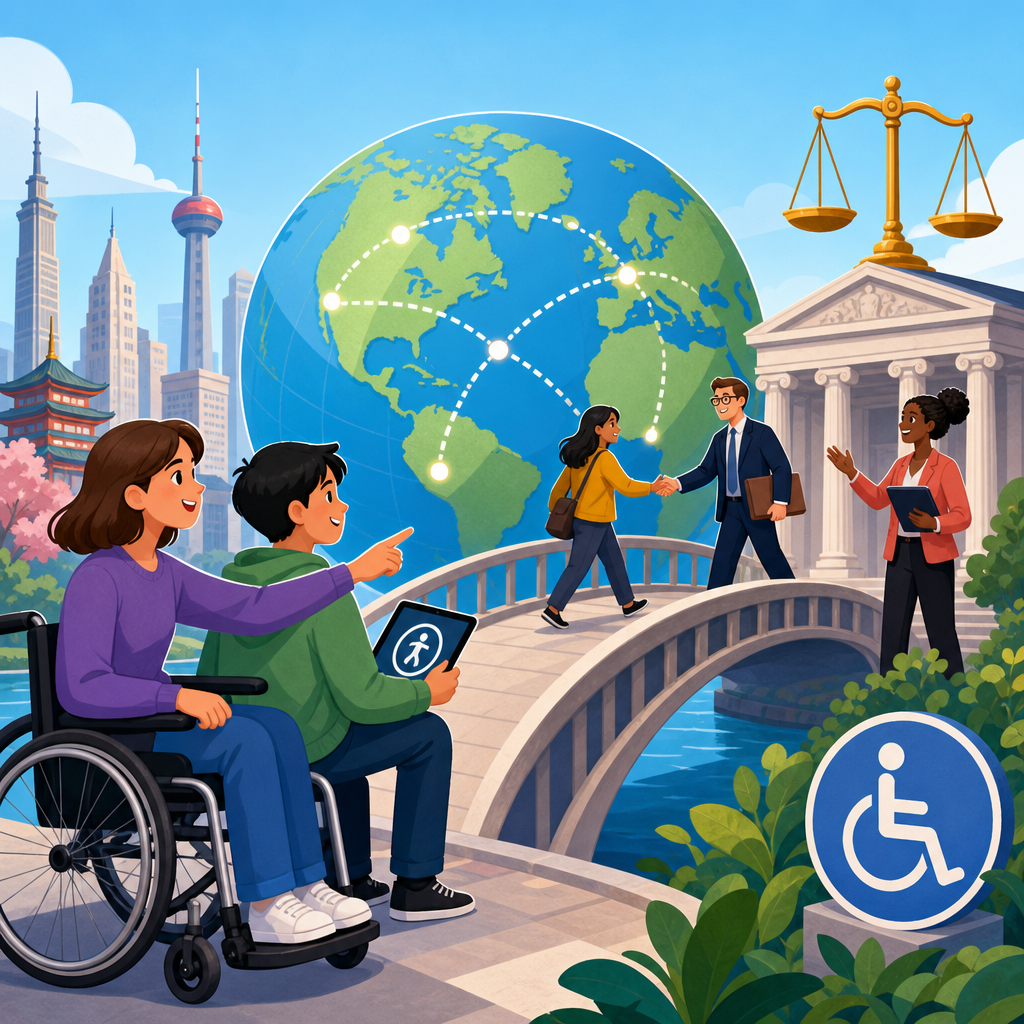
Cross-border accessibility litigation is moving from a niche compliance issue to a central question of global commerce, digital governance, and human rights enforcement. In practical terms, it refers to legal claims, regulatory actions, and dispute strategies that involve accessibility obligations across more than one country, whether the target is a multinational employer, an ecommerce platform, a software vendor, a transport provider, or a public institution serving users in multiple jurisdictions. Accessibility, in this context, means designing physical spaces, digital products, services, documents, communications, and workflows so disabled people can use them on equal terms. Disability rights provide the legal and policy foundation, while litigation supplies the mechanism that turns broad promises into enforceable duties.
I have worked with organizations trying to align websites, procurement terms, HR systems, and customer service processes across continents, and the hardest problem is rarely a single lawsuit. The harder problem is conflict between legal regimes, technical standards, language expectations, enforcement cultures, and timelines. A company may meet one country’s web rules yet still face claims elsewhere because mobile apps, PDFs, kiosks, captions, or hiring assessments fall short. A university can comply with domestic building codes but still confront accessibility disputes tied to foreign students using online learning platforms from abroad. These cases are no longer theoretical. They arise because digital services travel instantly, supply chains are international, and disability advocates increasingly coordinate across borders.
The future of global accessibility and disability rights matters because the legal environment is converging in some areas and fragmenting in others. The UN Convention on the Rights of Persons with Disabilities has influenced legislation worldwide by framing accessibility as a rights issue rather than a charitable add-on. At the same time, national laws still differ on standing, damages, class actions, deadlines, procedural hurdles, and technical benchmarks. The result is a litigation landscape where the same accessibility failure can trigger administrative complaints in one place, civil damages in another, and reputational fallout everywhere. For organizations operating internationally, this hub article explains where cross-border accessibility litigation is likely to evolve, what forces are shaping it, and how legal risk will connect with product design, procurement, employment, and public policy.
Why cross-border accessibility disputes are increasing
Cross-border accessibility disputes are increasing for three basic reasons: more laws, more digital reach, and more claimant sophistication. Over the past decade, jurisdictions including the European Union, the United Kingdom, Canada, Australia, Japan, and parts of Latin America have expanded legal expectations around accessible services, employment, transport, procurement, and digital content. In the United States, litigation under the Americans with Disabilities Act and related state laws normalized the idea that inaccessible websites and apps can create legal exposure. That litigation model has been closely watched abroad, even where local procedures differ. Once major brands standardize global platforms, one accessibility defect can be replicated across dozens of markets, making cross-border claims more efficient for advocates and more expensive for defendants.
Another driver is the shift from static websites to layered digital ecosystems. A retailer may rely on third-party payment tools, embedded chat, video players, logistics dashboards, and marketplace seller portals. If any one component blocks keyboard access, breaks screen reader labels, or lacks captions, users experience exclusion across countries at once. I have seen disputes begin with a narrow complaint about alt text and then widen into questions about procurement diligence, vendor indemnities, software release management, and executive oversight. This is why future litigation will focus less on isolated defects and more on whether an organization has a defensible accessibility governance system.
Claimants are also choosing forums more strategically. They may file where procedural rules are favorable, where regulators are active, or where settlement pressure is highest. Public interest groups share testing methods, expert resources, and model pleadings internationally. As a result, organizations should expect coordinated claims involving local counsel in multiple jurisdictions, especially where a service targets users in several languages or currencies.
How legal standards may converge and where they will still diverge
The most important convergence point is technical benchmarking. Courts, regulators, and settlement agreements increasingly rely on the Web Content Accessibility Guidelines, usually WCAG 2.1 Level AA and, more recently, WCAG 2.2 as an emerging reference point. That does not mean WCAG is law everywhere, but it often becomes the practical measuring stick for whether digital content is reasonably accessible. In procurement and product development, EN 301 549 has become especially influential in Europe because it ties accessibility requirements to ICT products and services in a structured way. Organizations that map controls against WCAG and EN 301 549 are generally better prepared for global scrutiny.
Still, legal divergence will remain substantial. Some jurisdictions emphasize reasonable accommodation, while others create more explicit proactive duties. Some allow broad representative actions; others require individual standing and proof of concrete harm. Remedies vary sharply. One system may prioritize injunctive relief and compliance timelines, while another allows statutory damages, regulatory penalties, or public naming. Evidence rules also matter. A screenshot-based complaint may be enough to trigger negotiation in one country, while another demands expert testing, user testimony, or proof that barriers affected a transaction. For multinational organizations, this means there will never be a single universal accessibility playbook. The practical future is layered compliance: one global standard for design and governance, combined with local legal analysis for enforcement risk.
The next wave of claims will extend beyond websites
Future accessibility litigation will not be limited to websites. The next wave is already visible in mobile apps, software as a service platforms, self-service kiosks, biometric identity checks, streaming media, virtual events, online assessments, workplace collaboration tools, PDFs, electronic signatures, and AI-powered customer interfaces. Courts and regulators are increasingly willing to examine the entire user journey, not just a homepage. If a user can browse products but cannot complete checkout with a screen reader, the legal problem is not partial compliance; it is exclusion from the service. The same logic applies to online job applications, telehealth portals, banking authentication flows, and educational platforms.
Physical accessibility will also remain central, especially where digital and built environments overlap. Think of airport apps that coordinate wheelchair assistance, public transport ticket machines linked to mobile wallets, or hotel booking systems that misrepresent accessible room features. A future claim may combine allegations about inaccurate online accessibility information, inaccessible booking steps, and barriers encountered on site. That blended model of litigation is significant because it ties consumer protection, disability discrimination, and contract issues together.
| Area | Likely dispute trigger | Cross-border implication |
|---|---|---|
| Websites and apps | Keyboard traps, unlabeled forms, missing captions | One platform can expose a brand in many markets |
| Employment systems | Inaccessible recruiting tests or HR portals | Global employers face claims from applicants in different jurisdictions |
| Travel and hospitality | Incorrect accessible room data or assistance failures | Foreign users rely on digital disclosures before travel |
| Education and training | Unreadable PDFs, uncaptioned lectures, inaccessible LMS tools | Remote learners can assert rights from abroad |
| AI interfaces | Voice-only bots, biased screening, inaccessible outputs | Novel claims will test product liability and discrimination rules |
Enforcement will be shaped by regulators, collective actions, and contracts
Litigation is only one enforcement path. In the coming years, accessibility duties will be shaped by a mix of court cases, ombuds processes, human rights commissions, market surveillance authorities, procurement rules, and consumer regulators. The European Accessibility Act is especially important because it pushes accessibility deeper into product and service markets, including ecommerce, banking, ticketing, and certain consumer devices. Even where private lawsuits are limited, regulator-driven enforcement can force redesign, withdrawals, recalls, or corrective roadmaps. In my experience, companies often underestimate this route because they focus too narrowly on civil claims while ignoring how market access rules can bite.
Collective enforcement will also mature. In some countries, disability organizations and consumer groups have standing to bring broader claims, and that reduces the burden on individual complainants. Where class actions are available, inaccessible products may become part of larger digital fairness or consumer deception cases. For example, if a platform advertises universal usability while excluding screen reader users, plaintiffs may frame the case as both discrimination and misleading commercial practice. That dual framing increases leverage.
Contracts will become another battleground. Enterprise customers, universities, and governments increasingly demand accessibility representations, VPAT documentation, remediation timelines, and indemnity clauses from vendors. When a public body is sued because its learning platform is inaccessible, it may turn to the software provider for breach of contract or misrepresentation. This contractual chain reaction means future litigation will involve not only end-user claims but also disputes among buyers, resellers, integrators, and developers.
Artificial intelligence, translation, and data governance will complicate disability rights
Artificial intelligence will expand both accessibility opportunities and litigation risk. Automated captions, image descriptions, speech interfaces, and reading assistants can improve access, but they can also fail in predictable ways. Auto-generated captions may misstate medical advice, legal instructions, or educational content. AI summaries can flatten important structure that screen reader users depend on. Resume screening systems may disadvantage applicants who use assistive technology or atypical speech patterns. When these tools are deployed globally, organizations must answer hard questions about testing, human review, error rates, language coverage, and responsibility for third-party models.
Translation introduces another layer. Accessibility is not merely converting words from one language to another. Alternative text, plain-language instructions, sign-language interpretation, caption timing, and document tagging all need localization. A company may have an accessible English checkout flow but a poorly translated French or Arabic version that breaks labels or reading order. That can create region-specific claims even when the source design was compliant. The future of global accessibility and disability rights will therefore depend on multilingual quality assurance, not just legal monitoring.
Data governance will matter too. Accessibility audits, accommodation records, and user feedback often involve sensitive personal data. Privacy rules such as the GDPR shape how organizations collect evidence, retain complaint data, and share issue logs across borders. A strong compliance program must reconcile accessibility testing with data minimization and security obligations. The organizations that do this well treat accessibility, privacy, and cybersecurity as connected governance functions rather than isolated checklists.
What organizations should do now to prepare
The best preparation for cross-border accessibility litigation is disciplined operational maturity. Start with a single global accessibility policy anchored to recognized technical standards, then map local legal deviations by market. Build accessibility into procurement, design systems, QA, content publishing, and release management. Require vendors to provide current conformance documentation, but do not rely on forms alone; validate claims with manual testing, assistive technology testing, and disabled user research. Track issues in the same governance tools used for security and privacy so remediation is visible to leadership.
Training should be role-specific. Designers need competency in focus order, contrast, and error prevention. Engineers need semantic markup, keyboard interaction patterns, ARIA discipline, and testing workflows. Content teams need heading structure, link purpose, captioning, and accessible document practices. Legal and procurement teams need to understand representations, warranties, cure periods, and the limits of boilerplate indemnities. Executive oversight matters because repeated accessibility failures usually reflect governance gaps, not isolated coding mistakes.
Finally, plan for dispute response before a claim arrives. Maintain documented audit trails, decision logs, roadmap commitments, and escalation paths. Establish who handles regulator inquiries, preservation obligations, expert testing, and public communications. Organizations that respond credibly can often narrow claims, negotiate realistic remediation schedules, and avoid compounding legal exposure through defensiveness or delay.
Cross-border accessibility litigation will evolve toward broader scope, stricter expectations, and more interconnected enforcement. The core shift is simple: accessibility is becoming a normal condition of market participation, not an optional compliance project. Global disability rights will continue to influence product design, employment systems, education platforms, transport services, procurement contracts, and AI deployment. Technical standards such as WCAG and EN 301 549 will keep shaping what good practice looks like, but litigation outcomes will still depend on local procedure, evidence, remedies, and regulatory posture.
For international organizations, the biggest mistake is waiting for a single definitive rule that resolves every jurisdiction. That rule is not coming. What works instead is a durable operating model built on accessible design, verified testing, documented governance, and local legal review. When those elements are in place, companies are better positioned not only to defend claims but to prevent exclusion in the first place. That is the real benefit: fewer barriers for users, lower legal friction for providers, and stronger trust across borders.
If this article is your starting point for the International Perspective hub, use it to guide deeper work on regional laws, digital standards, accessible procurement, inclusive employment, transport, education technology, and AI risk. Review your cross-border services now, identify the highest-impact barriers, and turn accessibility into a governed global capability before litigation forces the timeline.
Frequently Asked Questions
1. What is cross-border accessibility litigation, and why is it becoming more important?
Cross-border accessibility litigation refers to legal disputes, regulatory investigations, enforcement actions, and compliance challenges involving accessibility obligations that extend across more than one country. This can happen when a business offers digital services globally, employs people in multiple jurisdictions, sells products through international ecommerce channels, operates transportation systems across borders, or provides public-facing tools used by people in different legal systems. In each of these situations, accessibility is no longer just a local compliance issue. It becomes a question of how multiple laws, standards, regulators, and courts may apply to the same service, platform, or organization at the same time.
Its importance is growing because commerce, employment, education, and public services are increasingly delivered through digital systems that do not respect national boundaries in the same way older business models did. A website may be managed in one country, hosted in another, used by customers in dozens more, and subject to procurement rules, anti-discrimination laws, consumer protection standards, and sector-specific regulations in several of them. As a result, organizations face a rising risk that an accessibility failure could trigger parallel complaints, litigation, or regulatory scrutiny in more than one jurisdiction.
Another reason this area is becoming more significant is that accessibility is increasingly framed not only as a technical standard or customer experience issue, but as a matter of equal access, human rights, and market participation. Courts, regulators, and advocacy groups are paying closer attention to whether digital barriers exclude disabled users from essential services, employment opportunities, transportation, education, and civic life. That shift elevates accessibility from a box-checking exercise to a core legal and reputational issue. As international business becomes more interconnected, cross-border accessibility litigation is likely to evolve into a major feature of global risk management and digital governance.
2. Which kinds of organizations are most likely to face cross-border accessibility claims?
The organizations most likely to face cross-border accessibility claims are those whose services, workforces, or platforms operate internationally and interact directly with the public. Multinational employers are a leading example, especially when they use centralized recruiting portals, employee software, training systems, or workplace tools that must be accessible to candidates and employees in multiple countries. If those systems create barriers for disabled users, the employer could face claims under local employment laws, disability discrimination statutes, and broader equality or human rights frameworks in different jurisdictions.
Ecommerce companies are also particularly exposed. When a retailer sells into foreign markets through a website or app, it may trigger accessibility obligations tied to consumer protection, anti-discrimination law, and digital service regulation in the countries where customers are located. The same applies to software vendors, SaaS providers, streaming platforms, fintech companies, and marketplace operators whose products are used internationally. If the user interface, checkout process, authentication flow, or customer support features are inaccessible, the legal risk can spread beyond the company’s home country very quickly.
Transportation providers, travel platforms, educational institutions, healthcare systems, public bodies, and government contractors also face elevated exposure. These sectors often intersect with stricter rules because they provide essential or highly regulated services. Public procurement requirements, accessibility directives, aviation or rail standards, education access mandates, and public accommodation laws can all come into play. Even companies that do not think of themselves as “global” may still face cross-border issues if they serve users abroad, collect data from international users, maintain subsidiaries overseas, or rely on shared digital infrastructure across regions. In practice, any organization with a multi-jurisdictional digital footprint should assume that accessibility risk may no longer be confined to one legal system.
3. How could cross-border accessibility litigation evolve over the next several years?
Over the next several years, cross-border accessibility litigation is likely to become more structured, more strategic, and more closely tied to global digital regulation. One major development will likely be the continued movement toward harmonized or at least more recognizable technical expectations, particularly around widely accepted standards such as the Web Content Accessibility Guidelines. Even where laws differ, regulators and courts often look to common benchmarks when assessing whether digital tools are usable by disabled people. That does not mean litigation will become simple, but it does mean claimants, regulators, and defendants may increasingly argue over a familiar set of technical and usability principles rather than starting from scratch in every case.
Another likely shift is the rise of coordinated enforcement. Instead of isolated complaints about a single inaccessible webpage, future disputes may involve broader allegations tied to enterprise systems, mobile ecosystems, AI-enabled interfaces, procurement chains, and global service architecture. Regulators may exchange information more frequently, advocacy groups may file complaints in multiple jurisdictions at once, and plaintiffs’ firms may become more sophisticated in identifying companies whose cross-border operations create overlapping legal exposure. Litigation could therefore move from reactive dispute handling to strategic campaigns designed to drive systemic changes in how large organizations design and govern accessibility.
There is also a strong possibility that accessibility disputes will become more intertwined with other legal themes such as privacy, algorithmic accountability, consumer rights, product liability, and employment equity. For example, an inaccessible identity verification tool may raise accessibility concerns, but it may also trigger questions about discriminatory automated decision-making, exclusion from financial services, or unequal access to public benefits. This broader framing could expand the scope and seriousness of claims. Rather than treating accessibility as a niche technical defect, courts and regulators may increasingly view it as evidence of deeper failures in platform design, governance, and inclusion. That evolution would make cross-border accessibility litigation both more complex and more consequential.
4. What legal and practical challenges make cross-border accessibility disputes so complex?
The complexity of cross-border accessibility disputes comes from the fact that multiple legal systems can apply at once, and they do not always use the same definitions, procedures, remedies, or enforcement priorities. One country may treat accessibility primarily as an anti-discrimination issue, another may regulate it through consumer law or digital product rules, and another may focus on public sector obligations or procurement standards. Questions quickly arise about jurisdiction, applicable law, standing, enforcement authority, and whether a company’s foreign-facing website or software is sufficiently connected to a particular market to trigger local obligations. These threshold issues can be just as important as the accessibility allegations themselves.
There are also serious evidentiary and operational challenges. Accessibility disputes often depend on technical testing, user experience evidence, expert assessments, internal design records, and remediation timelines. In a cross-border context, companies may need to gather and explain evidence from different business units, languages, vendors, and legacy systems. A global organization may have one codebase but many localized interfaces, regional procurement arrangements, and country-specific legal obligations. That makes it difficult to present a unified defense or implement a single remediation plan that satisfies every regulator and claimant involved.
Practical business realities add another layer of difficulty. Many organizations rely on third-party software, embedded payment tools, plug-ins, document systems, and outsourced development teams. Responsibility for accessibility may therefore be fragmented across contracts and supply chains, even though the legal exposure lands on the organization serving the end user. At the same time, litigation risk is influenced by reputational pressure, investor scrutiny, disability advocacy, and public expectations about inclusive design. In short, cross-border accessibility disputes are complex not just because the law is complicated, but because the digital ecosystems involved are interconnected, fast-moving, and often governed by inconsistent internal ownership structures.
5. How can organizations prepare for the future of cross-border accessibility litigation?
The most effective preparation starts with treating accessibility as an enterprise governance issue rather than a narrow legal or technical task. Organizations should identify where they operate, which laws and standards may apply, and how accessibility obligations attach across websites, mobile apps, software products, recruiting systems, customer service channels, documents, kiosks, transport interfaces, and internal tools. This kind of mapping exercise is essential because legal risk often arises where business teams assume a product is local, optional, or outside the scope of accessibility requirements when, in reality, it is being used across multiple jurisdictions.
From there, companies should build durable accessibility programs that combine policy, engineering, procurement, training, testing, and accountability. That includes adopting recognized accessibility standards, integrating accessibility into design and development workflows, requiring vendors to meet contractual accessibility expectations, maintaining documentation of testing and remediation efforts, and creating clear internal ownership. Organizations should also involve disabled users in testing and feedback processes, because litigation frequently emerges when formal compliance claims do not match actual user experience. A system that technically appears aligned with a standard may still create barriers in practice, and cross-border claims often become more persuasive when real users can show meaningful exclusion.
Finally, organizations should prepare for disputes before they happen. That means establishing escalation procedures, preserving evidence, tracking complaints across jurisdictions, and coordinating legal, compliance, product, HR, procurement, and communications teams. Businesses with an international footprint should also monitor regulatory developments and case law trends in key markets rather than relying solely on home-country assumptions. The future of cross-border accessibility litigation will likely reward companies that can demonstrate not only that they reacted to individual complaints, but that they have a credible, organization-wide system for anticipating and reducing accessibility barriers. In a global environment where accessibility is increasingly tied to market access, trust, and rights protection, proactive governance is likely to be far less costly than reactive defense.