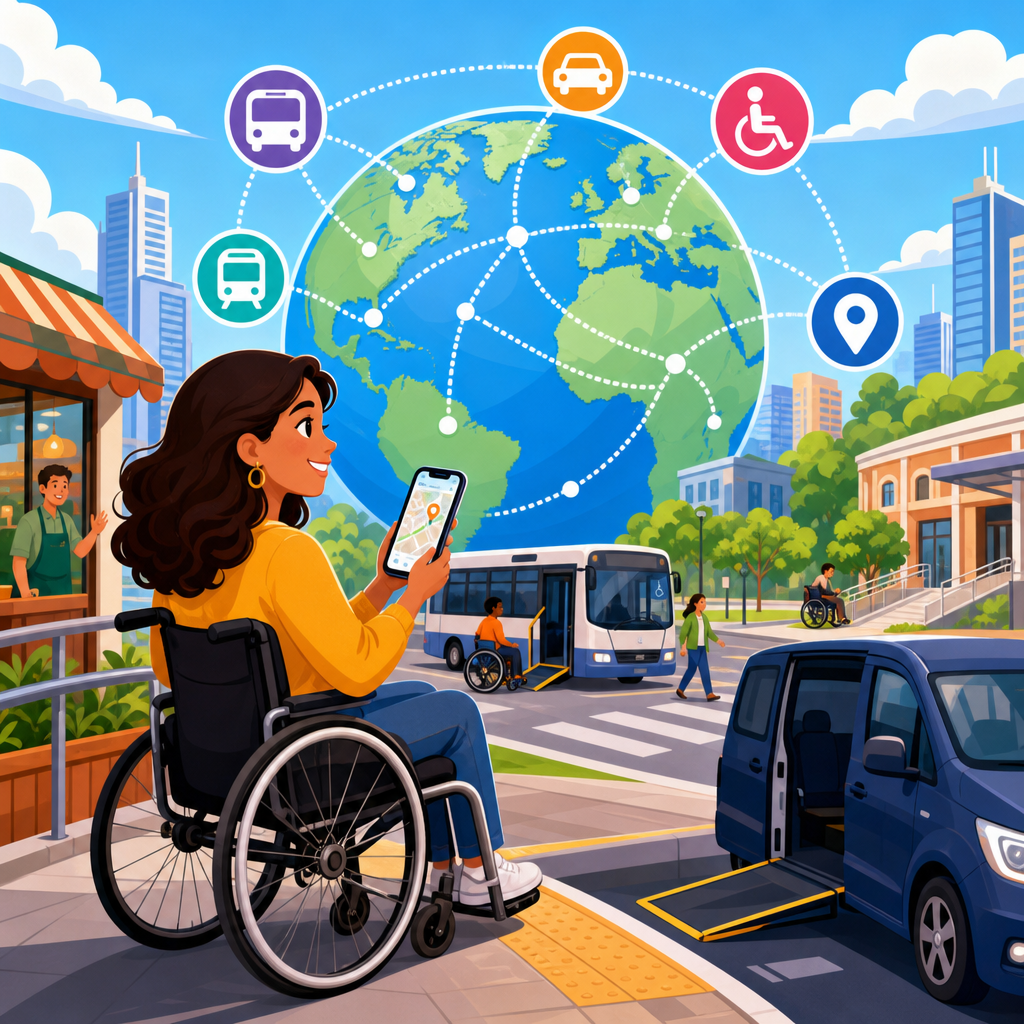
Global mobility platforms are rapidly becoming the operating systems of modern travel, yet the question of whether they can solve wheelchair access at scale depends on more than apps, maps, or booking engines. In this context, global mobility platforms include ride-hailing networks, airline and rail booking systems, hotel marketplaces, navigation apps, digital payments, and multimodal trip planners that coordinate movement across borders. Wheelchair access at scale means reliable, repeatable access for millions of users in streets, stations, vehicles, buildings, and digital interfaces, not isolated successes in a few flagship cities. Disability rights, meanwhile, refer to the legal, social, and technical frameworks that guarantee equal participation, from the Americans with Disabilities Act and the UN Convention on the Rights of Persons with Disabilities to local building codes and transport regulations. I have worked on accessibility programs where a journey failed because one elevator was out, one driver skipped a passenger, or one booking field omitted a mobility need. That is why this topic matters: wheelchair travel succeeds only when every link in the chain works. As the hub for the future of global accessibility and disability rights, this article examines where platforms can help, where they cannot, and what true scale requires across policy, technology, infrastructure, and accountability.
Why Wheelchair Access Remains a System Problem
Wheelchair access is often discussed as a product feature, but in practice it is a systems problem shaped by infrastructure, operations, and law. A traveler may be able to book an accessible hotel room online and still face a train station without step-free boarding, a taxi queue with no ramp-equipped vehicle, or a curb cut blocked by street furniture. Platforms can expose information, route demand, and standardize booking, yet they do not pour concrete, widen doorways, or maintain lifts. This distinction is essential because many executives assume software can compensate for inaccessible physical environments. It cannot.
The most common points of failure are predictable. Data is incomplete, accessibility labels are inconsistent, and “accessible” often collapses multiple needs into one vague checkbox. A manual wheelchair user, a power wheelchair user, and a traveler needing a transfer board may all require different dimensions, turning radii, securement systems, and staffing support. Internationally, definitions also vary. Some rail operators define accessibility by step-free station entry, while others include boarding assistance, tactile guidance, and restroom design. Without harmonized terminology, platforms scale confusion as efficiently as they scale convenience.
There is also a rights issue. Access is not a premium service to be added when profitable; it is a baseline condition of equal participation. The strongest global examples pair regulation with enforcement. The European Accessibility Act, national transport accessibility rules across the EU and UK, and aviation obligations under frameworks such as EC 1107/2006 have pushed operators to document and deliver assistance more consistently. Still, implementation remains uneven, especially across borders where one part of the trip is highly regulated and the next is not.
What Global Mobility Platforms Can Actually Do Well
When designed properly, platforms are powerful coordination tools. They can centralize accessibility data, standardize service requests, and reduce the uncertainty that makes travel exhausting for wheelchair users. In markets where I have seen the best outcomes, the platform did three things exceptionally well: captured specific user needs once, transmitted them through the journey without loss, and confirmed fulfillment at each transfer point. That sounds simple, but it is transformational when compared with current travel workflows that force people to repeat requirements to every carrier, station, and hotel.
Digital systems are particularly effective at discovery and pre-trip planning. A traveler can compare accessible routes, identify stations with functioning elevators, reserve wheelchair spaces on trains, request assistance at airports, and verify room specifications before payment. Good platforms also support real-time disruption management. If a lift fails, a multimodal app can reroute a user to a step-free bus corridor or notify station staff before arrival. This kind of orchestration is where scale becomes plausible, because software can process live operational data across many cities faster than any call center.
Platforms can also improve market incentives. If accessibility attributes are visible and filterable, operators that invest in ramps, boarding procedures, and staff training become easier to find and book. Over time, that visibility can redirect demand. We have already seen analogous effects in hospitality, where detailed amenity filters influence conversion rates. The same logic applies to transport. Once wheelchair users and their families can reliably compare accessible options, accessibility stops being hidden compliance and starts becoming commercial performance.
The Data Standardization Challenge
The biggest barrier to solving wheelchair access at scale is not user adoption; it is structured, trustworthy data. Accessibility data must describe the real world with enough precision to support a yes-or-no travel decision. A field marked “wheelchair accessible” is nearly useless on its own. Useful data includes entrance width, threshold height, lift dimensions, platform gap, slope gradient, bathroom turning space, bed height, shower type, vehicle securement compatibility, and whether assistance must be booked in advance. It should also include reliability signals such as maintenance history, timestamped verification, and source of truth.
Several standards and tools point in the right direction. General Transit Feed Specification data has improved transit interoperability, while GTFS Flex and real-time extensions help represent more dynamic services. For indoor and pedestrian routing, OpenStreetMap has become a valuable foundation because communities can tag kerbs, steps, surfaces, incline, and lift access. In hospitality and venue management, schema markup and structured property attributes can expose accessibility details to search engines and booking partners. Yet none of these systems fully solves semantic consistency across modes, countries, and legal definitions.
The issue is governance as much as taxonomy. If operators self-report without verification, data quality degrades quickly. If governments mandate disclosure without common formats, every city creates its own inaccessible spreadsheet. The most effective model combines a shared schema, operator responsibility, periodic audits, and user feedback loops. Wheelmap, AccessNow, and station accessibility registries show how community reporting can supplement official data, but crowdsourcing alone is not enough for critical travel decisions. Scale requires institutional stewardship.
Where Platforms Fail Without Infrastructure Investment
No platform can route around a city that is fundamentally inaccessible. If sidewalks are broken, buses lack ramps, stations have no elevators, or rural intercity travel has no accessible option at all, software only reveals scarcity more efficiently. I have seen projects spend heavily on elegant journey planners while ignoring the obvious constraint that wheelchair users could not physically reach the first boarding point. This is why accessibility leaders insist on a hierarchy: built environment first, service design second, digital layer third. The layers reinforce one another, but they are not interchangeable.
Air travel offers a useful example. Booking systems have improved wheelchair assistance requests, yet passengers still report damaged wheelchairs, unsafe transfers, and long delays in equipment return. The platform can capture the need, but the airport must provide trained staff, appropriate lifting equipment, accessible restrooms, and accountable ground handling processes. Likewise in urban mobility, app-based ride services can identify wheelchair accessible vehicles, but fleet availability depends on procurement policy, driver incentives, maintenance, and licensing rules.
Public investment therefore remains central. Accessible curb design, low-floor buses, tactile paving, platform edge treatments, and universal restroom standards are not optional complements to digital innovation. They are the substrate on which platforms operate. The cities making the fastest progress, such as London, Singapore, and parts of Tokyo, did not begin with apps. They built interoperable transport networks, codified service obligations, and then layered digital convenience on top.
The Rights, Policy, and Enforcement Layer
Global accessibility advances when legal rights create a floor below which service cannot fall. Platforms respond fastest when regulation is explicit about outcomes, reporting, and liability. The UN Convention on the Rights of Persons with Disabilities established mobility and participation as rights, not charitable aspirations. National laws then translate that principle into procurement rules, transport duties, anti-discrimination standards, and digital accessibility requirements. Where those rules are enforced, platforms have a strong reason to collect better data and coordinate better service.
Cross-border travel exposes the limits of fragmented regulation. A wheelchair user may fly from a country with strong airport assistance rules into one with weak accessible taxi standards and inconsistent hotel disclosure. The traveler experiences the trip as one service, even if legal duties are split across five sectors. This is why future progress depends on interoperability between public regulation and private platforms. Booking flows should not merely accept an assistance request; they should map that request to the operator’s legal obligations and produce a traceable service record.
Enforcement also needs metrics. Regulators should require disclosure of wheelchair-accessible fleet share, elevator uptime, assistance response times, damage rates for mobility devices, and complaint resolution outcomes. What gets measured gets managed. Public dashboards can pressure underperforming operators and help travelers make informed choices. Without measurement, accessibility remains a promise without evidence.
How Scalable Access Works in Practice
Scalable wheelchair access emerges when infrastructure, operations, and data are aligned. The table below shows the practical difference between partial and mature platform-led accessibility.
| Layer | Weak implementation | Scalable implementation |
|---|---|---|
| Discovery | Single “accessible” label | Detailed dimensions, photos, and verified attributes |
| Booking | Free-text special request | Standardized mobility profile carried across providers |
| Operations | Manual handoffs and call centers | Real-time alerts, staff tasking, and service confirmations |
| Infrastructure | Unknown lift status and gaps | Live outage data, fallback routes, step-free continuity |
| Accountability | Complaints after failure | Audits, uptime metrics, refunds, and regulatory reporting |
A practical example is rail. A mature system lets a traveler specify chair type and assistance needs once, reserves the correct boarding space, verifies lift availability at origin and destination, alerts staff automatically, and offers a reroute if equipment fails. Similar logic applies to hospitality. A robust accommodation platform should distinguish between roll-in showers and transfer showers, show door clearances, list bed heights, and require photo verification. These details determine whether a room works. They are not edge cases.
Scale also depends on inclusive procurement. When cities buy buses, contract ride-hailing services, or license micromobility, accessibility requirements must be embedded from the start. Retrofitting later is slower and more expensive. Procurement remains one of the strongest levers in the future of global accessibility and disability rights because it translates principle into market behavior.
The Future of Global Accessibility and Disability Rights
Over the next decade, the most important shift will be from reactive accommodation to interoperable design. Global mobility platforms will help only if they stop treating accessibility as an exception workflow and make it a core data layer. That means common terminology, verified attributes, machine-readable regulations, and user profiles that move securely across transport, lodging, payments, and public space information systems. It also means recognizing that disability rights are increasingly shaping product roadmaps, procurement standards, and cross-border policy.
Artificial intelligence will likely improve routing, translation, customer support, and anomaly detection, but it will not solve the basics by itself. If the underlying data is vague, biased, or outdated, AI will generate polished but unreliable guidance. The better use of AI is operational: flagging broken elevators, detecting inconsistent accessibility listings, summarizing complaint patterns, and predicting where assistance bottlenecks will occur. Used this way, it can strengthen accountability rather than obscure it.
The broader international perspective is clear. Aging populations, urbanization, inclusive tourism, and major events such as the Paralympics are increasing pressure for accessible mobility systems that work for residents and visitors alike. Governments, platforms, and operators that move first will not simply comply with disability rights expectations; they will build better transport for everyone, including parents with strollers, travelers with luggage, and people with temporary injuries.
Global mobility platforms can improve wheelchair access at scale, but they cannot solve it alone. They are most effective when they standardize information, coordinate assistance, surface reliable choices, and connect travelers to accountable providers. They fail when accessibility is reduced to a checkbox, when physical infrastructure remains inaccessible, or when legal rights are weakly enforced. The central lesson across the future of global accessibility and disability rights is that scale comes from systems, not slogans. Real progress requires accessible streets and stations, verified data standards, measurable service obligations, and procurement rules that reward inclusive design from the beginning.
For organizations building in this space, the path is practical. Audit your accessibility data model, replace vague labels with measurable attributes, publish performance metrics, and integrate feedback from wheelchair users into every release cycle. For public agencies, tie platform partnerships to enforceable accessibility outcomes. For travelers and advocates, keep demanding specificity, not promises. If global mobility platforms are to become genuine access infrastructure, they must be built on rights, evidence, and operational discipline. Start there, and scale becomes possible.
Frequently Asked Questions
1. Can global mobility platforms actually solve wheelchair access at scale?
Global mobility platforms can improve wheelchair access at scale, but they are unlikely to solve it on their own. Platforms can coordinate information, bookings, payments, routing, and customer support across multiple parts of a journey, which is a major advantage for travelers who use wheelchairs. They can make accessibility features visible at the moment of trip planning instead of forcing users to call separate providers, search through incomplete websites, or rely on guesswork. In that sense, they can reduce friction, standardize workflows, and create more predictable travel experiences.
However, wheelchair access depends on physical infrastructure and operational execution, not just digital convenience. A perfectly designed app cannot compensate for a train station without elevators, a hotel with misleading accessibility descriptions, an airline that mishandles mobility equipment, or a ride-hailing fleet with too few wheelchair-accessible vehicles. Scale also introduces complexity: a trip may involve a city sidewalk, a curb cut, an accessible taxi, an airport transfer process, an aircraft, a hotel room, and a local navigation system. If even one part fails, the trip may become unusable.
What platforms can do especially well is connect these fragmented systems and create accountability through standards, data, and service-level expectations. If mobility platforms require verified accessibility attributes, integrate real-time disruption alerts, support specialized assistance requests, and track fulfillment quality, they can significantly raise the baseline. So the practical answer is yes, they can be part of the solution at scale, but only if they act as orchestration layers tied to real-world infrastructure, provider compliance, and consistent service delivery.
2. What does “wheelchair access at scale” really mean in global travel and transportation?
Wheelchair access at scale means more than occasional accessible options or isolated premium services. It refers to reliable, repeatable access across large networks, geographies, and trip types. In practice, that means a wheelchair user should be able to plan, book, pay for, and complete journeys with a high degree of confidence whether they are taking a local ride, boarding a train, flying internationally, checking into a hotel, or navigating a city they have never visited before. The experience should not depend on luck, insider knowledge, or extraordinary effort.
True scale also requires consistency. A platform may list thousands of hotels, but if accessibility data is vague, outdated, or self-reported without verification, travelers still face uncertainty. A ride-hailing app may advertise accessible vehicles, but if wait times are extreme or coverage is limited to a few districts, that is not scalable access. Likewise, a trip planner may include “step-free” routes, but if elevator outages or curb conditions are not reflected in real time, the route may fail when it matters most.
Another important part of scale is interoperability. Wheelchair users do not travel in silos. They move through connected systems: booking, payments, stations, vehicles, lodging, and wayfinding. Access at scale means those systems work together instead of forcing the traveler to re-enter needs at each step. It also means accessibility is treated as a core operating requirement rather than a special exception. The strongest test is simple: can a wheelchair user expect dependable service across many destinations and providers, not just in best-case scenarios? If the answer is yes, then access is beginning to exist at scale.
3. What are the biggest barriers preventing mobility platforms from delivering reliable wheelchair access?
The biggest barrier is fragmented, low-quality accessibility data. Many platforms still lack standardized definitions for what “accessible” means. One hotel may label a room accessible because the doorway is wider, while another may include a roll-in shower, lowered controls, and transfer space. In transportation, “wheelchair accessible” can refer to boarding capability, onboard maneuvering space, securement systems, station access, or staff assistance availability. Without a shared data model, platforms cannot present accurate expectations, and travelers cannot make informed decisions.
A second barrier is weak integration between digital systems and on-the-ground operations. A traveler may request assistance during booking, but that information may not reach station staff, drivers, hotel teams, or gate agents in a usable format. Even when the request is transmitted, operational follow-through may be inconsistent. This gap between software and service execution is one of the main reasons accessibility journeys break down.
Supply constraints are another major issue. In ride-hailing, for example, platforms may want to offer wheelchair-accessible vehicles, but local fleet availability, driver incentives, vehicle costs, and regulatory rules can limit deployment. In rail and air travel, infrastructure may be decades old and expensive to retrofit. Platforms do not directly control elevators, platform gaps, aircraft hold procedures, or public street design, yet all of these affect outcomes.
Finally, there is the problem of trust. Many wheelchair users have experienced inaccurate listings, damaged equipment, or promised assistance that never arrived. Because the consequences of failure are so high, confidence matters as much as functionality. To overcome that trust deficit, platforms need verification, transparent performance metrics, strong remediation processes, and input from wheelchair users themselves. Until those elements are in place, even sophisticated platforms will struggle to deliver reliability at scale.
4. Which features would a global mobility platform need to make wheelchair travel meaningfully better?
A platform would need much more than an accessibility filter. First, it would need verified, standardized accessibility data across transportation, lodging, and navigation. That means detailed attributes such as ramp access, elevator dimensions, boarding methods, bathroom configuration, doorway widths, bed heights, transfer space, securement compatibility, and whether a location supports powered wheelchairs. The information must be specific enough to support real decisions, not broad enough to create false confidence.
Second, the platform would need real-time operational visibility. For wheelchair users, disruptions that seem minor to others can completely change whether a journey is possible. Elevator outages, station closures, inaccessible vehicle substitutions, weather-related boarding changes, and gate reassignments all matter. A meaningful platform should not only detect these changes, but also automatically suggest accessible alternatives and notify the traveler before the disruption becomes a crisis.
Third, it should support end-to-end coordination. A traveler should be able to enter mobility needs once and have them carried through every stage of the trip, including airport or station assistance, accessible transfer requests, hotel room requirements, and customer support escalation. Integrated payments, multilingual support, and clear service confirmations are also essential, especially for cross-border journeys where regulations and providers vary.
Just as important are accountability features. Platforms should allow photo verification, traveler reviews focused specifically on accessibility accuracy, provider performance scoring, and straightforward compensation when accessible services fail. They should also include accessible customer service channels, not just chatbots or generic help forms. The most effective platforms would be built with disabled travelers, tested against real journey scenarios, and judged by successful trip completion rates rather than by how many accessibility labels they display.
5. What would success look like if global mobility platforms truly improved wheelchair access worldwide?
Success would look like predictability. A wheelchair user planning a trip would know, with a high degree of confidence, that the route shown in the app is actually usable, the vehicle or room booked matches the stated accessibility features, assistance requests will be honored, and disruptions will trigger workable alternatives instead of dead ends. The traveler would spend less time verifying every detail manually and less energy preparing for failure. That reduction in uncertainty is one of the clearest markers of real progress.
At the system level, success would also show up in measurable outcomes. Accessible rides would have comparable wait times and pricing to standard rides. Elevator outages and service disruptions would be reflected in routing tools quickly and accurately. Booking platforms would have low rates of accessibility misrepresentation. Damage to wheelchairs during air travel would decline, and providers with poor accessibility performance would face visible consequences. In other words, accessibility would become a managed, monitored quality metric rather than a vague promise.
There is also a broader economic and social definition of success. When wheelchair access works at scale, more people can travel for work, education, healthcare, tourism, and family life without disproportionate barriers. That expands market participation, increases customer loyalty, and helps mobility platforms serve a population that has historically been underserved despite significant demand. The long-term win is not just inclusion as a slogan. It is a global travel ecosystem where wheelchair access is embedded into mainstream operations, measured continuously, and improved through data, standards, and real accountability.