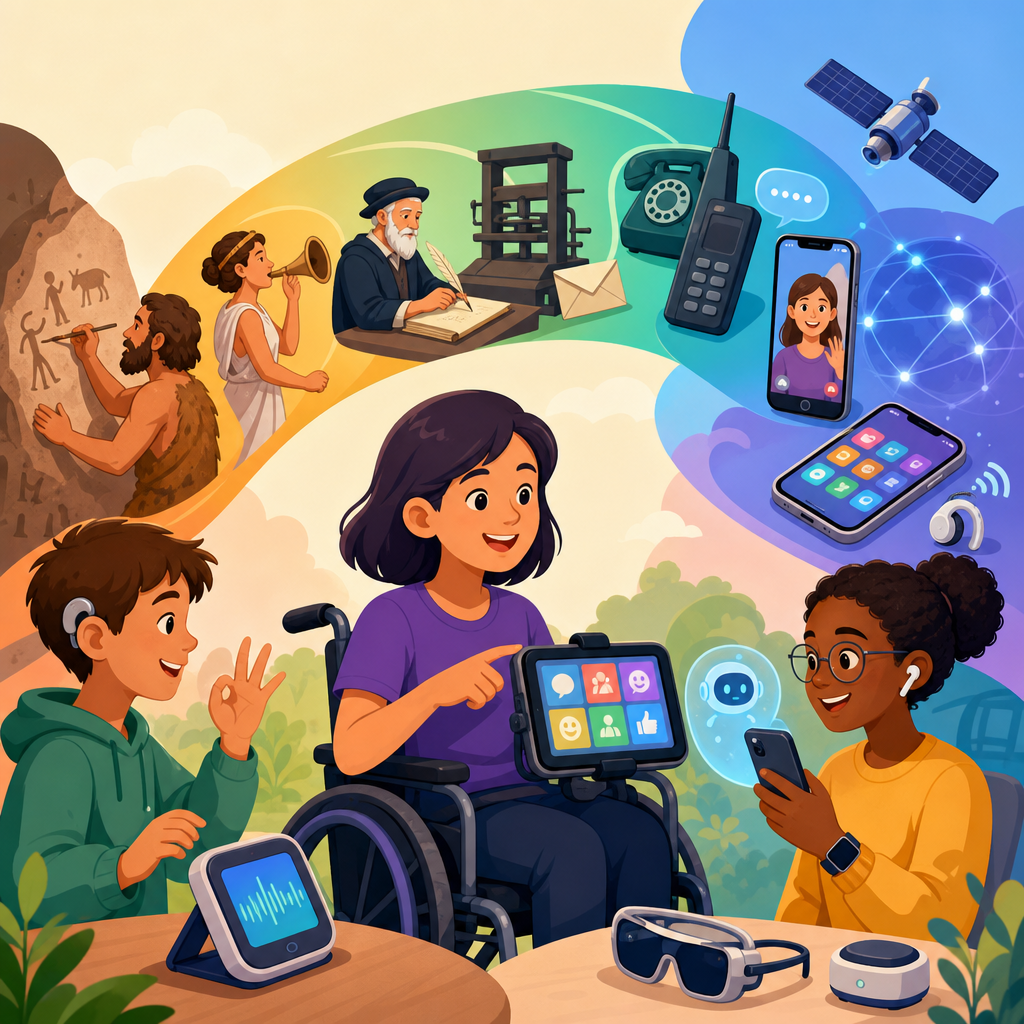
Communication aids have evolved from simple paper-based tools to intelligent, connected systems that help millions of people express needs, build relationships, learn, and work with greater independence. In accessibility practice, communication aids include any tool that supports understanding or expression, from picture boards and symbol books to speech-generating devices, eye-gaze systems, captioning software, hearing technology, and language prediction apps. I have seen the shift firsthand in schools, clinics, and workplaces: devices that once required specialist setup now run on tablets, integrate with cloud services, and adapt to a user’s habits in real time. That transformation matters because communication is not a niche convenience. It is the foundation of education, healthcare decision-making, employment, civic participation, and social belonging.
The future of technology and accessibility is increasingly shaped by how well communication tools reduce friction without reducing user control. Good design is not only about adding features. It is about matching a person’s motor abilities, language profile, sensory needs, literacy level, and environment. A child with cerebral palsy may need eye-gaze access and symbol-based vocabulary. An autistic adult may prefer text-to-speech with scripted phrases for high-stress situations. A person who is deaf or hard of hearing may rely on live captions, Bluetooth hearing support, and transcription archives. A stroke survivor may need aphasia-friendly interfaces with large icons, stored phrases, and slower input timing. The latest communication aids are moving toward personalization, interoperability, and mainstream availability, making this one of the most important areas in modern assistive technology.
This hub article explains where communication aids came from, which technologies are advancing fastest, what standards and design principles are shaping the field, and how organizations can choose tools responsibly. It also connects the broader technology and accessibility conversation: mobile computing, artificial intelligence, wearable devices, inclusive design, and digital policy all influence who can communicate effectively and when. For readers exploring the future of technology and accessibility, communication aids offer a practical lens because they reveal both the promise and the limitations of current innovation. The best systems do more than generate speech or text. They create access to real conversation, in real contexts, with dignity, privacy, and consistency.
From Low-Tech Supports to Connected AAC Ecosystems
The history of communication aids is best understood as a move from isolated supports to integrated ecosystems. Early low-tech tools included alphabet boards, communication books, topic boards, partner-assisted scanning, and printed symbol sets such as PCS and Blissymbols. These remain essential because they are durable, low cost, and reliable when batteries fail. In my work, low-tech backup systems are still mandatory for users of high-tech AAC because communication cannot depend on charging status or internet access. That practical rule has not changed, even as software has become more sophisticated.
High-tech augmentative and alternative communication, often shortened to AAC, expanded rapidly when dedicated speech-generating devices became more portable and robust. Products from companies such as Tobii Dynavox, PRC-Saltillo, and Smartbox brought structured vocabularies, switch access, environmental control, and mounting systems into daily use. The next major shift came when tablets and smartphones lowered hardware costs. Apps like Proloquo2Go, TouchChat, TD Snap, and CoughDrop made symbol-based and text-based communication more available to families, schools, and adults who had previously been priced out of dedicated devices. This did not eliminate the need for specialist hardware, but it dramatically widened entry points.
Today, the strongest communication systems combine hardware, software, cloud backup, analytics, and multiple access methods. A user may build messages on a tablet, control it through head tracking, store personalized vocabulary in the cloud, and mirror output to video calls or smart speakers. This ecosystem model reflects the larger future of technology and accessibility: devices are no longer standalone aids. They are connected platforms that must work across home, school, clinical, and workplace settings without forcing the user to relearn communication in each environment.
Artificial Intelligence, Prediction, and Context-Aware Communication
Artificial intelligence is changing communication aids most visibly through prediction, transcription, and adaptive interfaces. Predictive text is not new, but current language models and statistical engines are far better at suggesting relevant words, phrases, and sentence structures. For users with limited motor control, reducing keystrokes is not a convenience; it directly reduces fatigue and increases conversational speed. Modern systems can learn common names, routines, locations, and social scripts. In practice, this means a user who often says “I need a break after therapy” may get that phrase after a few selections instead of building it word by word every time.
Speech recognition and automatic captioning have also improved significantly. Tools such as Otter, Microsoft Teams captions, Google Live Transcribe, and Zoom transcription support people who are deaf, hard of hearing, late-deafened, or processing spoken language in noisy settings. Accuracy has improved because engines now handle speaker adaptation, punctuation, and domain-specific vocabulary better than earlier versions. Even so, these tools are not perfect. Accents, overlapping speech, poor microphones, and specialized terminology still reduce reliability. In healthcare, law, and education, human review or professional captioning remains important when precision is critical.
AI is also making interfaces more context aware. Some communication apps can surface vocabulary based on time, location, or routine, such as meal choices at lunch or transport phrases during a commute. The opportunity is clear: faster access to relevant language. The risk is equally clear: systems can over-prioritize convenience and suppress spontaneity. A communication aid should never become a menu of expected responses. The most effective designs balance prediction with open-ended expression, preserving the user’s ability to say something novel, private, humorous, or unexpected.
Access Methods: Eye Gaze, Switches, Touch, Voice, and Brain-Computer Research
Communication success depends as much on input as output. Touch remains the most common access method because mobile devices normalized direct selection, but many users need alternatives. Eye-gaze technology has become faster, more stable, and more practical outside specialist settings. Infrared eye trackers now allow users with conditions such as ALS, Rett syndrome, and severe cerebral palsy to select symbols, type text, browse the web, and control smart home devices with relatively low physical effort. Calibration has improved, though lighting, positioning, glasses, fatigue, and involuntary movement still affect performance.
Switch access remains one of the most dependable methods for users with very limited movement. A single switch can operate scanning interfaces, while dual-switch setups improve speed and control. Mounting options, switch placement, dwell timing, auditory scanning, and feedback settings make a substantial difference. I have seen a poorly placed switch turn a usable system into a frustrating one, while a minor repositioning restored independent access immediately. Accessibility decisions at this level are mechanical as much as digital.
Head tracking, joystick control, adapted keyboards, and voice input also play important roles. Apple and Android now include more built-in accessibility features, including switch control, voice control, guided access, and hearing support, reducing the need for expensive customization in some cases. Looking further ahead, brain-computer interface research is receiving attention for users with profound paralysis. Early systems have enabled limited spelling or cursor control through implanted or noninvasive methods, but these remain experimental, costly, and clinically complex. The near-term future is more likely to be hybrid access: combining eye gaze, switches, prediction, and environmental automation to reduce effort without relying on any single breakthrough.
Hearing, Vision, and Multimodal Communication Tools
Communication aids are not limited to AAC devices. Hearing and vision technologies are increasingly part of the same accessibility strategy because communication is multimodal. For people who are deaf or hard of hearing, hearing aids, cochlear implant processors, telecoils, Bluetooth Low Energy Audio, and remote microphones improve access to spoken conversation. Auracast, based on LE Audio, is especially important because it can allow public venues to broadcast audio directly to compatible hearing devices, reducing barriers in airports, classrooms, theaters, and service counters.
For people with vision loss or deafblindness, screen readers, refreshable braille displays, OCR tools, object recognition, and haptic navigation support both receptive and expressive communication. Mainstream screen readers such as JAWS, NVDA, VoiceOver, and TalkBack continue to improve app compatibility, though inaccessible document structures and poorly labeled controls remain common barriers. Refreshable braille displays have become more portable, and multi-line braille is advancing, though cost remains a major obstacle. For deafblind users, communication may involve braille notetakers, tactile signing support, and custom vibration alerts linked to mobile devices.
The most promising trend is convergence. Instead of separate tools for each disability category, platforms increasingly support captions, text-to-speech, speech-to-text, visual alerts, haptics, symbol communication, and alternative input on the same device. That convergence helps users with multiple disabilities and reflects real life, where needs overlap. An older adult, for example, may need amplified audio, larger text, simplified messaging, and speech output after a neurological event. The future of technology and accessibility will favor systems that combine sensory, cognitive, and motor supports instead of treating them as unrelated product lines.
| Technology | Primary users | Main benefit | Key limitation |
|---|---|---|---|
| Speech-generating AAC apps | Users with speech disabilities | Portable, customizable communication | Requires careful vocabulary setup |
| Eye-gaze systems | Users with severe motor impairments | Hands-free access and message creation | Sensitive to positioning and fatigue |
| Live captioning tools | Deaf and hard of hearing users | Real-time access to spoken content | Errors with noise and overlap |
| Refreshable braille displays | Blind and deafblind users | Private, precise text access | High hardware cost |
| Remote microphones and LE Audio | Hearing aid and implant users | Clearer speech in noisy spaces | Venue compatibility still growing |
Design Standards, Interoperability, and Procurement Decisions
The strongest communication aids succeed because of standards, not just innovation. In digital accessibility, WCAG remains the baseline for web and app content, while platform guidelines from Apple, Google, and Microsoft shape how assistive features behave. For medical and institutional settings, interoperability, security, and data governance matter just as much as usability. A communication app used in a school may need cloud syncing, but it also needs permission controls, backup policies, and export options when the learner changes setting or provider. Locking vocabulary into a single vendor ecosystem can undermine long-term independence.
Procurement is where many accessibility efforts fail. Teams often buy based on feature lists rather than use cases. A better process starts with communication goals, environments, access method trials, vocabulary strategy, mounting needs, durability, support availability, and training capacity. A school choosing a communication aid for a non-speaking student should ask whether the system supports core vocabulary, fringe vocabulary, literacy growth, partner training, and low-tech backup. An employer selecting accessibility tools should ask whether captions work in meetings, whether transcripts are searchable, whether outputs integrate with existing collaboration platforms, and whether employees can control their own settings without IT intervention for every change.
Interoperability is becoming a central requirement for the future of technology and accessibility. Users expect communication tools to work across email, messaging, telehealth, learning platforms, smart homes, and public kiosks. Open file formats, API access, device management, and exportable user profiles will increasingly separate sustainable products from short-lived ones. Organizations that treat accessibility as a procurement checkbox usually end up paying more later through abandoned tools, retraining, and fragmented support.
What the Next Decade Will Look Like
Over the next decade, communication aids will become more personalized, more embedded in mainstream devices, and more dependent on responsible data practices. Expect stronger on-device AI for privacy-preserving prediction, better multilingual support, improved synthetic voices based on voice banking and message banking, and wider integration with wearables, smart glasses, and environmental controls. Personalized voice output is especially significant for users with degenerative conditions, because preserving a familiar voice can support identity as much as intelligibility. Companies such as Acapela and emerging neural voice providers are already moving in that direction.
At the same time, several challenges will define whether progress is equitable. Cost remains a major barrier, especially for braille technology, eye-gaze hardware, and specialized mounting. Reimbursement systems often lag behind actual usage patterns, covering outdated categories instead of flexible ecosystems. Training is another persistent issue. The best communication aid fails when families, teachers, clinicians, or managers do not know how to model, maintain, and respect it. Privacy must also stay central. Tools that analyze speech, store personal phrases, or track routines need transparent consent and secure data handling.
The clearest takeaway is that communication aids are no longer peripheral assistive devices. They are a core part of the future of technology and accessibility because they determine who can participate, respond, create, and be heard across digital and physical spaces. Organizations should audit communication barriers now, test tools with real users, and invest in training alongside technology. Readers using this page as a hub should explore related topics such as inclusive mobile design, accessible workplace technology, smart home accessibility, AI ethics in disability tech, and assistive hardware trends. Start with one principle: choose systems that expand a person’s real communication options, not just the product’s technical specifications.
Frequently Asked Questions
1. How have communication aids evolved over time?
Communication aids have changed dramatically from basic, low-tech supports into highly personalized digital systems. Earlier tools often included paper communication boards, symbol charts, alphabet boards, notebooks, and printed choice cards. These formats were and still are valuable because they are affordable, portable, and easy to use in many settings. For many people, they remain an essential part of daily communication, especially when reliability, simplicity, and quick access matter most.
Over time, advances in assistive technology introduced speech-generating devices, touchscreen-based AAC apps, eye-gaze access, switch scanning, hearing support technologies, real-time captioning, and predictive language software. These tools do more than replace paper; they expand what is possible. Users can now build messages faster, access larger vocabularies, store personal phrases, connect with family and colleagues, and participate more fully in school, work, healthcare, and social life.
One of the most important shifts has been the move toward connected, intelligent systems. Many modern communication aids can sync across devices, integrate with environmental controls, support remote communication, and adapt to a user’s language patterns. Instead of being treated as a single device, communication support is increasingly seen as an ecosystem that includes hardware, software, access methods, training, and real-world communication opportunities.
2. What are the latest trends and technologies shaping modern communication aids?
Several major trends are currently shaping the field. First, mobile and tablet-based AAC solutions have made communication support more accessible and socially integrated. People can use mainstream devices with specialized apps, which often reduces stigma and increases flexibility. These platforms can include symbol-based communication, text-to-speech, customizable vocabularies, and multilingual options.
Second, access technology has become far more sophisticated. Eye-gaze systems, head tracking, switch access, touch alternatives, and adaptive keyboards now help people with complex physical needs communicate more effectively. For users who cannot rely on direct touch, these methods can make the difference between limited participation and meaningful independence.
Another important development is the rise of AI-assisted features. Language prediction, phrase suggestion, voice customization, smart captioning, and context-aware communication supports are helping users communicate more efficiently. In hearing and language access, automatic speech recognition has improved live captions and transcription tools. In AAC, predictive text and intelligent vocabulary organization can reduce effort and increase speed, especially for literate users or those building more complex messages.
Cloud connectivity is also transforming communication aids. Settings, custom vocabularies, and user profiles can often be backed up and transferred across devices. This helps families, educators, therapists, and support teams collaborate more effectively. At the same time, there is growing attention to user-centered design, neurodiversity-affirming practice, and communication autonomy, which means technology is increasingly being built around the person rather than forcing the person to adapt to the tool.
3. Who can benefit from communication aids, and are they only for people who cannot speak?
Communication aids can benefit a very wide range of people, and they are not only for individuals who are completely nonspeaking. They support anyone who has difficulty expressing themselves, understanding language, accessing speech, processing information, hearing spoken communication, or participating fully in conversation. This may include people with autism, cerebral palsy, apraxia, ALS, stroke, traumatic brain injury, developmental language differences, learning disabilities, hearing loss, or temporary communication challenges during illness or recovery.
Many people use communication aids as a supplement rather than a replacement for speech. Someone may speak in some situations but need AAC or captioning in noisy environments, under stress, during fatigue, or when communicating with unfamiliar partners. Others may use visual supports to improve comprehension, organization, and confidence. Communication support is not all-or-nothing; it often works best when it is flexible and matched to the user’s changing needs across home, school, work, and community settings.
It is also important to understand that communication competence is not defined by speech alone. Expression can happen through symbols, text, typing, gestures, recorded messages, synthesized voice, visual schedules, or hearing access tools. A well-chosen communication aid helps a person say more of what they want, when they want, to the people who matter. That broader view is central to modern accessibility practice.
4. How do you choose the right communication aid for an individual?
Choosing the right communication aid begins with a thorough assessment of the person, not the technology. The best solution depends on communication goals, language ability, literacy, motor access, vision, hearing, cognitive processing, sensory preferences, daily environments, and the support available from family, educators, employers, or caregivers. A tool that works well in a clinic demonstration may fail in real life if it is too complex, too fragile, too slow to access, or poorly matched to the user’s actual routines.
In practice, selection often involves trying different options across a range of low-tech and high-tech supports. For some people, a paper-based communication board, symbol book, or visual support system may be the most effective starting point. For others, a speech-generating device with eye-gaze or switch access may be necessary. Many users benefit from a layered system that includes backup tools, core vocabulary, personalized phrases, environmental communication supports, and training for communication partners.
The right communication aid should be functional, reliable, and empowering. It should support real participation, not just structured therapy tasks. That means asking practical questions: Can the user access it quickly? Can they communicate during meals, lessons, medical appointments, work meetings, and social conversations? Can the system grow with their language? Is there technical support, funding guidance, and enough training for consistent use? Strong outcomes usually come from thoughtful assessment, customization, and ongoing review rather than from any one device alone.
5. What does the future of communication aids look like?
The future of communication aids is likely to be more intelligent, more integrated, and more individualized. We can expect continued growth in AI-driven supports such as better language prediction, smarter interface adaptation, improved voice options, and more accurate captioning and transcription. These advances may help reduce fatigue, increase communication speed, and allow users to move more smoothly between different communication methods depending on context.
We are also likely to see stronger integration between communication aids and everyday technology. Devices may connect more easily with smartphones, smart home systems, classroom tools, workplace platforms, telehealth services, and wearable devices. This matters because communication does not happen in isolation. The more seamlessly a person can use their communication system across settings, the more independent and included they can be.
At the same time, the most promising direction is not just technical innovation but human-centered innovation. Future communication aids should better reflect identity, culture, language, age, and personal preference. They should offer greater privacy, more natural voices, better multilingual support, and designs that respect autonomy and dignity. As the field continues to evolve, the goal remains consistent: to give people more effective ways to understand, express themselves, build relationships, and participate fully in the world around them.