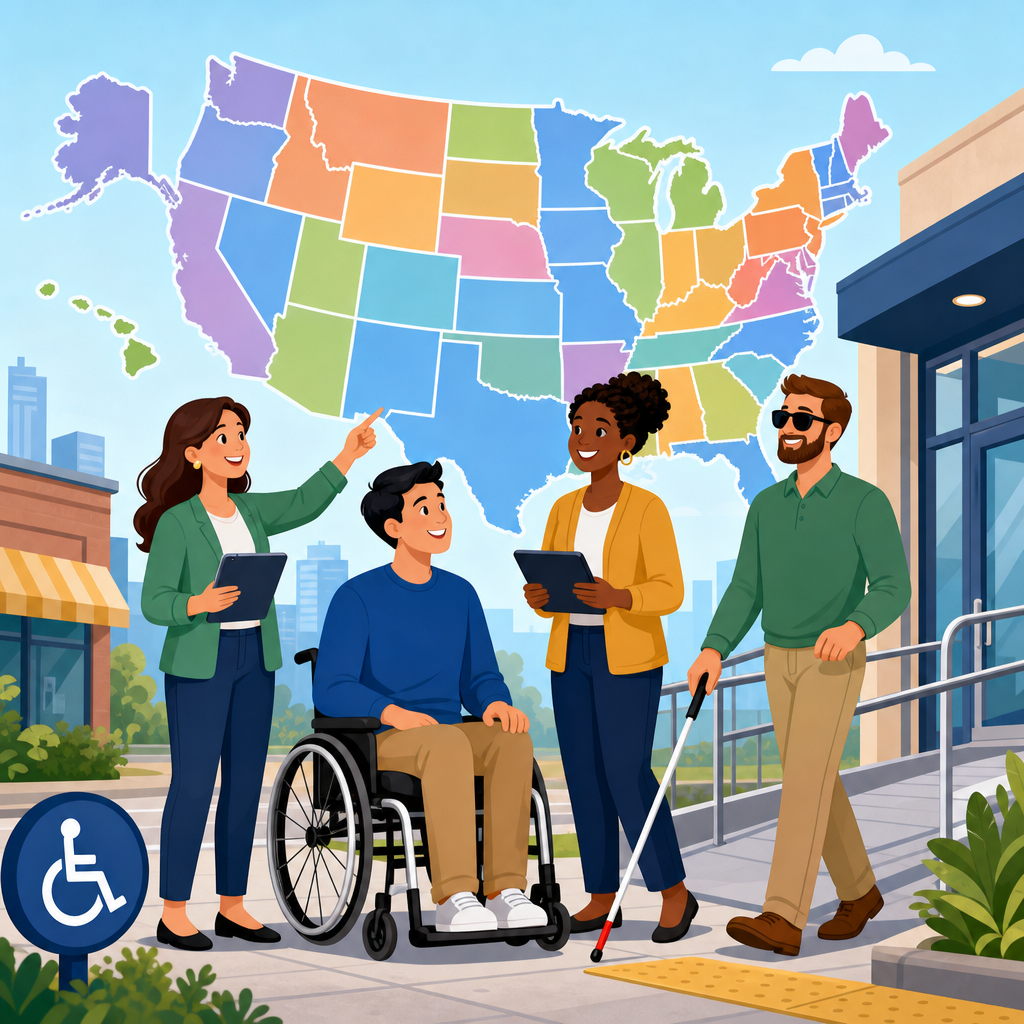
State-specific ADA regulations have become one of the most important moving targets in accessibility compliance because federal disability law sets the baseline, while states increasingly shape how businesses, employers, landlords, schools, health systems, and public agencies must apply those rules in practice. The Americans with Disabilities Act, or ADA, is the core federal civil rights law prohibiting disability discrimination in employment, public services, public accommodations, transportation, and telecommunications, but it does not operate alone. States add their own disability rights statutes, building codes, digital accessibility requirements, complaint procedures, damages rules, and enforcement priorities. In my work reviewing accessibility policies and remediation plans, the biggest compliance failures rarely come from ignoring the ADA entirely; they come from assuming federal compliance is enough everywhere. It is not.
Recent ADA updates and developments matter because accessibility obligations now evolve through a combination of federal rulemaking, state legislation, state accessibility codes, attorney general actions, and court decisions interpreting overlapping laws. A retailer may face one standard for physical access under the ADA Standards for Accessible Design, another under a state building code based on ICC A117.1, and separate exposure under a state civil rights act allowing statutory damages. A public university may need to consider ADA Title II, Section 504 of the Rehabilitation Act, web accessibility mandates tied to WCAG, and procurement rules imposed by state policy. A multistate employer may have to coordinate reasonable accommodation obligations with state disability definitions that are broader than the federal standard. That layered framework is why this topic needs a hub article.
This guide explains the current landscape of state-specific ADA regulations, highlights the most important recent ADA updates and developments, and shows where businesses should focus first. It is designed as a central resource for the broader updates and developments topic: a place to understand the legal structure, identify high-risk areas, and connect common questions about websites, facilities, employment, housing, education, transportation, and enforcement. The key point is straightforward: organizations should treat accessibility compliance as a state-by-state operational program, not a one-time federal checklist.
How state-specific ADA regulations work in practice
State-specific ADA regulations are not separate replacements for the ADA. They are additional legal and technical requirements that can expand rights, tighten procedures, or increase liability. The ADA creates a nationwide floor. States can provide equal or greater protection, and many do. In practice, that means compliance analysis starts with the federal statute and then adds state law, local code adoption, agency guidance, and controlling court precedent. For physical spaces, the interaction often involves the ADA Standards, state accessibility provisions in the building code, and inspection or permitting requirements. For digital accessibility, the interaction may involve federal nondiscrimination duties plus state procurement policies, consumer protection theories, or explicit public-sector web rules.
Three trends define recent ADA updates and developments at the state level. First, states are increasingly active on digital accessibility, especially for government websites, online services, and educational technology. Second, enforcement risk varies sharply depending on state remedies. California, for example, remains especially consequential because the Unruh Civil Rights Act can create statutory damages exposure in accessibility litigation. Third, states continue to broaden disability coverage in employment and public accommodation contexts, sometimes using definitions or procedural standards more favorable to claimants than federal law. These differences affect whether an issue becomes a warning letter, a remediation project, or full litigation.
For organizations with operations in several states, the practical answer is governance. Maintain an accessibility inventory, map obligations by state, and assign legal, facilities, HR, IT, procurement, and customer experience owners. That approach is more reliable than waiting for a complaint. Accessibility law now touches contracts, design systems, capital planning, onboarding, training, vendor management, and incident response. Teams that centralize these functions typically resolve issues faster and at lower cost.
Recent developments in digital accessibility requirements
Digital accessibility is where many readers first encounter state-specific ADA regulations, and for good reason. Websites, mobile apps, online forms, PDFs, kiosks, and video platforms have become the front door for commerce and public services. Recent ADA updates and developments in this area are driven by federal pressure and state implementation. The U.S. Department of Justice has consistently taken the position that the ADA applies to web and mobile experiences, and its 2024 rule for Title II entities formally adopted technical requirements based on WCAG 2.1 Level AA for state and local governments. States are now translating that federal direction into procurement terms, technology standards, and agency deadlines.
In practice, I have seen state entities move fastest where digital accessibility is tied to procurement. Once a state requires agencies or public universities to buy conformant software, accessibility shifts from an afterthought to a contract term. Vendors are asked for VPATs based on the Voluntary Product Accessibility Template, testing documentation, and remediation timelines. That does not guarantee real accessibility, but it creates a paper trail and a leverage point. For private companies, the lesson is similar: document testing against WCAG 2.1 AA, prioritize keyboard access, captions, color contrast, focus indicators, form labels, and error identification, and keep records showing an active remediation process.
States also influence digital risk through litigation patterns. California, New York, and Florida continue to see significant website accessibility filings, though the legal theories and remedies differ. California is notable because plaintiffs often pair ADA claims with state causes of action that increase settlement pressure. New York cases frequently focus on e-commerce barriers involving screen reader access and navigation. The result is that a company may operate one national site but face different practical exposure depending on where claims are filed. The most defensible strategy is uniform accessibility engineering rather than state-by-state website versions.
Physical accessibility, construction codes, and inspections
Physical access remains the area where businesses most often assume they are safe because a building passed inspection. That assumption is risky. Building code compliance and ADA compliance overlap, but they are not identical, and state-specific ADA regulations can complicate the analysis further. Many states adopt accessibility provisions through the International Building Code and ICC A117.1, sometimes with state amendments. Those codes affect plan review, permitting, and inspection for new construction and alterations. The ADA, meanwhile, imposes federal civil rights obligations that are enforceable even when a local inspector signed off.
Recent ADA updates and developments in this area often involve renewed attention to path-of-travel obligations, accessible parking geometry, service counters, restroom clearances, transient lodging features, pool access, and maintenance. I regularly find problems in spaces that look modern but fail at details: slopes outside compliant ranges, inaccessible point-of-sale devices, improper reach ranges, blocked maneuvering clearances, or signage mounted incorrectly. States may add their own certification systems or specialist review processes. California is again a major example because its accessibility regime includes Certified Access Specialists, commonly called CASp, who can help evaluate conditions and affect litigation posture.
The most important operational point is that accessibility is not only a design issue; it is a maintenance issue. An accessible route loses value when deliveries block it. An automatic door fails compliance when the opener breaks and stays broken. State enforcement agencies and private plaintiffs routinely focus on these ordinary breakdowns because they are visible, repeatable, and easy to document. Owners and tenants should conduct periodic inspections, train site managers, and track barrier removal decisions for existing facilities. For older properties, barrier removal under Title III remains a continuing obligation where changes are readily achievable, and some states layer on additional requirements or stronger remedies.
Employment accommodation rules that go beyond federal ADA standards
Employment is another area where recent ADA updates and developments are often state-driven. ADA Title I governs disability discrimination, reasonable accommodation, medical inquiries, and the interactive process for covered employers, but state fair employment laws frequently expand those protections. Some states cover smaller employers than the ADA. Some interpret disability more broadly. Some impose stronger accommodation duties related to pregnancy, temporary impairments, or off-duty medical treatment. Others create more demanding notice, leave, or anti-retaliation standards. If an employer uses only a federal ADA checklist, it may miss controlling state rules.
From a compliance standpoint, the interactive process is where state law differences become expensive. Supervisors often delay, ask for too much medical information, or treat remote work, modified schedules, reassignment, assistive technology, or leave as favors instead of legal accommodations. In several states, that approach creates liability quickly because the duty to engage is taken seriously by agencies and courts. Recent ADA updates and developments after the pandemic also changed expectations around telework. Employers that proved remote work was feasible during emergency periods now need stronger job-based evidence if they later insist every function must be performed on-site.
The most effective employment programs use standardized workflows with state-specific branches. HR should define essential functions carefully, set timelines for responding to accommodation requests, limit medical documentation to what is job-related and necessary, and train managers not to improvise. For multistate employers, a central accommodation team paired with local legal review is usually the safest model.
| Area | Federal baseline | Common state-level expansion | Practical effect |
|---|---|---|---|
| Employer coverage | ADA generally applies at 15+ employees | Some states cover smaller employers | Policies must extend to locations below the federal threshold |
| Definition of disability | Broad, but still tied to statutory standards | Broader state interpretations or protected conditions | More requests qualify for accommodation review |
| Leave as accommodation | Required when reasonable and not undue hardship | State leave laws may add parallel obligations | HR must coordinate multiple entitlements at once |
| Interactive process | Required under federal law | Some states treat process failures as stand-alone violations | Poor documentation becomes a major litigation risk |
State enforcement trends, litigation exposure, and high-risk jurisdictions
Not all states present the same accessibility risk profile. The legal standard may be similar, yet enforcement intensity, plaintiff activity, damages rules, and judicial attitudes can differ substantially. That is why any serious discussion of state-specific ADA regulations must include enforcement geography. California remains the clearest example of a high-risk jurisdiction because accessibility claims can be paired with statutes that permit monetary recovery beyond federal injunctive relief. New York also remains active, especially in digital cases. Florida has long seen substantial filing volume. Other states may have fewer private lawsuits but stronger attorney general interest in public-sector compliance.
Recent ADA updates and developments also show a shift toward systemic investigations. Instead of only targeting one inaccessible entrance or one defective webpage, regulators and plaintiffs increasingly ask whether the organization has an accessibility program. They want policies, training records, audit results, contract language, complaint logs, and remediation plans. In my experience, that program evidence often determines whether a matter escalates. A company that can show annual audits, issue tracking, vendor controls, and executive oversight is in a much better position than one claiming it was unaware of barriers.
High-risk sectors include retail, hospitality, restaurants, healthcare, higher education, banking, multifamily housing operations, and transportation-linked services. These sectors combine public-facing facilities with heavy digital dependence and frequent third-party vendor involvement. The most resilient response is enterprise accessibility management: designate an owner, adopt standards, fund remediation, and review changes before launch. That structure supports compliance across states even when the precise legal trigger varies.
Building a durable multistate accessibility compliance program
The best response to state-specific ADA regulations is a durable compliance system, not a reactive legal memo. Start with an applicability map covering every state where the organization has employees, customers, properties, students, patients, or government contracts. Then identify obligations across physical access, digital access, employment, communications, procurement, transportation, housing, and complaint handling. Use recognized benchmarks: ADA Standards for Accessible Design for facilities, WCAG 2.1 Level AA for digital experiences, Section 508 concepts for procurement review, and documented interactive-process procedures for employment. Those standards will not answer every state nuance, but they provide a reliable operating foundation.
Next, audit what exists. For facilities, inspect parking, routes, entrances, restrooms, service areas, lodging features, signage, and maintenance conditions. For digital assets, test templates, user flows, documents, multimedia, and third-party integrations using both automated tools and manual review with keyboard and screen reader testing. Tools such as axe DevTools, WAVE, Accessibility Insights, and screen readers like NVDA, JAWS, and VoiceOver are useful, but they do not replace human evaluation. For employment, review job descriptions, accommodation records, manager training, and medical information handling. For contracts, require accessibility representations, remediation obligations, and cooperation clauses.
Finally, create a governance loop. Assign deadlines, rank issues by user impact and legal exposure, track fixes, and repeat testing after changes. Accessibility should be integrated into design reviews, procurement approval, lease negotiations, construction planning, and incident management. That is how organizations stay ahead of recent ADA updates and developments rather than chasing them after a demand letter arrives. If this hub is relevant to your team, use it as the starting point for a state-by-state review, then build or refine the accessibility program that will keep your operations compliant as regulations continue to evolve.
Frequently Asked Questions
What does it mean when people talk about “state-specific ADA regulations”?
When people refer to state-specific ADA regulations, they are usually talking about the state laws, agency rules, building standards, enforcement procedures, and court interpretations that work alongside the federal Americans with Disabilities Act. The ADA establishes the national baseline by prohibiting disability discrimination in areas such as employment, public services, public accommodations, transportation, and telecommunications. However, states often go further by adopting broader disability definitions, stricter architectural accessibility standards, additional notice and cure requirements, expanded employee protections, or more detailed obligations for landlords, schools, health systems, and government entities.
In practice, that means compliance is rarely a federal-only question. A business may satisfy the ADA’s general requirements but still face state-level obligations that are more specific or more protective of disabled individuals. For example, a state may have its own accessibility code for new construction, a separate fair employment law covering smaller employers than the ADA does, or procedural rules that affect how disability discrimination claims are filed and investigated. Some states also create accessibility mandates through licensing laws, education regulations, housing rules, procurement standards, or digital accessibility requirements for public-facing services.
The key point is that the ADA remains the foundation, but state law often determines how accessibility expectations are implemented on the ground. For organizations operating in more than one state, this creates a patchwork of compliance responsibilities. The safest approach is to treat the ADA as the minimum standard and then evaluate whether each state imposes additional duties, narrower deadlines, different documentation rules, or enhanced remedies.
Why are updates in state-specific ADA regulations so important for businesses and organizations?
These updates matter because accessibility compliance is not static. State legislatures, administrative agencies, civil rights commissions, courts, and code officials regularly revise the rules that affect how organizations must serve employees, customers, tenants, students, patients, and members of the public with disabilities. Even modest changes can alter an organization’s legal exposure, operational procedures, and risk profile. A new state accessibility standard may affect renovation plans. A revised employment rule may change the interactive process for accommodation requests. A court decision may reinterpret what counts as effective communication, equal access, or undue hardship.
For employers, updates may affect hiring practices, medical inquiries, leave coordination, reasonable accommodation procedures, and disability harassment policies. For public accommodations such as retailers, restaurants, hotels, and professional offices, changes may influence physical access, service animal policies, website accessibility practices, communication aids, and complaint handling. For housing providers, schools, health systems, and public agencies, state developments can shape everything from program access and auxiliary aids to admissions procedures and emergency planning.
These developments are also important because noncompliance can be costly even when the organization believes it is following federal law. A company that relies only on general ADA guidance may miss a state requirement with different enforcement mechanisms or stronger penalties. Beyond litigation and agency investigations, there are reputational and operational consequences. Accessibility issues can interrupt projects, delay openings, generate customer complaints, trigger audits, and undermine public trust. Staying current helps organizations move from reactive compliance to proactive accessibility planning, which is usually more efficient and far less expensive over time.
How do state laws interact with the federal ADA when the rules are different?
As a general rule, the ADA sets a floor, not a ceiling. States can provide equal or greater protections for individuals with disabilities, but they cannot authorize conduct that would violate federal law. When state and federal requirements differ, organizations usually must comply with whichever standard is more protective or more demanding in the specific context. That is why accessibility analysis often begins with the ADA and then expands to state law, local code provisions, and sector-specific rules.
For example, if a state anti-discrimination statute covers employers with fewer employees than the ADA, a small employer may still be subject to state disability accommodation duties even if it is not covered by the federal employment title in the same way. If a state building code requires accessibility features beyond federal minimums for certain facilities, a property owner may need to follow those stricter design requirements. If a state agency adopts stronger communication access rules for healthcare providers or public entities, those providers may need to implement practices that exceed what they assumed was sufficient under federal law alone.
Conflicts can become complicated because the relevant rule may depend on the setting. Employment, housing, education, transportation, healthcare, and public services each have their own legal frameworks. In addition, some states have procedural laws that do not change the substance of accessibility rights but do affect how claims are brought, investigated, mediated, or defended. The most reliable strategy is to identify all applicable sources of law, compare the standards side by side, and apply the rule that creates the highest compliance obligation. Organizations with multistate operations should avoid one-size-fits-all policies unless those policies are designed to meet the most demanding jurisdictions in which they operate.
What are the most common areas where states expand on ADA accessibility requirements?
One of the most common areas is employment law. Many states have disability discrimination statutes that cover smaller employers, interpret disability more broadly, impose different documentation limits, or create additional leave and accommodation obligations. States may also have their own human rights agencies and claim procedures, which means an employer can face state-level review even when it believes the ADA framework is controlling.
Another major area is building and facility accessibility. States often adopt their own building codes, accessibility standards, inspection regimes, and permitting rules. While these may incorporate federal accessibility principles, they can add technical requirements related to entrances, parking, restrooms, signage, housing features, or renovation thresholds. Property owners, developers, and commercial tenants need to understand that accessibility compliance is often tied not only to civil rights law but also to construction law and local enforcement practices.
Digital accessibility is also becoming increasingly important. Some states impose website, online service, procurement, or educational technology accessibility requirements through public sector rules, consumer protection standards, or administrative guidance. Even where a statute does not explicitly mention websites or mobile apps, state enforcement bodies and courts may still interpret disability access obligations to include digital platforms. This is especially relevant for schools, healthcare systems, retailers, banks, and government contractors.
Additional expansion often appears in housing, education, healthcare, and public services. States may address service animals, communication access, disability-related screening criteria, emergency preparedness, transportation access, professional licensing, voting access, and grievance procedures in more detail than federal law does. The pattern is consistent across jurisdictions: the ADA provides the framework, and states increasingly define the practical details of implementation.
How can organizations keep up with updates in state-specific ADA regulations and reduce compliance risk?
The most effective approach is to build an ongoing compliance system instead of treating accessibility as a one-time legal review. Organizations should begin by identifying the states in which they operate, the facilities and digital services they offer, and the legal categories that apply to them, such as employment, public accommodation, housing, education, healthcare, or government services. From there, they should track legislative changes, agency guidance, building code updates, enforcement trends, and major court decisions in each relevant jurisdiction.
It is also smart to assign ownership internally. Compliance works better when specific teams are responsible for monitoring accessibility issues in HR, facilities, procurement, IT, customer service, legal, and operations. Policies should be reviewed regularly and updated when state law changes. Training matters as well. Front-line staff need to understand practical obligations involving communication assistance, accommodation requests, service access, and complaint escalation, while leadership should understand the strategic and legal consequences of inaction.
Periodic audits are another best practice. These can include physical accessibility reviews, digital accessibility testing, accommodation process assessments, contract and vendor reviews, and documentation checks. Many compliance failures happen not because an organization ignored the law entirely, but because its written policies, actual practices, and state-specific obligations drifted out of alignment over time. Working with experienced accessibility consultants, construction professionals, and legal counsel can help organizations spot those gaps early.
Most importantly, organizations should view accessibility updates as part of broader risk management and service quality, not just a legal burden. A proactive strategy helps reduce disputes, improve user experience, support inclusive hiring and customer engagement, and strengthen long-term resilience. In a regulatory environment where states continue to refine how disability rights are applied, staying informed is no longer optional; it is a core part of responsible operations.


