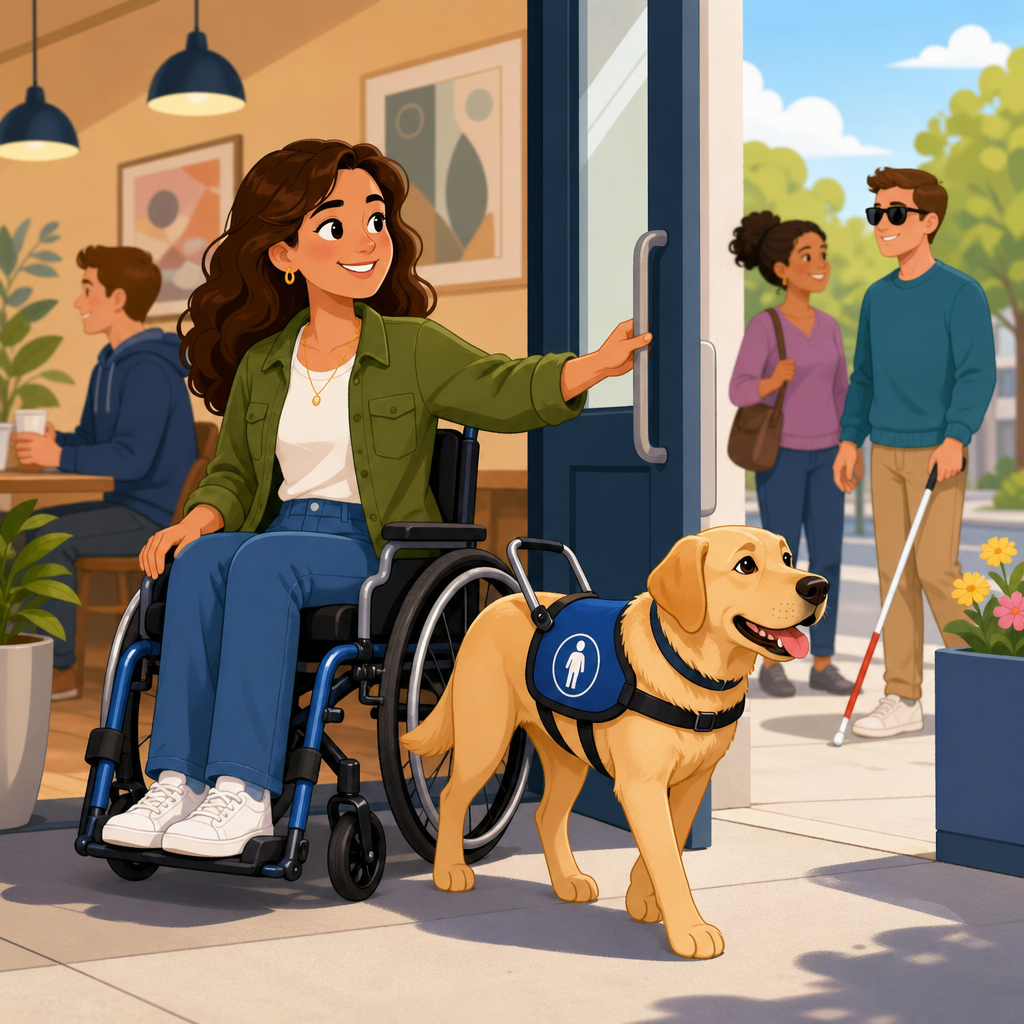
Service animals and the ADA shape daily access to work, housing, travel, healthcare, and public life for millions of Americans, yet the rules are widely misunderstood by businesses, landlords, schools, and even disabled handlers. The Americans with Disabilities Act, or ADA, is the federal civil rights law that prohibits discrimination against people with disabilities in public accommodations, state and local government services, transportation, and employment, and its service animal provisions are among the most practical protections in the statute. A service animal under the ADA is a dog that has been individually trained to do work or perform tasks for a person with a disability; in limited cases, a miniature horse may also qualify under a separate assessment. That definition matters because it separates trained task-performing animals from pets, therapy animals, comfort animals, and emotional support animals, which are not treated the same way under the ADA. In my work explaining disability access rules to organizations, this distinction is the point where most compliance failures begin. People often assume any animal that helps a disabled person is automatically protected everywhere, but the law is narrower and more specific. Understanding the actual standard protects disabled handlers from unlawful exclusion while also giving businesses and institutions a clear compliance framework. This hub article explains the core rights and regulations, the questions staff may ask, where service animals must be admitted, when removal is lawful, how the rules differ from housing and air travel standards, and what practical steps reduce conflict. If you need a central guide to focused explorations of ADA rights, this page provides the foundation and connects the most important issues in plain language.
What the ADA recognizes as a service animal
The ADA definition is straightforward: a service animal is usually a dog trained to perform specific work or tasks directly related to a person’s disability. The task requirement is critical. A guide dog leading a blind handler through traffic, a hearing dog alerting to alarms, a mobility assistance dog retrieving dropped items, a seizure response dog signaling or responding to episodes, and a psychiatric service dog interrupting self-harm or grounding a handler during dissociation all fit the rule because each animal performs trained actions. By contrast, animals whose sole function is comfort, companionship, or emotional support do not qualify as service animals under the ADA, even if they are very important to the person’s wellbeing. That does not make those animals unimportant; it means they are governed by different laws, if any. The Department of Justice regulations at 28 C.F.R. Part 35 and Part 36 are the controlling federal standards for state and local governments and public accommodations. Those regulations also recognize miniature horses in limited circumstances, requiring entities to consider whether the horse is housebroken, under control, can be accommodated by the facility, and whether its presence compromises legitimate safety requirements. In practice, miniature horse cases are uncommon, but the rule exists and staff should know it.
Where service animals have access rights under the ADA
Under the ADA, service animals generally must be allowed to accompany people with disabilities in all areas of a facility where members of the public, customers, program participants, or invitees are normally allowed to go. That includes restaurants, hotels, retail stores, hospitals, medical offices, theaters, libraries, schools operated by public entities, government buildings, public transit systems, and many workplace-adjacent public areas. Access is not limited to entrances or waiting rooms; if the public may enter a dining room, classroom, patient area, or checkout lane, the service animal usually may enter as well. I often remind staff that “no pets” policies are irrelevant here because service animals are not pets under the law. Fees, deposits, or surcharges also cannot be imposed just because the handler uses a service animal, even when a business normally charges pet fees. However, if a business would normally charge any customer for damage they cause, it may charge a handler for actual damage caused by the service animal. Healthcare settings create frequent questions. A hospital must usually admit a service animal to patient rooms, clinics, cafeterias, and exam spaces, but it may restrict access to sterile environments like operating rooms or burn units where the presence of an animal would create a legitimate safety risk grounded in actual medical standards, not stereotypes.
What staff may ask and what they may not demand
When the need for a service animal is not obvious, staff may ask only two questions: whether the dog is required because of a disability and what work or task the dog has been trained to perform. Those are the only routine gatekeeping questions permitted by the ADA. Staff may not require documentation, demand a special identification card, ask that the dog demonstrate its task, inquire about the person’s diagnosis, or insist on certification from an online registry. This point deserves emphasis because fake “service animal certificates” sold on the internet have created confusion for everyone. There is no federally required ADA registration, license, vest, or national database. A legitimate service animal may wear a vest, but the law does not require one. Good training practice often includes visible gear because it reduces confrontation, yet legal status does not depend on appearance. Frontline employees need scripted guidance because stressful interactions happen fast. A host at a restaurant, for example, can ask the two permitted questions if the disability is not apparent, but cannot say, “Show me papers” or “Tell me your medical condition.” A receptionist may not separate the handler from the dog or seat them in an inferior area. Clear policy language, annual training, and incident documentation usually prevent small mistakes from becoming civil rights complaints.
When a business may lawfully exclude or remove a service animal
The ADA is protective, but access is not absolute. A service animal may be excluded if it is out of control and the handler does not take effective action to control it, or if the animal is not housebroken. A dog barking continuously during a movie, lunging at other patrons, stealing food from tables, or urinating indoors can legally be removed if the handler cannot correct the behavior. Staff may also exclude an animal when its presence would fundamentally alter the nature of the goods or services or when legitimate safety requirements make accommodation impossible in a specific area. The standard is individualized and evidence based. Fear of dogs, generalized allergies, cultural discomfort, or assumptions about breed are not enough. The business must still offer the person with a disability the opportunity to obtain goods or services without the animal’s presence when feasible. That means a grocery store could remove a disruptive dog but should still assist the customer with shopping. The key concept is behavior, not status. Well-trained service animals are typically quiet, responsive, and focused, which is why most access disputes stem from staff misunderstanding or from untrained animals being misrepresented as service animals. Consistent enforcement of behavior standards protects access for legitimate handlers and reduces public skepticism.
How ADA rules differ from housing, air travel, and employment standards
One reason this topic is confusing is that the ADA is not the only law in play. Housing is usually governed by the Fair Housing Act and guidance from the U.S. Department of Housing and Urban Development, which can require reasonable accommodation for assistance animals, including emotional support animals, in some circumstances. Air travel is primarily governed by the Air Carrier Access Act and Department of Transportation rules, which now define service animals more narrowly than earlier airline practices and generally exclude emotional support animals from mandatory acceptance as service animals. Employment raises another separate issue: Title I of the ADA addresses reasonable accommodation in the workplace, but it does not contain the same public-accommodation service animal rule. Employers must evaluate requests case by case, considering job duties, safety, allergies, workspace design, and alternative accommodations.
| Context | Main law | Animal types commonly covered | Key point |
|---|---|---|---|
| Restaurants, stores, hotels | ADA Titles II and III | Service dogs, limited miniature horses | Must admit trained task-performing animals |
| Housing | Fair Housing Act | Service and other assistance animals | Emotional support animals may qualify |
| Air travel | Air Carrier Access Act | Service dogs | Airlines may require DOT forms |
| Employment | ADA Title I | Case-specific accommodation | No automatic workplace access rule |
In practice, people get into trouble when they apply one framework to another. A landlord may have to consider documentation for an emotional support animal request under housing law, while a coffee shop cannot demand paperwork for a service dog under public access rules. Keeping the legal context straight is essential to compliance.
Common disputes and how to handle them correctly
The most common service animal disputes involve restaurants, grocery stores, taxis or rideshare vehicles, hospitals, and apartment buildings with overlapping rules. In food service settings, staff sometimes wrongly claim health codes prohibit dogs where food is served. Federal disability law overrides blanket “no animals” assumptions, and health codes generally do not bar service animals from dining areas. In transportation, drivers may refuse rides because of dog hair, religion, or personal preference, but disability access obligations usually require carriage unless a direct safety problem exists. In medical settings, conflicts often arise when staff focus on infection-control myths rather than actual restricted zones. I have seen organizations solve recurring problems by using a simple response ladder: verify with the two permitted questions, assess behavior, offer equal service, and escalate only when there is a documented safety or control issue. For handlers, the best practical approach is equally direct: keep the animal under control with a harness, leash, or tether unless disability-related task work requires otherwise; maintain grooming and housebreaking; and explain the task succinctly without volunteering unnecessary medical detail. When a dispute still occurs, contemporaneous notes matter. Record the date, location, employee names, what was asked, what was refused, and whether comparable customers were treated differently. Complaints may be filed with the Department of Justice, transit agencies, state civil rights bodies, licensing boards, or courts depending on the setting. Early resolution is usually better than litigation, but accurate records drive results.
Best practices for businesses, public entities, and handlers
Strong service animal compliance depends less on legal theory than on repeatable operating practices. Businesses and public entities should adopt a written service animal policy, train all frontline employees, and include examples tailored to the site, such as restaurant seating, school events, clinic intake, or hotel housekeeping. Scripts work. A staff member who knows exactly what to say is less likely to improvise an unlawful question. Signage should be careful: “Service animals welcome” is useful, while signs requiring registration are incorrect. Managers should also know the removal standard and document incidents involving aggression, uncontrolled barking, or sanitation problems. Handlers benefit from preparing for common misunderstandings without assuming hostility. A calm, concise explanation often resolves issues quickly. From years of reviewing access incidents, I have found that the best outcomes come when both sides focus on function. Is the animal trained to perform disability-related tasks? Is it under control? Can the person receive the same service as everyone else? Those questions capture the core of the ADA. This hub page is the starting point for deeper focused explorations of ADA rights, including public accommodations, workplace accommodations, housing intersections, transportation access, and enforcement options. Review your policies, train your team, and use this framework whenever service animal access questions arise. Clear knowledge prevents exclusion, reduces conflict, and protects civil rights in the places people need to live ordinary lives every day.
Frequently Asked Questions
What is a service animal under the ADA, and how is it different from an emotional support animal?
Under the Americans with Disabilities Act, a service animal is defined as a dog that has been individually trained to do work or perform specific tasks for a person with a disability. In limited cases, a trained miniature horse may also qualify under ADA rules. The key point is that the animal must be trained to take a particular action directly related to the person’s disability. Examples include guiding a person who is blind, alerting a person who is deaf, pulling a wheelchair, retrieving dropped items, interrupting self-harming behaviors, reminding a person to take medication, or detecting and responding to a medical episode such as a seizure or blood sugar change.
That is very different from an emotional support animal, comfort animal, or therapy animal. Emotional support animals may provide companionship or relieve symptoms such as anxiety or loneliness, but they are not considered service animals under the ADA unless they are trained to perform a specific disability-related task. Therapy animals also serve a different role, typically visiting hospitals, schools, or care facilities to comfort multiple people rather than working for one disabled handler. Because the ADA uses a narrow legal definition, businesses and public entities are not required to admit emotional support animals in places where pets are normally prohibited, even though other laws, such as certain housing rules, may treat them differently in some situations.
What questions can a business or public place legally ask about a service animal?
When it is not obvious that a dog is a service animal, staff are generally limited to asking only two questions under ADA guidance: first, whether the dog is required because of a disability; and second, what work or task the dog has been trained to perform. These two questions are meant to balance access rights with legitimate operational concerns. They allow a business to determine whether the animal falls within the ADA definition without forcing the handler to disclose private medical details.
Just as important are the questions and demands that are not allowed. A business cannot require the person to reveal their diagnosis, describe the severity of their disability, provide medical documentation, produce a special identification card, show proof of certification, or demonstrate the dog’s task on the spot. There is no federally required registry or certification for service animals under the ADA, so demanding “papers” is often based on a misunderstanding of the law. Staff may still enforce neutral rules about behavior and safety, but they must do so in a way that does not single out disabled patrons unfairly. Training employees on the two-question rule is one of the best ways organizations can stay compliant while avoiding embarrassing or unlawful confrontations.
Where are service animals allowed under the ADA, and are there any exceptions?
In general, service animals must be allowed to accompany their handlers in areas where members of the public, customers, clients, passengers, patients, or program participants are normally allowed to go. That includes restaurants, stores, hotels, hospitals, government buildings, schools, libraries, theaters, public transit, and many other public-facing spaces covered by the ADA. The same basic principle applies to state and local government services and many transportation settings. A covered entity cannot isolate a person with a service animal, treat them as less welcome, or redirect them to a lesser area simply because a dog is present.
There are, however, limited exceptions. A service animal may be excluded if the dog is out of control and the handler does not take effective action to control it, or if the dog is not housebroken. In rare cases, exclusion may also be justified if the animal’s presence would fundamentally alter the nature of the service or program or create a legitimate direct threat that cannot be reduced through reasonable modifications. These are narrow exceptions, not broad loopholes. For example, concerns about allergies, fear of dogs, or assumptions about sanitation do not usually justify denying access. If a service animal is lawfully excluded for behavior-related reasons, the business or agency should still offer the person with a disability the opportunity to obtain goods, services, or access without the animal present, if that can be done safely and reasonably.
Do landlords, employers, airlines, and schools all have to follow the same service animal rules?
No. This is one of the most common sources of confusion. The ADA governs service animal access in public accommodations, state and local government services, transportation, and employment, but it does not control every setting in exactly the same way. Housing is often affected by the Fair Housing Act, which can require landlords and housing providers to consider reasonable accommodations for assistance animals, including some emotional support animals, even though those animals are not considered service animals under the ADA. That means the legal analysis in an apartment building or rental property may differ significantly from the analysis in a restaurant or retail store.
Employment is also more nuanced than many people expect. Title I of the ADA requires covered employers to provide reasonable accommodations to qualified employees with disabilities unless doing so would create an undue hardship, but bringing a service animal to work is usually handled through the accommodation process rather than through the public-access rules used in stores and restaurants. Schools and universities may have overlapping obligations under the ADA, Section 504, and sometimes the Individuals with Disabilities Education Act, depending on the setting and the student’s needs. Air travel is another distinct area because the Air Carrier Access Act, not the ADA, largely governs airline policies. As a result, a handler may have broad access rights in a hotel lobby, different documentation or policy rules when flying, and a separate accommodation process when seeking permission for an animal in housing or at work. Understanding which law applies is essential before assuming the same answer fits every situation.
Can a business charge extra fees, impose special rules, or remove a service animal for behavior problems?
A business or public entity generally cannot charge extra fees, deposits, cleaning surcharges, or pet rent simply because a person uses a service animal. Under the ADA, a service animal is not treated as a pet, so “no pets” policies and pet fees do not apply in the usual way. A hotel cannot move a guest with a service animal to a pet-designated room just because it prefers to keep animals in one area, and a restaurant cannot seat a diner in a less desirable section because staff are uncomfortable with dogs. Covered entities also cannot impose burdensome requirements such as advance notice, proof of training, or special tags if those demands are not imposed on others.
At the same time, handlers are responsible for keeping the animal under control. The dog should generally be harnessed, leashed, or tethered unless those devices interfere with the dog’s work or the person’s disability prevents their use, in which case the handler must maintain control through voice, signal, or other effective means. If the animal is barking repeatedly, lunging, running loose, jumping on people, or relieving itself indoors, the business may have grounds to ask that the animal be removed. That does not mean the person loses all rights to service; rather, the business should still try to serve the individual without the dog if possible. If the animal causes actual damage, a business may charge the same damage fee it would charge any other customer for comparable harm, but it cannot impose automatic or preventive fees just because the animal is present.