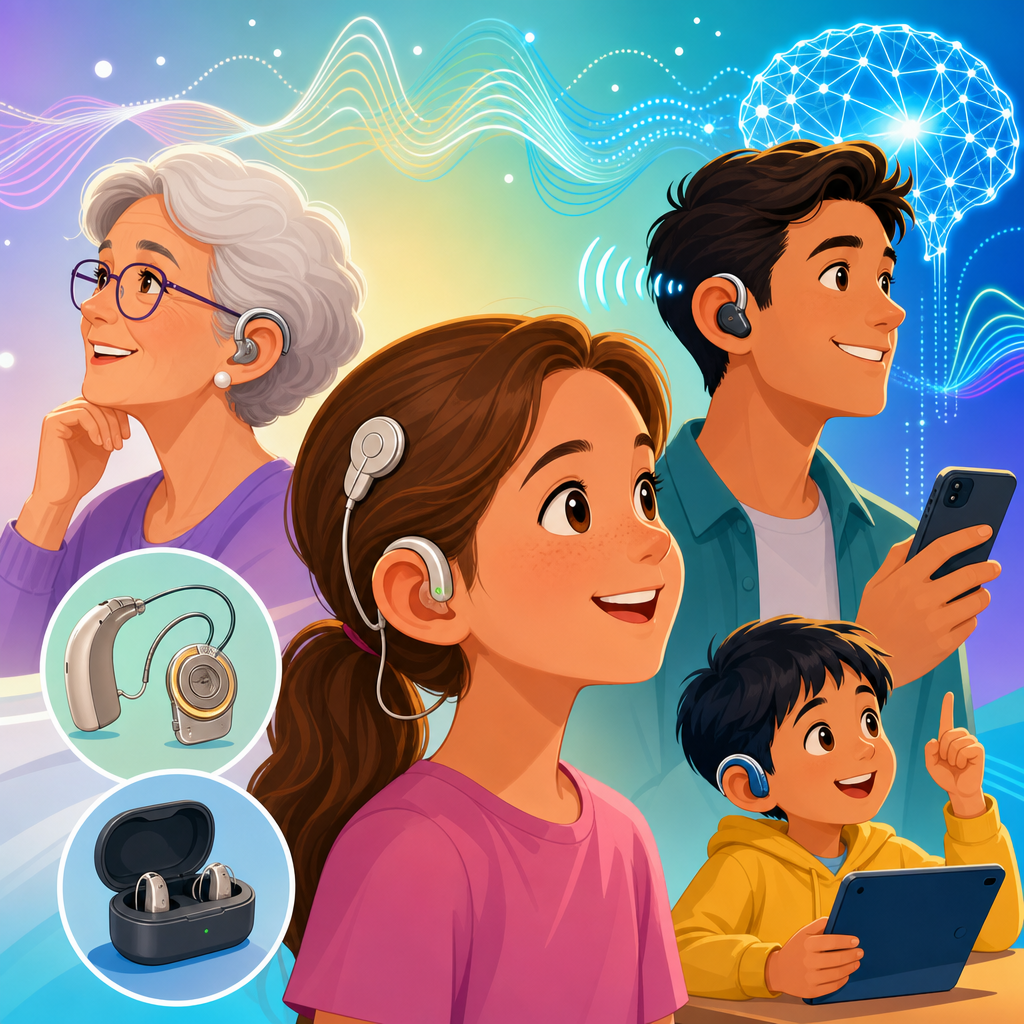
Advanced hearing technologies are reshaping accessibility by turning sound, speech, and environmental cues into information that more people can use with confidence. In the broader field of technology and accessibility, hearing tools matter because communication is foundational to education, work, healthcare, transportation, and daily independence. When I evaluate accessibility systems, I treat hearing technology as more than a medical device category; it is a practical interface layer between people, environments, and digital services. This hub explains the basics of technology and accessibility through the lens of hearing innovation, from cochlear implants and modern hearing aids to captioning platforms, alerting systems, and AI-assisted devices. It also clarifies key terms. Accessibility means designing products, places, and services so people with disabilities can use them effectively. Assistive technology refers to hardware or software that improves functional ability. Hearing loss can be conductive, sensorineural, or mixed, and solutions differ accordingly. Some tools amplify sound, some convert sound into text or vibration, and some bypass damaged structures of the ear entirely. Understanding these differences matters because the best outcome rarely comes from a single device. It comes from an ecosystem: clinical care, compatible consumer technology, accessible content, and environments built to recognized standards.
That ecosystem is expanding quickly. The World Health Organization has estimated that more than 1.5 billion people live with some degree of hearing loss, with hundreds of millions experiencing disabling hearing loss. At the same time, smartphones, cloud computing, Bluetooth Low Energy, edge AI, and teleaudiology have transformed what accessible hearing support can look like. A person may use a prescription hearing aid for meetings, live captions for video calls, a flashing doorbell at home, and a phone app that identifies nearby alarms or announces speech in noise. This article serves as a hub for the technology and accessibility subtopic by explaining the major device categories, the standards and design principles behind them, the tradeoffs users should weigh, and the practical questions organizations should ask when choosing tools. If you are building an accessibility strategy, buying products, supporting an employee, or learning where to start, these basics provide the foundation for deeper articles across the subtopic.
Core categories of advanced hearing technology
The hearing technology landscape is easiest to understand in five categories: hearing aids, cochlear implants, bone conduction systems, assistive listening systems, and communication access tools such as captioning and transcription. Each category solves a different problem. Hearing aids amplify and process acoustic sound for people with usable residual hearing. Modern devices use directional microphones, feedback suppression, adaptive noise reduction, and frequency shaping based on an audiogram. Cochlear implants work differently. They convert sound into electrical signals sent directly to the auditory nerve through an implanted electrode array, making them appropriate for severe to profound sensorineural hearing loss when hearing aids do not provide enough speech understanding. Bone conduction devices transmit vibration through the skull to the inner ear and are often considered for conductive hearing loss, single-sided deafness, or anatomical conditions affecting the outer or middle ear.
Assistive listening systems improve the signal-to-noise ratio in difficult spaces such as classrooms, theaters, airports, and worship venues. Common options include induction loop systems, FM systems, and infrared systems. A hearing aid user with a telecoil can connect directly to a looped room, receiving the speaker’s voice with less background noise and reverberation. Communication access tools extend beyond hearing hardware. Real-time captions, speech-to-text apps, relay services, visual alert systems, and wearable haptics all support access. In practice, users frequently combine categories. One executive I advised used bilateral hearing aids, a remote microphone in conference rooms, automatic captions on Teams and Zoom, and a smartwatch linked to door and smoke alarms. Accessibility improved not because one product was perfect, but because the toolset matched specific listening contexts.
Cochlear implants and implantable systems
Cochlear implants are among the most significant advances in hearing accessibility because they address cases where amplification alone is insufficient. The system has external and internal components. Externally, a microphone captures sound, a speech processor analyzes it, and a transmitter coil sends coded information across the skin. Internally, a receiver-stimulator and electrode array deliver electrical impulses to the cochlea. Those impulses stimulate auditory nerve fibers in patterns that the brain learns to interpret as meaningful sound. This is not restored natural hearing, and users need counseling and rehabilitation, but for appropriately selected candidates the improvement in speech perception can be life changing.
Major manufacturers include Cochlear, MED-EL, and Advanced Bionics, each with different electrode designs, processing strategies, and accessory ecosystems. Candidacy has broadened over time as evidence accumulated, but evaluation remains individualized and typically includes audiometry, aided speech testing, imaging, and medical review. Outcomes vary by age at implantation, duration of deafness, neural health, device programming, and post-implant therapy. Children implanted early often gain substantial spoken language access. Adults with progressive hearing loss may regain the ability to use the phone or follow conversation more reliably. Implantable options also include bone anchored hearing systems, which can use percutaneous or transcutaneous coupling, and active middle ear implants for selected cases. The central accessibility lesson is that implant technology is not only a surgical question. It is a long-term support model involving mapping sessions, software updates, accessory pairing, streaming compatibility, rehabilitation, and realistic expectations about performance in noise, music appreciation, and fatigue.
Hearing aids, OTC devices, and everyday connectivity
Hearing aids have evolved from simple amplifiers into miniature computers with sensors, wireless radios, and app-based controls. Current prescription devices from brands such as Phonak, Oticon, ReSound, Signia, Starkey, and Widex can classify sound environments, adjust gain automatically, stream calls, and integrate with remote microphones and TV transmitters. Core technical features include wide dynamic range compression, multiple channels for fine tuning, beamforming, impulse noise management, wind noise control, and feedback cancellation. Rechargeable lithium-ion models have improved convenience and increased adoption, especially for users with dexterity limitations. Receiver-in-canal devices remain common, but custom in-ear styles still matter for cosmetic preference and specific acoustic needs.
Over-the-counter hearing aids have expanded access for adults with perceived mild to moderate hearing loss, particularly in the United States after FDA rule changes. They can reduce cost and speed up acquisition, but they are not the right answer for every user. Red-flag symptoms such as sudden hearing loss, unilateral symptoms, pain, drainage, or dizziness warrant medical evaluation. In my experience, people succeed with hearing technology fastest when fitting quality, counseling, and expectation setting are treated as seriously as the hardware itself. Connectivity also matters. Bluetooth Classic and Bluetooth LE Audio support direct streaming, while the Auracast broadcast model promises shared audio in public venues, airports, museums, and classrooms. That shift could do for public listening access what Wi-Fi did for internet access: move support from special request to built-in infrastructure.
AI-assisted devices, captions, and environmental awareness
Artificial intelligence is changing hearing accessibility in practical, measurable ways. On-device machine learning can classify acoustic scenes, prioritize speech, suppress steady-state noise, and adapt settings with less user intervention. Cloud-based speech recognition can generate live captions for meetings, classes, and videos. Computer vision can supplement audio by identifying who is speaking or flagging a siren, barking dog, or crying baby through a phone camera and microphone. These systems do not replace clinical hearing care, but they reduce friction across everyday tasks.
Examples are already mainstream. Apple’s Live Listen, Sound Recognition, and Headphone Accommodations add accessibility features to consumer devices. Google Live Transcribe provides continuous speech-to-text on Android. Microsoft Teams, Zoom, and Google Meet offer live captions and transcripts, improving participation in remote and hybrid work. Dedicated products such as Roger remote microphones from Phonak improve speech pickup in noise, while apps like Ava and Otter support group transcription. Accuracy depends on microphone placement, accent variation, internet connection, and background noise, so no captioning system should be treated as infallible for legal or safety-critical use without validation. Still, AI-assisted hearing tools deliver real gains in comprehension, confidence, and autonomy.
| Technology | Best use case | Main advantage | Key limitation |
|---|---|---|---|
| Cochlear implant | Severe to profound sensorineural loss | Can improve speech access when hearing aids fail | Requires surgery and rehabilitation |
| Prescription hearing aid | Mild to severe hearing loss with residual hearing | Customized amplification and connectivity | Performance drops in complex noise |
| OTC hearing aid | Adults with perceived mild to moderate loss | Lower barrier to entry and lower cost | Limited personalization and support |
| Assistive listening system | Classrooms, theaters, counters, worship spaces | Better signal-to-noise ratio in public settings | Venue installation and maintenance required |
| Live captioning app | Meetings, lectures, casual conversation | Immediate text access to speech | Errors increase with noise and overlap |
Accessibility standards, inclusive design, and procurement basics
Technology and accessibility only work at scale when devices fit into inclusive environments. For physical spaces in the United States, the ADA sets obligations around effective communication, while the 2010 ADA Standards and related guidance shape accessible built environments. For digital products, WCAG 2.2 provides a recognized framework for perceivable, operable, understandable, and robust content. Hearing-related requirements often include captions for prerecorded and live media, transcripts, visible alerts, adjustable audio, and compatibility with assistive technologies. In procurement, I look for support across three layers: personal devices, environmental systems, and digital services. A school might need classroom audio distribution, captioned learning platforms, and hearing aid compatible service counters. A hospital might need visual paging alternatives, video remote interpreting workflows, looped registration desks, and accessible telehealth platforms.
Interoperability is where many projects fail. Buyers should confirm telecoil support, Bluetooth compatibility, latency performance, battery life, microphone accessory options, app accessibility, firmware update policies, and data privacy practices. If speech data is sent to the cloud for transcription, vendors should explain retention, encryption, and administrative controls. Training is equally important. Staff need to know how to turn on captions, pair a remote microphone, test a loop, and offer communication choices without making assumptions. Inclusive design means reducing the need for special accommodation by building access into normal operations. When organizations do this well, hearing accessibility benefits many users beyond those who identify as deaf or hard of hearing, including older adults, multilingual teams, people in noisy settings, and anyone dealing with poor audio quality.
Choosing the right solution and what comes next
The right hearing technology depends on hearing profile, environment, budget, and goals. Start with the question the user is trying to answer: Do I need clearer speech in restaurants, better access to meetings, awareness of alarms, or a pathway to spoken language after profound loss? Clinical assessment is essential for diagnosis and candidacy, but everyday context is just as important. I ask users to map their toughest listening moments across home, work, travel, education, and entertainment. That reveals whether they need amplification, direct audio input, captions, visual alerts, a remote microphone, or several layers working together. Total cost should include not just device price, but batteries or charging, earmolds, accessories, follow-up visits, software subscriptions, repairs, and training time.
Looking ahead, expect faster progress in low-latency wireless audio, personalized hearing profiles, self-fitting workflows, context-aware AI, and public broadcast audio. Auracast could make shared audio streams common in transit hubs and event venues. Better speech enhancement models will improve hearing in noise, though physics still limits what any system can do in crowded reverberant spaces. Remote care will keep expanding, especially for follow-up adjustments and troubleshooting. The main takeaway for this technology and accessibility hub is straightforward: advanced hearing technologies are most effective when treated as part of an accessibility system, not as isolated gadgets. Cochlear implants, hearing aids, assistive listening, captions, and AI-assisted devices each solve different access problems, and the best results come from matching tools to real situations. If you are building a program or choosing support for yourself, start with needs, confirm standards, test interoperability, and create a layered plan that people can actually use every day.
Frequently Asked Questions
1. What is the difference between cochlear implants, hearing aids, and AI-assisted hearing devices?
Cochlear implants, hearing aids, and AI-assisted hearing devices all support access to sound, but they do so in very different ways. Traditional hearing aids amplify sound that a person can still process through the natural hearing pathway. They are typically used when someone has mild to severe hearing loss but still has enough functioning hair cells in the inner ear to benefit from louder, clearer input. Modern hearing aids also include advanced digital signal processing that can reduce background noise, emphasize speech, and adapt to different listening environments.
Cochlear implants work differently. Instead of simply making sound louder, they bypass damaged parts of the inner ear and directly stimulate the auditory nerve using electrical signals. This makes them a very different category of technology, usually intended for people with severe to profound hearing loss who receive limited benefit from conventional hearing aids. A cochlear implant system generally includes an external microphone and processor plus an internal surgically implanted receiver and electrode array. For many users, the goal is not “normal hearing,” but improved access to speech, alerts, and environmental sounds that can significantly support communication and independence.
AI-assisted hearing devices add another layer of intelligence on top of these foundations. In practice, “AI” can refer to machine-learning features that classify listening environments, separate speech from noise, recognize sound patterns such as alarms or doorbells, personalize settings based on user behavior, or even provide live transcription and language support through connected apps. Some AI features are built into hearing aids and cochlear implant processors, while others operate through smartphones, wearables, or cloud-connected accessibility platforms. The key distinction is that AI-assisted systems do more than transmit sound; they interpret audio context and help turn it into more usable information.
For users, the most important question is not which technology sounds most advanced, but which one best matches hearing profile, communication goals, lifestyle, and support needs. A student in classrooms, a commuter navigating public transit, and an older adult prioritizing phone calls and safety alerts may all require different solutions. In accessibility terms, these tools are best understood as interface layers between the sound environment and the user, helping convert speech and acoustic cues into forms that are clearer, more actionable, and more reliable.
2. How is artificial intelligence improving hearing technology in real-world settings?
Artificial intelligence is improving hearing technology by making devices more adaptive, personalized, and context-aware. In older systems, users often had to switch manually between programs for quiet conversations, restaurants, outdoor environments, or music. AI-enabled devices can now analyze incoming audio in real time, identify the type of environment, and automatically adjust microphone directionality, gain, noise reduction, and speech enhancement settings. That means the device can respond more intelligently as the listening situation changes throughout the day.
One of the most meaningful benefits is speech understanding in noisy environments, which remains one of the biggest challenges for people with hearing loss. AI models can help distinguish speech from competing noise, prioritize voices in front of the listener, and reduce disruptive sounds such as traffic, HVAC hum, or crowd chatter. While no device can remove all listening difficulty, these tools can reduce cognitive load, meaning the user spends less mental effort trying to piece together conversations. That can make a major difference at work, in school, during healthcare visits, and in social situations where fatigue often becomes part of the accessibility barrier.
AI is also extending hearing access beyond direct amplification. Many systems now connect with smartphone apps that provide live captions, remote microphone support, sound alert recognition, and personalized listening controls. Some can identify sirens, smoke alarms, baby cries, or knocking sounds and send visual or haptic notifications. Others can integrate with video calls, public venue assistive systems, and smart home platforms. This is where hearing technology becomes part of a broader accessibility ecosystem rather than a standalone device category.
Another important development is personalization over time. AI-assisted systems can learn from how users adjust volume, select listening modes, or respond in particular places. Over repeated use, the device may become better tuned to the individual’s preferences rather than relying only on a generic clinical fitting. That said, strong design still matters. AI is most useful when it is transparent, reliable, and easy to override. The best systems support the user’s agency, not replace it. In real-world accessibility, success comes from practical outcomes: clearer communication, better awareness of surroundings, lower listening effort, and more confidence in everyday interactions.
3. Who is a good candidate for advanced hearing technologies, and how is the right solution chosen?
A good candidate for advanced hearing technologies is someone whose daily communication, safety, learning, or independence would improve with better access to sound and speech, but the right device depends heavily on the type and degree of hearing loss, overall health, listening goals, and everyday environments. There is no one-size-fits-all answer. Some people do well with modern hearing aids, while others may need cochlear implants, bone conduction systems, assistive listening devices, captioning tools, or combinations of technologies working together.
The evaluation process usually starts with a comprehensive hearing assessment by an audiologist, often combined with medical review by an ear, nose, and throat specialist when implantable devices are being considered. Clinicians look at hearing thresholds, speech recognition ability, ear anatomy, prior benefit from hearing aids, and whether one or both ears are affected. Just as important, they consider functional needs: Does the person need to follow meetings? Hear in traffic? Understand teachers in a classroom? Use the phone? Recognize alarms at home? Accessibility decisions are strongest when they are based not only on test results, but also on real-life participation needs.
For cochlear implants specifically, candidacy has broadened over time. Many people still assume implants are only for total deafness, but modern criteria may include individuals with severe hearing loss who receive limited benefit from well-fitted hearing aids, especially in speech understanding. Early referral matters because waiting too long can delay access to communication benefits. At the same time, cochlear implantation is a surgical intervention, so candidacy also includes medical suitability, rehabilitation readiness, and a clear understanding of what outcomes may realistically look like after activation and training.
The “right” solution is often a system, not a single product. A person may use hearing aids for direct listening, a remote microphone for school or conference rooms, live captions for presentations, vibrating alerts for safety, and AI-based apps for phone calls or noisy public spaces. This layered approach reflects how accessibility actually works in practice. The goal is not to force every challenge into one device, but to build a toolkit that supports communication across settings. The best outcomes usually come from individualized fitting, ongoing follow-up, user training, and willingness to adjust the technology as needs evolve.
4. What are the main benefits and limitations of cochlear implants and other advanced hearing devices?
The main benefit of advanced hearing technologies is that they can dramatically improve access to communication and environmental awareness. For many users, that means better speech perception, improved ability to participate in conversations, stronger performance in education or work, and greater confidence in navigating public and private spaces. Cochlear implants, in particular, can open access to speech for people who received little benefit from hearing aids, while advanced digital and AI-assisted hearing devices can improve comfort and clarity in complex listening environments. Features like directional microphones, wireless streaming, remote microphones, sound classification, and smartphone connectivity make hearing support more flexible and responsive than ever before.
Another important benefit is reduced listening effort. Hearing loss is not only about volume; it often affects clarity, timing, and the brain’s ability to separate meaningful sound from competing input. When technology improves signal quality or supplements audio with captions, alerts, and contextual cues, it can lower fatigue and improve concentration. This matters across nearly every accessibility domain, including classrooms, workplaces, healthcare appointments, transportation systems, and family communication. In that sense, advanced hearing devices do more than restore input; they help users participate more fully in systems that are often designed around spoken sound.
At the same time, every technology has limitations. Hearing aids do not “fix” hearing in the same way glasses often correct vision, and cochlear implants do not recreate natural acoustic hearing. Outcomes vary by person, and benefit depends on factors such as hearing history, device programming, rehabilitation, listening environment, and user expectations. No technology performs perfectly in all noise conditions, and some users may still struggle with group conversations, reverberant rooms, music quality, or rapidly changing public settings. AI tools can improve performance, but they can also make imperfect judgments, especially in chaotic environments or when multiple voices compete.
There are also practical limitations involving cost, maintenance, battery management, compatibility, training, and access to follow-up care. Implantable devices require surgery and post-implant programming. Non-implantable devices may still require repeated fitting adjustments and adaptation time. Insurance coverage varies, and users may face uneven access depending on geography, healthcare systems, and digital literacy. That is why the most effective perspective is a balanced one: advanced hearing devices can be life-changing, but they work best when paired with realistic expectations, skilled clinical support, rehabilitation, and inclusive environments that also use captions, visual alerts, assistive listening systems, and accessible communication practices.
5. How do advanced hearing technologies fit into the broader field of accessibility?
Advanced hearing technologies are a core part of accessibility because they