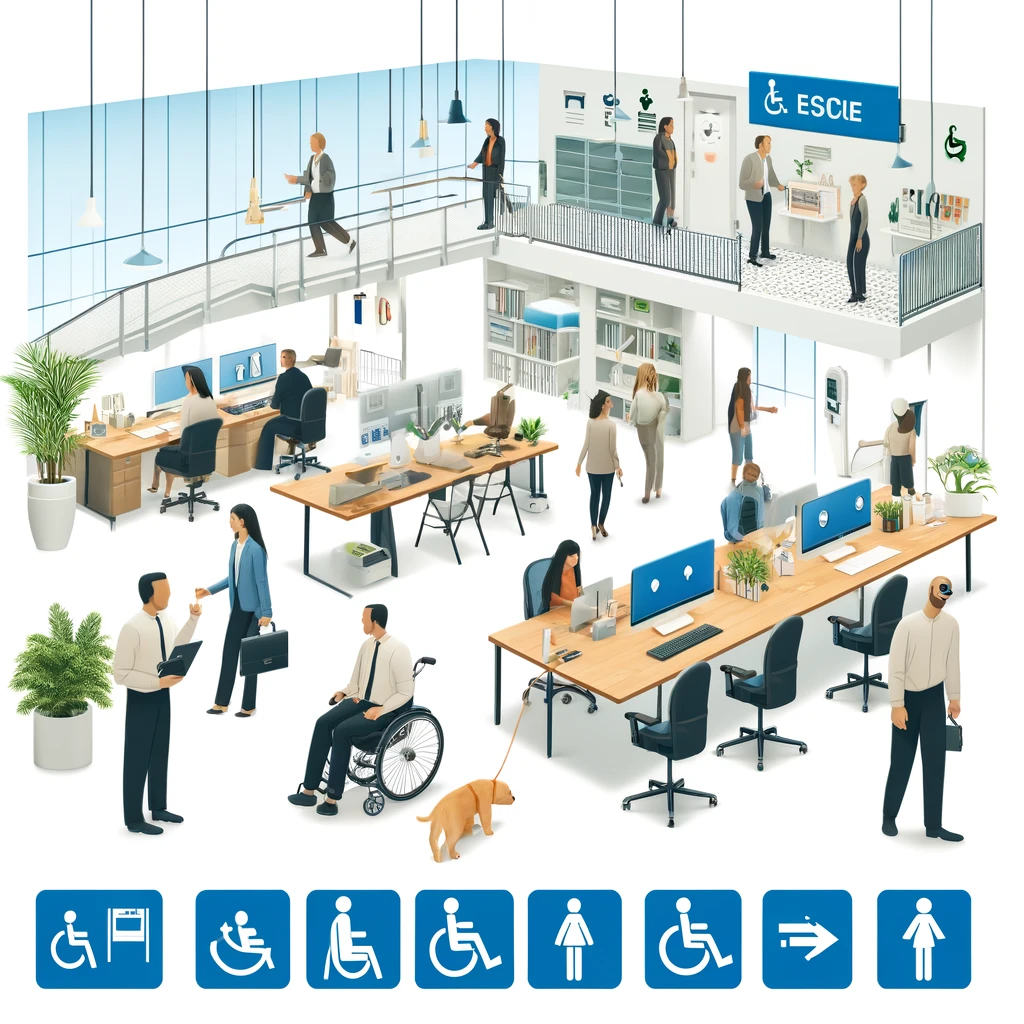
Vendor coordination for ADA remediation projects determines whether accessibility work becomes a disciplined implementation program or a patchwork of missed deadlines, change orders, and unresolved barriers. In this context, ADA remediation means identifying and correcting physical, digital, communication, and operational obstacles that prevent equal access under the Americans with Disabilities Act and related standards such as the 2010 ADA Standards for Accessible Design, WCAG for web content, and applicable state or local codes. Vendor coordination is the management system that aligns owners, architects, contractors, web developers, signage fabricators, elevator specialists, procurement teams, legal reviewers, and frontline operations staff around scope, sequence, documentation, and quality control.
This matters because ADA compliance is rarely achieved by one department or one contractor. A hotel renovation may require parking striping, path-of-travel corrections, pool lift procurement, website booking flow fixes, staff policy updates, and revised guest communication scripts. A university may need door hardware replacement, captioning vendors, learning platform adjustments, and accessible wayfinding installed across multiple campuses. In my work on remediation programs, the biggest failures have not come from lack of intent. They come from fragmented execution: one vendor follows architectural drawings, another relies on an outdated survey, a third ships compliant products that are installed incorrectly, and nobody confirms user experience at the end.
As a hub topic within compliance and implementation, practical implementation of ADA compliance starts with coordinated delivery. Policies and audits establish direction, but remediation succeeds only when every vendor understands the governing standard, the exact deficiency, the required fix, the acceptance criteria, and the order in which work must occur. Good coordination reduces rework, protects budgets, preserves evidence of diligence, and shortens the time between identifying a barrier and removing it. For organizations managing public accommodations, commercial facilities, housing interfaces, healthcare sites, or enterprise digital platforms, vendor coordination is the operating backbone of practical ADA compliance.
Build the remediation program before assigning work
Successful ADA remediation starts before purchase orders are issued. The owner or program lead must convert audit findings into a structured implementation plan with line-item scope, referenced standards, risk ranking, dependencies, and accountable parties. A survey report that simply says “restroom noncompliant” is not enough for field execution. Vendors need measurable requirements such as grab bar lengths and mounting heights, maneuvering clearances, lavatory knee clearance dimensions, pipe protection, mirror height, signage specifications, and photographic references tied to room numbers or asset IDs.
In practice, I recommend dividing scope into four buckets: physical barriers, digital barriers, communication barriers, and operational barriers. That separation matters because each bucket usually requires different procurement channels and different verification methods. Physical work may involve general contractors, millworkers, electricians, and inspectors. Digital work may require developers, QA testers, content editors, and platform vendors. Communication work may involve captioning providers, interpreters, document remediation specialists, and call center training. Operational work often belongs to HR, facilities, admissions, guest services, or security rather than an external contractor.
Remediation planning also needs prioritization. Life safety and access to primary functions come first: accessible entries, toilet rooms, service counters, routes, alarms, booking flows, emergency communications, and core transactions. Then move to supporting features and lower-risk items. This sequence helps organizations direct limited capital toward the barriers most likely to block use, trigger complaints, or create legal exposure. It also gives vendors a rational schedule instead of forcing every item into one expensive mobilization window.
Another essential step is defining acceptance criteria. For construction vendors, acceptance should reference the exact standard section and field tolerances. For digital vendors, acceptance should include keyboard operability, screen reader behavior, focus order, color contrast, form labeling, error identification, and testing with assistive technologies such as JAWS, NVDA, VoiceOver, ZoomText, or Dragon where relevant. If acceptance criteria are vague, vendors will declare completion based on effort rather than outcome.
Select vendors with accessibility-specific competence
Not every qualified contractor or developer is qualified for ADA remediation. A strong commercial contractor may still miss accessible reach ranges or install door closers with excessive opening force. A respected design agency may produce attractive interfaces that fail basic keyboard navigation. Vendor selection therefore has to test accessibility competence directly, not assume it from adjacent experience.
Bid packages should include standards references, deficiency logs, site constraints, submittal requirements, and mock-up expectations. Ask vendors to provide examples of similar remediation work, not just general renovation or website redesign projects. For physical scope, request photos, as-built documentation, and references from projects involving accessible parking, restrooms, paths of travel, signage, or assembly seating. For digital scope, ask for code samples, test protocols, accessibility statements, VPAT documentation where applicable, and details about how defects are tracked and retested.
Procurement teams should also evaluate whether the vendor understands the difference between supplying a compliant product and delivering a compliant installation or user journey. For example, buying an ADA-labeled sink does not ensure the rough-in height, faucet operability, and clear floor space will comply after installation. Buying an accessible widget does not make a website accessible if the underlying booking engine traps keyboard focus. The vendor must demonstrate process discipline, not just product familiarity.
| Scope Area | Typical Vendors | Key Coordination Risk | Best Verification Method |
|---|---|---|---|
| Parking and exterior route | Civil contractor, striping vendor, signage fabricator | Slope, signage, and route corrections handled separately | Field measurements with photo closeout |
| Restrooms and interiors | GC, plumber, carpenter, door hardware supplier | Compliant fixtures installed in noncompliant locations | Punch list against standard sections |
| Website and app | Developer, CMS vendor, QA tester, content team | Template fix made but content authors reintroduce errors | Manual assistive tech testing plus automated scans |
| Documents and media | PDF remediation vendor, captioning provider | Files corrected once but replacement workflow remains inaccessible | Sampling review with PAC, Acrobat, and user testing |
Contracts should require correction of accessibility defects discovered during testing if those defects fall within the awarded scope, even when the exact code issue was not individually listed in the original report. Without that language, organizations end up paying twice for obvious remediation work. At the same time, scope boundaries must be explicit so vendors are not unfairly held responsible for unrelated legacy conditions.
Coordinate standards, drawings, and decision rights across teams
Once vendors are selected, the next challenge is controlling information. ADA remediation often fails when teams work from different standards versions or undocumented assumptions. A facilities department may rely on a local building code summary, outside counsel may focus on federal enforcement posture, and a web vendor may cite an outdated accessibility benchmark. The program lead must issue one governing standards matrix that identifies which requirements control each asset type and location.
For built environment projects, that matrix should address federal accessibility standards, state accessibility codes where stricter, applicable building code provisions, and any landlord or campus design guidelines. For digital programs, it should identify the target WCAG level, supported browsers, mobile requirements, document formats, multimedia rules, and testing methodology. This avoids endless vendor debates over what “accessible” means.
Decision rights matter just as much. Someone must have authority to approve equivalent design choices, reject substitutions, escalate field conflicts, and decide whether temporary measures are acceptable during phased work. I have seen projects stall for weeks because a subcontractor identified a structural conflict with a compliant restroom turning space and nobody knew whether facilities, the architect, or legal had final approval. A simple RACI model prevents this. The owner is accountable, the accessibility consultant interprets the standard, the architect or technical lead develops the compliant detail, the vendor executes, and operations validates that the solution works in practice.
Coordination meetings should be disciplined and short. Weekly reviews should track open RFIs, procurement lead times, inspection dates, unresolved design conflicts, and barriers that could affect public access during construction. Minutes should record the standard cited, the decision made, and the person responsible. In digital projects, the same structure applies to defect triage meetings: identify issue severity, affected templates, user impact, fix owner, and retest date. When decisions are documented this way, closeout becomes evidence-based instead of anecdotal.
Manage sequencing, dependencies, and temporary access
Practical implementation of ADA compliance depends on sequencing. Many barriers cannot be corrected independently. Exterior parking remediation may need surveying before restriping. Restroom corrections may require demolition, plumbing rough-in, tile replacement, accessory installation, and final measurements in a precise order. A website form fix may depend on design system updates before content teams can correct individual pages. If these dependencies are missed, vendors either sit idle or complete partial work that must be redone.
The best approach is to create a dependency map for each remediation stream. For example, a retail store entry upgrade may require door hardware procurement, power operator electrical work, threshold adjustment, and revised route signage. The public path of travel must remain usable during construction, so temporary entrances, portable signage, and staff assistance protocols need to be defined before demolition begins. In healthcare settings, temporary routing is especially sensitive because patients may have mobility, sensory, or cognitive disabilities and little tolerance for confusing detours.
Temporary access measures should be treated as formal scope, not informal courtesy. That means specifying alternate routes, communication methods, and staff responsibilities during outages. If an accessible toilet room is offline, where is the nearest compliant alternative, how is it signed, and who ensures it remains unlocked and stocked? If a booking engine is under repair, can guests complete reservations by phone with equivalent rates and availability? These measures do not replace permanent compliance, but they reduce exclusion while work is underway.
Lead times also require active management. Common remediation items such as tactile signage, automatic door operators, platform lifts, assistive listening systems, and specialty plumbing trim can delay closeout if not ordered early. Digital projects have similar bottlenecks around third-party platform updates, captioning turnaround, or enterprise release calendars. Program leads should maintain a live procurement log and escalate long-lead items before they affect milestone dates.
Verify completion with testing, documentation, and operational follow-through
ADA remediation is not complete when the vendor says the work is done. Completion requires verification through measurement, testing, documentation, and operational adoption. For physical work, that means field checks with tapes, digital levels, force gauges where needed, photographs, and issue logs tied to exact locations. A restroom should be tested as a user sequence: approach, door maneuvering, fixture access, transfer space, accessory reach, and exit. A compliant dimension on a drawing is meaningless if a trash can blocks clear floor space on opening day.
Digital verification should combine automated scanning with manual expert review and assistive technology testing. Tools like axe DevTools, WAVE, Siteimprove, and Accessibility Insights are useful for detecting recurrent code problems, but they do not reliably judge reading order, meaningful link purpose, form usability, or screen reader announcements in dynamic interfaces. Real testing must include task completion, such as searching inventory, applying for a job, submitting a complaint, or paying a bill. If users cannot finish the transaction independently, remediation is incomplete.
Documentation is part of the control system. Keep updated deficiency logs, submittals, test results, photo records, inspection forms, training records, and sign-offs. These artifacts help future maintenance teams avoid reintroducing barriers and provide evidence that the organization took implementation seriously. They are also invaluable when multiple sites are remediated over several budget cycles, because lessons from one location can be standardized across the portfolio.
Finally, operational follow-through sustains the investment. Staff need training on maintaining accessible routes, posting temporary signs correctly, responding to accommodation requests, authoring accessible documents, and preserving digital fixes during content updates. Accessibility should move into preventive maintenance, design standards, procurement templates, and release checklists. That is the true hub of practical implementation of ADA compliance: coordinated vendors remove current barriers, and coordinated internal processes stop new ones from appearing.
Vendor coordination for ADA remediation projects succeeds when organizations treat accessibility as a cross-functional delivery program rather than a set of isolated corrections. The most effective teams define scope precisely, select vendors with proven accessibility competence, control standards and decision rights, sequence work around dependencies, and verify results through real testing. That combination turns audits into measurable improvements in access.
The main benefit is reliability. Coordinated remediation reduces rework, shortens timelines, protects budgets, and gives users better access sooner. It also creates durable internal systems for practical implementation of ADA compliance across facilities, websites, documents, and daily operations. Instead of reacting to complaints one barrier at a time, organizations gain a repeatable method for planning, procuring, executing, and sustaining accessibility improvements.
If you are building this subtopic into your broader compliance and implementation program, start with a master deficiency log, a governing standards matrix, and a vendor responsibility map. Those three tools will reveal gaps quickly and make every follow-on article in this cluster easier to apply. Use them to organize your next remediation phase, test every completed fix, and build accessibility into standard operations from this point forward.
Frequently Asked Questions
What does vendor coordination involve in an ADA remediation project?
Vendor coordination in an ADA remediation project is the structured process of aligning all internal teams and outside providers responsible for identifying, planning, correcting, testing, and documenting accessibility barriers. In practice, that may include architects, contractors, signage vendors, elevator specialists, web developers, PDF remediation providers, captioning services, accessibility consultants, IT teams, legal stakeholders, and facility managers. Because ADA remediation often spans physical spaces, digital assets, communication methods, and day-to-day operations, coordination is not simply scheduling vendors to perform isolated tasks. It is about making sure every party understands the project scope, the governing standards, the sequencing of work, and the expected documentation for compliance and quality control.
Strong coordination begins with a clearly defined remediation plan. That plan should identify the barriers being corrected, the applicable standards for each issue, the responsible vendor or team, the target timeline, dependencies between tasks, and the method for verification after completion. For example, a restroom renovation may need to be completed before final signage is installed, while website code fixes may need to be validated by accessibility testing before content teams publish updated pages. Without that level of coordination, one vendor may complete work that another vendor later has to undo, causing avoidable change orders, delays, and budget overruns.
Effective vendor coordination also includes communication protocols. Someone needs authority to centralize questions, approve substitutions, track progress, and confirm that fixes are not only installed but actually compliant. This is especially important in ADA work because a product or design choice that seems reasonable operationally may still fail the applicable accessibility standard. Good coordination keeps the project from becoming reactive and fragmented. Instead, it turns remediation into a disciplined implementation program with accountability, documentation, and measurable progress toward equal access.
Why do ADA remediation projects often run into delays, change orders, and unresolved barriers?
ADA remediation projects commonly run into trouble when accessibility is treated as a side issue rather than a core project requirement. Delays and change orders usually stem from incomplete scoping, unclear ownership, poor sequencing, and inconsistent interpretation of standards. In many organizations, physical accessibility work is managed separately from digital accessibility, procurement, operations, and communications. That separation creates gaps. A contractor may update a service counter height without considering reach range requirements, while a web vendor may revise templates without addressing document accessibility, keyboard navigation, or captioning. The result is piecemeal progress that looks productive on paper but leaves major barriers unresolved in practice.
Another major cause is failure to define standards up front. ADA remediation can involve multiple frameworks depending on the issue, including the 2010 ADA Standards for Accessible Design for built environments and WCAG for web content and digital experiences. If vendors are not told exactly which criteria apply to their portion of the work, they may rely on general assumptions, prior habits, or incomplete checklists. That often leads to rework when a consultant, internal reviewer, or legal team later identifies noncompliant elements. Rework is expensive, slows the project, and can create frustration between teams.
Scheduling problems also play a major role. Accessibility fixes often have dependencies that are overlooked during planning. For instance, wayfinding updates may depend on room renumbering, accessible parking improvements may require local permitting, and digital remediation may depend on content inventories and platform constraints. If those dependencies are not mapped early, vendors may be mobilized before prerequisites are complete, leading to idle time, rushed decisions, or scope changes. Finally, unresolved barriers persist when there is no formal verification process. Completion should never mean only that a vendor says the work is done. It should mean the fix has been reviewed against the applicable standard, tested where appropriate, and documented for future reference.
How should organizations scope and assign work across multiple vendors for ADA remediation?
Organizations should scope ADA remediation work by starting with a comprehensive barrier inventory and then grouping findings into logical workstreams. Those workstreams typically include physical environment issues, digital accessibility issues, communication access issues, and operational or policy-related issues. Each finding should be described in plain language, linked to the applicable standard, assigned a priority level, and translated into an actionable correction. This approach helps organizations avoid vague directives such as “improve accessibility” and instead issue clear tasks such as “replace noncompliant door hardware,” “add captions and transcripts to video content,” “remediate PDFs to meet accessibility requirements,” or “update intake procedures to provide effective communication options.”
Once the work is organized, assignments should be based on expertise and control. Architects and contractors may handle structural and fixture-related issues, while IT and web development vendors address platform-level digital barriers. Content owners may be responsible for accessible documents and media, and operations leaders may own policy, training, and service delivery changes. In many projects, a dedicated accessibility consultant or program manager is essential to bridge these groups. That person or team can interpret standards consistently, review proposed solutions, resolve conflicts between vendors, and keep the overall effort moving in the right direction.
It is also important to define deliverables with precision. Every vendor should know what they are expected to provide, how success will be measured, what documentation is required, and who will approve the work. Statements of work should include accessibility requirements explicitly rather than assuming vendors will infer them. They should also address testing, correction of deficiencies, meeting participation, and change management procedures. A well-scoped assignment reduces confusion, limits disputes, and creates accountability. Most importantly, it helps ensure that each correction contributes to an integrated accessibility program rather than a disconnected set of fixes.
What should be included in vendor contracts, statements of work, and project oversight for accessibility compliance?
Vendor contracts and statements of work for ADA remediation should spell out accessibility expectations in direct, enforceable language. At a minimum, they should identify the applicable standards for the vendor’s scope, describe the required deliverables, establish review and acceptance criteria, and require correction of any deficiencies discovered during testing or validation. If the work involves digital assets, the contract should specify the target WCAG conformance level, the environments covered, testing expectations, and responsibility for remediation of templates, components, content, and documents. If the work involves facilities, the agreement should reference the relevant built-environment standards, drawings, field conditions, submittal review expectations, and closeout documentation.
It is equally important to define process obligations. Contracts should address timelines, milestone reporting, escalation paths, and approval requirements for substitutions or design changes that could affect accessibility. Vendors should not be allowed to make field adjustments or technical compromises without review by the designated accessibility decision-maker. In many remediation projects, problems arise not because the original plan was wrong, but because modifications were made informally during implementation. Written controls help prevent that. Organizations should also consider requiring vendors to demonstrate relevant experience, designate an accessibility lead, participate in coordination meetings, and support post-installation or post-deployment testing.
Project oversight should include regular status reviews, issue logs, dependency tracking, and documented validation of completed work. Oversight is especially important when multiple vendors are working in parallel, because responsibility can become blurred very quickly. A strong governance structure typically includes a project owner, a cross-functional review team, and a clear process for signoff. The goal is not to create bureaucracy for its own sake. The goal is to ensure that every correction can be traced from identified barrier to implemented solution to verified result. That level of oversight protects budgets, reduces legal and operational risk, and produces a more defensible accessibility record.
How can organizations confirm that ADA remediation work is actually complete and sustainable over time?
Organizations can confirm that ADA remediation work is complete by using a formal validation process rather than relying on vendor self-certification alone. Completion should be measured against the original barrier inventory and the applicable standards, not just against whether the contractor, developer, or service provider finished their assigned task. In physical environments, that may include field measurements, walkthroughs, photo documentation, and review of installed elements such as signage, clearances, hardware, routes, parking, counters, and toilet rooms. In digital environments, completion should include manual and automated testing, keyboard-only review, screen reader evaluation, document accessibility checks, caption verification, and retesting after fixes are deployed.
Documentation is a critical part of this process. Organizations should maintain records showing what barriers were identified, which vendor addressed each item, what standard applied, when the correction was completed, how it was verified, and whether any exceptions or phased items remain open. This record serves several purposes. It supports internal accountability, helps future teams avoid reintroducing barriers, and provides evidence of a structured remediation effort if questions arise later from users, regulators, or legal counsel. It also makes recurring maintenance easier, because accessibility work rarely ends with a single round of corrections.
To make the results sustainable, organizations need to move from one-time remediation to ongoing accessibility governance. That means updating procurement requirements, design standards, content workflows, training programs, and maintenance procedures so that new barriers are not created as old ones are removed. Vendors should be evaluated not only on whether they completed a project, but also on whether their work can be maintained accessibly over time. Sustainable ADA remediation is achieved when accessibility becomes part of how the organization builds, buys, publishes, and operates going forward. That is the difference between a temporary cleanup effort and a durable access strategy.