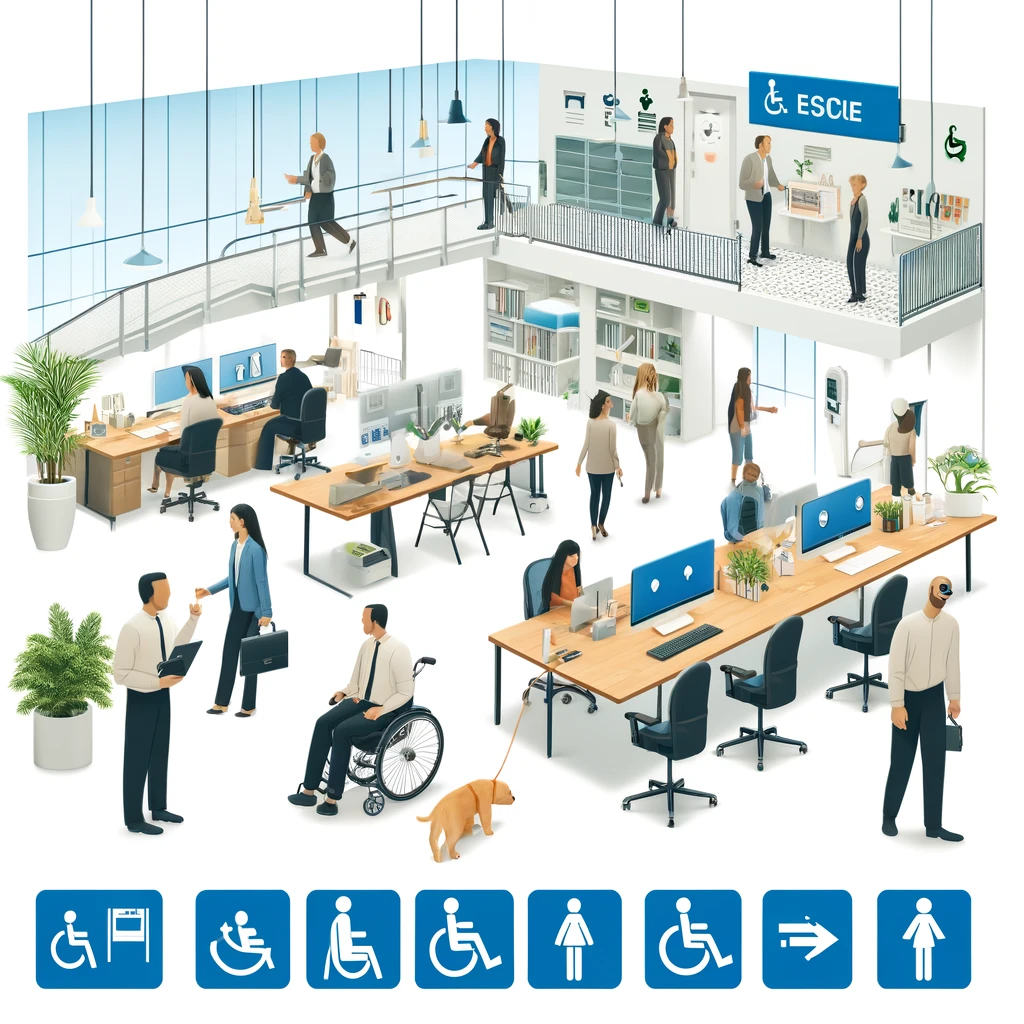
An ADA corrective action plan is the written roadmap an organization uses after an audit to fix accessibility barriers, assign responsibility, document timelines, and prove steady progress toward compliance. In practical terms, it turns a list of findings into a managed implementation program. I have built these plans after facility surveys, website reviews, and policy audits, and the difference between a useful plan and a shelf document is simple: a useful plan names exact barriers, cites the governing standard, prioritizes risk, funds the work, and tracks completion. That matters because the Americans with Disabilities Act is enforced through complaints, investigations, and litigation, but it is also a daily operational issue affecting customers, employees, students, patients, tenants, and visitors.
For this article, ADA compliance means meeting applicable accessibility obligations under Titles I, II, or III, often alongside related standards such as the 2010 ADA Standards for Accessible Design, Section 508 for certain federal contexts, and WCAG for digital content. Corrective action means the concrete fixes required after an audit identifies nonconforming conditions, from inaccessible parking and counters to missing captions, broken keyboard navigation, or weak accommodation procedures. A corrective action plan matters because an audit alone does not reduce risk. Regulators, plaintiffs, and internal stakeholders want evidence of implementation: what will be fixed, by whom, by when, with what interim measure, and how success will be verified. That implementation layer is the center of practical ADA compliance.
This page serves as a hub for compliance and implementation work because most organizations do not fail on awareness; they fail on execution. They commission an audit, receive a technical report, then struggle to translate findings into scopes of work, capital requests, procurement requirements, staff training, and governance. A strong ADA corrective action plan solves that problem by connecting legal duties to operational decisions. It also helps create internal linking signals across the broader implementation program: facility remediation, digital accessibility remediation, procurement controls, policy updates, employee accommodation procedures, vendor management, and ongoing monitoring. When built correctly, the plan becomes the master document that aligns leaders, legal counsel, operations, IT, HR, facilities, communications, and outside contractors around a single accessible implementation process.
Start with the audit findings, scope, and governing standards
The first step is to define exactly what the audit covered and which standards apply. Corrective action plans fail when teams blend different scopes into one vague list. A facility audit may measure routes, parking, toilet rooms, service counters, signage, assembly seating, alarms, and dwelling units against the 2010 ADA Standards. A website audit may evaluate templates, PDFs, multimedia, forms, and mobile behavior against WCAG 2.1 AA or WCAG 2.2 AA, depending on the organization’s policy baseline. A policy audit may review reasonable accommodation, service animal handling, effective communication, auxiliary aids, event planning, grievance processes, and procurement language. If the scope is unclear, remediation stalls because teams cannot tell whether a finding is mandatory, recommended, or outside the project boundary.
Every finding in the plan should preserve four details from the audit: location or asset identifier, barrier description, applicable requirement, and evidence. For built environment issues, that may mean “Building A, south entrance, threshold exceeds one-half inch vertical change” with the corresponding standard citation and measured dimensions. For digital findings, it may mean “Online application form, error messages are not programmatically associated with fields, WCAG 3.3.1 and 4.1.2” plus screenshots, code references, and assistive technology test notes. For policy findings, it may mean “No documented process for providing qualified interpreters at public meetings” with the relevant ADA obligation and current state interview notes. Keeping that technical lineage intact prevents disputes later about what was actually observed and why it matters.
At this stage, define ownership boundaries too. In my experience, the fastest plans separate enterprise findings from local findings. Enterprise findings affect shared systems, templates, policies, or standards and should be addressed once at the source. Local findings belong to a building, department, campus, clinic, or branch. This distinction saves significant time. If one inaccessible PDF template is used by fifty departments, the corrective action is not “fix fifty PDFs one by one.” It is “replace the source template, retrain document creators, then remediate high-use legacy files according to priority.” The same logic applies to door hardware standards, reception counter prototypes, and standard procurement clauses. Corrective action planning starts with disciplined scoping because implementation depends on repeatable decisions, not isolated fixes.
Prioritize barriers by risk, impact, and feasibility
Not every audit finding should be fixed in the order it appears in the report. A practical ADA corrective action plan uses a prioritization model that balances legal exposure, user impact, safety, service criticality, and implementation effort. High priority items usually include barriers that block core access: inaccessible entrances, parking, restrooms serving public areas, emergency egress communication, online checkout or appointment tools, inaccessible job application systems, and failures affecting effective communication. These issues can prevent equal participation entirely. Medium priority items often degrade usability without fully blocking access, such as inconsistent heading structure on informational pages or isolated signage gaps. Lower priority items may include noncritical legacy content with low traffic, provided an accessible alternative exists.
Use a rating method simple enough for leadership to understand. I often assign scores across four dimensions: severity of exclusion, frequency of use, complaint likelihood, and remediation complexity. The result supports sequencing and budgeting. For example, a missing van-accessible parking space at a busy outpatient clinic scores high because it affects daily access, creates clear enforcement risk, and typically has a defined remediation path. By contrast, an inaccessible archived newsletter PDF may score lower if the content is duplicated on a current accessible webpage. The point is not to avoid fixing lower-ranked items; it is to establish a defensible order and make resource decisions transparent.
| Priority Level | Typical Issues | Why It Ranks Here | Target Response |
|---|---|---|---|
| High | Entrances, parking, restrooms, online forms, checkout, job applications, captioning gaps for required content | Blocks essential access, high complaint risk, direct operational impact | Immediate interim measure and funded remediation plan |
| Medium | Wayfinding signage, document templates, page structure, service counter modifications | Impairs usability, affects efficiency, often repeatable across sites | Batch remediation with owner and deadline |
| Lower | Archived files, low-traffic pages, cosmetic inconsistencies, secondary amenities | Limited current impact when accessible alternatives exist | Remediate on refresh cycle or by request |
Feasibility matters, but it should not become an excuse for delay. When a permanent fix requires design, permits, procurement, or a software release cycle, document an interim measure. That may include relocated service delivery, staff-assisted access, alternate formats on request, temporary ramps where legally and technically appropriate, or immediate manual support while a digital defect is queued for release. Interim measures are especially important after an audit because they show active good-faith implementation. They do not replace compliance, but they reduce present harm while permanent work moves through normal operational channels.
Translate findings into corrective actions, owners, budgets, and timelines
The core of an ADA corrective action plan is the action register. Each line should convert a finding into a task someone can actually execute. “Fix accessibility issues” is not a task. “Replace round doorknob at Room 112 with operable hardware requiring no tight grasping, pinching, or twisting, verify mounting and clearances after installation” is a task. “Make website accessible” is not a task. “Update navigation component to support keyboard focus visibility, skip link operation, semantic landmarks, and screen reader naming across all templates” is a task. Precision prevents handoff failures between auditors, project managers, developers, architects, contractors, and department leads.
Every action line needs an accountable owner, not just a contributing team. I recommend naming one decision-maker per item, then listing support roles separately. Facilities may own physical modifications; IT may own application defects; HR may own accommodation workflow updates; procurement may own contract language; communications may own PDF and video remediation standards. If ownership remains collective, deadlines slip because no one has authority to approve work, release funds, or confirm closure. In mature programs, the ADA coordinator or accessibility program manager governs the plan centrally while functional leaders own execution within their domains.
Budgeting should be integrated early. Some items require operating expense, such as captioning subscriptions, accessibility testing tools like axe DevTools or Siteimprove, staff training, and document remediation services. Others belong in capital planning, such as restroom alterations, ramp reconstruction, elevator communication upgrades, or signage replacement programs. When I build plans, I separate no-cost, low-cost, moderate-cost, and capital-intensive actions because that distinction helps finance teams move faster. A no-cost policy revision should not wait for the same approval route as a six-figure entrance reconstruction. Timeframes should also be realistic. Software releases may follow sprint schedules, while facility work may depend on procurement windows, school breaks, or lease negotiations. A credible timeline reflects those constraints without surrendering urgency.
Include dependencies and closure criteria. A website issue may depend on vendor access to code repositories. A parking remediation project may depend on restriping during suitable weather. Closure criteria should specify how completion will be verified: field measurement, user acceptance testing, regression testing with assistive technology, updated policy publication, training attendance records, or photographic documentation. Closure is not “contractor says done.” Closure is evidence that the barrier no longer exists under the applicable standard. That level of documentation is what turns an ADA corrective action plan into a reliable management tool rather than a general intent statement.
Build governance, documentation, and verification into implementation
Implementation succeeds when governance is explicit. The best corrective action plans establish a cadence for review, escalation, and reporting. Monthly working sessions are common for active remediation, with quarterly executive reporting on overdue high-risk items, budget needs, and trend lines. The ADA coordinator, compliance officer, or accessibility lead should maintain the master register and version history. Legal counsel may advise on risk framing, but operational teams still need a live process for moving work forward. In large organizations, I have seen success with a steering group that includes facilities, IT, HR, procurement, communications, and a senior sponsor empowered to resolve conflicts.
Documentation should be centralized and audit-ready. That means storing the original audit report, measurement notes, screenshots, code tickets, design drawings, approvals, invoices, photos, test results, training logs, and policy versions in a structured repository. Many teams manage this in Smartsheet, Jira, Asana, Monday.com, or a governance platform, but the tool matters less than the data discipline. Each record should answer a simple question: if a regulator, plaintiff, board member, or internal auditor asked what happened with Finding 4.12, could you show the barrier, the plan, the interim measure, the budget, the implementation status, and the verification evidence within minutes? If not, the governance process is incomplete.
Verification deserves more attention than it often gets. Reinspection and retesting are essential because remediation can fail silently. A contractor may install a compliant-looking ramp with incorrect slopes. A developer may fix one keyboard trap while introducing another in a shared component. A new document template may be accessible in Word but produce tagged PDF errors on export. Verification should be independent enough to catch these problems before closure. For facilities, that means post-work measurement against the standard. For digital assets, that means automated scans plus manual testing with keyboard-only navigation and assistive technologies such as NVDA, JAWS, VoiceOver, or TalkBack, depending on the audience and platform. For policies, it means practical drills: can staff actually obtain an interpreter, alternate format, or accommodation through the documented process?
Use the plan as the hub for long-term ADA compliance
A corrective action plan should not end when the first round of audit findings is closed. It should become the operating hub for practical implementation of ADA compliance across the organization. The reason is simple: accessibility barriers recur unless the source systems change. If inaccessible PDFs keep appearing, the problem is governance, templates, and training, not just legacy files. If recurring parking or signage errors appear in renovated spaces, the problem is design standards, plan review, and contractor oversight. If web defects return after every release, the problem is development workflow, QA criteria, and procurement requirements for third-party software.
That is why this sub-pillar topic matters. A complete implementation program connects corrective action planning with related workstreams: accessible procurement requirements, employee and public accommodation procedures, design and construction review, digital content governance, event accessibility planning, vendor accountability, staff training, and recurring audits. In practice, the corrective action plan is the hub document linking those efforts. It tells facilities what to repair, IT what to rebuild, HR what to document, procurement what to require, and leadership what to fund. It also provides the evidence trail that demonstrates continuous improvement rather than one-time reaction.
The most effective plans are honest about tradeoffs. Some structural changes are expensive. Some legacy systems cannot be fully remediated without replacement. Some leased spaces require landlord coordination. Those realities do not remove ADA obligations, but they do shape sequencing and interim solutions. A strong plan acknowledges the limits, documents alternatives, and keeps progress visible. If you are building or revising your own ADA corrective action plan after an audit, start with precise findings, prioritize by access impact, assign accountable owners, fund the work, verify completion, and keep the plan alive as your implementation hub. Done well, it reduces risk, improves access, and gives your organization a practical path from audit report to measurable compliance. Review your latest findings today and convert them into an action register your teams can actually execute.
Frequently Asked Questions
What is an ADA corrective action plan, and why is it necessary after an audit?
An ADA corrective action plan is the working document that turns audit findings into a clear implementation strategy. After an accessibility audit, whether it covers a building, a website, a program, or internal policies, the organization usually has a list of barriers, risks, and compliance gaps. On its own, that list does not fix anything. The corrective action plan is what converts those findings into specific tasks, assigns ownership, sets deadlines, establishes priorities, and creates a record of progress.
This matters because accessibility compliance is not just about identifying problems. It is about showing that the organization understands the barriers, has evaluated them against the applicable standards, and is taking structured, measurable steps to correct them. A strong plan helps leadership budget for improvements, helps departments coordinate responsibilities, and helps legal, compliance, and operations teams demonstrate a good-faith effort toward compliance.
It is also necessary because not every issue can be fixed at once. Some barriers are high-risk and must be addressed immediately, while others require capital planning, vendor involvement, policy changes, or phased implementation. A corrective action plan creates a realistic roadmap. Instead of producing a shelf document that gets ignored, it gives the organization a management tool that tracks exact barriers, cites the governing standard, documents interim measures where needed, and shows steady progress over time.
What should be included in an effective ADA corrective action plan?
An effective ADA corrective action plan should be specific, organized, and tied directly to the audit findings. At a minimum, each issue should be described in plain language so there is no confusion about what the barrier is or where it exists. For example, instead of saying “entrance not compliant,” the plan should identify the exact condition, such as a threshold height that exceeds the allowed limit or a missing accessible route from parking to the main entrance. The more precise the description, the easier it is to scope, price, assign, and verify the fix.
The plan should also cite the governing standard or technical requirement that applies. That may include ADA Standards for Accessible Design, WCAG success criteria for digital properties, or internal policy requirements tied to program accessibility. Including the citation is important because it explains why the issue matters and helps contractors, developers, consultants, and internal teams correct the problem properly the first time.
In addition, the plan should identify priority level, responsible party, target completion date, estimated cost or budget category, and current status. These fields transform the plan from a static report into a functional project management document. It is also wise to include notes on dependencies, such as whether a barrier requires design review, procurement, permit approval, vendor coordination, or a larger renovation cycle.
For organizations managing risk carefully, the best plans also document interim measures and follow-up verification. If a barrier cannot be corrected immediately, the plan should state what temporary steps will be taken to maintain access in the meantime. Once corrective work is completed, the plan should record how the fix was verified, by whom, and on what date. That level of detail strengthens accountability and demonstrates that the organization is not just making promises, but actually closing accessibility gaps in a documented, systematic way.
How do you prioritize ADA audit findings when writing the corrective action plan?
Prioritization should be based on risk, impact, feasibility, and the importance of the affected service or feature. A common mistake is to organize the plan by whichever findings seem easiest to fix. While quick wins have value, the highest priority should usually go to barriers that prevent meaningful access to core services, create safety concerns, or expose the organization to immediate legal and operational risk. For example, an inaccessible entrance, a broken accessible route, missing captions on essential video content, or a website form that blocks users from completing critical transactions would generally rank above cosmetic or lower-impact issues.
It helps to divide findings into categories such as immediate, short-term, and long-term actions. Immediate actions may include barriers that deny access altogether, violate clear technical standards, or affect essential programs and emergency functions. Short-term actions often include moderate-impact issues that can be resolved through maintenance, content updates, coding changes, signage, staff retraining, or policy revisions. Long-term actions may involve capital projects, platform replacements, major redevelopment, or broader operational changes that require planning and funding.
You should also consider frequency of use and user consequence. A problem affecting a main entrance, primary online application flow, or central customer service policy should rank higher than a barrier in a rarely used area. Likewise, repeated barriers that affect many users may deserve higher priority than isolated issues, even if the technical correction seems straightforward.
The best plans explain the reasoning behind the priority assignment. That way, if leadership, regulators, auditors, or counsel review the document later, they can see that the organization used a defensible method rather than arbitrary judgment. Prioritization is not just about what can be fixed first. It is about sequencing work in a way that improves access quickly, reduces exposure, and demonstrates a credible commitment to compliance.
Who should be responsible for implementing and managing an ADA corrective action plan?
Responsibility should never sit with one person in name only. While the plan should have a central owner, successful implementation usually requires a cross-functional team. The central owner may be an ADA coordinator, compliance officer, facilities leader, digital accessibility manager, HR leader, or another designated administrator depending on the organization. That person should be responsible for overseeing the plan, maintaining records, coordinating stakeholders, and reporting progress to leadership.
However, each corrective action should also be assigned to the department or role that has practical authority to make the fix. Facilities teams may handle parking, routes, restrooms, counters, signage, and physical upgrades. IT and web teams may be responsible for website templates, forms, PDFs, mobile applications, and procurement of accessible platforms. HR, training, communications, and program managers may own policy changes, accommodation procedures, content practices, and staff education. Procurement and legal may also need to be involved where vendor contracts, accessibility representations, or outside consultants are part of the solution.
The key is clarity. Every action item should identify one accountable owner, not a vague group label such as “operations” or “management.” If multiple parties are involved, the plan should specify who leads and who supports. Without that level of detail, tasks stall, deadlines slip, and accessibility work becomes everyone’s issue and no one’s responsibility.
Strong governance also includes regular review meetings, status updates, escalation procedures, and leadership visibility. If the plan is important enough to create, it is important enough to manage. Organizations that make real progress usually treat the corrective action plan like any other serious compliance or operational initiative: they assign owners, monitor milestones, require updates, document completion, and revisit unresolved items until they are actually fixed.
How often should an ADA corrective action plan be updated, and how do you document progress?
An ADA corrective action plan should be updated regularly enough to reflect real-world progress, changing conditions, and new findings. In most organizations, monthly or quarterly updates are practical, depending on the volume and severity of the issues. If the plan includes high-risk barriers, active litigation concerns, or time-sensitive remediation deadlines, more frequent review may be appropriate. The important point is that the document should remain active and current. A plan that is not updated quickly loses value as a management and compliance tool.
Progress should be documented at the item level. Each finding should show its current status, such as open, in progress, pending vendor action, completed, or verified. The update should also capture meaningful details, including what work was done, when it was done, who completed it, and whether the corrective action has been tested or re-inspected. If a deadline changes, the revised date and reason should be recorded. This creates a transparent history of decision-making and implementation.
Supporting documentation is just as important as the status field itself. Depending on the issue, that may include photographs, construction records, invoices, code or content change logs, training records, meeting notes, procurement documents, policy revisions, testing results, or follow-up audit findings. These records help prove that progress is real, not just reported. They are especially useful if the organization needs to demonstrate a good-faith effort to regulators, legal counsel, auditors, or internal leadership.
Finally, the plan should be treated as a living document. New barriers may be discovered, standards may evolve, and organizational priorities may shift. Updating the plan does not mean the organization failed. It means the organization is managing accessibility responsibly. A well-maintained corrective action plan shows that accessibility is being tracked, funded, verified, and improved over time rather than addressed once and forgotten.