Climate emergencies expose Americans with disabilities to predictable, repeated failures in access, communication, transportation, shelter, healthcare, and recovery support. When a wildfire evacuation notice arrives only by spoken press conference, when a cooling center has steps and no accessible restroom, or when backup power for a ventilator user is treated as an individual problem rather than a public planning duty, the gap is not abstract. It is a real-world breakdown in ADA rights in practice. This hub explains how those failures happen, what the law requires, where emergency systems still fall short, and which emerging issues now shape disability rights during disasters.
The Americans with Disabilities Act, or ADA, is the core federal civil rights law prohibiting disability discrimination in public life. Title II governs state and local government services, including emergency management, public alerts, evacuation systems, shelters, and recovery programs. Title III covers private businesses and nonprofit service providers that operate places of public accommodation, including many temporary disaster-related services. Section 504 of the Rehabilitation Act also matters because many emergency and housing programs receive federal funding. Together, these rules require equal access, effective communication, reasonable modifications, and policies that avoid unnecessary exclusion.
Climate emergencies matter in this context because they magnify every weak point in public systems. Heat waves, hurricanes, floods, smoke events, winter storms, and blackouts disrupt medication access, paratransit, durable medical equipment, home care staffing, and communication networks. In my work reviewing emergency plans and shelter operations, I have seen the same pattern repeatedly: officials often plan for the average resident and then bolt disability access on later. That approach fails legally and operationally. Disability inclusion must be built into preparedness, response, and recovery from the start, because people with disabilities are present in every community and every phase of disaster.
This article serves as the hub for ADA rights in practice and emerging issues. It maps the major areas readers need to understand: evacuation, communication, shelter accessibility, healthcare continuity, housing displacement, technology, and enforcement. It also clarifies a central point many agencies miss. The ADA does not disappear during emergencies. If anything, climate disasters are the stress test that reveals whether rights protections were real, funded, trained, and usable before the crisis began.
Why climate emergencies create ADA failures
Climate emergencies expose ADA failures because disaster systems are interdependent, time-sensitive, and often designed around speed rather than accessibility. A person who is Deaf may miss a spoken evacuation order if livestreams lack qualified interpretation and real-time captioning. A wheelchair user may receive the same evacuation notice as everyone else but still have no accessible transportation route out. A person with an intellectual disability may get a warning written in technical language that does not explain, in plain terms, where to go, what to bring, and how to obtain assistance. Equal treatment on paper is not equal access in practice.
Emergency management agencies sometimes assume disability needs can be solved by segregated programs or voluntary registries. Both ideas are limited. Separate services are often slower, less reliable, and harder to scale. Registries become outdated quickly and do not replace universal planning. Federal emergency guidance has long emphasized integration, accessibility, and functional needs support rather than medicalizing disability. That means planning transportation, communication, sheltering, and recovery systems that work for broad disability populations from the outset. The most common legal failures are not exotic. They are inaccessible notices, inaccessible facilities, inflexible policies, and staff who were never trained to implement modifications under pressure.
Evacuation, alerts, and accessible communication
Accessible communication is usually the first point of failure. Under the ADA, public entities must ensure communications with people with disabilities are as effective as communications with others. In emergency settings, that requires redundancy across formats: Wireless Emergency Alerts, text, TTY-compatible channels where relevant, accessible websites and apps, plain-language notices, visual messaging, audio announcements, captioned briefings, and qualified sign language interpretation when needed. A single televised briefing without captions is not enough. Neither is a map posted online as an image with no text alternative.
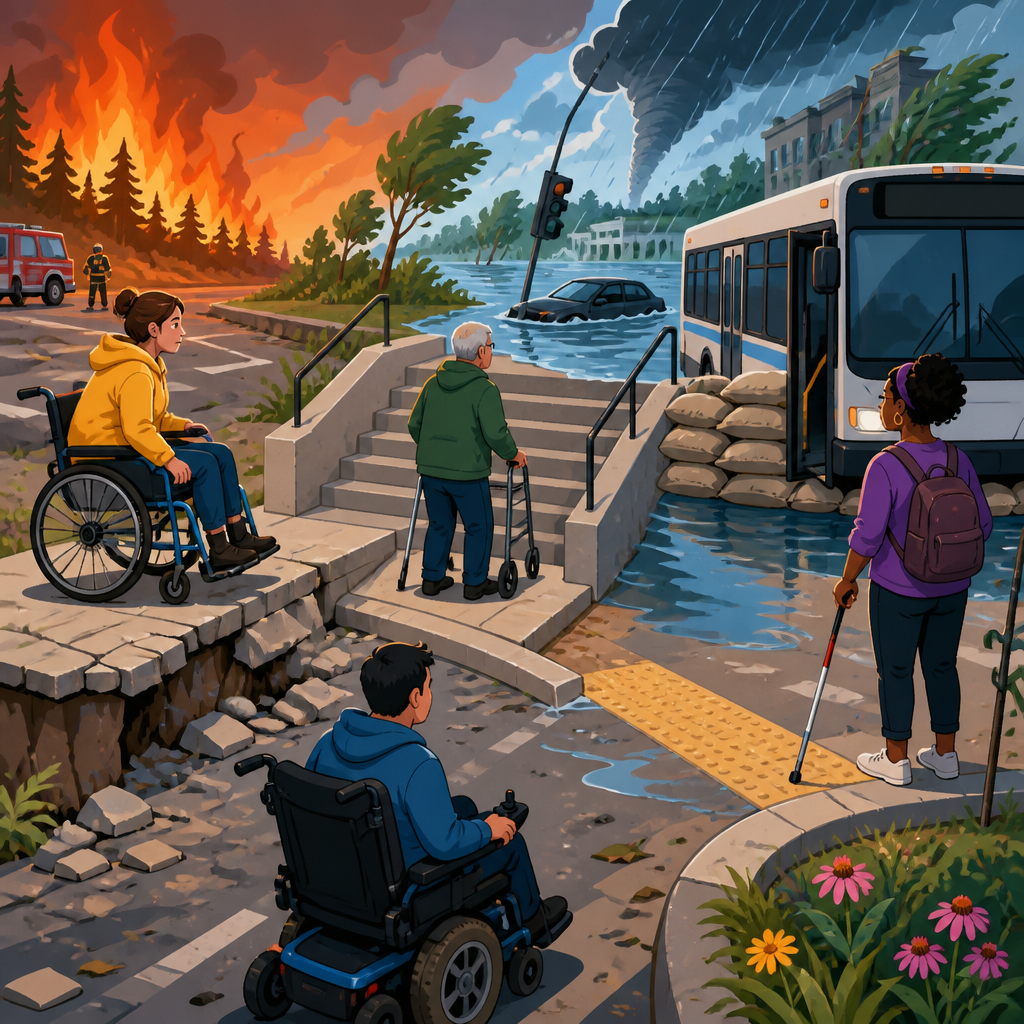
Evacuation planning also requires accessible transportation, not simply an order to leave. Paratransit users may need lift-equipped vehicles, drivers trained to secure mobility devices, and routes that accommodate service animals and essential support persons. During Hurricane Katrina, wheelchair users and nursing home residents were left behind or evacuated late, and those failures continue to shape modern disability disaster planning. More recent wildfire evacuations in California have shown similar pressure points: inaccessible pickup information, roads gridlocked before accessible vans arrive, and public charging disruptions that leave power wheelchair users stranded. The legal standard is practical access, not theoretical eligibility for evacuation.
Effective emergency alerts answer specific questions people actually have: What is happening? Who is at risk? When must I leave or shelter in place? Where is the accessible location? How do I get there if I use a wheelchair, oxygen, or a service animal? Agencies that pre-script these answers in multiple formats perform better than agencies improvising after conditions worsen.
Shelters, cooling centers, and power-dependent needs
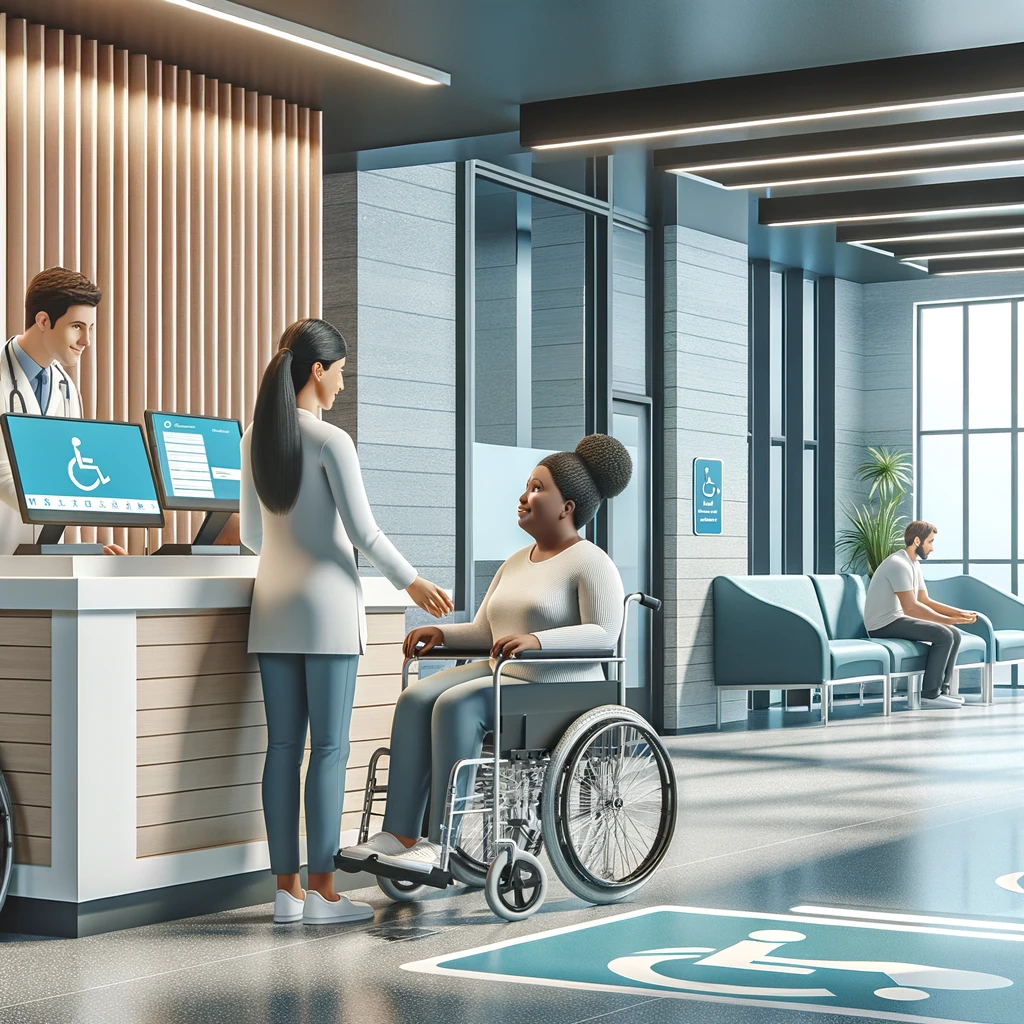
Mass care sites routinely reveal whether ADA compliance was operationalized before an event. An accessible shelter needs more than a ramp at the entrance. It needs an accessible route from parking or drop-off, registration tables at usable heights, cots or alternatives that work for people who cannot transfer safely, accessible toilets and showers where provided, quiet spaces for some neurodivergent evacuees, policies permitting service animals, charging access for power wheelchairs and communication devices, refrigeration options for medication where feasible, and staff trained on reasonable modifications. If any of those pieces fail, evacuees may avoid shelters entirely and face greater danger.
Heat emergencies make these issues especially visible. Cooling centers are often announced as universal solutions, yet many are located in buildings with poor transit access, limited seating, narrow doorways, or inaccessible restrooms. For people with multiple sclerosis, spinal cord injuries, certain psychiatric disabilities, cardiovascular conditions, or medications that impair temperature regulation, an inaccessible cooling center is not an inconvenience; it is a serious health risk. The same is true during blackouts. People who rely on ventilators, oxygen concentrators, dialysis schedules, refrigerated insulin, or home health aides face layered risks when emergency planners treat electricity as a comfort issue rather than a life-sustaining accommodation issue.
| Emergency setting | Common ADA-related failure | What compliant practice looks like |
|---|---|---|
| Evacuation alert | Audio-only warning | Captioned, interpreted, text-based, plain-language alerts across channels |
| Shelter intake | No policy for service animals or support persons | Integrated intake with trained staff and clear modification procedures |
| Cooling center | Steps, no accessible restroom, no transit plan | Accessible route, restroom access, seating, transit information, backup power |
| Blackout response | No charging or medical equipment plan | Power resilience strategy for durable medical equipment users |
Healthcare continuity, housing displacement, and recovery programs
Disaster law discussions often focus on the first seventy-two hours, but ADA rights failures continue long after evacuation. Healthcare continuity is a major example. Missed dialysis, disrupted personal care services, inaccessible pharmacies, and broken referral systems can turn a temporary emergency into a cascading civil rights problem. Hospitals and clinics also have ADA obligations during surge conditions. Triage protocols cannot devalue disabled lives based on biased quality-of-life assumptions, and communication access must continue in emergency departments, temporary clinics, and telehealth settings. The Office for Civil Rights at the U.S. Department of Health and Human Services has repeatedly warned against discriminatory crisis standards of care.
Housing displacement creates another layer of exposure. After floods, fires, or storms, people may be pushed into hotels, congregate shelters, or temporary units that are not accessible or not located near caregivers, transit, pharmacies, or dialysis centers. Recovery programs can also be inaccessible by design if applications depend on inaccessible websites, lengthy documentation requirements, or call centers that do not provide effective communication. FEMA has improved some disability integration practices over time, including disability integration advisors and guidance on accessible disaster assistance, but implementation still varies significantly by jurisdiction and contractor.
Long-term recovery raises hard questions about rebuilding. If a city replaces damaged accessible housing with fewer accessible units, or rebuilds transit-dependent neighborhoods without resilient accessible routes, climate adaptation can deepen exclusion. ADA rights in practice therefore extend beyond immediate response. They shape land use, housing policy, infrastructure design, insurance navigation, debris removal access, and the ability to return home safely with services intact.
Emerging issues: technology, mutual aid, and enforcement gaps
Several emerging issues now define this field. First, emergency technology can expand access or reproduce barriers. Apps for alerts, shelter locations, and aid applications are useful only if they meet established accessibility standards such as the Web Content Accessibility Guidelines. AI-generated captions, automated translations, and chatbot triage tools can help, but they are not reliable substitutes for qualified interpreters, plain-language content, or human review. I have audited emergency portals that looked modern yet failed basic keyboard navigation, color contrast, and form labeling tests, making them unusable when speed mattered most.
Second, mutual aid networks often fill gaps left by formal systems. Disability-led organizations have delivered batteries, medications, ride coordination, and peer support when official response lagged. That practical expertise should shape planning before disasters, not just patch holes afterward. Agencies that partner with Centers for Independent Living, Protection and Advocacy organizations, and local disability groups tend to identify barriers earlier and design more workable solutions. Community participation is not symbolic. It is one of the clearest indicators that an emergency plan will function under real conditions.
Third, enforcement remains uneven. People can file ADA complaints with the Department of Justice, pursue administrative remedies under Section 504 where federal funding is involved, or in some cases bring litigation. But emergency harms unfold quickly, and legal relief often arrives after the crisis. That reality makes proactive compliance more important than complaint-driven correction. The strongest systems use after-action reviews, accessibility audits, contract requirements, memoranda with accessible transportation providers, shelter inspections, and recurring staff drills. Rights become real when they are operational, budgeted, and measured.
What this hub covers and how to use it
As a hub under Rights and Protections, this page connects the major subjects readers should track across ADA rights in practice and emerging issues. Use it to evaluate whether emergency planning in your area addresses accessible alerts, evacuation transportation, integrated sheltering, medically necessary power and refrigeration, service animal policies, healthcare continuity, accessible temporary housing, digital accessibility, and complaint pathways. Each of those topics supports deeper analysis and deserves its own focused treatment, but they work best when understood as one system.
If you are an advocate, start with the gaps most likely to produce immediate harm: communication access, transportation, and shelter operations. If you are a local official, review plans against actual user journeys, not policy summaries. Ask whether a disabled resident can receive the alert, leave home, travel safely, enter the shelter, charge devices, obtain medications, communicate with staff, and return to accessible housing. If any step fails, rights protections are incomplete. Climate emergencies do not create those weaknesses from nothing. They reveal which obligations were postponed, underfunded, or never translated into practice. Use this hub to identify those pressure points, strengthen compliance, and push for emergency systems that protect disabled people before the next disaster.
Frequently Asked Questions
How do climate emergencies reveal failures in ADA compliance?
Climate emergencies make ADA failures impossible to ignore because they expose whether accessibility was built into emergency planning before a crisis began. In everyday life, barriers can sometimes be treated as isolated inconveniences. During a wildfire, hurricane, flood, heat wave, or power outage, those same barriers can become life-threatening. If evacuation alerts are delivered only through spoken announcements, people who are deaf or hard of hearing may miss critical instructions. If emergency websites are not screen-reader accessible, blind users may be shut out of real-time updates. If transportation plans assume everyone can drive, people who rely on paratransit, wheelchair-accessible vans, or personal assistance can be left behind.
The core issue is that disability access is often treated as an afterthought instead of a legal and operational requirement. The ADA requires public entities and many service providers to offer equal access to programs, services, and communications, including in emergencies. When shelters lack ramps, accessible bathrooms, charging capacity for medical devices, or staff trained to assist people with disabilities, the failure is not simply logistical. It reflects a breakdown in civil rights compliance. Climate emergencies reveal these weaknesses quickly because response systems are under pressure, and anything not planned for in advance tends to fail first.
These failures are also predictable. Advocates, disability rights organizations, and federal guidance have long warned that emergency management must include accessible communication, evacuation support, medical continuity, and shelter access. When communities repeatedly fail to provide these basics during disasters, it shows not that the needs were unknown, but that disabled people were excluded from planning and preparedness efforts. That is why climate emergencies are increasingly understood not just as weather events, but as stress tests for whether ADA rights exist in practice.
What kinds of ADA rights failures are most common during disasters and extreme weather events?
Some of the most common failures happen in six connected areas: communication, evacuation, transportation, shelter, healthcare continuity, and recovery support. Communication failures include emergency alerts without captions, sign language interpretation, plain-language alternatives, or screen-reader-friendly digital formats. This can prevent people from understanding where to go, when to evacuate, what risks they face, and what services are available. In a fast-moving emergency, delayed or inaccessible information can have immediate consequences.
Evacuation and transportation failures are also widespread. Many emergency plans still assume that people can leave independently, use standard vehicles, or travel without mobility equipment, medications, or caregivers. In reality, some people need wheelchair-accessible transportation, lift-equipped vehicles, extra time, communication support, or coordinated evacuation with service animals and durable medical equipment. If those systems are not built into disaster plans, disabled residents may be effectively trapped or forced into unsafe choices.
Shelter-related failures often include inaccessible entrances, cots that cannot be used by people with mobility impairments, lack of accessible toilets and showers, no refrigeration for medication, no private areas for personal care, and policies that improperly exclude service animals. Healthcare continuity failures can involve interrupted dialysis, inability to charge ventilators or power wheelchairs, lost access to home- and community-based services, and disruptions in prescription refills or personal attendant care. Recovery failures continue after the immediate crisis, especially when disaster applications, temporary housing programs, debris removal, insurance processes, and rebuilding services are inaccessible or difficult to navigate without accommodations.
What makes these failures especially serious is that they compound one another. A person who misses an inaccessible evacuation warning may then lose access to transportation, arrive at an inaccessible shelter, and later encounter inaccessible recovery systems. The problem is not one broken ramp or one missed caption. It is a chain of preventable barriers that can systematically exclude people with disabilities from safety, survival, and recovery.
Are emergency managers, cities, and public agencies legally required to make disaster response accessible under the ADA?
Yes. Public agencies and other covered entities generally have legal obligations under the ADA, and often under related disability rights laws, to ensure that emergency programs, services, and activities are accessible. That includes preparedness planning, evacuation procedures, emergency communications, shelters, transportation systems, and post-disaster recovery programs. Accessibility is not optional during a crisis. In many respects, emergencies make compliance more important because the risks are greater and the consequences of exclusion are more severe.
Under the ADA, state and local governments must provide people with disabilities an equal opportunity to benefit from their services and must communicate effectively with individuals who have hearing, vision, speech, or other communication disabilities. That means agencies should be planning in advance for accessible alerts, captioned briefings, interpreters when needed, accessible digital information, and alternative formats. Physical accessibility also matters. If a city opens a cooling center, emergency shelter, or assistance site, it cannot simply assume that a location works for everyone. The site must be usable by people with mobility disabilities and others who need accessible features.
Legal compliance also extends beyond buildings and announcements. Agencies should modify policies and procedures when necessary to avoid discrimination, unless doing so would fundamentally alter the service or create an undue burden under the law. In practical terms, that can include permitting service animals in shelters, allowing disability-related supports, coordinating accessible transportation, or making reasonable adjustments to intake and assistance processes. The exact legal analysis can vary depending on the entity and circumstances, but the broad principle is clear: emergency response systems cannot lawfully be designed around nondisabled assumptions and then claim neutrality when disabled people are excluded.
Importantly, the ADA is not satisfied by telling individuals to solve systemic barriers on their own. A ventilator user should not have to independently invent a backup power plan because public emergency planning ignored predictable electricity loss. A deaf resident should not have to rely on neighbors for critical warnings because official communication was inaccessible. Disaster accessibility is a planning duty, not a personal workaround.
Why is inaccessible emergency communication such a serious issue for people with disabilities?
Emergency communication is often the first link in the safety chain, so when that link fails, every later stage of response becomes harder or impossible to access. If people do not receive warnings in ways they can perceive and understand, they may miss evacuation orders, shelter locations, air quality alerts, boil-water notices, heat advisories, curfews, and medical resource updates. In climate emergencies, timing matters. Minutes and hours can determine whether someone gets out safely, secures medication, charges equipment, or avoids exposure to dangerous heat, smoke, or floodwaters.
Inaccessible communication can take many forms. A spoken press conference without real-time captioning or interpretation excludes many deaf and hard-of-hearing people. An image-based social media post without text description can block access for blind users. A dense emergency notice filled with technical jargon may be unusable for people with intellectual or cognitive disabilities, limited English proficiency, or those under acute stress. Websites that break screen-reader navigation, emergency apps that lack accessibility features, and hotline systems that are not compatible with relay services all create barriers at the exact moment when reliable information is most needed.
This issue is serious not only because it affects awareness, but because it shapes who gets treated as part of the public in the first place. When communication systems are built for a narrow audience, disabled residents are effectively excluded from emergency governance. They are left to depend on informal networks, chance encounters, or delayed secondhand information. That is both dangerous and inequitable. Effective emergency communication should be multimodal, redundant, and accessible by design, using captions, interpreters, text alerts, audio, plain language, accessible websites, and community-based outreach rather than assuming one format will reach everyone.
Accessible communication also supports independence and dignity. People with disabilities should be able to receive official information directly, not through a caregiver, family member, or stranger. In a disaster, direct access to timely, understandable information can be the difference between meaningful choice and forced dependence.
What would a disability-inclusive climate emergency response look like in practice?
A disability-inclusive climate emergency response would begin long before disaster strikes. It would include disabled people, caregivers, service providers, and disability rights organizations in planning, drills, policy design, and after-action reviews. Instead of treating disability as a special category to bolt onto a general plan, agencies would assume from the outset that the public includes people with mobility, sensory, cognitive, psychiatric, and chronic health disabilities. That shift changes how warnings are issued, how transportation is arranged, where shelters are located, how medical continuity is protected, and how recovery programs are delivered.
In practice, this means creating accessible and redundant alert systems, mapping residents who may need evacuation support without compromising privacy, contracting for wheelchair-accessible and medically appropriate transportation, and ensuring shelters have ramps, accessible restrooms, charging stations, refrigeration for medication, quiet spaces, cots and alternatives that work for different bodies, and staff trained in disability etiquette and accommodation procedures. It also means planning for backup power, continuity of personal care services, accessible cooling and clean-air centers, and policies that support service animals and necessary assistive equipment.
A truly inclusive approach would also address recovery, not just immediate survival. Applications for emergency aid, temporary housing, debris removal, food support, and rebuilding assistance should be accessible online, by phone, and in person. Temporary housing should be available in accessible units, not after months of delay. Outreach should reach people living independently, in congregate settings, and in rural or underserved areas. Data collection should track disability-related outcomes so agencies can identify gaps rather