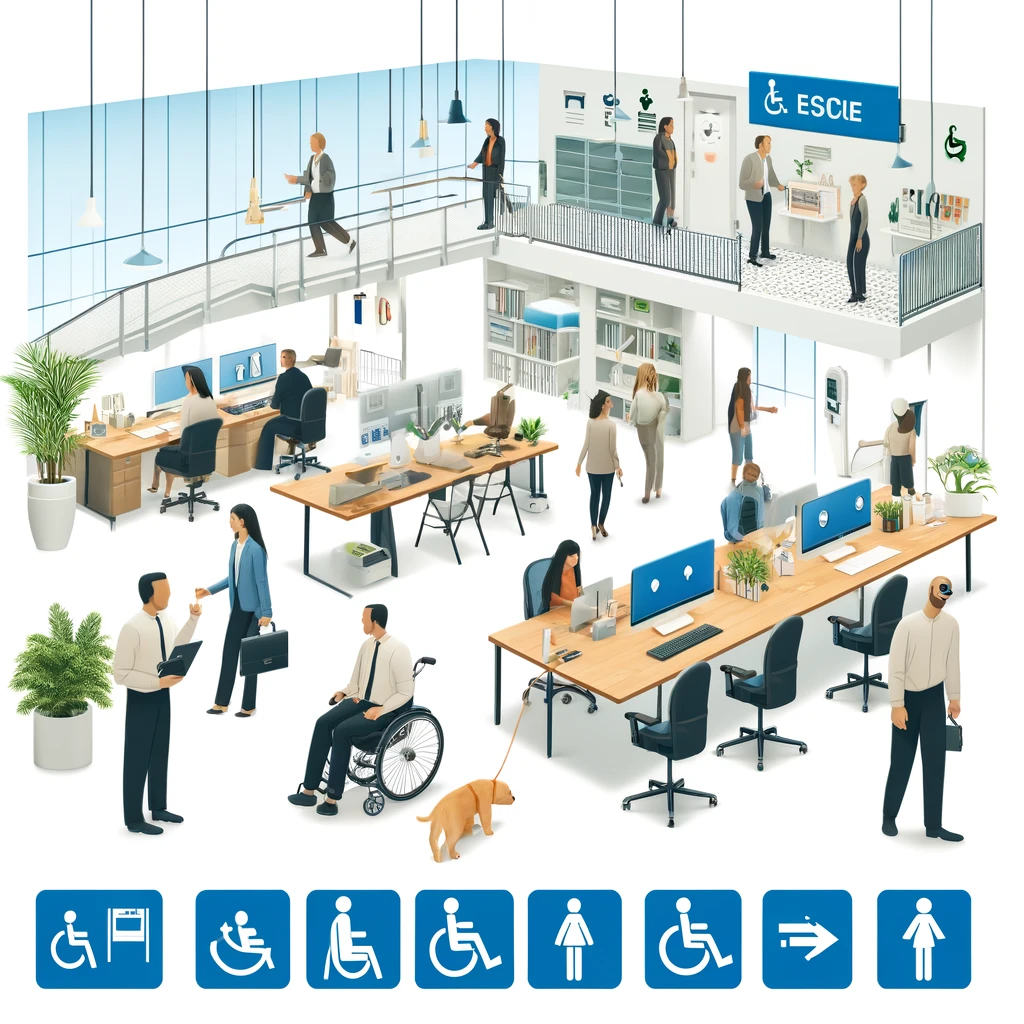
ADA compliance becomes manageable when teams stop treating it as a vague legal obligation and start measuring it through clear operational indicators. In practice, ADA compliance KPIs are the metrics that show whether accessibility work is reducing barriers, lowering legal risk, and improving real user outcomes across websites, mobile apps, documents, physical spaces, customer support, hiring workflows, and procurement. I have seen programs stall when leaders ask only, “Are we compliant?” and gain traction when they ask better questions: how many critical barriers remain, how quickly are issues fixed, what percentage of new releases pass accessibility review, and where are disabled users still dropping off. That shift matters because the Americans with Disabilities Act is enforced through outcomes, not intentions. Responsible teams measure implementation, not just policy language. They connect standards such as WCAG 2.1 or 2.2, Section 508, design system governance, training completion, vendor controls, and complaint handling to practical indicators that can be reviewed every month. This article explains what those indicators are, how mature teams use them, and how to build an ADA compliance measurement framework that supports continuous improvement rather than one-time certification.
Why ADA compliance KPIs matter in practical implementation
ADA compliance KPIs matter because accessibility programs fail when ownership is diffuse and success criteria are undefined. The ADA sets a civil rights expectation of equal access, but implementation happens through product roadmaps, facilities maintenance schedules, HR processes, service scripts, and purchasing decisions. Without metrics, accessibility becomes reactive. Teams fix issues only after complaints, demand letters, or failed audits. With metrics, they can prioritize risk, allocate budget, and verify that controls are working before harm reaches customers or employees.
In digital environments, the most common implementation benchmark is conformance with Web Content Accessibility Guidelines. Yet conformance alone is not enough. A page can technically pass many automated rules and still frustrate screen reader users if focus order is confusing, error recovery is weak, or a custom component behaves inconsistently. That is why mature teams pair technical KPIs with user-centered KPIs. In physical environments, a building may meet dimensional requirements on paper, but poor maintenance of lifts, blocked routes, or unclear signage can still create exclusion. Measurement must cover both static compliance and operational reliability.
I usually advise teams to organize ADA compliance KPIs into five categories: coverage, defect severity, remediation speed, prevention, and user impact. Coverage shows how much of the organization has been assessed. Defect severity tracks how many barriers exist and how serious they are. Remediation speed measures how quickly confirmed issues are fixed. Prevention captures whether upstream controls, such as training and design system standards, are reducing new defects. User impact tells you whether disabled people can actually complete tasks. Together, these categories give executives a realistic picture of progress.
The core KPI categories responsible teams track
The strongest ADA compliance dashboards do not rely on a single pass rate. They show a portfolio of indicators that map to the full implementation lifecycle. First is audit coverage: the percentage of critical user journeys, templates, documents, physical locations, and internal systems reviewed within a defined period. If only a handful of public pages are scanned while checkout, login, career applications, kiosks, and PDFs remain untested, the program is not under control. Coverage should be segmented by risk, traffic, and business criticality.
Second is barrier inventory by severity. Teams need a count of open issues classified as critical, serious, moderate, or minor, with a documented rubric. Critical issues usually block core tasks, such as unlabeled checkout buttons, inaccessible CAPTCHAs without alternatives, or inaccessible interview scheduling systems. Serious issues substantially degrade use, such as form errors that are not announced to assistive technology. Moderate and minor issues still matter, but a mature team distinguishes them so remediation focuses first on the highest impact barriers.
Third is mean time to remediate, often measured separately for critical and noncritical issues. A responsible target might require critical production defects to be fixed within thirty days, while less severe issues are resolved in a quarterly release. What matters is consistency and exception management. If legal complaints or customer escalations are involved, teams often set much tighter service levels. Fourth is defect escape rate: how many accessibility issues reach production after design review, QA, or procurement checks should have caught them. This KPI reveals whether preventive controls work.
Fifth is release compliance. Product teams should know what percentage of releases completed accessibility acceptance criteria before launch. Sixth is training effectiveness, not just completion. It is easy to report that ninety percent of designers took a course; it is more meaningful to measure whether color contrast errors, missing alt text, and keyboard traps decline after training. Seventh is issue recurrence. If the same modal dialog bug appears across products every quarter, the root problem may be a shared component or weak engineering standard.
| KPI | What it measures | Typical implementation use |
|---|---|---|
| Audit coverage | Percent of high-risk assets reviewed | Shows whether the program is assessing what matters most |
| Open critical barriers | Count of blockers on key tasks | Prioritizes remediation and executive attention |
| Mean time to remediate | Average time to close confirmed issues | Tests whether owners and workflows are responsive |
| Release accessibility pass rate | Percent of launches meeting acceptance criteria | Measures prevention before defects reach users |
| Complaint resolution time | Time to acknowledge and resolve reported barriers | Connects governance to real user experience |
| Recurring issue rate | Issues repeated across teams or releases | Identifies systemic design or component failures |
Digital accessibility KPIs for websites, apps, and documents
For websites and mobile apps, the most useful ADA compliance KPIs align with actual user journeys. I recommend measuring accessibility at the template, component, and transaction level. Template conformance answers whether core page types, such as product detail pages or article pages, meet requirements. Component conformance tests buttons, menus, modals, carousels, accordions, form fields, date pickers, and media players inside the design system. Transaction success evaluates complete tasks such as account creation, payment, password reset, telehealth booking, and job application submission.
Automated scanning tools such as axe, WAVE, Siteimprove, Deque WorldSpace, and Accessibility Insights are valuable, but teams should not treat scan scores as final truth. Automation reliably catches only a subset of issues, often around labels, semantics, color contrast, and ARIA misuse. It cannot fully judge reading order, context changes, meaningful alternative text, instructional clarity, or whether a screen reader workflow makes sense. That is why one of the most important digital KPIs is the percentage of critical journeys tested manually with keyboard-only navigation and at least one mainstream screen reader, such as NVDA, JAWS, or VoiceOver.
Document accessibility deserves its own KPI set. Many organizations publish policy PDFs, benefit guides, statements, and forms that remain inaccessible long after the main website improves. Track the percentage of public-facing PDFs remediated to tagged, navigable, machine-readable standards; the number of inaccessible legacy files removed or replaced with accessible web pages; and turnaround time for providing accessible alternative formats. In regulated sectors, inaccessible documents are often the hidden backlog that keeps legal risk high.
Mobile app teams should measure support for dynamic type, screen reader labels, touch target size, orientation changes, and nonvisual error handling. If a banking app passes a website audit but account transfer fails with TalkBack because confirmation messages are not announced, the accessibility program has a gap. Real implementation means measuring the moments where users succeed or fail, not only the code patterns auditors inspect.
Operational KPIs beyond the website
Practical implementation of ADA compliance extends well beyond digital products. Responsible teams measure accessibility in customer service, employment, facilities, events, and vendor management because users experience the organization as a whole. A retailer may offer an accessible website but still fail customers if call center agents cannot process relay calls efficiently or if curbside pickup instructions assume all users can stand in line. KPI design should reflect that full service chain.
For customer support, common metrics include accessibility-related contact volume, first response time, first contact resolution rate, and the percentage of frontline staff trained on communication accommodations. If a Deaf customer requests a captioned support session or a blind customer reports an inaccessible bill, teams should measure not only how fast the ticket was closed but whether the accommodation actually solved the barrier. Quality assurance reviews can sample interactions for plain language, correct handling of relay services, and escalation accuracy.
In employment, HR should measure accessibility of recruiting portals, interview processes, onboarding documents, benefits enrollment, and workplace accommodation workflows. Useful KPIs include time to acknowledge accommodation requests, median time to implement approved accommodations, percentage of job descriptions reviewed for unnecessary physical requirements, and accessibility review coverage for learning platforms used in mandatory training. I have seen organizations reduce both employee frustration and legal exposure simply by tracking accommodation request aging and naming owners for every stalled case.
Facilities teams can track elevator uptime, accessible route obstruction incidents, signage inspection completion, restroom compliance checks, service counter accessibility, assistive listening device availability, and resolution time for maintenance affecting accessible features. Event teams should measure captioning coverage, sign language interpreter fulfillment rate, accessible seating inventory accuracy, and the percentage of registration forms that clearly ask about accommodation needs. These operational KPIs matter because the ADA is lived in moments of service delivery, not only in policy binders.
Leading indicators versus lagging indicators
One reason ADA compliance programs struggle is that they overemphasize lagging indicators. Complaints, lawsuits, demand letters, settlement costs, and public escalations are important metrics, but they tell you failure already reached a person. Mature teams balance those with leading indicators that predict future accessibility performance. Leading indicators include design review completion, percentage of reusable components with documented accessible behavior, test case coverage for keyboard and screen reader scenarios, procurement contracts containing accessibility clauses, and accessibility sign-off before release.
Lagging indicators still have strategic value. A spike in complaints about inaccessible account statements can reveal a document workflow issue that scans never touched. A pattern of unresolved accommodation requests can expose a broken HR handoff. The key is not to manage by complaint volume alone. Low complaint volume does not prove accessibility. Many users simply abandon the task, find a workaround, or decide not to engage. That abandonment can show up elsewhere, in lower conversion, higher support contacts, or poor task completion during usability testing with disabled participants.
A balanced scorecard might assign forty percent of attention to prevention metrics, forty percent to active barrier reduction, and twenty percent to user-reported outcomes. The exact mix varies by maturity. Early-stage teams often need more inventory and remediation metrics because they are reducing obvious backlog. Mature teams should gradually shift toward prevention and experience quality, because the best ADA compliance KPI framework is the one that stops barriers from recurring.
How to set targets, owners, and review cadences
Metrics become useful only when each one has a definition, owner, data source, threshold, and review rhythm. Start by documenting the asset inventory: websites, apps, kiosks, PDFs, office locations, call center channels, hiring systems, and third-party platforms. Then assign accountable owners. Product may own release pass rate and defect escape rate. Facilities may own accessible route inspections and repair time. HR may own accommodation request aging. Legal and compliance should advise on risk, but they should not be the only owners of execution metrics.
Targets should be ambitious enough to drive change and realistic enough to sustain credibility. Examples include one hundred percent manual accessibility testing for top ten revenue-generating journeys, closure of all critical barriers within thirty days, quarterly review of all newly published PDFs, and accessibility clauses in one hundred percent of high-risk technology contracts. Review cadence usually works best at multiple levels: weekly for operational issue triage, monthly for management dashboards, and quarterly for executive governance. Accessibility debt trends should be visible over time, not hidden in isolated audit reports.
Governance also needs escalation rules. If a launch misses accessibility acceptance criteria, who can approve a temporary exception, for how long, and with what remediation deadline? If an elevator outage affects an accessible route, when is communication to visitors required? If a vendor fails to provide a current accessibility conformance report, can procurement proceed? I have found that programs mature fastest when KPI thresholds are tied to actual decision points. A metric nobody uses to make decisions is just a report.
Common mistakes when measuring ADA compliance
The most common mistake is relying on a single percentage score from an automated scanner. Accessibility is multidimensional. A score can be directionally helpful, but it cannot substitute for component testing, assistive technology checks, or user task validation. Another mistake is measuring outputs without outcomes. Tracking how many people attended training or how many audits were completed is useful, but if critical barriers remain open for months, the program is not effective.
Teams also get in trouble when they ignore third-party dependencies. Payment providers, HR systems, chat widgets, maps, video platforms, and document generators often introduce serious barriers. Vendor accessibility should be measured through procurement review, conformance documentation, contract language, defect logging, and retest obligations. Another recurring problem is failing to separate backlog reduction from net-new quality. An organization may close two hundred historical issues while shipping fifty new inaccessible components every month. Without a recurrence metric, leadership may think performance is improving when systemic quality is not.
Finally, many dashboards omit direct feedback from disabled users. Responsible teams include moderated testing, customer interviews, complaint patterns, and accommodation fulfillment data because implementation quality is not fully visible in source code or facility checklists. Measurement should respect privacy, but it should never ignore lived experience.
ADA compliance KPIs work when they translate accessibility from aspiration into accountable operational practice. The most effective programs measure coverage, severity, remediation speed, prevention, and user impact across digital products, documents, facilities, support channels, employment processes, and vendors. They use standards such as WCAG and Section 508 as anchors, but they do not confuse checklists with equal access. They monitor leading indicators to prevent barriers, lagging indicators to detect harm, and governance thresholds that trigger decisions. Most importantly, they tie every metric to an owner and a review cadence.
If you are building the practical implementation of ADA compliance, start with a simple scorecard for your highest-risk journeys and services. Identify the barriers that block access, set remediation timelines, and add preventive controls to design, QA, procurement, and operations. Then expand the framework until accessibility is measured wherever your organization serves people. Responsible teams do not ask whether compliance is finished. They measure whether access is improving, every month, in ways users can feel.
Frequently Asked Questions
What are ADA compliance KPIs, and why do responsible teams rely on them instead of asking only whether they are compliant?
ADA compliance KPIs are the measurable indicators teams use to track whether accessibility efforts are actually reducing barriers, lowering legal exposure, and improving experiences for people with disabilities. Instead of treating compliance as a yes-or-no legal status, responsible organizations break accessibility into operational outcomes they can monitor over time. That might include the percentage of high-traffic pages that meet accessibility standards, the average time to fix critical issues, the volume of accessibility-related customer complaints, the accessibility pass rate of new product releases, or the percentage of vendor tools reviewed for accessibility before purchase.
This approach matters because “Are we compliant?” is usually too vague to guide action. Most organizations are not dealing with one static environment. They are managing websites, mobile apps, PDFs, kiosks, support channels, forms, hiring systems, internal tools, and third-party platforms that change constantly. A single compliance statement does not tell a team where barriers exist, whether conditions are improving, or whether specific departments are doing their part. KPIs create visibility. They help leaders see whether accessibility work is preventive or reactive, whether problems are being introduced faster than they are fixed, and whether users are encountering fewer obstacles in real situations.
Well-designed ADA compliance KPIs also shift accessibility from a legal panic to a management discipline. When teams measure trends consistently, they can prioritize high-risk areas, allocate resources intelligently, and hold owners accountable. In practical terms, that means accessibility becomes something teams plan for, report on, and improve continuously rather than something they scramble to address after a complaint, audit, or demand letter. That is why mature programs rely on KPIs: they turn accessibility from an abstract obligation into a trackable operational function.
Which ADA compliance KPIs are most useful for websites, mobile apps, and digital documents?
The most useful digital ADA compliance KPIs are the ones that show both technical quality and real-world impact. For websites and mobile apps, many teams start by tracking the number and severity of accessibility issues identified through audits, scans, and manual testing. Severity matters because a backlog of minor issues does not carry the same risk as a smaller set of blockers that prevent screen reader access, keyboard navigation, form completion, or video comprehension. Teams should also track remediation timelines, including average time to resolve critical defects and the percentage of high-severity issues fixed within a defined service level.
Another strong KPI is release accessibility performance. In other words, what percentage of new features, pages, templates, or app updates pass accessibility review before launch? This is one of the clearest measures of program maturity because it shows whether accessibility is built into design and development workflows or merely cleaned up afterward. Related metrics may include the percentage of components in a design system that have been accessibility tested, the share of user stories with accessibility acceptance criteria, and the percentage of QA cycles that include keyboard, screen reader, color contrast, zoom, and focus testing.
For digital documents such as PDFs, slide decks, and downloadable forms, useful KPIs include the percentage of documents that pass accessibility review, the number of inaccessible legacy files still in active use, and the turnaround time for remediating high-priority public-facing documents. It is especially helpful to distinguish between documents that are merely archived and those tied to essential services like applications, benefits, billing, policies, or healthcare information. Teams should also monitor user support requests related to inaccessible documents, because a document can appear technically compliant while still creating practical barriers.
Finally, mature teams combine technical metrics with experience metrics. These may include accessibility-related support tickets, completion rates for key tasks by users with assistive technology, feedback from disability usability testing, and repeat issue patterns by product area. That combination is important. Automated scans alone do not tell the whole story. The best KPI set shows whether barriers are being detected early, fixed quickly, and avoided in future releases while actual users are able to complete important tasks successfully.
How should organizations measure ADA compliance beyond digital properties like websites and apps?
Responsible teams understand that ADA performance extends far beyond digital products. ADA compliance KPIs should also reflect the accessibility of physical spaces, customer interactions, employment processes, and vendor relationships. For physical environments, organizations often track findings from site accessibility assessments, the number of unresolved barriers in entrances, restrooms, parking, signage, service counters, or paths of travel, and the average time to complete remediation after a barrier is identified. It is also useful to monitor the percentage of facilities assessed on a recurring schedule, especially for organizations with multiple locations.
In customer support, practical KPIs may include the availability and response time of accessible communication channels, the number of accommodation requests received, the percentage fulfilled within target timeframes, and complaint trends involving phone systems, chat tools, captioning, relay support, or inaccessible forms. These metrics help leaders understand whether customers with disabilities can actually get help without extra friction. If support teams are fielding repeated accessibility complaints, that often signals a broader operational problem, not an isolated issue.
For hiring and employment, strong KPIs include the accessibility review rate for job application systems, the time required to provide interview or workplace accommodations, completion rates for accessibility training among recruiters and managers, and the number of reported barriers in onboarding, benefits enrollment, or internal employee systems. These indicators are especially important because many organizations focus heavily on customer-facing accessibility while overlooking employment-related risk and inclusion outcomes.
Procurement is another area where measurement matters. Teams should track the percentage of third-party products assessed for accessibility before purchase, the percentage of contracts containing accessibility requirements, the response rate for VPAT or accessibility documentation requests, and the number of vendor-related issues that remain unresolved after implementation. This is critical because inaccessible third-party tools often create major ADA risk even when internal teams have strong standards. In short, organizations should measure accessibility wherever a person must interact with the business, not just on the homepage or in the mobile app.
What makes an ADA compliance KPI meaningful rather than superficial or misleading?
A meaningful ADA compliance KPI is tied to actual barrier reduction, accountability, and user outcomes. A superficial KPI may look impressive on a dashboard but fail to show whether accessibility is improving in practice. For example, reporting the raw number of issues found is not very helpful by itself. A higher issue count could mean the product is getting worse, or it could simply mean testing has improved. Similarly, counting how many employees attended accessibility training does not prove they are applying what they learned. Good metrics need context, targets, ownership, and a connection to risk or experience.
The strongest KPIs usually share a few traits. First, they are specific enough to guide decisions. “Improve accessibility” is not a KPI. “Reduce critical checkout accessibility defects by 50% in two quarters” is. Second, they distinguish between severity levels and business impact. A blocked payment form, inaccessible application portal, or uncaptioned required training video deserves more attention than a minor cosmetic inconsistency. Third, they are tied to time. Without deadlines or trend lines, teams cannot tell whether they are making progress or simply documenting problems.
Another hallmark of a meaningful KPI is that it supports accountability across functions. Accessibility is not only the legal team’s job or only the developer’s job. A strong measurement framework identifies owners in design, engineering, QA, content, facilities, HR, procurement, support, and leadership. That way, each group is measured on the indicators it can influence directly. This prevents the common failure mode where accessibility is everyone’s responsibility in theory and no one’s responsibility in practice.
Most importantly, meaningful KPIs do not stop at technical compliance signals. They include evidence from real users whenever possible. Complaint volumes, failed task completion, accommodation delays, recurring support escalations, and usability findings from people with disabilities reveal whether barriers are affecting real interactions. If a dashboard shows high compliance scores but users still cannot apply, purchase, read, navigate, or communicate successfully, the KPI framework is incomplete. The goal is not to produce attractive numbers. The goal is to measure whether access is actually becoming easier.
How often should teams review ADA compliance KPIs, and how should they use the results to improve performance over time?
Most teams should review ADA compliance KPIs on a regular cadence that matches the pace of operational change. For fast-moving digital environments, monthly review is often appropriate for issue trends, remediation speed, release quality, and support signals. Quarterly review works well for broader program indicators such as training completion, vendor assessment coverage, facility remediation progress, and policy adoption. Annual review still has a role, but mainly for strategic benchmarking, budget planning, and evaluating whether the accessibility program is maturing over time. If teams wait for annual reviews alone, they usually discover problems too late to manage them effectively.
The review process should do more than summarize data. Teams should look for patterns: Are the same issues being reintroduced after every release? Are critical barriers concentrated in one product team, template, vendor, or facility type? Are accommodation requests increasing because awareness is improving, or because systems remain inaccessible? Are fixes happening quickly in low-visibility areas while high-risk, customer-facing issues remain open? KPI review is valuable because it helps leaders move from anecdotal concern to evidence-based prioritization.
To improve performance, organizations should connect KPI findings to concrete actions. If remediation time is too slow, that may point to resource gaps, weak