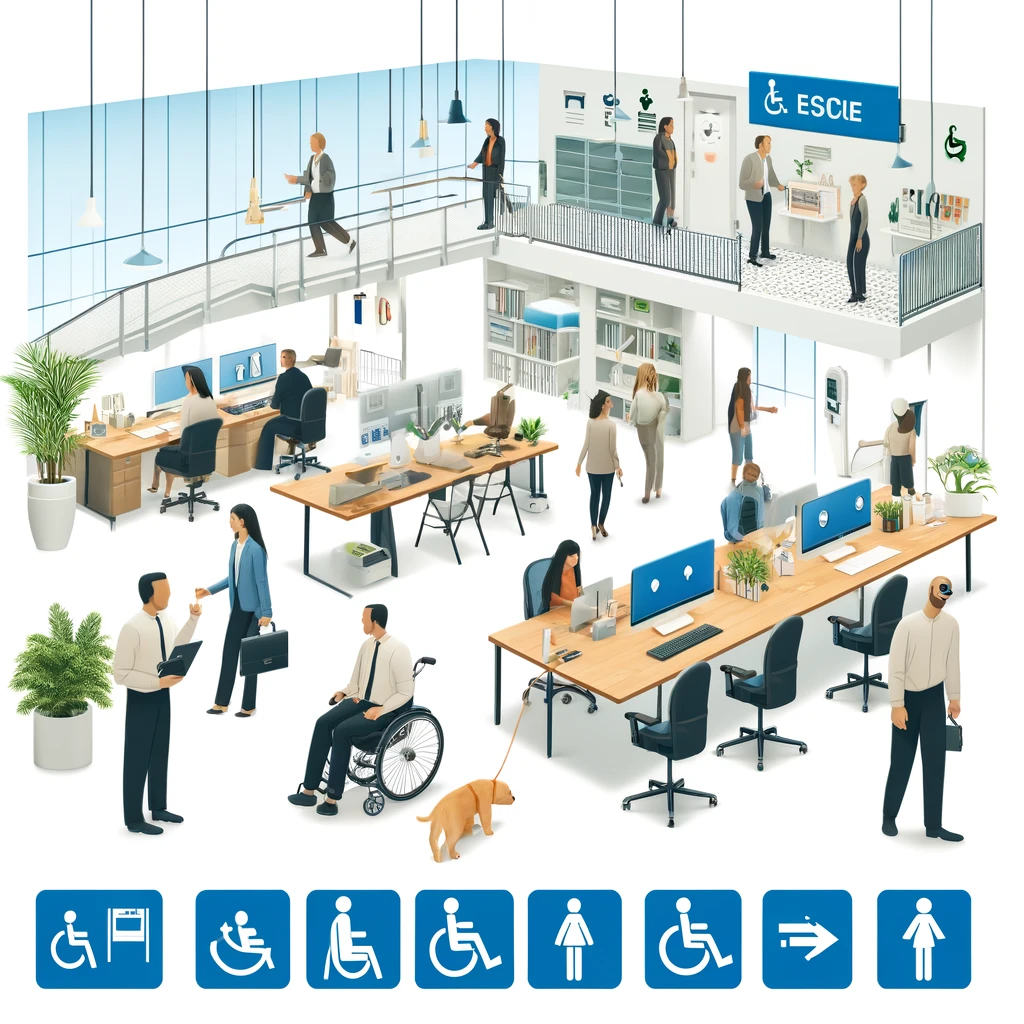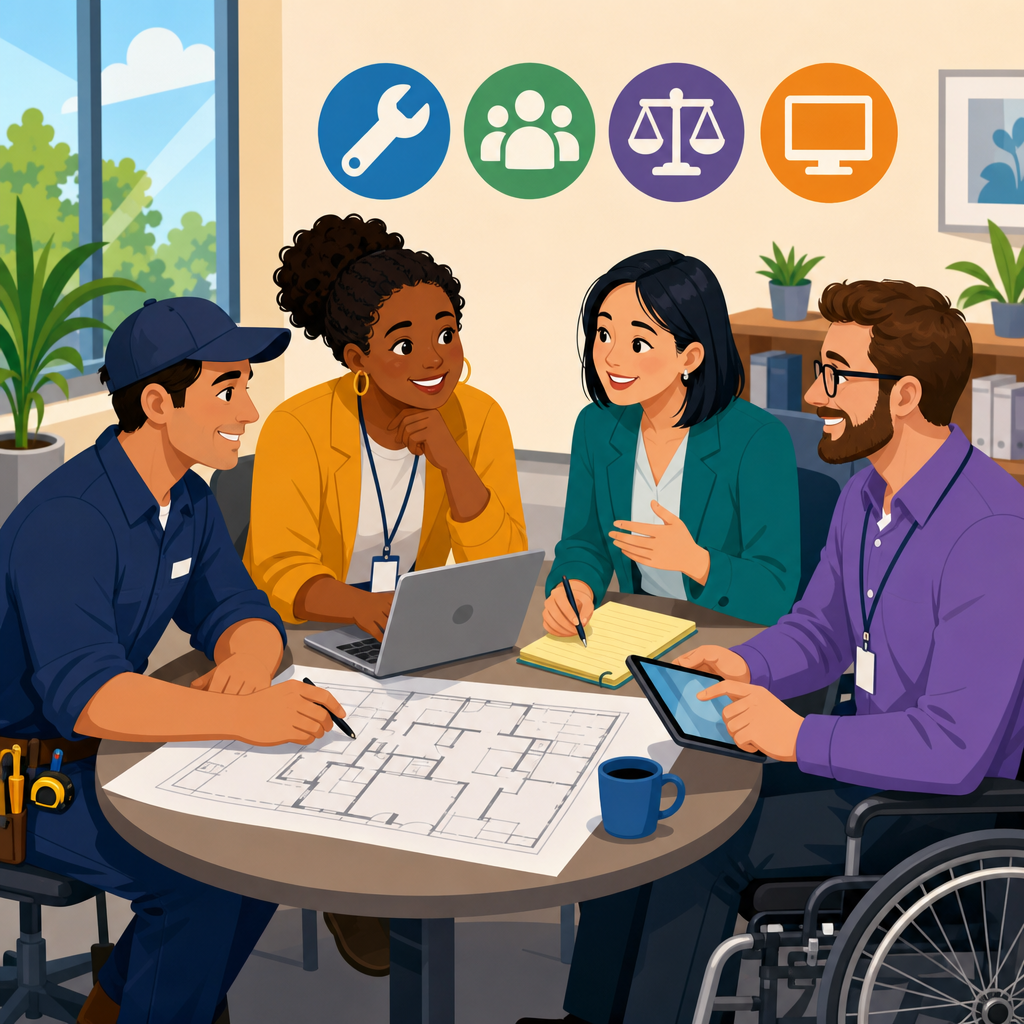
Building a cross-functional ADA team in facilities, HR, legal, and IT is the most reliable way to turn disability compliance from a reactive obligation into a repeatable operating practice. In practical terms, ADA compliance means meeting the requirements of the Americans with Disabilities Act across physical spaces, employment processes, digital systems, communications, and service delivery. A cross-functional team is a formal working group with shared accountability, defined roles, escalation paths, and measurable outcomes. This structure matters because ADA issues rarely stay in one department. A job applicant may need an accessible application portal, a modified interview room, captioned video instructions, and a timely accommodation review, all within days. If facilities, HR, legal, and IT work in sequence instead of together, delays and inconsistent decisions follow.
I have seen organizations spend heavily on isolated fixes while still missing basic implementation gaps, such as inaccessible visitor kiosks, undocumented accommodation decisions, or software contracts that ignore accessibility requirements. The risk is operational as much as legal. Complaints, turnover, procurement waste, inconsistent employee experience, and preventable remediation costs all rise when ownership is fragmented. A strong ADA team creates one governance model for three connected areas: employment under Title I, public-facing and customer-facing access under Title II or Title III depending on the organization, and digital accessibility across websites, documents, applications, and internal tools. It also helps leaders align with the Rehabilitation Act where Section 504 or Section 508 applies, plus state disability laws, building codes, and privacy rules affecting medical information. This hub explains how to build that team, assign authority, coordinate implementation, and connect policy to everyday decisions.
Why a cross-functional ADA team works
An ADA team works because most access barriers are interdisciplinary. A wheelchair user’s challenge entering a workplace might involve parking striping, door pressure, badge reader height, visitor policy, emergency egress planning, and an accessible route from transit. An employee with low vision may need screen-reader-compatible software, alt text in training materials, and a quiet process for requesting support from HR. A deaf customer may need CART or an interpreter for a public meeting, but also accessible registration forms, live captioning, and a procurement process that can quickly source communication services. No single department controls all of those decisions.
The cross-functional model replaces ad hoc handoffs with coordinated implementation. Facilities addresses the built environment using standards such as the 2010 ADA Standards for Accessible Design and relevant ICC A117.1 provisions where codes incorporate them. HR manages reasonable accommodation workflows, essential function analysis, leave coordination, anti-retaliation safeguards, and manager training. Legal interprets regulatory obligations, litigation risk, policy language, documentation discipline, and state law interactions. IT governs digital accessibility requirements, testing methods, remediation, product selection, and support channels. Communications, procurement, risk, security, and operations often need participation too, but the core team should start with the four named functions because together they cover the most common failure points.
Core roles, decision rights, and operating cadence
The most effective ADA teams have a named executive sponsor, usually from operations, HR, or legal, plus one accountable program lead. Without a single owner, action items become requests instead of commitments. I recommend giving the program lead authority to convene stakeholders, maintain a centralized issue log, track deadlines, and escalate unresolved decisions. Each function then needs clearly defined decision rights. Facilities should own physical barrier assessments, capital planning inputs, maintenance controls, and emergency planning for accessible evacuation and sheltering. HR should own accommodation intake, interactive process timelines, manager guidance, job description review, and employee communications. Legal should own policy review, case law monitoring, privileged investigation support when needed, and standards for records retention. IT should own digital accessibility conformance targets, defect triage, testing protocols, procurement language, and vendor accountability.
A practical cadence includes monthly governance meetings, weekly case reviews for open accommodations or urgent access issues, and quarterly reporting to leadership. Standing agenda items should include new complaints, aging requests, remediation progress, training completion, capital projects, major procurements, policy changes, and risk trends. Teams also need service-level expectations. For example, acknowledge accommodation requests within two business days, begin the interactive process within five, triage severe digital barriers within one business day, and review life-safety access issues immediately. These are operational commitments, not legal absolutes, but they create discipline and defensible consistency.
| Function | Primary ADA responsibilities | Typical deliverables | Key metric |
|---|---|---|---|
| Facilities | Site audits, barrier removal, signage, routes, restrooms, parking, alarms, evacuation planning | Access survey, remediation plan, capital budget requests | Percent of high-risk barriers corrected on schedule |
| HR | Accommodation process, manager coaching, job analysis, training, applicant support | Request workflow, forms, SOPs, training records | Median days to accommodation decision |
| Legal | Policy review, regulatory interpretation, complaint response, documentation standards | Policy library, legal issue memos, retention rules | Repeat issue rate after legal review |
| IT | Website, software, documents, kiosks, procurement, testing, remediation support | Accessibility roadmap, VPAT review process, defect backlog | Critical accessibility defects closed per quarter |
Facilities implementation: from survey to sustained access
Facilities teams often begin with a one-time audit and stop there. That is not enough. Practical implementation means integrating accessibility into preventive maintenance, project design, move management, space standards, and vendor scopes of work. Start with a site access survey covering parking, passenger loading, exterior routes, entrances, interior circulation, restrooms, service counters, assembly areas, break rooms, alarms, and wayfinding. Use the 2010 ADA Standards as the baseline, but also check local code adoption, because dimensional requirements and trigger points can differ in alteration projects. A taped threshold, a poorly placed trash can, or a malfunctioning automatic door can create an immediate barrier even in a building that was compliant at opening.
Real-world examples matter here. I have seen organizations fix accessible parking signage but ignore the slope of the access aisle, leaving the space functionally unusable. I have also seen well-intended renovations add attractive furniture that narrows circulation paths below accessible clear width. Strong teams avoid these regressions by making accessibility part of design review checklists, punch walks, maintenance tickets, and post-occupancy inspections. For leased sites, the team should map landlord versus tenant responsibilities and address them before lease renewal or expansion. Emergency planning deserves special attention. Accessible egress, areas of refuge where applicable, evacuation chair programs, and staff training cannot wait until a drill exposes a gap.
HR implementation: making the accommodation process work
HR carries the most visible ADA workload because employees and applicants usually start there. The goal is a reasonable accommodation process that is timely, consistent, confidential, and individualized. That begins with simple intake channels. Employees should be able to request support through a manager, HR business partner, online form, email, or phone without using legal terminology. Managers need training to recognize a request even when an employee does not say “accommodation.” The interactive process then requires understanding the limitation, the essential functions of the job, the workplace barriers involved, and possible effective accommodations. Documentation should be structured but not burdensome. Overly complex forms often discourage requests and slow decisions.
Good implementation also separates medical confidentiality from operational need-to-know. HR should store medical documents securely, limit disclosures, and give managers only the information they need to implement the approved accommodation. Common breakdowns include outdated job descriptions, inconsistent remote work analysis, and unclear ownership for equipment purchases. I recommend maintaining a catalog of common accommodations such as ergonomic devices, captioning, flexible scheduling, screen-reader-compatible software, reserved parking, or modified training formats, while still evaluating each case individually. The Job Accommodation Network is especially useful for idea generation and cost context. In many organizations, the majority of accommodations cost little or nothing, but delays create the real expense through lost productivity, leave disputes, or escalation to counsel and agencies.
Legal implementation: building defensible consistency without slowing action
Legal should not become a bottleneck, but it must shape the rules of the road. The legal function translates broad requirements into policies, templates, and escalation criteria that nonlawyers can actually use. That includes accommodation and accessibility policies, complaint intake language, event planning requirements, digital accessibility standards in contracts, and records retention protocols. Legal should also help define when direct threat, undue hardship, fundamental alteration, or safety concerns require deeper analysis. These are not routine conclusions and should never be used casually by managers trying to avoid change.
In practice, the best legal teams focus on pattern recognition. If the same barrier appears in multiple complaints, the issue is probably systemic. If managers repeatedly ask whether remote work is a reasonable accommodation, the organization likely needs clearer job function analysis and workflow design. If vendor contracts promise accessibility but products still fail screen-reader testing, procurement language may be too weak or acceptance testing may be missing. Legal can strengthen the program by standardizing correspondence, preserving privilege where appropriate, and reviewing high-risk decisions before they harden into precedent. The aim is predictable implementation, not defensive delay.
IT implementation: digital accessibility, procurement, and support
IT’s role in ADA compliance has expanded dramatically because work, learning, benefits, and customer service now depend on digital tools. A practical program covers websites, intranets, HR systems, learning platforms, kiosks, PDFs, mobile apps, collaboration tools, and third-party software. The most widely used technical benchmark is WCAG, usually version 2.1 Level AA or better in policy and contracts, though teams should watch updates and regulatory developments. Implementation starts with an inventory: what systems exist, which are business critical, who owns them, and how accessible they are today. Then create a triage model that prioritizes high-use, high-risk, and externally facing systems first.
Procurement is where many organizations either prevent future problems or purchase them. Every RFP, MSA, SOW, and renewal should include accessibility requirements, testing rights, remediation obligations, and documentation expectations such as a current VPAT based on the applicable Accessibility Conformance Reporting Template. A VPAT is not proof of accessibility, so IT should validate claims through manual and automated testing using tools such as axe, WAVE, Accessibility Insights, keyboard-only review, screen-reader testing with NVDA, JAWS, or VoiceOver, and user feedback where possible. Support processes matter too. If an employee cannot access payroll or training because of a software barrier, help desk staff need scripts for intake, escalation, workaround identification, and defect tracking. Accessibility must be treated like security and privacy: a nonfunctional requirement with operational ownership.
Governance, metrics, and the implementation roadmap
To make this hub topic actionable, build your ADA team around a phased roadmap. First, establish governance: sponsor, program lead, charter, role definitions, and meeting cadence. Second, baseline the current state with physical audits, accommodation process mapping, digital inventories, contract review, training review, and complaint trend analysis. Third, prioritize remediation by severity, legal exposure, affected population, and implementation effort. Fourth, embed accessibility into business processes: design standards, procurement gates, manager onboarding, project management templates, and change control. Fifth, measure and report results. Useful metrics include time to acknowledge and resolve accommodation requests, closure rate for high-severity barriers, percent of critical systems tested, percent of contracts with accessibility language, training completion, and recurrence of substantiated complaints.
The main benefit of a cross-functional ADA team is not simply fewer complaints, though that matters. The real benefit is operational clarity. People know where to go, who decides, how fast action should happen, and what standards apply. That clarity improves employee trust, customer experience, project quality, and budget discipline. It also helps organizations respond effectively when laws change, offices relocate, software is replaced, or emergencies disrupt normal procedures. If you are building your compliance and implementation program, start by naming the four core owners, issuing a charter, and completing a ninety-day baseline review. From there, convert findings into a funded roadmap and review progress every month. Consistent implementation is what makes ADA compliance durable.
Frequently Asked Questions
Why is a cross-functional ADA team more effective than assigning compliance to one department?
A cross-functional ADA team is more effective because ADA compliance does not live in just one area of the organization. The Americans with Disabilities Act affects facilities and the built environment, employment practices, technology platforms, digital content, communications, procurement, customer interactions, and day-to-day service delivery. If responsibility sits only with HR, important issues in the workplace may be addressed while digital barriers, inaccessible spaces, or inconsistent vendor requirements go unchecked. If it sits only with facilities or legal, the organization may miss accommodation workflows, employee relations concerns, or accessibility defects in software and internal systems.
Bringing facilities, HR, legal, and IT together creates a practical operating model instead of a reactive fire drill. Facilities can address entrances, restrooms, parking, wayfinding, and maintenance standards. HR can manage accommodations, job descriptions, leave coordination, manager training, and candidate experience. Legal can interpret obligations, guide risk decisions, and help document policies and escalation paths. IT can improve website accessibility, software procurement standards, assistive technology compatibility, and remediation priorities. When these functions work together, the organization gains shared accountability, faster issue resolution, and a more consistent approach to disability access across the employee and customer experience.
Just as important, a cross-functional structure helps prevent gaps between teams. Many accessibility failures happen in handoffs: a facility modification is completed but never communicated to employees, an accommodation is approved but the software needed to support it was never procured, or a digital system goes live without accessibility review because no one knew who owned that decision. A formal team with defined roles, regular meetings, and escalation procedures reduces those failures and turns ADA compliance into a repeatable business process.
Who should be on a cross-functional ADA team, and what should each function own?
The core team should usually include representatives from facilities, HR, legal, and IT, but the strongest programs often expand to include procurement, communications, operations, security, learning and development, and where appropriate, DEI or employee experience leaders. The exact structure depends on the size and complexity of the organization, but the key is to assign ownership clearly rather than assuming everyone is “supporting” accessibility in general.
Facilities should typically own physical accessibility planning and maintenance. That includes barrier assessments, coordination of building modifications, parking and route access, signage, furniture and workstation standards, emergency egress considerations, and communication with landlords or contractors. HR should own employment-related ADA processes, including accommodation intake, interactive process documentation, manager guidance, return-to-work coordination, accessible recruiting practices, and employee policy alignment. Legal should guide statutory interpretation, documentation standards, confidentiality issues, risk analysis, complaint response, and escalation when obligations are unclear or when multiple laws intersect. IT should own digital accessibility standards for websites, intranets, software, collaboration tools, kiosks, and purchased technology, along with testing processes, remediation planning, and accessibility requirements in procurement and development lifecycles.
Beyond functional ownership, the team also needs a coordinator or chairperson who keeps the work moving. That person does not need to be the ultimate decision-maker in every area, but they should manage agendas, maintain issue logs, track deadlines, and make sure decisions turn into action. Many organizations also benefit from naming executive sponsorship so the team has authority to secure resources, resolve conflicts, and elevate high-risk issues quickly. In practice, the most successful ADA teams combine subject-matter expertise with clear process ownership, documented responsibilities, and leadership support.
What processes should a cross-functional ADA team put in place first?
The first priority is to build a clear governance framework. That means documenting who is responsible for what, how issues are reported, how cases are triaged, when legal review is required, and what the escalation path looks like when a request spans multiple departments. Without that structure, even experienced teams end up reacting inconsistently, which increases delays and risk. A simple written charter can define the team’s purpose, scope, meeting cadence, decision rights, and reporting expectations.
Next, the team should establish intake and tracking processes. There should be a reliable way for employees, applicants, customers, and internal stakeholders to raise accessibility concerns or request support. Those requests should be logged, categorized, assigned, and monitored through resolution. A central tracker helps the organization identify patterns, such as repeated website issues, recurring workstation requests, or facility barriers that affect multiple locations. It also makes it easier to demonstrate good-faith effort, timeliness, and follow-through if questions arise later.
Another early priority is creating standards and playbooks. Examples include accommodation workflows for HR, accessibility review checkpoints in software procurement, digital accessibility requirements for vendors, communication templates for common requests, and facilities response protocols for physical barrier reports. The team should also identify high-risk areas for baseline assessment: entrances, restrooms, conference rooms, online application systems, public websites, employee portals, PDFs, video content, and customer service channels are common starting points. From there, the team can build a remediation roadmap with deadlines, owners, budget assumptions, and success metrics. Starting with governance, intake, standards, and baseline assessments gives the team the structure it needs to move from ad hoc problem-solving to repeatable ADA operations.
How can the team balance legal risk, employee accommodations, facility access, and digital accessibility without creating bottlenecks?
The best way to balance these priorities is to separate routine decisions from high-risk exceptions. Not every ADA-related issue needs to go through a slow, centralized approval chain. The team should define standard scenarios that can be handled quickly within existing procedures, such as common workstation adjustments, accessible document requests, captioning workflows, or known facility fixes. Legal should help shape the framework, but routine cases should not stall waiting for case-by-case review if the organization already has established standards and approved practices.
For more complex matters, the team needs clear triage criteria. Legal review may be necessary when a request presents conflicting obligations, impacts essential job functions, raises undue hardship questions, involves significant structural changes, or creates broader policy implications. Facilities may need to lead when physical changes affect lease terms, capital planning, or life safety systems. IT may need to step in when a digital barrier affects core systems, vendor contracts, or assistive technology compatibility. HR may lead when a request is tied to job performance, scheduling, leave, or manager communication. The point is not to push every issue to the same group, but to route it intelligently based on the nature and impact of the request.
To avoid bottlenecks, the team should also use service levels, templates, and decision trees. For example, there can be target response times for intake acknowledgment, interactive process steps, digital issue validation, and facilities follow-up. Common vendor contract language, accessibility checklists, and accommodation documentation templates reduce reinvention and make decisions more consistent. Regular case reviews also help the team identify where delays are happening and whether authority should be delegated closer to the point of need. A mature cross-functional ADA program is not just compliant; it is operationally efficient, which is what allows accessibility to scale across the organization.
What metrics show that a cross-functional ADA team is actually improving compliance and accessibility?
The most useful metrics combine risk indicators, operational performance, and lived experience. On the operational side, organizations should track request volume, average response time, time to resolution, backlog, and the percentage of issues closed within target service levels. These measures show whether the team is functioning consistently and whether requests are getting stuck in a particular department. It is also helpful to measure how many issues are recurring, because repeated requests often signal a systemic process problem rather than an isolated case.
On the compliance and remediation side, the team should monitor the number of completed facility corrections, digital accessibility defects identified and resolved, accessibility checks built into procurement or project lifecycles, manager training completion, and policy updates implemented. For IT, metrics might include accessibility conformance testing results, remediation rates for high-severity defects, and the percentage of vendors reviewed for accessibility before purchase. For facilities, metrics may include barrier assessment completion, corrective action status by site, and preventive maintenance compliance for accessibility-related features. For HR, useful indicators include accommodation process timelines, manager escalation trends, and accessibility outcomes in recruiting and onboarding.
Organizations should also pay attention to qualitative signals. Employee feedback, applicant experience, customer complaints, audit findings, and internal survey responses can reveal whether the formal metrics reflect actual improvement. The strongest ADA teams use metrics not just to report activity, but to prioritize prevention. If the data shows that inaccessible PDFs, interview scheduling issues, or restroom access complaints keep resurfacing, the team should address the underlying process rather than treating each case as separate. Real success looks like fewer surprises, faster resolution, stronger documentation, and a visible shift from reactive response to ongoing accessibility management.