Introduction to ADA Compliance in Restrooms
The Americans with Disabilities Act (ADA) was enacted in 1990 to prohibit discrimination against individuals with disabilities in various areas of public life. One of the most crucial provisions of the ADA is ensuring that public facilities, including restrooms, are accessible to everyone, regardless of physical ability. ADA-compliant restrooms are designed to accommodate people who have physical disabilities, ensuring equal access and usability in public and private spaces.
ADA-compliant restrooms are a critical component in eliminating barriers that prevent individuals with disabilities from participating fully in activities most people take for granted. The design of these restrooms ensures people with disabilities can maintain independence and dignity when using these facilities. While ADA compliance may seem daunting, especially in older buildings, it is a legal requirement aimed at promoting inclusivity and offering a better quality of life for all.
Creating ADA-compliant restrooms involves specific regulations that cover various aspects, such as the size of the space, fixture placement, signage, and more. These regulations ensure accessibility for individuals who use wheelchairs, have limited mobility, or have a range of other disabilities. Understanding and implementing these requirements is not only a legal obligation but also an essential step in demonstrating commitment to inclusion and accessibility.
Essential Elements of ADA-Compliant Restrooms
Designing ADA-compliant restrooms involves adherence to specific guidelines outlined in the ADA standards. These standards detail the dimensions and features necessary for restrooms to be accessible to individuals with disabilities. They include the proper placement of fixtures, the necessary amount of floor space, and the appropriate signage and controls.
The dimensions of an ADA-compliant restroom require enough space for a wheelchair to navigate comfortably. The ADA mandates clear space of at least 60 inches in diameter for a wheelchair to turn around. Sink areas must have a knee clearance of 27 inches high, 30 inches wide, and 19 inches deep to provide access for individuals in wheelchairs. Additionally, soap dispensers, hand dryers, and faucets must be reachable without excessive stretching or reaching.
A real-world example can be observed in airports, where restrooms are designed to accommodate high traffic volumes and diverse needs. ADA-compliant restrooms at airports often include multiple accessible stalls and sinks to ensure that even during peak times, everyone has access. Features such as touchless sensors for faucets and hand dryers further enhance accessibility and convenience.
Beyond mere dimensions, ADA guidelines require specific legibility and contrasting colors for signage. Restroom signs must include Braille and raised characters for individuals with visual impairments. Designing restroom signs to suit ADA requirements not only serves compliance but also embodies an inclusive design philosophy.
Fixture Accessibility and Placement
Placing fixtures appropriately ensures ease of use for individuals with different mobility challenges. An ADA-compliant restroom must have at least one accessible stall that measures a minimum width of 60 inches and a depth of 56 inches for wall-mounted toilet stalls. Toilet seat height should be 17 to 19 inches above the floor, and grab bars must be installed on the side walls.
In a corporate office building, accessible restrooms might use lever-type flush handles and faucets, which do not require a tight grasp or twisting of the wrist. These fixtures make it easier for people with limited hand mobility to use the restroom independently and comfortably.
To enhance accessibility, all restroom controls such as faucets, soap dispensers, and hand dryers must require minimal effort to operate. They should be operable with one hand, designed to be easy to reach, and not demand substantial force to activate. These measures help ease use for individuals with various physical disabilities.
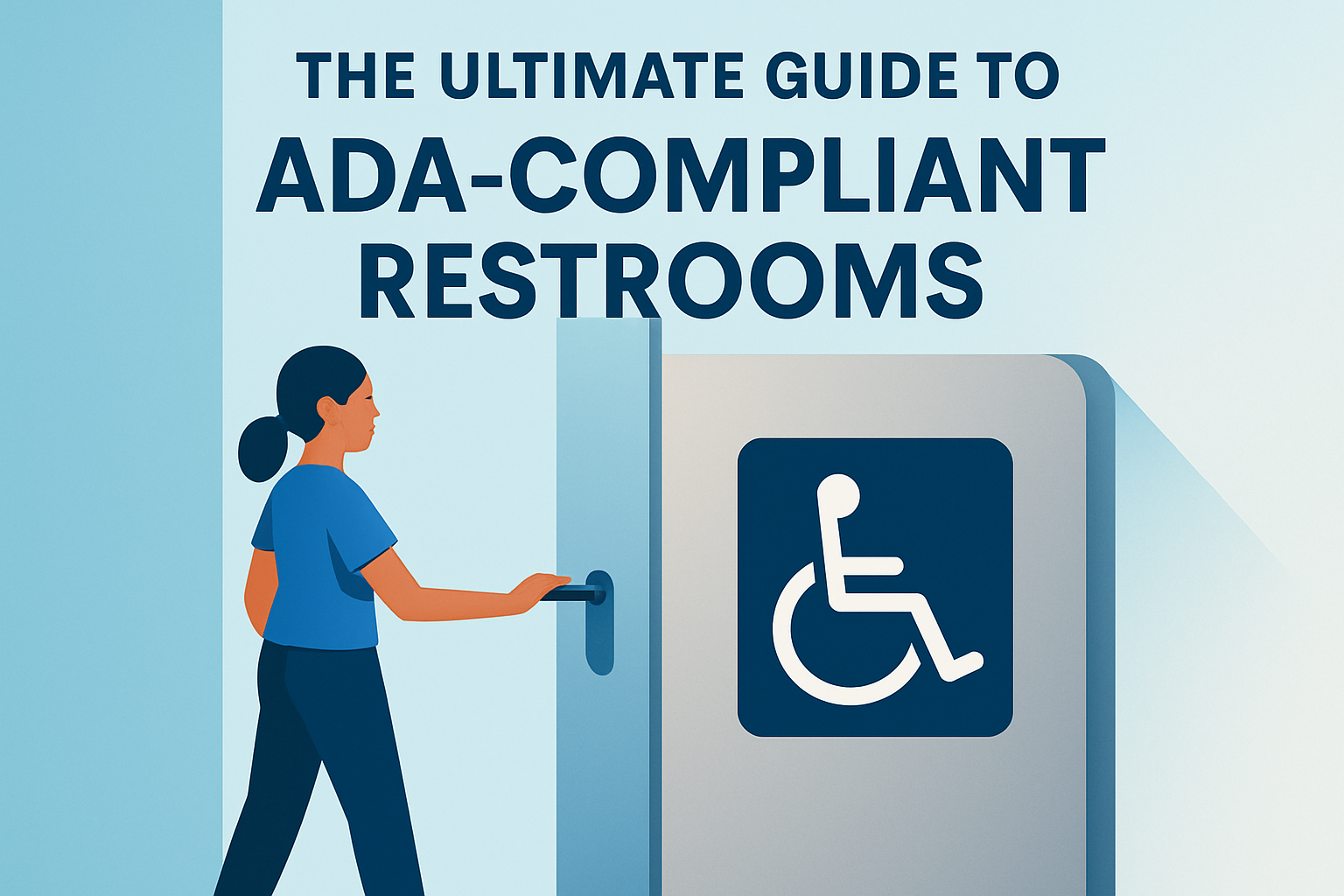
Guide to ADA-Compliant Restroom Doors
Proper door design and operability play a crucial role in accessibility. Restroom doors must provide a clear width of at least 32 inches to accommodate individuals using mobility aids. If the door swings into the restroom, additional clear floor space is required beyond general clearance.
In shopping centers, doors are often installed with automatic mechanisms, allowing users to enter and exit without physical contact. This automatic door system serves all users, eliminating the challenge faced by those who might struggle with heavy doors or latches.
Additionally, ADA guidelines suggest the use of U-shaped handles or lever hardware for easy gripping and turning. Doors may also be fitted with safety aids such as kick plates and push mechanisms to provide further convenience and accessibility.
ADA-Compliant Restroom Signage
Signage in ADA-compliant restrooms serves both navigational and safety purposes. These signs must utilize easy-to-read fonts, contrast well with their background, and include Braille. Critical restroom signs should be installed between 48 to 60 inches from the floor to ensure they are within the visual reach of most individuals.
An illustrative example can be found in community centers, where signs are often accompanied by auditory announcements for enhanced accessibility. These features aid individuals with varying degrees of visual disabilities in safely and efficiently locating bathroom facilities.
For organizations looking to improve accessibility, investing in comprehensive signage systems ensures compliance and promotes a more inclusive environment. Consider signs featuring high contrast and sans-serif typefaces for enhanced readability. Meanwhile, letters and numerals should measure at least 5/8 inch high, with non-glare finishes to maintain visibility under different lighting.
Maintaining ADA Compliance Over Time
Maintaining ADA compliance requires ongoing vigilance and commitment. Regular checks ensure that restrooms remain accessible in function as much as in design. Changes in building usage, wear and tear, or modifications due to maintenance can affect compliance.
The hospitality industry provides a relevant example with hotels performing yearly audits to assess ADA compliance. Inspections cover elements such as the operability of restrooms, the adequacy of space, and the functionality of all installed aids. This proactive approach helps to immediately address any areas of concern.
It is important to involve individuals with disabilities in the feedback process. Their firsthand experiences provide invaluable insights on actual usability and accessibility. Establishing an open channel for feedback ensures that any needed modifications are guided by user needs and experiences.
| Component | ADA Standard | Example Implementation |
|---|---|---|
| Toilet Stall Width | 60 inches minimum | Airports use wider stalls for luggage and wheelchair access. |
| Signage | Braille and Raised Characters | Shopping centers provide audio guides and Braille signs. |
| Door Width | 32 inches minimum clearance | Offices utilize automatic doors for uncompromised entry. |
| Sink Height | 34 inches maximum | Rest stops across highways accommodate varied user heights. |
Final Thoughts on Implementing ADA-Compliant Restrooms
Ensuring that restrooms are compliant with ADA standards is not merely about meeting legal obligations—it’s about creating a society where inclusivity is a priority. ADA-compliant restrooms eliminate barriers and foster an environment where everyone can move independently and comfortably.
Organizations benefit from embracing ADA standards not just in compliance but as a core value that champions accessibility and inclusion. By implementing these standards, facilities demonstrate their commitment to supporting diversity and enabling access for everyone.
The task of creating ADA-compliant restrooms should be seen as an opportunity to provide an inclusive environment for all users. Readers interested in exploring further can find numerous resources and professional services dedicated to improving accessibility through architecture, consulting, or advocacy. Taking proactive steps to assess current facilities and invest in necessary improvements will contribute significantly to creating a barrier-free world.
Take action now by assessing your facilities and ensuring they meet ADA standards. Partner with experts in accessibility to guide your improvements and adopt best practices. Your efforts make a lasting impact on promoting equality and accessibility for all individuals.
Frequently Asked Questions
1. What are the key requirements for an ADA-compliant restroom?
Ensuring ADA compliance in restrooms is essential for providing equal access to all individuals, regardless of their physical abilities. Several key requirements must be met to achieve this compliance:
Door Width and Maneuvering Clearance: The entry door to the restroom must have a minimum width of 32 inches when the door is opened at a 90-degree angle. The surrounding area should provide enough clearance for a wheelchair to maneuver comfortably, which typically involves space measuring at least 60 inches in diameter to facilitate a complete 360-degree turn.
Grab Bars: Grab bars must be installed in the toilet stalls and near the toilet. They should be placed at a height of 33-36 inches from the floor, with specific guidelines on their length depending on the layout of the bathroom. These bars are crucial for users who require additional support when using the restroom facilities.
Toilet Seat Height: Toilets in ADA-compliant restrooms must have seat heights between 17-19 inches from the floor to the top of the seat. This height accommodates wheelchair users, making transfers both to and from the toilet more manageable.
Accessible Sink and Faucets: Sinks should be mounted no higher than 34 inches from the floor and should leave enough knee clearance underneath (27 inches from the floor to the bottom of the sink). Effective faucet design includes lever-operated, push, touch-operated, or electronically controlled mechanisms, all of which can be operated with minimal force.
Clear Floor Space: Every fixture, including the sink and toilet, must be surrounded by clear floor space to ensure accessibility. This ensures individuals using wheelchairs or similar assistive devices can easily approach and use the restroom amenities.
These components, among others, form the foundation of creating restrooms that are not only ADA compliant but supportive of dignity and autonomy for all users.
2. How does ADA compliance benefit businesses and public facilities?
Adhering to ADA compliance standards in restrooms carries numerous benefits for businesses and public facilities. While ensuring that facilities are accessible to all is a legal requirement, doing so also reflects positively on the establishment in several ways:
Inclusivity: Implementing ADA guidelines demonstrates a commitment to inclusivity and respect for all individuals, regardless of their physical capabilities. It sends a powerful message of acceptance and value to all patrons and employees.
Enhanced Customer Experience: Accessibility improvements can significantly enhance the customer experience by providing convenience for all users. Families with strollers and older customers with mobility challenges, in addition to those with disabilities, benefit from design features like wider doorways and accessible stalls.
Legal Compliance: Compliance helps businesses and public facilities avoid potential legal issues related to disability discrimination. Ensuring facilities meet ADA standards protects against fines, lawsuits, and other legal challenges that might arise from failing to meet these required guidelines.
Increased Patronage: Improved accessibility often leads to an increase in patronage. Individuals with disabilities, their friends, and family members are more likely to frequent businesses they know cater to their needs, fostering customer loyalty and community support.
Public Image: A commitment to inclusivity and accessibility can bolster a business’s or institution’s public image, setting it apart from competitors and building a reputation as a socially responsible entity that values diversity and equal access.
Ultimately, ADA compliance not only fulfills legal obligations but also enhances the reputation, customer service offerings, and ethical standing of your establishment.
3. What are some common mistakes regarding ADA compliance in restrooms?
Despite the clear guidelines outlined for ADA compliance in restrooms, certain recurring mistakes can hinder accessibility efforts. Being aware of these common errors is crucial for correcting them and ensuring full compliance:
Insufficient Doorway Width: A frequent oversight involves doors that do not meet the minimum width requirement of 32 inches, making access difficult for wheelchair users.
Lack of Proper Signage: Proper signage indicating the location of accessible facilities is often inadequate or missing entirely, leading to confusion and inconvenience for users who need accessible options.
Improper Placement of Accessories: Restroom accessories, such as hand dryers, soap dispensers, or paper towel holders, must be within reach ranges prescribed by the ADA. Incorrect placement can make these amenities inaccessible to wheelchair users.
Inadequate Grab Bar Installations: Installing grab bars that are either at the wrong height or absence entirely is a common mistake. Proper anchoring and placement are crucial for user safety and compliance.
Non-Compliant Sink Design: Sinks that are not mounted at the correct height or that lack the necessary knee clearance can prevent wheelchair users from accessing them, violating ADA standards.
Avoiding these mistakes through careful planning and regular review of ADA guidelines can significantly enhance the accessibility of restroom facilities.
4. Are all restrooms required to be ADA-compliant?
The requirement for ADA compliance in restrooms is influenced by several factors, including the type of establishment, whether the facility is newly constructed or part of an existing building, and the level of accessibility alterations performed. Here is how these factors play a role:
New Construction: All new public and commercial buildings must comply fully with the ADA standards for accessible design, including restroom facilities. This compliance is verified during the planning and construction phases to ensure all aspects meet or exceed new build requirements.
Existing Facilities: For existing buildings, the law requires that facilities be made accessible unless it poses an undue burden or is technically infeasible. When renovations or alterations are made, these areas must be brought up to current ADA standards.
Public vs. Private Entities: While private residential homes are generally exempt from ADA requirements, public entities and commercial facilities, including restaurants, hotels, and government buildings, are required to comply. Certain private facilities may be subject to ADA guidelines if they provide services or facilities to the public.
Failure to meet ADA standards where required can result in legal actions and penalties, making it important for business owners and facility managers to understand the specific obligations applicable to their circumstances. Regular consultation with ADA guidelines and, if necessary, legal counsel, ensures proper adherence.
5. Can a restroom be both ADA-compliant and stylishly designed?
Many people wonder if an ADA-compliant restroom can also be stylish. The good news is that accessibility and aesthetics can certainly coexist! Here’s how designers and architects can achieve both:
Modern Materials and Finishes: Choosing modern materials and finishes can elevate the style of an ADA-compliant restroom without sacrificing functionality. Sleek stainless steel or elegant ceramic tiles are often used to infuse style while maintaining durability and ease of maintenance.
Creative Layouts: Thoughtful layout designs can ensure compliance and create a pleasing aesthetic. By strategically placing fixtures and furniture, designers can maintain open spaces required for maneuverability while also creating visually appealing rooms.
Design-Friendly Fixtures: Manufacturers now offer a wide range of fixtures and accessories designed specifically for ADA compliance that do not compromise on style. From elegant sink designs to sleek grab bars, it’s possible to find products that fit seamlessly into the overall design theme.
Color Schemes and Textures: By choosing the right color palettes and incorporating diverse textures, designers can create welcoming and stylish environments. Soft, neutral colors can complement the required layouts and fixtures without overwhelming the senses.
With careful planning and a creative approach, ADA-compliant restrooms can certainly be both fully accessible and beautifully designed. The key is to blend style with functionality, ensuring equal accessibility without neglecting visual appeal.