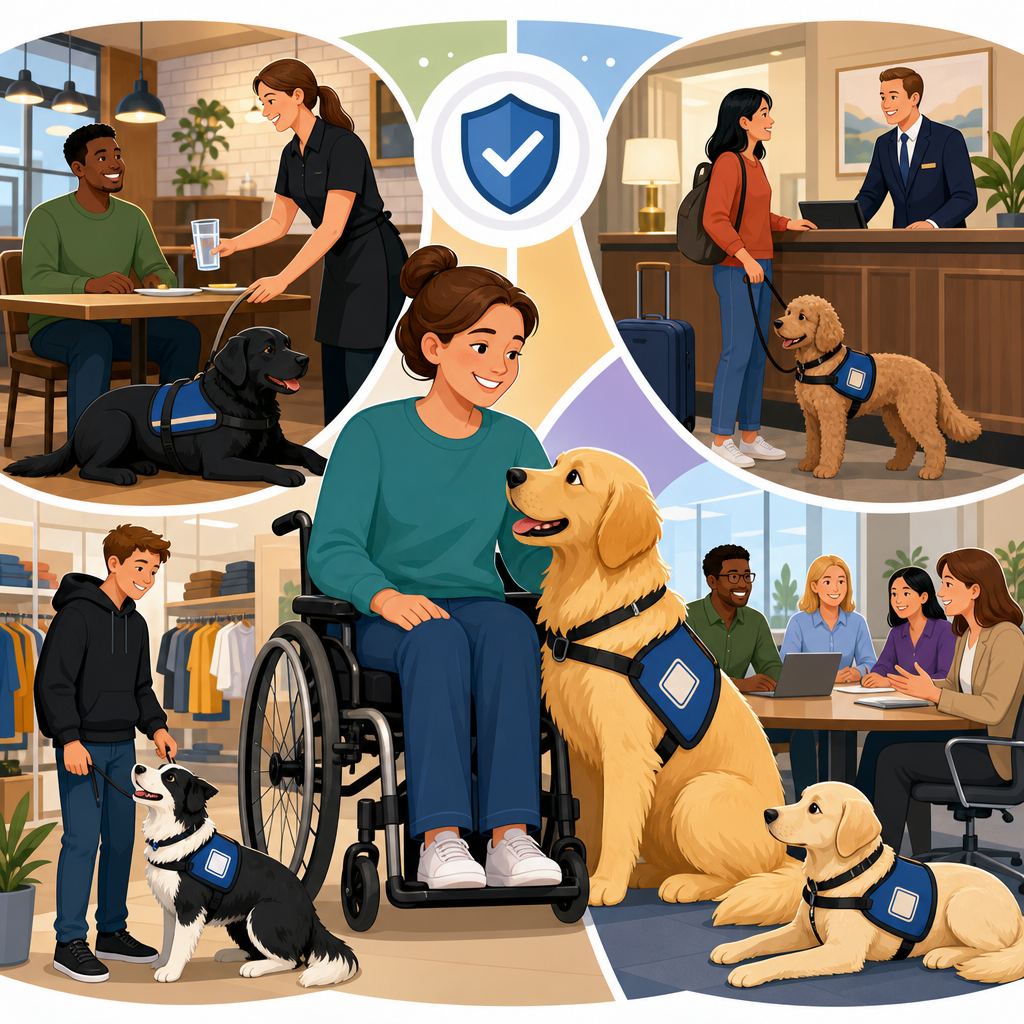
Service animal law changed business policy not through theory, but through disputes at hotel desks, grocery aisles, hospitals, restaurants, and airline gates. In the United States, service animals are generally dogs individually trained to perform tasks for a person with a disability under the Americans with Disabilities Act, while emotional support animals, therapy animals, and pets follow different legal rules. That distinction sounds simple, yet in practice it has triggered years of litigation, federal enforcement, and expensive policy rewrites for public accommodations and employers. I have helped businesses revise access rules after complaints and demand letters, and the same pattern repeats: frontline staff rely on assumptions, managers improvise, and a single mishandled interaction becomes a precedent that reshapes training across an entire brand. For companies in hospitality, retail, healthcare, housing-adjacent services, and transportation, these cases matter because they define what questions staff may ask, when exclusion is lawful, how allergies or fear must be handled, and why documentation demands often violate federal standards.
This hub article analyzes influential ADA legal cases involving service animals and explains how those rulings changed business policies. It also frames the broader legal landscape readers need before diving into individual case studies within the Legal Cases and Precedents topic. The core issue is not whether a company supports accessibility in principle; it is whether daily operations align with enforceable rules issued through statutes, Department of Justice regulations, settlement agreements, and court decisions. Businesses that understand these cases reduce complaint risk, improve customer experience, and create policies staff can actually follow under pressure. Businesses that ignore them usually make the same avoidable mistakes: blanket no-animals rules, unnecessary certification requests, unequal seating practices, and overreaction to isolated behavior problems.
Several legal sources shape the modern answer. Title III of the ADA governs most private businesses open to the public. Department of Justice regulations at 28 C.F.R. Part 36 define service animals and limit staff inquiries to two questions when disability and task are not obvious: whether the dog is required because of a disability and what work or task it has been trained to perform. Businesses cannot require special identification, demand documentation, or charge pet fees, though they may charge for actual damage if they charge others for similar damage. A service animal can be excluded when it is out of control and the handler does not take effective action, or when it is not housebroken. Those baseline rules became operationally meaningful because influential cases forced businesses to translate them into scripts, signage, escalation procedures, and risk management protocols.
Why service animal litigation became a policy driver
Service animal disputes produce policy change because they arise at high-volume customer touchpoints where staff make split-second judgments. Unlike structural accessibility claims involving ramps or door widths, these disputes depend on human interaction. One cashier asks for papers, another tells a handler to sit outside, a nurse cites infection control without analysis, or a hotel adds a cleaning fee. Each act can trigger a Department of Justice complaint, state civil rights claim, bad press, and classwide policy review. In my experience, companies often discover their written policy is legally sound but operationally useless because no one trained supervisors on the allowed questions or on de-escalation.
Courts and federal agencies repeatedly pushed businesses toward standardized procedures. Retailers introduced quick-reference cards for managers. Hotel brands revised reservation systems so agents would not code service animals as pets. Restaurants clarified that local health codes do not override federal access requirements for dining areas. Hospitals created unit-specific guidance distinguishing sterile environments, legitimate safety concerns, and routine patient access spaces. The legal significance of these disputes lies less in dramatic verdicts than in the practical compliance rules they generated. A good service animal policy now reads like an incident manual, not a mission statement.
Key ADA principles that cases clarified for businesses
The most influential service animal cases did not merely restate the ADA; they clarified ambiguous points businesses struggled with. First, task training matters. A service animal must be trained to do work directly related to a disability, such as guiding, alerting, retrieving, interrupting self-harm behavior, or detecting medical episodes. Comfort by presence alone does not qualify under Title III. Second, access is broad. A person with a service animal must generally be allowed anywhere the public may go, including sales floors, dining rooms, waiting areas, and guest rooms. Third, control standards are behavioral, not speculative. A business cannot exclude a service animal because another customer is afraid, allergic, or skeptical, but it can address barking, lunging, or sanitation failures.
Cases also clarified what not to do. Staff cannot separate a customer from companions, limit them to outdoor seating, or impose extra deposits. They cannot insist that the dog wear a particular vest or show online registration documents, which have no special legal status under the ADA. They must assess direct threat based on actual risk, not stereotypes about breeds or assumptions about hospitals, food service, or luxury properties. These points became central in training because most violations stem from prohibited shortcuts rather than malicious intent.
| Business issue | What older policies often did | What case-driven ADA compliance requires |
|---|---|---|
| Verification | Asked for certification, ID cards, or medical letters | Use only the two permitted questions when need and task are not obvious |
| Fees | Charged pet deposits or cleaning surcharges automatically | No pet fee; charge only for actual damage under neutral rules |
| Seating and placement | Directed handlers to corners, patios, or separate rooms | Provide the same choices available to other customers |
| Exclusion | Removed animals based on fear, allergies, or breed assumptions | Exclude only for out-of-control behavior, not housebroken status, or true direct threat |
| Staff response | Left decisions to ad hoc manager discretion | Train frontline employees with scripts, escalation paths, and incident documentation |
Influential cases and enforcement actions that reshaped policy
One of the most cited turning points was the Department of Justice settlement with Walmart in 2012 after allegations that customers with service animals were denied entry or questioned improperly in multiple stores. The importance of that matter was operational: a national retailer had to adopt clearer policy language, train employees, post notices, and create complaint handling procedures. Compliance professionals still point to it because it showed that inconsistent treatment across locations can become evidence of a systemic failure, even when corporate headquarters claims to support access rights.
Another landmark was the DOJ settlement with Marriott in the late 1990s involving reservation practices and treatment of guests with disabilities, part of a broader accessibility enforcement trend that influenced how hotel chains handled service animals. Hotels learned that access problems begin before arrival. Reservation agents who mark a service animal as a pet, promise only “pet-friendly” rooms, or quote fees create liability before a guest reaches the front desk. As a result, major brands rewrote reservation scripts and property-management system notes so service animals would not trigger pet rules automatically.
Restaurant and grocery cases repeatedly established that food safety objections rarely justify exclusion from customer areas. The ADA expressly anticipates service animals in places that prepare or serve food, so long as the animal is under control. That principle led chains to replace broad “health code” excuses with narrow behavior-based rules. If a dog is calm under a table, access is required. If it jumps onto chairs, blocks aisles, or urinates indoors, exclusion may be lawful. This distinction seems obvious now, but it was learned through complaints, settlements, and repeated agency guidance.
Healthcare disputes generated especially nuanced policy changes. Hospitals sometimes assumed infection control concerns allowed categorical bans, yet enforcement actions taught otherwise. The correct analysis is location-specific and evidence-based. A hospital may restrict service animals from operating rooms or burn units where legitimate sterile-field concerns exist, but not from lobbies, exam rooms, or many inpatient areas simply because a dog is present. Policies shifted from blanket prohibitions to clinical assessment protocols coordinated among nursing, risk management, and patient relations teams.
Air travel changed through a different legal path because airlines are governed primarily by the Air Carrier Access Act, not Title III. Even so, airline disputes influenced broader business expectations. For years, carriers faced abuse of emotional support animal claims and uneven documentation practices. The Department of Transportation’s 2020 rule narrowed the definition for air travel to trained service dogs and allowed forms attesting to health, behavior, and training. Businesses outside aviation took note because the public often assumed those airline forms applied everywhere. Smart companies updated websites and FAQs to explain that air travel rules differ from hotel, retail, and restaurant rules under the ADA.
What these precedents changed inside business operations
The most durable effect of influential ADA legal cases was procedural. After enforcement actions, businesses stopped treating service animals as rare exceptions and started building repeatable workflows. Training now typically covers the legal definition, the two allowed questions, examples of qualifying tasks, examples that do not qualify, and how to document disruptions neutrally. Many companies added role-play scenarios because staff freeze when a customer records them on a phone or insists an emotional support animal has the same rights as a service dog in a store. Scenario training works better than policy memos because it mirrors the pressure of actual encounters.
Physical operations changed too. Hotels reviewed relief area information, room assignment practices, and housekeeping communication. Restaurants trained hosts not to steer handlers to isolated tables. Retailers taught asset protection teams that suspected shoplifting and service animal access are separate issues requiring separate analysis. Healthcare systems created escalation channels so clinicians would not argue ADA compliance in hallways. Even websites changed: FAQ pages now answer whether businesses can ask for papers, whether service animals must wear vests, and what happens if another customer has allergies.
Complaint handling also became more sophisticated. Earlier policies often ended at the point of denial. Modern systems capture who asked what, what behavior was observed, whether the handler was offered continued service without the animal after lawful exclusion, and whether a district manager reviewed the incident. That recordkeeping matters because the best defense in a close case is usually a consistent behavior-based application of a well-trained policy.
Common mistakes businesses still make despite settled law
Despite decades of guidance, the same errors continue. The biggest is documentation fixation. Staff remain convinced there must be a certificate, registry, or doctor’s note because internet vendors sell them aggressively. There is no federally recognized ADA certification for service animals. Another common mistake is overreliance on appearance. Businesses distrust small breeds, owner-trained dogs, or handlers with nonvisible disabilities, even though none of those facts defeats service animal status. The ADA focuses on disability-related tasks and control, not aesthetics.
Companies also mishandle conflicts between disabled patrons. Allergies and fear of dogs are not valid reasons to deny access, but they are real concerns that require accommodation efforts such as spacing, alternate routes, room transfers, or schedule adjustments when feasible. The legal error occurs when a business solves the conflict by excluding the service animal team first. A final recurring problem is policy drift. Corporate counsel may draft an excellent rule, yet local managers add unofficial requirements over time. That is why audits, mystery shops, and refresher training are now standard in high-risk industries.
How to use this hub to analyze influential ADA legal cases
This sub-pillar hub is designed as the starting point for analyzing influential ADA legal cases involving service animals. From here, readers should move into deeper articles on retail enforcement, hotel reservation disputes, healthcare access conflicts, transportation rules, and the emotional support animal distinction. When reviewing any case, ask five questions. What statute or regulation applied? What specific conduct triggered the dispute? Did the decision turn on access, verification, control, safety, or fees? What operational change followed? And can that fix be implemented through training, systems, or physical workflow redesign? Those questions turn case law into usable policy.
The central lesson from service animal cases that changed business policies is practical: compliance depends on precise, repeated execution at the point of contact. The ADA does not require businesses to tolerate disruption, but it does require them to replace assumptions with lawful, narrow judgment. The companies that improved fastest were not the ones with the longest policies; they were the ones that converted precedent into plain-language scripts, examples, and manager accountability. If you are building or revising a service animal policy, use this hub as your roadmap, then review the linked case analyses and compare them against your current training materials, customer journey, and incident response process today.
Frequently Asked Questions
What kinds of service animal disputes have had the biggest impact on business policies?
The disputes that have most clearly reshaped business policy are the everyday access conflicts that happen at customer-facing points of service: hotel check-in counters, restaurant dining rooms, hospital entrances, grocery store aisles, and airport gates. These cases matter because they force businesses to move from vague ideas about inclusion to concrete rules for employees. When a business denies entry, charges an improper pet fee, demands medical paperwork, or excludes a trained dog because of assumptions about allergies, cleanliness, or customer discomfort, the dispute often exposes whether the company actually understands the law.
Under the Americans with Disabilities Act, a service animal is generally a dog that has been individually trained to do work or perform tasks for a person with a disability. That definition has driven policy changes because many businesses long treated all animals the same. Litigation and enforcement actions repeatedly showed that a trained service dog cannot be handled like a pet, and that emotional support animals, therapy animals, and ordinary pets fall under different legal frameworks. As a result, companies revised front-line procedures, manager escalation rules, employee scripts, and written accommodation policies to reflect the legal distinction more accurately.
These disputes also changed policy by clarifying what businesses may and may not ask. In many settings, staff may ask only two limited questions when the need for the animal is not obvious: whether the dog is required because of a disability, and what work or task the dog has been trained to perform. They generally cannot demand certification, insist on a special vest, or require the handler to disclose a diagnosis. Cases arising from improper questioning pushed businesses to adopt shorter, more disciplined intake procedures because overly aggressive screening often created legal risk.
Another major category involves situations where a business claimed health, safety, or operational concerns. Courts and regulators have repeatedly signaled that generalized fears are not enough. A business must evaluate the actual behavior of the animal, not stereotypes about breeds, size, or the reactions of other patrons. That principle led many organizations to replace blanket bans with behavior-based standards focused on control, housebreaking, and direct threat analysis. In short, the cases that changed policy most were not necessarily dramatic headline events; they were recurring access disputes that taught businesses how narrow mistakes in day-to-day operations can become significant legal problems.
How did these cases help businesses understand the difference between service animals, emotional support animals, and pets?
One of the most important contributions of service animal litigation has been forcing businesses to treat animal categories with legal precision rather than emotional instinct. Many disputes began because employees heard a customer say “support animal” and assumed all assistance animals had the same rights everywhere. Cases and enforcement actions helped correct that misunderstanding. In the ADA context, service animals are generally dogs individually trained to perform specific work or tasks for a person with a disability. Emotional support animals may provide comfort, but comfort alone does not meet the ADA service animal standard. Therapy animals, meanwhile, typically assist others in structured settings and are not automatically granted the same public-access rights as service animals. Pets, of course, have no special disability-related access rights under the ADA.
This distinction changed business policies in very practical ways. Companies began rewriting employee manuals to explain that legal obligations vary by setting and by statute. A hotel, restaurant, retail store, or doctor’s office operating under the ADA cannot simply apply a “no pets, no exceptions” rule if a trained service dog is involved. At the same time, the business is not required to admit every animal someone describes as comforting or supportive. That balancing point is exactly where many earlier policies failed, and exactly where litigation brought clarity.
These cases also highlighted the danger of relying on appearance-based judgments. A small dog without a vest may still be a service animal. A calm animal with impressive paperwork may still not qualify if it has not been individually trained to perform tasks for a person with a disability. Businesses learned that the legal analysis depends less on labels and more on function. That realization often led to more reliable compliance training: staff were taught to focus on permissible questions, observable behavior, and the specific law governing the setting.
For business leaders, the long-term policy lesson was that confusion between service animals and emotional support animals creates risk in both directions. If a company wrongly excludes a legitimate service dog, it may face discrimination claims. If it wrongly assumes all animals must be admitted, it may create avoidable operational and safety issues. The cases that changed policy most effectively were the ones that showed businesses how to draw the line lawfully, respectfully, and consistently.
What rules can businesses actually enforce when a customer enters with a service animal?
Businesses are not powerless when a service animal enters the premises, but the rules they enforce must be lawful and narrowly tailored. A business generally may require that the service animal be under the handler’s control. That usually means the dog should be harnessed, leashed, or tethered unless those devices interfere with the animal’s work or the person’s disability prevents their use. The animal must also be housebroken. If a service animal is out of control and the handler does not take effective action to correct it, or if the animal is not housebroken, the business may usually require the animal to be removed. Importantly, the business should still offer the person with a disability the opportunity to obtain goods or services without the animal’s continued presence, if that is possible.
Cases that changed business policy often revolved around overreach. Many businesses used to require ID cards, certification papers, special tags, or advance notice. Others imposed pet fees or restricted service animals to limited areas. Litigation and guidance made clear that these practices often conflict with ADA principles. A business generally cannot charge extra because a person uses a service animal, even if it routinely charges pet fees. It also cannot isolate the person from other customers or provide lesser service simply because an animal is present.
That said, businesses can still apply legitimate, neutral conduct standards. A service animal cannot be allowed to bark continuously in a restaurant, lunge at customers, block emergency pathways, or create a genuine sanitation problem simply because it is called a service animal. The legal protection is strong, but it is not unlimited. Courts and regulators have consistently supported policies based on actual behavior rather than assumptions. That is why modern business training often emphasizes documentation of specific incidents, calm manager involvement, and language focused on conduct rather than disability status.
These cases also taught businesses to avoid informal rulemaking by individual employees. A cashier, host, gate agent, or receptionist improvising under pressure can easily say the wrong thing. Stronger policies now often include approved scripts, examples of permissible questions, and clear instructions on when to involve a supervisor. The lesson from litigation is not merely that businesses must admit service animals; it is that they must build repeatable procedures that protect access rights while preserving order and safety in a legally defensible way.
Why did hotels, restaurants, hospitals, and airlines each face different service animal policy challenges?
Each of these industries encounters service animal issues in a distinct operational environment, which is why disputes in each setting pushed policy development in different directions. Hotels frequently faced complaints involving pet fees, room restrictions, cleaning charges, and attempts to steer guests with service animals into designated rooms. Cases in that sector made clear that a service animal is not a pet for purposes of access and that blanket surcharges are generally improper. Hotel policies evolved to focus more on equal booking access, front-desk training, and post-stay damage assessment based on actual harm rather than automatic fees.
Restaurants and grocery stores often struggled with sanitation concerns and customer reactions. Employees sometimes believed that local health codes prohibited all animals in food-service spaces, when in reality service animals are generally treated differently from pets. Disputes in these settings pushed businesses to train staff on the interaction between disability law and public-health rules. The policy shift was significant: instead of reflexively excluding all animals, many food-service businesses adopted scripts that distinguish between lawful service-animal access and situations involving disruptive or uncontrolled animals.
Hospitals and healthcare facilities faced a more complex challenge because they must balance disability access with infection control, patient safety, sterile environments, and the needs of other vulnerable individuals. Cases in healthcare settings encouraged more nuanced policies that separate general access areas from truly restricted clinical spaces. They also underscored that healthcare facilities cannot rely on broad fears or convenience alone; they must analyze whether exclusion is truly necessary in a particular location. That moved many hospitals toward unit-specific protocols rather than sweeping bans.
Airlines historically presented another layer of complexity because air travel has been governed not only by practical safety concerns but also by rules distinct from the ADA framework used in many brick-and-mortar businesses. Disputes over cabin access, animal behavior, fraud concerns, and the rapid growth of emotional support animal claims led to substantial policy tightening in the aviation sector. Airlines increasingly moved toward more defined documentation and species rules under the governing air-travel framework, especially as regulators revisited the treatment of emotional support animals. The broader lesson is that “service animal law” is not always one-size-fits-all. The cases changed policy by teaching businesses that compliance depends heavily on the setting, the governing statute, and the real-world risks of the environment.
What is the biggest takeaway for businesses trying to avoid service animal-related legal trouble today?
The biggest takeaway is that compliance depends less on having a generic “ADA policy” and more on building informed, practical,


