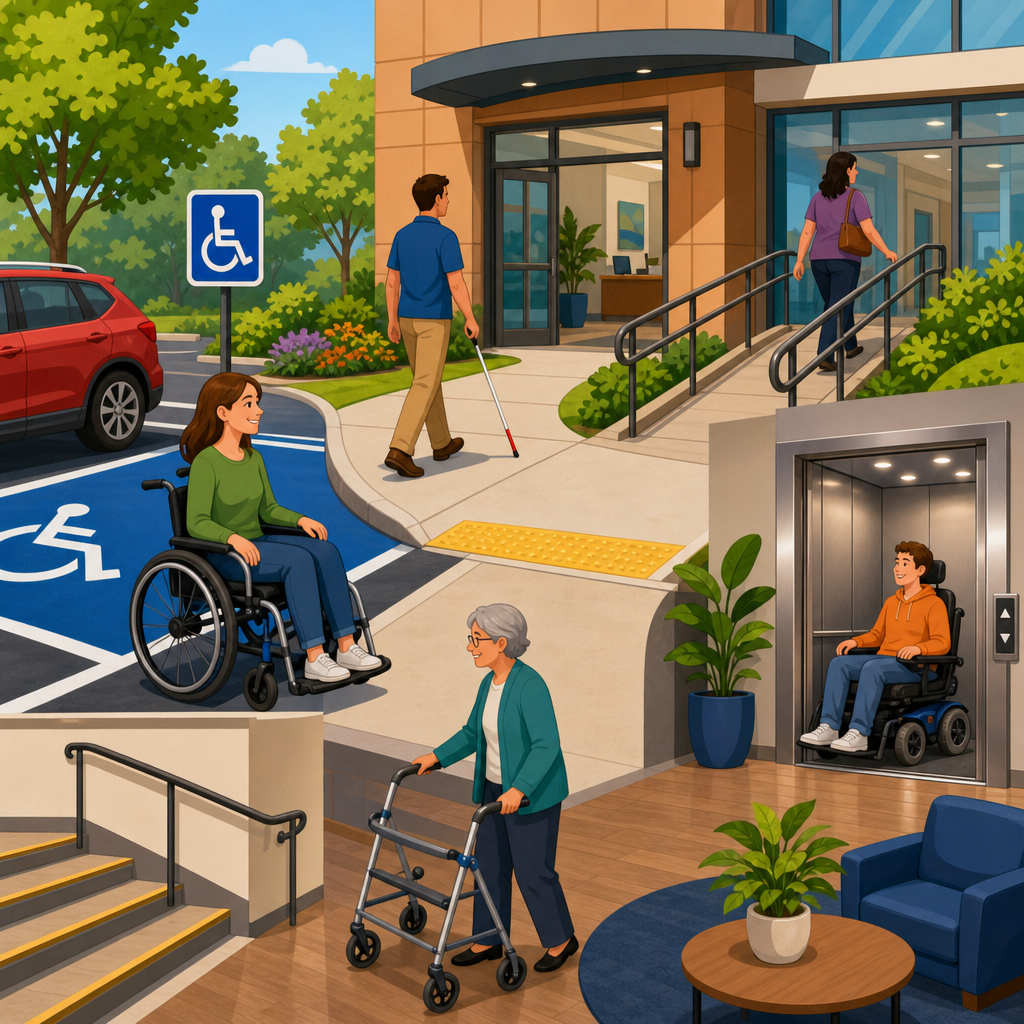
Cases on accessible parking, paths of travel, and barrier removal shape how businesses, property owners, architects, and disability advocates understand the Americans with Disabilities Act in daily practice. In this area of disability access law, the disputes often look ordinary: a parking lot striped too narrowly, a curb ramp with excessive slope, a route blocked by steps, or a renovation that improves a lobby but leaves the restroom inaccessible. Yet these details determine whether a disabled person can enter, move through, and use a site independently. I have worked through many of these fact patterns in compliance reviews and litigation support, and the lesson is consistent: small design choices create large legal consequences.
To analyze influential ADA legal cases, it helps to define the key terms. Accessible parking means spaces, access aisles, signage, and location that comply with the 2010 ADA Standards for Accessible Design and related scoping rules. A path of travel is the continuous, unobstructed route connecting parking, sidewalks, entrances, interior circulation paths, restrooms, and primary function areas. Barrier removal refers to the duty under Title III to remove architectural barriers in existing facilities when doing so is readily achievable, meaning easily accomplishable without much difficulty or expense. For altered facilities, the rules are stricter: when a business alters an area containing a primary function, it must also make the path of travel to that area accessible to the extent the added work is not disproportionate, generally measured against a 20 percent cost threshold.
Why these cases matter is straightforward. Accessible parking and routes are usually the first points of contact between a customer and a place of public accommodation. If they fail, everything behind the front door is effectively unavailable. Courts therefore spend substantial attention on technical measurements, maintenance conditions, and whether fixes were feasible. These opinions also influence compliance strategy far beyond the parties involved. Owners use them to prioritize capital spending. Plaintiffs and defense counsel use them to evaluate standing, mootness, and remediation. Consultants use them to explain why a missing van aisle sign or a six-inch step at an entry is not a harmless defect but a legal barrier. As a hub for analyzing influential ADA legal cases, this article focuses on the patterns courts return to repeatedly and the practical rules those decisions establish.
How courts frame accessible parking disputes
Accessible parking cases often look simple, but they raise recurring legal questions: Was the plaintiff personally affected? Did the lot comply on the date of the visit? Were the defects isolated maintenance issues or systemic violations? Did post-suit repairs moot the claim? Courts usually begin with the ADA Standards because parking is highly measurable. They examine the number of required accessible spaces, the presence and width of access aisles, cross slope, signage, location on the shortest accessible route, and whether a van-accessible space was properly identified.
Several influential cases show how rigorously courts treat these details. In Chapman v. Pier 1 Imports, the Ninth Circuit emphasized that a plaintiff has standing to challenge barriers related to their disability when those barriers deter access or cause personal difficulty. That standing analysis became central in parking cases because plaintiffs often encounter multiple defects in one visit. Strong v. Valdez Fine Foods, another Ninth Circuit decision, reinforced that a disabled plaintiff need not engage in futile gestures when barriers are known and likely to persist. In practical terms, businesses cannot avoid liability by arguing that the customer should have tried again after seeing a noncompliant lot.
Courts also reject the idea that striping and signage errors are trivial. A narrow access aisle can prevent wheelchair deployment. Excessive slope can cause rolling, instability, and dangerous transfers. Missing signs can expose an accessible space to misuse by nondisabled drivers. I have seen facilities spend heavily on interior finishes while overlooking these exterior basics, only to face the most immediate and defensible claims at the parking area. Parking cases teach a broader rule: if a barrier denies safe arrival, judges are less patient with excuses about limited budgets or future plans.
Paths of travel and the chain of accessibility
Path of travel litigation shows that compliance is not a checklist of disconnected features. Accessibility functions as a chain, and one broken link can defeat an otherwise compliant site. A compliant parking space does little good if the route to the door crosses traffic without a curb ramp, climbs an over-steep sidewalk, or ends at a threshold that cannot be negotiated independently. The ADA Standards treat the route as continuous for exactly this reason, and courts usually do the same.
One of the most cited path-of-travel decisions is Colorado Cross Disability Coalition v. Hermanson Family Ltd. Partnership I, involving a shopping center where route conditions and parking features were central to whether disabled patrons had meaningful access. Cases like this highlight a practical truth from field inspections: exterior routes fail most often at transitions. The parking stall may be properly sized, but the access aisle empties into a curb with no ramp. The route may exist, but bollards, planters, or merchandise narrow it below minimum width. The entrance may have a ramp, but the landing is too steep for safe maneuvering.
Judges regularly connect these facts to the statute’s purpose rather than treating them as abstract dimensions. The legal question is whether a person with mobility limitations can travel from arrival point to service area with independence and dignity. That framing matters because defendants sometimes argue that alternate assistance is available, such as employee help at the door. Courts are skeptical when assistance substitutes for an accessible route that should have existed physically. Under the ADA, equal access generally means built access, not dependence on staff intervention.
Barrier removal in existing facilities
Barrier removal cases are where legal doctrine and real-world budgeting intersect. Existing facilities that have not been altered are not automatically required to meet every detail of new construction standards, but they do have an ongoing obligation to remove barriers when doing so is readily achievable. This standard is intensely fact specific. Courts look at cost, difficulty, available resources, the nature of the business, safety, and the impact of the work on operations. They also look at common-sense fixes first: restriping parking, adding signs, installing a curb ramp, adjusting door hardware, or reconfiguring a route.
The Department of Justice has long identified parking, entrances, and routes as high-priority barrier removal items because they unlock access to everything else. In litigation, that priority often becomes decisive. If a business has done nothing for years, courts are more likely to view straightforward exterior corrections as readily achievable. I have repeatedly seen defendants undermine their position by failing to gather concrete cost data. General claims that remediation would be expensive carry little weight if no contractor pricing, site constraints, or financial records support them.
| Issue | What courts examine | Typical legal outcome |
|---|---|---|
| Accessible parking | Number of spaces, aisle width, slope, signage, location | Technical noncompliance often supports injunctive relief |
| Path of travel | Continuous accessible route from arrival to entrance and services | Broken links can establish denial of meaningful access |
| Barrier removal | Whether fixes are readily achievable in existing facilities | Low-cost corrections are frequently ordered or voluntarily completed |
| Alterations | Whether work triggered path-of-travel upgrades to primary function areas | Renovation can expand compliance duties significantly |
Another recurring point is maintenance. Even where original construction complied, access can degrade through neglect. Faded striping, heaved pavement, blocked routes, and missing signs generate claims because accessibility is not a one-time event. Courts and the DOJ treat operable, maintained accessible features as part of ongoing compliance. Businesses that inspect lots and routes on a schedule are in a much stronger position than those that wait for a complaint.
Alterations, disproportionality, and renovation-triggered obligations
Some of the most important ADA cases involve altered facilities rather than untouched older buildings. The legal stakes are higher because once a business alters a primary function area, it may have to upgrade the path of travel serving that area unless the added cost is disproportionate. This issue appears in restaurant remodels, hotel lobby renovations, retail buildouts, and medical office updates. Owners often budget for visible improvements but overlook path-of-travel obligations until a lawsuit or plan review exposes them.
Kinney v. Yerusalim, while arising under Title II and public street resurfacing, remains highly influential because it rejected a narrow reading of alteration duties and confirmed that resurfacing can trigger curb ramp obligations. The broader lesson carries into private-facility analysis: when a project changes how people use a space, accessibility upgrades tied to travel routes are not optional afterthoughts. In Title III settings, the 20 percent disproportionality cap is important, but it is not a blanket exemption. It requires documented cost comparisons and thoughtful prioritization, usually starting with entrance access, route access, restrooms, telephones, and drinking fountains in that order of priority described by DOJ guidance.
In practice, renovation cases turn on records. Courts want to see contracts, plans, invoices, and line-item estimates, not after-the-fact narratives. If an owner claims route upgrades were disproportionate, they should be able to show the alteration cost, the cost of route improvements, and why selected items were prioritized. Without documentation, a court may infer that accessibility was ignored rather than evaluated. For facility operators, this is one of the clearest compliance lessons from the case law: project files are legal evidence, not just construction paperwork.
Procedural themes: standing, mootness, and serial litigation
Influential ADA cases are not only about slopes and dimensions; they also shape procedure. Standing is frequently contested, especially in jurisdictions where disabled plaintiffs bring multiple access suits. Defendants often label these claims serial litigation, but courts generally focus on whether the plaintiff encountered a barrier related to their disability and whether there is a real intent to return or ongoing deterrence. Chapman is again central here, especially in the Ninth Circuit, because it clarified the need to connect each claimed barrier to the plaintiff’s disability while also recognizing deterrence as a real injury.
Mootness is another major defense. Because Title III usually provides injunctive relief rather than damages in federal court, defendants often remediate after suit and argue that the case should be dismissed. Courts may accept mootness where repairs are complete, verified, and unlikely to recur, but cosmetic or partial fixes are not enough. I have reviewed many post-remediation sites where one corrected feature sat beside several untouched barriers. That kind of incomplete work weakens a mootness argument quickly. Photographs, expert reports, and reinspection data matter.
These procedural rulings influence settlement patterns. Businesses that perform prompt, comprehensive corrections can reduce exposure and legal fees. Plaintiffs with well-documented visits, clear photos, and disability-specific allegations usually fare better on standing challenges. As a result, the strongest cases on either side are built with evidence from the first site visit, not improvised after pleadings begin.
What these precedents mean for owners, designers, and compliance teams
The combined lesson from accessible parking, path of travel, and barrier removal cases is that access risk is predictable. Most disputes arise from a short list of recurring failures: missing or mislocated accessible spaces, excessive slopes, inaccessible transitions, blocked routes, unaddressed remodel triggers, and absent maintenance programs. None of these issues are exotic. They are the everyday conditions a trained survey can identify in a few hours using a digital level, tape measure, and the 2010 Standards.
For property owners, the best response is not defensive lawyering after a complaint arrives. It is a documented compliance system. Survey the site. Rank barriers by user impact and legal priority. Fix low-cost exterior items first. Tie every renovation to an accessibility review before permits are issued. Preserve records showing what was corrected, when, by whom, and at what cost. For designers and contractors, the case law is a reminder that accessibility details belong in drawings, specifications, and punch lists, not in vague notes. For legal teams, these cases show that technical experts often determine the outcome because measurements and feasible alternatives drive the merits.
This hub article also points to the broader value of studying ADA precedents by subtopic. Accessible parking cases explain arrival and standing. Path-of-travel cases explain continuity and meaningful access. Barrier removal cases explain feasibility and prioritization. Alteration cases explain triggers and cost allocation. Together, they form the core framework for analyzing influential ADA legal cases involving the built environment.
The central takeaway is simple: courts treat accessible parking, paths of travel, and barrier removal as foundational access rights, not minor property-management issues. The most influential cases repeatedly confirm that technical compliance matters because it directly affects independence, safety, and equal participation. Parking defects can prevent arrival. Route defects can break access between the curb and the service area. Failure to remove readily achievable barriers can leave exclusion in place for years. Renovations can trigger broader duties that owners ignore at their peril.
For anyone responsible for a facility, these precedents offer a practical roadmap. Focus first on the exterior route people actually use. Verify measurements instead of relying on assumptions. Treat maintenance as part of compliance, not a separate housekeeping issue. When altering a site, document path-of-travel decisions and disproportionality calculations carefully. When evaluating legal exposure, remember that standing, mootness, and deterrence are shaped by the physical facts on the ground.
If you are building out a deeper understanding of legal cases and precedents, use this hub as your starting point and review each subtopic in detail. Then compare your own property, portfolio, or client sites against the recurring defects courts identify most often. That step turns case law into prevention, which is where ADA compliance does the most good.
Frequently Asked Questions
Why do accessible parking cases matter so much under the ADA?
Accessible parking cases matter because parking is often the first point of contact a disabled person has with a business, medical office, restaurant, shopping center, or public-facing building. If the parking space is too narrow, the access aisle is missing, the slope is too steep, the signage is absent, or the route from the space to the entrance is broken by curbs or uneven pavement, the person may effectively be denied access before even reaching the door. In ADA litigation and enforcement, these cases illustrate a simple but important principle: compliance is judged by real-world usability, not by good intentions alone.
Courts and parties in these disputes frequently focus on measurable features such as width, slope, striping, signage, and the connection between the parking area and an accessible entrance. Even seemingly small deviations can have major consequences for wheelchair users, people who use walkers, and individuals with limited balance or mobility. Cases involving accessible parking also help clarify who may be responsible for correcting barriers, including landlords, tenants, property managers, and business operators. As a result, these cases do more than resolve one parking lot problem; they influence design practices, maintenance routines, lease negotiations, and accessibility audits across many industries.
What is a “path of travel,” and why is it so important in disability access cases?
A path of travel is the continuous, usable route that allows a disabled person to move from arrival points such as sidewalks, public transportation stops, or parking areas into and through a facility. It typically includes exterior walkways, curb ramps, entrances, interior corridors, doorways, elevators, and, in some situations, access to restrooms, telephones, and drinking fountains that serve the altered area. In practice, path-of-travel cases matter because accessibility is not achieved by fixing one isolated feature while leaving the route to that feature blocked or unsafe.
These cases often arise when a business argues that it has made some improvements, but a disabled plaintiff still cannot independently enter, circulate, or use the space. For example, a parking space may be designated as accessible, but if the route from the space leads to steps with no compliant ramp, the access is incomplete. Similarly, a renovated dining area may look modern and attractive, but if the entrance threshold is too high or the interior route is obstructed, the legal and practical problem remains. Courts evaluating path-of-travel issues tend to look at how the facility functions as a whole from the user’s perspective. That makes these cases especially influential, because they reinforce that ADA compliance is about meaningful, connected access rather than isolated technical fixes.
What does “barrier removal” mean, and when are businesses required to do it?
Barrier removal generally refers to the obligation in existing facilities to remove architectural obstacles when doing so is readily achievable, meaning it is easily accomplishable and able to be carried out without much difficulty or expense. This concept is central to many ADA cases involving older buildings that were constructed before modern accessibility standards took effect. Businesses do not get a free pass simply because a property is old. Instead, the law often asks whether practical steps can be taken now to improve access, such as restriping parking, adding compliant signage, installing a ramp, adjusting door hardware, lowering a service counter, or removing small level changes along a route.
Cases in this area are often highly fact-specific. Courts may consider the nature and cost of the proposed fix, the financial resources of the business, the structure of the facility, and whether the modification is straightforward or more complex. Importantly, barrier removal is not limited to dramatic reconstruction projects. Many lawsuits involve relatively modest corrections that could significantly improve access. These disputes also show that maintenance matters. An accessible feature that exists on paper but is unusable because of poor upkeep, improper striping, broken pavement, or blocked routes may still create legal exposure. In that way, barrier-removal cases shape the day-to-day expectations for businesses by emphasizing ongoing accessibility, not just one-time construction decisions.
How do renovation and alteration cases affect obligations for restrooms, entrances, and routes?
Renovation and alteration cases are important because they often trigger accessibility obligations beyond the exact area being remodeled. When a business alters a primary function area, the ADA may require an accessible path of travel to that area, as well as access to related elements such as restrooms, drinking fountains, and telephones serving the altered space, to the extent the added work is not disproportionate in cost. This is why so many disputes involve situations where an owner upgrades visible customer-facing areas but leaves basic access features unchanged.
A common example is a lobby, retail floor, or dining area renovation that improves finishes and layout while failing to address an inaccessible restroom or entrance route. In litigation, that kind of partial update can become a central issue because it suggests the owner had an opportunity to incorporate accessibility improvements but did not do enough. These cases help define the practical reach of alteration obligations by examining what work was performed, whether the area altered is a primary function area, and what related access improvements were feasible at the time. For businesses, the lesson is clear: any significant renovation should be reviewed with accessibility in mind from the beginning. For architects, contractors, and owners, these cases underscore that accessibility analysis cannot be treated as an afterthought once design or construction is already underway.
What can businesses and property owners learn from cases involving accessible parking, paths of travel, and barrier removal?
The biggest lesson is that accessibility problems are often ordinary, visible, and preventable. Many lawsuits in this area do not arise from obscure legal theories; they arise from features people encounter every day, such as a missing access aisle, a steep curb ramp, a heavy door without accessible hardware, a step along the route, or a restroom that cannot be reached or used by a wheelchair user. Cases repeatedly show that small design or maintenance choices can have large legal and human consequences. Businesses that wait for a complaint or lawsuit usually spend more time and money than those that evaluate and correct barriers proactively.
These cases also teach that responsibility may be shared. Depending on the property and lease structure, liability issues can involve owners, tenants, management companies, and sometimes design or construction professionals. Another important lesson is that compliance should be approached both technically and practically. Measuring slopes, widths, clearances, and maneuvering space is essential, but so is walking the site as a user would and asking whether the route actually works. Regular accessibility reviews, prompt maintenance, thoughtful planning during renovations, and consultation with knowledgeable professionals can reduce risk and improve public access at the same time. Ultimately, the case law in this area reinforces a straightforward point: accessible parking, connected routes, and timely barrier removal are not peripheral issues. They are core parts of making a facility genuinely open to everyone.


