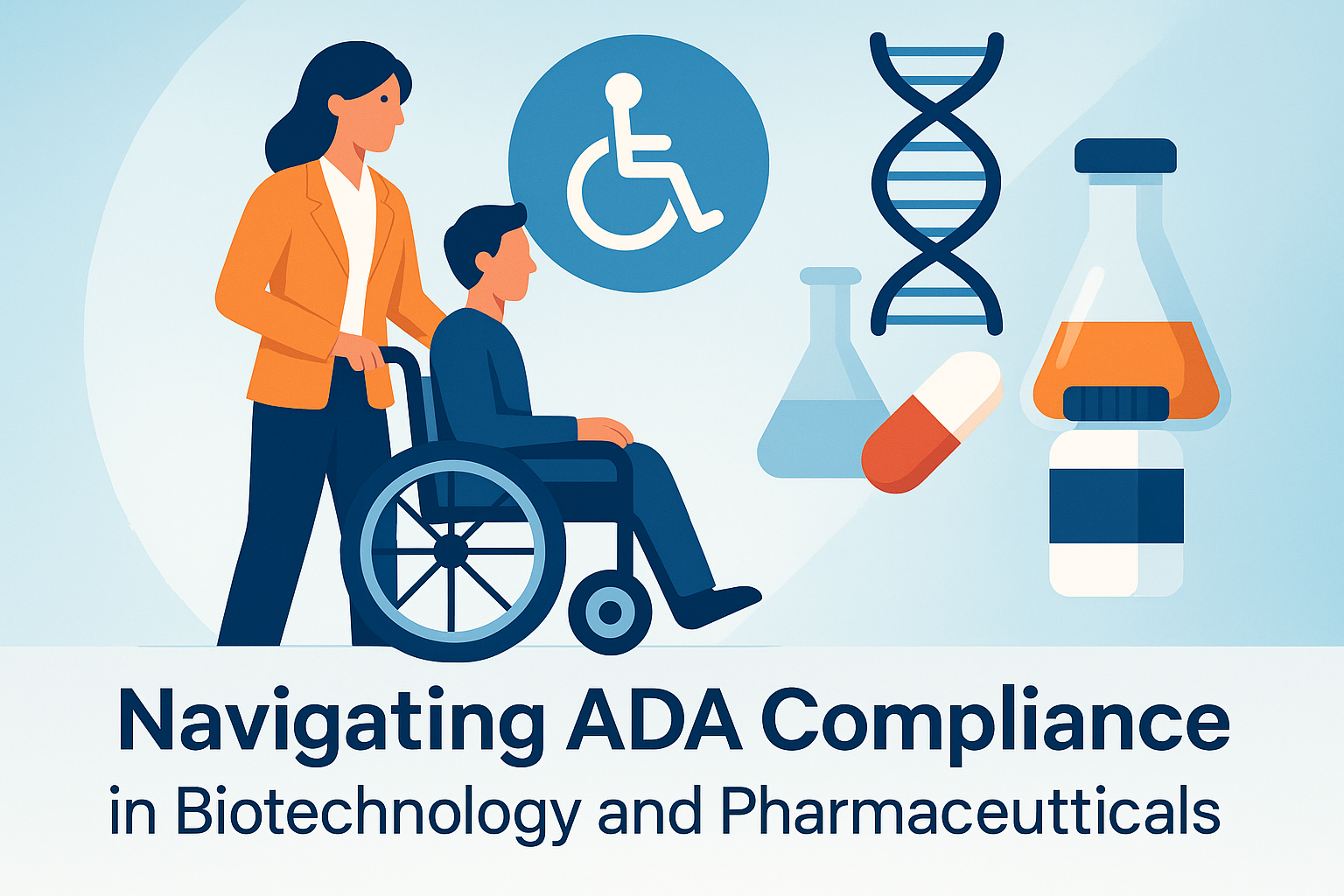
The biotechnology and pharmaceutical industries are foundational pillars of modern healthcare, driving innovation and discoveries that save lives and improve quality of life. With advancements in medicine becoming increasingly reliant on cutting-edge technology, ensuring accessibility for all individuals, including those with disabilities, has become more critical than ever. This brings us to the pivotal subject of ADA (Americans with Disabilities Act) compliance, a regulatory requirement that ensures equal access and opportunity for people with disabilities. Complying with ADA not only fulfills legal obligations but also fosters inclusivity and broadens the potential market for biotech and pharma companies.
ADA compliance means adhering to regulations that prevent discrimination against individuals with disabilities across various public and private sectors. For biotechnology and pharmaceutical companies, this involves making sure their digital platforms, clinical practices, facilities, and communication efforts are accessible to everyone, regardless of their physical or cognitive abilities. ADA compliance is not merely a legal hurdle; it is an ethical and business imperative that can enhance reputation, increase customer loyalty, and expand accessibility to life-saving drugs and treatments. In this article, we will explore various dimensions of ADA compliance within the biotech and pharma industries, highlighting practical examples and offering insights to achieve regulatory adherence.
Understanding ADA Compliance in the Digital Realm
In today’s digital age, the majority of biotech and pharmaceutical information is disseminated through websites, apps, and digital publications. ADA compliance requires these digital channels to be accessible to users with disabilities, such as those who are visually or hearing impaired. An essential aspect of compliance is ensuring that assistive technologies like screen readers can navigate websites effectively.
Consider the case of a major pharmaceutical company’s website, which faced legal scrutiny as visually impaired users could not access crucial information about their products. The resolution involved redesigning the site to include alternative text for images, ensuring compatibility with screen readers, and enabling keyboard navigability. This not only improved site usability for people with disabilities but also enhanced overall user experience.
- Alternative text for images
- Keyboard-friendly navigation
- Screen reader compatibility
- Accessible PDF documents
Facility Accessibility: Ensuring Physical Access
Biotech and pharmaceutical companies often have physical locations, including research facilities, production sites, and offices, where ADA compliance extends to the built environment. This includes providing accessible parking, entryways, navigable interiors, and restrooms that accommodate individuals with various disabilities.
A real-world example is a leading biotech firm that revamped its headquarters, incorporating wide doorways, ramps, and elevators to accommodate wheelchairs and those with mobility challenges. These changes not only met ADA requirements but also promoted an inclusive workplace, benefiting employees and visitors alike.
Effective Communication: A Vital Component
Ensuring that communication is accessible means providing information in formats that can be understood by people with different disabilities. This involves offering materials in braille, large print, and simple language versions, as well as providing sign language interpreters or captioning services during events, meetings, and consultations.
For instance, during a clinical trial, a pharmaceutical company provided patient information sheets in multiple accessible formats, ensuring participants with visual and hearing impairments could fully comprehend the procedures and potential risks. This approach not only facilitated better patient understanding but also built trust and engagement within the diverse participant pool.
ADA Compliance in Clinical Trials
Clinical trials are an integral part of the pharmaceutical industry, where ADA compliance can greatly influence participant diversity and inclusiveness. This means accommodating volunteers with disabilities by ensuring accessible trial sites and providing necessary assistance during the trial process.
An example is a pharmaceutical company that adapted its trial process by offering transportation assistance for participants with mobility issues and conducting home visits for those who could not travel. By implementing such strategies, the company not only adhered to ADA requirements but also expanded its participant base, leading to more comprehensive trial results.
The Place of Assistive Technologies
Assistive technologies are instrumental in achieving ADA compliance for both digital and physical aspects. These technologies range from software solutions, like screen readers and voice recognition software, to physical aids such as hearing devices and mobility supports.
A biotech company advanced its compliance strategy by integrating assistive technologies into its patient support programs, thereby offering customized solutions that aid patients in managing their conditions and treatment regimens. Such initiatives not only reflect a commitment to accessibility but also enhance patient satisfaction and outcomes.
| Compliance Area | Successful Implementation |
|---|---|
| Digital Accessibility | Website redesign with accessibility features |
| Facility Accessibility | Renovated headquarters with wheelchair ramps |
| Communication | Patient materials in braille and large print |
| Clinical Trials | Transportation for participants with mobility issues |
| Assistive Technologies | Integration into patient support programs |
Legal Considerations and Risk Management
Compliance with ADA is not just a matter of ethical business practice but also a legal obligation. Non-compliance can result in lawsuits, penalties, and reputational damage. Companies must stay abreast of ADA regulations and collaborate with legal and compliance experts to mitigate risks effectively.
A case in point is a biotech firm that faced a lawsuit due to inaccessible digital content. The case was settled by committing to an overhaul of their digital platforms and regular audits conducted by compliance experts to ensure ongoing adherence to ADA standards.
Fostering an Inclusive Culture
Beyond compliance, embracing an inclusive culture within biotech and pharmaceutical organizations fosters innovation and broadens business reach. Inclusivity attracts diverse talent and creates an environment where diverse perspectives fuel creativity and problem-solving.
For instance, a pharmaceutical giant implemented inclusive hiring practices and employee training programs focusing on diversity and accessibility. This not only improved workplace morale and innovation but also positioned the company as an industry leader committed to ADA compliance and inclusive excellence.
Conclusion: Embarking on the Path to ADA Compliance
In summary, navigating ADA compliance in biotechnology and pharmaceuticals is a multidimensional effort that encompasses digital accessibility, physical facility design, effective communication, clinical trail inclusiveness, and the integration of assistive technologies. Achieving compliance reaps numerous benefits, ranging from mitigating legal risks to enhancing company reputation and fostering an inclusive, innovative culture.
For biotech and pharmaceutical companies looking to embark on this journey, the first step involves a comprehensive audit of current practices and systems, identification of areas for improvement, and implementation of a structured compliance strategy with ongoing evaluation. Ultimately, achieving ADA compliance not only fulfills legal obligations but also aligns with broader goals of social responsibility and market inclusivity.
Adopting ADA compliance as a core business principle propels biotechnology and pharmaceutical companies towards a future where accessibility, innovation, and inclusivity coalesce to deliver cutting-edge solutions to diverse populations globally.
Frequently Asked Questions
1. What is ADA compliance, and why is it important in the biotechnology and pharmaceutical industries?
ADA compliance refers to adherence to the Americans with Disabilities Act, a landmark civil rights law enacted in 1990 aimed at preventing discrimination against individuals with disabilities. For biotechnology and pharmaceutical companies, ADA compliance is not just a legal obligation but a crucial aspect of corporate responsibility. These industries play an essential role in healthcare, which should be accessible to everyone, including those with disabilities. Ensuring that facilities, products, research, and digital content are ADA-compliant helps guarantee that all individuals, regardless of their abilities, can participate fully in society. For example, making digital interfaces like websites accessible ensures that customers using screen readers or other assistive technologies can navigate and access information about vital medical products and services.
2. How can biotechnology and pharmaceutical companies ensure their digital content is ADA compliant?
To ensure digital ADA compliance, biotechnology and pharmaceutical companies should adopt web accessibility standards such as the Web Content Accessibility Guidelines (WCAG). This involves a range of actions, such as ensuring that websites are navigable using keyboard commands alone, images have descriptive alt text for screen readers, and video content includes captions and transcripts for those with hearing impairments. It’s equally important to conduct accessibility testing regularly, ideally involving individuals who have disabilities to provide genuine feedback on usability. Implementing inclusive design from the outset of digital product development can vastly improve accessibility and ensure compliance.
3. What role does assistive technology play in promoting ADA compliance in these industries?
Assistive technology is a critical component of ADA compliance, primarily by enabling individuals with disabilities to engage more freely and effectively with biotechnology and pharmaceutical products and services. Examples include screen readers and braille displays for the vision-impaired; voice recognition software for individuals with mobility limitations; and closed captions or transcription services for those with hearing impairments. Companies should ensure compatibility between their digital and physical products with these assistive technologies and consider them a cornerstone of their accessibility strategies. Regular updates and testing are necessary to keep pace with advancements in both assistive technology and the biotechnology/pharmaceutical sectors, ensuring continuous compliance and accessibility.
4. What are the consequences for biotechnology and pharmaceutical companies if they fail to comply with ADA regulations?
Non-compliance with ADA regulations can have significant repercussions for biotechnology and pharmaceutical companies. Legally, they might face lawsuits, fines, or other punitive measures. Beyond legal consequences, failing to comply can damage a company’s reputation and erode trust with consumers and stakeholders. Customers with disabilities might feel excluded or marginalized, which can result in lost business and negative publicity. Ensuring ADA compliance is hence not only a legal and ethical imperative but also a good business practice that encourages an inclusive and positive public image.
5. Can you give examples of ADA compliance in action within the biotechnology and pharmaceutical industries?
ADA compliance can be seen in numerous ways within these industries. For example, a pharmaceutical company might design its website with an accessible layout that conforms to WCAG standards, ensuring all users can seamlessly access online medication information. A biotechnology firm might ensure their laboratories are physically accessible, with adjustable lab benches and accessible restrooms for employees with mobility challenges. Additionally, companies could provide alternative communication formats for health-related documentation, offering digital and large-print editions. In essence, these practical applications highlight the sector’s commitment to inclusivity, ensuring no individual is left behind in accessing groundbreaking healthcare innovations.


