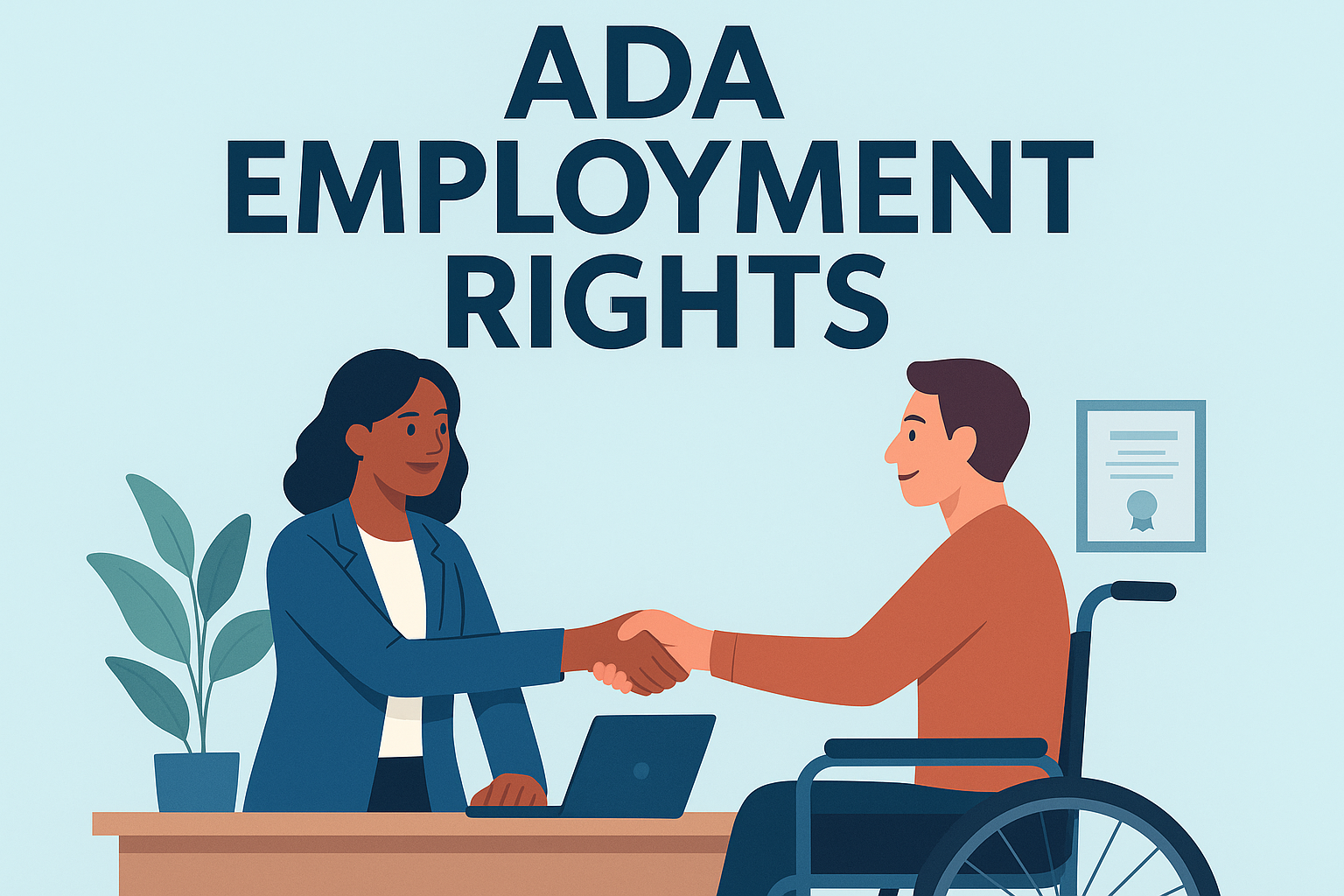
In today’s dynamic business landscape, small businesses serve as the backbone of economic growth and community development. However, they face numerous challenges, particularly in complying with legal standards related to employment. One significant legal area that impacts small businesses is the Americans with Disabilities Act (ADA), which ensures that individuals with disabilities have equal employment opportunities. Among the landmark cases that define the intersection of small business operations and ADA compliance is Griffin v. Steeltek. This case not only highlighted issues related to employment rights under the ADA but also underscored the importance of understanding and implementing fair practices in small businesses.
The Americans with Disabilities Act, enacted in 1990, is a civil rights law designed to eradicate discrimination against individuals with disabilities in several areas including employment, public accommodations, transportation, and government services. In the employment domain, Title I of the ADA requires employers to provide reasonable accommodations to qualified employees with disabilities and prohibits discrimination in recruitment, hiring, promotions, training, pay, social activities, and other privileges of employment. However, certain small businesses may feel ill-equipped to comply fully with ADA requirements due to limited resources. Griffin v. Steeltek serves as a pivotal example of the complexities and challenges small businesses face in balancing resource constraints with legal obligations.
The Basics of ADA Compliance for Small Businesses
For small businesses, understanding ADA compliance begins with grasping the foundational requirements. The ADA mandates that employees with disabilities should not be discriminated against and must be provided with reasonable accommodations that do not impose undue hardship on the operation of the business. While larger corporations may have entire departments dedicated to ensuring compliance with such regulations, small businesses typically operate with limited staff and resources. Consequently, ADA compliance can sometimes inadvertently fall through the cracks.
Consider a small retail business that hires a new cashier, an individual with a mobility impairment who requires an accessible workstation. The business owner must determine how to adjust the existing setup without significant financial outlay that could jeopardize the shop’s operations. This scenario reflects the fundamental struggle faced by small enterprises—how to meet ADA standards without stifling their economic viability. In the Griffin v. Steeltek case, Steeltek, Inc. was found to have failed in providing necessary accommodations, demonstrating the importance of proactive planning and adaptation in small business settings.
Griffin v. Steeltek: Case Overview and Implications
The case of Griffin v. Steeltek prominently showcases the practical implications of ADA non-compliance in small businesses. Brenda Griffin, an employee at Steeltek—a small manufacturing company—requested accommodations due to her disability. The management’s failure to provide adequate adjustments led to a lawsuit. The court ultimately ruled in Griffin’s favor, emphasizing that even smaller businesses must adhere to ADA requirements or face legal consequences.
This case signals a critical lesson: ignorance or underestimation of compliance requirements does not exempt businesses from enforcement. By ignoring Griffin’s request, Steeltek neglected both its ethical duty and legal obligation under the ADA, thereby translating into both reputational and financial harm. It illustrates the necessity for business owners to remain informed and proactive about disability accommodations irrespective of business size.
Common Misunderstandings About ADA Accommodations
Small business owners may harbor misconceptions about what constitutes reasonable accommodation. A prevalent misunderstanding is that accommodations always entail excessive costs or complicated adjustments. In reality, the ADA defines reasonable accommodations broadly to include modifications like adjusting work schedules, restructuring jobs, or reassigning duties. These adjustments frequently entail little to no cost.
For instance, imagine a small graphic design firm wherein an employee with a visual impairment requires software that enlarges text. The company can implement simple and affordable tools to adapt their systems rather than perceive this as a costly technological overhaul. Steeltek’s oversight reflects this misunderstanding, as the requested accommodations were minimal in scale, yet viewed as burdensome. Overcoming these misconceptions can help businesses better align with ADA requirements and avoid scenarios similar to Griffin v. Steeltek.
Practical Strategies for Ensuring ADA Compliance
Ensuring compliance with the ADA need not be daunting or excessively costly. Small businesses can engage several practical strategies to support compliance while maintaining operational efficiency. First, fostering an inclusive workplace culture is instrumental, as it promotes proactive identification of challenges faced by employees with disabilities. This aspect of organizational culture encourages open dialogue, ensuring that employees feel comfortable requesting necessary accommodations.
Consider a traditional bakery operating in a small community that employs individuals of varying abilities. By promoting open communication and mutual respect, the bakery ensures all employees are empowered to discuss necessary adjustments. Additionally, providing training to management and staff about ADA requirements and accommodation processes is invaluable. Simple education sessions can better equip team members to respond adeptly to accommodation requests and alleviate tensions that might otherwise arise.
Lessons from Griffin v. Steeltek: Implementing Compliance Measures
Implementing effective compliance measures following lessons learned from Griffin v. Steeltek begins with assessing current workplace policies concerning disability accommodations. A thorough audit of these practices can help identify gaps and areas of improvement. Establishing clear, written policies that explicitly outline the process for requesting and granting accommodations is crucial, as it affords transparency and consistency in handling such issues.
Real-life experiences demonstrate the effectiveness of such measures. For example, a small digital marketing company that recently revamped its accommodation policy saw an improvement in both team morale and productivity. By adopting a clear procedural framework, similar to what Steeltek lacked, the company thus mitigated the risk of legal challenges and built an equitable workplace environment.
| Compliance Measure | Implementation Steps | Benefits |
|---|---|---|
| Conduct Workplace Accessibility Audit | Engage experts to assess facilities and identify potential barriers | Ensure existing facilities are inclusive and identify necessary updates |
| Develop Written Policies | Outline clear procedures and guidelines for requesting accommodations | Promote transparency, consistency, and compliance with regulations |
| Provide Training & Education | Organize sessions explaining ADA laws and accommodation processes | Increase staff awareness, enhance communication, and reduce liability risks |
| Foster Inclusive Culture | Encourage dialogue about diverse needs and collaboration | Create a supportive work environment conducive to higher morale and collaboration |
The Financial Aspect of ADA Compliance
A critical concern for small businesses involves the perceived financial burden of ADA compliance. Misperceptions about high compliance costs cause some businesses to resist implementing necessary changes. However, the ADA provides exemptions for accommodations that would result in undue hardship, defined as those entailing significant difficulty or expense. It considers factors including the nature and cost of accommodations in relation to business size and financial resources.
The restaurant industry offers poignant examples of balancing compliance with financial considerations. Smaller establishments often innovate resourcefully to comply with ADA without breaking the bank. Installing ramps, modifying restroom areas for accessibility, or adopting policies accommodating staff with varying abilities are examples of manageable adjustments. Griffin v. Steeltek reminds business owners that failure to approach these modifications mindfully can lead to more severe financial repercussions, such as legal fees and settlement payments.
Conclusion: Embracing ADA Compliance as Small Business Advantage
In conclusion, Griffin v. Steeltek underscores the intricate ways small businesses must navigate ADA compliance and the real-world outcomes when such obligations are overlooked. The importance of understanding ADA employment rights cannot be underestimated, particularly for small businesses where resource allocation directly impacts overall sustainability. By embracing ADA compliance as an opportunity to enhance workplace inclusivity rather than a hindrance, small businesses can foster supportive environments that drive growth and innovation.
Keenly aware of the lessons from Griffin v. Steeltek, small business owners must recognize the significance of proactivity in their approach toward accommodating employees with disabilities. Implementing practical compliance strategies, appropriately training staff, and maintaining an open, communicative culture can serve not only to shield from legal pitfalls but to build positive, cooperative work environments.
For small businesses seeking to align with ADA regulations, the clear action is to start today—conduct assessments, develop robust policies, and engage with legal and human resources experts to ensure that compliance forms a part of the business model. In doing so, small businesses can position themselves as equitable employers and drive organizational success.
Frequently Asked Questions
1. What is Griffin v. Steeltek and why is it important for small businesses?
Griffin v. Steeltek is a notable legal case that underscores the responsibilities of small businesses under the Americans with Disabilities Act (ADA). This case highlights the importance of providing equal employment opportunities to individuals with disabilities. It stresses the need for small businesses to understand and integrate ADA compliance into their human resource practices. The outcome of the case provides critical guidance on how small businesses should approach employment practices to prevent discrimination based on disability, showcasing that even smaller employers are not exempt from these legal standards. The case stands as a reminder that all businesses, regardless of size, must ensure their employment practices are inclusive and accessible, meeting ADA requirements and offering reasonable accommodations where necessary.
2. How does the ADA apply to small businesses, and what does it require?
The Americans with Disabilities Act (ADA) applies to businesses, including small enterprises, with 15 or more employees. It requires these businesses to provide equal opportunities to qualified individuals with disabilities, which involves not discriminating against employees or job applicants due to their disability. The ADA mandates businesses to make reasonable accommodations unless doing so would cause undue hardship, which refers to significant difficulty or expense relative to the business’s size and resources. For small businesses, this means assessing job positions to determine their essential functions, assessing whether current procedures might unintentionally discriminate, and modifying these practices to accommodate disabled employees efficiently. ADA compliance not only serves legal obligations but also fosters a more inclusive workplace, ultimately improving business reputation and employee morale.
3. What are “reasonable accommodations,” and how can small businesses implement them effectively?
“Reasonable accommodations” refer to changes or adjustments in a work environment that enable people with disabilities to apply for jobs, perform job duties, or enjoy benefits and privileges of employment equitably. The goal is to remove barriers and enable the employee to perform essential job functions without undue hardship. For small businesses, implementing these accommodations effectively can range from altering physical workspaces, such as installing ramps, to providing assistive technology, or allowing flexible work schedules. The key is open communication between the employer and employee to assess the individual’s needs. Employers should focus on identifying possible accommodations through discussions with the employee or consulting resources like the Job Accommodation Network (JAN). Implementing reasonable accommodations involves not only compliance with ADA regulations but also nurturing a supportive and diverse workforce.
4. What strategies can small businesses use to ensure ADA compliance without incurring excessive costs?
Ensuring ADA compliance in a cost-effective way is a common concern for many small businesses, given limited resources. One viable strategy is to proactively train HR personnel and managers on ADA requirements and best practices for inclusivity. Familiarity with the law can prevent potential legal costs associated with non-compliance. Another approach is to prioritize accommodations that are straightforward and low-cost, such as modifying work schedules or the way tasks are assigned. Businesses can also seek advice from network organizations, such as the U.S. Small Business Administration (SBA) or the Job Accommodation Network (JAN), which provide free resources and guidance on implementing ADA-compliant practices. Technical assistance initiatives and tax incentives, like the Disabled Access Credit, can offset some costs associated with compliance. Lastly, maintaining open dialogue with employees about their needs helps customize accommodations effectively, reducing the likelihood of complex issues that could demand more expensive interventions.
5. How can a small business develop a culture that supports ADA compliance and inclusivity?
Developing a culture that supports ADA compliance and inclusivity in a small business begins with leadership commitment to diversity and equity. This commitment should be reflected in a clear, written policy outlining the business’s stance on compliance and inclusivity, which is communicated to all employees. Regular training and workshops on inclusivity, embracing diversity, and ADA requirements reinforce this culture, enhancing awareness and acceptance among employees. Small business leaders should model inclusive behavior by promoting open communication, encouraging feedback, and actively addressing both physical and psychological workplace barriers. This involves forming committees or appointing champions for accessibility that focus on ongoing assessment and improvement of practices and facilities. Businesses can also celebrate achievements and share success stories about ADA compliance within their teams, showcasing real examples of how inclusion positively impacts the business and ensuring everyone recognizes the value of a diverse workforce. Engaging with the broader community through partnerships with local disability advocacy groups can further solidify a commitment to creating an inclusive, accessible work environment.


