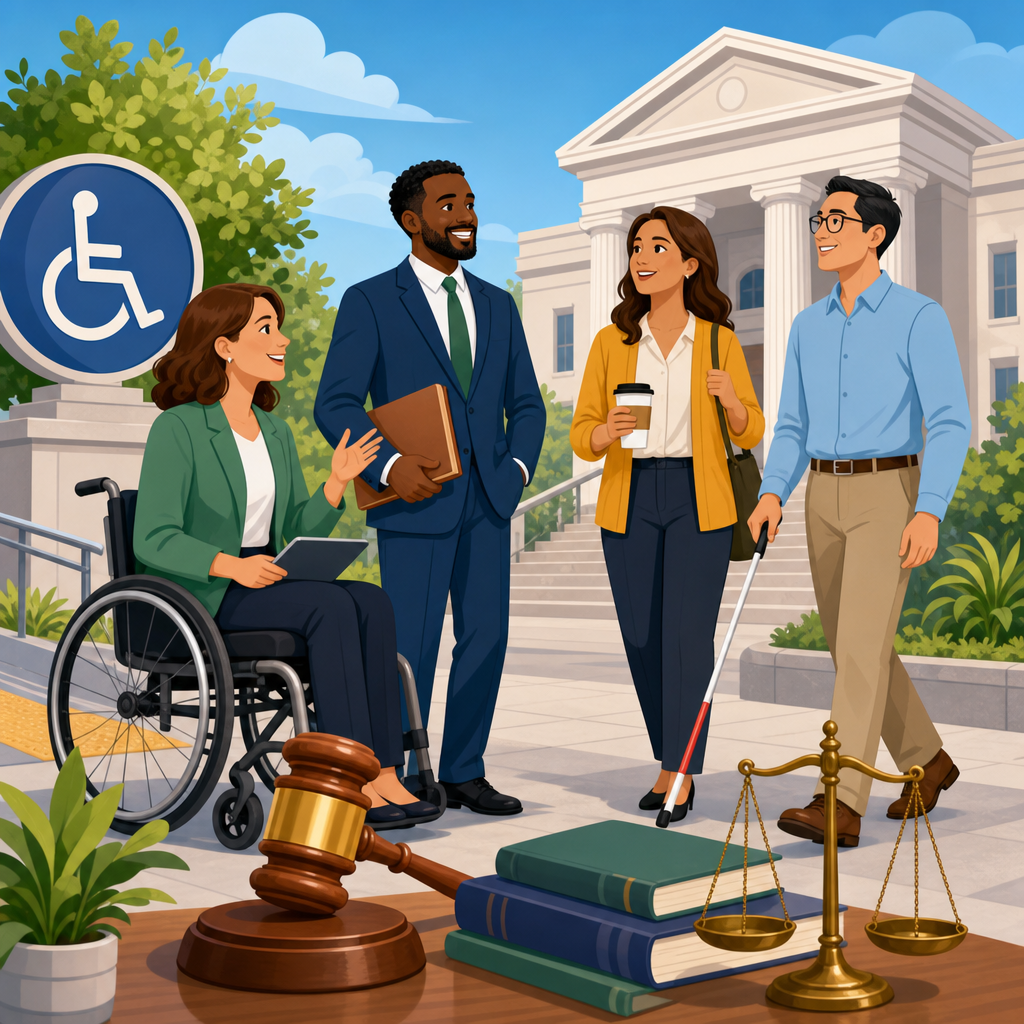
New developments in ADA litigation are reshaping how businesses, public entities, schools, healthcare systems, and digital service providers assess accessibility risk. The Americans with Disabilities Act, or ADA, is the primary federal civil rights law prohibiting disability discrimination in employment, government services, public accommodations, transportation, and telecommunications. In recent years, the most important shift has been practical rather than theoretical: litigation is expanding beyond ramps, restrooms, and parking to include websites, mobile apps, online forms, video content, self-service kiosks, and policies that create unequal access. From working with organizations responding to demand letters and consent decrees, I have seen the same pattern repeatedly. Many leaders still think ADA compliance is a facilities issue managed by real estate teams, while plaintiffs, regulators, and courts increasingly treat accessibility as an enterprise-wide obligation touching design, procurement, customer service, information technology, and governance.
This matters because ADA litigation now operates at the intersection of civil rights enforcement, digital transformation, and risk management. A lawsuit can trigger remediation costs, attorney fees, reputational damage, business interruption, and long-tail monitoring obligations. At the same time, the legal landscape remains uneven. The ADA itself predates the modern web, so judges often rely on broader statutory language, Department of Justice positions, and technical standards such as the Web Content Accessibility Guidelines, commonly called WCAG, to evaluate whether disabled users received meaningful access. The result is a fast-moving body of law in which small factual differences can matter. This hub explains future trends and predictions in ADA developments, identifies the litigation patterns most likely to shape the next several years, and provides practical takeaways for organizations that need to move from reactive defense to durable accessibility governance.
Digital accessibility will remain the center of ADA litigation growth
The clearest trend is that digital accessibility will continue to drive a large share of ADA lawsuits and pre-suit demand activity. Plaintiffs have increasingly targeted websites and apps that block screen-reader navigation, keyboard access, captioning, color contrast, error identification, form labeling, and transactional completion. Retail, hospitality, healthcare, financial services, higher education, and food service are frequent targets because they depend on online reservations, account access, applications, patient portals, ordering systems, and customer support tools. In practice, the legal question is simple: can a person with a disability use the service with substantially equal ease, privacy, independence, and completeness? When the answer is no, businesses face exposure even if they never intended to discriminate.
Future litigation will likely become more technically sophisticated. Instead of general allegations that a website is inaccessible, complaints increasingly identify broken ARIA attributes, unlabeled buttons, inaccessible PDFs, CAPTCHA barriers, autoplay media without controls, and app components that fail gesture alternatives. Courts and settlement agreements often reference WCAG 2.0 AA or WCAG 2.1 AA, and many accessibility programs now treat WCAG 2.2 AA as the forward-looking benchmark because it addresses additional needs around focus appearance, target size, and dragging movements. Although WCAG is not identical to the ADA, it functions as the dominant yardstick in negotiations, audits, and remediation plans. Organizations that still rely on one-time scans or accessibility widgets are especially vulnerable, because plaintiffs’ experts can usually show that overlays do not fix source-code defects or inaccessible user flows.
Regulatory activity will shape litigation strategy and settlement expectations
The Department of Justice has steadily reinforced the position that the ADA applies to digital services, and regulatory developments will continue to influence private litigation. The strongest recent signal came from federal rulemaking under Title II covering state and local government web and mobile accessibility, which set clear technical expectations tied to WCAG 2.1 AA for many public entities. Even though that rule directly governs public bodies rather than private businesses under Title III, it changes the broader litigation environment. Plaintiffs can point to a more concrete federal accessibility baseline, defense counsel must explain why comparable digital barriers should be tolerated elsewhere, and judges gain another reference point when evaluating what reasonable access requires.
Expect future disputes to focus not only on whether content is accessible, but also on governance failures. Regulators increasingly look for policies, training, procurement controls, testing protocols, feedback channels, and executive accountability. I have seen organizations spend heavily remediating a public website, only to be sued again because vendor booking engines, embedded maps, downloadable forms, and customer service scripts remained inaccessible. That is why settlement terms are becoming more operational. They often require designated accessibility coordinators, annual audits by qualified consultants, issue tracking, deadlines for fixes, and periodic reporting. The trend suggests that litigation will push companies toward documented compliance systems rather than ad hoc repair after a complaint arrives.
Serial filings, standing battles, and venue selection will continue to matter
Another major development is the persistence of serial ADA filings, especially in jurisdictions where plaintiffs have found receptive procedural pathways. A relatively small group of law firms and repeat plaintiffs has generated a significant volume of cases, particularly involving websites and physical access barriers. Defendants often frame these suits as opportunistic, but courts generally focus on statutory rights and standing requirements rather than motive alone. The key future trend is not whether serial litigation will disappear; it almost certainly will not. The more important question is how standing doctrine, mootness arguments, and venue-specific precedent will shape outcomes.
Some circuits have scrutinized whether plaintiffs plausibly intend to return to a physical location or revisit a website, while others have allowed broader deterrence-based theories. This creates uneven risk across states and federal districts. For national businesses, that means forum analysis is now part of accessibility planning. A website accessible enough to avoid practical complaints may still produce exposure if a company is sued in a jurisdiction with plaintiff-friendly standing law and well-developed precedent favoring digital access claims. Defendants can still prevail when they remediate quickly, challenge conclusory allegations, or show lack of nexus where required by local case law, but litigation budgets rise when the same issue is treated differently across circuits. Over time, more appellate clarification is likely, yet short-term fragmentation will remain a defining feature of ADA litigation.
Physical accessibility claims are evolving, not disappearing
Digital cases receive the headlines, but physical accessibility litigation remains active and is also changing. Traditional allegations involving parking slopes, curb ramps, restroom clearances, service counters, seating dispersion, pool lifts, signage, and route obstructions continue because the built environment still contains widespread barriers. What is different now is that physical claims increasingly overlap with policy and technology issues. Hotels face disputes over reservation system disclosures and accessible room inventory controls. Restaurants and retailers face complaints involving kiosks, point-of-sale devices, and queuing systems. Healthcare providers confront barriers in medical diagnostic equipment, communication access, and telehealth platforms. Housing-related entities navigate overlapping obligations under the Fair Housing Act, Section 504, and state disability laws.
| Trend Area | What Plaintiffs Are Targeting | Likely Organizational Response |
|---|---|---|
| Web and mobile | Checkout barriers, unlabeled forms, inaccessible PDFs, caption failures | WCAG-based audits, remediation roadmaps, accessibility statements, QA testing |
| Physical spaces | Parking, routes, restrooms, counters, seating, signage | CASp or consultant inspections, barrier removal plans, capital budgeting |
| Procurement | Third-party booking engines, kiosks, SaaS platforms, HR systems | Contract clauses, VPAT review, acceptance testing, vendor indemnity |
| Operations | Policies, service animal handling, accommodation delays, poor staff responses | Training, escalation procedures, centralized documentation, audits |
The future takeaway is that businesses should stop separating “facility compliance” from “customer experience.” Courts and regulators increasingly evaluate whether the entire journey is accessible. A compliant parking space does not help if the entrance door pressure is excessive, the counter is too high, the kiosk is unusable by blind customers, and staff have no idea how to provide an alternative. The same integrated view applies to schools, stadiums, transit systems, and clinics. Accessibility litigation is moving toward system-level analysis, and organizations that manage only isolated defects will continue to face repeat claims.
State laws and overlapping statutes will intensify exposure
Federal ADA claims rarely exist in isolation. State statutes such as California’s Unruh Civil Rights Act, the Disabled Persons Act, New York State and City Human Rights Laws, and other state accessibility provisions can add damages, fees, or broader remedies. That changes plaintiff economics dramatically. A pure federal injunctive claim may produce limited leverage in some scenarios, but a paired state-law claim can create immediate settlement pressure because statutory damages and fee-shifting alter the defense calculus. Businesses operating nationally often underestimate this layering effect until they face a complaint in California or New York.
Future ADA developments will therefore involve more integrated pleading across disability, consumer protection, housing, education, and employment frameworks. For example, a university may face website accessibility claims under the ADA, Section 504 of the Rehabilitation Act, and state anti-discrimination law. A hospital may encounter issues under the ADA, Section 1557 of the Affordable Care Act, and regulations governing effective communication. Employers using artificial intelligence hiring tools may confront ADA accommodation theories alongside Title VII and state privacy concerns. The prediction here is straightforward: plaintiffs will continue to combine legal theories wherever facts permit, and defense strategies will need cross-functional legal analysis rather than siloed issue spotting.
Artificial intelligence, automation, and procurement will create the next wave of disputes
The next major front in ADA litigation is likely to involve automated systems. Companies are rapidly adopting AI chat tools, resume screeners, video interview analysis, biometric verification, recommendation engines, and self-service technologies. These tools can improve efficiency, but they also create disability access risks when they rely on speech patterns, facial analysis, timed interactions, inaccessible interfaces, or rigid workflows that do not allow accommodations. I have already seen procurement teams focus on cybersecurity and data privacy while giving almost no attention to accessibility representations, testing evidence, or remediation rights. That gap will not hold.
Future claims will likely ask whether organizations exercised reasonable diligence before deploying new technology. Did they request a Voluntary Product Accessibility Template, review conformance claims critically, test real user journeys with assistive technology, and include contract language requiring accessibility fixes? Or did they accept vendor assurances and push the tool live? Courts may differ on specific theories, especially where ADA text meets novel software functions, but the operational expectation is becoming clear. Accessibility must be built into procurement, product design, and change management. Organizations that adopt AI or automation without disability impact review are effectively storing up litigation for later.
What organizations should do now to prepare for future ADA litigation
The most effective response is a governance model that treats accessibility as an ongoing compliance program, not a one-time project. Start with a risk-based inventory of digital assets, physical sites, third-party tools, and high-volume user journeys. Prioritize what is essential to access: purchasing, scheduling, applications, account management, forms, customer support, and legally required notices. Use both automated scanning and manual testing. Automated tools such as axe, WAVE, and Lighthouse are useful for finding common defects, but they cannot reliably evaluate screen-reader logic, focus order quality, error recovery, caption accuracy, or complex component behavior. Manual testing with keyboard navigation, NVDA, JAWS, VoiceOver, TalkBack, zoom, and speech input remains indispensable.
Then build control mechanisms. Adopt an accessibility policy, assign executive ownership, train developers and content authors, require procurement review, and establish a method for users to report barriers. Track issues in the same system used for security or quality defects so remediation has accountability and deadlines. For physical locations, perform periodic inspections against the 2010 ADA Standards for Accessible Design and address readily achievable barrier removal where Title III applies. Most important, document decisions. In litigation, a company that can show structured testing, prioritized remediation, vendor management, and responsive accommodation practices is in a far stronger position than one that scrambles to create records after a complaint. The legal trend is clear: preparedness reduces both exposure and settlement cost.
ADA litigation is entering a more mature, more technical, and more operational phase. The central lesson from new developments in ADA litigation is that accessibility risk no longer sits at the margins of compliance. It is embedded in websites, apps, facilities, procurement, customer service, AI deployment, and executive oversight. Future trends and predictions in ADA developments point in one direction: more claims involving digital access, more reliance on recognized technical standards, more overlap with state laws and related statutes, and more scrutiny of whether organizations have real governance rather than aspirational statements. Businesses and public entities that wait for perfect legal certainty will remain behind the curve, because enforcement is being driven by actual barriers experienced by users in everyday transactions.
The practical benefit of acting now is larger than litigation avoidance. Strong accessibility programs reduce churn in customer journeys, improve usability for aging populations, strengthen procurement discipline, and make services more resilient across devices and contexts. They also create better evidence when disputes arise. If this hub is your starting point for updates and developments, use it as a map: review your highest-risk digital journeys, inspect physical locations, examine vendor contracts, and align legal, IT, facilities, HR, and customer experience teams around a single accessibility strategy. The organizations that will navigate the next wave of ADA litigation most successfully are the ones that treat accessibility as a measurable business function today. Start that work now, before the next demand letter defines your priorities for you.
Frequently Asked Questions
What are the most important new developments in ADA litigation?
The most significant recent development in ADA litigation is that enforcement risk is expanding beyond traditional brick-and-mortar access barriers and into digital environments, institutional policies, and operational practices. While the ADA has long applied to employment, public services, public accommodations, transportation, and telecommunications, current litigation trends show a stronger focus on how accessibility works in practice for real users. That means courts, plaintiffs, and regulators are looking not only at whether a ramp exists or a restroom meets dimensional standards, but also at whether a website can be navigated by a screen reader, whether a healthcare intake system is usable by patients with disabilities, whether educational technology creates barriers, and whether policies unintentionally exclude disabled individuals.
Another major development is the growing volume of website and app accessibility claims. Businesses that once viewed ADA compliance primarily as a facilities issue are now facing litigation tied to online reservations, e-commerce platforms, mobile applications, digital forms, video content, and customer service workflows. At the same time, public entities and educational institutions are seeing more scrutiny of online services, portals, and communications tools. The practical takeaway is that ADA exposure is no longer limited to a physical site inspection; it now often requires a broader, enterprise-wide accessibility review.
There is also increased attention to recurring plaintiffs, serial filings, and strategic enforcement through demand letters and lawsuits. Even where legal standards continue to evolve in some jurisdictions, the cost of defending these matters can be substantial. As a result, organizations are shifting from reactive compliance to proactive accessibility risk management. In short, the newest development is not just a novel legal theory. It is a wider, more aggressive application of existing disability rights principles across physical, digital, and policy-based barriers.
Why are websites, mobile apps, and other digital services becoming a major focus in ADA cases?
Digital accessibility has become a central issue because online services are now a primary gateway to commerce, healthcare, education, government information, and everyday participation. When a person cannot use a website to make a purchase, schedule an appointment, complete a form, access course materials, or obtain critical information, the barrier can be just as exclusionary as an inaccessible entrance or service counter. Plaintiffs and advocacy groups increasingly argue that inaccessible digital tools deny equal access to goods, services, privileges, and advantages that the ADA is meant to protect.
What makes this area especially important is that many organizations adopted digital platforms quickly, often without building accessibility into design, procurement, testing, and maintenance processes. Common problems include missing alternative text, keyboard navigation failures, poor color contrast, unlabeled form fields, inaccessible PDFs, video content without captions, and mobile app features that do not work with assistive technologies. These issues may seem technical, but in litigation they are framed as concrete barriers preventing users with disabilities from accessing essential services.
Another reason digital cases are increasing is that online barriers can be identified and documented quickly, sometimes from anywhere, without a site visit. That makes them easier to test, easier to plead, and easier to scale across multiple defendants. For businesses and public entities, the key takeaway is that digital accessibility should be treated as an ongoing compliance function, not a one-time IT project. Organizations that adopt recognized accessibility standards, conduct regular audits, remediate known barriers, and document their efforts are generally in a stronger position than those that wait until a complaint arrives.
How are these ADA litigation trends affecting businesses, schools, healthcare providers, and public entities differently?
Although the ADA’s broad anti-discrimination principles apply across sectors, litigation risk plays out differently depending on the type of organization and the services it provides. Businesses that qualify as places of public accommodation are increasingly targeted for barriers affecting customer access, including website usability, reservation systems, point-of-sale interfaces, store layouts, and service policies. Retailers, restaurants, hotels, financial service providers, and e-commerce companies are all facing pressure to ensure that accessibility is integrated into both customer-facing technology and in-person experiences.
Schools and universities face a somewhat different challenge because accessibility issues often arise across a wide range of systems at once. These can include admissions platforms, learning management systems, classroom technology, housing processes, event access, captioning, testing accommodations, and campus facilities. Educational institutions also must think beyond a single transaction and consider whether students, parents, employees, and visitors can participate meaningfully across the entire academic experience. Litigation in this area often exposes breakdowns in coordination among disability services, IT, procurement, academic departments, and administration.
Healthcare systems face especially sensitive exposure because inaccessible systems can interfere with patient safety, informed consent, communication, and timely treatment. Common concerns include inaccessible patient portals, intake forms, scheduling systems, diagnostic communications, and failures to provide effective auxiliary aids and services. Public entities, meanwhile, are under scrutiny for ensuring equal access to government programs, benefits, meetings, transportation, emergency information, and municipal websites. Across all sectors, the common lesson is that ADA risk is increasingly operational. It is shaped by how an organization delivers services in the real world, not just by what its written policies say.
What practical steps can organizations take now to reduce ADA litigation risk?
The most effective first step is to stop treating accessibility as a narrow legal issue handled only after a complaint is filed. Organizations should instead adopt a proactive compliance strategy that combines legal review, operational planning, technical remediation, and ongoing monitoring. A useful starting point is an accessibility assessment covering physical spaces, websites, mobile apps, digital documents, customer service channels, and internal policies that affect external access. The goal is to identify barriers before they become the subject of a demand letter or lawsuit.
From there, organizations should prioritize remediation based on risk and impact. For digital properties, that often means auditing against recognized accessibility standards, fixing core navigation and form issues, improving document accessibility, and ensuring that new content follows accessible design practices. For physical locations and service delivery, it may involve reviewing parking, paths of travel, counters, restrooms, signage, communication procedures, and accommodation processes. Training is equally important. Front-line staff, developers, content creators, procurement teams, HR personnel, and managers should understand how their roles affect accessibility compliance.
Just as important, organizations should document what they are doing. Written policies, audit results, remediation timelines, vendor requirements, complaint intake procedures, and accessibility statements can all help show that the organization is taking compliance seriously. Documentation does not eliminate liability, but it can strengthen credibility and support a more effective response if a claim arises. Ultimately, the best risk-reduction strategy is continuous improvement: build accessibility into design, purchasing, maintenance, and decision-making rather than trying to retrofit everything under litigation pressure.
What are the key takeaways for responding to ADA demand letters, investigations, or lawsuits?
The first takeaway is to take every ADA claim seriously and respond promptly. Even if an allegation seems overstated, a slow or dismissive reaction can increase legal and business risk. Organizations should quickly preserve relevant information, identify the services or facilities at issue, and involve legal counsel and internal stakeholders who understand operations, technology, facilities, and customer-facing processes. Early fact gathering matters because ADA disputes often turn on very specific details about how a person attempted to access a service and what barriers were encountered.
Second, response strategy should focus on both legal exposure and practical remediation. In many cases, the organization’s ability to identify and fix the alleged barrier quickly can affect settlement posture, litigation costs, and reputational impact. If the claim concerns a website or app, technical teams may need to test the relevant workflows immediately. If it concerns a physical location or policy, facilities and operations personnel should evaluate whether changes can be made without delay. The strongest responses usually combine a sound legal position with a credible, documented plan to improve accessibility.
Finally, organizations should use any claim as a signal to look for broader patterns rather than treating it as an isolated event. A lawsuit about one inaccessible form, one entrance, or one communication failure may reveal systemic issues in governance, procurement, testing, or staff training. The long-term takeaway from current ADA litigation trends is clear: accessibility is now a core compliance, operational, and reputational issue. Organizations that respond strategically, remediate thoughtfully, and invest in sustainable accessibility practices are generally better positioned than those that approach each claim as a one-off dispute.


