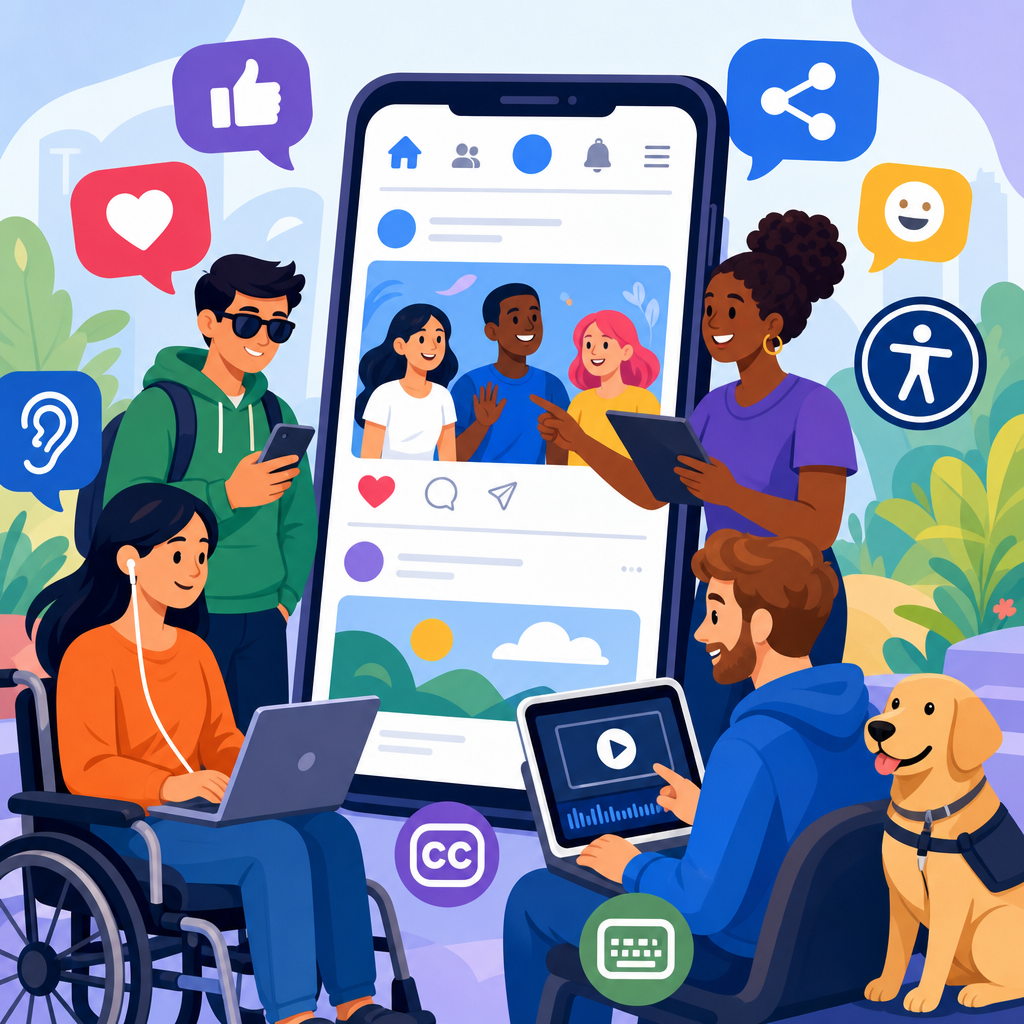
Technology and ADA: Ensuring Accessible Social Media Platforms sits at the center of a fast-changing legal and product landscape. Social media now functions as a public square, customer service channel, classroom, newsroom, and hiring tool, which means accessibility is no longer a side feature. Under the Americans with Disabilities Act, digital experiences can trigger the same inclusion duties that once focused mainly on physical spaces. In practice, that means platforms, brands, creators, and software vendors must think carefully about captions, keyboard navigation, screen reader support, color contrast, motion controls, form labels, and moderation workflows. I have worked with teams auditing social campaigns and platform features, and the pattern is consistent: when accessibility is designed in early, engagement improves for everyone, legal risk drops, and product quality rises.
This hub page explores future trends and predictions in ADA developments as they affect social media platforms. The key terms matter. ADA compliance refers to meeting civil rights obligations for people with disabilities. Digital accessibility means content and interfaces can be perceived, operated, understood, and robustly interpreted by assistive technology. Social media accessibility covers both platform architecture and the content published on top of it, from live video captions to alt text on product posts. The reason this topic matters now is simple: enforcement is expanding, user expectations are rising, and artificial intelligence is reshaping how content is created, personalized, translated, and moderated. Organizations that treat accessibility as an ongoing governance issue, not a one-time remediation project, will be better prepared for the next wave of standards, litigation, and platform innovation.
The legal and standards landscape shaping the next decade
The most important prediction is not speculative at all: regulators and courts will continue to push digital accessibility toward clearer, more enforceable expectations. Although the ADA does not list detailed technical requirements for social media interfaces, U.S. enforcement increasingly points organizations toward the Web Content Accessibility Guidelines, especially WCAG 2.1 and WCAG 2.2, as the practical benchmark. The Department of Justice has repeatedly stated that websites and mobile apps can fall within ADA coverage. Public entities also face explicit technical obligations under updated federal rules tied to WCAG. Even when a platform is not directly named in a statute, the ecosystem around it is affected because brands, schools, hospitals, employers, and government agencies use social channels to deliver essential information.
In real projects, the compliance question rarely arrives as a theoretical debate. It shows up when a city posts emergency updates on a platform without captions, when a retailer runs image-only promotions with no alt text, or when an embedded social feed on a company site cannot be used by keyboard-only visitors. Future ADA developments will likely bring more specific expectations around third-party tools, procurement language, and documented accessibility conformance. Vendor questionnaires, VPAT reviews, and contract clauses are becoming standard. That trend will continue because organizations need evidence that their technology stack supports disabled users. The platforms that can demonstrate mature accessibility roadmaps, responsive bug handling, and compatibility testing with screen readers such as JAWS, NVDA, and VoiceOver will gain trust.
Product design trends that will define accessible social media
The next major shift is from reactive fixes to accessibility by default. Social media platforms have historically offered optional tools, such as adding alt text manually or turning on captions after upload. The future points toward systems that generate accessible structure automatically while still allowing human correction. That includes mandatory alt text prompts before publishing, auto-captioning with confidence scores, transcript generation for audio posts, stronger heading semantics in creator tools, and better focus management in modal dialogs, carousels, and story interfaces. These changes matter because inaccessible patterns are often baked into growth features first and repaired later, which is expensive and damaging.
Short-form video is a clear example. Platforms optimized for speed and visual novelty can create barriers through rapid transitions, flashing effects, tiny interface controls, and text overlays that disappear before they can be read. Product teams are already moving toward adjustable playback speed, pause controls, reduced motion settings, and safer animation thresholds to reduce seizure risk and vestibular discomfort. Another trend is improved creator guidance inside the posting flow. Instead of burying accessibility help pages, the most effective platforms surface recommendations at the exact moment of creation: add camel case in hashtags, keep overlay text inside safe zones, avoid low-contrast color pairs, and review caption timing before publishing. Friction at creation time is beneficial when it prevents inaccessible content from spreading at scale.
Artificial intelligence will help, but human review will remain essential
AI is poised to transform accessible social media faster than any other technology trend, but it will not eliminate the need for expertise. Automatic captions have improved dramatically because of better speech recognition models, yet they still struggle with accented speech, technical vocabulary, multiple speakers, background music, and code-switching. Image description tools can identify objects and scenes, but they often miss context, brand meaning, sarcasm, or the purpose of an image within a campaign. In my experience auditing automated alt text, the common failure is not total inaccuracy; it is vagueness. A blind user does not benefit much from “image may contain indoor scene” when the relevant content is a price promotion, safety instruction, or election notice.
Future ADA developments will likely focus on accountable AI rather than blind reliance on automation. Expect stronger expectations for editable machine-generated captions, disclosure when synthetic voices are used, and testing for bias in image and content classifiers. Platforms will also use AI to detect likely accessibility issues before publication, such as missing captions, inaccessible color combinations, or emoji strings that produce confusing screen reader output. That is useful, but organizations should set governance rules: who approves final accessible text, how quality is sampled, what error thresholds trigger review, and how urgent public communications are handled when automation fails. AI should accelerate accessibility operations, not replace informed judgment. The best future state is a human-in-the-loop system that combines scale with accountability.
What future-ready accessibility programs look like
Organizations preparing for the next phase of ADA developments need repeatable operating models, not scattered good intentions. The most resilient programs combine policy, training, testing, and ownership across legal, design, engineering, content, and customer support teams. That is especially important for social media because responsibility is fragmented. One team may own brand channels, another may buy social ads, another may run influencer partnerships, and an external agency may produce video. Without shared standards, accessibility breaks down quickly. Future-ready programs establish channel-specific rules, approved templates, escalation paths for complaints, and review checkpoints for high-risk content such as live streams, public safety alerts, and job postings.
| Area | Current common gap | Future-ready practice |
|---|---|---|
| Video posts | Auto-captions published without review | Edited captions, transcripts, speaker identification, audio description when needed |
| Images | Missing or generic alt text | Purpose-based alt text tied to campaign intent and key on-image text |
| Design systems | Inconsistent contrast and focus states | Accessible component libraries tested across devices and assistive tools |
| Governance | No owner for social accessibility issues | Named accountable lead, documented workflow, quarterly audits |
| Procurement | Third-party tools adopted without review | VPAT analysis, contract commitments, remediation timelines |
Metrics will also mature. Many teams still track accessibility as a binary pass or fail event tied to a launch date. That model is too weak for social media, where content changes every hour. A better approach measures caption accuracy rates, percentage of posts with reviewed alt text, response time for accessibility complaints, assistive technology defect backlog, and compliance coverage across regions and languages. Future ADA developments will reward this operational rigor because it creates evidence of sustained effort. When an issue arises, documented training records, audits, and remediation logs can show that accessibility is treated as a managed discipline rather than an afterthought.
Platform accountability, creator responsibility, and emerging case law
One of the hardest questions in social media accessibility is who bears responsibility: the platform, the publisher, or both. The practical answer is both, though their duties differ. Platforms control the interface, APIs, player behavior, ad tools, reporting systems, and the availability of accessibility features. Creators and brands control much of the content quality, including whether captions are corrected, whether hashtags are readable, and whether graphics rely entirely on embedded text. Future ADA developments will increasingly test this shared responsibility model. As social commerce grows, accessibility failures will be evaluated not only as communication barriers but also as barriers to transactions, customer support, and employment-related interactions.
Case law and settlements are likely to push toward clearer expectations around user-generated content, moderation access, and equal participation in core platform functions. Consider live audio spaces, direct messaging, creator marketplaces, and in-app checkout. If a deaf user cannot participate in a live discussion because real-time captions are unavailable, or a blind seller cannot manage storefront settings because form controls are unlabeled, the barrier is substantial. I expect more attention to complaint handling as well. Accessible reporting channels, timely remediation, and documented alternative access methods matter because they show whether a company responds meaningfully once notified. Platforms that wait for litigation before improving accessibility will lose ground to competitors that integrate inclusive design into roadmaps and public trust strategies.
Global influence and the technologies most likely to reshape compliance
ADA developments do not happen in isolation. Social media platforms operate globally, so U.S. expectations are influenced by international laws and standards, including the European Accessibility Act, EN 301 549, the Accessibility for Ontarians with Disabilities Act, and long-standing procurement requirements under Section 508 in the United States. This cross-border pressure accelerates convergence around common technical practices. Product teams prefer building one accessible pattern library rather than maintaining different experiences for each market. As a result, future improvements in captioning, screen reader support, haptic feedback, voice control, and cognitive accessibility prompts will often arrive as part of global platform updates, even when the immediate driver is regional regulation.
Several technologies will shape what compliance looks like over the next few years. First, multimodal AI will improve synchronized captions, live translation, and richer image descriptions, making accessible publishing easier at scale. Second, wearable and mobile assistive technologies will raise expectations for interoperability, especially with voice assistants, switch control, braille displays, and eye-tracking systems. Third, decentralized and immersive environments will create new legal questions. Social interaction in virtual reality, augmented reality, and mixed reality must still address captioning, spatial audio alternatives, motion sensitivity, readable interfaces, and accessible gestures. The lesson for organizations is straightforward: do not build accessibility plans around today’s content formats alone. Build around enduring user needs, test with disabled participants, and review every new social feature before adoption. That is how teams stay ready for future ADA changes and deliver accessible social media experiences that truly include everyone.
The central takeaway is clear: accessible social media is moving from optional best practice to core operational requirement. Future ADA developments will bring stricter expectations, better technical guidance, and more scrutiny of both platform design and published content. Teams that prepare now should align to WCAG-based standards, strengthen vendor review, use AI carefully, and create governance that covers creators, agencies, engineers, and support staff. The reward is broader reach, lower risk, stronger usability, and more credible public communication.
This hub page should anchor your broader research on future trends and predictions in ADA developments. From here, map your next steps: audit your current social channels, document recurring barriers, prioritize high-impact fixes, and build accessibility checkpoints into every campaign and product release. Organizations that act early will not just satisfy compliance pressure. They will create social media experiences that more people can use, trust, and benefit from every day.
Frequently Asked Questions
1. How does the ADA apply to social media platforms and digital content?
The Americans with Disabilities Act was written before today’s social media ecosystem existed, but its core purpose—preventing discrimination and ensuring equal access—applies directly to digital experiences. As social media has evolved into a major channel for communication, commerce, education, customer support, recruiting, and public engagement, accessibility is increasingly treated as a legal and operational requirement rather than a nice-to-have feature. Courts, regulators, and advocacy groups have all pushed the broader interpretation that when a digital platform functions like a public-facing service, barriers that exclude people with disabilities can create serious ADA risk.
In practical terms, this means accessibility responsibilities do not stop with the platform itself. Social media companies, brands, public agencies, schools, employers, nonprofits, and content creators may all play a role in making social content usable for people with disabilities. If a business relies on social media to provide important updates, interact with customers, advertise jobs, or offer services, inaccessible posts can become more than a usability issue. They can interfere with equal participation. The ADA does not provide a simple checklist specifically for every social media feature, but widely accepted accessibility standards such as the Web Content Accessibility Guidelines, or WCAG, are often used as the benchmark for what accessible digital content should look like.
The bottom line is that social media accessibility should be viewed as part legal compliance, part audience inclusion, and part sound digital strategy. If people cannot understand a video because it lacks captions, cannot interpret an image because it has no alt text, or cannot navigate interactive content using assistive technology, then access is being limited in ways that the ADA was designed to prevent.
2. What are the most common accessibility barriers people encounter on social media?
The most common barriers are often the simplest ones to prevent. Missing or poor-quality captions are a major issue for users who are deaf or hard of hearing. If a video contains spoken information, sound cues, or dialogue and none of that is captioned accurately, a large part of the audience is excluded immediately. The same problem appears in live streams when platforms fail to support reliable real-time captions or when hosts do not plan for accessible participation.
Images without meaningful alt text are another widespread barrier. Many posts rely heavily on graphics, memes, infographics, product images, and event flyers to communicate information. When those visuals have no text alternatives, users who rely on screen readers may miss the core message entirely. Decorative alt text or vague descriptions like “image may contain” are often not enough when the image carries important context, calls to action, or factual content.
Other frequent barriers include poor color contrast, tiny text in stories or reels, flashing effects that can create seizure risk, auto-playing media, inaccessible hashtags, and content that depends on gestures, hover states, or visual cues alone. For example, a post that says “click the green button below” is not very helpful for users who cannot perceive the layout in the same way. Similarly, using long strings of emojis, stylized fonts, or all-caps text can make content harder to process for people using assistive tools or for users with cognitive and reading disabilities.
Accessibility barriers also show up in platform design. Unlabeled buttons, broken keyboard navigation, poor focus order, inaccessible moderation tools, and inconsistent screen reader support can prevent users from posting, reporting abuse, applying privacy settings, or engaging with communities. So while creators control a lot, platforms themselves still carry major responsibility for the underlying user experience.
3. What should brands, creators, and businesses do to make their social media content ADA-friendly?
The most effective approach is to build accessibility into the content workflow from the start. That means treating accessible publishing as a standard editorial practice, not a last-minute fix. Every team that creates social content should have clear guidance on captions, alt text, visual design, plain language, and accessible video. If accessibility depends on one knowledgeable employee catching issues manually, consistency usually breaks down.
Start with the basics that deliver immediate impact. Add accurate captions to all videos, including short-form clips. Provide transcripts when possible, especially for longer audio and video content. Write descriptive alt text for images that convey information, not just generic labels. Use strong color contrast and make sure text embedded in graphics is large enough to read on mobile devices. Avoid posting essential information only inside images when that same information could also appear in the main caption or post text. If you use hashtags, camel case formatting—such as #SocialMediaAccessibility instead of #socialmediaaccessibility—makes them easier for screen readers to interpret.
Brands and organizations should also think beyond individual posts. Social campaigns, contests, customer service interactions, livestream events, and influencer partnerships all need accessibility planning. If a company hires creators, it should provide accessibility expectations in briefs and contracts. If it runs customer support through direct messages or public comments, those communication channels should be monitored for accessibility barriers. If it promotes job opportunities or deadlines on social media, those announcements should be equally available in accessible formats on owned digital channels as well.
Just as important, teams should test content and platform workflows with real assistive technology and, ideally, with disabled users. Accessibility is not just about following rules mechanically. It is about making sure people can actually perceive, understand, navigate, and interact with content in real-world conditions. Training, templates, platform-specific playbooks, and periodic audits can turn accessibility from a reactive concern into a reliable operational standard.
4. Can a business face legal risk for inaccessible social media content?
Yes, legal risk is real, and it is growing as digital accessibility expectations become more established. While the exact facts matter in every case, inaccessible social media content can contribute to ADA-related complaints, demand letters, regulatory scrutiny, reputational damage, and broader disputes about digital discrimination. Risk increases when social media is used as an essential point of access for services, announcements, customer support, applications, event participation, education, or sales. If users with disabilities cannot access those functions on equal terms, the business may have difficulty arguing that access is truly equal.
It is important to understand that legal exposure rarely comes down to one isolated post. More often, risk comes from patterns: repeated failure to caption video, inaccessible event promotions, image-based announcements with no text equivalent, or social content that serves as the only practical source of important information. Regulators and plaintiffs often look at whether an organization has a meaningful accessibility process in place. A company that can show training, internal standards, remediation efforts, and a commitment to accessible communication is generally in a stronger position than one that ignores the issue until a complaint arrives.
There is also business risk beyond the courtroom. Accessibility failures can undermine brand trust, reduce audience reach, create customer frustration, and lead to public criticism. For schools, employers, healthcare providers, government-adjacent entities, and service businesses, the consequences can be especially serious because social media often acts as an extension of core services. Inaccessible digital outreach can therefore affect inclusion, compliance, and public perception all at once.
For these reasons, many organizations treat social media accessibility as part of a broader ADA and digital compliance program. Legal counsel may help assess risk, but the operational side matters just as much: governance, content standards, procurement requirements, accessible design review, and documented remediation processes all play a role in reducing exposure.
5. What does an effective long-term social media accessibility strategy look like?
An effective strategy is proactive, cross-functional, and measurable. It starts with leadership recognizing that accessibility is not only a compliance obligation but also a core quality standard. From there, organizations need documented policies for how content is created, reviewed, approved, published, and monitored across platforms. Accessibility should be integrated into social media governance in the same way teams manage brand voice, privacy, moderation, and legal review.
Strong programs usually include platform-specific standards, because accessibility features differ across networks. Teams should know how each platform handles alt text, captions, auto-generated subtitles, image descriptions, live audio, and interface limitations. They should also have fallback procedures when a platform feature is weak or unavailable. For example, if a platform does not support a certain accessibility need reliably, important information should also be shared on an accessible website, landing page, or companion format.
Training is another essential piece. Social managers, designers, video editors, copywriters, community managers, and external creators all need practical instruction tailored to their role. Generic awareness training is helpful, but hands-on guidance works better: how to write effective alt text, how to caption fast-moving video, how to avoid inaccessible graphics, how to format hashtags, and how to review a post before it goes live. These practices become sustainable when they are built into templates, style guides, and content calendars.
Finally, the best strategies include auditing and feedback loops. Organizations should review posts regularly, track recurring issues, monitor platform changes, and invite input from disabled users. Accessibility is not static because platforms, algorithms, content formats, and user expectations change constantly. A mature strategy adapts over time. That is what makes social media accessibility effective under the ADA in the real world: not a one-time fix, but an ongoing commitment to equal participation.


