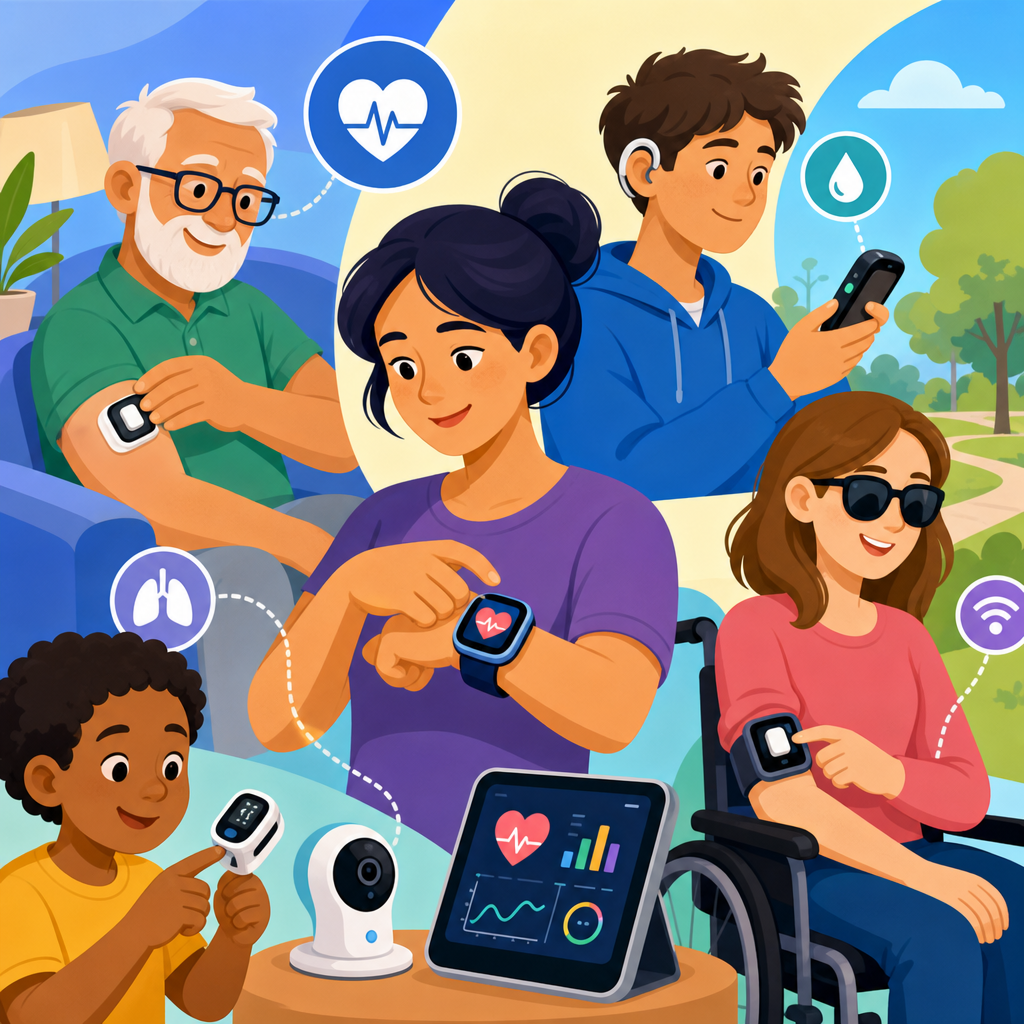
Recent advances in accessible health monitoring devices are reshaping how people with disabilities track vital signs, manage chronic conditions, and participate more fully in everyday care. In this context, accessible health monitoring devices are tools such as glucose monitors, smartwatches, blood pressure cuffs, hearing-linked alert systems, and remote patient monitoring platforms designed so people with visual, hearing, mobility, cognitive, or speech disabilities can use them independently. The topic also connects directly to recent ADA updates and developments because device design, digital accessibility, telehealth workflows, and equal access to medical information increasingly intersect with civil rights obligations. I have worked with digital health teams evaluating patient-facing products, and the lesson is consistent: a device is only useful if the person can actually perceive, operate, and understand it. That makes accessibility a clinical issue, a compliance issue, and a product quality issue at the same time.
Why does this matter now? First, remote care expanded rapidly after 2020, moving health monitoring from clinics into homes. Second, wearable sensors, app-based dashboards, and connected medical devices now influence treatment decisions, insurance programs, and hospital workflows. Third, enforcement and policy discussions around the Americans with Disabilities Act increasingly focus on digital environments, communication access, and equitable service delivery, not only ramps and door widths. For patients, the stakes are practical. An inaccessible pulse oximeter app can delay action on low oxygen levels. A blood glucose system without screen-reader support can force dependence on others. A telehealth portal that times out too quickly can prevent someone with dexterity limitations from uploading readings. Recent ADA updates and developments matter because they push organizations to treat accessible design as a baseline requirement, not a premium feature reserved for a small user group.
This hub article explains the main device innovations, the most important policy and ADA-related developments affecting them, the standards shaping procurement and design, and the implementation issues providers, employers, insurers, and manufacturers need to address. It also serves as the central guide for deeper articles in this subtopic, including telehealth accessibility, wearable device usability, accessible patient portals, and compliant procurement. If you need a direct answer, here it is: the biggest recent change is the shift from isolated adaptive features toward end-to-end accessible health monitoring ecosystems, where hardware, software, alerts, onboarding, data sharing, and customer support all need to work for disabled users. That shift is being driven by better sensor technology, mainstream consumer wearables, interoperability standards, stronger digital accessibility expectations, and growing recognition that equal access to health data is essential to equal access in healthcare.
What accessible health monitoring devices include today
Accessible health monitoring devices now span far more than traditional assistive technology. They include wearable ECG and heart-rate devices, continuous glucose monitors, smart inhalers, connected weight scales, blood pressure monitors, sleep trackers, seizure-alert wearables, fall-detection systems, medication adherence tools, and home hubs that collect readings for clinicians. Accessibility in this setting means the full interaction is usable: buttons are reachable, screens support large text and high contrast, mobile apps work with VoiceOver and TalkBack, vibration and audio alerts can be customized, onboarding does not rely on color alone, and data can be exported in formats patients can read and share. In strong products, accessibility is not confined to one feature. It runs through setup, calibration, troubleshooting, alarm management, interpretation, and ongoing updates.
A concrete example is the evolution of continuous glucose monitoring. Earlier systems often relied heavily on visually dense graphs and touchscreen gestures that were difficult for blind users to navigate. Newer systems increasingly support smartphone integrations, spoken notifications, customizable thresholds, and improved app compatibility with mobile accessibility settings. That does not mean every product is fully accessible, but the market has moved materially. Similar progress appears in blood pressure monitoring, where some connected cuffs now pair with apps that can store readings automatically, reducing the need for manual note-taking for users with dexterity impairments or memory limitations. For people with hearing disabilities, multimodal alerts that combine haptics, visual notifications, and integration with connected home devices offer safer monitoring than sound-only alarms.
The strongest recent trend is convergence. A smartwatch can now track heart rhythm irregularities, detect falls, prompt medication reminders, measure activity levels, and relay alerts through accessible smartphone interfaces. When these systems sync with patient portals or remote patient monitoring platforms, users avoid duplicate data entry. That matters because accessibility failures often emerge at handoff points. I have seen organizations purchase a reasonably usable device, then break the experience with an inaccessible PDF instruction sheet or a portal message center that screen readers cannot navigate efficiently. The modern accessibility question is therefore broader: can the person independently receive, interpret, and act on the health information produced by the device across the whole care journey?
Recent ADA updates and developments shaping device access
Recent ADA updates and developments are significant because they clarify that equal access obligations increasingly reach digital tools and communication methods used in healthcare settings. The ADA itself predates modern wearables and app-based monitoring, but enforcement positions, settlement activity, and related federal accessibility rules have made the practical direction clear: when healthcare delivery depends on digital interfaces, those interfaces must be accessible. For hospitals, clinics, pharmacy chains, insurers, and employers offering health monitoring programs, that means evaluating websites, mobile apps, kiosks, telehealth systems, and connected-device workflows. The legal issue is not whether a device is innovative; it is whether disabled users have equal opportunity to benefit from it.
One major development is the stronger alignment between disability access expectations and recognized technical standards such as WCAG for web and mobile content. Another is the expanding operational focus on effective communication. If a monitoring device pushes critical alerts only through inaccessible app text, or if support is available only by voice calls without relay-friendly alternatives, equal access problems arise quickly. The Department of Justice has also signaled through rulemaking and enforcement that digital accessibility is not optional for covered entities delivering public services, and that broader expectation influences private healthcare organizations as well. In practice, risk now sits less in a single inaccessible screen and more in systemic barriers embedded across onboarding, consent, authentication, and follow-up care.
These developments also affect procurement. Health systems increasingly ask vendors to document accessibility testing, provide VPATs based on Section 508 criteria, and demonstrate compatibility with assistive technologies before purchase. That is a meaningful shift from earlier years, when accessibility was often raised after implementation. As a result, device makers are under pressure to treat accessible design as a market requirement. This trend benefits users because procurement pressure changes roadmaps faster than general awareness campaigns do. It also creates a more disciplined conversation: instead of vague promises, buyers can ask whether the app works with screen readers, whether alerts are redundant across sensory channels, whether controls meet touch target expectations, and whether firmware updates preserve accessibility over time.
Technology breakthroughs making devices more usable
Several technical advances have materially improved accessible health monitoring devices. Low-power sensors have become smaller and more accurate, allowing wearables to deliver continuous tracking without bulky form factors that are hard to fasten or maintain. Edge computing lets devices process more information locally, improving alert speed and reducing dependence on complex cloud interactions. Smartphone operating systems now include mature accessibility frameworks, which means device makers can build on established APIs for screen readers, switch control, haptics, captions, and voice control instead of creating isolated workarounds. Bluetooth Low Energy and standards-based integration have also improved pairing reliability, which is essential for users who cannot repeatedly troubleshoot dropped connections.
Artificial intelligence contributes in narrower but useful ways. On-device anomaly detection can surface unusual patterns in heart rate, gait, or glucose trends with simpler messaging. Speech interfaces can help users navigate readings hands-free. Computer vision can support medication identification or detect whether a cuff is positioned properly. These features are helpful when they reduce cognitive load, but they must be designed carefully. Inaccessible conversational flows, unexplained confidence scores, or alerts that cannot be reviewed later create new barriers. Good design translates sophisticated analytics into plain-language guidance, such as “your blood pressure is higher than your usual range for three mornings in a row; contact your clinician if this continues,” while also making raw data available for those who want more detail.
| Advance | Accessibility benefit | Example in practice |
|---|---|---|
| Multimodal alerts | Supports users with hearing, vision, or cognitive differences | Vibration, spoken prompts, and visual banners for glucose alarms |
| App accessibility APIs | Improves compatibility with screen readers and voice control | Blood pressure app readable through VoiceOver and TalkBack |
| Automatic data sync | Reduces manual entry for users with dexterity limitations | Connected scale sending weights directly to a clinician dashboard |
| Smaller wearable sensors | Easier placement and longer wear time | Patch-based cardiac monitoring with fewer handling steps |
| AI-supported summaries | Lowers cognitive burden when interpreting trends | Plain-language weekly heart rhythm summaries in a patient app |
Battery life, waterproofing, and simpler charging have also become accessibility improvements, not merely convenience features. A charger that requires fine alignment can be a barrier for users with tremors or low vision. A short battery cycle can break adherence for anyone managing fatigue or executive function challenges. In product reviews, I increasingly treat these traits as access factors because they determine whether the device can realistically stay in service. The best recent products reduce friction through magnetic chargers, tactile orientation cues, reusable adhesives, and fewer mandatory calibration steps. Small design decisions like these often determine whether a device is empowering or abandoned in a drawer.
Implementation challenges in healthcare and at home
Despite progress, adoption still fails when organizations treat accessibility as a one-time device feature rather than an operational responsibility. The most common breakdowns happen during account creation, consent, portal linking, and customer support. Multi-factor authentication that depends on inaccessible CAPTCHAs, printed instructions with tiny text, inaccessible video tutorials, and support teams untrained on relay services can make a technically advanced product unusable. Healthcare providers also underestimate how many patients use combinations of assistive technology, older smartphones, shared devices, and limited broadband. Accessibility planning must therefore include realistic conditions, not ideal laboratory setups.
Training is another major issue. Clinicians and support staff need to understand both the device and the accommodations surrounding it. A nurse may know how to apply a remote cardiac monitor but not how to explain tactile landmarks to a blind patient or how to verify that alerts are configured for vibration rather than sound. Employers and insurers offering wellness or chronic care programs face similar problems. If participation incentives depend on device use, inaccessible workflows can create discrimination risk. Equal access requires alternate formats, equivalent participation methods, and a process for reasonable modifications. In my experience, organizations that include disability specialists and actual users early in deployment avoid expensive rework later.
Privacy and accessibility can also conflict if handled poorly. Security controls are essential for protected health information, but inaccessible security blocks legitimate access. The answer is not weaker security; it is accessible security. Passkeys, accessible authenticator flows, biometric options with alternatives, and clear session management can protect data without excluding users. The same principle applies to data interpretation. Some patients want highly detailed charts, while others need simplified summaries. Accessible design should support both. A device that hides details to appear simple may frustrate expert users, while one that floods everyone with unexplained metrics can overwhelm people with cognitive disabilities. Flexible presentation is now a core requirement.
What organizations should do next
Healthcare organizations, manufacturers, and program sponsors should respond to recent ADA updates and developments with a structured accessibility program rather than isolated fixes. Start with procurement. Require documented accessibility conformance information, independent testing where possible, and remediation commitments in contracts. Then test the full workflow: unboxing, setup, app registration, alert handling, data sharing, telehealth review, and technical support. Include users with disabilities in usability studies, because compliance documents alone do not reveal practical barriers. Build governance so product, legal, compliance, clinical operations, and patient experience teams review changes together. Accessibility problems often arise when one team updates software without understanding downstream care impacts.
Next, prioritize the issues that affect health outcomes most directly. Alarm accessibility, readability of trend data, compatibility with screen readers, keyboard and switch access, and accessible support channels should be considered high severity. Publish clear accessibility information so patients and clinicians can make informed choices before enrollment. Provide instructions in plain language, large print, captioned video, braille-ready or accessible digital formats where needed, and multilingual versions. Monitor complaints and support logs for patterns. If users repeatedly ask how to silence or acknowledge an alarm, the problem is probably not user error; it is a design flaw worth fixing.
The larger benefit is better care for everyone. Features first framed as disability accommodations, such as voice prompts, stronger contrast, simpler setup, and redundant alerts, improve usability in noisy homes, low-light conditions, stressful moments, and aging populations. That is why accessible health monitoring devices are becoming central to quality care, not a side category. For this hub on recent ADA updates and developments, the key takeaway is straightforward: policy expectations and product innovation are moving in the same direction, toward health technology that people can use independently and reliably. Audit your current device ecosystem, identify barriers across the full patient journey, and make accessibility part of every future purchase and deployment decision.
Frequently Asked Questions
What are accessible health monitoring devices, and how are they different from standard health tech?
Accessible health monitoring devices are tools designed to help people with disabilities independently track health information, respond to changes in their condition, and stay connected to care teams. They include products such as glucose monitors with audio feedback, smartwatches with haptic alerts, blood pressure cuffs with large high-contrast displays, hearing-linked notification systems, voice-enabled medication reminders, and remote patient monitoring platforms with screen reader compatibility. What makes these devices different from standard health tech is not just the medical function itself, but the way that function is delivered. Accessibility features may include tactile buttons, speech output, simplified interfaces, captioned alerts, adjustable font sizes, compatibility with assistive technology, one-handed operation, and alternative input methods for people with limited dexterity or speech.
Recent advances have moved accessibility from being an afterthought to becoming a core design feature in many devices. Instead of expecting users to adapt to technology, newer products are increasingly being built around real-world needs across visual, hearing, mobility, cognitive, and speech disabilities. This shift matters because it supports more accurate self-monitoring, reduces dependence on caregivers for routine tasks, and helps users act more quickly when readings fall outside safe ranges. In practical terms, an accessible device is one a person can set up, use consistently, understand clearly, and trust during daily life. That usability is essential for better adherence, stronger health outcomes, and more equitable participation in personal healthcare.
What recent advances are making health monitoring devices more accessible for people with disabilities?
Several important advances are improving accessibility across health monitoring devices. One of the biggest is multimodal feedback, where devices provide the same information in more than one way. A smartwatch, for example, may combine on-screen text, vibration patterns, spoken notifications, and app-based summaries. This helps users with different sensory needs receive alerts in ways that are meaningful and dependable. Another key advance is better integration with assistive technology. More monitoring apps now work with screen readers, voice assistants, switch controls, hearing aids, and customizable smartphone accessibility settings, making the overall experience far easier to navigate independently.
Remote patient monitoring has also become more inclusive. Many newer platforms automatically transmit blood pressure, glucose, oxygen saturation, heart rate, or weight data to clinicians without requiring complex manual entry. That can be especially helpful for users with mobility limitations, dexterity challenges, cognitive fatigue, or conditions that make repeated interaction difficult. In addition, device makers are improving physical design through lighter wearables, easier-to-apply sensors, simpler charging methods, and more ergonomic cuffs and straps. Artificial intelligence and smart analytics are also beginning to play a role by identifying patterns, simplifying data displays, and generating clearer alerts rather than overwhelming users with raw information. Taken together, these advances are making health monitoring more practical, less burdensome, and more responsive to the diverse ways people manage health every day.
How do accessible health monitoring devices help people manage chronic conditions more effectively?
Accessible health monitoring devices can make chronic condition management more consistent, more timely, and less stressful. For people living with diabetes, hypertension, heart disease, respiratory illness, hearing-related safety concerns, or multiple long-term conditions, regular monitoring is often essential. When devices are accessible, users are more likely to take readings on schedule, understand what the results mean, and respond appropriately. A glucose monitor with spoken readings, for instance, can help a blind or low-vision user confirm values immediately without waiting for assistance. A blood pressure device with a single-button workflow and large display may help someone with arthritis or cognitive overload complete readings more reliably. These seemingly small design choices can significantly improve day-to-day adherence.
Accessible tools also strengthen communication with healthcare providers. Many devices now store trends over time and share them automatically with clinicians or caregivers, which can support earlier intervention before a problem becomes an emergency. This is particularly valuable for people who may face barriers to frequent in-person visits. Better monitoring can reduce missed warning signs, improve medication adjustments, and support individualized care plans based on real-life data rather than occasional office readings. Just as importantly, accessible devices can increase confidence and autonomy. When users can independently check their own health status, they often feel more in control of their condition and more engaged in decision-making. That combination of better data, faster response, and greater independence is a major reason these technologies are becoming so important in chronic care.
What accessibility features should someone look for when choosing a health monitoring device?
Choosing the right device starts with matching features to the user’s specific needs, rather than assuming one product will work for everyone. For people with visual disabilities, important features may include audio readouts, screen reader support, high-contrast displays, large text, tactile controls, and apps that do not rely only on color-coded indicators. For users with hearing disabilities, look for strong visual notifications, vibration alerts, captioned instructions, and compatibility with hearing aids or connected alert systems. For those with mobility or dexterity limitations, a device should be easy to hold, wear, apply, charge, and clean, with minimal force required for buttons or battery access. People with cognitive disabilities may benefit from simplified interfaces, guided setup, clear language, repeatable routines, and reminders that are easy to understand and act on.
It is also important to evaluate the full experience, not just the device itself. The mobile app, user manual, customer support, onboarding process, and data-sharing features all affect accessibility. A device may have excellent sensors but still be difficult to use if setup instructions are not accessible or if alerts are confusing. Buyers should look for products tested with disabled users, backed by clear privacy protections, and supported by reliable technical assistance. Compatibility with existing phones, assistive devices, and healthcare systems is another major consideration. Whenever possible, it helps to read independent reviews, ask clinicians or occupational therapists for recommendations, and confirm whether a trial period or return policy is available. The best accessible device is one that fits naturally into everyday life and can be used accurately and consistently over time.
What challenges still exist, and what is the future of accessible health monitoring devices?
Despite strong progress, several challenges remain. Cost is still a major barrier, especially when insurance coverage does not fully account for accessibility-related needs or when the most usable device is not the lowest-priced option. Interoperability is another issue, since devices, apps, telehealth platforms, and electronic health record systems do not always work smoothly together. Some products still treat accessibility as limited customization rather than universal design, which can leave users navigating workarounds. There are also ongoing concerns about data privacy, especially as more monitoring happens remotely and more health information is shared continuously. In addition, not all users have equal access to smartphones, broadband, training, or technical support, which means digital health progress can still leave some communities behind.
Looking ahead, the future is promising if developers continue to build with accessibility from the start. We are likely to see more passive and low-burden monitoring, better voice and gesture interfaces, improved predictive alerts, and more personalized settings that adapt to different disabilities and changing health needs. Wearables may become more comfortable, less intrusive, and more accurate across a wider range of bodies and use cases. Remote patient monitoring platforms are also expected to become easier to navigate and better integrated with clinical care, making home-based health tracking a more routine part of treatment. Perhaps most importantly, the strongest advances will come from involving disabled people directly in research, product testing, and design decisions. When that happens, health monitoring devices are more likely to be truly accessible, clinically useful, and empowering in everyday life.


