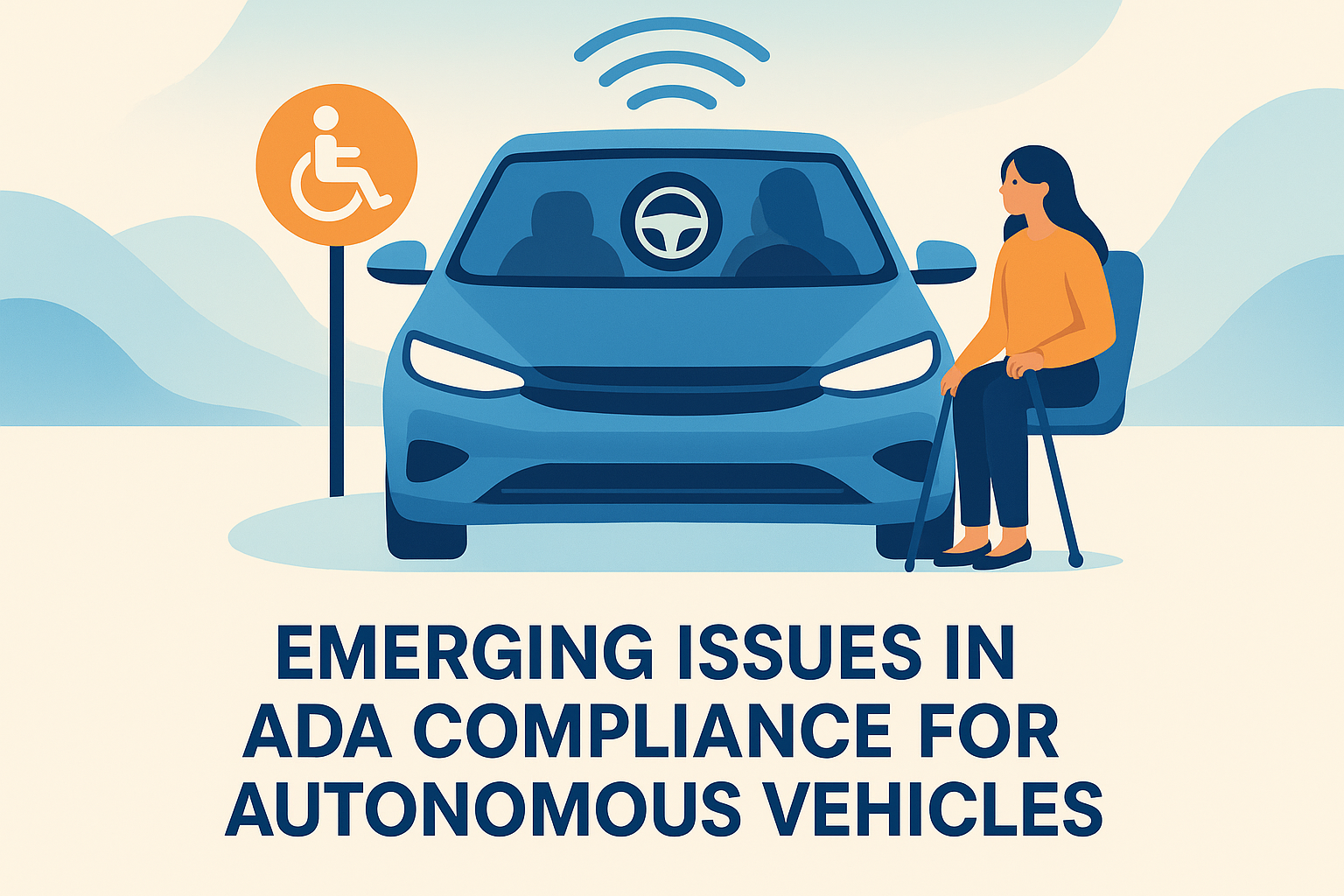
Introduction to ADA Compliance and Autonomous Vehicles
As technology rapidly advances, autonomous vehicles (AVs) are becoming an intriguing reality, promising to redefine transportation as we know it. These self-driving cars are endowed with sophisticated algorithms and sensors, enabling them to operate without human intervention. However, amidst this technological leap, compliance with the Americans with Disabilities Act (ADA) remains a pivotal consideration. Introduced in 1990, the ADA aims to ensure equal access and opportunities for individuals with disabilities, influencing various sectors including transportation. With the introduction of autonomous vehicles, corporations, and developers are now faced with novel challenges in fulfilling ADA requirements in this futuristic domain.
Why does this matter? Well, the promise of autonomous vehicles to improve mobility and independence for individuals with disabilities can only be fulfilled if ADA compliance is adequately addressed. If neglected, these advancements can inadvertently propagate inequities in accessibility rather than mitigate them. Ensuring that AVs are inclusive by design is not just a legislative requirement; it’s a moral imperative and a business opportunity that ensures a wider market reach and holistic transportation innovation.
Design and Accessibility Challenges
While autonomous vehicles possess incredible potential, designing them for optimal accessibility remains a significant hurdle. Conventional vehicles have established norms for accessibility features such as ramps, hand controls, and signage. However, incorporating such features in AVs requires creative re-engineering to accommodate unique design elements inherent in self-driving technology.
For instance, consider individuals with visual impairments who currently rely on human drivers for navigation. Autonomous vehicles must adeptly communicate information such as location, destination status, and emergency alerts through auditory means or tactile interfaces. An example is Waymo, which has developed in-cabin announcements and adapted tactile maps for easier navigation by passengers with visual disabilities. Despite these advancements, the challenge persists in creating a standard that accommodates a wider range of disabilities.
| Company | Accessibility Feature | Target Disability |
|---|---|---|
| Waymo | In-cabin Announcements | Visual Impairments |
| Uber ATG | Wheelchair Accessible User Interface | Mobility Impairments |
| GM Cruise | Auditory Instructions | Hearing Impairments |
Legal Implications and Responsibilities
The introduction of autonomous vehicles into mainstream transportation raises complex legal questions regarding ADA compliance. Current legislation does not specifically address AVs, thus creating a legal gray area. Companies developing AVs need to interpret how ADA guidelines apply to their products and innovate within these boundaries.
A real-world example is the lawsuit faced by Uber in 2020, where plaintiffs argued that the lack of wheelchair-accessible vehicles in Uber’s fleet violated ADA mandates. Although Uber claimed it was not a transportation provider but a technology platform, the court’s decision emphasized the need for businesses to consider the accessibility of their services and their duty under ADA norms, regardless of technological advancements.
Hence, it’s essential for developers of AVs to consult with legal experts, disability advocates, and regulatory bodies early in the development process. This collaboration ensures the creation of AVs that are not only compliant but also inclusive of the specific needs of all potential users.
Technological Innovations Supporting ADA Compliance
Fortunately, technology itself offers solutions to some of the accessibility challenges facing autonomous vehicles. From voice-controlled systems that enable passengers to issue commands and receive feedback, to mobile applications designed for trip scheduling and monitoring, innovation is paving the way for greater inclusion.
For example, General Motors’ Cruise has been exploring accommodations fitting their autonomous Chevrolet Bolt, ensuring that passengers with disabilities can seamlessly engage with the vehicle. By integrating voice-activated systems and dedicated accessibility features within their mobile applications, characteristically tedious tasks such as destination input or cabin temperature control are simplified for individuals with limited mobility or dexterity.
Moreover, the advent of augmented reality (AR) interfaces presents exciting possibilities in supporting ADA compliance. AR can provide an interactive and immersive experience that assists individuals with cognitive disabilities to better understand navigation and journey details. As these technological tools mature, the potential bandwidth for creating inclusive autonomous vehicles broadens.
Public-Private Collaborations and the Role of Policies
Ensuring ADA compliance in autonomous vehicles is not solely the responsibility of private enterprises. Public policy also plays a vital role in guiding and mandating inclusive practices within this transformative industry. Collaborative efforts between government agencies, private companies, and advocacy groups are crucial in developing coherent guidelines and policies that promote equal access for all individuals.
A pivotal example of such collaboration is the Partnership for Automated Vehicle Education (PAVE), which involves varied stakeholders including federal agencies, automakers, and nonprofits. The initiative aims to educate both policymakers and the public on autonomous vehicle technologies and their implications, ensuring comprehensive talks about accessibility integration.
Moreover, governmental institutions, at both national and local levels, can influence the industry by offering incentives for companies that prioritize accessibility in their autonomous vehicles. Through grants, subsidies, or recognition programs, these policies can motivate more firms to innovate with ADA compliance at the forefront.
Societal Impact and Ethical Considerations
Beyond legal and technical aspects, the societal impact of ADA compliance in autonomous vehicles is profoundly significant. The ethical imperative of ensuring equal access allows individuals with disabilities to enjoy the same freedom and mobility that AVs promise to deliver to the broader population.
Take, for instance, the elderly community, which often faces reduced mobility. The integration of accessible features in autonomous vehicles could empower them with renewed independence, thereby enhancing their quality of life. Ethical considerations thus demand that technology be harnessed not only for the majority but also for minority groups who, historically, have been marginalized in the design of transportation systems.
Moreover, by fostering inclusivity and increasing accessibility, companies are presented with broader market opportunities. The economic benefits of appealing to a diverse client base underscore a fundamental business advantage. The commitment to ADA compliance transforms from a regulatory challenge into a strategic asset ensuring customer satisfaction and brand loyalty.
Conclusion and Forward-Thinking Approaches
The emergence of autonomous vehicles marks an exciting epoch in transportation history, with the potential to enhance the lives of millions, particularly individuals with disabilities. However, achieving this vision necessitates an unwavering commitment to ADA compliance. By carefully addressing design challenges, embracing technological innovations, navigating legal obligations, and fostering multisector collaborations, the goal of creating truly inclusive autonomous vehicles becomes attainable.
The comprehension and navigation of these emerging issues offer not only compliance assurance but also a competitive edge in this burgeoning industry. Companies are encouraged to actively engage with diverse stakeholders, adopt forward-thinking accessibility standards, and contribute to shaping a future where mobility is equitable for all. To support these endeavors, stakeholders—from developers to policy-makers—must remain dedicated to ongoing dialogue, innovation, and collaboration.
The technological transformation of transportation is inevitable. Thus, it is incumbent upon us to ensure it is inclusive and equitable. As the saying goes, a rising tide lifts all boats. In this case, ensuring ADA compliance in autonomous vehicles means ensuring a better, more accessible transportation future for everyone.
Frequently Asked Questions
1. What are the emerging issues in ensuring ADA compliance for autonomous vehicles?
As autonomous vehicles (AVs) transition from concept to reality, ensuring they comply with the Americans with Disabilities Act (ADA) is crucial. One of the primary issues is ensuring that AVs are accessible to individuals with various types of disabilities, which is a broad category that includes physical, sensory, and cognitive impairments. The ADA mandates that transportation should be available to everyone, including those who require wheelchair accessibility or need audio-visual assistance.
Another emerging issue is the interface design of AVs, which must be accessible to individuals with disabilities. For example, screen readers and tactile interfaces are essential for people with vision impairments, while clear audio instructions could benefit those with hearing difficulties. Ensuring these technologies harmonize with AV systems without causing safety concerns is complex.
Additionally, there’s a growing concern about the need for clear regulations and standards. Currently, the regulatory landscape for AVs is somewhat fragmented, leading to varied interpretations of how ADA compliance should be integrated. Developing comprehensive guidelines that address the needs of all disabled individuals is critical in bridging this gap.
2. How might AVs improve transportation accessibility for people with disabilities?
Autonomous vehicles have the potential to significantly enhance transportation accessibility for individuals with disabilities. Firstly, they provide a safer, more independent means of travel, reducing the reliance on human drivers and potentially minimizing human error-related accidents. For people with physical disabilities, being able to summon a ride from an AV without needing to transfer in and out of a vehicle could alleviate many daily challenges.
Furthermore, AVs can be equipped with technologies that support communication through multiple channels, such as voice recognition and touchscreens adapted with braille options, promoting inclusivity for people with sensory disabilities. The real-time updates and navigational aids provided by AVs can also help individuals with cognitive disabilities to travel more independently.
Moreover, the integration of AVs into public transportation systems could expand mobility options and provide on-demand access to individuals in underserved areas, promoting a more inclusive society. The potential of AVs to tailor services to meet specific disability needs offers a transformative leap towards equitable transport solutions.
3. What challenges do policymakers face in drafting regulations for ADA compliance in AVs?
Policymakers face the significant challenge of creating regulations that address the myriad of accessibility needs while allowing room for technological innovation. One key issue is the lack of existing precedent, as no comprehensive ADA compliance framework for AVs currently exists. This requires policymakers to anticipate future needs and potential technological advancements.
Another challenge is balancing the interests of various stakeholders, including AV manufacturers, disability advocates, and the general public. Ensuring that regulations are stringent enough to guarantee accessibility while not stifling technological progress presents a difficult balancing act.
The rapid pace of technological advancement also means that regulations must be adaptable to quickly changing technologies. Policymakers must ensure that laws remain relevant and are able to address new challenges, such as cybersecurity implications or the ethical use of AI in AVs, all while maintaining accessibility standards.
4. What role do AV manufacturers play in ensuring ADA compliance?
AV manufacturers have a pivotal role in ensuring ADA compliance by designing vehicles that accommodate the needs of individuals with disabilities. This begins with incorporating universal design principles, which focus on making products usable by the widest range of people possible, right from the early stages of AV development.
Manufacturers should collaborate closely with disability advocates and accessibility experts to understand the specific needs and challenges faced by people with disabilities. This can guide the integration of features such as ramps for wheelchairs, customizable interface controls, or enhanced auditory signals for visually impaired users.
Furthermore, manufacturers can drive innovation by experimenting with new materials and technologies that enhance accessibility, partnering with tech companies to integrate cutting-edge solutions like voice-activated commands or AI-driven assistive tools. By prioritizing accessibility, manufacturers can not only comply with ADA requirements but also capture a broader market segment and foster a more inclusive transportation ecosystem.
5. How can users with disabilities provide feedback to enhance ADA compliance in AVs?
Users with disabilities can play an integral role in shaping ADA compliance in AVs by actively providing feedback to manufacturers and policymakers. This can be accomplished by participating in pilot programs and user-testing sessions, where their real-world experiences offer invaluable insights into the usability and accessibility of AV features.
Moreover, input from disabled users can highlight areas where AVs fall short, prompting manufacturers to address these gaps through targeted improvements. Engaging with disability advocacy groups and participating in forums or public meetings can also amplify their voices, ensuring that their concerns are heard at local and federal levels.
Additionally, using digital platforms to provide detailed feedback can help developers and engineers understand specific issues from a technical standpoint, enabling more precise adjustments and innovations. Fostering this ongoing dialogue between users, manufacturers, and policymakers is critical to refining AV technology and enhancing compliance with ADA standards, ultimately leading to more accessible and inclusive autonomous transportation options.


