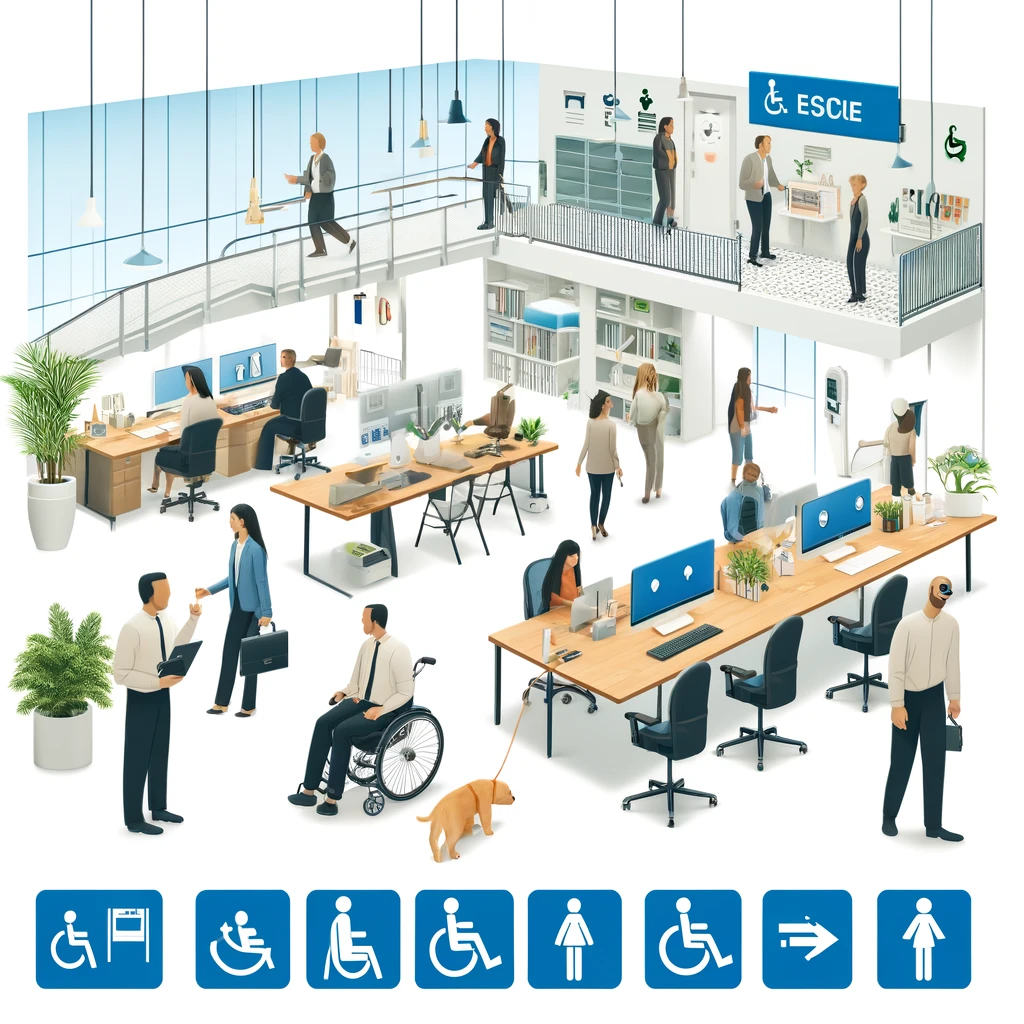
Handling walk-in accommodation requests in real time is one of the clearest tests of whether an organization has moved from written ADA policies to practical implementation. A walk-in accommodation request happens when a customer, patient, visitor, student, tenant, employee candidate, or member of the public arrives without advance notice and needs a modification, auxiliary aid, service adjustment, or physical access solution immediately so they can participate on equal terms. Practical implementation of ADA compliance means staff can recognize the request, respond lawfully, communicate respectfully, document the action, and resolve barriers without delay or confusion.
This matters because most accessibility failures do not begin with bad intent; they begin with uncertainty at the point of service. I have seen front-desk teams freeze when a deaf visitor requests a qualified interpreter, when a wheelchair user cannot clear a temporary display blocking a route, or when a customer asks for help completing a form because of low vision. In each case, the legal issue was not abstract. It was operational. The Americans with Disabilities Act requires covered entities to provide equal access, and in many situations the difference between compliance and complaint is the quality of the first five minutes.
For a compliance and implementation program, walk-in accommodation requests sit at the center of practical ADA compliance because they connect policy, training, budget, facilities, procurement, and recordkeeping. They also reveal whether staff understand core terms. A reasonable modification is a change in policy, practice, or procedure when necessary to avoid discrimination. An auxiliary aid or service may include qualified interpreters, captioning, assistive listening systems, large print, Braille, note taking, or accessible electronic communication. Effective communication means the method used must actually work for the individual and the context, not merely exist on paper. Direct threat, undue burden, and fundamental alteration are narrow defenses, not routine excuses.
The goal of this hub article is to show how to handle walk-in accommodation requests in real time while building a durable implementation system underneath every response. The process is practical: identify the need, engage in a focused interactive conversation, choose an effective option, act quickly, escalate only when necessary, and document the outcome for continuous improvement. When organizations do this well, they reduce legal risk, improve customer service, support frontline staff, and create a repeatable model that strengthens every other area of ADA compliance.
Recognize a Request and Start the Interactive Response
The first operational rule is simple: a walk-in accommodation request does not need special wording. People rarely say, “I am requesting an accommodation under the ADA.” They usually describe a barrier. A patient says, “I cannot hear when you call my name.” A visitor says, “I cannot use this touchscreen kiosk.” A student says, “I need this in larger print.” Frontline staff must be trained to treat barrier statements as requests for assistance and to respond without forcing the person to repeat sensitive details to multiple employees.
The best first response is calm, direct, and respectful. Staff should ask, “What do you need so you can access this service today?” That question keeps the conversation focused on the immediate access need rather than the person’s diagnosis. In many public accommodations and state or local government settings, staff do not need extensive medical documentation for an obvious barrier that can be addressed on the spot. They need enough information to identify an effective solution. Over-questioning is one of the most common implementation errors because it delays service and can feel adversarial.
Real-time handling also requires distinguishing urgent same-day solutions from requests that may need follow-up. If a blind customer needs assistance reading a short form, a trained employee can often provide immediate verbal assistance in a private and accurate manner. If a deaf patient needs complex informed-consent communication for a medical procedure, the organization may need a qualified interpreter, remote interpreting platform, or another communication method that is effective for the complexity and length of the interaction. The key is not to promise the cheapest option by default. The key is to provide effective access in the actual circumstances.
Apply the Core Decision Framework in the Moment
In practice, teams need a consistent decision framework they can use under pressure. I recommend a five-part sequence: recognize, clarify, evaluate, act, and record. Recognize the request. Clarify the barrier and the immediate objective. Evaluate available effective options, including on-site tools and rapid vendor support. Act by implementing the option with the least delay that still provides equal access. Record what happened so supervisors can spot patterns and improve readiness. This framework works at reception desks, security checkpoints, clinics, retail counters, libraries, housing offices, and event venues.
Speed matters, but precision matters more. Staff should know the difference between convenience and compliance. Offering to “help carry someone up the stairs” is not a substitute for an accessible entrance when one is required. Speaking louder is not an effective communication strategy for every deaf or hard-of-hearing person. Directing a person to return on another day may amount to unequal treatment if the service is available to others immediately. The real-time test is whether the person can obtain substantially equivalent access without unnecessary burden or stigma.
Escalation protocols should be narrow and clear. Frontline employees need authority to approve common low-cost accommodations immediately, such as moving a meeting to an accessible room, retrieving merchandise from an inaccessible area, reading written content aloud, providing a chair during a long wait, or switching from a kiosk to staff-assisted service. Escalation should be reserved for higher-cost decisions, safety-sensitive issues, interpreter coordination, or conflicts about effectiveness. If every request requires manager approval, delays become systemic and the organization will fail in predictable ways.
| Situation | Immediate Question | Effective Real-Time Response | Common Mistake |
|---|---|---|---|
| Wheelchair user blocked by temporary display | Can the accessible route be restored now? | Remove obstruction immediately and check route width | Asking the person to use a service entrance |
| Deaf visitor at reception | What communication method is effective for today’s interaction? | Use qualified interpreter, VRI, writing, or captioned method depending on complexity | Relying on lip reading or a family member by default |
| Blind customer facing kiosk-only check-in | Is there an equivalent staffed option right now? | Provide staff-assisted check-in with privacy and equal speed | Pointing repeatedly to inaccessible touchscreen prompts |
| Customer with service animal challenged at entry | Is the animal trained to do work or tasks for disability? | Allow access if the limited legal questions are satisfied | Demanding certification or charging a pet fee |
Build Frontline Preparedness Before the Request Happens
Real-time success depends on preloaded implementation. Organizations that handle walk-in accommodation requests well usually have four things already in place: role-based training, quick-reference tools, available equipment, and vendor pathways. Training must be specific to actual duties. A receptionist needs scripts and escalation rules. Facilities staff need route-clearance standards and maintenance response times. Event teams need seating maps, captioning contacts, and accessible registration procedures. Security staff need service-animal rules and de-escalation guidance. Generic annual training modules are rarely enough.
Quick-reference tools should fit into live operations. One-page decision trees, badge-card prompts, shared digital playbooks, and accommodation logs outperform thick binders no one opens. In one rollout I supported, a municipal service center reduced response delays by giving staff a two-minute triage card: identify barrier, ask preferred method, check available tools, contact named backup, document outcome. The change was small, but complaint volume dropped because staff no longer waited for legal review on simple issues they could solve immediately.
Equipment and services must also be available, maintained, and tested. That includes hearing loop systems, portable ramps where appropriate, accessible counters, screen-reader compatible forms, large-print templates, accessible signature methods, and reliable video remote interpreting setups with adequate bandwidth, camera placement, and staff who know how to use them. I have seen organizations purchase VRI subscriptions and still fail because tablets were uncharged, Wi-Fi was unstable, or no one knew the login. Procurement without implementation is not compliance.
Vendor pathways matter whenever on-demand support may be needed. Medical sites, courts, universities, hotels, and public service centers often maintain interpreter contracts, CART providers, alternate-format vendors, and emergency maintenance contacts. The contract terms should define response windows, after-hours coverage, cancellation rules, and quality standards. Named contacts beat generic inboxes. If staff cannot reach the right vendor in under five minutes, the process is too slow for true walk-in accommodation requests.
Handle High-Risk Scenarios with Clear Rules
Some situations generate disproportionate legal and reputational risk, so they deserve precise operating rules. Effective communication in healthcare is one. The Department of Justice and the Department of Health and Human Services have repeatedly emphasized that the communication method must match the complexity of the interaction. For brief scheduling matters, writing may work. For diagnosis discussions, treatment planning, mental health assessments, or consent conversations, a qualified interpreter may be necessary. Using minor children to interpret is generally inappropriate except in genuine emergencies involving an imminent threat when no other interpreter is available.
Service animals create another frequent flashpoint. Staff may ask only two limited questions when the disability and task are not obvious: whether the dog is required because of a disability and what work or task the dog has been trained to perform. Staff cannot demand documentation, require the dog to demonstrate the task, or charge pet fees. The animal may be excluded only for specific reasons, such as loss of control or not being housebroken, and even then the person must be offered access without the animal if feasible. Scripted training reduces confrontations and keeps staff inside the legal boundaries.
Temporary barriers are equally important. A compliant building can become inaccessible in one morning if boxes narrow a route, an elevator is down, snow blocks curb ramps, or a pop-up queue line cuts off clear floor space. Real-time ADA compliance requires operational inspections, not just design compliance. Facilities teams should use opening and shift-change checks for entrances, restrooms, routes, counters, and signage. When a barrier appears, the organization needs an interim access plan such as rerouting, staff assistance, temporary signage, or immediate removal of obstructions while permanent repairs are scheduled.
Digital touchpoints inside physical spaces deserve the same attention. Check-in kiosks, QR-code menus, payment terminals, and digital consent forms can fail accessibility in ways that strand walk-in visitors. A legally safer and customer-centered approach is to maintain an equivalent staffed option that preserves privacy, timeliness, and independence as much as possible. If the tablet signature process is inaccessible, staff should have an alternative workflow ready, not improvise in front of a waiting line.
Document, Review, and Improve the System
Documentation is often misunderstood as a defensive exercise. In strong compliance programs, documentation is a performance tool. For each walk-in accommodation request, capture the date, location, barrier, requested solution if stated, action taken, timing, escalation if any, and whether the solution was effective. Keep the record factual and respectful. The purpose is to identify trends: repeated requests for large print may justify preprinted stock; frequent route obstructions may signal a facilities discipline problem; interpreter delays may show a weak vendor contract or poor staffing model.
Review these records at least monthly across operations, compliance, facilities, and customer-facing leaders. Look for lag time, repeat incidents, avoidable denials, and places where staff lacked authority. Tie findings to corrective actions: retraining, procurement changes, signage updates, maintenance priorities, or policy revisions. This is how a sub-pillar hub on practical implementation of ADA compliance should function. It is not only a legal checklist. It is the central operating method that links frontline response to continuous improvement.
Internal linking across your broader compliance and implementation resources should reinforce this hub structure. Teams benefit when this page connects to detailed guidance on service animals, effective communication, accessible events, digital forms, building access, staff training, complaint handling, and accommodation documentation. In operational terms, every subtopic feeds the same real-time question: when a person is here now and access is blocked now, can we resolve it correctly now? If the answer is inconsistent, the implementation program is incomplete.
The strongest organizations treat every walk-in accommodation request as both a service moment and an audit moment. When handled well, the person gets equal access without friction, staff gain confidence, and leaders get data to improve systems. When handled poorly, the same request can trigger complaints, lost business, damaged trust, and preventable enforcement risk. Practical ADA compliance lives in these moments, not in policy binders.
To handle walk-in accommodation requests in real time, train staff to recognize requests without legal jargon, give them authority to solve common barriers immediately, maintain effective tools and vendor support, and document outcomes for review. Focus on effectiveness, speed, dignity, and consistency. That is the operational core of practical implementation of ADA compliance, and it is the standard this hub should set for every related article. Use this framework to audit your current process today, close the gaps you find, and turn accessibility from a policy statement into a reliable daily practice.
Frequently Asked Questions
What is a walk-in accommodation request, and why does handling it in real time matter?
A walk-in accommodation request happens when someone arrives without advance notice and needs an immediate adjustment so they can access services, spaces, communication, or participation on equal terms. That person might be a customer, patient, visitor, student, tenant, job applicant, or member of the public. The request could involve a physical access solution, a communication aid, a change in procedure, help completing a form, a quieter waiting area, a service adjustment, or another practical modification that removes a barrier in the moment.
Handling these requests in real time matters because accessibility is not measured only by whether an organization has written policies. It is measured by whether frontline staff can recognize a need, respond respectfully, and make practical decisions quickly. In many settings, delayed access is effectively denied access. If someone cannot enter a building, communicate with staff, navigate a process, or receive a service when they arrive, the organization has not provided equal access in a meaningful way.
Real-time response also reduces confusion, conflict, and escalation. When staff know what to do, they are more likely to stay calm, focus on solutions, and involve the right people efficiently. A strong response shows that accessibility is part of operations, not an exception. It protects the experience of the individual making the request, strengthens compliance efforts, and builds trust by showing that inclusion is practical, not just promised.
How should staff respond when someone makes an accommodation request on the spot?
The best first response is calm, respectful, and solution-oriented. Staff should listen carefully, avoid making assumptions, and focus on what the person needs to access the service or environment right now. A simple response such as, “Thank you for letting us know. Let’s figure out what will help,” sets the right tone. It acknowledges the request without creating unnecessary defensiveness, delay, or confusion.
From there, staff should clarify the barrier and the requested adjustment. In many cases, the individual already knows what will work. Staff do not need to overcomplicate the interaction or demand excessive explanation. The goal is to understand the functional need and identify an effective modification, auxiliary aid, or alternative method of access that can be provided promptly. If the requested solution is available and reasonable to implement immediately, staff should act without unnecessary approval layers.
Good practice also includes knowing when to escalate. If the request is outside a frontline employee’s authority, staff should contact the designated manager, ADA coordinator, accessibility lead, or supervisor right away instead of telling the person to come back later. During that process, staff should keep the individual informed and continue looking for interim solutions. The most common operational failure in walk-in situations is not hostility but drift: the request gets passed around, delayed, or treated as unusual. Clear ownership, quick communication, and practical follow-through are what make real-time accommodation work.
What kinds of accommodations can often be provided immediately for walk-in requests?
Many walk-in accommodations are simpler than organizations expect and can be handled on the spot with preparation and staff judgment. Immediate accommodations may include opening an accessible entrance, retrieving a portable ramp if one is safely used and approved, moving a conversation to a quieter or more private area, reading forms aloud, allowing extra time, assisting with navigation through a facility, modifying a check-in process, or communicating in writing if spoken communication is difficult in the moment.
Other real-time responses may involve providing large-print materials if available, using captioned communication tools, allowing a support person to accompany the individual where appropriate, adjusting line procedures, relocating a meeting to an accessible room, or changing the method used to deliver information. In healthcare, education, housing, public-facing business, and government settings, practical access often depends on flexibility in workflow rather than a major structural change. That is why frontline discretion and training are so important.
Organizations should not assume that only expensive or highly specialized solutions count as accommodations. Often, equal access is achieved through timely modifications to routine practice. The key question is whether the change allows the person to participate effectively and without unnecessary disadvantage. With advance planning, supply kits, contact lists, escalation protocols, and authority built into frontline roles, many same-day requests can be handled efficiently and respectfully.
What if the exact accommodation requested cannot be provided immediately?
If the exact requested accommodation is not available right away, the organization should not stop at “no.” The next step is to engage in a practical, interactive problem-solving process focused on what can be done now. Staff should explain the situation clearly, avoid dismissive language, and work with the individual to identify an effective alternative that provides meaningful access as close as possible to the original request.
For example, if a specific auxiliary aid is unavailable on short notice, there may be another communication method that works in the interim. If a space is inaccessible, the activity may be moved to another location. If a standard procedure creates a barrier, the process can often be modified so the person can still participate. The point is not to insist on one rigid method, but to reach an effective solution without needless delay. Even temporary measures can make a major difference when they are implemented promptly and respectfully.
It is also important to document what happened, who was contacted, what alternatives were offered, and whether a longer-term fix is needed. Repeated last-minute barriers often reveal a planning problem, not just a one-time operational challenge. Organizations that review these incidents can improve inventory, staffing, vendor access, training, and decision-making authority. In other words, when an exact accommodation is not possible immediately, the response should still demonstrate urgency, flexibility, and a commitment to equal access rather than inconvenience management.
How can organizations prepare staff to handle walk-in accommodation requests consistently and effectively?
Preparation starts with moving accessibility from policy language into daily operations. Staff need more than a general statement about ADA compliance. They need practical training on how to recognize accommodation requests, what language to use, what resources are available, when they can act independently, and when escalation is required. Training should include realistic scenarios for front desk teams, security staff, supervisors, clinicians, instructors, leasing personnel, recruiters, and anyone else likely to receive walk-in requests.
Organizations should also create operational tools that support fast action. These may include quick-reference guides, internal contact trees, lists of available auxiliary aids and accessible spaces, backup communication methods, incident documentation templates, and clear authority rules for frontline employees. If staff must wait for multiple approvals before making simple adjustments, the process will fail under real-time conditions. The goal is to reduce uncertainty so employees can respond confidently and consistently.
Just as important, leadership should review real incidents to identify patterns. If staff frequently scramble to find accessible entrances, interpreters, alternate rooms, or process exceptions, that signals a systems issue that should be addressed proactively. Strong organizations treat walk-in accommodation requests as valuable operational data. They use those moments to strengthen preparedness, remove recurring barriers, and make accessibility part of service delivery. When that happens, real-time accommodation becomes less of a crisis response and more of a normal, reliable business practice.