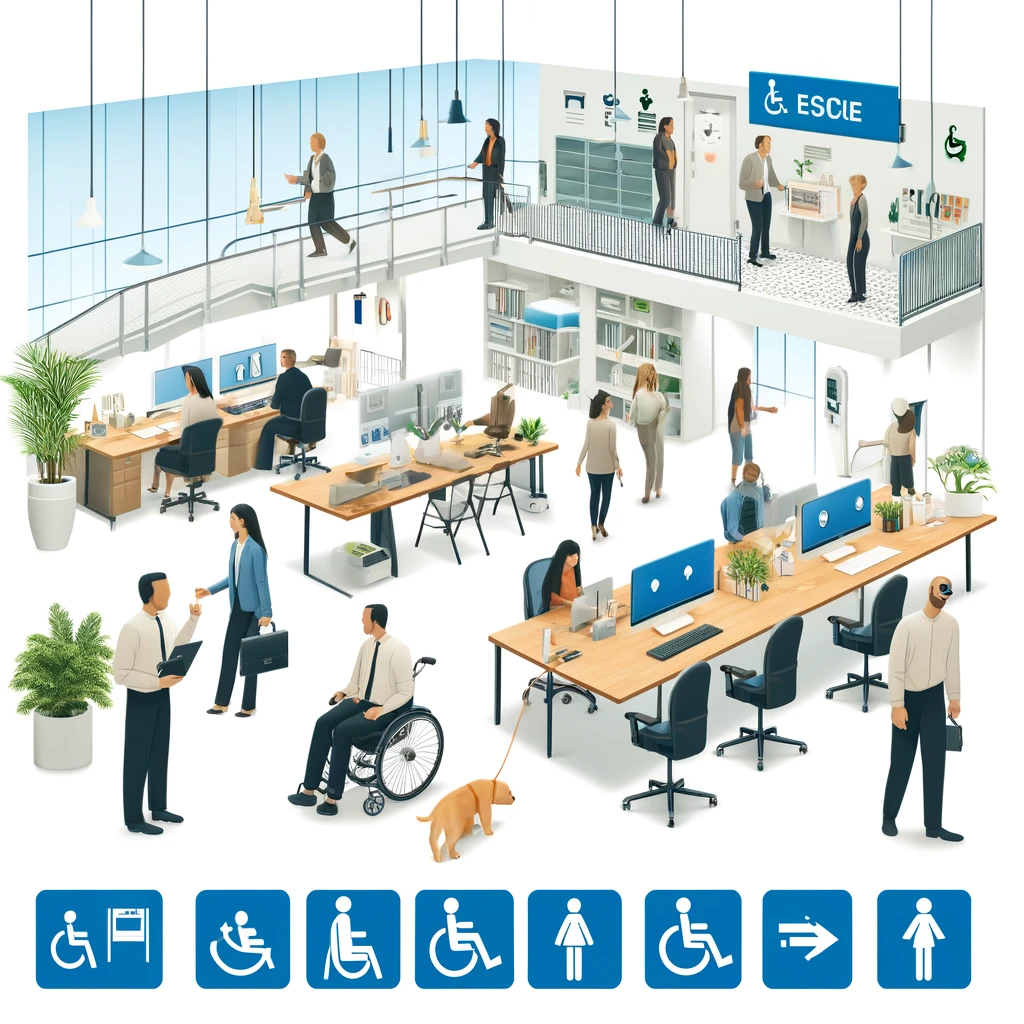
Budgeting for ADA remediation across facilities and digital systems requires more than assigning a lump sum to accessibility and hoping teams spend it wisely. It is a governance exercise, a capital planning discipline, and a risk management program that spans buildings, websites, mobile apps, kiosks, PDFs, procurement, training, and ongoing maintenance. In practical terms, ADA remediation means identifying barriers that prevent people with disabilities from accessing spaces, services, content, and workflows, then funding the work needed to remove or reduce those barriers. Across physical locations, that can include parking, entrances, restrooms, counters, signage, elevators, alarms, and path-of-travel corrections. Across digital systems, it usually includes conformance work aligned to WCAG, document remediation, captioning, accessible procurement, user testing, and platform upgrades.
This topic matters because accessibility budgets fail when organizations treat remediation as a one-time project instead of an operating capability. I have seen facilities teams reserve funds for door hardware and ramps while digital teams separately scramble to fix inaccessible forms after a complaint, with no shared governance, no common prioritization model, and no owner for cross-channel risk. The result is predictable: duplicated spending, emergency legal costs, deferred maintenance, and frustrated users. A better approach is to build one budgeting framework that compares unlike items on a common basis: legal exposure, user impact, safety, operational dependency, remediation effort, and lifecycle timing. That framework lets leaders decide what to fix now, what to phase, and what to address through replacement planning.
For this hub page, budgeting, prioritization, and governance are the core concepts. Budgeting is the process of forecasting, funding, tracking, and revising accessibility spend across capital and operating budgets. Prioritization is the method used to sequence remediation according to risk, impact, complexity, and strategic value. Governance is the system of roles, standards, approvals, reporting, and accountability that keeps the program consistent across departments. When those three elements work together, organizations can document good-faith progress, reduce avoidable complaints, and improve access for employees, customers, students, patients, tenants, and the public. The goal is not simply to spend more; it is to spend in the right order, with clear evidence for every decision.
Build a complete ADA remediation cost baseline
The first step in any ADA remediation budget is creating a defensible baseline. Without one, leadership sees isolated cost requests instead of a portfolio. Start by inventorying all facilities, digital assets, and service channels that create accessibility obligations. For facilities, that means every owned, leased, and managed location, plus site elements such as parking, routes, and exterior entrances. For digital systems, include public websites, intranets, mobile apps, kiosks, forms, PDFs, media libraries, software platforms, and third-party tools used for essential functions. A baseline is not just a list of barriers; it is a map of where access depends on each asset and what failure would mean to users.
Use recognized standards to structure the baseline. For buildings, teams commonly assess conditions against the 2010 ADA Standards for Accessible Design, applicable state codes, and any local requirements that are stricter. For digital systems, most organizations use WCAG 2.1 Level AA as the working benchmark, even when legal obligations depend on context. In my experience, using named standards prevents endless debates about whether an issue is subjective. A sink clearance conflict, missing accessible parking signage, empty link text, or unlabeled form field becomes a documented variance against a known requirement. That makes costs easier to estimate and easier to defend in budget review.
The cost baseline should break each issue into remediation units. For facilities, examples include restriping parking, replacing hardware, adjusting door closers, lowering accessories, modifying restroom stalls, adding tactile signage, or correcting slopes. For digital, units might include template remediation, component library fixes, PDF tagging, captioning hours, QA cycles, vendor patching, and assistive technology testing. Estimating at the unit level matters because broad line items such as “website accessibility improvements” invite cuts. Specific scopes tied to inventory and standards create confidence.
Do not ignore soft costs. Accessibility budgets regularly understate program management, audits, legal review, user research, training, change management, and retesting. They also miss the internal time needed from facilities, IT, procurement, HR, communications, and customer support. A credible baseline includes both direct correction costs and the recurring costs required to keep new barriers from appearing.
Prioritize by risk, impact, and operational dependency
Once the baseline exists, the next question is simple: what gets funded first? The right answer is usually not the cheapest item or the loudest complaint. Effective prioritization combines legal risk, safety impact, frequency of use, essential service dependency, user volume, and remediation effort. In practice, I recommend separating emergency barriers from strategic backlog. Emergency barriers include inaccessible entrances, restrooms that block basic use, life-safety communication failures, inaccessible job application workflows, payment barriers, and digital tasks required to receive critical services. Strategic backlog includes lower-volume issues, improvements tied to scheduled renovations, and enhancements that are important but not immediately exclusionary.
A practical model is to score each issue on five dimensions: severity of exclusion, affected audience size, legal sensitivity, technical difficulty, and timing opportunity. Severity asks whether the issue blocks access completely or creates inconvenience. Audience size estimates how many people encounter it. Legal sensitivity reflects complaint patterns and sector expectations; healthcare, education, employment, public accommodations, and government-facing functions usually deserve higher weighting. Technical difficulty helps sequence quick wins separately from major rebuilds. Timing opportunity recognizes that some remediation becomes far cheaper when coordinated with renovation cycles, CMS redesigns, or platform replacements.
Quick wins are valuable, but they should not distort priorities. Replacing inaccessible PDFs with accessible HTML can be fast and high impact. So can adding captions to frequently viewed videos or correcting color contrast in shared components. By contrast, retrofitting toilet rooms, replacing an inaccessible kiosk fleet, or rebuilding a custom portal may require design, procurement, and capital approval. The budgeting discipline is to fund immediate controls for high-risk barriers while planning larger corrections through staged appropriations.
| Priority factor | Facilities example | Digital example | Budget implication |
|---|---|---|---|
| Life safety or essential access | Alarm notification lacks visual signals | Patient portal login unusable with screen readers | Fund immediately from contingency or compliance reserve |
| High-volume user journey | Main entrance lacks accessible route | E-commerce checkout has unlabeled fields | Prioritize in current fiscal year |
| Moderate impact, low effort | Missing room signage | Video captions absent on key training modules | Bundle as quick-win package |
| High effort, replacement candidate | Noncompliant restroom layout in aging building | Legacy platform with inaccessible codebase | Align with capital renewal or replatforming |
Choose the right funding model for facilities and digital systems
Accessibility remediation rarely fits one budget bucket. Facilities work often belongs partly in capital expenditure and partly in maintenance or repair budgets. Digital work can land in application development, content operations, marketing, procurement, or enterprise risk. The funding model should match the nature of the correction. If a project materially changes a physical asset, extends useful life, or is part of renovation, capital treatment may be appropriate subject to accounting policy. If the work is corrective maintenance, content repair, testing, or training, it generally fits operating budgets.
A centralized compliance fund works well for enterprise standards, audits, training, policy development, and emergency remediation where ownership is unclear. A decentralized model works better when business units directly control the assets and can be measured on remediation progress. Most mature programs use a hybrid approach: central funds support governance and shared services, while asset owners fund corrections inside their roadmaps and facility plans. This avoids the common failure mode where one central budget becomes a bottleneck for every team.
For physical sites, tie ADA remediation to preventive maintenance and capital planning calendars. If a location is scheduled for lobby renovation in eighteen months, include counter heights, door hardware, signage, and route corrections in the same project rather than funding piecemeal fixes now and rework later. For digital systems, connect remediation to release cycles, design system work, and vendor renewals. If your organization is already upgrading its content management system or replacing an HR platform, accessibility requirements should be embedded in that spend, not treated as a side request.
Reserve contingency for unknowns. In older facilities, demolition can reveal hidden conditions that affect accessibility scope. In digital systems, audits often uncover systemic issues that spread across templates and third-party integrations. A ten to fifteen percent contingency is common for remediation programs with incomplete discovery, though the right level depends on asset age, documentation quality, and platform complexity.
Create governance that turns budgets into measurable progress
Governance is the difference between funded remediation and sustainable accessibility. At minimum, every program needs an executive sponsor, a cross-functional steering group, documented standards, decision rights, and reporting cadence. The steering group should include facilities, IT, digital product, procurement, legal, HR, communications, and any operational leaders responsible for customer or public access. Their job is not to review every defect. Their job is to approve standards, resolve ownership disputes, set annual priorities, and monitor risk reduction against budget.
Clear roles prevent chronic delays. Facilities teams should own built environment assessments and correction plans. Digital product and engineering should own code remediation and release management. Content owners should be accountable for accessible documents, media, and publishing practices. Procurement should enforce accessibility requirements in RFPs, contracts, and vendor due diligence, including VPAT review where relevant. Legal and risk teams should advise on complaint response, documentation, and privilege strategy, but they should not become the only gatekeepers for action. When legal becomes the sole driver, organizations often underinvest in prevention and overspend after escalation.
Measurement matters. Track open findings, high-risk barriers, aging of remediation items, percentage of critical user journeys tested, trained staff coverage, and spend against plan. I also recommend tracking recurrence rates. If the same PDF errors, form labeling issues, or signage omissions keep reappearing, the budget problem is really a process problem. Governance should therefore include design reviews, procurement checkpoints, construction closeout requirements, accessibility acceptance criteria, and regression testing. Those controls cost far less than repeated remediation.
Documentation is part of governance, not bureaucracy. Maintain audit reports, capital plans, exception approvals, complaint logs, policy decisions, and evidence of completed fixes. If the organization must explain why one barrier was corrected before another, a documented prioritization model and funding rationale are invaluable.
Account for procurement, vendors, and lifecycle costs
Many accessibility budgets fail because they focus on fixing owned assets while new barriers enter through purchasing. Procurement is therefore a budget control mechanism. Every major contract for software, kiosks, communication tools, self-service devices, learning platforms, or digital agencies should include accessibility requirements, testing expectations, remediation obligations, and acceptance criteria. For digital products, a vendor accessibility statement or VPAT is only a starting point. Teams should validate claims through demos, sample testing, and use-case review. I have seen organizations buy “accessible” tools that still failed keyboard navigation in critical workflows.
Facilities procurement needs the same discipline. Architects, contractors, millwork vendors, and signage providers should work from accessibility specifications that reference applicable standards. Closeout should include verification, not assumptions. A beautifully renovated area can still miss mounting heights, clearances, or detectable warnings if accessibility is checked only at the end. Budget for construction administration and post-installation inspection because correcting installed mistakes is expensive.
Lifecycle costing also changes budget decisions. A cheap inaccessible kiosk may look attractive until you price retrofit kits, legal review, field support, and early replacement. Likewise, a low-cost plugin that generates inaccessible PDFs or overlays accessibility problems can create years of technical debt. Budget models should compare total cost of ownership, not purchase price alone. In many cases, the most economical ADA strategy is to procure accessible systems upfront and reduce future remediation volume.
Plan the portfolio as a hub program, not isolated projects
Because this page sits at the center of budgeting, prioritization, and governance, the strongest operating model is a hub-and-spoke program. The hub sets standards, maintains the enterprise backlog, manages shared audits and training, and coordinates reporting. The spokes are the business units, facilities managers, product teams, and content owners who implement remediation within their domains. This model scales better than ad hoc requests because it preserves local accountability while giving leadership one view of progress.
In practice, the hub should link remediation planning to related workstreams: facility assessments, digital audits, document accessibility, vendor governance, policy development, training, complaint response, and capital planning. Each spoke should know which standards apply, which findings are high risk, what budget has been approved, and what evidence must be returned after completion. Internal linking between these subtopics is not just helpful for readers; it mirrors the way mature programs operate. Budgeting decisions depend on assessment quality. Prioritization depends on complaint data and operational criticality. Governance depends on procurement and reporting discipline.
The organizations that handle ADA remediation best do three things consistently. They estimate costs from a complete inventory, not anecdotes. They prioritize based on exclusion and operational dependency, not convenience. And they govern accessibility as an ongoing program with named owners, standards, and measurable controls. If you are building or refining your compliance and implementation roadmap, start by creating one enterprise baseline, one scoring model, and one governance cadence. Then fund the highest-risk barriers first, align major fixes with lifecycle events, and make accessibility requirements part of every future project. That is how remediation spending becomes predictable, defensible, and genuinely useful to the people who rely on access every day.
Frequently Asked Questions
1. What should be included in an ADA remediation budget across facilities and digital systems?
An effective ADA remediation budget should cover far more than one line item labeled “accessibility.” It needs to account for the full lifecycle of identifying, prioritizing, fixing, validating, and maintaining accessibility across both physical and digital environments. On the facilities side, that often includes site surveys, architectural assessments, barrier removal, restroom upgrades, signage, parking and path-of-travel improvements, entrance modifications, service counters, elevators, alarms, and other building-system changes. On the digital side, budgeting should include accessibility audits for websites, mobile apps, kiosks, software platforms, PDFs, multimedia, and customer-facing workflows, as well as the cost of code remediation, design updates, captioning, document remediation, user testing, and platform reconfiguration.
Just as important, the budget should include governance and operational costs. Many organizations underestimate the need for policy development, accessibility training, procurement controls, program management, legal review, and documentation. Accessibility is not a one-time repair project; it is an ongoing operating requirement. That means there should also be funding for recurring monitoring, periodic reassessments, regression testing after redesigns or renovations, staff education, vendor oversight, and support for accommodation requests. A strong budget separates one-time capital improvements from recurring operating expenses so leadership can see what must be funded now and what must be sustained year after year.
In practice, the most reliable budgets are built by asset class and risk area rather than by guesswork. Organizations often create categories such as facilities remediation, digital remediation, document accessibility, training, third-party testing, legal and compliance support, and contingency reserves. That structure helps decision-makers assign accountability, compare costs across departments, and avoid the common mistake of funding remediation without funding maintenance. If the goal is to reduce legal exposure, improve usability, and support equitable access over time, the budget must reflect the real scope of work across people, process, technology, and the built environment.
2. How do you prioritize ADA remediation spending when budgets are limited?
When budgets are constrained, prioritization should be based on risk, impact, and feasibility rather than on whichever issue is easiest or loudest. A practical first step is to identify barriers that affect essential access to services, employment, education, healthcare, housing, transportation, or customer transactions. In facilities, that could mean inaccessible entrances, restrooms, service counters, parking, or paths of travel. In digital systems, it often means barriers in high-traffic pages, online forms, authentication flows, checkout processes, mobile app functions, kiosks, and core documents that users need to complete important tasks. If a barrier prevents someone from obtaining a service or participating in a program, it belongs near the top of the list.
Legal and operational exposure should also shape spending decisions. Organizations should prioritize items tied to complaints, demand letters, audit findings, consent decrees, regulatory scrutiny, or known standards gaps. High-volume properties, flagship locations, and heavily used digital channels usually deserve earlier investment because they affect more users and create greater reputational and compliance risk. Another smart lens is dependency: some fixes unlock broader progress. For example, establishing an accessible design system, procurement standard, CMS workflow, or facilities barrier-removal framework can reduce future costs and prevent new noncompliance from being introduced.
A mature prioritization model often uses a scoring framework that weighs factors such as user impact, legal risk, volume of use, cost to remediate, complexity, time to implement, and whether a workaround exists. This allows leadership to build phased roadmaps instead of treating accessibility as an all-or-nothing funding decision. Phase one may address critical barriers and high-risk assets, phase two may tackle structural or platform-level upgrades, and phase three may cover lower-risk improvements and long-tail maintenance. That kind of sequencing helps organizations make defensible decisions, show measurable progress, and direct limited dollars where they will have the greatest accessibility and risk-reduction value.
3. Should ADA remediation be treated as a capital expense, an operating expense, or both?
For most organizations, ADA remediation should be treated as both a capital and an operating expense because accessibility obligations span one-time upgrades and ongoing management. Capital expenditures usually apply to major physical alterations, substantial building improvements, platform replacements, large-scale website or app rebuilds, kiosk replacement, enterprise software changes, and other significant investments that improve accessibility over multiple years. These items often require formal planning, approvals, design review, and integration into broader renovation or modernization projects. Treating these efforts as capital investments helps organizations align accessibility with long-term asset planning instead of relegating it to ad hoc discretionary spending.
At the same time, a large portion of accessibility work belongs in the operating budget. Examples include recurring audits, automated and manual testing, document remediation, captioning, interpretation support, accessibility training, policy implementation, vendor review, ongoing content fixes, help desk support, user research with people with disabilities, and periodic reassessment of facilities and digital assets. These are not optional extras. They are the activities that keep organizations from slipping back into noncompliance after a project is completed. If accessibility is funded only as a capital program, the organization may fix a website or renovate a building but fail to maintain accessible content, workflows, and services over time.
The most resilient approach is to map each budget item to the nature of the work. Structural renovations, platform replacement, and major retrofits generally fit capital planning. Monitoring, governance, training, quality assurance, accommodations, and routine remediation generally belong in operating budgets. This distinction matters because it affects approvals, ownership, timing, depreciation, and internal accountability. It also gives finance and executive teams a clearer view of total cost of ownership. Accessibility is not just about paying to fix historical barriers; it is about funding the systems that prevent those barriers from returning.
4. How can organizations estimate ADA remediation costs accurately before starting the work?
Accurate cost estimation starts with assessment, not assumptions. Before assigning numbers, organizations should conduct baseline evaluations of the facilities, digital properties, and content types within scope. For physical environments, that may involve accessibility surveys, plan reviews, code and standards analysis, site inventories, and identification of readily achievable barrier removal opportunities versus larger alterations. For digital systems, estimates improve significantly when teams inventory websites, mobile apps, software tools, kiosks, templates, PDFs, videos, and transaction paths, then assess them against recognized accessibility requirements and actual user experience barriers. Without a validated inventory and condition assessment, budgets tend to be either unrealistically low or padded without direction.
Once the baseline is clear, cost estimation should be built from units of work. For example, facilities teams may estimate by location, building type, barrier category, or construction package. Digital teams may estimate by page template, component library, app feature, document volume, media asset, or vendor platform. This is usually more reliable than estimating asset by asset in isolation because many accessibility issues repeat across systems and locations. A component used on 500 pages, a kiosk model deployed in 40 sites, or a restroom layout repeated across multiple buildings can often be remediated through a standardized solution. That insight can materially improve forecasting and reduce duplicated spending.
It is also wise to include soft costs and contingency. Program management, external consulting, legal review, internal labor, testing with assistive technology, user validation, change management, and procurement delays all affect total cost. In older buildings or legacy systems, hidden complexity is common, so contingency reserves are essential. Many organizations also benefit from creating cost bands rather than pretending to know an exact number at the start. A range-based estimate tied to remediation phases allows leadership to fund immediate priorities while refining later-stage budgets as designs and scopes mature. The goal is not perfect precision on day one; it is a credible, evidence-based budget model that improves as audits, pilots, and remediation work produce better data.
5. How do you keep ADA remediation costs under control over time?
The best way to control ADA remediation costs is to stop treating accessibility as a periodic cleanup effort and instead build it into normal operations. Costs rise quickly when organizations allow inaccessible buildings, documents, websites, apps, or procurements to accumulate for years and then attempt a large-scale correction under legal pressure or tight deadlines. By contrast, when accessibility is embedded in design standards, content workflows, development practices, renovation planning, and purchasing decisions, many barriers are prevented before they become expensive remediation projects. Prevention is usually cheaper than retrofitting, whether the issue involves a digital form, a software contract, a PDF template, or a building renovation detail.
Strong governance is a major cost-control tool. That means assigning ownership, setting policies, using technical standards, requiring accessibility in procurement, and creating review checkpoints before new content, software, construction, or equipment goes live. It also means training the people who create risk every day: developers, designers, facilities managers, content authors, procurement teams, project managers, and vendors. If teams know what compliant and usable output looks like, fewer defects enter the system. Regular audits, automated scanning where appropriate, manual testing, and issue tracking further reduce costs by catching problems early, when they are cheaper to correct.
Organizations should also think in terms of portfolio management. Standardizing accessible templates, components, construction specifications, and vendor requirements can dramatically reduce duplicate effort across locations and systems. Centralized oversight with decentralized execution often works well: a core team defines standards and