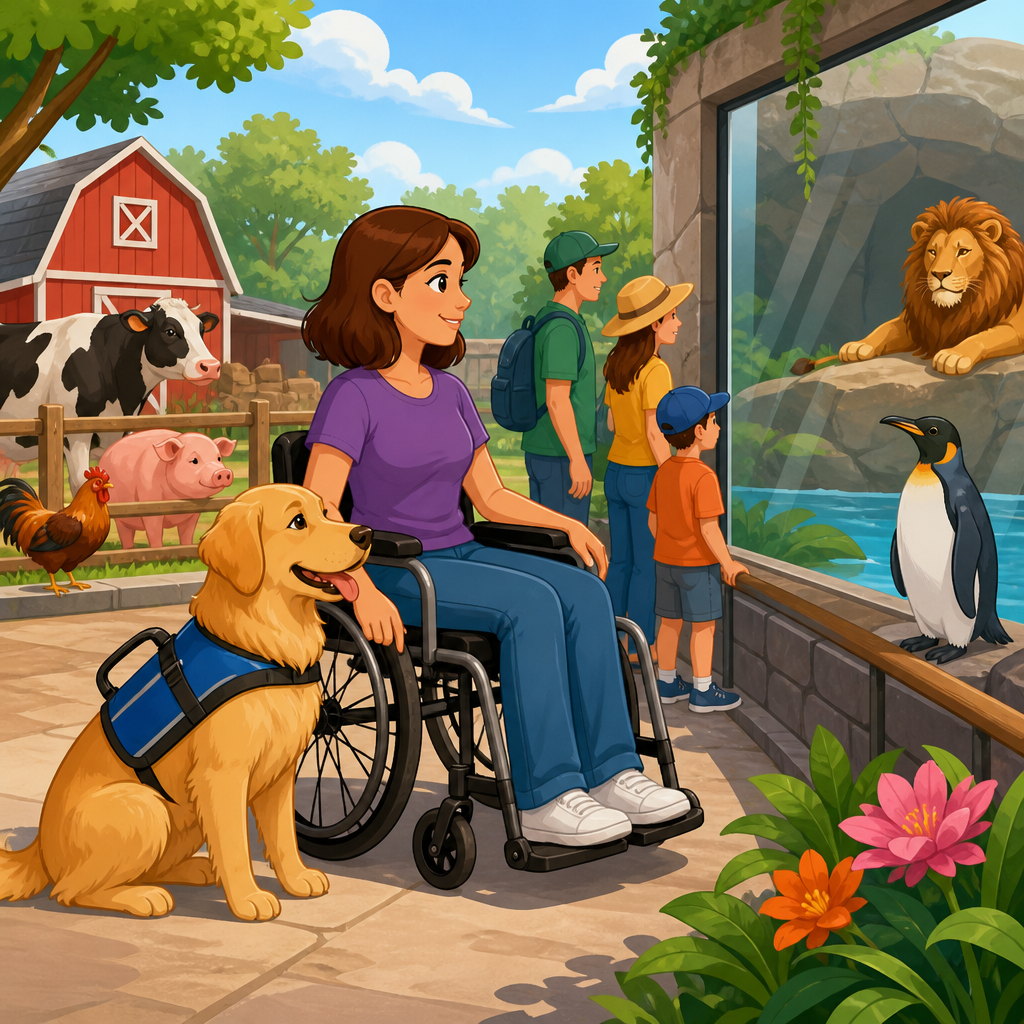
Service animals are not automatically allowed everywhere, and zoos, farms, petting areas, aquariums, and wildlife exhibits are the clearest examples of when restrictions may be valid under disability access rules. In this context, a service animal usually means a dog individually trained to do work or perform tasks for a person with a disability, while a mobility device can include a wheelchair, walker, scooter, cane, crutches, or, in some settings, another power-driven mobility device such as a Segway. I have worked through these questions with operators, disability advocates, and frontline staff, and the same confusion appears repeatedly: people know there is a broad right of access, but they do not know where safety, animal welfare, and legitimate operational limits change the answer. This matters because the wrong decision can either deny a disabled guest equal participation or expose animals, handlers, staff, and visitors to preventable harm. A sound policy must protect civil rights while recognizing that an exhibit housing prey species, a breeding stallion, a free-flight aviary, or a contact yard presents risks that do not exist in a hotel lobby or retail store.
For rights and protections, this hub covers the full service animals and mobility devices landscape through the specific lens of animal-related venues. The core legal principle is straightforward: a public-facing facility generally must modify policies to permit service animals and mobility devices, unless a specific safety requirement or fundamental alteration justifies a narrower rule. The details are where most disputes arise. Staff may ask only limited questions about a service dog when the disability is not obvious. Emotional support animals are treated differently from trained service dogs. Miniature horses can require a separate assessment. Wheelchairs and manually powered devices are almost always permitted where the public can go, but other power-driven mobility devices may be restricted if the site can show actual safety concerns based on the terrain, design, and operations. Zoos and farms also carry special obligations because resident animals may become stressed, predatory, territorial, or disease exposed. Understanding how these standards fit together helps visitors plan, helps operators train employees, and reduces the kind of ad hoc gate decisions that create legal complaints and bad outcomes for everyone.
What the access rules generally require
At a baseline, animal exhibits open to the public are usually treated like other public accommodations and must provide equal access to disabled visitors. In practice, that means a trained service dog is allowed in customer areas unless one of a small number of recognized exceptions applies. The dog must be under the handler’s control, typically by leash, harness, or tether unless those devices interfere with the task or the person’s disability prevents their use. The dog must also be housebroken and must not be out of control. If a dog lunges at goats in a contact yard, barks continuously in a reptile house, or ignores the handler around a camel ride queue, removal may be justified because the issue is behavior, not disability.
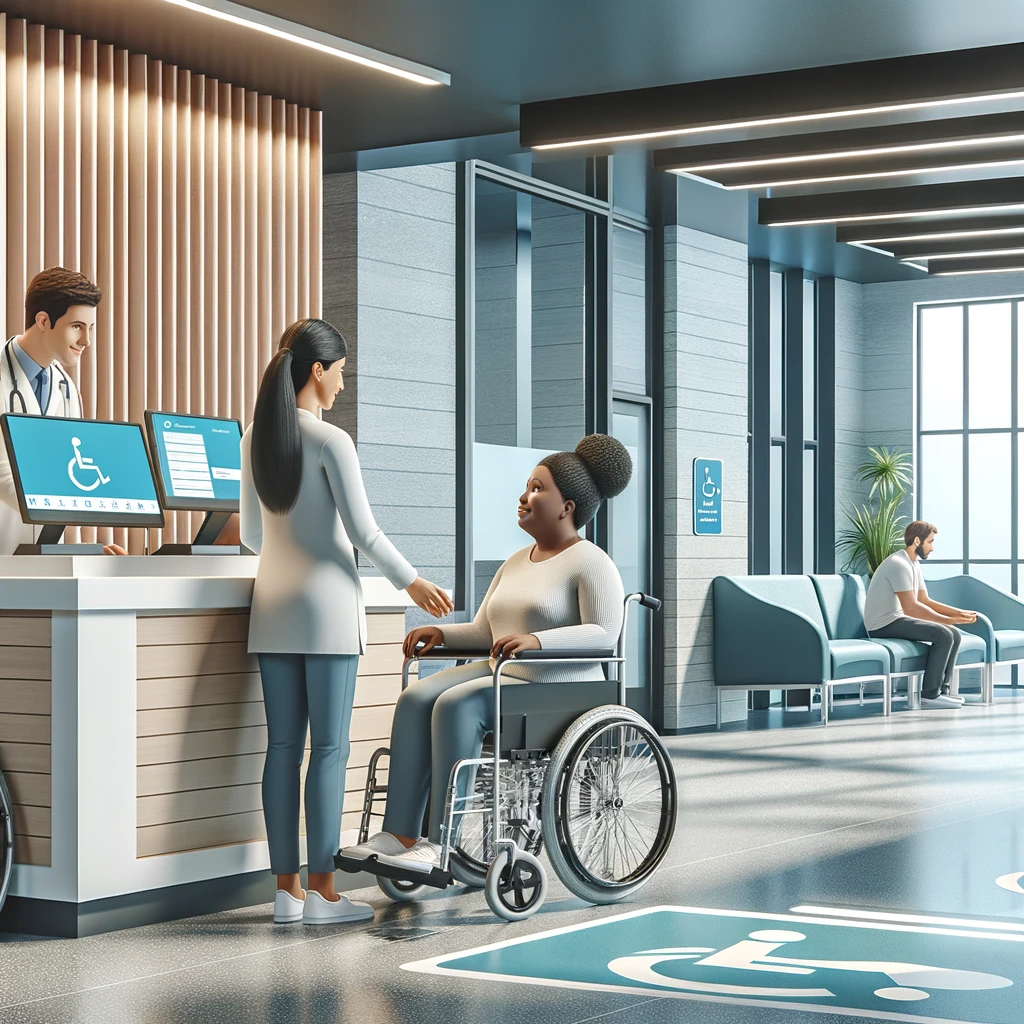
Mobility devices follow a similar but distinct structure. Wheelchairs, walkers, and other manually powered devices used by people with mobility disabilities are generally allowed wherever pedestrians may go. Other power-driven mobility devices are evaluated differently. Operators may consider the device’s size, weight, speed, turning radius, the site’s volume of pedestrian traffic, legitimate safety rules, and whether the facility can make reasonable modifications to permit use. On compacted gravel paths near hoofstock paddocks, a mobility scooter may pose no issue. In a narrow elevated boardwalk through a free-roaming lemur habitat, a large high-speed device may create a documented safety risk. The rule is not “no unusual devices.” The rule is whether the restriction is based on actual conditions rather than assumptions or discomfort.
When a zoo or animal exhibit may restrict a service animal
The best-known exception involves areas where the presence of a dog would fundamentally alter the nature of the goods, services, or programs, or would compromise legitimate safety requirements. Zoos often rely on this exception for specific habitats or pathways rather than entire facilities. If antelope, wallabies, or aviary birds are likely to panic at the sight, sound, or scent of a dog, the zoo may exclude service dogs from that zone while still allowing the handler to access the rest of the property. I have seen well-run facilities map these areas in advance, post clear signage, and offer alternate viewing locations so the restriction stays narrow and defensible.
The key is evidence and tailoring. A blanket statement that “animals and dogs do not mix” is too broad. A stronger policy names the exact species and risk. For example, cheetahs can become highly aroused by canids; some hoofstock may bolt into fences; primates may react aggressively; and free-flight birds can collide when startled. Many accredited zoos use species-specific behavioral assessments developed with keepers, veterinarians, and curators. Those assessments matter because the standard is not convenience. It is whether allowing the dog into that particular area would alter the exhibit or create a direct safety problem that cannot be reduced through a reasonable modification such as rerouting, timed access, visual barriers, or greater distance from the enclosure.
Farms, petting zoos, and agricultural settings
Farms and agricultural exhibits raise additional concerns because visitors may enter spaces that are less controlled than a conventional zoo pathway. Working farms may have loose livestock, electric fencing, feed storage, manure pits, biosecurity stations, tractors, and active herding dogs. Service animals still cannot be excluded simply because the venue is rural or commercial agriculture is involved. The analysis remains specific to the area and risk. A farm market, produce stand, ticket barn, or open event lawn will usually need to admit a service dog. A milking parlor during active operations, a poultry barn under disease-control protocols, or a pen where rams are rutting may be different.
Real-world disputes often come from contact areas. In petting zoos, goats and sheep may crowd a handler, and some service dogs remain neutral while others become visibly stressed. The legally sound response is not to assume every dog is a hazard. It is to assess whether that particular setting can safely accommodate the team. Some facilities solve this by creating dog-free animal contact zones but allowing handlers to wait at the perimeter and receive equivalent staff assistance, such as bringing an educator animal to an adjacent area or providing a raised viewing platform. Those options do not replace access everywhere, but they can preserve equal participation where direct entry would create a documented conflict between species welfare and disability access.
Mobility devices in uneven, animal-focused environments
Mobility access at animal attractions often fails not because of formal bans but because routes were never designed with disabled visitors in mind. Gravel, mud, steep grades, narrow gates, soft turf, and cattle guards can stop a wheelchair more effectively than a locked door. In my experience, the strongest operators conduct route audits by path segment, not by attraction brochure. They measure slope, cross-slope, gate width, turning space, threshold height, and resting intervals, then identify which paths support manual wheelchairs, powered chairs, scooters, and strollers. That level of detail matters because a guest deciding whether to visit needs usable information, not a vague promise of “partial accessibility.”
Where another power-driven mobility device is requested, the venue should document a practical assessment instead of relying on fear of novelty. A compact seated device limited to walking speed may work safely on broad paved zoo loops. A stand-up device in a crowded bird show exit may not. The decision should connect the device characteristics to actual site conditions and should be applied consistently. Staff also need alternatives ready. If a historic farm lane is too narrow for a large scooter because livestock transport vehicles must pass, the operator should know whether an accessible shuttle, alternate route, or companion assistance can provide comparable access without forcing the visitor to negotiate the issue at the gate.
| Issue | Usually Allowed | Restriction May Be Valid When |
|---|---|---|
| Service dog in general public areas | Yes | The dog is out of control, not housebroken, or a specific exhibit presents a documented animal welfare or safety risk |
| Service dog in petting or free-roam animal zones | Sometimes | Resident animals are likely to panic, attack, or be harmed, and no reasonable modification reduces the risk |
| Wheelchair or walker | Yes | Only if the area itself is genuinely inaccessible to all pedestrians due to terrain or emergency safety limits |
| Other power-driven mobility device | Often | Size, speed, weight, turning radius, or route conditions create an actual safety conflict |
| Miniature horse used for disability-related work | Often | Space, control, housebreaking, or safety factors cannot be reasonably accommodated in the setting |
Questions staff may ask and mistakes that trigger complaints
Frontline staff training is where most compliance efforts succeed or fail. When a disability is not obvious, staff may generally ask two limited questions: whether the dog is required because of a disability, and what work or task the dog has been trained to perform. They should not demand documentation, ask about the person’s diagnosis, require the dog to demonstrate the task, or insist on a special vest. At farms and wildlife exhibits, I still see homemade policies requiring vaccine records, county licenses, or “service animal certification.” Those requirements are common, but they are not the correct starting point for public access decisions.
Another frequent mistake is treating every animal rule as universally applicable to service animals. “No animals beyond this point” may make sense for pets, but it is incomplete for disability access. A better sign states that service animals are welcome except in designated restricted habitats for animal welfare or safety reasons, with staff available to assist. Language matters because it shows the restriction is narrow. Consistency matters too. If one employee waves a service dog through the giraffe barn and another threatens removal, the facility looks arbitrary. Written maps, species-specific exclusion lists, and scenario-based training reduce that risk substantially.
Building a defensible policy for rights and protections
A defensible policy starts with a zone-by-zone review led by operations, animal care, facilities, and legal or compliance staff. Each zone should be categorized: unrestricted access, conditional access, or restricted access. For restricted zones, the facility should record the reason, the species involved, the observed or anticipated behavior, and why less restrictive measures would not work. This documentation is invaluable if a complaint arises because it shows the decision was based on welfare and safety evidence rather than stereotypes about disability or dogs. It also helps the venue revisit old assumptions. An area restricted ten years ago may become accessible after redesign, better barriers, or changed husbandry practices.
Communication is the next pillar. The website should publish accessible route information, service animal rules, mobility device guidance, and contact options for accommodation planning before the visit. Onsite, maps should identify restricted habitats and alternate viewing points. Staff should know how to escort a guest, explain the reason for a restriction respectfully, and offer a comparable experience when available. For this rights and protections hub, the larger lesson is simple: service animals and mobility devices are access tools, not special favors, but their use in zoos, farms, and animal exhibits must be evaluated in the real conditions of the setting. If you operate one of these venues, audit your policy now; if you plan to visit, contact the site in advance and ask for the specific access details that will shape your day.
Frequently Asked Questions
Are service animals always allowed in zoos, farms, petting areas, and animal exhibits?
No. Although service animals are generally permitted in places open to the public, they are not automatically allowed in every part of a zoo, farm, petting area, aquarium, safari-style attraction, or wildlife exhibit. These environments are among the most common examples where restrictions may be legally valid under disability access rules. The key issue is whether the presence of the service animal would fundamentally alter the nature of the exhibit or create a legitimate safety risk for the service animal, the exhibit animals, staff, or the public. For example, a zoo may restrict a service dog from entering areas where predator species, prey species, free-roaming animals, or highly sensitive animals could react aggressively, fearfully, or unpredictably. A farm or petting area may also limit access where livestock could kick, trample, stampede, or become agitated by the dog’s presence. In many cases, the restriction applies only to specific areas rather than the entire property, meaning the person with a disability may still access other public portions of the facility. These decisions should be based on actual risk and the nature of the exhibit, not on speculation, stereotypes, or a blanket “no dogs” policy.
Why can a zoo or animal exhibit restrict a service animal if service animals are normally protected?
Because disability access protections recognize that some settings involve unusual animal behavior, conservation concerns, and safety issues that do not exist in most stores, restaurants, or hotels. A service animal is typically a dog individually trained to do work or perform tasks for a person with a disability, but even a highly trained dog can change the behavior of captive or domesticated animals in ways that are difficult to control. Exhibit animals may perceive the dog as a predator, a threat, a competitor, or prey. That reaction can lead to distress, defensive behavior, escape attempts, injury, or disruption of breeding, feeding, or handling routines. In a farm setting, horses, cattle, goats, sheep, alpacas, and other animals may startle or behave unpredictably when a dog is nearby. In aquariums or wildlife parks, some species may be especially sensitive to visual, auditory, or scent-based cues. The law typically allows restrictions when they are grounded in the specific characteristics of the animal collection and the particular area involved. In other words, the facility usually must have a real, supportable reason for limiting access, such as animal welfare or direct safety concerns, rather than relying on a generalized preference to exclude service animals.
Can a facility ban a service animal from the entire property, or only from certain areas?
Usually, any restriction should be as limited as possible and tied to the actual risk. In many cases, a zoo, farm, or animal exhibit may lawfully exclude a service animal from certain enclosures, walkthrough habitats, aviaries, petting zones, animal contact areas, or behind-the-scenes spaces, while still allowing the handler to access other public paths, viewing areas, gift shops, food service spaces, restrooms, and general circulation routes. A full-property ban is much harder to justify unless the nature of the entire site makes separation impossible or safety risks exist throughout the whole environment. The best practice is a case-by-case assessment: which animals are present, whether they are separated by barriers, whether the area involves direct public-animal interaction, how close visitors come to exhibit animals, and whether the service animal’s presence would trigger a known behavioral response. If a facility restricts a service animal from a particular area, it should still consider whether there are alternative ways for the guest to experience the attraction, such as different routes, alternative viewing locations, staff assistance, or accessible accommodations that provide meaningful access without compromising safety or animal welfare.
What questions can staff ask about a service animal at a zoo or farm?
When it is not obvious that the dog is a service animal, staff generally may ask only two limited questions: whether the dog is required because of a disability, and what work or task the dog has been trained to perform. Staff should not demand medical documentation, require a special identification card or certification, insist that the dog demonstrate its task, or ask intrusive questions about the person’s disability. At the same time, a facility may still explain that certain animal areas have lawful restrictions because of safety or exhibit-specific concerns. That means a guest can have a legitimate service animal and still be told that access is limited in a particular zone. The focus should remain on the specific exhibit conditions rather than on challenging the legitimacy of the disability. Facilities that train employees on this distinction are usually better positioned to handle these interactions respectfully: recognize the rights of guests with disabilities, ask only the permitted questions when necessary, and clearly explain any narrowly tailored restriction based on the animals or environment involved.
How do mobility devices fit into access rules at zoos, farms, and exhibits when service animals are restricted?
Mobility devices are a separate issue from service animals, and they are often handled under different access standards. A mobility device can include a wheelchair, walker, scooter, cane, crutches, or, in some settings, another power-driven mobility device. Even if a service animal cannot enter a specific exhibit area, the facility may still need to allow appropriate use of a mobility device unless there is a valid safety-based reason for limiting it. For example, a zoo or farm may evaluate whether a device can be used safely on certain terrain, in narrow pathways, on bridges, in muddy livestock areas, or in enclosed animal-contact spaces. The analysis is not supposed to be based on assumptions or convenience alone. Instead, facilities generally should consider factors such as the device’s size, speed, weight, turning radius, pedestrian traffic, the design of the area, and whether use would create a substantial risk that cannot be reduced through reasonable operating rules. In practice, this means a person may be entitled to use a wheelchair or scooter in places where a service dog cannot safely go. It also means facilities should think carefully about accessible routes, transfer options, staff assistance, and practical accommodations so that people with disabilities are not excluded simply because one type of aid is restricted in a specific setting.