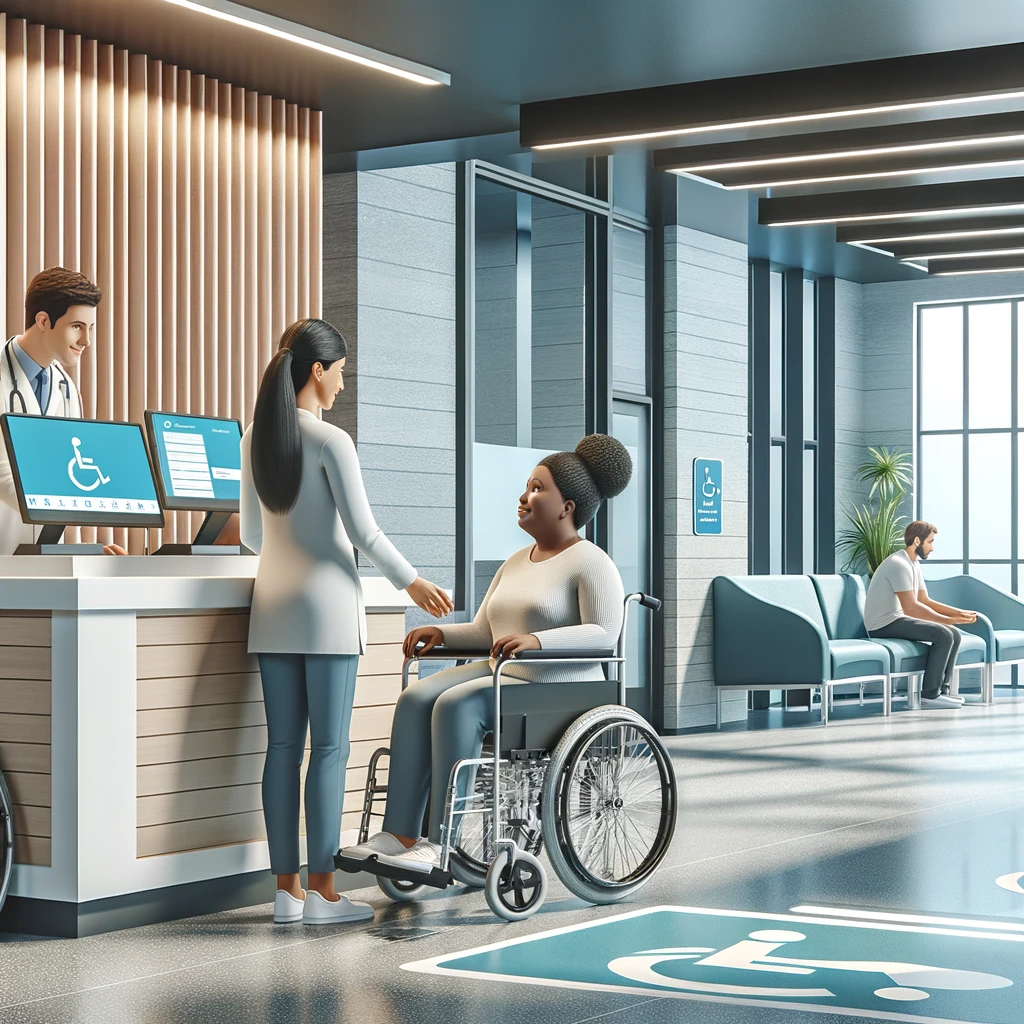
Mobility device speed, size, and safety rules matter because public spaces must balance disability access with legitimate operational concerns, and the law does not treat every device or every rule the same. In day-to-day access work, I have seen confusion arise when a store allows a powered wheelchair but questions a larger scooter, or when a museum permits entry yet asks a rider to slow down in narrow galleries. Those situations sit at the center of rights and protections for service animals and mobility devices. A public space usually cannot impose blanket restrictions simply because equipment looks unusual, moves under power, or takes up more room than expected. At the same time, a business, school, hospital, transit system, hotel, park, or government building may set certain limits when those limits are grounded in actual safety, actual space constraints, or actual program requirements rather than assumptions.
To understand when limits are allowed, it helps to define the key categories. A wheelchair includes a manually operated or power-driven device designed primarily for use by an individual with a mobility disability for indoor or outdoor locomotion. Other power-driven mobility devices include a broader group of battery-powered, fuel-powered, or electronic devices used by people with mobility disabilities, such as golf carts, Segways, all-terrain style personal vehicles, or other adaptive devices. Service animals are trained dogs, and in some cases miniature horses under a separate assessment framework, that perform work or tasks for a person with a disability. These categories matter because the rules governing admission, speed, route access, control, and safety are related but not identical. A venue generally must permit wheelchairs and manually powered devices in any area open to pedestrian use, while other powered devices may be evaluated using specific safety factors.
This topic matters beyond legal theory because access often breaks down through informal practices: a front desk employee invents a speed limit on the spot, a security guard blocks a larger device without measuring clearances, or a venue confuses service animal rules with pet policies. People need practical guidance on what a public space may ask, what evidence should support a restriction, and how to resolve conflicts without sacrificing dignity or safety. For organizations, getting this wrong creates legal exposure, reputational harm, and preventable exclusion. For users of mobility devices and service animals, clear standards mean fewer confrontations and safer participation in daily life. As the hub page for this subject, this article explains the governing principles, the tests public spaces should apply, and the real-world limits that may be lawful when they are narrow, evidence-based, and consistently enforced.
Core legal framework for mobility devices in public spaces
The basic rule is straightforward: if a person uses a wheelchair or manually powered mobility aid, a public-facing entity generally must allow that device anywhere pedestrians may go, unless a separate lawfully applied safety rule restricts everyone in that area. In practice, that means restaurants, retail stores, libraries, courthouses, sports arenas, airports, universities, and medical offices cannot exclude a wheelchair because it is powered, heavy, or inconvenient. The analysis changes with other power-driven mobility devices. Under federal accessibility rules used across many public accommodations and government services, a public space must make reasonable modifications to permit these devices unless it can demonstrate that the specific class of device cannot be operated in accordance with legitimate safety requirements. That is an evidence-based standard, not a license for instinctive denial.
When I evaluate policies, I look first for whether the rule distinguishes between wheelchairs and other powered devices. If it does not, the policy is often legally flawed from the start. A powered wheelchair cannot be treated like a recreational vehicle merely because it has a motor. By contrast, a larger adaptive golf cart in a historic house museum may require a more nuanced review. The accepted safety assessment usually examines the device’s type, size, weight, dimensions, speed capabilities, the facility’s volume of pedestrian traffic, the facility’s design and operational characteristics, whether legitimate safety requirements can mitigate risk, and whether the device creates a substantial risk of serious harm to the immediate environment or natural resources. Each factor must connect to the actual site.
Public spaces also need to separate access rights from preference. A business may prefer slim devices because aisles are easier to manage, but preference is not a legal standard. If the accessible route complies with architectural requirements yet staff place display racks into the path, the answer is to fix the displays, not deny entry to the user. Likewise, an entity may enforce neutral rules that address actual hazards, such as requiring everyone to stop at a ramped loading zone during emergency movement or directing all users away from a wet floor during cleanup. Proper policy design depends on measurable conditions, not subjective discomfort with disability equipment.
When speed limits, size limits, and route restrictions may be lawful
A public space may impose limits when they are necessary for safe operation and tailored to the environment. Speed is the most common example. In a crowded concourse, a hospital corridor, or a children’s museum, management may require mobility devices to travel at walking speed if that rule reflects the pace required for safe pedestrian mixing. The strongest versions of these policies define expected conduct instead of setting arbitrary miles-per-hour numbers that no one can monitor. “Maintain a speed consistent with pedestrian traffic and yield at blind corners” is usually better than “three miles per hour,” unless the facility uses a system that can realistically measure speed. I have seen good policies pair this with staff training on de-escalation rather than immediate expulsion.
Size limits are more sensitive because they can easily become disguised exclusion. A venue may rely on route width, turning radius, elevator cab dimensions, structural load, or emergency egress constraints, but it should be prepared to identify the exact feature that creates the problem. If an older building has a historic elevator with a documented capacity and a device exceeds that capacity, directing the visitor to a ground-floor service area or alternative accessible route may be lawful if the program remains meaningfully available. What is not lawful is announcing a broad “no scooters larger than X” rule without analyzing which spaces are affected and whether comparable access can be provided. Measured facts matter.
Route restrictions can also be proper when tied to temporary conditions. Construction zones, active loading docks, sterile medical areas, backstage rigging paths, and conservation-sensitive trails are examples where access may be modified for everyone or for classes of equipment that present a documented conflict. The legal and practical question is whether the restriction is the least restrictive way to address the hazard while preserving participation. If a botanical garden bars all powered devices from a crushed-stone path because of erosion risk, it should examine whether a stabilized alternate route, timed access window, or escort procedure can preserve access. Blanket denial without alternatives is usually where organizations fail.
| Issue | Usually Permissible | Usually Problematic |
|---|---|---|
| Speed | Walking-speed rule in crowded areas, applied consistently | Random staff orders with no stated safety basis |
| Size | Restriction tied to measured doorway, elevator, or load limits | Blanket ban on “large scooters” without site analysis |
| Routes | Temporary reroute around construction with accessible alternative | Closing the only accessible path without equivalent access |
| Device type | Case-by-case review of other powered devices using safety factors | Treating wheelchairs as recreational vehicles |
How public spaces should evaluate safety without discrimination
Legitimate safety rules must be based on actual risks, not speculation, stereotypes, or worst-case hypotheticals. That principle shows up repeatedly in disability access enforcement. A mall cannot say a device “might scare customers,” and a theater cannot claim a user “could lose control” unless there is evidence tied to the device and setting. Sound evaluation starts with observation of the physical environment: aisle width, slope, floor surface, sightlines, traffic density, queue design, emergency exits, and whether staff can mitigate conflicts through simple operational changes. In many facilities, conflicts blamed on mobility devices are actually wayfinding and crowd-management failures.
Documentation helps. The best-run organizations keep written accessibility policies, site measurements, incident logs, and maintenance records. If a transit station restricts a certain turning movement because platform edge gaps create a known hazard, it should have engineering or operational data behind that decision. If a convention center allows larger powered devices on the exhibit floor but limits access during forklift operations, the policy should identify the time window, hazard area, and alternate path. Specificity protects both the visitor and the operator. It also makes staff enforcement more consistent, which reduces unequal treatment claims.
Training is where most policies succeed or fail. Front-line employees should know the difference between a wheelchair and another powered mobility device, the limited questions they may ask in uncertain situations, and the process for escalation. I advise organizations to script short, respectful language: explain the safety concern, describe the available alternative, and avoid debating the person’s disability. Staff should never demand proof of disability as a routine condition of entry when the disability-related need is apparent from use of the device. They should also understand that a person may use more than one aid at once, such as a wheelchair user accompanied by a service dog. Those combined needs require coordination, not suspicion.
Service animals, miniature horses, and the overlap with mobility devices
Because this page serves as the hub for service animals and mobility devices, the overlap deserves direct attention. A person may navigate a public space using a power chair while accompanied by a service dog trained for retrieval, balance-related tasks performed safely within legal limits, alerting, or medical response. The public space must assess each accommodation under its own rule set. It cannot deny the service animal because the person already has a mobility device, and it cannot deny the mobility device because the dog changes traffic flow. If both are under control and the pair can safely use the area, both generally must be admitted.
Service animal rules are narrower than many people realize. In most settings covered by federal disability law, only dogs qualify as service animals, and they must be trained to do work or perform tasks related to a disability. Emotional support alone does not create service animal status in public accommodations. Staff may usually ask only whether the dog is required because of a disability and what work or task the dog has been trained to perform, unless the need is obvious. They may not demand certification papers because no federal certification system exists. A dog may be excluded if it is out of control and the handler does not take effective action, or if it is not housebroken.
Miniature horses occupy a special category. Covered entities that permit service animals must make reasonable modifications to allow trained miniature horses where reasonable, considering factors such as type, size, weight, whether the facility can accommodate those features, whether the handler maintains sufficient control, and whether the horse’s presence compromises legitimate safety requirements necessary for safe operation. That analysis resembles the mobility-device safety assessment because it focuses on the real environment. In a tight café, the answer may differ from a large airport terminal. The key is individualized review supported by operational reality rather than reflexive refusal.
Common scenarios: stores, hospitals, transit, housing, and outdoor spaces
Retail stores often struggle with aisle congestion. The lawful response is usually better merchandising and queue management, not excluding larger devices. Hospitals may impose stricter movement rules in surgical, imaging, or sterile zones, but they still must provide access to care through transfer assistance, alternative pathways, or comparable services. Transit operators can require safe securement procedures on buses and paratransit vehicles where equipment is available and policy is neutrally applied, yet they cannot invent nonstandard size rules without support from vehicle design and accessibility standards. On rail platforms, staff should focus on boarding safety and route communication, not device stigma.
Housing creates a different legal context because reasonable accommodation and reasonable modification duties may apply under fair housing law. A landlord may have to permit a tenant’s mobility scooter charging arrangement or adjust a no-animals policy for a service animal or other assistance animal under the applicable standard. However, a housing provider may still enforce fire code requirements, prevent obstruction of egress, and regulate unsafe battery charging setups. In my experience, the best solutions involve designated charging areas, documentation of electrical capacity, and clear maintenance responsibilities rather than simple denial.
Outdoor spaces raise some of the hardest questions. Trails, beaches, campgrounds, and historic sites involve terrain, environmental protection, and emergency response limits. Agencies often perform best when they publish route-specific accessibility details: surface type, slope range, width, gate clearance, and seasonal hazards. That lets users assess whether a wheelchair, scooter, track chair, or other powered device will work. Restrictions tied to resource protection can be lawful, but only if they are genuine and consistently supported. If an off-road adaptive device is banned from one trail due to erosion, officials should be ready to explain why another nearby route can accommodate it or why no safe option exists during a given season.
What users and operators should do when a limit is disputed
When a problem arises, both sides benefit from a calm, structured approach. Users should ask for the exact rule, the exact safety reason, and whether an alternative route or method of access is available. Operators should identify the site-specific concern and avoid broad statements about what devices are “allowed here.” Written policies, posted route maps, and incident documentation often resolve disputes quickly because they force precision. If the rule appears invented or inconsistently enforced, request a manager and note names, time, location, and any witnesses. Photos of the route or obstruction can be useful if taken safely and lawfully.
Organizations should review disputed incidents after the fact. If the issue arose from cluttered aisles, poor signage, or untrained staff, the fix is operational. If the issue was a genuine hazard, the policy should be refined and communicated better. People using mobility devices or service animals should consider filing an internal complaint first, then escalating to an enforcement agency, licensing body, transportation authority, housing agency, or court if necessary. Good records matter. The central principle is simple: public spaces may impose limits on speed, size, and safety only when those limits are legitimate, individualized where required, and no broader than necessary. Review your policies or know your rights before the next access dispute.
Frequently Asked Questions
Can a public space limit the speed of a mobility device?
Yes, in many situations a public space may require a mobility device user to travel at a safe speed, but the key issue is how that rule is framed and applied. A business, museum, store, hospital, theater, or similar place generally cannot exclude someone simply because they use a wheelchair, scooter, or other mobility device. At the same time, it may enforce legitimate safety rules that are necessary for the operation of the space, especially where there are tight walkways, heavy foot traffic, sharp turns, fragile displays, or areas where sudden movement could create a real risk of collision.
The important distinction is that a speed restriction should be based on actual safety concerns, not assumptions or discomfort about mobility devices. A rule such as asking everyone to move carefully in a crowded gallery or requiring slower travel in narrow indoor corridors is more likely to be appropriate than a rule aimed only at people with disabilities. In practice, a public place should focus on behavior and conditions, not stereotypes. If someone is operating any device in a way that threatens safety, staff may address that conduct. But if a person is simply using a mobility device in an ordinary, controlled manner, the space usually should not impose arbitrary speed demands that effectively interfere with access.
Context matters a great deal. A wide convention hall may allow normal powered wheelchair use without issue, while a historic house museum with small rooms may reasonably ask all visitors, including mobility device users, to proceed slowly. The legal question is often whether the restriction is necessary, neutral in application, and tied to real operational concerns rather than a blanket effort to discourage certain users from entering.
Is a public space allowed to question the size of a scooter or other mobility device?
Sometimes yes, but not just because the device looks large or unfamiliar. Public spaces often struggle with the difference between recognizing disability access rights and managing practical limits in a building or facility. The law generally protects the use of wheelchairs and manually or power-driven mobility devices, but it does not require a place to ignore genuine physical constraints. If a device is too large for safe passage through aisles, doorways, ramps, elevators, or emergency routes, the space may have a basis to raise concerns. What it cannot do is rely on generalized fear, inconsistent assumptions, or a preference for one type of mobility device over another without a real reason.
For example, if a store allows powered wheelchairs but challenges every larger scooter automatically, that may signal a problem if the decision is based only on appearance or staff judgment rather than measurable space and safety conditions. A lawful approach is usually tied to objective factors such as width, turning radius, floor load, available clearance, or whether the device can be used safely in the specific environment. A public space should be able to explain the operational concern in concrete terms. It should also consider whether there is a workable way to provide access rather than moving immediately to exclusion.
In other words, size can matter, but only where size actually affects safe and practical use of the premises. A business should not assume that “bigger” means “not allowed.” The better question is whether the device can be accommodated safely in that setting, and if not, whether there is another effective way to provide access to the goods, services, or experience being offered.
Does the law treat every mobility device the same way?
No. That is one of the most common sources of confusion. The legal analysis often depends on what kind of device is involved and how it is being used. Traditional wheelchairs and power wheelchairs generally receive the strongest protection because they are recognized mobility aids used by individuals with mobility disabilities. Other power-driven mobility devices, such as certain scooters, electronic personal transport devices, or similar equipment, may also be protected, but the rules can be more nuanced. A public space may sometimes evaluate whether a particular device can be operated safely in the specific environment.
That does not mean staff have unlimited discretion to decide what they like or dislike. It means the law recognizes that not all devices present the same operational issues. A compact power chair used inside a library presents different concerns than a large, heavy scooter in a crowded exhibit hall. Relevant factors can include the device’s size, weight, dimensions, speed, maneuverability, and whether the facility can reasonably accommodate it without creating a significant safety problem. The nature of the site matters too. A sidewalk-accessible retail store is different from a small shuttle, a swimming pool deck, or a narrow historic structure.
The practical takeaway is that equal access does not always mean identical treatment of every machine. It means decision-making should be grounded in legitimate safety and operational realities, not guesswork or bias. Public spaces should avoid broad bans where a more tailored assessment is possible, and individuals should not be denied access simply because their mobility device falls outside what staff are used to seeing.
What makes a mobility device rule reasonable instead of discriminatory?
A reasonable rule is one that serves a genuine safety or operational purpose, is based on the actual conditions of the space, and is applied in a fair and consistent way. A discriminatory rule is more likely to be one that singles out people with disabilities without adequate justification, relies on myths or assumptions, or imposes restrictions so severe that access becomes meaningless. The difference often comes down to whether the rule is necessary and narrowly connected to a real problem.
For instance, requiring slower operation in a crowded indoor area may be reasonable if the same concern would apply to any fast-moving traffic in that space. Limiting access to a route that can physically accommodate the device may also be reasonable if there are genuine width or turning constraints. On the other hand, announcing that scooters are not welcome because they are “too dangerous” without any individualized or site-based justification is much more likely to raise discrimination concerns. The same is true when staff create ad hoc rules on the spot, apply them only to certain users, or cannot explain how the restriction connects to actual safety.
Consistency, evidence, and alternatives matter. If a venue imposes limits, it should be prepared to explain them clearly and apply them evenhandedly. It should also consider whether another accommodation or access method can address the concern. Reasonableness is not measured by convenience alone. It is measured by whether the limitation is truly needed to protect safety or preserve the operation of the space while still respecting the person’s right to meaningful access.
What should someone do if a public place tries to restrict or deny their mobility device?
Start by asking for a clear explanation of the rule and how it applies to the specific space. Many disputes come from confusion, inconsistent staff training, or a vague belief that a certain device is not allowed. A calm request for the reason behind the restriction can reveal whether the issue is a true operational concern, such as aisle width or crowding, or whether it is based on misunderstanding. It is often helpful to ask whether the location has a written policy and whether that policy applies to all visitors in similar circumstances.
If the stated concern relates to speed, size, or safety, ask whether there is a practical alternative that would still provide access. That might include using a different route, traveling at a reduced speed in a particular area, entering during a less crowded time, or receiving assistance with navigating a narrow section. The goal is not to surrender access, but to identify whether the concern can be addressed without excluding the person or making the visit impossible. A public space that is acting lawfully should generally be able to discuss concrete safety issues and possible solutions.
It is also wise to document what happened, including the date, location, names of staff if available, and the exact reason given. If the restriction appears inconsistent, unsupported, or targeted, that record can be important. In more serious situations, the person may wish to raise the issue with management, submit a formal complaint, or seek legal guidance. Because mobility device cases often turn on detailed facts, the most useful question is usually not “Can they ever make a rule?” but “Is this particular rule justified, applied fairly, and consistent with disability access requirements?”