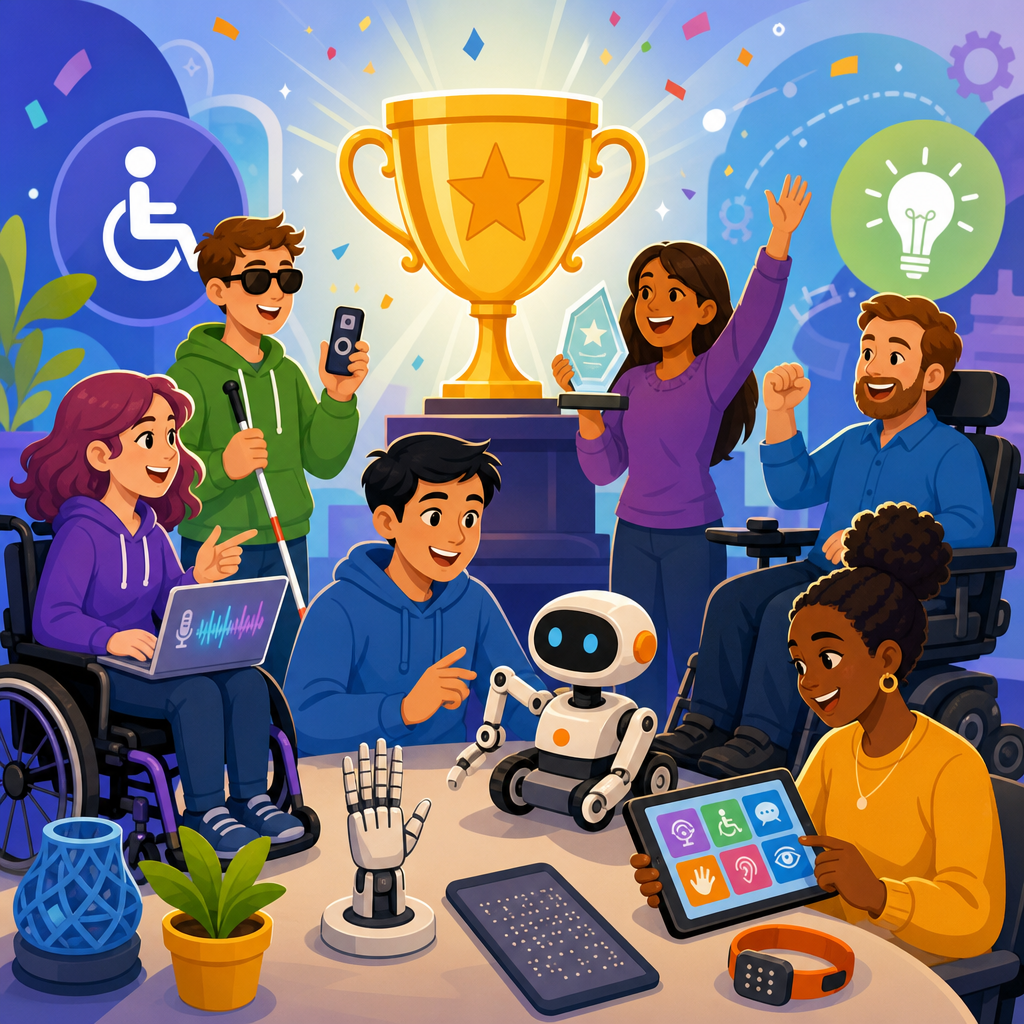
Accessible technology turns digital and physical tools into products people with disabilities can use effectively, safely, and with dignity. Competitions and awards accelerate that work by funding prototypes, attracting media attention, validating useful ideas, and pushing teams to solve overlooked problems. In the technology and accessibility field, innovation means more than clever engineering. It means designing products, platforms, and services that work across vision, hearing, mobility, speech, cognitive, and neurodivergent needs in real settings. I have judged accessibility submissions, reviewed product roadmaps, and helped teams translate award-winning demos into usable releases, and the lesson is consistent: recognition matters most when it moves solutions from concept to adoption.
This hub article explains how competitions and awards shape innovative solutions in technology and accessibility, which categories of innovation are advancing fastest, what standards separate meaningful entries from superficial ones, and how organizations can use this ecosystem to build better products. It also serves as a practical gateway for related articles across this subtopic, including inclusive design methods, assistive software, accessible hardware, education technology, workplace tools, and policy-driven innovation. For founders, product leaders, educators, disability advocates, procurement teams, and researchers, understanding the awards landscape is important because it signals where the market is heading and which solutions are earning trust.
At their best, accessibility competitions create a disciplined environment for problem solving. They define a challenge, require evidence, set evaluation criteria, and force teams to test assumptions against user needs. A strong accessible technology award does not celebrate intention alone. It looks for measurable usability gains, interoperability with mainstream platforms, compliance with recognized standards such as WCAG, EN 301 549, Section 508, and relevant ISO guidance, and proof that disabled users were involved throughout design and validation. That combination of ambition and accountability is why competitions and awards have become such influential drivers of innovation in accessible technology.
Why Competitions Matter in Accessible Technology
Competitions matter because accessibility innovation often struggles at the exact point where a promising prototype needs credibility, partnerships, and sustained funding. Mainstream investors sometimes underestimate the size of the disability market, despite the well-established spending power associated with disabled people and their households. Public awards, university challenge programs, corporate innovation funds, and nonprofit prize models reduce that friction. They provide structured deadlines, mentorship, and visibility that can turn a niche project into a deployable solution.
In practice, I have seen teams sharpen their products simply because an award application forced them to answer hard questions. Who is the primary user? What barrier is being removed? Which assistive technologies are supported? How does the solution perform with screen readers such as JAWS, NVDA, and VoiceOver, or with switch access, speech input, captions, and keyboard-only navigation? The discipline of documenting those answers improves the product even before judging begins. It also helps buyers compare entries on substance rather than marketing polish.
Competitions also widen the innovation pipeline. Large technology vendors may have the resources to invest in accessibility labs, but many practical breakthroughs come from startups, university teams, disabled inventors, and cross-sector collaborations. A challenge focused on wayfinding for blind travelers, real-time communication for deaf users, or adaptive gaming can surface ideas that established firms have missed. When those ideas win or place highly, they gain social proof. That often leads to pilot programs with schools, employers, hospitals, transit agencies, or public-sector buyers.
Award programs create another important effect: they redefine what excellence looks like. Ten years ago, many judges treated accessibility as a compliance layer added near release. The better programs now evaluate inclusive design from discovery onward, looking for co-creation, equitable onboarding, plain language, robust user testing, and long-term maintainability. That shift has raised expectations across the industry. Winning today usually requires evidence of accessibility architecture, not just a helpful feature.
Where Innovation Is Happening Across the Accessibility Landscape
Innovative solutions in technology and accessibility now span far more than traditional assistive devices. Software is advancing rapidly through AI-assisted captioning, image description, voice interfaces, reading support, and personalized interfaces. Hardware innovation includes smart canes, haptic navigation wearables, refreshable braille devices, low-force controllers, hearing support systems, and environmental controls for independent living. Platform-level improvements matter just as much: accessible design systems, semantic coding frameworks, cross-device accessibility settings, and testing automation have broad downstream impact because they influence thousands of products at once.
Education technology is a particularly active area. Award-winning tools often combine multimodal content delivery with customization features such as text-to-speech, dyslexia-friendly typography, captioned video, contrast control, and flexible assessment options. The strongest examples do not label these supports as special accommodations buried in settings. They present them as ordinary controls available to every learner. That design choice improves adoption and reduces stigma while still supporting individualized needs.
Workplace accessibility is another major frontier. Employers increasingly need software that supports hybrid communication, accessible document workflows, inclusive recruitment, and ergonomic adaptation. Tools that automatically check color contrast in presentations, flag inaccessible PDFs, generate editable transcripts, or improve meeting participation for deaf and neurodivergent staff are winning recognition because they solve daily operational problems. Accessibility in the workplace is not only a legal issue; it directly affects retention, productivity, and talent acquisition.
Mobility and navigation remain highly visible categories because the barriers are immediate and public. Indoor navigation systems using Bluetooth beacons, computer vision, ultra-wideband positioning, and crowdsourced map data are improving independence in airports, hospitals, and campuses. Some of the best competition entries pair precise navigation with situational detail, such as elevator status, temporary closures, or tactile landmark descriptions. That extra layer matters because accessibility fails when systems provide technically correct directions that ignore real-world usability.
| Innovation area | Typical award-winning solution | Why it stands out |
|---|---|---|
| Digital communication | Live captioning and transcript platforms with speaker labeling | Improves meetings, learning, and customer support at scale |
| Mobility | Indoor navigation apps with audio, haptic, and visual guidance | Supports independent travel in complex environments |
| Education | Adaptive reading tools with text-to-speech and display controls | Serves diverse learners without separate workflows |
| Hardware access | Affordable braille and alternative input devices | Reduces cost barriers to core digital participation |
| Workplace inclusion | Document remediation and accessibility QA platforms | Helps organizations operationalize compliance and usability |
What Judges and Buyers Look For in Award-Winning Solutions
The best competitions do not reward novelty alone. They reward verified usefulness. Judges typically look for five things: a clearly defined accessibility barrier, direct involvement of disabled users, technical quality, measurable outcomes, and a credible path to implementation. If a team cannot explain whose problem it is solving or provide evidence from testing, the entry usually weakens quickly. Accessible technology has too much history of building for users instead of with them, and serious award panels increasingly reject that pattern.
User involvement is the strongest signal of quality. Co-design can include paid advisory panels, participatory research, iterative usability testing, community partnerships, and post-launch feedback loops. In my experience, products become dramatically better when disabled users influence core decisions early, such as navigation structure, setup friction, error recovery, sensory load, and compatibility priorities. These are not cosmetic details. They determine whether a product is merely accessible in theory or workable in everyday life.
Standards matter, but judges also understand their limits. Conformance with WCAG 2.2, platform accessibility APIs, caption accuracy targets, or procurement rules is essential, especially for enterprise and public-sector use. Still, standards are a baseline, not the finish line. A screen reader compatible app can remain confusing. A captioning system can technically function yet fail in noisy classrooms or multilingual meetings. Strong entries demonstrate both formal compliance and practical usability. They bring benchmark results, testing notes, retention data, and implementation lessons.
Scalability is another decisive factor. An elegant prototype that requires expensive custom hardware, highly trained staff, or unusual infrastructure may impress judges, but it will not transform the market unless the deployment model is realistic. Teams that succeed usually understand manufacturing cost, software maintenance, procurement cycles, privacy obligations, and support requirements. They can explain how the solution will reach users beyond the pilot stage.
Examples of Competitions and the Impact They Create
Accessible technology innovation is supported by a mix of global awards, sector-specific challenges, academic programs, and corporate initiatives. The Zero Project has become a widely recognized source of examples and policy-linked innovation, highlighting scalable practices and products from many countries. The AbilityNet Tech4Good Awards have showcased digital products that improve access and independence. The James Dyson Award and university-based engineering challenges have occasionally surfaced assistive hardware concepts that later moved toward commercialization. Large firms including Microsoft, Google, and Apple influence the field less through public competitions alone and more through developer programs, accelerator support, accessibility grants, and ecosystem recognition around platform-integrated features.
Another important pattern is the rise of procurement-linked innovation challenges. Hospitals, transit authorities, school systems, and city governments increasingly define a practical accessibility problem and invite vendors or startups to propose solutions. That model is powerful because it connects innovation to a real buyer and a real deployment setting. For example, a transit challenge might seek more reliable boarding information for blind passengers and wheelchair users. A winning entry is then tested in stations, measured against travel success and satisfaction, and refined with direct user feedback. That process is far more valuable than a showcase demo disconnected from operations.
Awards also influence mainstream product categories by creating reputational pressure. When one video platform wins recognition for caption accuracy, keyboard shortcuts, and transcript search, competitors often respond. When a learning platform is praised for built-in accessibility controls and inclusive assessment design, procurement teams start asking why others cannot do the same. This is one of the most underappreciated benefits of awards: they raise the minimum competitive standard for everyone.
How to Build Solutions That Deserve Recognition
Teams that consistently perform well in accessible technology competitions follow a repeatable pattern. They start with a documented barrier and a defined user group, but they avoid designing for a stereotype. Disability is not monolithic. Blind users vary in braille use, device habits, and travel preferences. Deaf users differ in language background, signing fluency, and caption dependence. Neurodivergent users may have opposite interface needs. Strong teams map these differences early and decide which needs they can serve well.
They also treat accessibility as a systems problem. A brilliant interface can still fail because onboarding emails are unreadable, documentation is inaccessible, customer support lacks relay-friendly channels, or updates break compatibility with assistive technology. Award-winning products are usually coherent across the full journey from discovery to support. They use semantic structure, plain language, resilient error handling, accessible authentication, and careful change management. They test on actual devices with actual users, not only in simulators.
Measurement is essential. Useful metrics include task completion rate, time on task, error frequency, caption latency, comprehension improvements, retention, and support ticket trends. For workplace tools, teams should track whether accessibility checks reduce remediation time or whether meeting features improve participation. For education products, they should examine engagement, independence, and educator workload. These data points help judges see impact and help internal teams prioritize what to improve next.
Finally, teams should communicate honestly. Judges respond well to entries that explain tradeoffs, limitations, and next steps. If a navigation tool works best in mapped buildings, say so. If speech recognition accuracy falls with strong regional accents or noisy environments, document it and show the mitigation plan. Credibility grows when teams acknowledge constraints without minimizing user impact.
Using This Hub to Explore Innovative Solutions in Technology and Accessibility
As a sub-pillar hub, this page connects the broad role of competitions and awards to the wider landscape of innovative solutions in technology and accessibility. From here, readers should explore related articles on inclusive design strategy, AI for accessibility, assistive communication tools, accessible education technology, workplace accessibility platforms, smart home and mobility innovations, and the standards that guide evaluation. Together, those topics show how recognition programs identify patterns before they become mainstream practice.
The central takeaway is simple. Competitions and awards matter when they reward evidence-backed solutions that disabled people can actually use. They help founders secure partnerships, help buyers identify credible products, help researchers move ideas into practice, and help the market understand that accessibility is a design and engineering discipline, not a side feature. The most valuable programs raise expectations for usability, interoperability, affordability, and adoption.
If you are building, buying, funding, or evaluating accessible technology, use awards strategically. Study the judging criteria, examine past winners, test with disabled users early, and measure outcomes that matter in real environments. Then use the rest of this Technology and Accessibility hub to go deeper into the specific tools, methods, and sectors driving the next wave of inclusive innovation.
Frequently Asked Questions
Why do competitions and awards matter in accessible technology?
Competitions and awards play an important role in accessible technology because they help move promising ideas from concept to real-world impact. Many accessibility solutions begin as responses to very specific barriers experienced by people with disabilities, but turning those ideas into reliable, scalable products often requires funding, visibility, and outside validation. Awards programs can provide all three. Prize money helps teams build prototypes, run user testing, improve compliance, and prepare for launch. Recognition from a respected competition also signals that a product is solving a meaningful problem, which can attract investors, partners, employers, nonprofit organizations, and public-sector decision-makers.
Just as important, these programs create momentum around issues that might otherwise be overlooked. They encourage startups, students, designers, engineers, and established companies to focus on inclusive design challenges such as screen reader compatibility, captioning, alternative input methods, cognitive accessibility, and mobility-friendly interfaces. In that way, competitions do more than reward innovation after the fact. They actively shape what gets built by directing attention toward unmet needs. When well designed, they raise the standard for what innovation should mean in this space: not novelty alone, but measurable usability, dignity, independence, and participation for people with diverse disabilities.
What makes an accessible technology competition truly effective?
An effective accessible technology competition does more than ask for creative ideas. It creates a framework that rewards solutions grounded in lived experience, inclusive research, and practical implementation. The strongest programs involve people with disabilities throughout the process, including challenge design, judging, mentoring, and product testing. That matters because accessibility cannot be evaluated accurately through assumptions alone. A tool may seem innovative on paper, but if it does not work well with assistive technologies, if it creates friction in daily use, or if it ignores the diversity of user needs, it is unlikely to deliver meaningful value.
Effective competitions also use thoughtful judging criteria. Instead of rewarding technical complexity alone, they typically assess usability, affordability, scalability, interoperability, and evidence of community input. A strong entry should show that the team understands accessibility standards, but also that it has considered adoption in realistic environments such as schools, workplaces, transit systems, healthcare settings, and online platforms. Follow-up support is another major factor. The most valuable competitions offer mentorship, pilot opportunities, industry introductions, and post-award development resources so that winning ideas do not stall after the announcement. In short, the best competitions create a pathway from recognition to sustained impact.
How do awards help startups and inventors working on disability-focused innovation?
For startups and independent inventors, awards can be a major accelerator. Accessible technology founders often work in specialized markets where the problem is clear to users but less obvious to mainstream investors or buyers. An award helps bridge that gap by providing credibility. It tells potential stakeholders that experts, advocates, and industry leaders see value in the solution. That kind of endorsement can open doors to seed funding, pilot programs, media coverage, strategic partnerships, and procurement conversations that might otherwise take years to develop.
Awards also help inventors refine their products. The application process itself often requires teams to clearly explain the problem, define the intended users, demonstrate testing, and show measurable outcomes. That discipline can strengthen product strategy. During judging or mentorship stages, teams may receive feedback on design flaws, compliance gaps, pricing concerns, or opportunities for broader adoption. For disability-focused innovation, this is especially useful because successful products must balance technical capability with usability, trust, and long-term support. A recognition program can therefore act as both a spotlight and a stress test, helping founders improve their solutions while building the public profile needed to grow.
What should judges look for when evaluating accessible technology entries?
Judges should begin with the most important question: does the technology genuinely improve access for the people it is intended to serve? That means looking beyond polished demos and marketing language to examine real usability. Strong entries should demonstrate that people with disabilities were involved early and often, not added at the end for validation. Judges should look for user research, iterative testing, accessibility documentation, and evidence that the solution performs in everyday conditions. If a product claims to help blind users, Deaf users, wheelchair users, or people with cognitive disabilities, the submission should show how those users informed the design and how their feedback shaped revisions.
Judges should also assess whether the solution is practical, inclusive, and sustainable. Important considerations include compatibility with existing platforms and assistive technologies, affordability for individuals and organizations, clarity of onboarding, data privacy, and the ability to scale without excluding the users who need it most. It is also wise to evaluate whether a product addresses one access barrier while accidentally creating another. For example, a mobility-friendly kiosk that is not screen reader accessible is not fully inclusive. The most deserving entries are usually those that combine strong technical execution with broad accessibility thinking, ethical design, and a clear plan for real-world adoption.
How can competitions and awards drive long-term change in accessibility rather than short-term publicity?
Competitions and awards create long-term change when they are structured around outcomes, not just announcements. Publicity can be useful, but lasting progress happens when recognition leads to deployment, policy influence, product improvement, and wider industry adoption. Programs that support post-award pilots, mentorship, procurement access, and cross-sector collaboration are far more likely to produce enduring results than those that stop at a trophy or press release. Long-term impact also depends on whether the competition measures success by meaningful indicators such as user satisfaction, reduction of barriers, adoption rates, accessibility compliance, and improvements in independence or participation.
Another key factor is whether these initiatives help normalize accessibility as a core innovation standard. When high-profile awards consistently celebrate inclusive design, they send a message to the broader market that accessibility is not a niche feature or optional add-on. It becomes part of what defines excellence. Over time, that can influence how teams build products, how investors assess opportunity, how public institutions choose vendors, and how consumers expect technology to perform. In that sense, the greatest value of these competitions is not only the individual winners they elevate. It is the broader cultural and commercial shift they create toward technology that works effectively, safely, and with dignity for more people.