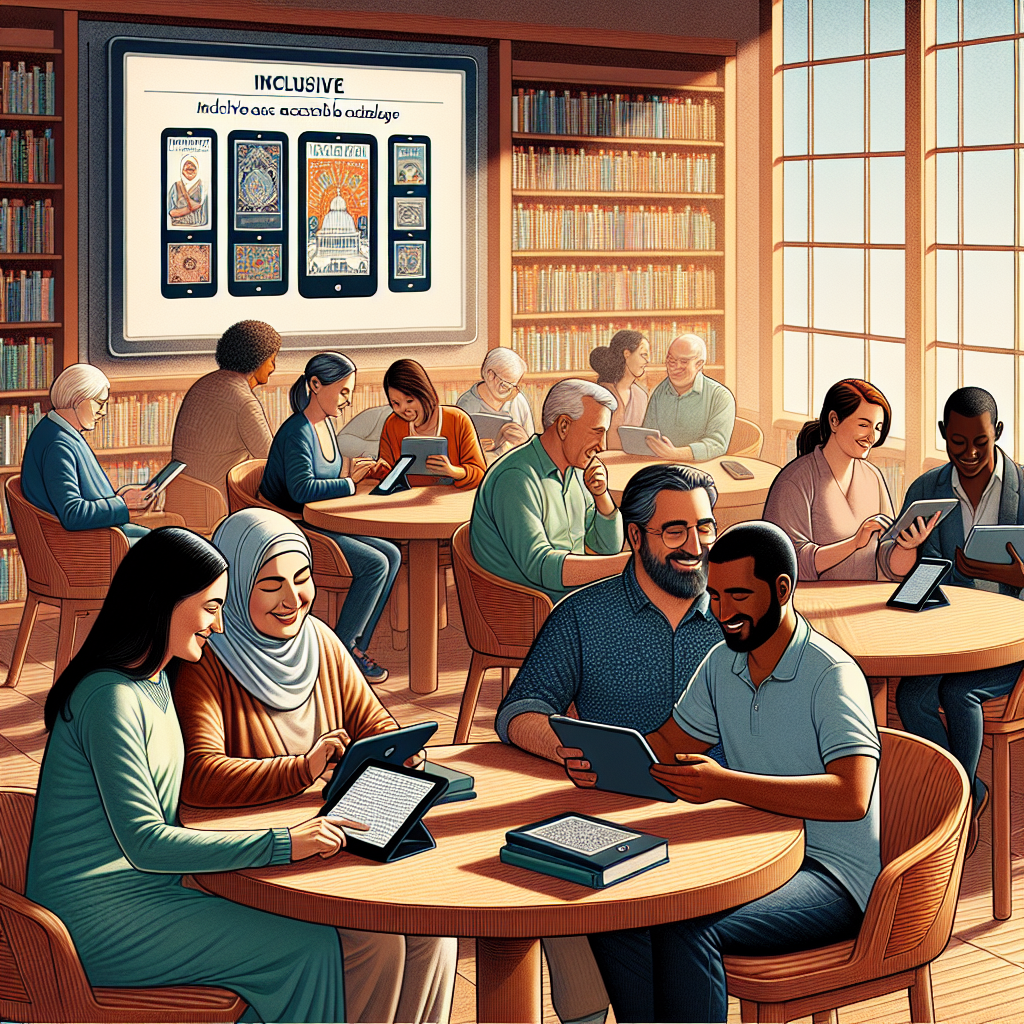
In the digital age, creating content that is accessible to all is not just a recommendation but a necessity. As technology continues to advance rapidly, new mediums such as mixed reality (MR) are gaining traction. Mixed reality, which combines elements of both virtual and augmented reality, offers unique challenges and opportunities for content creators. Developing accessible content for mixed reality experiences is crucial to ensure that everyone, regardless of their abilities, can benefit from the new possibilities that mixed reality provides.
The journey toward inclusive mixed reality experiences begins with understanding the specific challenges and opportunities that MR presents. These challenges are often technologically rooted and require a fresh approach to design and development. Traditional accessibility methods and strategies must often be adapted to fit the unique requirements of MR platforms. Furthermore, mixed reality’s immersive nature demands that developers consider accessibility aspects from the ground up.
However, creating accessible MR content is not solely about overcoming technological hurdles. It also involves engaging with diverse user communities to understand their needs and preferences. In this regard, iterative testing and feedback are integral components of the development cycle. By adopting a user-centric approach and leveraging cutting-edge technologies, developers can create mixed reality experiences that are not only inclusive but also enriching and transformative.
In this article, we will explore what accessibility means within the context of mixed reality, discuss the inherent challenges, and outline best practices for developing accessible MR content. We will delve into how thoughtful design and innovative solutions can drive inclusivity in MR environments, ultimately making these experiences accessible to a broader audience.
Consequently, as we navigate the various facets of developing accessible mixed reality content, it is paramount to remember that accessibility is an ongoing commitment. As MR technology evolves, so too must our approaches and solutions for ensuring that it remains inclusive for all users. This continuous evolution represents a significant opportunity to pave the way for more equitable and immersive digital interactions.
Understanding Accessibility in Mixed Reality
Accessibility in mixed reality means making these experiences usable by people with diverse abilities. This includes people with visual, auditory, motor, and cognitive disabilities. Unlike traditional platforms, mixed reality merges the real and virtual worlds, necessitating new considerations for accessibility. Understanding the specific needs of different user groups is the foundation for developing accessible mixed reality experiences.
A significant part of accessibility in MR is catering to visual impairments, as many MR environments rely heavily on visual elements. Developers must consider the use of high-contrast visuals, providing alternative text or audio descriptions for visual elements, and ensuring that any important information presented graphically is also available in an alternative format. Similarly, for users with auditory impairments, providing closed captions and visual alerts is critical to conveying sound-based information.
For users with motor disabilities, the MR environment should support alternative input methods, such as voice commands, adaptive controllers, or eye-tracking technology. These alternatives are necessary to accommodate users who may not be able to use standard input devices effectively. Additionally, considering the ergonomics of the MR devices themselves is essential to reduce fatigue and ensure a comfortable experience.
Cognitive accessibility should not be overlooked. Simplifying navigation and ensuring a clear, intuitive user interface can significantly enhance user experience for people with cognitive disabilities. This includes providing easy-to-understand instructions, minimizing the need for complex interactions, and supporting multiple ways of interacting with the environment.
Challenges in Developing Accessible MR Content
Mixed reality poses unique challenges that differ from traditional digital platforms. First and foremost, there is the challenge of integrating accessibility features without diminishing the immersive nature of MR experiences. For instance, introducing on-screen text elements for narration or captions without obstructing the view or diminishing the immersive experience can be difficult.
Another challenge is the diversity of MR devices and platforms. Each platform may have its own accessibility standards and technological limitations, making it challenging to apply a one-size-fits-all approach to accessibility. Developers need to be familiar with the capabilities and restrictions of different MR hardware and software solutions to implement effective accessibility features.
Furthermore, there is a lack of established accessibility standards specifically for mixed reality. While web content and applications have clearly defined standards such as the Web Content Accessibility Guidelines (WCAG), MR lacks a similarly comprehensive framework. Developers often have to improvise or adapt existing standards to fit MR environments, which can lead to inconsistencies and gaps in accessibility coverage.
The technological complexity of MR can also be a barrier to accessibility. Developing MR applications requires a high level of expertise in multiple disciplines, including 3D modeling, interaction design, and programming. These complexities can make it difficult to prioritize accessibility from the outset, particularly for smaller development teams with limited resources.
Best Practices for Accessible MR Design
To create accessible mixed reality experiences, developers should adopt a design-thinking approach that puts the user at the center of the development process. Here are some best practices to consider:
1. **Start with Inclusive Design**: Integrate accessibility into the design process from the beginning. Use inclusive design principles that prioritize flexibility and usability, ensuring that MR experiences are accessible to the broadest audience possible.
2. **Engage Users with Disabilities**: Engage with users who have disabilities throughout the development process. Their insights can provide valuable feedback that may not be apparent to developers. Conduct user tests with diverse participants to identify potential accessibility issues early on.
3. **Leverage Established Guidelines**: While mixed reality lacks specific guidelines, existing standards like WCAG can still be beneficial. Use these guidelines as a starting point and adapt them to address the unique challenges of MR.
4. **Provide Alternative Interactions**: Offer multiple methods for interacting with the MR environment. This can include voice commands, gesture recognition, or adaptive controllers. Providing these options enhances accessibility and allows users to choose the method most comfortable for them.
5. **Consider All Senses**: Utilize auditory, haptic, and visual cues to create a multisensory experience. For example, use sound and haptic feedback to compensate for visual deficiencies, and visual displays to replace auditory information as needed.
6. **Continuous Iteration and Feedback**: Accessibility is an evolving process. Regularly update and iterate MR content based on user feedback and emerging accessibility technologies. Continuously assess the effectiveness of accessibility features and make necessary adjustments.
Leveraging Technology for Accessibility
Technology plays a significant role in enhancing the accessibility of mixed reality experiences. Recent advancements offer promising solutions for overcoming some of the distinctive challenges MR presents. One such technology is eye-tracking, which can be used to assist navigation and interaction within MR environments for users with motor impairments.
Artificial intelligence (AI) is another potent tool that can enhance MR accessibility. AI-driven systems can provide real-time captioning and translation services, significantly benefiting individuals with hearing impairments or those who speak different languages. Machine learning can also be used to personalize user interfaces and interactions based on the preferences and needs of individual users.
Voice recognition technology can provide an effective alternative input method for people with motor disabilities. By integrating natural language processing capabilities, MR platforms can enable users to control the environment using voice commands, thereby offering a hands-free interaction method.
Moreover, augmented reality (AR) enhancements offer a unique opportunity for accessibility. By overlaying information onto the real world, AR can provide supplementary data that aids navigation and understanding, such as augmented descriptions for visual impairments or real-time translations for language barriers.
The Role of Collaboration in Accessibility
Collaboration is fundamental in developing accessible mixed reality experiences. Stakeholders, including developers, designers, accessibility specialists, and end-users, should work together to create effective accessibility solutions. Cross-disciplinary collaboration can lead to innovative ideas and shared knowledge that enriches the development process.
Furthermore, partnerships with organizations dedicated to accessibility can provide valuable insights and resources. Collaborating with such organizations can ensure that MR solutions align with best practices and industry standards. Moreover, open-source communities and academic institutions can contribute research and development resources, fostering continuous improvement in accessibility technology.
Conclusion
As mixed reality becomes more mainstream, ensuring accessibility in these environments is vitally important. Creating accessible MR experiences is not just about compliance; it is about providing all users the opportunity to engage with, benefit from, and enjoy the full potential of this exciting technology.
Accessibility should be integral to every stage of the MR development process, from initial design to deployment. By understanding the diverse needs of users, incorporating best practices, leveraging advanced technologies, and fostering collaborative efforts, developers can make significant strides in creating inclusive mixed reality content.
The ongoing evolution of MR technology provides an opportunity to be at the forefront of accessible innovation. Developers must commit to continuous learning, adapting to new challenges, and integrating emerging accessibility solutions. By doing so, they will not only meet the needs of users with disabilities but also enhance the overall user experience for all.
Thus, as we look to the future of mixed reality, accessibility should remain a core focus, ensuring that this transformative technology remains inclusive and empowering for everyone.
Frequently Asked Questions
1. What is mixed reality, and why is it important to develop accessible content for it?
Mixed reality (MR) is a technology that blends the real world with digital elements, creating environments where physical and virtual objects co-exist and interact in real-time. This innovative environment is achieved by combining aspects of both virtual reality (VR) and augmented reality (AR). It’s an immersive experience that can transform how people interact with digital information and their environment. Developing accessible content for mixed reality is vital because it ensures inclusivity, allowing individuals with varying abilities to experience and benefit from new technologies. Accessibility in MR is not only a moral obligation but also expands your user base, ultimately leading to broader audience engagement and satisfaction.
2. What are the specific accessibility challenges faced when developing content for mixed reality experiences?
Creating accessible content for mixed reality experiences can be quite challenging due to several factors. First, you need to consider sensory accessibility for individuals with visual or auditory impairments. This means providing alternatives such as screen readers, haptic feedback, or audio descriptions. Additionally, the physical aspect of MR can be a barrier for those with mobility issues, so alternate navigation methods must be available. Cognitive accessibility also cannot be overlooked; ensuring that the experience is intuitive and straightforward is crucial for individuals with cognitive disabilities. Furthermore, consistency in design across different platforms and devices can pose a challenge, as MR is experienced through a variety of hardware with differing capabilities.
3. How can developers ensure that their mixed reality content is inclusive and accessible to all users?
Developers can ensure their mixed reality content is inclusive and accessible by adhering to several best practices. First, familiarize yourself with the Web Content Accessibility Guidelines (WCAG) and apply these principles to MR development. Also, include customizable settings that allow users to modify their experience to better suit their accessibility needs. For instance, font sizes and contrast levels should be adjustable for those with visual impairments. Furthermore, ensure that interactive elements are operable via multiple input methods—such as gestures, voice commands, and traditional controllers—catering to different physical capabilities. Testing designs with diverse user groups regularly will help identify accessibility issues early in the development process. Additionally, leverage user feedback to make continuous improvements, knowing that accessibility is an ongoing commitment.
4. Are there any tools or resources available to help with creating accessible mixed reality content?
Yes, there are a variety of tools and resources that can assist in creating accessible mixed reality content. Software development kits (SDKs) like Unity and Unreal Engine provide accessibility plugins and guidelines tailored for MR development. Platforms such as Microsoft’s Mixed Reality Toolkit (MRTK) offer detailed documentation and resources to help developers incorporate accessibility features. Online communities and forums are also invaluable, as they are platforms where developers share insights, solutions, and advice on best practices in accessibility. Additionally, organizations like the W3C and various accessibility advocacy groups offer resources and seminars on implementing accessibility in digital content. By utilizing these tools and networks, developers can better understand accessibility needs and innovate solutions within the mixed reality domain.
5. What role do user feedback and testing play in developing accessible mixed reality experiences?
User feedback and testing are critical components in the development of accessible mixed reality experiences. Since MR is still an evolving technology, gathering insights from actual users helps developers understand the unique challenges faced by individuals with disabilities. Conducting usability tests with diverse participant groups will highlight areas where accessibility features may fall short, offering opportunities for improvement. User feedback provides real-world data, identifying accessibility gaps that may not be apparent during the initial design phase. By engaging directly with users throughout the development process and responding to their needs, developers can refine their content, ensuring it meets the accessibility standards required to cater to all users effectively.