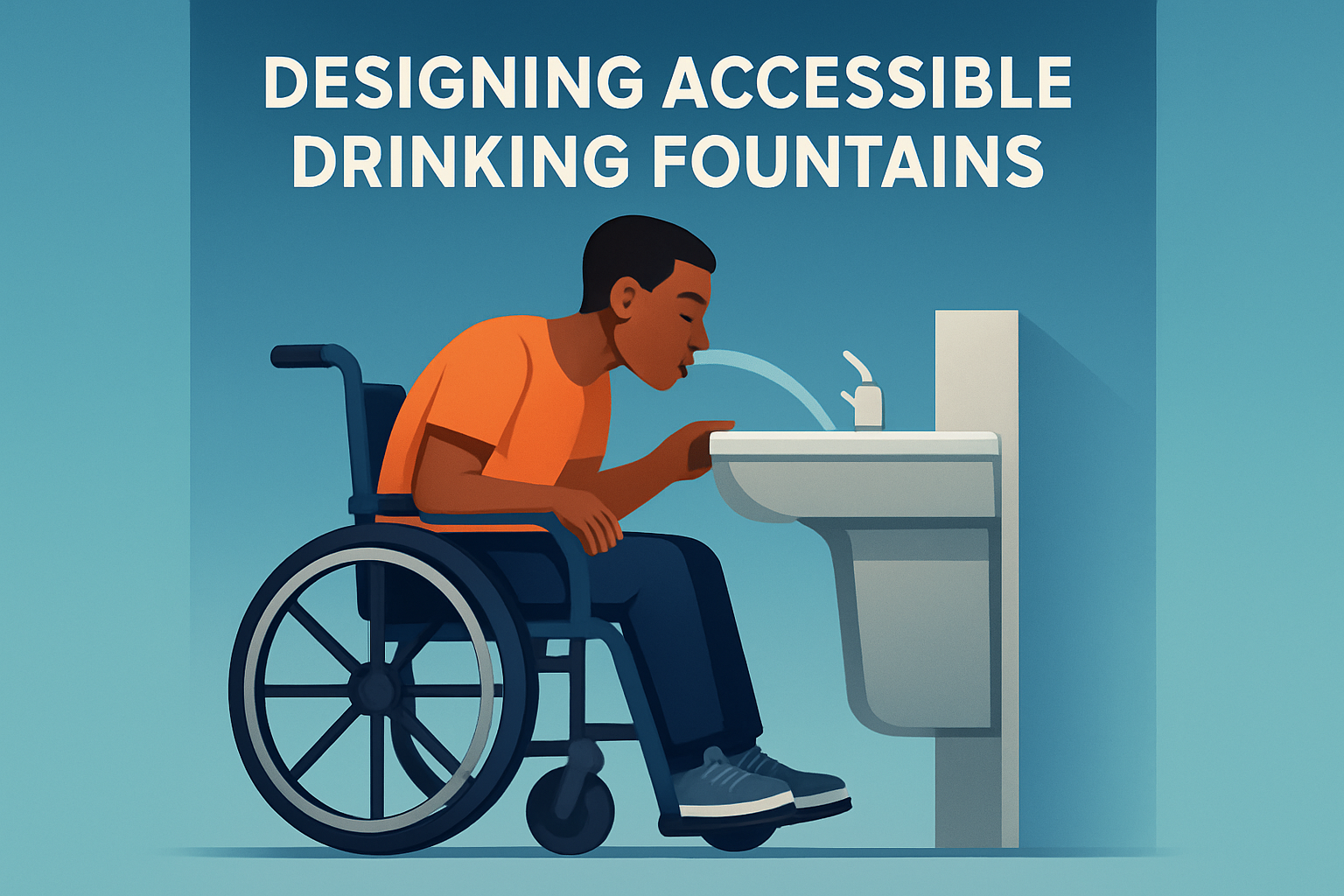
In the realms of public design and urban development, the task of creating spaces that cater to everyone is becoming increasingly significant. While designing, some seemingly minor details can have a significant impact on inclusivity and accessibility. One such detail is the design of drinking fountains. Drinking fountains are public amenities meant to provide clean, accessible water to every individual. However, the accessibility of these amenities is often overlooked, especially for those with disabilities. Designing accessible drinking fountains matters because it aligns with principles of universal design, catering to the needs of people with differing abilities, and providing a basic human necessity—water—in an equitable manner. By ensuring these are designed inclusively, not only do we enhance public health but we also foster dignity and greater independence for all individuals.
Understanding the Principles of Inclusive Design
The first step to designing accessible drinking fountains is understanding the principles that govern inclusive design. This approach is about creating products that are easy to use for as many people as possible, without the need for adaptation. In context, these principles tell us that drinking fountains should be approachable and operable by people with varying degrees of physical ability. For example, consider an instance in Portland, Oregon, where retrofitting older drinking fountains was prioritized. Designers reinvented older installations by employing pedal operations alongside traditional handles. Such adjustments allowed ease of use for individuals who may have upper-body mobility challenges, or even for those who just find it difficult to press buttons due to wet surfaces.
The Necessity for Proper Height and Reach Ranges
A pivotal aspect of accessible drinking fountain design is considering the height and reach range. The Americans with Disabilities Act (ADA) specifies that drinking fountains must incorporate clear floor space for wheelchair access. There should be a portion of the fountain with a spout height of no more than 36 inches for forward approach and a higher portion for those who can stand. An example can be found in San Francisco’s Mission District, where public park renovation included layered-level fountains to cater to both wheelchair users and those standing. This design means all patrons, regardless of height or mobility device, can conveniently access the water, reducing any potential barriers to hydration in public areas.
The Role of Easy-to-Use Controls
The controls of a drinking fountain are crucial in determining its usability. They need to be easy to handle, thus ensuring no individual is left struggling because their strength fails to meet the control’s demands. Push-button systems are quite prevalent, but these aren’t always accessible for all users. Pushing might not be an option for some and people with arthritis, for example, might find these controls challenging. In New York City, touchless sensor-operated fountains were installed across key parks, allowing users to activate the water flow with a simple hand wave, thereby expanding accessibility to include individuals who have physical restrictions that prevent them from exerting force when operating standard push buttons.
Weather and Environmental Considerations
The effectiveness of an accessible drinking fountain is also dependent on how well it holds up against environmental conditions. These include understanding local climatic challenges such as freezing temperatures which can render fountains inoperable or flood conditions that might contaminate the water supply. Stainless steel construction is often recommended due to its durability and resistance to various weather conditions. Take Chicago’s Millennium Park, where high-quality materials and weather-ready technology in fountain designs help ensure functionality all year round. Designers must envision the fountain’s use throughout varying seasons as an inability to withstand weather conditions can restrict accessibility to what should be a universally available resource.
| Location | Design Feature | Benefits |
|---|---|---|
| Portland, Oregon | Pedal Operations | Facilitates use for individuals with upper-body mobility challenges |
| San Francisco, Mission District | Layered-Level Fountains | Caters to both wheelchair users and those standing |
| New York City Parks | Touchless Sensor Operation | Enables use without physical exertion |
| Chicago’s Millennium Park | Stainless Steel, Weather-Ready Tech | Ensures functionality despite climate challenges |
The Importance of Maintenance and Signage
Continuing usability of an accessible drinking fountain hinges on regular maintenance and clear signage. A broken or poorly maintained fountain quickly becomes inaccessible. Furthermore, appropriate signage is vital. Clear instructions must guide users on how to operate the fountain, including visual or tactile components for users with limited vision. A noteworthy example comes from Amsterdam’s Schiphol Airport, where multilingual signs and Braille markers feature on every public fountain. This ensures individuals from diverse linguistic or sensory backgrounds can consume water without confusion or hesitation.
To ensure long-term accessibility, public authorities need to adopt regular checks and develop systems for users to report faults. Community engagement can enhance these maintenance processes, as seen in Toronto, where public feedback was integrated into maintenance planning. As a result, not only did the user experience improve, but so did knowledge regarding how people interacted with these amenities.
Innovating for Sustainability and Efficiency
As the demand for sustainable practices grows, integrating water efficiency measures into fountain designs becomes increasingly relevant. Highly efficient fixtures that manage water flow or fountains equipped with bottle-filling stations might reduce waste and environmental impact. Consider Seattle, where hydration stations double as traditional fountains and bottle refill spots, reducing plastic waste. Such innovative thinking merges practical accessibility with environmental stewardship, ensuring the design not only benefits its direct users but contributes positively to broader societal goals.
Summary and Call to Action
Designing accessible drinking fountains is a critical concern for modern urban environments. It requires architects, city planners, and policymakers to consider multiple factors such as height, controls, environmental resilience, maintenance, and sustainability. Ensuring that these amenities are accessible to all—regardless of physical limitations—means promoting equity in the availability of something as fundamental as water. From Portland to Amsterdam, the moves already taken by cities towards inclusive design exemplify the positive impacts of embracing this approach.
For professionals involved in designing public spaces, it is imperative to prioritize the implementation of these principles. Embracing technology and community involvement will create spaces that not only meet current regulations but exceed in promoting inclusivity. As a next step, assess the accessibility of existing installations and consider innovative design solutions that could make public hydration more inclusive, sustainable, and efficient. Pursuing this objective can significantly bridge barriers for people with disabilities, ultimately nurturing more equitable, engaging, and accessible public spaces for everyone.
Frequently Asked Questions
1. Why is the design of accessible drinking fountains important?
Designing accessible drinking fountains is crucial because it ensures that everyone, regardless of physical ability, has access to clean drinking water in public spaces. When drinking fountains are designed with accessibility in mind, they accommodate a wide range of users, including those with mobility devices like wheelchairs, individuals with limited reach, and even children who may otherwise struggle to access standard-height fountains. Accessibility in design promotes inclusivity, social equity, and sustainability in our communities. By considering the needs of all individuals, public amenities like drinking fountains enhance the quality of life and contribute to a more equitable society.
2. What are the key features of an accessible drinking fountain?
Accessible drinking fountains are typically characterized by several vital features that cater to diverse users. Firstly, they often include a lower spout height, making it easier for wheelchair users to access. Secondly, they may provide a clear, unobstructed approach to accommodate mobility aids. Additionally, accessible fountains may have easily operable levers or buttons that require minimal force. Some designs incorporate an angled or side-mounted spout to facilitate a natural approach from a seated position. For those with visual impairments, fountains can include tactile indicators or Braille, along with contrasting colors to assist in navigation. Moreover, environmental sustainability aspects, such as water-efficient technology and lead-free materials, are commonly integral to modern accessible drinking fountain designs.
3. How do regulatory standards impact the design of accessible drinking fountains?
Regulatory standards play a critical role in the design and implementation of accessible drinking fountains in public spaces. These standards, often grounded in national building codes or guidelines like the Americans with Disabilities Act (ADA) in the United States, provide requirements for elements such as spout height, operation force, and clear floor space. Meeting these regulations ensures drinking fountains provide adequate access and usability for individuals with various disabilities. Adherence to these standards is not only a legal requirement but also a commitment to inclusivity. Designers and planners need to stay updated on regulatory changes to ensure compliance and to foster the development of barrier-free, user-friendly environments.
4. What challenges are faced when implementing accessible drinking fountains?
Implementing accessible drinking fountains poses several challenges. A primary issue is the existing infrastructure in older buildings or public spaces that may not initially include adequate provisions for accessibility. Retrofitting these areas to comply with modern standards can be costly and logistically complex. Additionally, there may be budget constraints in public development projects that limit the availability of resources to invest in accessible designs. Another challenge can stem from aesthetic or historical preservation considerations, which might resist modification for accessibility. Planners and designers must balance these concerns while prioritizing functionality and inclusivity. Furthermore, a lack of awareness or education on the importance of accessibility can sometimes result in overlooked considerations during the design phase. Continuous advocacy, education, and innovative design solutions can help mitigate these challenges.
5. How can communities support the adoption of accessible drinking fountains?
Communities play a vital role in supporting the widespread adoption of accessible drinking fountains. Public advocacy and awareness campaigns can highlight the importance of accessibility and encourage local governments and developers to prioritize inclusive designs in their projects. Community members can get involved by participating in public planning meetings, providing feedback, and voicing the need for accessible amenities. Supporting local policies and initiatives that promote accessibility in urban design will amplify efforts to incorporate inclusive features. Educating the public about the benefits of accessible design and encouraging discussions around diversity and equality can create a more supportive environment for changes. Lastly, partnering with disability rights organizations can bring about informed perspectives and resources necessary to effectively implement accessible solutions in community planning.