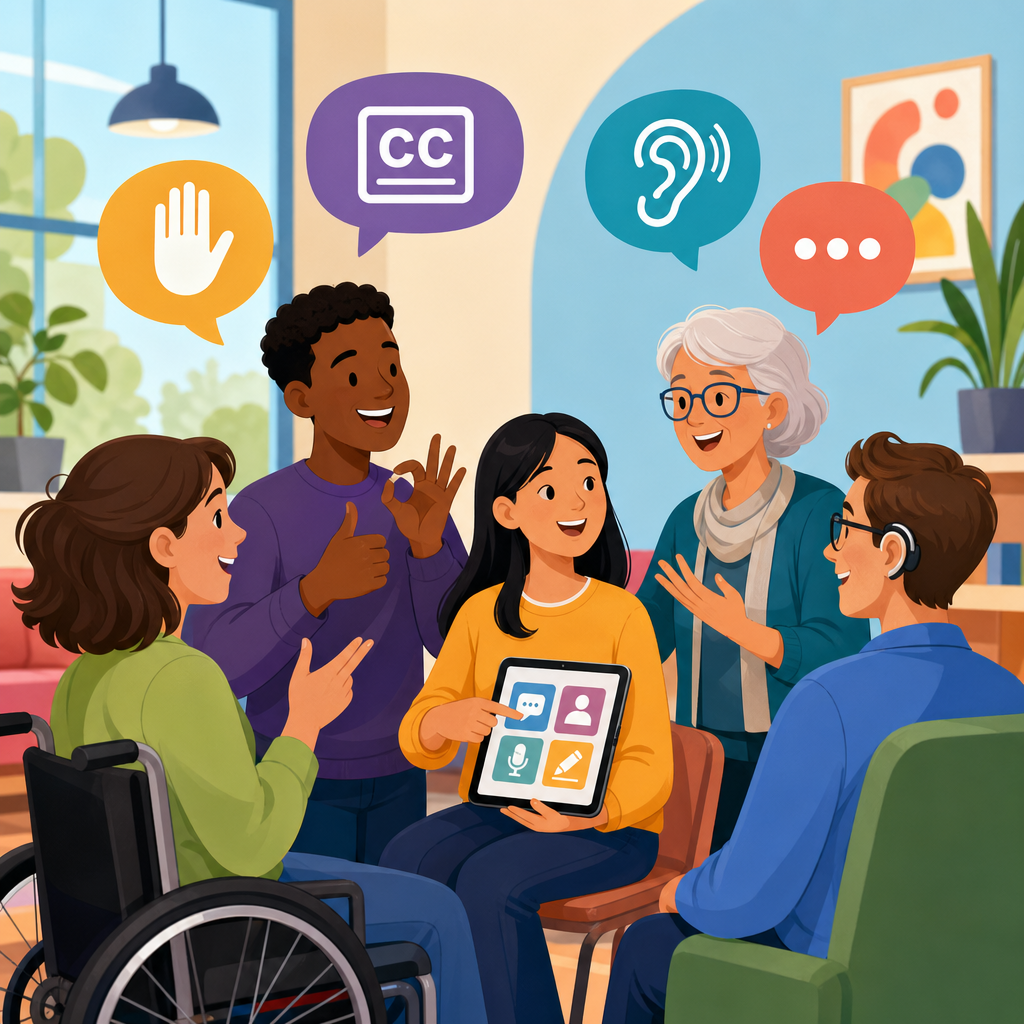
Communication rights under the ADA determine whether people with disabilities can fully participate in everyday life, from a doctor’s visit to a court hearing, a college class, a job interview, or an online customer service chat. The Americans with Disabilities Act, enacted in 1990 and strengthened by later regulations and case law, requires covered entities to provide effective communication, meaning information must be conveyed as clearly and accurately to a person with a disability as it is to others. In practice, that can include qualified sign language interpreters, real-time captioning, accessible documents, assistive listening systems, screen-reader-friendly websites, relay services, or plain-language modifications. I have worked with organizations trying to comply after complaints, and the same lesson repeats: communication access is not a courtesy add-on. It is a civil right with concrete operational requirements, legal exposure, and measurable human impact.
For readers focused on rights and protections, this hub page centers on rights in action: how communication rights work in real settings, what standards apply, where disputes arise, and what case studies teach. The ADA is divided into titles. Title II covers state and local governments. Title III covers public accommodations such as hospitals, retailers, hotels, schools, legal services, and entertainment venues. Title I governs employment and overlaps with obligations to communicate during hiring, training, and workplace processes. Section 504 of the Rehabilitation Act may also apply to federally funded entities, and the FCC regulates telecommunications relay services. The key question is usually straightforward: what auxiliary aid or service is necessary for effective communication in this situation? The answer depends on context, complexity, timeliness, privacy, and the individual’s normal method of communication. Understanding those factors is essential because rights are won or lost in details, not slogans.
What Effective Communication Means Under the ADA
Effective communication means people with disabilities must be able to receive and convey information with substantially equal clarity, accuracy, and speed. For people who are deaf or hard of hearing, auxiliary aids and services may include qualified interpreters on-site or through video remote interpreting, CART captioning, note takers, written materials, exchange of typed messages, captioned videos, hearing loop systems, and text telephones in limited legacy contexts. For people who are blind or have low vision, examples include Braille, large print, accessible electronic documents, audio formats, tactile signage where required, and verbal description. For people with speech disabilities, staff may need to allow extra time, accept communication boards or devices, or use relay services. The Department of Justice regulations emphasize an individualized assessment rather than one-size-fits-all substitutions.
A central legal principle is that the person with a disability should be consulted about what works. Covered entities must give primary consideration to the requested aid or service in Title II settings, unless another equally effective means exists or the request would create a fundamental alteration or undue financial and administrative burden. In Title III settings, the obligation is to furnish appropriate auxiliary aids and services unless doing so would fundamentally alter the nature of the goods or services or result in an undue burden. Those defenses are real but narrower than many organizations assume. Cost alone rarely ends the analysis; decision makers must consider resources, alternatives, and whether the communication at issue is routine, complex, urgent, confidential, or legally significant.
Family members, especially children, generally should not be used as interpreters except in emergencies involving imminent threats or when the individual specifically requests it, the accompanying adult agrees, and reliance is appropriate under the circumstances. In my experience reviewing complaint files, this is one of the most common breakdowns in healthcare and law enforcement settings. Staff assume that basic conversational ability equals interpretation competence. It does not. A qualified interpreter must be able to interpret effectively, accurately, and impartially, both receptively and expressively, using necessary specialized vocabulary. Medical consent discussions, police questioning, educational discipline proceedings, and courtroom matters all require precision. Small communication gaps in those environments become major rights violations.
Where Communication Rights Show Up Most Often
Communication rights under the ADA appear anywhere information, decision making, or service delivery matters. Healthcare is the highest-stakes example because errors can affect consent, diagnosis, treatment compliance, pain reporting, medication instructions, and discharge planning. Hospitals commonly face complaints when staff rely on lip reading, handwritten notes, or family members during emergency room intake or surgical consent. Courts and law enforcement agencies face similar risks when witnesses, defendants, victims, or jurors cannot understand proceedings. Schools, colleges, and testing providers must address lectures, advising, disciplinary meetings, housing communications, and digital learning tools. Businesses open to the public must make customer service, sales processes, reservation systems, and websites accessible. Employers must also ensure communication access during applications, interviews, onboarding, training, performance management, and workplace safety procedures.
The growth of digital services has expanded the communication rights conversation. A benefits application that times out before a screen-reader user can complete it, a telehealth platform without captioning, or a retail checkout flow that traps keyboard users can all undermine equal access. While the ADA was enacted before modern websites and apps, regulators and courts increasingly treat digital communication as part of the service itself. The Web Content Accessibility Guidelines, especially WCAG 2.1 Level AA, are often used as the practical benchmark, even when settlements do not frame them as the only possible standard. Organizations that treat accessibility as an IT afterthought usually end up paying more later through remediation, consultant reviews, complaint responses, and reputational damage.
| Setting | Common Communication Barrier | Typical Effective Solution | Why It Matters |
|---|---|---|---|
| Hospital | Deaf patient asked to use written notes for consent | Qualified interpreter or VRI if clinically appropriate | Consent and treatment decisions require accuracy |
| Court | Juror cannot follow testimony | Interpreter or real-time captioning | Protects fair process and civic participation |
| College | Lecture videos lack captions | Accurate captions and accessible media player | Ensures equal access to instruction |
| Retail | Inaccessible online checkout | Keyboard access, labels, error identification | Allows independent purchase and account use |
| Workplace | Safety training not accessible | Interpreters, captions, accessible documents | Supports compliance and employee safety |
Rights in Action: Case Studies and Real-World Applications
Case studies show how abstract rights become operational duties. In healthcare, one recurring pattern involves deaf patients denied interpreters during complex encounters while staff insist that note writing is enough. The Department of Justice has repeatedly resolved matters against hospitals that failed to provide interpreters for emergency care, labor and delivery, psychiatric treatment, and informed consent discussions. The legal issue is not whether some communication occurred; it is whether communication was effective for the content exchanged. A patient discussing chest pain history, surgical risks, or medication side effects needs nuanced two-way communication. I have seen organizations defend note writing until record review reveals pages of missing patient questions and inconsistent staff documentation. That is exactly why interpreter access policies, after-hours vendor contracts, and escalation procedures matter.
Law enforcement provides another important set of real-world applications. During arrests, interrogations, or victim interviews, agencies sometimes rely on gestures, family members, or untrained bilingual staff. Courts have treated those shortcuts skeptically because they can affect constitutional rights, witness credibility, and case outcomes. Effective communication in policing may require a qualified interpreter, captioning for a deaf hard-of-hearing participant, or modified methods for a person with a speech disability or cognitive disability. Emergency exceptions exist, but once immediate danger passes, the agency must shift to effective aids and services. Training officers on when to secure communication support is often more important than teaching abstract disability law because failures usually happen in the first minutes of contact.
Education settings illustrate how communication access extends beyond classrooms. A college may caption lectures but still fail if advising portals are inaccessible, orientation videos are uncaptioned, housing notices are not screen-reader compatible, or disciplinary meetings occur without needed auxiliary aids. The Office for Civil Rights has addressed these patterns under disability nondiscrimination rules, and many institutions now combine disability services, procurement standards, and digital accessibility governance to reduce risk. Real-world compliance means faculty know how to handle accommodation notices, media teams caption content before publication, and procurement contracts require accessibility conformance reports. Rights become reliable only when the institution builds them into normal operations.
Business and consumer cases often focus on websites, apps, reservation systems, menus, kiosks, and customer support. A blind customer who cannot use a restaurant ordering app or a traveler who cannot complete a hotel booking because date selectors are inaccessible is facing a communication barrier just as real as an unreadable printed form. Settlements in these cases commonly require audits, user testing, staff training, accessibility statements, and timelines for remediation. The lesson is practical: if a digital channel is how the public receives information and completes transactions, then communication rights attach to that channel. Accessible design is not only legally safer; it reduces abandonment, support calls, and duplicate manual work.
How Organizations Can Comply and How Individuals Can Assert Their Rights
Compliance starts with policy, but policy alone is never enough. Organizations need a written effective communication policy, clear responsibility for implementation, budgeting for auxiliary aids, vendor relationships for interpreters and captioners, and a process for urgent requests outside business hours. Staff should know how to identify communication needs, document requests, consult the individual, and escalate when the issue involves medical consent, legal rights, education access, or safety. For digital communication, teams need accessibility baked into design, procurement, content publishing, and quality assurance. That means testing with screen readers such as JAWS, NVDA, or VoiceOver; validating keyboard access; checking color contrast; captioning prerecorded and live media when appropriate; and fixing document structure in PDFs and office files.
Individuals asserting their rights should be specific, prompt, and documented. A useful request states the disability-related communication need, the aid or service sought, the context, and the date or event involved. For example: “I am deaf and need a qualified ASL interpreter for my cardiology appointment on May 12 because treatment options and consent will be discussed.” If the organization denies the request, ask for the reason in writing and note any alternatives offered. Keep emails, screenshots, appointment records, and names of staff involved. Complaints may be filed internally, with a disability rights office, with the Department of Justice, with the Department of Education’s Office for Civil Rights, with a state agency, or through private counsel depending on the setting. The strongest complaints connect the denied aid to a concrete communication failure and resulting harm.
There are limits and tradeoffs. Not every requested accommodation is required if another method is equally effective, and not every inaccessible moment is an ADA violation if the entity responds reasonably and quickly. Video remote interpreting can work well in some settings but fail if bandwidth is poor, the screen is too small, or the participant cannot see the interpreter clearly. Captioning quality varies significantly, especially with technical terminology or multiple speakers. Automated accessibility overlays do not replace code-level remediation. Good compliance therefore depends on matching the tool to the task, auditing results, and correcting failures rather than declaring success too early.
Building Communication Access Into Everyday Practice
The most effective organizations stop treating communication rights as exceptions and build them into routine service delivery. That means front-desk scripts asking about communication needs, scheduling systems that capture requests, contracts with interpreter agencies that cover evenings and weekends, telehealth platforms that support captioning and interpreter integration, and document templates designed for accessibility from the start. In digital environments, teams that follow accessible design patterns early spend less on retrofits later. In physical spaces, signage, assistive listening systems, and staff training reduce confusion before a dispute begins. Measured over time, these practices improve service quality for everyone, not only people with disabilities.
Communication rights under the ADA are ultimately about equal participation, informed decision making, and dignity. The legal standards matter, but the practical takeaway is simple: if a person cannot understand or be understood in a meaningful interaction, access has not been achieved. Rights in action means looking at the real encounter, the complexity of the information exchanged, and the effectiveness of the aid provided. Use this hub as a starting point for deeper articles on healthcare, education, employment, digital accessibility, law enforcement, public services, and complaint strategies. Review your policies, test your systems, train your staff, and document how requests are handled. Communication access is achievable when organizations plan for it and when individuals know what to ask for and how to enforce their rights.
Frequently Asked Questions
What does “effective communication” mean under the ADA?
Under the ADA, “effective communication” means a person with a disability must be able to receive, understand, and exchange information as clearly, accurately, and timely as someone without a disability. This applies in many everyday settings, including hospitals, courts, schools, government offices, retail businesses, transportation services, workplaces, and online services offered by covered entities. The goal is not simply to provide some form of access, but to make sure communication actually works in the specific situation.
In practice, effective communication depends on the individual, the nature of the communication, and the context. A brief interaction at a store counter may require a different solution than a complex medical consultation, legal proceeding, or college lecture. For someone who is deaf or hard of hearing, effective communication might involve a qualified sign language interpreter, real-time captioning, written notes, assistive listening systems, or video remote interpreting. For someone who is blind or has low vision, it might mean providing information in large print, Braille, accessible electronic formats, or reading information aloud. For individuals with speech disabilities, it can include allowing extra time, accepting communication through devices, or using trained staff who know how to communicate respectfully and accurately.
The key legal standard is whether the communication is equally effective, not whether the method is the cheapest, fastest, or easiest for the business or agency. Covered entities generally must give primary consideration to the aid or service requested by the person with a disability, especially in state and local government settings, unless another equally effective method is available or providing the requested aid would create a fundamental alteration or undue burden. In short, effective communication under the ADA is about meaningful access, not minimal effort.
Who has to provide communication accommodations under the ADA?
The ADA applies broadly, and communication obligations can fall on several different types of organizations. State and local governments are covered by Title II, which includes public schools, public colleges, courts, police departments, public hospitals, transit systems, and government agencies. Private businesses and nonprofit organizations that serve the public are generally covered by Title III, including doctors’ offices, private hospitals, restaurants, hotels, banks, retail stores, law offices, day care centers, museums, theaters, and many service providers. Employers with 15 or more employees are covered by Title I, which addresses disability rights in employment, including communication access during hiring, training, meetings, and workplace policies.
These obligations are not limited to in-person interactions. If a covered entity communicates through websites, mobile apps, online forms, chat systems, telehealth platforms, video content, or customer service portals, those communication channels also need to be accessible. That means digital communication may need captions, screen reader compatibility, keyboard navigation, accessible documents, or alternative formats so people with disabilities can use them effectively.
Coverage does have limits, and not every organization is subject to every part of the ADA in the same way. Still, many entities that interact with the public or employ workers do have duties to provide auxiliary aids and services when needed. Whether the setting is a job interview, a parent-teacher conference, a courtroom hearing, or a telemedicine appointment, the central rule is that covered entities cannot exclude or disadvantage people with disabilities by failing to make communication accessible.
What kinds of auxiliary aids and services may be required?
The ADA does not impose a one-size-fits-all solution. Instead, it recognizes a wide range of auxiliary aids and services that may be necessary depending on the person’s disability and the communication involved. For individuals who are deaf or hard of hearing, this can include qualified sign language interpreters, oral interpreters, cued-speech interpreters, real-time captioning, CART services, assistive listening devices, written materials, text telephones in some contexts, and captioned video content. For people who are blind or have low vision, examples include Braille, large print, screen reader-accessible electronic documents, audio recordings, qualified readers, and verbal descriptions of visual information.
For people with speech disabilities, effective communication may involve permitting communication boards, speech-generating devices, typing responses, or other alternative methods. In some settings, staff may need training so they know how to listen patiently, avoid interrupting, and communicate directly with the person rather than through a companion. In digital environments, auxiliary aids and services often overlap with accessibility features, such as properly labeled online forms, compatibility with assistive technology, transcripts for audio content, and captions for videos.
What is required depends heavily on complexity and importance. A hospital discussing symptoms, consent forms, treatment options, or discharge instructions may need a qualified interpreter rather than relying on handwritten notes. A court hearing, university lecture, or job training session may require real-time captioning or another robust accommodation because accuracy matters. The ADA generally does not allow covered entities to rely on family members or friends to interpret, except in limited emergencies or when the individual specifically requests it and it is appropriate. The point is to choose an aid or service that results in communication that is truly effective in the real-world circumstances.
Can a business, hospital, school, or government agency charge someone for communication accommodations?
No. Under the ADA, the cost of providing required auxiliary aids and services cannot be passed on to the person with a disability. A hospital cannot bill a patient for an interpreter. A court cannot add a charge for captioning. A college cannot require a student to pay extra for accessible course materials that are necessary for equal access. A business cannot impose a surcharge because a customer needs communication assistance to use the service being offered. These costs are considered part of the entity’s legal obligation to provide nondiscriminatory access.
This rule is important because communication access is not an optional upgrade or special perk. It is part of equal participation. If covered entities were allowed to charge for accommodations, many people with disabilities would be priced out of basic services and opportunities. The ADA is designed to prevent that result by placing responsibility on the covered entity, not the individual seeking access.
There are limited defenses under the ADA, such as undue burden or fundamental alteration, but those are narrow and cannot be used casually. A covered entity usually must look for an alternative that still provides effective communication if the preferred option truly would be too difficult or expensive in light of the organization’s overall resources and operations. Importantly, even when there is a dispute about the exact accommodation needed, the answer is not to shift the financial burden to the person with a disability. The organization must engage with the issue and provide an effective solution whenever the law requires it.
What should someone do if their ADA communication rights are denied?
If a person believes their communication rights were not respected, the first step is often to clearly explain what accommodation is needed and why the current method is not effective. Many access problems can be resolved more quickly when the person identifies the specific barrier, such as the lack of a qualified interpreter, inaccessible electronic documents, missing captions, or a refusal to communicate through an assistive device. It can help to make the request in writing, keep copies of emails or forms, note dates and names, and document what happened during the interaction.
If the issue is not resolved informally, the next step may be to use the organization’s internal grievance or disability services process, if one exists. For example, a hospital may have a patient advocate, a college may have a disability services office, and a government agency may have an ADA coordinator. In employment settings, workers or applicants may raise the issue through human resources or an equal employment opportunity channel. Being specific about the accommodation requested, the setting, and the impact of the denial can strengthen the complaint and help create a clear record.
People may also file administrative complaints or pursue legal remedies depending on the setting. Complaints involving state or local governments and public accommodations may be filed with the U.S. Department of Justice. Employment-related communication barriers may fall under the U.S. Equal Employment Opportunity Commission. Education-related issues may also involve the U.S. Department of Education in some cases. State or local civil rights agencies may provide additional enforcement options. Because deadlines can matter, it is wise to act promptly and, in serious cases, consult an attorney or disability rights organization. The ADA’s communication protections are meaningful only when enforced, and individuals do have avenues to challenge barriers that prevent full and equal participation.