The Americans with Disabilities Act shapes daily life in the creative arts far beyond ramps at theater doors. It governs who gets to make art, who gets hired, who can attend performances, and whether cultural institutions treat disabled people as full participants rather than afterthoughts. In the arts, access means more than physical entry. It includes communication access, sensory inclusion, equal audition standards, fair employment practices, accessible ticketing, service animal policies, website usability, and the right to reasonable modifications when standard procedures exclude disabled artists or patrons.
When I have advised arts organizations on disability compliance, the biggest mistake I see is narrowing ADA rights to building codes. The law is broader. Title I covers employment. Title II applies to state and local government entities such as public universities, municipal museums, and city-run arts programs. Title III applies to places of public accommodation, including many private galleries, theaters, cinemas, music venues, art schools, and festival spaces. Section 504 of the Rehabilitation Act often overlaps when federal funding is involved, and state disability laws may add stronger protections.
This article serves as a hub for rights in action in the creative arts. It defines the legal framework, then shows how access disputes arise in real settings: auditions, rehearsals, classrooms, galleries, streaming events, and front-of-house operations. The practical question is simple: what must arts organizations do, and what can artists and patrons ask for? The answer depends on context, but the governing standard is consistent. If a rule, format, or space screens out disabled people unnecessarily, the organization usually must change course unless doing so would create an undue burden, direct threat, or fundamental alteration. Understanding those terms is essential because they determine the boundary between lawful access requests and legitimate operational limits.
How ADA rights apply across the arts ecosystem
ADA rights in the creative arts are not abstract civil rights principles. They apply at every stage of participation. A disabled actor may need an accessible audition room, extra time to complete paperwork, scripts in screen-reader-friendly format, or a modified rehearsal schedule tied to medical treatment. A museum visitor may need captioned video installations, a tactile map, a sign language interpreter for a lecture, or an exception to a no-food rule for diabetes management. A composer may need remote participation during flare-ups. A patron buying tickets online may need a site compatible with keyboard navigation and screen readers.
Courts and regulators generally focus on equal opportunity, effective communication, and individualized assessment. Equal opportunity means disabled people must be able to compete for roles, jobs, grants, classes, residencies, and audience experiences on fair terms. Effective communication means information must be delivered in a way the person can actually use, which may require captions, audio description, large print, Braille, plain language, assistive listening systems, or qualified interpreters. Individualized assessment means organizations cannot rely on stereotypes about what disabled people can do. They must assess the actual person, actual request, and actual program.
Creative institutions often worry that access will compromise artistic standards. Sometimes artistic integrity is a real factor, but it does not cancel the ADA. The better approach is to identify the essential eligibility requirements of the program or role. If vocal range is essential for a singing part, that can remain. If climbing an inaccessible staircase to audition is not essential, that barrier must go. In my experience, many conflicts disappear when organizations separate core artistic requirements from inherited habits that were never necessary in the first place.
Rights in action: case studies for artists, workers, and patrons
Real-world applications show how disability law works better than abstract summaries. Consider a regional theater holding auditions on an upper floor without elevator access. The organization may think it can simply offer a video submission instead. That may help, but if in-person callbacks are central to casting, an inaccessible venue still creates unequal access. Moving the audition to an accessible room is usually the cleaner solution. The same logic applies to portfolio reviews, artist talks, and backstage orientation.
A second common case involves service animals in galleries and performance venues. Staff may ask whether the animal is required because of a disability and what work or task it has been trained to perform. They cannot demand documentation or charge pet fees. They may exclude the animal only in narrow circumstances, such as if it is out of control and the handler does not take effective action, or if it is not housebroken. Fear of dogs or generalized allergy concerns rarely justify blanket exclusion.
Communication access disputes are equally common. A deaf patron requests open captions for a film festival screening, while the venue offers only a script after the show. That is usually not effective communication. A blind visitor asks for audio description during a live performance, and the presenter says no one else has requested it before. Prior demand is not the legal test. The right question is whether the aid or service is necessary to provide effective communication and whether providing it would pose an undue burden or fundamental alteration.
| Scenario | Typical Barrier | Likely Required Response | Key Limitation |
|---|---|---|---|
| Theater audition | Inaccessible room or format | Relocate, adjust submission method, accessible materials | Essential artistic criteria may remain |
| Museum lecture | No interpretation or captioning | Provide interpreter, CART, captions, assistive listening | Undue burden analysis must be specific |
| Gallery entry | No service animals policy exception | Permit trained service animal | Animal may be removed if uncontrolled |
| Arts employment | Rigid schedules or inaccessible software | Reasonable accommodation, accessible tools | No need to remove essential job functions |
| Online ticketing | Website unusable with screen reader | Accessible booking path and seat selection | Alternative phone line alone may be insufficient |
Employment cases require especially careful analysis. A costume shop employee with a mobility impairment may request a rearranged workstation, adaptive cutting table, or reassignment of marginal tasks involving ladder use. Those are often reasonable accommodations. But the employer does not have to eliminate an essential function of the role or tolerate a safety risk grounded in objective evidence. The interactive process matters here. Employers should discuss options, evaluate costs, test equipment, and document the decision. Blanket refusals create legal risk and usually signal weak internal systems.
Education settings in the arts produce another cluster of disputes. Conservatories, university theater departments, and community arts programs may be covered by different legal regimes, but the practical issues are familiar: inaccessible studios, attendance rules that ignore episodic disabilities, grading methods tied to inaccessible participation formats, and field trips without transportation access. The strongest programs build access into syllabi, production calendars, and event planning before requests arrive. Retrofits are possible, but proactive design reduces conflict and cost.
Common legal standards and where organizations make mistakes
Three standards come up repeatedly in arts access disputes: reasonable accommodation or modification, effective communication, and program accessibility. Reasonable accommodation usually appears in employment. Reasonable modification usually appears in public services and public accommodations. Effective communication applies when information must be conveyed accessibly. Program accessibility, especially under Title II, looks at whether a public entity’s services are accessible when viewed in their entirety, even if every individual room is not.
The most frequent mistake is treating every request as optional customer service. It is not. Once a venue or employer is covered, disability access becomes a legal compliance issue. A second mistake is demanding unnecessary medical detail. Often an organization needs only enough information to understand the limitation and evaluate the request. A third mistake is delay. If a patron asks for captioning two weeks before an event, silence until the day before is not a serious process. Timeliness matters because access delayed can equal access denied.
Another common failure is relying on posted policies that are too rigid. “No re-entry,” “performances begin promptly and late seating is prohibited,” or “all applicants must audition in person” may be neutral on paper yet discriminatory in application. The ADA often requires exceptions to standard rules when doing so is necessary for disability access and does not fundamentally alter the service. Frontline staff need authority and training to make those exceptions consistently.
Digital access is now inseparable from cultural participation. Ticketing portals, residency applications, streaming performances, donor pages, and educational archives should align with recognized accessibility practices such as the Web Content Accessibility Guidelines. Although the ADA does not contain a single technical web standard written into the statute, WCAG 2.1 AA is widely used as the practical benchmark. Inaccessibility here can block every later step, from buying a ticket to submitting a grant application.
Building access into operations, programming, and audience experience
Arts organizations can reduce complaints and expand participation by treating accessibility as an operational discipline. Start with an access audit: entrances, restrooms, seating maps, backstage routes, rehearsal spaces, emergency egress, websites, kiosks, marketing materials, and volunteer scripts. Then identify decision points where exclusion happens: casting calls, application deadlines, ticket exchanges, security screening, and patron communication. This process should involve disabled artists and audience members, not just facilities staff.
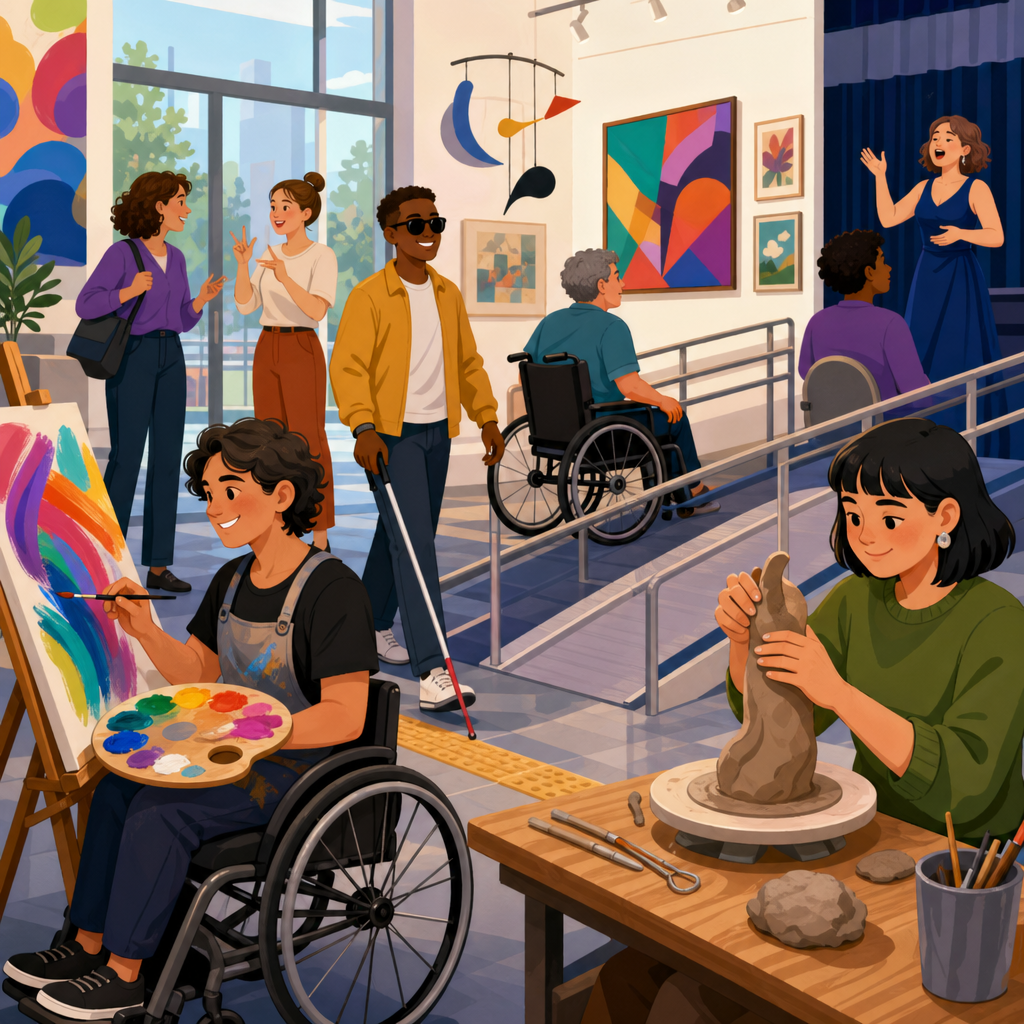
Programming choices matter too. Captioned screenings should be listed clearly, not hidden in fine print. Audio-described performances should have easy booking options. Relaxed performances need published expectations so patrons know lighting, sound, and movement norms in advance. Exhibition design should consider line of sight for wheelchair users, text size for labels, quiet areas for sensory regulation, and tactile engagement where appropriate. None of these practices lowers artistic quality. They widen the circle of participation.
Training is where policy becomes real. Box office teams should know how to sell accessible seats without forcing patrons to disclose unnecessary medical information. Ushers should understand wheelchair seating locations, companion seating rules, and service animal etiquette. Stage managers should know how to route accommodation requests during rehearsal. HR staff should know the interactive process and confidentiality rules. In my experience, one trained coordinator can improve outcomes dramatically, but only if department heads share responsibility rather than treating access as a side task.
Documentation also protects both sides. Organizations should keep written procedures for requesting accommodations, timelines for response, vendor contacts for interpreters and captioners, and decision logs for denials based on undue burden or fundamental alteration. Those determinations should be specific and evidence based. Saying “too expensive” is not enough. The analysis should consider the overall resources of the organization, available alternatives, and whether a lower-cost option would still provide meaningful access.
How artists and patrons can assert their rights effectively
Disabled artists and patrons often get better results when they make requests early, in writing, and with practical specificity. State the event, role, or service involved; describe the barrier; explain the accommodation or modification requested; and give a reasonable deadline. For example: “I am attending the March 12 artist talk and request CART captioning because I am deaf and need real-time text to follow spoken content.” Clear requests help organizations act and create a record if they do not.
If the first answer is no, ask for the reason and any alternative that would provide comparable access. Many denials are not final decisions; they are frontline misunderstandings. Escalate to an access coordinator, producer, HR representative, or general counsel if needed. Keep copies of emails, screenshots of inaccessible pages, ticket records, and names of staff involved. If the issue remains unresolved, options may include internal grievance processes, disability rights organizations, state or local human rights agencies, the Equal Employment Opportunity Commission for employment claims, or the Department of Justice in appropriate cases.
The central lesson from rights in action is that access works best when it is planned, funded, and normalized. The ADA does not require perfection, but it does require serious effort, individualized analysis, and equal dignity. For artists, that can mean fair auditions, accessible workplaces, and room to create without avoidable barriers. For patrons, it means enjoying culture through accessible ticketing, seating, communication, and policies that recognize real human needs. If you run an arts organization, audit your practices now. If you are an artist or patron facing barriers, document the issue and ask clearly for access. Rights become real when people use them.
Frequently Asked Questions
How does the ADA apply to the creative arts beyond basic physical access?
The ADA reaches much further than wheelchair ramps, elevators, and accessible restrooms. In the creative arts, it affects who can participate as an artist, who can work in arts organizations, and who can attend and fully enjoy cultural events as a patron. Title I of the ADA governs employment, which means theaters, galleries, museums, orchestras, film companies, dance organizations, and arts nonprofits generally cannot discriminate against qualified employees or job applicants with disabilities and may need to provide reasonable accommodations. Title II applies to state and local government entities, including public universities, municipal arts programs, and publicly operated cultural venues. Title III covers many private places of public accommodation, such as theaters, museums, galleries, schools, and performance venues, requiring equal access to goods, services, privileges, and programs.
In practice, that means access in the arts includes communication access like captioning, sign language interpretation, assistive listening systems, accessible websites, and readable digital ticketing platforms. It also includes policy decisions, such as allowing service animals, providing companion seating, making auditions accessible, and avoiding eligibility criteria that screen out disabled people unless those criteria are truly necessary. Just as important, the ADA pushes institutions to think about disabled people as artists, employees, students, donors, audience members, and community leaders. A venue may technically allow entry, but if its website is unusable with a screen reader, its audition notices exclude accommodation information, or its sensory environment makes participation impossible without flexibility, it may still be failing to provide meaningful access. The law is about equal opportunity and full participation, not just getting through the front door.
What rights do disabled artists and arts workers have in auditions, hiring, and workplace accommodations?
Disabled artists and arts workers generally have the right to be evaluated on their skills, qualifications, and ability to perform the essential functions of a role, with reasonable accommodation if needed. Under the ADA’s employment provisions, covered employers cannot refuse to hire someone simply because they have a disability, a history of disability, or are regarded as disabled. That matters in the arts, where assumptions about stamina, appearance, communication style, mobility, or productivity can unfairly shape casting, hiring, promotion, and contract decisions. A qualified disabled actor, designer, teaching artist, curator, musician, technician, administrator, or stage manager is entitled to fair consideration based on the actual requirements of the job rather than stereotypes.
Reasonable accommodations in arts settings can take many forms. They may include modified audition formats, accessible rehearsal spaces, extra time for written tests, captioned training videos, adaptive equipment, flexible scheduling for medical treatment, permission to sit rather than stand during certain tasks, remote administrative work where appropriate, or adjusted communication methods for Deaf, blind, neurodivergent, or chronically ill workers. The employer and employee typically engage in an interactive process to determine what accommodation will work without imposing an undue hardship. The employer does not have to remove essential job functions or create an entirely different position, but it does have to seriously consider effective accommodations rather than dismissing requests out of hand.
Auditions and interviews also raise important ADA issues. An arts organization should not structure its selection process in a way that unnecessarily excludes disabled candidates. If a performer needs materials in advance, an alternative format, a physically accessible audition room, scent-reduced practices, or an interpreter, those requests may be part of providing equal access to the opportunity itself. The key legal principle is that disabled people must have a genuine chance to compete, work, and contribute in the arts on equal terms.
What accessibility obligations do theaters, museums, galleries, and other cultural venues owe to patrons with disabilities?
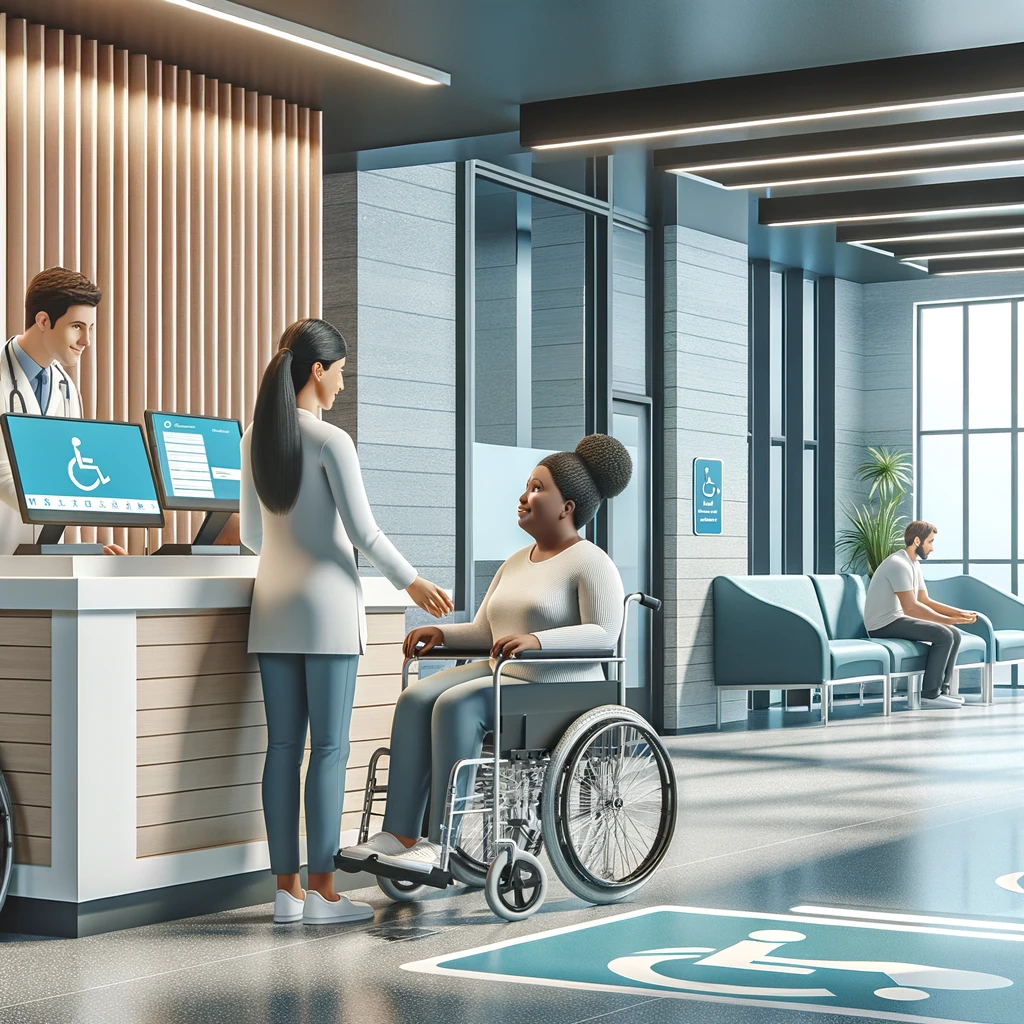
Cultural venues generally must provide patrons with disabilities equal access to programs, services, and experiences. That includes physical access, but it also extends to communication and policy-based access. For theaters and performance spaces, accessibility may involve wheelchair seating integrated with other seating choices, companion seating, accessible routes to lobbies and restrooms, assistive listening systems, captioned performances, audio description, and clear procedures for requesting accommodations. Museums and galleries may need to provide accessible entrances, exhibit design that can be navigated by people with mobility devices, large-print or braille materials where appropriate, audio guides, captioned media, and staff training on interacting respectfully with disabled visitors.
Accessible ticketing is another major issue. Patrons with disabilities should be able to buy tickets through systems that offer equivalent convenience, pricing, and access to information. If accessible seats are sold online, the platform should allow disabled patrons to locate and purchase them without excessive barriers. If a venue offers premium views or seating categories, accessible seating should not be relegated only to inferior locations. Policies on transfers, companions, and exchanges should also be implemented in a nondiscriminatory way. Likewise, websites and mobile apps used for event information, donations, membership access, and ticket purchases should be accessible to users with screen readers, keyboard-only navigation, and other assistive technologies.
Venues must also think through patron policies. Service animals are generally permitted in covered settings subject to limited exceptions. Staff should know how to respond lawfully and respectfully without imposing unnecessary documentation demands. Sensory access may require relaxed performances, quiet spaces, flexible re-entry rules, or adjusted house policies for patrons who need to move, stim, or use disability-related devices. The ADA does not require perfection in every circumstance, but it does require meaningful, nondiscriminatory access and a real commitment to removing barriers that exclude disabled patrons from the cultural life of their communities.
Are arts organizations required to provide communication and sensory access, such as captioning, interpreters, or relaxed performances?
In many situations, yes. The ADA often requires organizations to provide auxiliary aids and services when necessary to ensure effective communication, unless doing so would fundamentally alter the program or create an undue burden. In the arts, effective communication can mean open captioning or closed captioning, sign language interpreters, assistive listening devices, audio description, accessible printed materials, screen-reader-friendly digital content, and staff who know how to communicate with disabled patrons and participants. The exact obligation depends on the type of organization, the nature of the program, the needs of the individual, and what would be effective in context, but the legal baseline is that disabled people should be able to obtain information and participate in a way that is genuinely comparable, not merely symbolic.
Sensory access is also increasingly recognized as central to inclusion in cultural spaces. While the ADA does not always prescribe one specific sensory accommodation, institutions should evaluate whether modifications to policies, practices, or procedures are needed to avoid discrimination. For example, a theater might offer relaxed performances with modified lighting and sound levels, permit audience movement and vocalization, create decompression spaces, or ease strict late-seating and re-entry rules. A museum may reduce sensory triggers during designated hours or provide sensory maps and advance information so visitors can plan their experience. These measures can make the difference between nominal access and actual participation for autistic patrons, people with PTSD, people with migraines, and others with sensory disabilities.
The best legal and practical approach is not to wait for conflict. Arts organizations should build communication and sensory access into planning, budgeting, scheduling, and marketing. They should clearly publicize what access services are available, how to request additional accommodations, and whom to contact. When access is treated as a standard operational responsibility rather than an exception, compliance improves and the audience broadens.
What should artists or patrons do if they believe an arts organization has violated their ADA rights?
The first step is usually to document what happened as clearly as possible. Save emails, screenshots, ticketing records, event listings, accommodation requests, written policies, and notes about conversations with staff. If the problem involved a physical barrier, inaccessible website, denied service animal entry, refusal to provide communication access, or discriminatory treatment in hiring or auditions, details matter. Dates, names, exact statements, and evidence of how the barrier affected participation can all be important. In many cases, it helps to make a direct, written request for correction to the organization, especially if the problem may be resolved quickly through an accommodation, policy change, or technical fix.
If informal efforts do not work, there may be several options depending on the setting. Employment-related complaints may be filed with the Equal Employment Opportunity Commission. Complaints involving public entities may be directed to the relevant agency or the U.S. Department of Justice, and some issues involving private public accommodations may also be reported to the Department of Justice. State or local civil rights agencies may provide additional remedies under disability rights laws that overlap with or go beyond the ADA. In some situations, speaking with an attorney or disability rights advocacy organization is the most effective next step, particularly when the issue is systemic, urgent, or has caused significant harm.
It is also worth remembering that many access failures in the arts stem from poor planning, inadequate training, or outdated assumptions rather than openly hostile intent. That does not excuse noncompliance, but it means a well-framed complaint can sometimes lead to meaningful institutional change. Whether the goal is a captioned performance, an accessible audition process, a corrected website, or an end to discriminatory policies, disabled artists and patrons have every right to insist that the creative arts be truly accessible. The ADA is designed to support that demand for equal participation, dignity, and belonging.