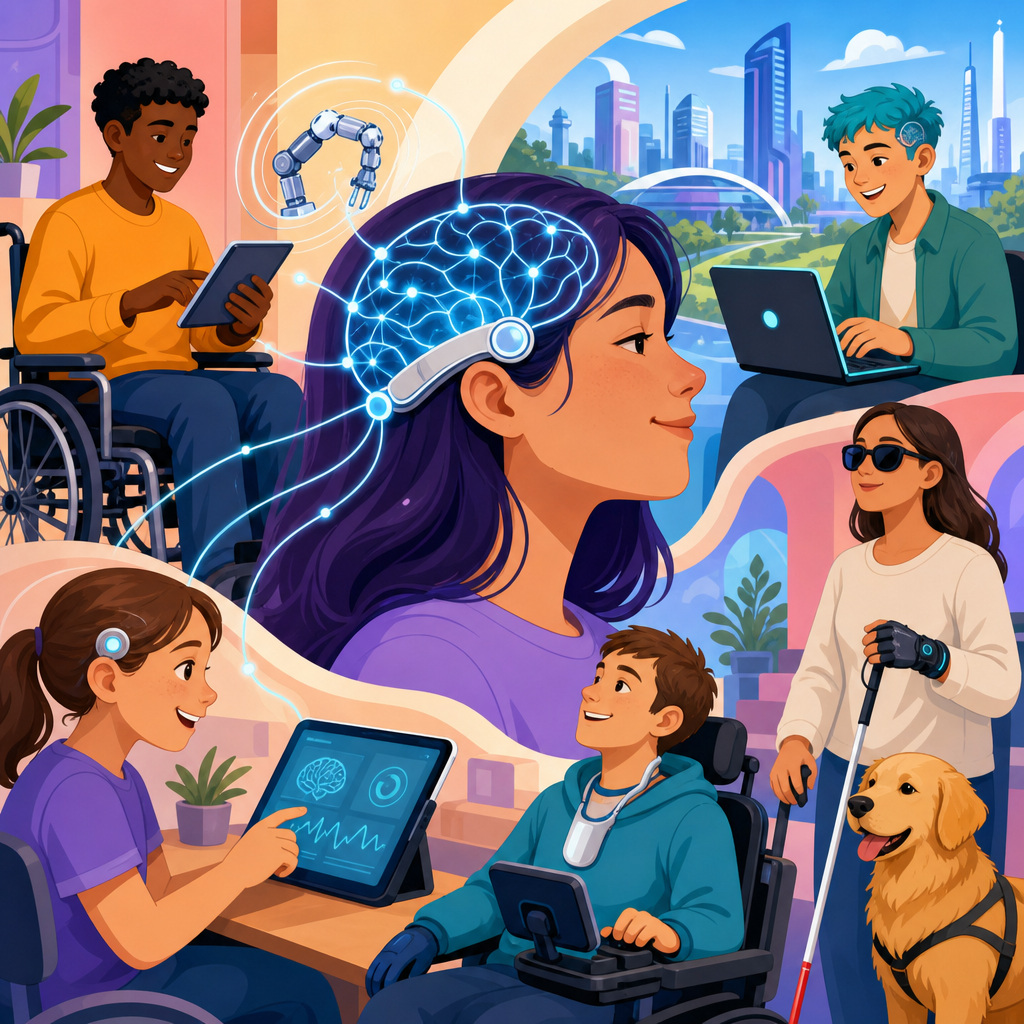
Brain-computer interfaces are moving from research labs into clinics, startups, classrooms, and public policy debates, and that shift could redefine disability access over the next decade. A brain-computer interface, or BCI, is a system that detects neural activity, translates it into commands, and uses those commands to control software, hardware, or communication tools. In practical terms, a person who cannot reliably move a hand, speak, or operate a conventional keyboard may still be able to type, select icons, drive a wheelchair, or trigger a home automation routine through signals measured from the brain.
For disability access, that possibility matters because many current assistive technologies still depend on residual movement, stable posture, or clear speech. Eye-tracking can fail when lighting changes, fatigue sets in, or ocular control is limited. Switch access can be powerful, but it requires at least one repeatable movement. Voice systems break down for users with dysarthria, ventilator noise, or degenerative conditions that affect speech. BCIs expand the access toolkit by creating another pathway: direct interpretation of intention from neural activity. They do not replace ramps, captions, screen readers, or alternative input devices. Instead, they widen the range of what access can mean when conventional interfaces no longer fit the user.
I have worked with assistive technology teams evaluating communication systems for people with complex motor disabilities, and the biggest lesson is simple: access fails when design assumes one body, one mode of control, or one stable level of energy. A useful BCI strategy starts with the same principle that guides strong rehabilitation engineering: match the tool to the person, environment, task, and support network. That is why this topic belongs at the center of emerging technologies. It touches medicine, civil rights, education, employment, cybersecurity, product design, reimbursement, and standards development all at once.
This hub article maps the field comprehensively. It explains the main types of brain-computer interfaces, the disability use cases that are advancing fastest, the legal and ethical questions shaping deployment, and the adjacent technologies that make BCIs more effective in real settings. It also clarifies a key point often lost in headline coverage: the future of disability access will not be defined by one dramatic implant alone. It will be built through a layered ecosystem that includes noninvasive headsets, implanted arrays, AI language models, adaptive software, robotics, accessibility law, and service delivery models that support daily use beyond the clinic.
What Brain-Computer Interfaces Actually Do
A brain-computer interface converts patterns of neural activity into actionable outputs. Most systems follow the same pipeline: signal acquisition, preprocessing, feature extraction, classification or decoding, and device control. Signal acquisition may be noninvasive, such as electroencephalography, known as EEG, which measures electrical activity through sensors placed on the scalp. It may also be invasive, such as electrocorticography, or ECoG, which records activity from electrodes placed on the cortical surface, or intracortical arrays implanted within brain tissue. In general, invasive systems can capture richer signals with higher spatial resolution, while noninvasive systems are safer and easier to deploy but typically offer lower precision and more noise.
The distinction matters for disability access because the design tradeoff affects who can benefit and how quickly. EEG systems can often be used without surgery and are already common in research and some consumer-adjacent products. They can support spelling interfaces, yes-no responses, attention tasks, and environmental control, but they may require calibration, careful electrode placement, and sustained concentration. Implanted systems can deliver much faster, more flexible control. High-profile studies have shown people with paralysis using intracortical BCIs to move robotic arms, control cursors, and generate text at rates that approach or exceed earlier assistive communication methods. Yet implantation raises surgical risk, regulatory complexity, maintenance questions, and cost barriers.
BCIs also differ by control strategy. Some rely on reactive signals, such as the P300 response, where a user focuses attention on a flashing target and the system detects a recognizable event-related potential. Others use steady-state visual evoked potentials, or SSVEP, which measure the brain’s response to flickering stimuli at specific frequencies. Motor imagery systems ask the user to imagine moving a limb, creating patterns the software can classify. More recent systems decode attempted speech or handwriting movements directly from motor cortex activity. Each method has strengths, limitations, and ideal contexts. The right choice depends on whether the goal is communication, navigation, prosthetic control, home access, or computer use.
Where BCIs Are Improving Disability Access Today
The clearest near-term impact is augmentative and alternative communication. For people with locked-in syndrome, advanced ALS, brainstem stroke, high cervical spinal cord injury, or severe cerebral palsy, communication access can determine medical autonomy, education, family participation, and legal capacity. BCIs can provide a path to generate letters, words, or synthesized speech when hand use, eye gaze, or voice are unavailable or inconsistent. Stanford and other research groups have reported brain-to-text systems that decode intended handwriting or speech-related activity at increasingly practical rates. These results are not science fiction. They show that neural decoding can support expressive communication, which is often the most urgent access need.
Mobility is another major area. BCIs have been used experimentally to control powered wheelchairs, exoskeletons, and robotic arms. In practice, shared control is usually more effective than pure direct control. For example, a user may indicate a destination or directional preference through BCI input while onboard sensors handle obstacle avoidance and path correction. This mirrors a lesson learned across assistive robotics: autonomy features reduce cognitive burden and improve safety. A wheelchair that requires constant perfect neural control is less accessible than one that accepts higher-level intent and handles routine navigation intelligently.
Digital access is equally important. A person does not need a robotic limb to gain independence through BCI. Cursor control, text entry, smart home operation, media access, and app navigation can dramatically improve daily life. Integration with operating system accessibility features is critical here. A BCI that can trigger switch control on iOS, Android, Windows, or macOS can unlock existing ecosystems of scanning keyboards, communication apps, and environmental controls. In rehabilitation settings, I have seen simpler integrations deliver more real benefit than more glamorous prototypes because they fit into ordinary routines: sending messages, opening doors, adjusting lights, joining school, and using workplace software.
| Use Case | Common BCI Approach | Access Benefit | Main Limitation |
|---|---|---|---|
| Communication for severe paralysis | P300 speller, motor cortex decoding, attempted speech decoding | Enables text or synthesized speech when hands and voice are unavailable | Calibration time, fatigue, clinical support needs |
| Wheelchair or mobility aid control | Motor imagery or directional selection with shared autonomy | Supports navigation and independence in home or community settings | Safety validation and slower command speed |
| Robotic arm or prosthetic control | Intracortical or ECoG decoding | Restores reaching, grasping, and object interaction | Surgical risk and long-term device maintenance |
| Computer and smart home access | EEG selection systems, cursor control, switch emulation | Improves everyday digital access and environmental control | Variable performance outside structured environments |
Emerging Technologies That Will Shape the Hub
Brain-computer interfaces sit inside a broader emerging technology stack. Artificial intelligence is the most visible layer because modern decoding depends on machine learning models that identify meaningful neural patterns within noisy signals. Better models improve speed, personalization, and error correction. Language modeling also matters. If a user intends to write “I need suction now,” predictive systems can reduce the number of selections required while preserving intended meaning. However, predictive assistance must remain transparent and user-controlled. In disability contexts, an incorrect prediction is not a minor annoyance; it can misstate consent, medical need, or legal intent.
Neuroprosthetics and advanced robotics form another layer. A BCI becomes more useful when it can connect to robotic arms, orthotic devices, smart wheelchairs, and wearable sensors. Computer vision adds environmental awareness, allowing systems to identify cups, doors, beds, or obstacles and translate neural commands into goal-based actions. Cloud computing and edge processing affect reliability and privacy. Edge processing can keep sensitive neural data local and reduce latency, while cloud services can support model updates and remote clinical oversight. Interoperability standards will determine whether these systems become isolated premium products or part of a practical access ecosystem.
Extended reality, digital therapeutics, and biosignal fusion also belong in this hub. Mixed reality environments can help train BCI use or support rehabilitation by providing immersive feedback. Biosignal fusion combines neural data with eye tracking, electromyography, inertial sensors, or residual switch input. This is often the most realistic path to usable access. In the field, hybrid systems outperform purist visions because disability is variable. A person may use gaze on one day, a cheek switch on another, and BCI input when fatigue or disease progression limits everything else. The future is multimodal, not singular.
Legal, Regulatory, and Ethical Frontiers
Any serious discussion of brain-computer interfaces and disability access must address law and governance. In the United States, the Food and Drug Administration plays a central role for medical devices, particularly implanted systems and software with treatment or diagnostic claims. Regulatory review matters because safety, effectiveness, cybersecurity, and labeling are not abstract concerns when a device mediates communication or movement. Standards bodies such as ISO and IEC influence quality management, risk analysis, and device lifecycle expectations. Hospital ethics committees, institutional review boards, and payer policies further shape who gets access and under what conditions.
Disability rights law is equally important. The Americans with Disabilities Act, Section 504 of the Rehabilitation Act, Section 1557 in health settings, and accessibility procurement rules all affect how emerging technologies should be deployed. A university, employer, hospital, or public agency cannot treat BCI access as a luxury if it becomes a reasonable and effective accommodation for a qualified individual. At the same time, BCIs do not erase the obligation to maintain accessible mainstream systems. A website still needs keyboard navigation and screen reader compatibility; a school still needs communication supports that work without experimental hardware. New technology expands accommodation options, but it does not weaken baseline accessibility duties.
Privacy, consent, and data governance are the hardest ethical issues. Neural data may reveal attention, intent, fatigue, or health patterns. That raises questions about ownership, secondary use, security, and discrimination. Employers should not gain access to neural performance data from workplace accommodations. Insurers should not exploit BCI logs to narrow coverage. Consent procedures must account for communication barriers and fluctuating capacity. There is also a fairness issue: if only wealthy early adopters receive cutting-edge access tools, disability inequality deepens. Public funding, Medicaid pathways, veterans’ programs, and durable reimbursement models will determine whether BCI access becomes a niche service or a legitimate part of assistive technology infrastructure.
What Must Happen Next for Real-World Adoption
For BCIs to improve disability access at scale, five practical conditions must be met. First, systems need durable performance outside laboratories. That means faster setup, better signal stability, easier calibration, and interfaces that work in noisy homes, schools, and clinics. Second, training and support must be built into deployment. Successful use depends on rehabilitation engineers, speech-language pathologists, occupational therapists, neurologists, caregivers, and users working together. Third, procurement and reimbursement pathways must mature. Without coverage for hardware, software, fitting, maintenance, and replacement, promising devices remain inaccessible.
Fourth, product teams need to design with disabled users from the start. Co-design is not optional. It is the only reliable way to address comfort, aesthetics, fatigue, setup burden, privacy expectations, and everyday goals. Fifth, BCIs must integrate with the rest of the accessibility landscape. The best future is not a separate neural island. It is a connected environment where BCIs can interface with AAC platforms, smart home standards, wheelchair electronics, mainstream operating systems, and telehealth services. That integration is what turns a compelling demo into a sustainable access tool.
Brain-computer interfaces and the future of disability access should be understood as both a technological breakthrough and a systems challenge. The breakthrough is real: direct neural control can restore communication, mobility, and digital participation for people excluded by conventional interfaces. The challenge is just as real: usefulness depends on regulation, design, training, interoperability, affordability, and rights-based implementation. If you are building, funding, prescribing, or studying emerging technologies, start with the access problem that needs solving, then evaluate where BCIs fit within the wider assistive ecosystem. That is how this field moves from possibility to everyday inclusion.
Frequently Asked Questions
What is a brain-computer interface, and how could it improve disability access?
A brain-computer interface, or BCI, is a system that detects patterns of neural activity, interprets those signals, and converts them into commands that can control a digital or physical device. In the context of disability access, that matters because it creates a new pathway for interaction that does not depend entirely on speech, hand movement, or conventional motor control. For someone living with paralysis, advanced neuromuscular disease, a speech impairment, or a condition that makes touchscreens and keyboards unreliable, a BCI may offer a way to type, move a cursor, select menu items, operate assistive software, or communicate basic needs more independently.
The biggest accessibility promise of BCIs is not that they will replace every existing assistive technology, but that they could expand the menu of options. Today, disability access often depends on eye tracking, switches, voice control, adaptive keyboards, or caregiver assistance. Those tools remain essential, but they do not work equally well for every person or every environment. A BCI could serve as an additional access method when fatigue, muscle weakness, speech loss, or environmental barriers make other tools difficult to use. Over time, that could reshape accessibility in education, employment, healthcare, and home life by giving more people a direct way to engage with devices and communication systems on their own terms.
Who could benefit most from brain-computer interfaces over the next decade?
BCIs are most often discussed in relation to people with significant motor or communication impairments, and that is where many of the most immediate benefits are likely to appear. Individuals with spinal cord injuries, ALS, cerebral palsy, muscular dystrophy, locked-in syndrome, stroke-related impairments, or other neurological conditions may benefit if a BCI allows them to control a computer, generate speech, send messages, or navigate digital environments with less physical effort. In some cases, the value is practical and functional. In others, it is deeply personal, because the ability to communicate consistently and independently can affect education, employment, healthcare decision-making, relationships, and quality of life.
That said, the future impact of BCIs may be broader than a single diagnostic category. Disability access is not one-size-fits-all, and many people experience fluctuating needs depending on fatigue, pain, medication effects, progression of disease, or context. A student may be able to use a keyboard in the morning but not later in the day. A worker may need a secondary access pathway when speech recognition fails in a noisy environment. A person with multiple disabilities may combine BCIs with eye tracking, predictive text, and smart home controls. Over the next decade, the people who benefit most may be those for whom existing tools are inconsistent rather than impossible, because BCIs could help close gaps that current accessibility systems still leave open.
Are brain-computer interfaces meant to replace wheelchairs, screen readers, eye tracking, or other assistive technologies?
In most realistic scenarios, no. BCIs are better understood as part of a larger accessibility ecosystem rather than a total replacement for established assistive technologies. Wheelchairs, screen readers, augmentative and alternative communication devices, eye-gaze systems, switch controls, captioning, adaptive gaming tools, and environmental control systems all address different needs and contexts. A BCI may add an important layer of access, especially when movement or speech is severely limited, but it does not eliminate the need for accessible design, disability accommodations, or the wide range of tools people already rely on every day.
This distinction is important because disability access works best when people have multiple reliable options. A BCI may help someone open an app, type a message, or control a robotic assistive device, but they may still need screen-reader compatibility, accessible web design, caregiver support, transportation access, and workplace accommodations. In fact, the most effective future systems will likely be integrated ones, where BCIs work alongside existing tools instead of competing with them. For example, a person might use eye tracking for fast navigation, a BCI for difficult fine selections when eye fatigue sets in, and speech output software for communication. That layered approach reflects the reality of accessibility: independence usually comes from flexibility, interoperability, and user choice.
What are the biggest barriers to making BCIs widely accessible and equitable?
Although the technology is advancing quickly, several barriers could limit who actually benefits from BCIs. Cost is one of the most obvious. Advanced hardware, software training, clinical support, maintenance, and customization can make these systems expensive, especially in the early stages of adoption. Access may also depend on geography, because major research hospitals and specialized clinics are not evenly distributed. Insurance coverage, public funding, and regulatory approval will play a major role in determining whether BCIs become realistic tools for a broad disability community or remain available only to a small number of users in well-resourced settings.
There are also technical, ethical, and policy barriers. BCIs often require calibration, user training, and ongoing adjustment, and performance can vary by person, condition, fatigue level, and environment. Privacy is another major concern, because neural data is highly sensitive and should not be treated like ordinary consumer data. Users need clear protections around consent, data storage, security, and commercial use. On top of that, equitable design requires input from disabled people at every stage, from research and clinical trials to procurement standards and classroom implementation. If policymakers, startups, and healthcare systems move too quickly without accessibility safeguards, BCIs could reinforce inequality instead of reducing it. The future of disability access will depend not just on whether BCIs work, but on whether they are affordable, trusted, usable, and governed responsibly.
What should schools, employers, healthcare providers, and policymakers do now to prepare for the future of BCI-based accessibility?
The most important step is to treat BCIs as an emerging access technology that deserves serious planning now, not after adoption becomes widespread. Schools and employers should begin by reviewing their digital accessibility practices, procurement standards, and accommodation processes. If educational platforms, workplace software, and communication tools are already difficult to use with assistive technology, BCIs alone will not solve the problem. Organizations should prioritize interoperable systems, flexible input methods, and accessibility-by-design so that future BCI users can participate without needing custom workarounds for every task.
Healthcare providers and policymakers have a parallel responsibility. Clinicians need training on when BCIs may be appropriate, how to discuss them realistically with patients, and how to connect users with long-term support rather than one-time pilot programs. Policymakers should focus on reimbursement pathways, disability rights protections, data privacy rules, research funding, and inclusive standards that prevent access from becoming dependent on wealth or location. Just as important, disabled people and advocacy groups should be involved in decision-making from the beginning. The future of BCI-based accessibility should not be defined only by engineers or investors. It should be shaped by the people who will actually use these systems, live with their limitations, and depend on them for education, work, communication, and everyday autonomy.


