The Americans with Disabilities Act (ADA) is crucial legislation enacted to prohibit discrimination against individuals with disabilities. An important aspect of this law pertains to ensuring accessibility in various sectors, including residential and commercial spaces. One significant area where ADA compliance plays a vital role is in the kitchen and kitchenette environment. The ADA-compliant kitchen is designed to accommodate individuals with disabilities, guaranteeing that they can prepare meals, reach necessary appliances, and move around without obstruction. This is not merely a matter of legal compliance but is integral to ensuring inclusivity, independence, and equality for people with disabilities.
The primary goal of an ADA-compliant kitchen is to create an environment that is accessible to everyone, regardless of their physical abilities. Key components include the height of countertops, the width of doorways, the functionality of kitchen appliances, and the availability of adequate space to maneuver wheelchairs. Compliance with ADA standards ensures that physically challenged persons can enjoy the same convenience and autonomy that able-bodied individuals take for granted. Furthermore, accommodating these needs demonstrates a respect for diversity and commitment to inclusive living.
Therefore, ensuring a kitchen is ADA-compliant is of paramount importance. It’s not only about conforming to legal requirements but also about recognizing the diverse needs of our community. This commitment to accessibility fosters a greater quality of life and empowers individuals with disabilities to lead more independent lives. Throughout this article, we will explore various aspects of what constitutes an ADA-compliant kitchen, providing insights on how to create such spaces. Whether you are a homeowner, builder, or designer, understanding these guidelines is crucial to make informed decisions while planning a universally accessible kitchen.
Essential Elements of ADA-Compliant Kitchens
Creating an ADA-compliant kitchen involves adhering to many specific guidelines. These regulations are designed to address the functional and spatial requirements of individuals with disabilities. Some of the fundamental elements include accessible countertops, reachable storage, and user-friendly appliances. Proper incorporation of these elements ensures that the kitchen is accessible, safe, and efficient for all users.
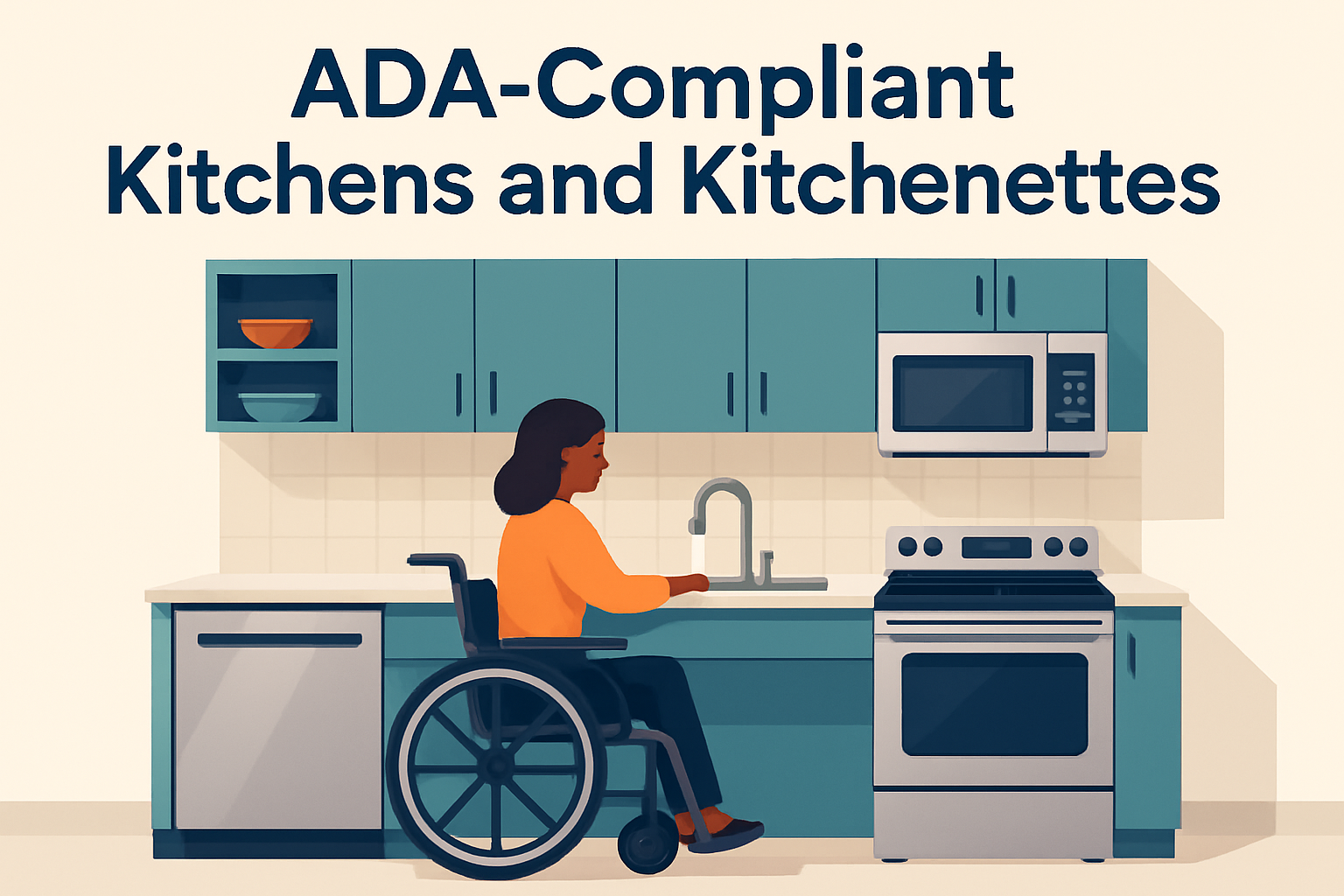
Countertops, for example, must be designed so they are accessible to a person seated in a wheelchair. The ADA specifies a specific height range for countertops—between 28 to 34 inches from the floor—to accommodate different heights and reach requirements. A notable example is the remodel of a popular restaurant’s kitchen in New York City. They significantly lowered sections of countertops to better serve and employ individuals with mobility restrictions, resulting in increased food preparation efficiency and improved staff morale.
Equally important is the arrangement of kitchen appliances such as ovens, microwaves, and sinks. They should be at a height and location that minimizes the need for reaching or bending excessively. For instance, a standard practice is having wall-mounted ovens with side-swing doors, unlike the traditional drop-down design. In a residential remodel, a homeowner in Chicago installed a pull-out oven that seamlessly integrated into cabinetry, providing easy access while seated.
Storage Solutions in ADA-Compliant Kitchens
Storage solutions are another vital aspect of ADA-compliant kitchens. Cabinets, drawers, and shelves should be easy to access without necessitating any physical strain. Implementing pull-down shelves and drawers with full-extension slides is essential. For example, a remodeler in Austin created a kitchen concept featuring pull-down cabinetry mechanisms, which brought high shelves to the individual’s level, greatly enhancing accessibility for a homeowner bound to a wheelchair.
Moreover, using “D” shaped pulls rather than knobs on cabinets and drawers makes them accessible to individuals with limited hand strength or motor skills. The inclusion of such simple yet thoughtful designs significantly impacts ease of use, showcasing how accessible design addresses nuances in every living space.
| ADA Kitchen Element | Specifications |
|---|---|
| Countertop Height | 28 to 34 inches from the floor |
| Door Width | Minimum 32-inch clear width |
| Work Space Clearance | Minimum 30 inches x 48 inches space |
| Sinks | Shallow basins with open access below |
Open Space and Maneuverability
Space is a critical consideration in ADA-compliant kitchens. It is vital to ensure sufficient clear floor space for maneuvering, especially for wheelchair users. Depending on the configuration (U-shaped, G-shaped, or galley kitchen), a standard ADA requirement is a clear floor space of at least 30 inches by 48 inches. Additionally, a turning space of 60 inches is necessary for a full 360-degree rotation by a wheelchair.
A practical illustration can be drawn from the renovation of a corporate office’s kitchenette in Seattle. After the modification, the kitchenette provided expansive turning space that allowed staff members using wheelchairs to move freely and safely. This transformation not only facilitated their movements but also enhanced social interaction by creating a more inclusive environment.
Consideration of Lighting and Electrical Controls
Lighting and electrical controls also play a vital role in ADA-compliant kitchen designs. Lighting should be adjusted to minimize glare and shadows, enhancing safety and visibility. Additionally, switches, outlets, and controls should be installed at 15 to 48 inches above the floor to ensure they are reachable from a seated position.
An inspiring example comes from a newly developed community center in San Francisco, designed with these principles in mind. Each kitchen space was equipped with strategically positioned lighting and accessible switches, improving functionality and ensuring activities could proceed without difficulty for mobility-challenged individuals. Such thoughtful installations demonstrate that maintaining a balance of aesthetics and function is possible while adhering to ADA regulations.
Appliances Tailored for Accessibility
Finally, ensuring that appliances suit varying accessibility needs is indispensable in an ADA-compliant kitchen. It’s crucial for these appliances to have accessible design features, such as front-control panels on stoves and cooktops or side-opening oven doors. Other accessible appliance features might include dishwashers with adjustable racks and refrigerators that offer easy access to commonly used areas.
A noteworthy case is a residential upgrade project in Miami, where a family installed appliances with customizable features—their refrigerator included an accessible lower pull-out drawer for simple access and organization. The new setup empowered the family members with limited mobility and notably enhanced their daily living experience.
Conclusion: Embracing ADA Compliance in Kitchen Design
In summary, creating ADA-compliant kitchens is not just about meeting legislative standards; it is a meaningful step towards creating inclusive spaces where everyone, regardless of physical ability, can enjoy independence and dignity. Key elements such as countertop height, flexible storage solutions, clear open space, user-friendly appliances, and intuitive lighting and electrical controls are essential features that should be carefully considered.
By embracing these guidelines and integrating thoughtful design practices, homeowners, builders, and designers can create kitchens that are not only functional and welcoming but also accommodating of diverse needs. As you consider new builds or renovations, prioritizing accessibility will enhance the living experience for all inhabitants, enriching their quality of life.
Whether planning for immediate needs or future-proofing your environment, integrating ADA-compliant features is a wise investment in a space that is welcoming to all. Take the step to consult with professionals who specialize in accessible design to ensure your kitchen project aligns with these standards, delivering an inclusive, functional, and beautifully designed space.
Frequently Asked Questions
1. What makes a kitchen ADA-compliant?
To label a kitchen as ADA-compliant, several key features must be included to ensure that the space is fully accessible to individuals with disabilities. An ADA-compliant kitchen will typically have lowered countertops so that individuals who use wheelchairs can work comfortably. They will often be around 34 inches from the ground, significantly lower than the standard counter height. Additionally, there should be a clear floor space of at least 30 by 48 inches in front of appliances for wheelchair access.
Cabinets and countertops must be designed so that they are easily reachable, usually with pull-out shelves or lazy Susans to minimize the need to reach into deep cabinets. Under the sink or stovetop, having knee clearance of at least 27 inches high and 30 inches wide is crucial. Faucets should be easy to operate with one hand – often lever-style handles are used in compliant kitchens. Appliances, such as stoves and ovens, should have controls on the front to avoid the need to reach over hot surfaces.
Lighting is another key aspect. Adequate lighting both inside and outside the storage spaces, task lighting on work surfaces, and easy-to-reach switch controls are essential. These elements combined ensure an adaptable and inclusive space, conducive to independent living for those with disabilities.
2. Why is it important for kitchens and kitchenettes to be ADA-compliant?
ADA compliance in kitchens is important for creating an inclusive space where everyone, regardless of their physical abilities, can live independently and safely. The kitchen is a crucial part of any home or workplace as it facilitates daily activities such as cooking and dining, which are essential for maintaining a healthy and balanced lifestyle.
When kitchens are ADA-compliant, they provide equal access and opportunity. This ensures that individuals with disabilities are not marginalized within their own homes or workplaces. It also reduces the risk of accidents and injuries in the kitchen, which can be particularly dangerous. For example, properly designed spaces prevent the need to reach over hot surfaces or stretch excessively, minimizing burn or strain injuries.
Moreover, ADA-compliance is not just a moral obligation but also a legal one, especially for commercial spaces. Businesses must ensure their environments are accessible to all potential employees and clients. This opens doors for those with disabilities to participate fully in the workforce and community life.
3. What types of stoves and ovens are considered ADA-compliant?
When it comes to stoves and ovens, an ADA-compliant design aims to ensure that these appliances are accessible to those who might have mobility challenges. Single wall ovens are often considered ADA-compliant because they can be mounted at an accessible height. They allow the user to place them in a position where they can be reached from a seated position, depending on the individual’s comfort level.
For stovetops, electric models with smooth surfaces are frequently more appropriate than designs with raised burners, as they often include capacitive touch controls or controls located at the front, which are easier to access. Additionally, induction ranges are gaining popularity because they also offer a smooth surface, and the cooktop doesn’t get hot to the touch.
Slide-in ranges, where controls are mounted on the front of the appliance rather than on the back, are also a good choice. They eliminate the need to reach over hot cooking surfaces to adjust the heat. Any controls, whether on stoves or ovens, should be clearly labeled and have tactile feedback or large, easy-to-read print to accommodate users with visual impairments.
4. How do ADA-compliant kitchen designs help maintain safety?
Safety is a major concern in any kitchen environment, and ADA-compliant designs strive to address potential hazards and create a more secure space. By ensuring that spaces are reachable and operable for those with disabilities, risk is inherently reduced. For instance, appropriately positioned countertops and appliances help prevent the act of stretching and bending excessively, which can cause falls or other injuries.
Appliance safety is enhanced through the use of front-controlled burners and ovens, minimizing the potential burn risk associated with reaching over hot surfaces. ADA guidelines also recommend knobs and controls that are operable with one hand and do not require tight grasping, pinching, or twisting of the wrist, making them safer and more accessible.
Additionally, ADA-compliance often includes attention to lighting, both for visibility and safety. Well-lit workspaces help prevent accidents with sharp or hot tools, while accessible switch placements ensure that individuals with limited mobility can control lighting without straining themselves. Together, these elements work to create a safe, effective environment for all users.
5. Can existing kitchens be renovated to become ADA-compliant?
Absolutely! Existing kitchens can definitely be renovated to meet ADA standards. While it may take some planning and investment, altering an existing kitchen to be more accessible is a worthwhile endeavor that can significantly improve quality of life. It generally involves evaluating the current layout and making adjustments to meet ADA guidelines.
One of the first steps in renovating an existing kitchen might include adjusting countertop heights and ensuring there is appropriate clearance underneath for wheelchairs. Adding pull-out shelves and lazy Susans in cabinets can make storage more accessible in a cost-effective way. Replacing knobs with handles that are easy to grip and swapping out traditional faucets for lever-style taps can also be simple adjustments.
Changing out appliances with more accessible options, such as those with front controls, is also a significant step in the renovation process. If an existing renovation budget doesn’t allow for all changes at once, prioritizing the most critical adjustments – like appliance control updates and egress adjustments – can be a good compromise to move towards full compliance.
Engaging with professionals who understand ADA requirements is crucial. They can assist in creating a layout that navigates both the requirements of ADA compliance and the space constraints of the existing structure, ensuring a more inclusive and efficient renovation.