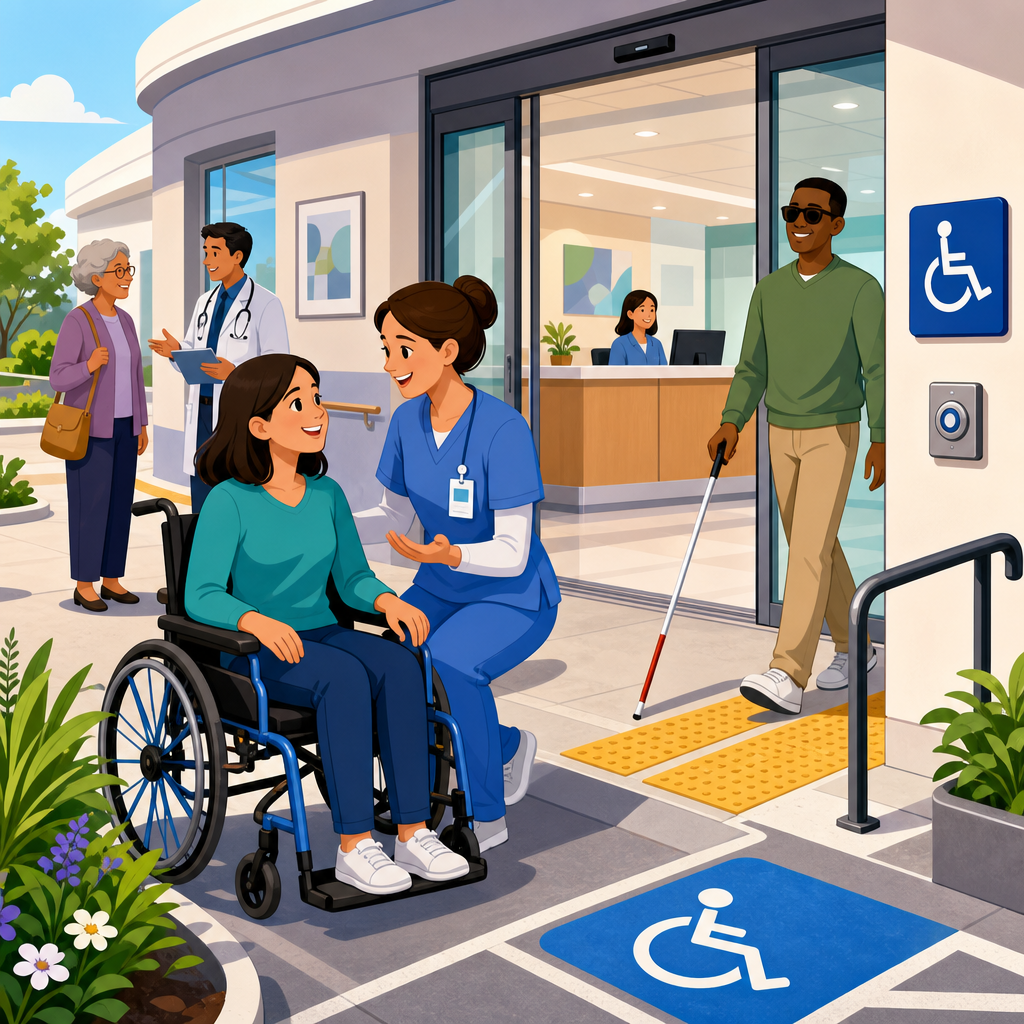
ADA compliance in healthcare has shifted from a facilities-only concern to a technology, operations, and patient-safety priority that touches every digital and physical interaction a patient has with a provider. In practical terms, ADA compliance means meeting the requirements of the Americans with Disabilities Act and related federal rules so people with disabilities can access care, information, communication, and services on an equal basis. In healthcare, that includes wheelchair access, effective communication for patients who are deaf or blind, accessible medical equipment, usable websites, patient portals, kiosks, telehealth platforms, mobile apps, and documents such as discharge instructions or billing notices. The recent changes and updates matter because healthcare delivery now depends on digital systems as much as waiting rooms and exam tables, and regulators increasingly expect accessibility to be built into both.
I have worked with health systems on accessibility reviews of patient-facing technology, and the biggest shift in the last few years is clear: accessibility is no longer treated as a narrow legal checklist. It is now tied to clinical outcomes, revenue cycle performance, patient experience scores, and cybersecurity modernization. A patient who cannot complete eCheck-in because a portal fails with a screen reader may miss care. A deaf patient without qualified video remote interpreting during an emergency visit may not understand consent or discharge instructions. A patient with low vision who receives an image-only PDF statement may never pay a bill on time. Accessibility failures create friction at every step of the care journey, and regulators have become more specific about what covered entities must do.
Recent updates have accelerated this trend. The Department of Justice finalized a rule under Title II establishing technical expectations for web and mobile accessibility for state and local government entities, including many public hospitals and academic medical centers, by pointing to WCAG 2.1 Level AA. Section 1557 of the Affordable Care Act has also been updated, reinforcing nondiscrimination obligations in healthcare programs and activities, including digital communication access. At the same time, the Department of Health and Human Services continues to emphasize language access, auxiliary aids and services, and equal access for telehealth. For private healthcare organizations covered by Title III, the law still relies heavily on general nondiscrimination principles and case law rather than a single web regulation, but the operational expectation is the same: digital accessibility must be addressed systematically.
This hub article explains what changed, what healthcare organizations need to implement now, and how to advance accessible technology in a way that stands up to legal scrutiny and works in real clinical settings. It covers websites, mobile apps, telehealth, patient portals, self-service tools, documents, procurement, testing, governance, and staff training. If you lead digital transformation, compliance, patient access, IT, revenue cycle, clinical operations, or marketing, these are the core issues that should guide the rest of your accessibility program.
What Recent ADA and Healthcare Accessibility Updates Mean
The most important recent development is the move from broad accessibility principles to more explicit digital standards. For public hospitals, public university medical centers, county health departments, and other state or local entities, the DOJ Title II web and mobile rule creates a much clearer compliance target by adopting WCAG 2.1 Level AA. That matters because WCAG translates legal obligations into testable requirements such as keyboard operability, text alternatives, sufficient color contrast, captions, error identification, and compatible code structure for assistive technologies. The rule also sets compliance timelines based on entity size, which means organizations cannot postpone remediation indefinitely.
Another major update is the 2024 Section 1557 final rule from HHS. Section 1557 prohibits discrimination on the basis of disability, race, color, national origin, sex, and age in certain health programs and activities. For disability access, the rule reinforces the need for effective communication, reasonable modifications, accessible buildings and equipment, and nondiscriminatory use of digital tools. This is especially important in modern healthcare because many administrative and clinical tasks have moved online. If registration, scheduling, consent, education, billing, or telehealth is inaccessible, the barrier is not merely technical; it is a civil rights issue within care delivery.
Healthcare organizations should also understand that accessibility expectations extend beyond public websites. In enforcement actions and settlement agreements, regulators often look at the full patient journey. That includes appointment reminders, electronic forms, online bill pay, post-visit summaries, wearable device integrations, and embedded third-party tools. I have seen organizations focus heavily on homepage accessibility while leaving the actual scheduling widget or PDF intake packet unusable. That approach fails in practice because patients interact with workflows, not isolated pages.
Accessible Technology in the Full Patient Journey
Implementing accessible technology in healthcare starts with mapping where patients encounter digital barriers. The journey usually begins before a visit, with provider search, insurance information, parking instructions, and online scheduling. It continues with registration, identity verification, forms completion, arrival kiosks, wait-time notifications, portal use, telehealth, after-visit instructions, refill requests, and payment. Every handoff matters. If one step is inaccessible, the patient may call the contact center, arrive unprepared, abandon the task, or delay care.
In one hospital network assessment I worked on, the website homepage largely met common accessibility checks, but the scheduling flow embedded from a third-party vendor did not support keyboard-only use and mislabeled form fields for screen readers. Analytics showed high abandonment on mobile devices. Fixing field labels, focus order, and error messaging reduced drop-off and lowered call-center volume. This is a common pattern: accessibility improvements often deliver measurable operational gains because they reduce confusion for everyone, not only users of assistive technology.
Telehealth requires the same discipline. A platform may be clinically sound and secure under HIPAA, yet still fail accessibility if captions are absent, controls are not keyboard reachable, or chat and consent prompts are not announced correctly by screen readers. Patients with speech disabilities may need integrated chat or relay support. Patients with cognitive disabilities may need simpler instructions, predictable workflows, and fewer timeouts. Accessible telehealth is not a side feature; it is part of equitable access to care.
| Healthcare touchpoint | Common accessibility risk | Practical implementation fix |
|---|---|---|
| Online scheduling | Unlabeled fields, inaccessible date pickers, timeout errors | Use properly coded forms, keyboard support, visible and programmatic error messages |
| Patient portal | Low contrast, confusing navigation, inaccessible lab result PDFs | Apply WCAG-based design system, simplify information architecture, provide tagged documents |
| Telehealth visit | No captions, poor screen-reader support, inaccessible consent flow | Enable live captioning, test assistive technology compatibility, redesign modal dialogs |
| Self-service kiosk | Touch-only interface, fixed height, no speech output | Add tactile controls, audio guidance, adjustable positioning, staff fallback process |
| Billing and statements | Image-only PDFs, unclear payment instructions | Generate tagged PDFs or accessible HTML statements with plain-language summaries |
Websites, Portals, Mobile Apps, and Documents
For most organizations, the fastest path to improvement is to prioritize high-traffic, high-risk assets: the main website, provider directories, scheduling tools, patient portals, mobile apps, and document templates. WCAG 2.1 Level AA remains the most defensible technical baseline because regulators, courts, vendors, and auditors already use it. In healthcare, the most frequent failures are still basic ones: missing alt text on functional images, poor heading structure, empty buttons, insufficient contrast, inaccessible form fields, content that cannot be zoomed to 200 percent, and PDFs that are not tagged for assistive technology.
Documents deserve special attention. Health systems send enormous volumes of PDFs, including consent forms, explanations of benefits, discharge instructions, notices of privacy practices, and financial assistance applications. Many are exported as flat image files or built from inaccessible templates. A screen reader cannot infer structure from an image-only scan. The fix is to create source documents with proper heading levels, lists, table markup, reading order, and descriptive link text, then export and test tagged PDFs. In some cases, the better solution is to publish critical content as accessible HTML and use PDFs only when a printable form is genuinely necessary.
Mobile apps add another layer. Native iOS and Android apps must work with VoiceOver and TalkBack, support dynamic text sizing, preserve color contrast in dark and light modes, and avoid gesture-only interactions. Healthcare apps often fail when developers customize controls without exposing names, roles, and values to accessibility APIs. Medication refill buttons, insurance card upload controls, or symptom checkers may appear polished visually but remain unusable for blind patients. That is why accessibility testing must be built into the software development lifecycle, not deferred to a final audit.
Medical Devices, Kiosks, and Clinical Environment Technology
Accessible technology in healthcare extends beyond websites. The clinical environment includes check-in kiosks, digital wayfinding, pharmacy pickup systems, bedside entertainment, nurse call interfaces, imaging check-in tablets, and increasingly, connected medical devices with touchscreens. The ADA and related nondiscrimination rules require equal access to services, and inaccessible hardware can block that access just as effectively as a staircase.
Medical diagnostic equipment has its own accessibility considerations. The Access Board has issued standards for medical diagnostic equipment to improve independent access for patients with disabilities, covering features such as transfer surfaces, support rails, stirrups, and clear floor space. Although procurement and deployment vary, these standards have changed expectations. A clinic that installs only fixed-height exam tables or weight scales that cannot accommodate wheelchair users exposes itself to both clinical quality and legal risk. Technology and accessibility intersect here because modern devices are software-driven, networked, and integrated into workflows. If a patient cannot independently use intake hardware or diagnostic equipment, staff need defined accommodation procedures, not improvised workarounds.
Kiosks are a recurring problem. Vendors often deliver sleek touchscreen systems with no tactile controls, no headphone jack for audio output, and no privacy-conscious speech mode. In healthcare, that can force a patient to disclose sensitive information to staff just to check in. The better approach is to include accessibility requirements in procurement documents, require vendor conformance statements such as VPATs based on the applicable template, and verify claims through hands-on testing before rollout.
Governance, Procurement, Testing, and Training
Healthcare organizations that make durable progress treat accessibility as a governance function rather than a one-time remediation project. That means assigning executive ownership, defining policy, setting technical standards, creating issue escalation paths, and tracking remediation with the same rigor used for privacy or cybersecurity findings. Accessibility should sit within digital governance but connect directly to compliance, patient experience, clinical operations, and procurement. Without that structure, teams fix isolated defects while new inaccessible content keeps entering production.
Procurement is where many programs either succeed or fail. Health systems depend on electronic health records, telehealth platforms, CRMs, payment vendors, chatbot tools, and marketing technologies that patients interact with every day. Contracts should require accessibility conformance, ongoing remediation commitments, audit cooperation, and notice of material changes. A VPAT is useful, but it is not proof. I advise teams to review the VPAT, ask for test evidence, run sample assistive-technology scenarios, and include accessibility acceptance criteria before renewing or implementing a product.
Testing must combine automation and manual review. Automated scanners such as axe, WAVE, or Lighthouse can identify missing form labels, contrast issues, or structural errors quickly, but they do not reliably judge task completion, reading order quality, caption accuracy, or the practical usability of a scheduling flow. Manual testing with keyboard navigation, screen readers like JAWS, NVDA, and VoiceOver, screen magnification, and mobile assistive technologies is essential. The strongest programs also include users with disabilities in moderated testing because real patient behavior reveals barriers that technical checks miss.
Training closes the loop. Content authors need to know how to create accessible pages and documents. Developers need standards for semantic markup, ARIA use, focus management, and component libraries. Designers need rules for contrast, target size, and error prevention. Frontline staff need to understand accommodation workflows, auxiliary aids, and how to respond when technology fails. In healthcare, accessibility is ultimately operational. A compliant design that staff cannot support consistently will still break down in live care settings.
How to Advance Accessible Technology Strategically
The best accessibility roadmaps in healthcare start with risk-based prioritization. First, inventory patient-facing assets and rank them by volume, criticality, and legal exposure. Second, fix the pathways that affect access to care and money: scheduling, portal login, telehealth, forms, statements, and core documents. Third, build accessibility into design systems, procurement, release gates, and content workflows so the organization stops recreating the same defects. This is how programs move from reactive remediation to sustainable maturity.
Metrics matter. Track defect severity, time to remediate, percentage of templates conforming to your standard, caption coverage, document conversion rates, contact-center complaints tied to digital barriers, and completion rates for high-value tasks such as appointment booking or bill payment. When leaders see accessibility tied to reduced abandonment, fewer manual interventions, and stronger patient satisfaction, investment decisions become easier. Accessibility is not separate from digital quality; it is one of the clearest indicators of it.
Healthcare organizations should also connect accessibility with broader modernization initiatives. During EHR upgrades, CRM migrations, telehealth replacement, or website redesigns, accessibility requirements should be embedded from day one. Retrofitting after launch is slower and more expensive. In my experience, the organizations that improve fastest are the ones that standardize components, centralize document templates, and require accessibility signoff before deployment. They make accessible technology the default rather than the exception.
ADA compliance in healthcare now depends on how well organizations implement and advance accessible technology across the entire patient journey. Recent regulatory updates have made digital accessibility expectations clearer, especially for public entities, while healthcare-specific nondiscrimination rules reinforce that websites, apps, telehealth, documents, kiosks, and equipment all shape equal access to care. The practical lesson is straightforward: accessibility is not a side project for legal teams or web managers. It is a core operational capability that affects patient safety, communication quality, revenue, and trust.
The strongest healthcare programs focus on the places where barriers cause the most harm: scheduling, registration, telehealth, portals, documents, self-service tools, and clinical equipment. They adopt a recognized technical standard, test with real assistive technologies, tighten procurement, train staff, and measure outcomes over time. They also acknowledge tradeoffs honestly. Not every legacy system can be fixed overnight, and some vendor platforms will require phased remediation. What matters is having a documented plan, a defensible priority model, and reliable accommodation processes while improvements are underway.
If you are building a technology and accessibility program, use this page as your hub: map the patient journey, assess your highest-risk touchpoints, and create governance that keeps accessibility in every project from procurement through launch. That is how healthcare organizations turn compliance into better access, better experience, and better care.
Frequently Asked Questions
What does ADA compliance mean in healthcare today, and how has it changed in recent years?
ADA compliance in healthcare now extends well beyond ramps, parking spaces, and accessible restrooms. While physical accessibility remains a core requirement, the modern healthcare environment has expanded the definition of access to include websites, patient portals, online scheduling tools, telehealth platforms, digital intake forms, kiosks, communication methods, and the way care is operationally delivered. In other words, ADA compliance today is about making sure patients with disabilities can access care, information, services, and communication on an equal basis at every point in the patient journey.
Recent changes and updates have pushed healthcare organizations to treat accessibility as an enterprise-wide responsibility rather than a facilities checklist. Increased attention to digital accessibility, clearer expectations around effective communication, and broader enforcement trends have all contributed to this shift. Providers are expected to consider how patients who are blind or have low vision, are deaf or hard of hearing, have mobility limitations, cognitive disabilities, speech disabilities, or other impairments can independently and safely navigate both in-person and digital interactions. This includes everything from accessible examination tables and interpreters to screen-reader-friendly patient portals and captioned video content.
Another important development is the growing recognition that accessibility is closely tied to patient safety, quality of care, and risk management. If a patient cannot understand discharge instructions, use a portal to review test results, complete digital forms, access telemedicine, or physically transfer to an exam table, the issue is not merely administrative. It can directly affect health outcomes. For that reason, healthcare organizations are increasingly integrating ADA compliance into compliance programs, IT planning, procurement decisions, staff training, and patient experience strategies. The overall trend is clear: healthcare accessibility is no longer viewed as a narrow legal obligation but as a core operational standard.
What are the most important recent ADA-related updates affecting healthcare providers?
One of the most significant recent developments is the heightened focus on digital accessibility. Healthcare providers are under increasing pressure to ensure that websites, mobile applications, patient portals, online forms, telehealth systems, and other digital tools are usable by people with disabilities. This includes compatibility with screen readers, keyboard navigation, color contrast, clear labeling of form fields, meaningful alternative text for images, accessible PDFs, captions for video content, and other features that support equal access. Digital barriers that prevent patients from booking appointments, reviewing records, paying bills, or communicating with providers can raise serious compliance concerns.
Another major area of attention is effective communication. Healthcare organizations must provide appropriate auxiliary aids and services when needed to ensure communication with patients, family members, and companions with disabilities is as effective as communication with others. Depending on the situation, that may include qualified sign language interpreters, real-time captioning, assistive listening devices, accessible written materials, large print, Braille, or electronic formats that work with assistive technology. Recent enforcement and litigation activity have made it clear that providers should not rely on one-size-fits-all approaches or informal workarounds when a patient needs a specific communication accommodation.
There has also been stronger emphasis on accessible medical equipment and equal access to clinical services. It is not enough for a patient to enter a building if they cannot safely receive an exam, weight measurement, imaging service, or treatment because the equipment is inaccessible. Height-adjustable exam tables, accessible weight scales, transfer supports, and staff training on safe patient assistance are becoming much more central to compliance discussions. In practice, healthcare providers are being expected to think through whether a patient with a disability can actually receive the same service in a comparable manner, with the same degree of privacy, dignity, and safety as other patients.
Finally, the regulatory and enforcement climate has become more proactive. Organizations are being encouraged to perform accessibility audits, update policies, document accommodation processes, and build accessibility into procurement and vendor oversight. The current trend is toward measurable, repeatable compliance rather than reactive fixes after complaints arise.
How does ADA compliance apply to digital healthcare tools like patient portals, websites, telehealth, and online forms?
Digital healthcare tools are now one of the most important front lines of ADA compliance. If a healthcare organization allows patients to schedule appointments online, access records through a portal, complete pre-visit forms, attend virtual appointments, review bills, request prescription refills, or communicate through a mobile app, those systems must be accessible to patients with disabilities. The legal and practical principle is simple: if a digital service is part of how care is delivered, it must be available in an accessible manner.
In practice, this means healthcare websites and platforms should be designed and tested so people using assistive technologies can navigate them effectively. Patients who are blind or have low vision may rely on screen readers or screen magnification. Patients with mobility impairments may depend on keyboard-only navigation rather than a mouse. Patients who are deaf or hard of hearing may need captions for videos and accessible telehealth communication options. Patients with cognitive disabilities may benefit from clear layouts, consistent navigation, plain language, and forms that are easy to understand and complete. Accessibility is not just a coding issue; it is also a user experience and content issue.
Common digital barriers in healthcare include unlabeled buttons, inaccessible PDFs, appointment calendars that cannot be navigated by keyboard, patient forms that time out too quickly, image-based text, poor color contrast, lack of captions, and telehealth systems that do not support interpreters or real-time communication needs. These problems can prevent patients from obtaining timely care and may expose providers to legal risk. Because many healthcare organizations use third-party vendors for portals, apps, scheduling systems, and telemedicine platforms, procurement and contract review have become essential parts of ADA strategy. Providers should not assume that vendor-supplied technology is compliant simply because it is widely used in the industry.
A strong compliance approach includes accessibility testing, remediation planning, alternative access methods while fixes are underway, staff awareness, and ongoing monitoring as systems change. Digital accessibility should be treated as a continuing obligation, especially in healthcare where websites and applications are frequently updated. Organizations that build accessibility into design, content creation, and vendor management are in a much better position than those that address problems only after patients encounter barriers.
What are the biggest ADA compliance risks for hospitals, clinics, and medical practices?
The biggest compliance risks usually arise where accessibility breaks down in routine patient interactions. One major risk area is ineffective communication. If a patient who is deaf does not receive a qualified interpreter when needed for informed consent, diagnosis discussions, discharge instructions, or treatment planning, the provider may face not only ADA concerns but also patient safety and liability issues. The same is true when accessible written materials, captioning, or other communication supports are not provided appropriately.
Another common risk is inaccessible digital infrastructure. Healthcare organizations increasingly depend on websites, portals, apps, kiosks, and telehealth systems, yet these tools are often launched without proper accessibility review. If a patient cannot complete intake paperwork, access lab results, request accommodations, or attend a virtual visit because of digital barriers, the organization may be excluding that patient from services in a very direct way. Because these systems often involve multiple departments and outside vendors, responsibility can become fragmented, which increases the likelihood that accessibility gaps go unaddressed.
Physical and clinical access remains a major risk as well. A building may technically comply in some respects, but patients can still encounter barriers such as inaccessible exam tables, diagnostic equipment that cannot be used safely by patients with mobility impairments, poorly trained staff, inaccessible check-in counters, inadequate signage, or parking and route issues. Providers also face risk when accommodation processes are informal or inconsistent. If staff do not know how to respond to requests for interpreters, service animal access, mobility assistance, extra time, or alternate formats, patients may receive delayed, uneven, or inappropriate treatment.
Documentation and governance are often overlooked risk areas. Organizations that lack written accessibility policies, audit records, training logs, vendor requirements, and complaint response procedures may struggle to demonstrate good-faith compliance efforts. In today’s environment, the most exposed providers are typically those that view ADA compliance as an occasional facilities matter rather than a coordinated program involving operations, technology, clinical delivery, and patient experience.
What should healthcare organizations do now to stay current with ADA compliance expectations?
Healthcare organizations should begin by taking a broad, current-state view of accessibility across physical spaces, digital systems, communication practices, and clinical operations. That means conducting a structured accessibility assessment rather than focusing on isolated issues. A meaningful review should examine entrances, parking, restrooms, waiting areas, exam rooms, medical equipment, signage, and emergency procedures, but it should also include websites, patient portals, mobile apps, online scheduling, telehealth, digital documents, phone systems, kiosks, and accommodation workflows. The goal is to understand where patients may encounter barriers throughout the full care experience.
From there, organizations should establish or update formal policies and accountability. ADA compliance works best when there is clear ownership, cross-functional coordination, and defined procedures for responding to accommodation requests. Staff should know how to arrange interpreters, provide auxiliary aids, support patients using service animals, respond to mobility needs, and escalate accessibility concerns promptly. Training is essential, especially for front-desk teams, clinical staff, call center personnel, IT teams, and anyone involved in scheduling, registration, or patient communications. Many accessibility failures happen not because the organization lacks resources, but because employees do not know what to do