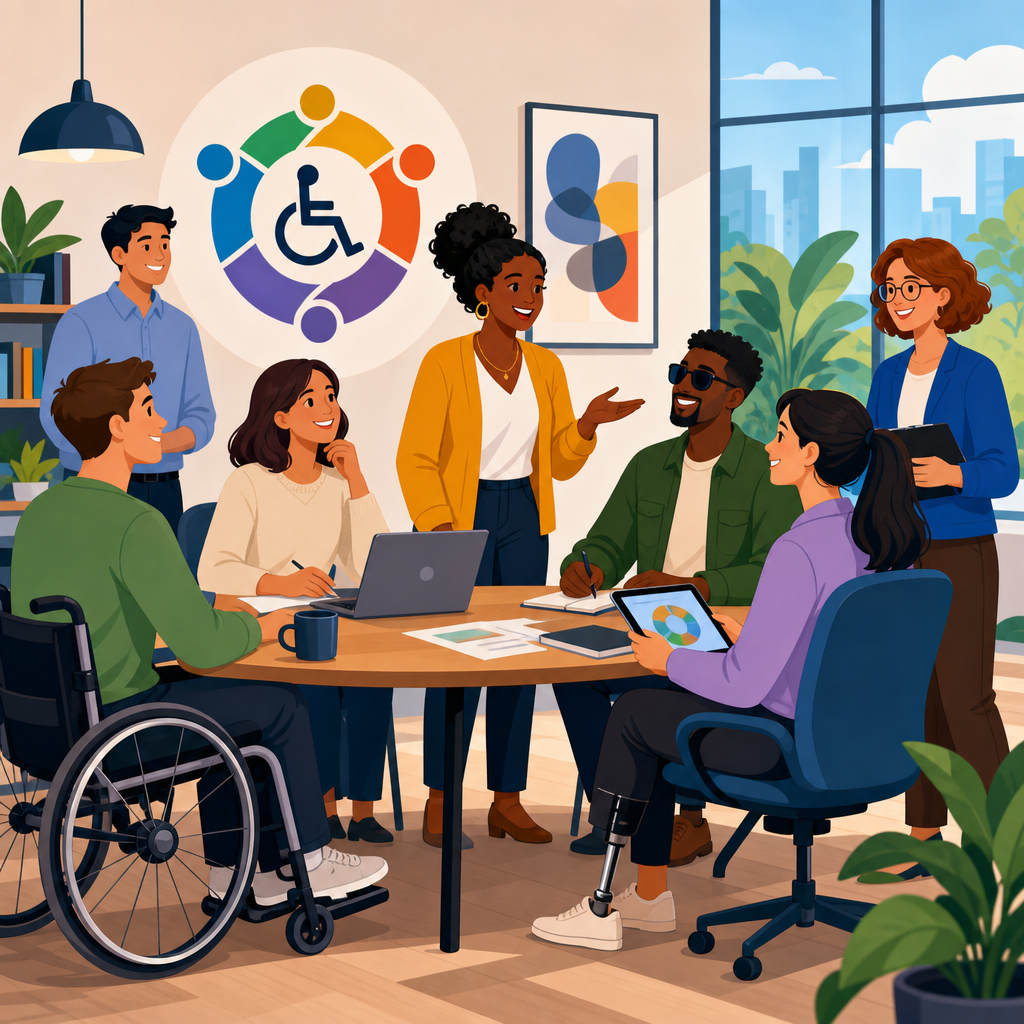
ADA and inclusivity now shape how corporations buy software, design workplaces, train managers, and serve customers across digital and physical channels. In practice, implementing and advancing accessible technology means aligning tools, policies, and daily operations with the Americans with Disabilities Act, related state laws, and the broader goal of equal participation. I have worked with legal, HR, procurement, and product teams on accessibility programs, and the biggest lesson is simple: technology decisions become policy decisions very quickly. A video platform without captions affects training compliance. An inaccessible applicant tracking system limits hiring. A customer portal that fails keyboard navigation can create legal exposure and lost revenue at the same time.
For companies, the term accessible technology covers websites, mobile apps, enterprise software, kiosks, collaboration tools, documents, and hardware that people with visual, auditory, motor, cognitive, or speech disabilities can use effectively. Inclusivity is broader. It includes accommodation processes, workplace flexibility, disability etiquette, procurement standards, and governance models that prevent accessibility from becoming a last-minute fix. The ADA remains the legal anchor in the United States, especially Title I for employment, Title II for public entities, and Title III for public accommodations. Recent developments matter because regulators, courts, investors, employees, and customers increasingly expect accessibility to be built in, documented, and measurable rather than promised in general terms.
Corporate policy has moved beyond basic non-discrimination language. The modern hub for implementing and advancing accessible technology connects digital accessibility standards, reasonable accommodation workflows, inclusive design practices, vendor oversight, and executive accountability. Organizations that treat accessibility as an enterprise capability generally perform better than those that isolate it inside compliance or IT. They reduce remediation costs, improve employee retention, widen talent pools, and lower the risk of complaints, demand letters, and reputational damage. They also create more resilient systems. Features like captions, transcripts, strong color contrast, voice input support, and predictable navigation help many users, including aging workers, multilingual teams, and people using devices in noisy or low-light environments.
This article explains the recent developments in corporate policies and shows how companies can operationalize accessible technology at scale. It covers the legal shifts, the policy architecture that works, the technology standards teams should use, practical implementation methods, and the metrics that demonstrate progress. As a hub, it also frames the subtopics every accessibility program should connect internally: accessible procurement, inclusive software development, workplace accommodation technology, document accessibility, training, testing, and governance.
Recent ADA and policy developments corporations cannot ignore
The most important change is that accessibility expectations are becoming more explicit and less negotiable. The Department of Justice has repeatedly stated that the ADA applies to websites and mobile experiences offered by businesses open to the public, even though the statute predates the internet era. Courts have not resolved every detail uniformly, but the trend line is clear: companies are expected to provide accessible digital experiences. In parallel, the Web Content Accessibility Guidelines, especially WCAG 2.1 Level AA and increasingly WCAG 2.2, have become the de facto benchmark in contracts, settlements, procurement rules, and internal policies.
Another major development is the expansion of disability inclusion into broader corporate governance. Public companies and large private employers increasingly place accessibility under ESG, enterprise risk, DEI, or responsible technology programs. That shift matters because it changes who owns the work. Accessibility is no longer only a web issue for front-end developers. It now touches HR systems, learning platforms, customer support tools, conference room technology, cybersecurity controls, and procurement templates. In one rollout I supported, an organization discovered that multifactor authentication methods were blocking employees who used screen readers and workers who could not reliably handle time-based mobile prompts. The policy fix required security, IT, and disability accommodation teams to approve equivalent accessible authentication options in advance.
State laws and international rules have also raised the bar. California’s Unruh Act often appears alongside accessibility claims. Section 508 standards shape vendor requirements for organizations serving government customers. Globally, the European Accessibility Act is pushing multinational corporations to harmonize design and procurement practices across regions. Even companies focused only on the U.S. market feel this pressure because software vendors, cloud platforms, and device makers are standardizing around common accessibility expectations.
Enforcement patterns reinforce the same message. Demand letters and lawsuits continue to target inaccessible e-commerce flows, online booking systems, mobile apps, and digital documents such as PDFs. Employment complaints often involve inaccessible assessments, onboarding materials, communication tools, and accommodation breakdowns. The policy implication is straightforward: corporations need written standards, evidence of conformance efforts, and a repeatable method for identifying and correcting barriers before complaints arise.
What strong corporate accessibility policies include
Effective policies are specific enough to guide day-to-day decisions. A strong corporate accessibility policy usually starts with scope. It names the systems covered: public websites, mobile apps, employee tools, digital documents, audiovisual media, kiosks, and third-party services. It defines the technical benchmark, often WCAG 2.1 AA or WCAG 2.2 AA for web and app content, plus PDF/UA or tagged PDF standards for documents and platform-specific guidance for iOS, Android, Windows, and macOS. It also names governance roles, including executive sponsor, accessibility lead, legal review, procurement review, and business owners.
Accommodation language is equally important. Many organizations still separate disability accommodation from technology policy, which creates delays and inconsistencies. Better policies connect the two. For example, if an employee needs screen reader compatibility, live captioning, alternative input support, or a modified collaboration workflow, the policy should explain intake, evaluation, implementation, and escalation timelines. It should also state how privacy will be protected and how temporary workarounds will be handled while permanent fixes are developed.
Vendor requirements belong in the policy, not in an optional checklist. Mature organizations require accessibility language in RFPs, ask for a current VPAT based on the Accessibility Conformance Reporting format, test critical user journeys before purchase, and negotiate remediation commitments with deadlines. I have seen teams buy expensive platforms based on a vendor’s generic assurance that accessibility was on the roadmap. That usually ends with custom workarounds, employee frustration, and budget overruns. Procurement policy is where avoidable accessibility debt is either prevented or invited.
| Policy area | Minimum requirement | Practical example |
|---|---|---|
| Digital standards | WCAG 2.2 AA for new web and app releases | Checkout flow supports keyboard use, visible focus, labels, and error identification |
| Procurement | VPAT review plus independent testing for high-risk systems | HR tests applicant tracking workflows with JAWS, NVDA, and keyboard-only navigation before contract signature |
| Documents and media | Tagged PDFs, captions, transcripts, accessible templates | Investor presentations include reading order, alt text, and captioned video embeds |
| Workplace accommodation | Defined intake and implementation process | Employee receives captioning and meeting platform settings within stated service-level targets |
| Governance | Named owners, audit cadence, remediation tracking | Quarterly dashboard shows open critical defects, vendor exceptions, and closure rates |
Implementing accessible technology across the enterprise
Implementation succeeds when companies stop treating accessibility as a single project. It is an operating model. The first step is an inventory of systems and user journeys. Most organizations underestimate how many accessibility touchpoints they own. The obvious ones are websites and apps, but high-impact barriers often sit in PDFs, e-signature flows, chatbot widgets, internal knowledge bases, virtual meeting platforms, and digital forms. Create a system map, rank platforms by business criticality and user reach, then assess each one against the relevant standard.
Testing must combine automated and manual methods. Automated scanners such as axe, WAVE, Lighthouse, and Accessibility Insights can identify common issues like missing form labels, low contrast, and structural markup errors, but they do not tell you whether a process is truly usable. Manual testing with keyboard navigation and screen readers such as JAWS, NVDA, and VoiceOver is essential. For mobile, TalkBack and VoiceOver testing should be part of every release cycle. Include users with disabilities whenever possible; moderated usability testing reveals friction that technical checks miss, especially around timing, complex workflows, and confusing instructions.
Development teams need design-system support. The fastest way to scale accessible technology is to build accessibility into reusable components: buttons, dialogs, menus, carousels, forms, alerts, and data tables. If the design system provides semantic structure, focus management, color contrast compliance, and error messaging patterns, product teams can ship accessible interfaces more consistently. In my experience, organizations with accessible component libraries reduce recurring defects dramatically because engineers are not reinventing interaction patterns under deadline pressure.
Training should be role-based. Designers need to understand information hierarchy, color dependence, zoom, and reflow. Engineers need semantic HTML, ARIA usage, focus order, and assistive technology behavior. Content teams need plain language, descriptive headings, link purpose, and alt text discipline. Procurement teams need to evaluate VPATs critically instead of treating them as proof. HR and people managers need to know how digital barriers affect accommodations. General awareness training is useful, but it does not replace skill-specific instruction tied to actual workflows.
Governance closes the loop. Create an accessibility review gate for new purchases and major releases. Set severity definitions, remediation deadlines, and exception procedures. Require product owners to document known issues and planned fixes. Establish an accessibility statement and feedback channel, then route incoming reports to a monitored process with service levels. This is not bureaucracy for its own sake. It is how corporations move from good intentions to repeatable execution.
Inclusive workplace technology and accommodation in practice
Corporate policies are tested most clearly in employment settings. Hiring, onboarding, collaboration, performance management, and learning systems must all be accessible. Consider recruiting. If a candidate cannot complete an online application because fields are unlabeled, timed assessments cannot be extended, or interview scheduling requires inaccessible widgets, the company may be screening out qualified applicants before a human conversation ever begins. Inclusive policy therefore requires accessibility checks in talent acquisition technology and a clear process for candidates to request accommodations without penalty or delay.
Inside the workplace, collaboration tools are a common source of friction. Live captioning, transcript quality, screen reader support, keyboard shortcuts, and compatibility with magnification software affect whether employees can participate fully in meetings and training. Hybrid work made this more urgent. A conference room with poor microphone pickup can undermine automatic captions for remote attendees. Shared whiteboard tools may exclude keyboard users. Corporate policy should define accessible meeting practices, such as always enabling captions, sharing materials in advance, describing visuals, and selecting platforms with documented accessibility support.
Accommodation programs work best when they emphasize outcomes rather than narrow device lists. An employee may need speech recognition, alternative keyboards, refreshable braille display support, visual alerting systems, ergonomic setups, or flexible software settings. The right solution depends on the task, environment, and existing architecture. Employers should use an interactive process, consult knowledgeable IT staff, and evaluate compatibility before deployment. They also need maintenance plans. I have seen accommodations fail because software updates broke integrations and no owner was assigned to monitor them.
Document accessibility deserves special attention because it is one of the most persistent enterprise problems. Policies should require accessible templates in Microsoft Office and Google Workspace, tagged exports, meaningful headings, table headers, sufficient contrast, and alt text for informative images. Learning content should include captions and transcripts, while scanned image PDFs should be replaced with searchable, structured text. These steps sound basic, but in large organizations they can determine whether compliance training, benefit enrollment, and policy acknowledgments are actually usable.
Measuring progress, managing risk, and building long-term maturity
Accessibility programs improve when companies track operational metrics, not just legal incidents. Useful measures include percentage of critical journeys tested manually, number of severe defects open beyond target date, vendor conformance rates, document accessibility pass rates, training completion by role, and accommodation implementation time. Customer support data can also help. If users repeatedly contact support about inaccessible payment forms, caption failures, or navigation traps, that pattern is a measurable signal of product risk.
Risk management should distinguish between conformance and usability. A page can technically satisfy many criteria and still confuse users if the flow is overly complex or error recovery is weak. That is why mature teams combine standards-based audits with scenario testing such as applying for a job, resetting a password, completing a purchase, or enrolling in benefits using assistive technology. The goal is not only to pass checks but to ensure task completion with reasonable effort.
Long-term maturity usually follows stages. First comes reactive remediation after complaints. Next comes policy standardization and periodic audits. Then organizations embed accessibility into procurement, design systems, SDLC checkpoints, and accommodation operations. The most advanced stage treats accessibility as a quality attribute alongside security, privacy, and performance. At that point, executives review dashboards, teams budget for accessibility from the start, and accessibility expertise is represented in architecture and product decisions.
For corporations building a hub around implementing and advancing accessible technology, the central message is practical: connect policy to process, and process to measurable outcomes. Accessibility should influence how you buy, design, test, train, document, and support technology. The ADA created the baseline, but recent developments in enforcement, standards, and stakeholder expectations have made accessibility a core business function. Companies that act early gain cleaner systems, broader talent access, stronger customer trust, and fewer expensive surprises.
The next step is to assess your highest-impact technologies, update corporate policy to define clear standards and responsibilities, and create a remediation roadmap tied to procurement, development, and accommodation workflows. Start with the systems employees and customers use most, publish realistic timelines, and review progress quarterly. Accessibility advances when ownership is clear and action is routine. Make it part of how your organization operates, and inclusivity will become visible in every digital experience you deliver.
Frequently Asked Questions
What recent corporate policy developments are most important under the ADA and broader inclusivity efforts?
One of the biggest recent developments is that accessibility is no longer treated as a narrow compliance issue handled only by legal teams. More companies now embed ADA-related requirements into corporate policy across procurement, workplace design, digital product development, customer service, and manager training. In practice, that means organizations are updating purchasing standards so software vendors must demonstrate accessibility, revising workplace accommodation procedures to be faster and more consistent, and adopting internal design standards for websites, apps, kiosks, documents, and communication tools.
Another important shift is the move from reactive accommodation to proactive inclusion. Instead of waiting for an employee or customer to report a barrier, many corporations are writing policies that require accessibility reviews earlier in decision-making. For example, product teams may be required to include accessibility checks before launch, facilities teams may assess physical access during renovations, and HR may standardize disability-inclusive hiring and onboarding processes. This reflects a broader understanding that equal participation is not achieved by isolated fixes; it requires systems, accountability, and everyday operational habits.
Companies are also paying closer attention to the interaction between the ADA, state disability laws, and related obligations involving remote work, digital services, and public-facing platforms. As work and commerce increasingly happen across digital and physical channels, corporate policies are evolving to cover video conferencing accessibility, captioning, accessible PDFs, online application systems, self-service technologies, and omnichannel customer support. The strongest policies recognize that accessibility must be integrated wherever people work, apply, communicate, purchase, or receive services.
How are corporations changing the way they buy software and technology to support ADA compliance and inclusion?
Procurement is now one of the most influential areas in corporate accessibility strategy. Many organizations have learned that if they buy inaccessible software, they inherit barriers that become difficult and expensive to fix later. As a result, corporate policies increasingly require accessibility review before a contract is signed, not after implementation. This often includes vendor questionnaires, accessibility conformance reports, contract language addressing remediation obligations, and cross-functional review by legal, IT, security, HR, procurement, and business stakeholders.
More mature companies do not simply ask vendors whether a product is accessible. They require evidence, such as testing results, documentation tied to recognized accessibility standards, and a clear explanation of known gaps and remediation timelines. This is especially important for tools used in recruiting, onboarding, benefits administration, collaboration, training, customer service, and product delivery. If a company purchases a platform that blocks screen reader use, keyboard navigation, captioning, or color-contrast readability, the issue quickly becomes both a legal risk and an operational problem.
Recent policy development also reflects a practical lesson: accessibility in procurement is not about creating a one-time checklist. It is about establishing a repeatable governance process. Effective policies define who reviews accessibility, when that review happens, what standards apply, how exceptions are approved, and what happens if a vendor cannot fully meet requirements. Companies that do this well treat accessibility as part of overall quality, usability, and risk management. That approach usually leads to better technology decisions for everyone, not just people with disabilities.
What does an inclusive workplace policy look like beyond basic ADA accommodations?
An inclusive workplace policy goes further than stating employees may request accommodations. It builds a culture and process framework that makes access more predictable, respectful, and usable in day-to-day work. That includes clear accommodation procedures, defined response timelines, manager guidance, confidentiality protections, and multiple ways for employees to ask for support. It also includes proactive practices such as accessible meetings, captioned video content, inclusive communication norms, ergonomic and sensory considerations, and accessible internal systems used for scheduling, training, performance management, and benefits access.
Recent corporate policy changes often reflect lessons learned from hybrid and remote work. Companies have seen that accessibility issues do not disappear when employees work from home; they simply change form. An inclusive policy should address accessible virtual meetings, chat tools, shared documents, project platforms, remote onboarding, and flexibility in how work is performed. It should also acknowledge that disability inclusion intersects with leave policies, mental health support, return-to-work practices, and job restructuring where appropriate. The best policies are practical enough for managers to apply consistently and flexible enough to account for individual circumstances.
Another hallmark of a strong policy is accountability. Organizations are increasingly training managers not only on legal obligations but on how to respond constructively when an employee raises a barrier. A policy is only as effective as the people implementing it. If supervisors are unsure what to do, delays and inconsistency follow. Clear escalation paths, centralized support, and periodic review of accommodation trends help corporations move from ad hoc problem-solving to a more stable, equitable model of inclusion.
How should companies train managers and employees on ADA responsibilities and inclusive practices?
Training works best when it is tied to real decisions people make every day. Many companies used to rely on generic annual compliance modules, but recent developments show a stronger emphasis on role-based training. Managers need to know how to recognize accommodation requests, respond appropriately, maintain confidentiality, avoid retaliation, and involve the right internal partners. HR teams need deeper guidance on documentation, the interactive process, leave coordination, and consistency across cases. Procurement teams need to understand accessibility in vendor selection. Product and design teams need practical instruction on accessible development and testing. Customer-facing staff need to know how to communicate effectively and provide equal service across channels.
Effective ADA and inclusivity training also addresses tone and culture, not just legal rules. Employees should understand that accessibility is part of equal participation and business effectiveness, not merely a box to check. That means training should cover disability etiquette, communication best practices, digital accessibility basics, and how to remove avoidable barriers before they become formal complaints. For example, staff can be taught to create accessible documents, caption videos, describe visual content when needed, and ensure events and meetings are usable by all participants.
Companies that see the best results usually reinforce training with policy tools and leadership support. That may include manager playbooks, accommodation intake templates, procurement standards, accessible content guides, and periodic audits of how policies are working in practice. Training should not be a one-time event. Because technology, workplace arrangements, and legal expectations continue to evolve, organizations need regular updates and a way to connect training to measurable improvements in employee and customer experience.
What are the biggest mistakes companies make when trying to improve ADA compliance and inclusivity?
A common mistake is treating accessibility as a side project rather than an operational requirement. When companies isolate ADA compliance within legal or HR, barriers often persist in software selection, product design, facilities planning, and customer experience. Accessibility needs cross-functional ownership. If the organization does not define responsibilities across teams, important issues fall through the cracks and become harder to correct later.
Another frequent mistake is relying on reactive fixes instead of building accessible systems from the start. Companies may wait until an employee struggles with a platform or a customer files a complaint before acting. By then, the cost, disruption, and legal exposure are usually higher. Stronger corporate policies now emphasize early review, standardized processes, and ongoing monitoring because that approach is more sustainable. Accessibility should be considered when buying tools, designing workflows, creating content, and setting service standards, not only when a problem becomes visible.
Organizations also run into trouble when they confuse policy language with actual implementation. A well-written accessibility statement does not help much if accommodation requests stall, vendors are not screened, digital content remains unusable, or managers are not trained. The lesson many teams learn over time is simple: technology, policy, and daily operations must align. Real progress happens when accessibility is reflected in contracts, procedures, training, budgets, timelines, leadership expectations, and quality controls. That is what turns inclusivity from a stated value into a working part of corporate practice.