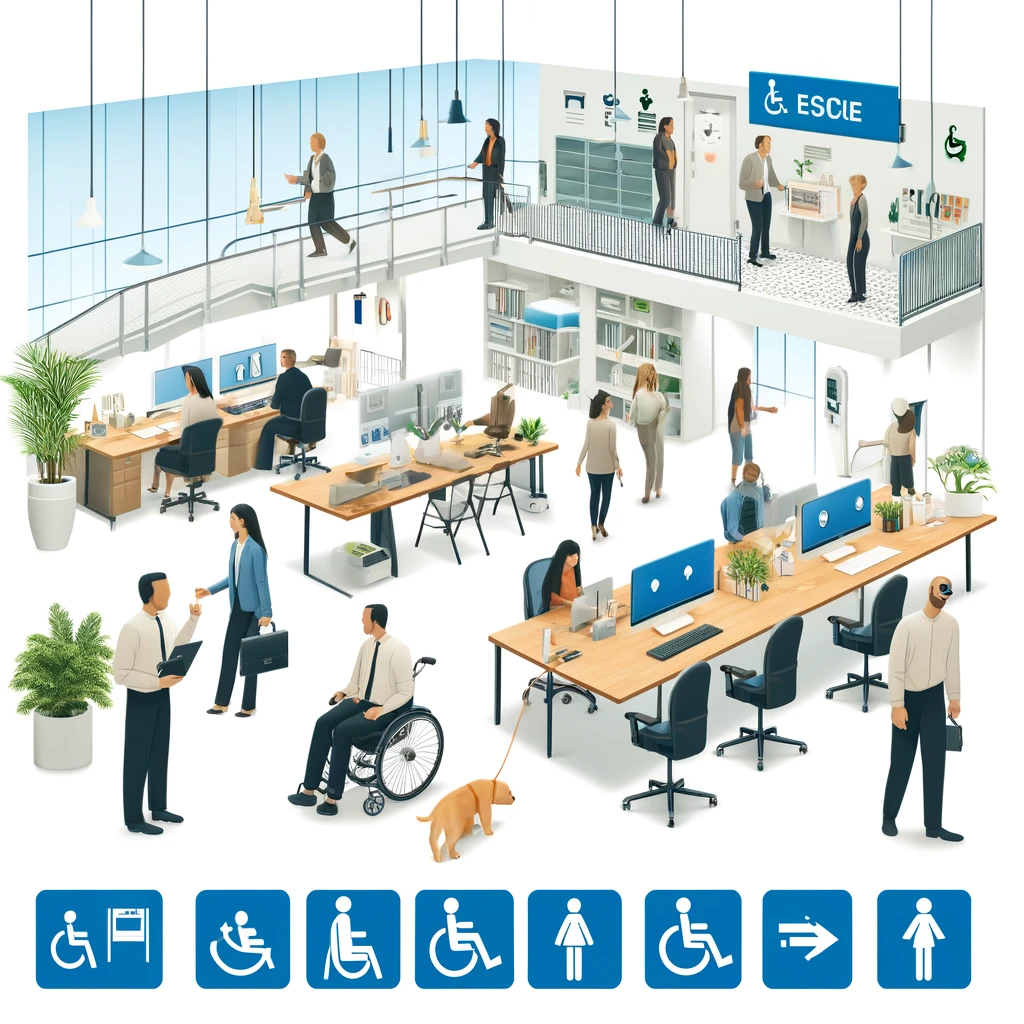
ADA compliance across franchises is rarely controlled by one party alone. In practice, responsibility is shared among franchisors, franchisees, landlords, developers, architects, digital vendors, and operations teams, and confusion at any point can create legal risk. For multi-site and franchise compliance, the central question is simple: who controls the condition, policy, or customer experience that may exclude a person with a disability? That question matters because the Americans with Disabilities Act applies to both physical locations and many digital touchpoints, while state laws, building codes, and lease obligations can expand exposure. After working with franchise systems on accessibility audits, remediation plans, and rollout governance, I have seen the same pattern repeatedly: brands standardize customer experience aggressively, yet leave accessibility accountability vague. The result is inconsistency between locations, incomplete fixes, and avoidable disputes. A strong franchise accessibility program defines control by asset, decision, and workflow. It maps who owns design standards, who funds alterations, who approves vendors, who trains staff, and who responds to complaints. When that map exists, accessibility becomes manageable across dozens or hundreds of sites. When it does not, even well-intentioned operators miss deadlines, duplicate work, or assume someone else is handling compliance.
Understanding multi-site and franchise compliance starts with a few key terms. The franchisor owns the brand system, operating model, and often the required standards for layout, technology, signage, and customer service. The franchisee operates one or more locations and usually controls daily staffing, maintenance, local policies, and execution. ADA compliance refers to meeting legal accessibility obligations for customers, job applicants, employees, and sometimes website or app users, depending on the touchpoint. Control means practical authority to prevent or correct a barrier. If corporate mandates a store prototype with inaccessible counters, corporate likely controls the design decision. If a local operator fails to maintain an accessible route or leaves merchandise blocking it, that operator controls the condition. Because the ADA is enforced through complaints, investigations, and litigation, control is not just a theoretical legal concept; it determines who can fix the issue quickly and who may be named in a claim. For franchise brands, this makes accessibility governance a core operational issue, not a side topic for legal review alone.
How ADA responsibility is divided in a franchise system
The most practical way to assign ADA responsibility is by separating ownership from control. Ownership answers who holds the lease, who purchased the fixture, or who employs the worker. Control answers who created the standard, who can approve a change, and who can make the barrier disappear. In franchise systems, those answers are often different. A franchisor may not hold the lease for a restaurant, but it may still dictate store layout, point-of-sale hardware, menu board templates, website architecture, and reservation technology. A franchisee may own local equipment and employ front-line workers, yet have limited freedom to alter prescribed brand elements. Courts and plaintiffs often look beyond labels and examine real authority. If a franchisor requires a specific kiosk, queue design, or customer service script, the franchisor can be pulled into a dispute even when a franchisee operates the site.
Physical accessibility usually involves layered responsibility. Site selection may be controlled by the franchisee, with approval rights reserved to the franchisor. Base building conditions such as parking lots, entrances, elevators, and common areas may be controlled by a landlord in a shopping center. Interior finishes, seating layouts, service counters, restrooms, and dining clearances may be allocated between tenant and landlord under the lease and build-out agreement. Then maintenance shifts responsibility again. I have seen systems where corporate issued an accessible prototype, but local operators later introduced barriers by adding promotional racks, moving furniture, replacing lever hardware with knobs, or disabling automatic doors to save energy. The original compliant design did not protect the brand because field execution drifted. Multi-site and franchise compliance therefore depends on continuous operational controls, not only initial construction drawings.
Digital accessibility follows a similar pattern, but with different actors. A franchisor often controls the primary website, loyalty program, mobile app, gift card platform, and systemwide ordering engine. Franchisees may control local microsites, PDF menus, recruiting pages, social media promotions, and third-party delivery listings. If corporate chooses an inaccessible online ordering tool or pushes inaccessible templates to all operators, the central brand has obvious exposure. If a franchisee uploads image-only coupons with no alternative text or posts event details that screen readers cannot interpret, local responsibility is easier to trace. The critical point is that customers experience the brand as one entity. They do not distinguish between corporate code, local content, and vendor integrations when they cannot place an order or access a promotion.
What franchisors typically control, and what they should own
Franchisors usually control the standards that shape consistency across the system, and those standards should be documented with accessibility requirements built in. This includes prototype plans, finish schedules, fixture packages, approved signage, procurement specifications, website design systems, reservation flows, e-commerce templates, and required software. In every mature program I have helped structure, the franchisor also owns policy architecture: accessibility standards, design review criteria, vendor requirements, complaint escalation rules, and reporting expectations. That ownership is appropriate because individual franchisees cannot realistically negotiate brandwide digital code standards or redesign a national prototype.
Training is another franchisor-controlled area that too many systems underuse. The most defensible brands provide role-based modules for operations leaders, general managers, HR staff, facilities teams, marketing coordinators, and web editors. Those modules explain practical rules: keep accessible routes clear, maintain door pressure and hardware, provide effective communication, caption video, test forms with a keyboard, and respond consistently to accommodation requests. Standards without training fail in the field. One retail franchise I worked with had compliant fitting room dimensions on paper, but associates routinely stored inventory in the accessible room because nobody had trained them on why that room must remain available at all times.
Vendor selection is often the clearest example of franchisor control. If the brand mandates one kiosk supplier, one online ordering platform, one scheduling tool, or one learning management system, the franchisor should require accessibility representations, testing evidence, remediation timelines, indemnity language, and change management obligations. Accessibility should sit beside security, uptime, and privacy in vendor due diligence. Named standards matter here. For digital tools, organizations commonly benchmark against WCAG 2.1 AA or the newer WCAG 2.2 AA criteria. For built environments, design teams rely on the 2010 ADA Standards for Accessible Design alongside applicable state codes and, in many jurisdictions, ICC A117.1 technical requirements incorporated into building codes. Franchisors that ignore those baseline standards create repeatable defects at scale.
What franchisees typically control at the local level
Franchisees control daily operations, and many ADA failures happen in daily operations rather than design documents. They control staffing, scheduling, maintenance calls, housekeeping, local purchasing, in-store merchandising, and the moment-to-moment customer interaction. That means they usually own tasks such as clearing aisles, keeping access routes unobstructed, maintaining accessible parking signage, replacing burned-out lights, ensuring restroom grab bars remain secure, keeping portable ramps available where required, and communicating respectfully with guests who use service animals or need auxiliary aids. If the barrier can be corrected by a manager before the next shift, it is generally a local control issue.
Local content is another frequent source of risk. A franchisee may post hiring notices, local promotions, event flyers, PDFs, or social media stories that omit captions, color contrast, alt text, or keyboard-accessible links. They may also choose local communication methods that exclude customers, such as requiring phone calls only for reservations when text-based alternatives are feasible. Even where corporate provides templates, local teams need simple publishing rules and periodic spot checks. In audits, I routinely find a technically accessible corporate website undermined by inaccessible franchisee-uploaded files and embedded widgets.
Complaint response also belongs largely to the franchisee because customers complain to the location first. The best operators treat every accessibility complaint as structured operational data. They log the issue, timestamp it, classify whether it involves built environment, digital access, communication, or service policy, assign an owner, and track closure. Small fixes should be immediate. Larger fixes should be escalated with photos, measurements, and vendor notes so the franchisor can detect patterns across the network. Without this discipline, the same issue surfaces repeatedly across locations and eventually becomes evidence of systemic neglect.
Shared control areas where liability often overlaps
Most serious franchise disputes arise in areas of shared control. Remodels are a classic example. A franchisee may fund the project, a franchisor may require the prototype, a landlord may control structural elements, and an architect may prepare the plans. If the accessible route fails because the entry slope was not coordinated with the landlord’s sidewalk, each party may point elsewhere. Shared control must therefore be defined before construction starts. The same is true for websites with local pages, where corporate controls the platform but local operators manage content. A booking engine might be centrally selected, yet local staff configure time slots and confirmation messages. Accessibility breaks can occur at both layers.
Employment-related accommodations add another layer of overlap. Franchisees typically employ store staff and therefore handle applicant and employee accommodations directly. But if the franchisor mandates software, scheduling practices, uniforms, or job descriptions that create barriers, local employers may need brand support to resolve them. I have seen franchisees struggle when a required training module was incompatible with screen readers; they were responsible for the employee experience, but they could not remediate the platform alone. Clear escalation paths solve this problem.
| Area | Primary Control | Common Shared Parties | Typical Risk |
|---|---|---|---|
| Store prototype and fixtures | Franchisor | Architect, franchisee | Repeated design defects across many sites |
| Parking, exterior route, common areas | Landlord or franchisee | Franchisor, contractor | Lease disputes and delayed remediation |
| Daily aisle clearance and maintenance | Franchisee | Store managers | Operational barriers despite compliant design |
| Brand website and ordering platform | Franchisor | Digital vendor, franchisee content editors | Inaccessible transactions at scale |
| Local promotions and PDFs | Franchisee | Marketing agencies, franchisor templates | Broken accessible content on local pages |
| Complaint intake and escalation | Franchisee | Franchisor legal and operations | Slow response and repeat incidents |
Building a multi-site compliance model that actually works
The strongest multi-site and franchise compliance programs use a control matrix. This is a simple but powerful document listing each asset or process, the governing standard, the responsible party, the approving party, the funding source, the audit method, and the escalation path. Every franchise system should have one. Start with categories: site selection, lease negotiation, prototype design, construction, pre-opening inspection, facilities maintenance, customer service, hiring, training, website, app, PDFs, kiosks, call centers, and complaint handling. Then assign control realistically, not politically. If corporate can veto a change, corporate has control. If local operations can fix it same day, local operations have control.
Auditing should mirror that matrix. Physical audits should include measurements, photos, maintenance observations, and operational barriers, not just plan review. Digital audits should combine automated scanning with manual testing using keyboards, screen readers, zoom, and error-state review. For high-volume systems, prioritize templates and repeated components first because one fix can remove barriers across hundreds of locations. I advise brands to score findings by customer impact, legal exposure, frequency, and remediation effort. That helps sequence work sensibly instead of chasing low-value cosmetic issues while transaction barriers remain live.
Governance matters as much as the audit itself. Someone at the franchisor level should own accessibility program management, even if legal, digital, facilities, and operations each handle part of execution. Quarterly reviews should track open issues, repeat complaints, vendor remediation, and remodel exceptions. Franchisees need a practical reporting channel, not a vague instruction to contact support. When accountability is visible, fix rates improve quickly. When it is diffuse, the same inaccessible kiosk or blocked route stays unresolved for months.
Conclusion: control must be explicit, documented, and tested
ADA compliance across franchises becomes manageable when brands stop asking who is “generally responsible” and start asking who controls each barrier, policy, and tool. Franchisors usually control standards, vendors, prototypes, and systemwide digital experiences. Franchisees usually control daily operations, local content, maintenance response, and first-line complaint handling. Landlords, architects, contractors, and software providers often share meaningful control in specific areas, especially construction and technology. Because customers experience one brand, fragmented accountability creates brandwide risk.
The practical solution for multi-site and franchise compliance is a documented control matrix backed by training, audits, vendor requirements, and clear escalation rules. That approach reduces duplicated effort, speeds remediation, and creates defensible evidence that accessibility is being managed systematically. It also supports this subtopic’s broader goal: helping franchise systems scale compliance across many locations without guessing who owns the next fix. If you are building or refining a franchise accessibility program, start by mapping control across physical sites, digital assets, and operations today, then use that map to drive every audit, contract, and remediation plan.
Frequently Asked Questions
Who is usually responsible for ADA compliance in a franchise system?
In most franchise systems, ADA compliance is not controlled by a single party. Responsibility typically depends on who owns, controls, designs, maintains, or operates the specific feature, policy, or customer interaction at issue. That means the franchisor, franchisee, landlord, property manager, developer, architect, contractor, website provider, and even internal operations teams may each carry part of the compliance burden. The practical question is not simply, “Who is the brand?” but rather, “Who controls the barrier?” If the issue involves daily operations, staffing, service policies, or maintenance, the franchisee often has primary responsibility. If the issue involves brand-wide standards, required technology, or corporate-mandated customer workflows, the franchisor may have exposure as well. If the barrier is tied to common areas, site conditions, or lease-controlled building elements, the landlord may also be involved.
That shared structure is exactly why franchise ADA disputes can become complicated. A parking lot slope problem may involve the landlord or developer. An inaccessible online ordering tool may involve the franchisor and its digital vendor. A service-animal mishandling issue may come down to franchise-level training failures. Courts and regulators often look beyond titles and focus on real-world control over the condition or experience. If multiple parties influence the outcome, multiple parties can face risk. For that reason, franchise systems work best when ADA responsibility is clearly allocated in franchise agreements, leases, vendor contracts, design standards, maintenance protocols, and training programs. Clear documentation does not eliminate legal obligations, but it does reduce confusion and improve accountability.
How do courts and regulators decide who “controls” an ADA issue in a franchise setting?
Control is usually evaluated functionally, not just contractually. In other words, decision-makers often ask who had the authority to create, approve, prevent, fix, or continue the condition that allegedly denied access to a person with a disability. If a franchisor requires a particular store layout, technology platform, mobile app flow, self-service kiosk, signage package, or operating procedure, that level of involvement may matter. If the franchisee handles hiring, training, maintenance, scheduling, service delivery, and in-store accommodations, that level of operational control matters too. If a landlord retains responsibility for exterior routes, parking, restrooms in common areas, or structural elements, that can place the landlord in the picture as well.
Contracts still matter, but they are only part of the analysis. A lease may assign repair obligations to a tenant, yet a landlord may still be relevant if it controls approvals, structural modifications, or common-area maintenance. A franchise agreement may label the franchisee as an independent business, but if the franchisor dictates customer-facing systems or approves every design choice, that influence may become important. Regulators and plaintiffs’ attorneys often examine manuals, brand standards, inspection protocols, approval workflows, vendor relationships, maintenance logs, complaint histories, and internal communications. The more a party can direct the customer experience or remedy a barrier, the harder it is to argue that it had no meaningful role. That is why businesses should focus less on labels and more on actual authority, oversight, and operational practice.
Can a franchisor be liable for ADA problems at a location it does not own?
Yes, in some circumstances a franchisor can face risk even if it does not own or directly operate the individual location. Ownership is important, but it is not the only factor. If the franchisor controls key aspects of the customer experience, mandates design features, requires the use of a specific website or app, approves plans, sets service rules, or enforces operating standards that affect accessibility, those facts can create exposure. The issue becomes especially important when the alleged barrier flows from brand-wide requirements rather than a local operator’s independent choice. For example, if every franchise location must use the same inaccessible reservation platform or kiosk, the franchisor’s role may be difficult to ignore.
That does not mean franchisors are automatically responsible for every accessibility issue at every site. Many ADA issues remain squarely within the franchisee’s control, especially day-to-day service practices, local maintenance, staffing decisions, and response to accommodation requests. But franchisors should be careful about assuming that disclaimers alone will shield them. If corporate standards shape the inaccessible condition, or if the franchisor has the practical power to require corrections, liability arguments become stronger. Smart franchisors reduce risk by embedding accessibility into brand standards, procurement requirements, design reviews, digital governance, and operator training. They also create escalation paths for complaints and clarify which issues must be corrected locally versus centrally. The more system-wide the accessibility issue, the more important the franchisor’s role becomes.
What ADA issues are most likely to fall on the franchisee or local operator?
Franchisees and local operators are commonly responsible for the parts of accessibility that arise in everyday business operations. That includes maintaining accessible routes free of obstructions, keeping parking and entrances usable, training staff on communication and accommodation obligations, allowing service animals where required, providing effective assistance at the point of sale, handling auxiliary aid requests appropriately, and making sure policies do not exclude customers with disabilities. If an accessible restroom is used for storage, if employees refuse entry to a customer with a service animal, if a broken door closer is ignored, or if staff are not trained on how to communicate with a deaf or blind customer, those are the kinds of issues that often point directly to local operational control.
Franchisees also frequently carry responsibility for maintenance and prompt corrective action. Even when a site was originally designed by others, a local operator can still face serious risk if known barriers are allowed to continue or if temporary barriers become permanent through neglect. The same is true for local marketing events, queue management, seating practices, pickup procedures, and customer service methods. A franchisee cannot assume that because a feature was “part of the brand” it is someone else’s problem forever. If the operator can report it, escalate it, modify a practice, or implement a temporary workaround while a permanent fix is pending, those actions matter. Good local compliance means regular site checks, staff training, written complaint handling procedures, documented maintenance, and a clear understanding of what must be escalated to the franchisor, landlord, or vendor.
How can franchise systems reduce ADA risk when responsibility is shared across so many parties?
The most effective approach is to treat ADA compliance as a coordinated governance issue rather than a one-time checklist. Start by mapping control: who is responsible for site selection, design standards, plan approval, construction, lease obligations, maintenance, digital platforms, customer service policies, staff training, and complaint response. Once that map exists, obligations should be written clearly into franchise agreements, leases, construction contracts, vendor agreements, and internal operating procedures. Accessibility should be built into brand standards from the beginning, not added only after a complaint or demand letter. That includes physical design, digital accessibility, procurement requirements, renovation standards, and front-line service protocols.
Ongoing oversight is just as important as contract language. Franchise systems should conduct periodic accessibility reviews, train both corporate and local teams, maintain issue-tracking and escalation procedures, and require vendors to meet accessibility expectations in measurable ways. Digital tools, online ordering, mobile apps, kiosks, loyalty programs, and reservation systems deserve special attention because they are often rolled out centrally but used locally. When a complaint arises, businesses should investigate quickly, determine who actually controls the issue, and document corrective steps. Shared responsibility does not have to mean shared confusion. The strongest franchise systems create a practical framework in which every party understands its role, known barriers are escalated promptly, and accessibility is treated as part of standard risk management, customer experience, and brand protection.