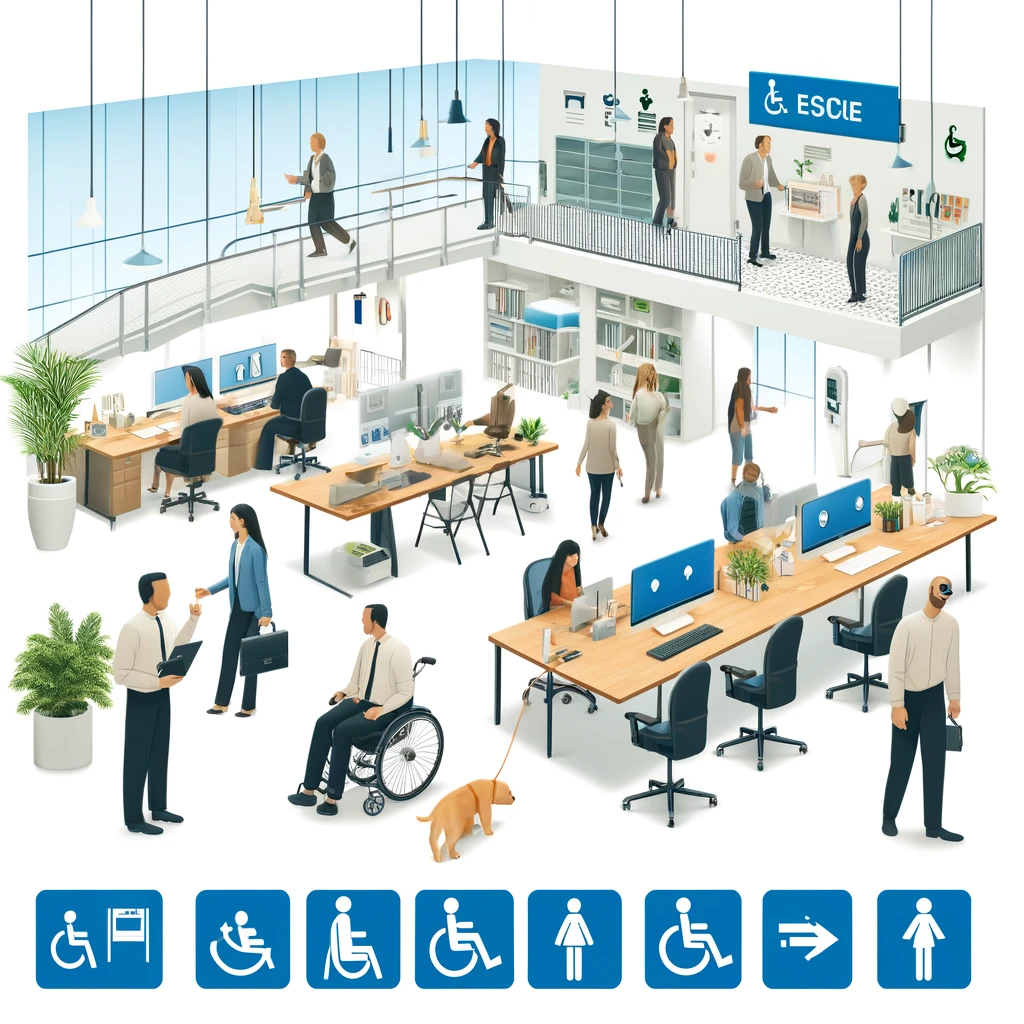
Accessibility governance becomes difficult the moment responsibility is split across facilities, human resources, and digital teams, because each group controls a different part of the employee and customer experience while compliance obligations apply to the organization as a whole. In practice, I have seen companies invest heavily in website remediation while office signage remained noncompliant, or modernize physical access routes while recruiting systems still blocked candidates using screen readers. Accessibility governance is the operating model that prevents those gaps. It defines decision rights, funding rules, escalation paths, standards, and accountability so accessibility work is planned, budgeted, measured, and sustained rather than handled as isolated fixes.
For organizations with separate facilities, HR, and digital functions, governance matters because accessibility is inherently cross-functional. Facilities influences entrances, restrooms, meeting rooms, wayfinding, parking, and emergency egress. HR governs recruiting, onboarding, accommodations, benefits, training, performance management, and internal communications. Digital teams own websites, apps, documents, design systems, procurement of software, and product release practices. Legal exposure, employee experience, customer trust, and operational resilience depend on how well these teams coordinate. In the United States, the Americans with Disabilities Act, Section 504, Section 508 in applicable contexts, and state-level requirements all shape expectations. Globally, many organizations also align to WCAG 2.1 or 2.2, EN 301 549, and local building codes and employment laws.
Budgeting, prioritization, and governance sit at the center of successful accessibility programs because resources are finite and risks are uneven. Not every issue can be fixed at once, but every issue should be triaged using a clear method. A broken accessible entrance, an inaccessible online application form, and missing captions in mandatory training do not carry the same impact, remediation timeline, or ownership model, yet all require action. A governance hub article must therefore answer three practical questions directly: who decides, how money is allocated, and what gets addressed first. When those answers are documented and enforced, organizations move from reactive remediation to repeatable implementation.
This article explains how to build an accessibility governance model for decentralized organizations. It covers operating structures, budget models, prioritization frameworks, policy components, procurement controls, metrics, and executive oversight. It also serves as a hub for the broader budgeting, prioritization, and governance topic by laying out the concepts that related articles should expand, including capital planning, accommodation workflows, accessible procurement, roadmap sequencing, and audit-based remediation planning. The goal is simple: create one accessibility program with many contributors, not many disconnected efforts with no owner.
Establish a cross-functional governance structure with clear decision rights
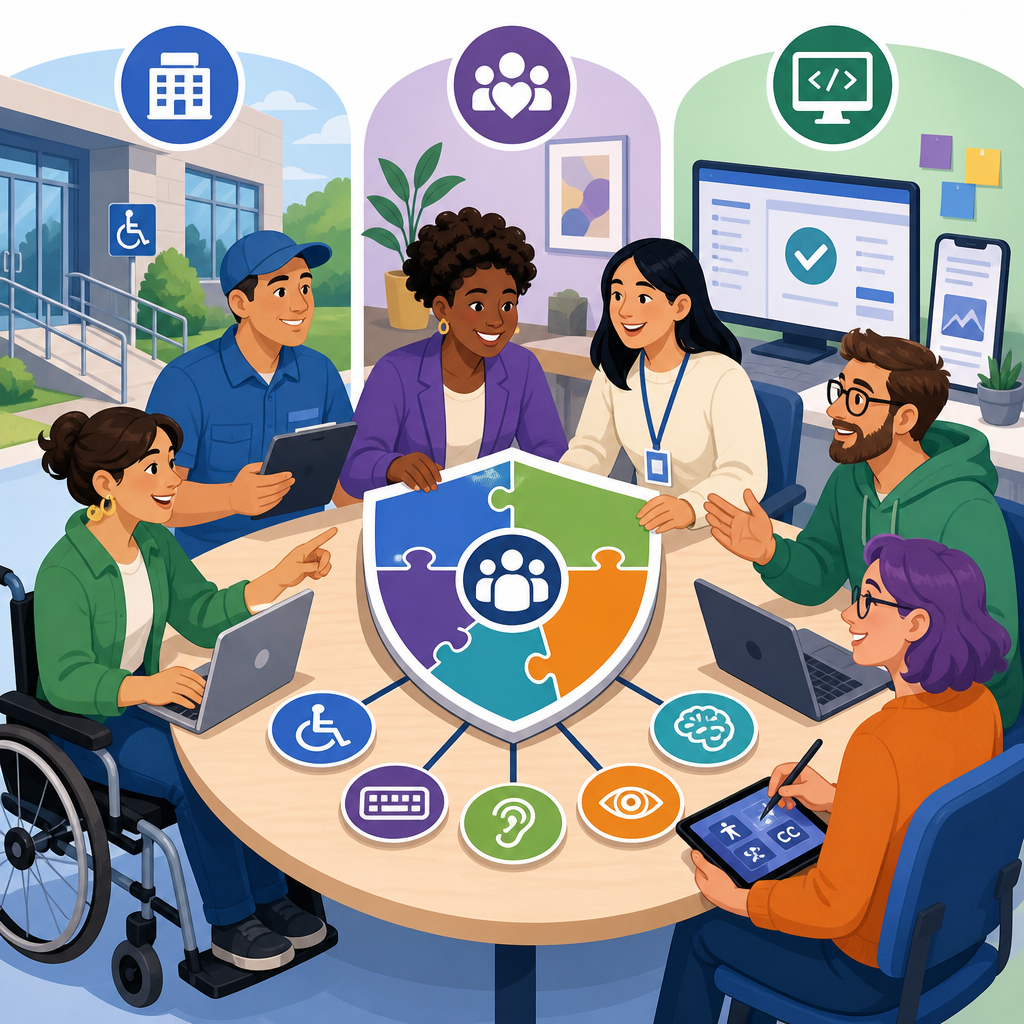
The first requirement is a formal governance structure that matches how the organization actually operates. In most enterprises, accessibility cannot sit only in compliance, legal, or one delivery team. It needs an executive sponsor, a program owner, and designated leaders from facilities, HR, digital, procurement, legal, communications, and learning. I recommend a tiered model: an executive steering committee that approves policy and budget direction, a working group that manages implementation, and domain owners who are accountable for controls in their area. Without this layered structure, decisions stall or get pushed to whichever team feels the most pressure at the moment.
Decision rights should be explicit. Facilities should own built environment standards, inspection schedules, lease coordination, and capital remediation planning. HR should own accommodation process governance, accessible hiring workflows, employee communications standards, and learning content requirements. Digital should own design standards, code quality, release gates, document accessibility standards, and monitoring of websites and applications. Procurement should own accessibility language in RFPs, vendor due diligence, and contract enforcement. Legal should advise on regulatory interpretation and risk but should not become the operational owner by default. This separation prevents duplication while preserving accountability.
A practical governance charter defines scope, authority, cadence, and escalation. It should specify which standards the organization adopts, how exceptions are approved, what evidence teams must provide, and what happens when business owners miss remediation deadlines. In one program I helped formalize, the turning point came when accessibility exceptions required written sign-off from both the relevant vice president and the central program owner. That single change reduced casual deferrals because teams now had to document business impact, user impact, compensating controls, and target dates. Good governance makes delay visible, and visible delay is easier to manage.
Build a unified budget model across capital, operating, and program funds
Accessibility funding fails when every team assumes another budget will pay. The strongest model separates baseline responsibility from shared program support. Domain teams should fund accessibility as part of normal delivery. Facilities should include access improvements in maintenance plans, fit-outs, and renovation budgets. HR should budget for captioning, document remediation, accommodations administration, and accessible training platforms. Digital should fund accessible design, engineering remediation, testing tools, audits, and design system updates within product and platform budgets. Accessibility is not a side project; it is a quality and compliance requirement inside existing work.
At the same time, decentralized organizations benefit from a central fund for enterprise-level needs. Typical uses include external audits, staff training, assistive technology labs, policy development, expert consulting, shared captioning contracts, and urgent remediation that crosses functions. This avoids a common failure mode where teams agree a problem matters but no single cost center can absorb it quickly. Central funding should not become a dumping ground for avoidable defects. Its purpose is to accelerate maturity, address systemic issues, and support transition, not to replace line-of-business accountability.
Budget planning works best when spending is categorized by remediation type. Capital expenses usually cover physical alterations, major wayfinding upgrades, hardware replacements, and structural changes. Operating expenses cover subscriptions, testing services, interpreters, captions, recurring audits, and staff enablement. Program investments cover governance tooling, policy rollout, metrics dashboards, and change management. Finance partners respond well when accessibility requests are framed this way because the accounting treatment becomes clearer. It also helps forecast multi-year commitments, especially when real estate cycles, HR system renewals, and digital platform roadmaps do not align.
| Budget area | Typical owner | Examples | Funding pattern |
|---|---|---|---|
| Capital | Facilities | Entrances, restrooms, parking, signage, hearing loops | Planned in annual or multi-year facilities budgets |
| Operating | HR and Digital | Captioning, interpreters, audits, accessibility software, remediation services | Recurring departmental expense |
| Shared program | Central accessibility office or compliance function | Training, governance tools, enterprise assessments, urgent cross-functional fixes | Pooled fund with approval criteria |
| Procurement risk reserve | Procurement with Legal | Vendor remediation support, replacement planning, contract enforcement | Contingent funding for third-party issues |
A mature budget model also calculates the cost of delay. If an inaccessible application process reduces applicant conversion, or inaccessible self-service tools drive up support calls, the organization is already paying for poor accessibility. Facilities delays can carry similar hidden costs through temporary accommodations, manual workarounds, employee dissatisfaction, and project change orders. When I prepare business cases, I compare remediation cost with these ongoing operational burdens. That moves the conversation beyond compliance and shows why preventive investment is cheaper than repeated exceptions and retrofits.
Prioritize work using risk, reach, severity, and dependency
Prioritization is where governance becomes operational. A useful framework weighs at least four factors: risk, reach, severity, and dependency. Risk asks whether the issue affects legal compliance, safety, employment access, or core service delivery. Reach measures how many people encounter it and how often. Severity evaluates whether the barrier blocks task completion or merely creates friction. Dependency looks at whether fixing one issue unlocks many others, such as updating a design system component or adopting an accessible document template. This method helps leaders compare physical, HR, and digital issues on one scale without pretending they are identical.
Some issues should automatically rise to the top. Safety and emergency access issues in facilities are urgent because the impact can be immediate and irreversible. Barriers in recruiting, onboarding, benefits enrollment, payroll access, or mandatory training also deserve high priority because they affect employment opportunity and essential workplace participation. In digital channels, blockers on login, checkout, application submission, authentication, or account recovery typically rank above lower-impact defects like decorative image text alternatives. Priority does not mean every other issue waits indefinitely; it means sequencing follows documented criteria rather than noise, anecdote, or executive preference alone.
Dependencies matter more than many organizations realize. If HR continues distributing inaccessible PDF forms, every accommodation workflow remains slower than necessary. If the digital team has no accessible component library, new defects will keep entering production even as old ones are fixed. If facilities lacks an accessibility review checkpoint in construction projects, each site refresh creates fresh remediation work. Governance should therefore fund root-cause fixes first when they reduce defect inflow. In mature programs, backlog reduction is measured alongside defect prevention, because success is not only remediation volume but also lower recurrence.
Use a visible scoring model and review it regularly. I advise clients to score issues quarterly with representatives from all major functions, then publish the ranked roadmap internally. That transparency reduces conflict because teams can see why one item moved ahead of another. It also supports executive reporting. A chief human resources officer and a chief information officer may not need the same details, but both need evidence that the organization is applying a consistent prioritization method tied to business impact and user harm.
Set policy, standards, and procurement controls that prevent rework
Governance fails when it starts and ends with remediation lists. The durable solution is a policy framework that tells teams what good looks like before they design, buy, build, lease, publish, or train. At minimum, organizations need an accessibility policy, technical standards, procurement requirements, exception procedures, and role-based responsibilities. The policy should define scope across physical spaces, employment practices, digital content, software, events, and communications. Standards should reference recognized requirements such as WCAG for digital experiences, applicable building codes for facilities, and documented accommodation procedures for HR operations.
Procurement is the control point that most quickly improves outcomes across decentralized teams. New software, kiosks, learning platforms, benefits tools, visitor systems, and facilities technologies often introduce barriers that internal teams then inherit. Strong procurement controls require accessibility conformance documentation, product testing evidence, contract commitments, remediation timelines, and replacement rights when claims are inaccurate. A VPAT can be useful, but it is only a starting document; it should never substitute for validation. I have seen organizations avoid expensive platform lock-in simply by adding accessibility review before final vendor selection rather than after rollout.
Standards must also connect to day-to-day workflows. Digital teams need release gates, QA checklists, design reviews, and content publishing rules. HR needs templates for job postings, interview scheduling, benefits materials, and training modules, plus a process for handling accommodation requests confidentially and consistently. Facilities needs accessibility checkpoints in site selection, lease negotiation, design review, move planning, and post-project inspection. Policies without workflow integration become shelf documents. The organizations that improve fastest are the ones that translate standards into required steps inside the systems people already use.
Measure performance with governance metrics that leaders can act on
Metrics should help leaders make decisions, not merely describe activity. Good governance dashboards combine lagging indicators, such as audit findings and complaint volume, with leading indicators, such as training completion, procurement review coverage, release conformance rates, and percentage of projects that passed accessibility checkpoints before launch. Facilities metrics might include number of sites assessed, remediation completion by risk tier, and percentage of capital projects reviewed for accessibility at concept stage. HR metrics can track accessible hiring funnel completion, caption coverage in required training, and accommodation turnaround time. Digital metrics often include defect density by severity, percentage of pages or screens passing automated and manual checks, and backlog aging.
Executives also need narrative interpretation. A rising defect count is not always bad if it reflects better testing and newly expanded scope. A falling complaint count is not always good if users have no clear reporting channel. In governance reviews, I pair metrics with causal explanations and corrective actions. For example, if third-party software issues are increasing, the response may be tighter procurement gates and contract enforcement, not simply more remediation spending. If facilities remediation is slipping, the root cause may be lease constraints or capital planning cycles that require a phased approach.
Public commitments and internal reporting should align. If the organization publishes an accessibility statement, careers promise, or accommodation commitment, governance metrics should show whether teams can deliver on those promises. This builds trust because leadership can see where promises are supported by process and where they are not yet operationally sound. Consistent reporting also helps internal audit, enterprise risk, and board committees understand accessibility as a managed business discipline rather than a sporadic legal issue.
Create a sustainable operating rhythm and accountability culture
Accessibility governance lasts when it is built into recurring business rhythms. Monthly working sessions should review open risks, decisions needed, procurement items, and roadmap progress. Quarterly steering meetings should resolve escalations, approve exceptions, and adjust funding priorities. Annual planning should connect accessibility goals to capital plans, HR initiatives, and digital roadmaps before budgets are locked. This rhythm matters because accessibility touches change programs, not just steady-state operations. New offices, mergers, HR system replacements, brand redesigns, and platform migrations all create moments of elevated risk and opportunity.
Accountability also depends on capability. Teams cannot be held responsible for standards they were never trained to apply. Role-based training is essential: designers need component and interaction guidance, developers need code patterns and testing practice, recruiters need inclusive hiring procedures, facilities teams need plan review criteria, and executives need enough grounding to approve budgets and weigh tradeoffs intelligently. In my experience, governance becomes credible when training, tooling, and escalation support are available before leaders start enforcing deadlines aggressively.
Finally, treat accessibility governance as continuous improvement. Standards evolve, laws change, buildings age, vendors shift, and digital products release constantly. The organizations that perform best run periodic maturity assessments, revisit ownership boundaries, and refresh roadmaps based on evidence. If your facilities, HR, and digital teams are currently operating separately, start by naming one program owner, documenting decision rights, and adopting one prioritization model. Then align budgets, procurement, and metrics around that structure. A clear governance system turns accessibility from fragmented obligation into coordinated execution. Build that system now, and every future project will start from a stronger, more compliant baseline.
Frequently Asked Questions
Why is accessibility governance so challenging when facilities, HR, and digital teams operate separately?
Accessibility governance becomes difficult when responsibility is distributed because barriers rarely stay contained within one department. A candidate may encounter an inaccessible job application managed by HR and a vendor platform, then arrive for an interview at a location with confusing wayfinding or a reception area that does not support effective communication, and later onboard through digital systems that are not compatible with assistive technology. To the employee, applicant, customer, or regulator, these are not separate problems. They are all part of one organizational experience, and the organization is accountable for the whole journey.
Separate teams also tend to use different standards, budgets, project timelines, and definitions of success. Facilities may focus on building codes, physical access routes, signage, and emergency egress. HR may focus on recruiting, accommodations, policy administration, and equal employment obligations. Digital teams may focus on website conformance, application accessibility, procurement of software, and user testing. Each area is important, but without a shared governance model, gaps emerge at the handoff points. Those gaps are where accessibility failures often become legal risk, employee frustration, customer complaints, and reputational damage.
Another challenge is that organizations often overinvest in the most visible or measurable area, usually the public website, while under-governing less visible but equally important systems such as applicant tracking tools, internal portals, office signage, conference room technology, or accommodation workflows. Good governance solves this by creating enterprise-wide ownership, common standards, escalation paths, and reporting structures that make accessibility a coordinated operational function rather than a series of disconnected remediation efforts.
What should an effective cross-functional accessibility governance model include?
An effective governance model should begin with executive sponsorship and a clearly assigned owner who has authority to coordinate across facilities, HR, digital, legal, procurement, communications, and operations. Without visible leadership support, accessibility work often stalls when teams have competing priorities. The organization needs a formal structure, not just good intentions, and that usually means a steering committee or governance council with defined responsibilities, decision-making authority, and regular reporting expectations.
At a practical level, the model should include a written accessibility policy, a defined standard for digital accessibility, clear expectations for physical accessibility and workplace access, and procedures for accommodations, issue intake, vendor management, training, testing, and remediation. It should also map responsibilities across the employee and customer lifecycle. For example, who owns accessibility in recruiting tools, pre-employment assessments, interview coordination, onboarding portals, office navigation, conference technology, customer-facing websites, service counters, and emergency communications? If the answer is unclear, governance is incomplete.
Strong governance also requires measurable controls. These may include accessibility review gates in project lifecycles, procurement requirements in contracts, periodic audits of buildings and digital assets, accommodation response time metrics, issue severity classifications, and enterprise reporting dashboards. Just as importantly, the model should define how departments collaborate when one experience spans multiple teams. A complaint about an inaccessible office kiosk might involve facilities, IT, HR, and a third-party vendor at the same time. Governance should make that coordination routine rather than improvised. The goal is consistency, accountability, and sustained improvement across every environment the organization controls.
How can organizations align facilities, HR, and digital teams around one accessibility strategy?
The most effective approach is to organize the strategy around real user journeys instead of internal departmental boundaries. Rather than asking what facilities owns, what HR owns, and what digital owns in isolation, ask what an applicant, employee, visitor, or customer experiences from beginning to end. That framing makes interdependencies visible. A recruiting journey, for example, includes job postings, application forms, assessments, interview scheduling, building entry, wayfinding, communication supports, and post-interview follow-up. Once the journey is mapped, the organization can assign responsibilities without losing sight of the fact that the experience must work as a whole.
Shared standards and shared vocabulary are also essential. Teams should agree on what accessibility means in the organization, which laws and technical standards apply, how issues are prioritized, and when escalation is required. Facilities teams may be fluent in code compliance and physical barrier removal, while digital teams may think in terms of WCAG testing and assistive technology compatibility, and HR may focus on accommodations and non-discrimination obligations. Alignment happens when these perspectives are integrated into one operating model rather than treated as separate specialties with separate goals.
Regular communication is what keeps the strategy alive. Cross-functional review meetings, common reporting dashboards, coordinated training, and centralized issue tracking help teams see patterns and solve root causes. It is also important to align funding and planning cycles. If digital teams remediate a portal but HR renews an inaccessible vendor contract or facilities delays physical improvements needed for equal access, progress will remain fragmented. A unified strategy connects policy, budgeting, procurement, design, operations, and remediation so that accessibility becomes part of business planning instead of a reactive compliance exercise.
What are the biggest risks when accessibility is addressed in silos?
The biggest risk is organizational inconsistency that creates exclusion and liability at the same time. A company may believe it is making progress because one department has completed a major initiative, such as website remediation or office renovation, while equally serious barriers remain elsewhere. This fragmented approach leads to experiences that are technically improved in one channel but still inaccessible in practice. A person cannot benefit from an accessible careers page if the application platform blocks screen reader use. Likewise, an employee cannot fully participate in workplace activities if the digital tools are accessible but meeting rooms, signage, or emergency procedures are not.
Siloed efforts also increase legal and compliance exposure because obligations generally apply to the organization as a whole. Regulators, courts, employees, applicants, and customers do not separate their complaints by internal department. They judge whether the organization provided equal access. If governance is weak, issues can be missed during procurement, discovered too late in implementation, or mishandled during complaint response. That drives up remediation costs, slows hiring, affects retention, and can turn manageable barriers into formal disputes.
There is also a business performance risk. Inaccessible recruiting systems can reduce applicant pools. Poor accommodation processes can damage employee trust and productivity. Inaccessible physical spaces can undermine safety, participation, and customer service. And scattered ownership often leads to duplicated spending, where teams solve the same problem differently or pay for remediation repeatedly because accessibility was not built into design and purchasing decisions from the start. Siloes do not just create compliance problems; they make the organization less efficient and less inclusive in everyday operations.
What are the first steps an organization should take to build stronger accessibility governance across these teams?
Start with an enterprise-level assessment that looks across physical spaces, employment processes, and digital systems together. The purpose is not only to find barriers, but to identify where ownership is unclear, where standards are inconsistent, and where high-risk touchpoints cross departments. Organizations should inventory facilities, websites, applications, recruiting tools, communication channels, and accommodation workflows, then map them to the employee and customer journeys they support. This creates a realistic picture of how accessibility is experienced and where governance must improve first.
Next, establish formal ownership and decision-making. Designate an accountable leader or accessibility office, create a cross-functional governance group, and publish a policy that defines expectations for facilities, HR, digital, procurement, and leadership. This should be paired with practical procedures, including how teams request reviews, how issues are triaged, how exceptions are handled, how vendor accessibility is evaluated, and how accommodation needs are coordinated. Many organizations already have pieces of this in place, but they are scattered. The first win often comes from connecting them into one system.
Finally, prioritize a manageable roadmap with visible milestones. Focus first on high-impact areas such as recruiting, onboarding, public-facing digital properties, office entry and navigation, communication accessibility, and accommodation response processes. Provide role-based training so each team understands both its own responsibilities and the points where collaboration is required. Build accessibility into project governance, procurement, and audit cycles so progress continues after the initial push. Strong governance does not mean solving everything at once. It means creating a durable structure that helps separate teams act like one organization when accessibility is at stake.