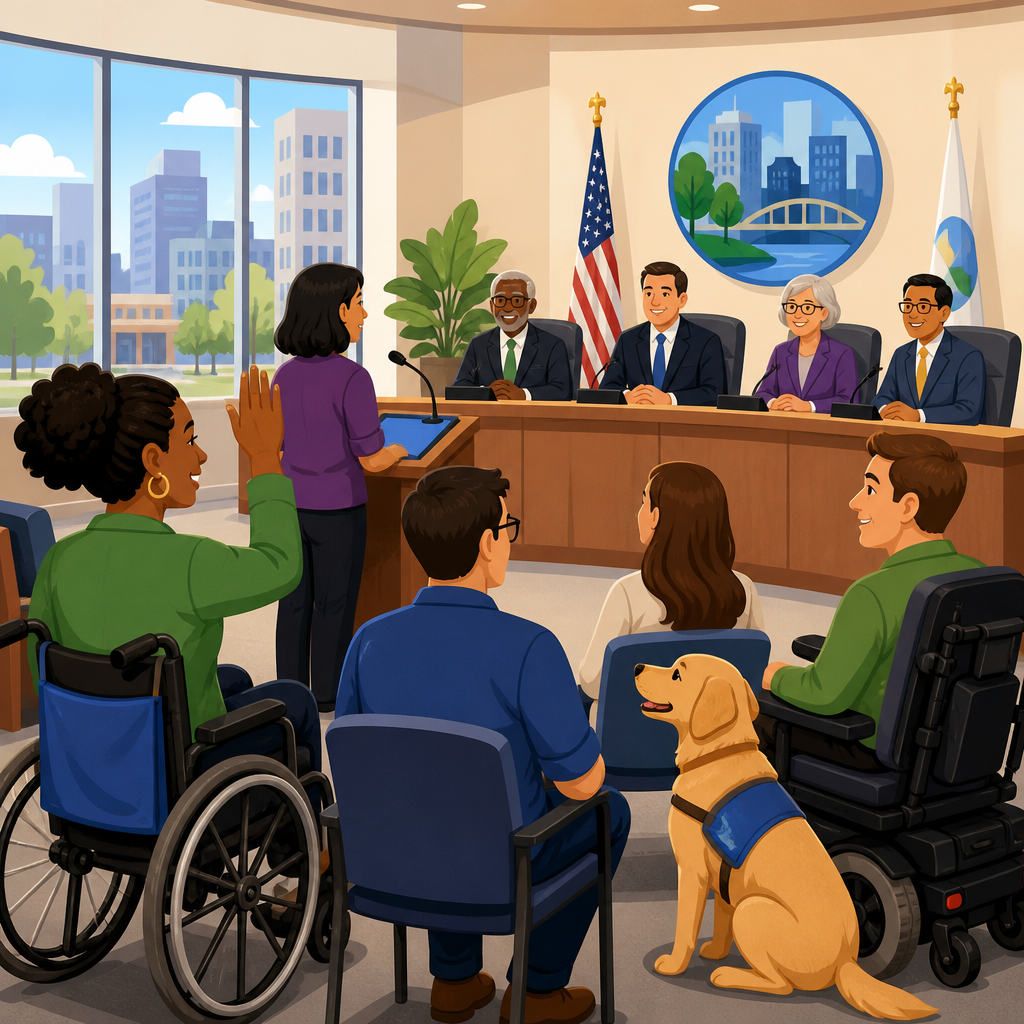
ADA rights at city council meetings and public hearings determine whether disabled residents can participate fully in the decisions that shape housing, policing, transportation, schools, parks, and local budgets. In practice, these rights govern much more than wheelchair seating in a chamber. They include accessible notice, interpreters, captioning, remote participation tools, service animal access, readable documents, and fair procedures for requesting accommodations. I have worked with public entities, meeting staff, and advocates on these issues, and the same pattern appears repeatedly: people are not shut out only by stairs. They are shut out by rushed agendas posted as image files, microphones that fail, inaccessible livestreams, complicated sign-up rules, and officials who do not understand their obligations.
The legal foundation starts with the Americans with Disabilities Act, especially Title II, which applies to state and local governments. Section 504 of the Rehabilitation Act also matters when a public entity receives federal funding, which many cities, counties, school districts, transit agencies, and housing authorities do. Public meetings and hearings are government programs, services, and activities. That means a city cannot exclude qualified people with disabilities, deny them the benefits of civic participation, or provide participation on unequal terms. The government must make reasonable modifications to policies, practices, and procedures when needed to avoid discrimination, unless doing so would fundamentally alter the program. It must also ensure effective communication with people who have hearing, vision, or speech disabilities.
This matters because local government is where daily life gets decided. A rezoning hearing can affect whether an accessible apartment building gets approved. A transit board meeting can change paratransit hours. A school board hearing can determine whether special education transportation is funded. If disabled residents cannot hear testimony, sign up to speak, enter the room, or review meeting materials, they lose influence at the point where public power is exercised. This hub explains the core rights, common barriers, accommodation standards, enforcement options, and practical steps that make public services and civic access real rather than symbolic.
What ADA rights apply at city council meetings and public hearings
At a basic level, disabled residents have the right to attend, understand, and participate in public meetings in a manner that is as effective as participation by others. Title II regulations require public entities to operate each service, program, or activity so that, when viewed in its entirety, it is readily accessible to and usable by individuals with disabilities. For meetings, that includes the physical site, routes into and through the building, the speaking process, and the information needed to follow the agenda. The Department of Justice has long treated public meetings as covered government activities, not optional extras.
Effective communication is one of the most important rights in this setting. A city may need to provide qualified sign language interpreters, Communication Access Realtime Translation, assistive listening systems, accessible electronic documents, large print, braille in some circumstances, or qualified readers. The appropriate aid depends on the person, the length and complexity of the meeting, and the method of communication normally used. For a zoning hearing with technical testimony, relying on handwritten notes instead of a qualified interpreter is usually not enough. For a blind resident reviewing a budget appendix, a scanned PDF that screen readers cannot parse is not meaningful access.
People also have a right to reasonable modifications of standard procedures. Examples include allowing a support person at the podium, extending speaking time when an interpreter is used, accepting testimony in alternative formats, permitting early entry to avoid sensory overload, or modifying sign-up rules that require standing in line. Public entities may set neutral time, place, and manner rules, but those rules cannot be applied in a way that effectively excludes disabled participants. A first-come, first-served comment system may need adjustment if the sign-up desk is inaccessible or if the person cannot physically wait in line.
Physical access, seating, and navigation in government buildings
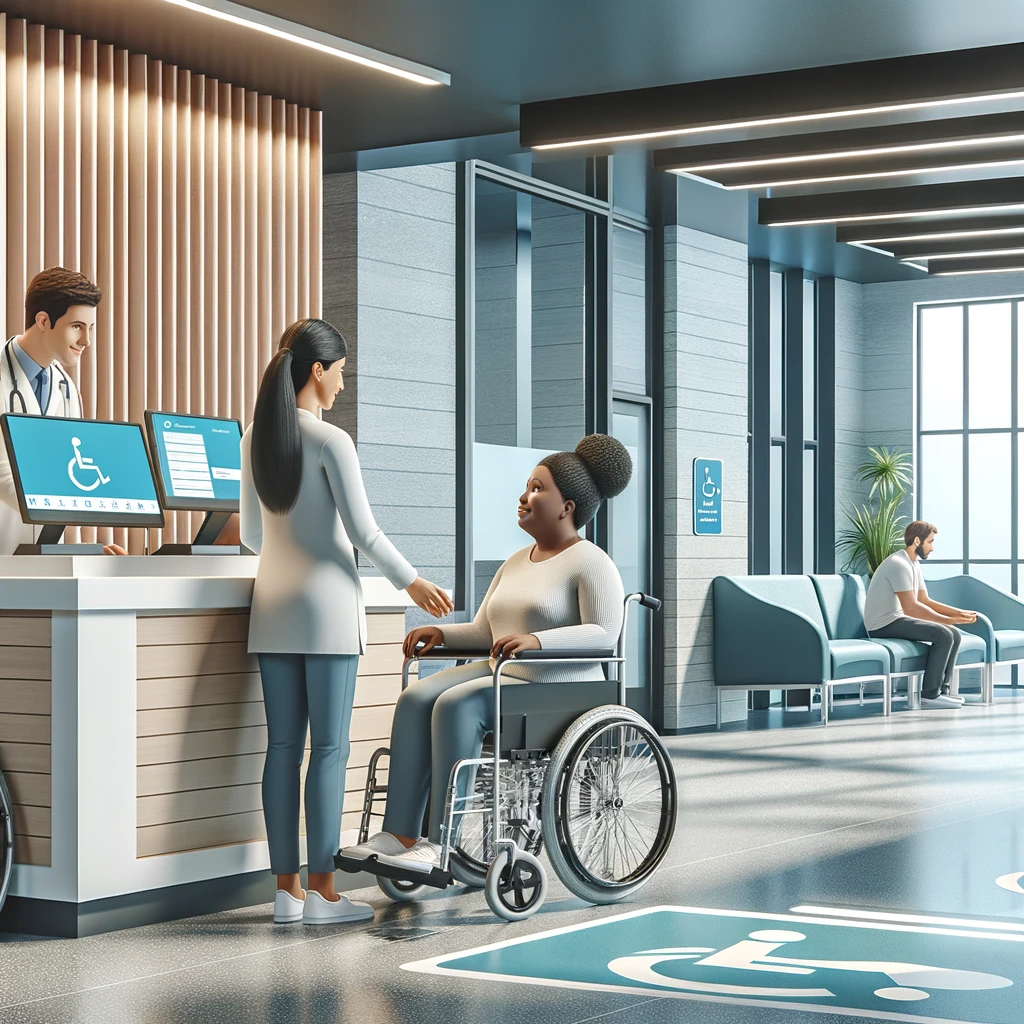
Physical accessibility remains the most visible issue, and it is still often mishandled. Meetings must be held in locations that are accessible to wheelchair users and others with mobility disabilities. That means accessible parking where parking is provided, an accessible route from transit stops or parking to the entrance, doors and hardware that can be used, elevators if upper floors are involved, and an accessible route to seating, restrooms, and the speaking area. The podium itself matters. If public comment is invited only from a raised podium that cannot be reached or used by a wheelchair user, the city is not offering equal participation.
Seating must be integrated, not segregated. Wheelchair spaces should be distributed so attendees can sit with family, aides, or other members of the public instead of being parked in leftover corners. Sight lines matter for deaf attendees who need to see interpreters and for blind attendees using low-vision aids who need proximity to displays. In older buildings, governments sometimes assume that historic status excuses inaccessibility. It does not create blanket immunity. A city may use alternate methods if structural changes would threaten historic significance or create an undue burden, but it still must provide access to the program. That might mean relocating the hearing to an accessible chamber or providing equivalent participation nearby with full audiovisual access.
Navigation inside the building is another frequent failure point. Temporary signs taped to walls, security checkpoints with no clear accessible route, and speaking queues that block aisles can all defeat access. I have seen councils technically choose an accessible building but then hold overflow seating in a basement room with no functioning captions and no staff support. Compliance is measured by real usability, not by a checkbox on a room reservation form.
Communication access: interpreters, captioning, accessible documents, and livestreams
Communication access is often the difference between mere attendance and actual participation. Deaf and hard of hearing attendees may need a qualified American Sign Language interpreter, oral interpreter, CART captioning, assistive listening devices, or a combination. The key term is qualified. The interpreter or captioner must be able to convey information accurately, impartially, and effectively, using any necessary specialized vocabulary. Land use, policing, procurement, and budget hearings routinely involve technical language, names, acronyms, and rapid exchanges. Public entities should not assume a family member or volunteer can do this job.
Blind and low-vision attendees may need agendas and attachments in accessible digital formats compatible with screen readers, structured headings, alt text for images, and properly tagged PDFs. If a city posts meeting packets as scanned images, the materials are often unreadable with JAWS, NVDA, or VoiceOver. Large-print versions may also be required for some attendees. People with speech disabilities may need extra time, communication boards, or permission to use text-to-speech devices. These are ordinary modifications, not special favors.
Livestreams and virtual hearings create opportunities but also new barriers. If a city streams meetings on YouTube, Zoom, or a proprietary platform, captions must be accurate enough to be useful, and platform controls must be keyboard accessible. Dial-in options matter for residents without reliable broadband. Chat or Q&A tools used for remote public comment must be accessible to screen reader users. Meeting recordings should preserve captions and remain available in accessible formats after the hearing. When a government accepts written testimony electronically, web forms should meet recognized accessibility standards such as WCAG 2.1 AA.
| Access need | Common barrier at meetings | Practical accommodation |
|---|---|---|
| Hearing access | No interpreter or inaccurate auto-captions | Qualified ASL interpreter, CART, assistive listening system |
| Vision access | Scanned agendas and unreadable slides | Tagged PDFs, accessible slides, large print, screen-reader compatible files |
| Mobility access | Inaccessible podium or seating area | Accessible speaking location, integrated wheelchair seating, clear routes |
| Speech access | Rigid time limits and no device support | Extra time, permission for AAC or text-to-speech tools |
| Sensory or cognitive access | Confusing procedures and overwhelming environment | Plain-language instructions, quiet space, modified sign-up process |
How to request accommodations and what agencies must do
Most public entities publish an ADA notice, a grievance procedure, and contact information for an ADA coordinator. Meeting notices often include a line stating that requests for auxiliary aids or accommodations should be made a certain number of business days in advance. Advance notice is useful, but it is not a license to deny late requests automatically. The legal question is whether the accommodation is reasonable and whether the entity can provide effective communication in the circumstances. If a resident requests captioning the morning of a routine council meeting, the city should still explore available options rather than reciting a deadline and stopping there.
In my experience, the strongest requests are specific. Identify the meeting, date, agenda item, disability-related need, and preferred accommodation. For example: “I plan to testify at the June 18 planning commission hearing on Item 7. I am Deaf and request a qualified ASL interpreter and a reserved seat with sightline to the dais and interpreter.” If documents are needed in advance, say so. If remote access is necessary because of a mobility impairment or immune condition, explain that clearly. Public entities may ask limited questions to understand the request, but they should not demand unnecessary medical records for obvious or straightforward needs.
Agencies must engage in an interactive process even though Title II does not use that phrase as heavily as employment law does. The point is practical problem solving. If an in-person interpreter is unavailable, remote interpreting may work if the video quality, screen placement, and staffing are adequate. If a chamber is inaccessible because an elevator failed, the entity should relocate the meeting, postpone it when necessary, or create an equivalent access arrangement that preserves the ability to observe and comment. Good-faith effort matters, but results matter more. The accommodation has to provide meaningful access.
Common violations in public services and civic access
The most common violations are predictable. Meeting notices are posted in inaccessible image formats. Agendas are published too late for interpreters or accessible conversion. Speakers must line up at a narrow lectern. Video screens display maps or budget tables without verbal description. Public comment closes before a disabled resident can connect to the remote platform. Security staff tell a person with a service animal to wait outside. Interpreters are placed off camera during hybrid meetings. None of these failures is unusual, and each one can amount to exclusion from a government activity.
Another recurring problem is unequal dignity. A city may technically provide access while treating disabled participants as disruptions. Staff may question why extra time is needed, complain publicly about costs, or force residents to repeat private medical details at the clerk’s desk. These practices chill participation and can support a discrimination claim. The ADA protects equal opportunity, not grudging access on humiliating terms.
Public hearings on land use, policing, and schools are especially sensitive because records created there influence later appeals and lawsuits. If a disabled resident cannot present testimony, submit exhibits, or understand the proceedings, the harm is not abstract. It may affect property rights, educational access, neighborhood safety, or benefits tied to local policy. That is why public services and civic access deserve to be treated as a rights issue, not simply an event-planning concern.
Enforcement, complaints, and practical next steps
If access fails, document the problem immediately. Save the agenda, screenshots of inaccessible materials, emails requesting accommodations, names of staff involved, and recordings showing what occurred. Then send a concise complaint to the clerk, ADA coordinator, city attorney, or agency head describing the barrier, the law implicated, the remedy requested, and the deadline if a future hearing is approaching. Ask for correction of the individual problem and a systemic fix, such as updated notice language, staff training, or accessible document standards. Many disputes resolve at this stage because agencies understand the risk once the facts are clear.
Residents can also use formal grievance procedures, state or local human rights processes where available, federal administrative complaints, or litigation. The Department of Justice enforces Title II, and agencies that receive federal funding may also face Section 504 complaints through the relevant funding department. Remedies can include injunctive relief, policy changes, training, and in some cases attorney’s fees. Timing matters. If the meeting concerns a near-term vote, ask for continuance or postponement so access can be restored before the decision is made.
This hub should guide every related page in the broader public services and civic access topic: accessible voting locations, transit hearings, school board meetings, police oversight sessions, parks advisory councils, digital government services, emergency alerts, and online complaint systems. The central principle is consistent across all of them. Disabled residents are entitled to equal access to the mechanisms of local government, including the information, spaces, technologies, and procedures that make participation possible. Review your local meeting notices, test the accessibility of posted materials, and request fixes before the next hearing so civic participation is open to everyone.
Frequently Asked Questions
What ADA rights do disabled residents have at city council meetings and public hearings?
Disabled residents have the right to meaningful access to city council meetings, public hearings, and other local government proceedings under the Americans with Disabilities Act, especially Title II, which applies to state and local governments. In practical terms, that means a city cannot limit accessibility to simply providing a ramp or a few wheelchair spaces. The meeting itself, the process for joining it, the materials being discussed, and the opportunity to speak or observe must all be accessible in a way that allows disabled people to participate on equal terms.
These rights commonly include physically accessible meeting spaces, accessible parking and entrances, clear routes to seating and public comment areas, and restrooms that can be used by people with mobility disabilities. They also include communication access, such as sign language interpreters, real-time captioning, assistive listening systems, accessible livestreams, screen-reader-friendly agendas and attachments, documents in alternative formats, and policies that allow service animals. If the city offers remote attendance or hybrid participation, those options should also be accessible to residents with disabilities.
Just as important, disabled residents must have an equal opportunity to understand what is happening and to take part in the decision-making process. That includes receiving adequate notice of meetings and accommodation procedures, being able to submit comments, ask questions when the format allows, and testify during hearings in an accessible manner. A city does not satisfy the ADA if a disabled person can technically enter the room but cannot hear the proceedings, cannot read the materials, cannot use the microphone, or cannot navigate the process for public comment. The core legal principle is full and effective participation, not partial or symbolic access.
What accommodations can I request before a city council meeting or public hearing?
You can request a wide range of accommodations depending on your disability and the meeting format. Common examples include American Sign Language interpreters, CART or real-time captioning, accessible electronic copies of agendas and supporting documents, large-print or Braille materials, assistive listening devices, wheelchair-accessible seating in a preferred location, extra time to speak, permission to provide comments in writing or by video, remote participation access, and modifications to rules or procedures that would otherwise prevent you from taking part effectively.
You may also be able to request practical adjustments that are less obvious but equally important. For example, a person with a respiratory disability may need a fragrance-reduced space or a remote participation option. A person with a vision disability may need materials delivered in advance in a screen-reader-compatible format rather than as scanned PDFs. Someone with a speech disability may need an alternative method to give testimony. A person with a psychiatric disability may need flexibility in timing or a quieter waiting area. The ADA is designed to be individualized, so the right accommodation depends on what is necessary for effective access in your situation.
Most local governments publish an accommodation request contact person, often an ADA coordinator, city clerk, or meeting administrator. It is usually best to request accommodations as early as possible, especially for interpreters or live captioning, but a city should not use unreasonable deadlines to avoid its legal obligations. Even if a posted deadline has passed, the government should still consider whether it can provide the accommodation or an effective alternative. The city may ask limited questions necessary to understand the request, but it generally should focus on how to provide access rather than creating unnecessary barriers. A fair process is part of ADA compliance.
Does the ADA require interpreters, captioning, and accessible documents for public meetings?
Yes, when those aids and services are necessary to ensure effective communication, the ADA can require local governments to provide them. Public entities must communicate with people with disabilities as effectively as they communicate with others. For someone who is deaf or hard of hearing, that may mean a qualified sign language interpreter, CART captioning, an assistive listening system, or accurate live captions for an in-person, livestreamed, or hybrid meeting. For someone who is blind or has low vision, it may mean agendas, ordinances, maps, reports, and presentation materials in accessible digital formats, large print, Braille, or other usable forms.
The key legal standard is effectiveness, not convenience for the government. A city cannot meet its obligations by offering a substitute that does not actually work for the person involved. For example, handing a deaf attendee a written summary after the meeting is not the same as providing real-time access to the discussion. Likewise, posting scanned image PDFs online may not give a blind resident meaningful access if the files cannot be read by assistive technology. If maps, slides, charts, or videos are part of the presentation, the city should consider whether those materials are also being conveyed accessibly.
Governments do have some flexibility in choosing among effective options, but they should give primary consideration to the accommodation requested by the disabled person, particularly in communication-related situations. They also cannot charge the resident for the cost of interpreters, captioning, or accessible formats. If a city claims that providing an aid or service would be too difficult or would fundamentally alter the program, that is a narrow defense and should not be treated as a routine excuse. In most public meeting settings, cities are expected to plan ahead and build accessibility into the process.
Can a city deny remote participation, service animal access, or changes to speaking rules for a disabled resident?
A city cannot refuse these types of modifications if they are necessary for equal access unless the government can show a legitimate legal reason, such as a fundamental alteration of the meeting or a direct safety issue that cannot be addressed in another way. Under the ADA, local governments must make reasonable modifications to policies, practices, and procedures when needed to avoid disability discrimination. That rule often comes into play at public hearings, where standard procedures may unintentionally exclude disabled residents.
For example, if a city allows any form of remote attendance, recorded testimony, or virtual comment, those tools should be accessible to disabled participants. Even when remote participation is not generally available, it may still be appropriate as an accommodation in some circumstances. Service animals are also generally permitted in public buildings and meeting spaces, and a city cannot exclude them based on fear, assumptions, or a preference for a no-animals policy. Similarly, rigid public comment rules may need adjustment if a person with a disability needs extra speaking time, a different method of presenting comments, flexibility in waiting requirements, or help reaching a microphone or podium.
What matters is whether the requested change is reasonable and necessary for equal participation. A city does not have to grant every request exactly as made, but it must engage with the issue seriously and look for an effective solution. Blanket refusals are often a warning sign. If the government denies an accommodation, it should be able to explain why and, ideally, offer an alternative that still provides meaningful access. The ADA expects problem-solving, not formalistic barriers that keep disabled residents away from the local decisions that affect their lives.
What should I do if a city council meeting or public hearing is not accessible?
Start by documenting the problem as clearly as you can. Save the meeting notice, agenda, emails, screenshots, recordings, and any written accommodation request you made. Note the date, time, location, and the names or titles of staff involved. If the access problem happens during the meeting, write down exactly what occurred, such as the absence of an interpreter, broken captioning, inaccessible entrance, refusal to allow a service animal, inaccessible remote platform, or denial of a reasonable request to modify speaking procedures. Specific facts are extremely helpful if you later need to escalate the issue.
Next, report the problem to the appropriate city official, which may be the city clerk, ADA coordinator, hearing officer, or department running the meeting. Ask for a prompt remedy if the issue can still be fixed, such as rescheduling your testimony, reopening the comment period, providing accessible documents, or arranging effective communication aids for a continued hearing. Many access problems can and should be corrected quickly when the right person is notified. If you are still planning to participate in future meetings, ask that your accommodation needs be noted going forward so you are not forced to start over each time.
If the city does not respond appropriately, you may have grounds to file an internal grievance, submit a complaint to the U.S. Department of Justice, or speak with a lawyer experienced in ADA and disability rights matters. In some situations, state law may provide additional protections beyond the ADA. Accessibility failures at public meetings can affect housing rights, education access, transportation planning, policing policy, and many other areas of civic life, so these cases are not minor procedural disputes. When disabled residents are excluded from hearings and council meetings, they are excluded from local democracy itself. Taking action can help secure access not only for you, but for everyone who depends on a fair and inclusive public process.