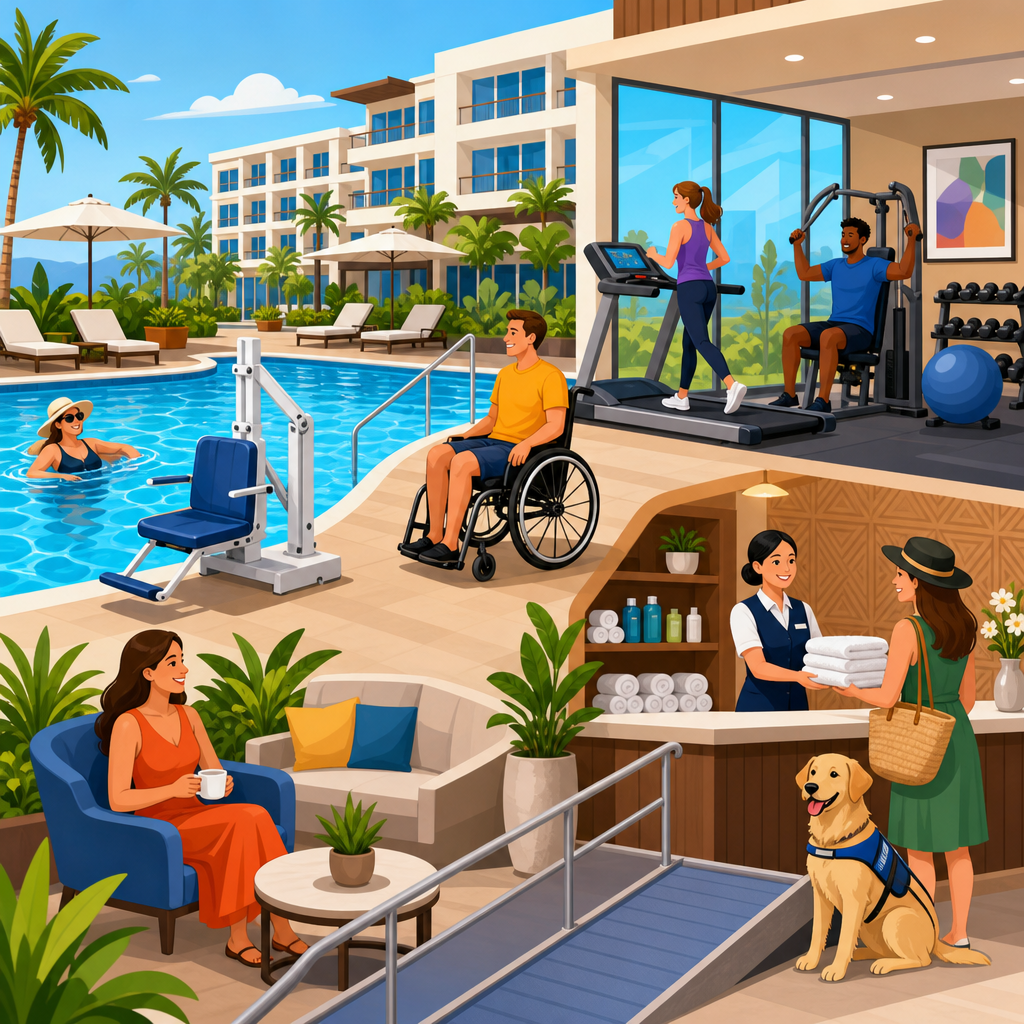
Accessible pools, fitness areas, and guest amenities in hotels shape whether a property merely offers lodging or truly delivers equal hospitality to every traveler. In hotel operations, accessibility means designing spaces, services, and policies so guests with mobility, sensory, cognitive, and medical needs can use them with dignity and as much independence as possible. In hospitality and food service settings, that definition extends beyond ramps and guestroom door widths. It includes pool lifts that work when needed, exercise equipment positioned with clear floor space, breakfast layouts reachable from seated height, visual and audible alarms, wayfinding that reduces confusion, and staff training that turns written compliance into practical service. I have audited hotels where a beautiful accessible suite was undermined by a breakfast counter too high to use, and others where a modest property earned glowing reviews because the pool transfer wall, check in process, and dining support were consistently reliable. That contrast is why this topic matters.
For hoteliers, accessible guest amenities affect legal risk, market reach, online reputation, and operational efficiency. In the United States, hotel accessibility is influenced by the Americans with Disabilities Act Standards for Accessible Design, while many global brands also align with local building codes, fire safety rules, and internal brand standards. Travelers increasingly evaluate accessibility before booking, often through reviews, direct calls, and third party platforms. A family choosing a resort may need a pool lift for one member, an allergy aware breakfast setup for another, and an accessible fitness room for rehabilitation routines. Business travelers may need an accessible route from parking to lobby to meeting room to restaurant without barriers. Because pools, gyms, and amenities are central to the guest experience, they are also where accessibility failures become most visible. A hospitality and food service accessibility strategy therefore must treat these shared spaces as core revenue and satisfaction assets, not secondary features.
What accessible hotel amenities include in practice
Accessible hotel amenities are the shared features and services guests use outside the sleeping room, designed so disabled guests can participate in substantially the same experience as other guests. In practice, that covers arrival paths, front desk counters, elevators, public restrooms, pools, spas, fitness centers, breakfast areas, bars, business centers, lounges, meeting rooms, and outdoor recreation. The essential test is usability. A pool is not meaningfully accessible if a lift exists but is stored away, uncharged, or blocked by furniture. A fitness room is not accessible if the doorway complies on paper but the circulation path between machines is too narrow for a wheelchair user to turn. A coffee station is not accessible if all cups, lids, and condiments are beyond reach range.
Hotels should document amenities through a guest journey lens. Start at reservation, where accurate descriptions and photographs reduce confusion and abandoned bookings. Continue through arrival, where accessible parking, curb cuts, and route continuity matter. Then assess each shared space: can a guest enter, understand, reach, operate, and exit independently or with reasonable assistance? In my reviews, the most effective properties use checklists tied to actual tasks, such as entering the pool deck, transferring onto a lift seat, storing a mobility device nearby, or carrying a plate through a breakfast buffet. This method uncovers practical barriers that plan reviews often miss, especially in older properties that have added features over time without rethinking circulation.
Accessible hotel pools: requirements, equipment, and operations
Accessible pools are one of the most frequently misunderstood hotel amenities. For many guests, the headline question is simple: can I get into the water safely and with dignity? The answer depends on both permanent design and daily operations. Common accessible means of entry include pool lifts, sloped entries, transfer walls, transfer systems, and accessible pool stairs. In many hotel settings, especially existing properties with limited deck space, a fixed pool lift is the most recognizable solution. The key word is usable. The lift must be available during pool hours, located where water depth and deck clearance allow safe transfer, and maintained according to manufacturer instructions.
Hotels also need an accessible route to the pool deck, stable deck surfaces, nearby accessible seating, and an accessible restroom or changing area along the route. Signage should identify the accessible entry clearly. Staff should know how to operate the lift, charge batteries where applicable, and perform opening checks before guests ask. I have seen hotels lose guest trust because one manager had the lift key while another stored the sling improperly. The best properties eliminate that friction with a written standard operating procedure and a daily log. This is especially important at resorts with multiple water features, because a guest may reasonably assume each advertised pool has an accessible entry.
| Pool accessibility element | What good practice looks like | Common failure point |
|---|---|---|
| Accessible route | Continuous route from lobby or guestroom areas to pool deck without steps | Heavy gate, abrupt slope, or furniture blocking passage |
| Pool lift | Installed, charged, tested, and available whenever the pool is open | Lift stored off deck or battery not working |
| Deck clearance | Space for wheelchair positioning and assisted transfer if needed | Crowded loungers or towel carts reducing maneuvering room |
| Support facilities | Accessible restroom, shower, and seating near pool area | Nearest accessible restroom is on another floor |
| Staff readiness | Team trained to explain, inspect, and assist respectfully | No one on shift knows operating procedure |
Indoor pools, spas, and hot tubs add complexity. Condensation can create slippery conditions, acoustics may make verbal instructions hard to hear, and transitions between locker areas and deck surfaces can become hazard points. For food service oriented hotels and resorts, pool accessibility also connects to cabanas, bars, towel stations, and event service on the deck. If a guest can enter the pool but cannot reach beverage service, dining tables, or shaded seating, the amenity remains only partly accessible. Operators should therefore inspect the full recreation zone, not just the water entry point.
Accessible fitness areas: layout, equipment, and user experience
An accessible fitness area allows guests with varied abilities to exercise, stretch, recover, and maintain health routines while traveling. The first requirement is physical access: door hardware that can be used with limited grip strength, enough clear width at entrances, and circulation spaces that permit turning and side approaches. Beyond entry, the room should include equipment spacing that supports movement with mobility devices, benches at practical heights, and controls that are visible and reachable. If televisions, water stations, towel shelves, or sanitation supplies are part of the fitness offer, they also need to be accessible.
Equipment selection matters. Not every machine can serve every body, but a balanced room should include options that support seated or stabilized exercise. Adjustable cable machines, recumbent bikes, and open floor space for resistance bands can be more usable than tightly packed rows of identical treadmills. Hotels often assume accessibility means buying one specialized machine. In practice, layout and variety usually matter more. A wheelchair user may value transfer space next to a recumbent bike, while a guest with low vision may need high contrast control labels and predictable pathways. A traveler with a prosthetic limb may prioritize sturdy seating and uncluttered stretching space. Good design serves all three without branding the room as medical or limited.
Operational details again determine success. Flooring should be firm enough for wheeled mobility while still appropriate for exercise. Mirrors should not create confusing reflections at route intersections. Emergency communication systems should work for deaf and hard of hearing guests as well as for those who cannot easily leave equipment quickly. Staff or posted instructions should explain how to request assistance without implying supervision is required for access. In select service hotels, where fitness rooms are small, one blocked corner can erase accessible turning space. Housekeeping and engineering teams should therefore inspect the room after cleaning and maintenance, not just at renovation stage.
Guest amenities beyond recreation: dining, business, and everyday usability
In hospitality and food service environments, guest amenities extend far beyond pools and gyms. Breakfast buffets, coffee stations, vending areas, lounges, concierge desks, self service kiosks, laundry rooms, shuttle pickups, outdoor patios, and meeting spaces all influence whether a stay feels welcoming. Dining is especially important because food service combines physical access, communication, and health needs. An accessible breakfast setup offers routes between tables, reachable utensils and beverages, and staff prepared to assist with carrying trays, reading labels, or addressing allergens. Menus should be available in accessible digital formats on request, and point of sale devices should be usable from seated height.
Business centers and meeting facilities deserve similar attention. A conference attendee may need an accessible registration desk, integrated seating rather than isolated positions, hearing assistance technology, and presentation materials shared digitally in advance. Outdoor amenities such as fire pits, picnic areas, and rooftop bars should have stable routes, dispersed accessible seating, and guardrails or furniture placement that preserve views from seated positions. Family friendly properties should also think about game rooms, kids’ clubs, and vending zones. A guest who can reach the lobby but not the snack market or ice machine experiences a daily barrier that quickly affects satisfaction scores.
Digital and service amenities are increasingly part of accessibility. Mobile check in apps need screen reader compatibility. In room tablets should have accessible interfaces or alternate controls. Captioning on televisions, visual notification devices, and clear instructions for requesting refrigeration for medication all count as guest amenity design. The strongest hotel operators coordinate these elements across departments instead of treating accessibility as an engineering issue alone.
How hotels build an accessibility program that actually works
Hotels improve accessibility when they move from reactive fixes to a managed program. Start with a baseline audit of all public amenities, ideally using a specialist familiar with hospitality operations, applicable accessibility standards, and brand requirements. Pair that audit with guest feedback review from sources such as Medallia, Revinate, TripAdvisor, and direct post stay surveys. Then rank issues by guest impact, safety risk, legal exposure, and ease of correction. A missing sign may be fast to fix; an inaccessible pool deck route may require capital planning. Both belong on the roadmap.
Training is the second pillar. Front office, housekeeping, engineering, food and beverage, recreation, and security teams all affect accessibility outcomes. Staff should learn person first or identity affirming communication based on guest preference, safe assistance basics, equipment checks, and escalation paths. Engineers should know preventive maintenance intervals for lifts and door operators. Restaurant teams should understand route clearance and buffet assistance etiquette. Sales teams should know how to describe accessible meeting setups accurately. In my experience, short role specific modules work better than a single annual lecture because each department faces different situations.
Finally, build accountability into everyday management. Include pool lift inspections in opening checklists, track fitness room obstructions during room ready walks, and review amenity descriptions on the website quarterly. During renovations, use universal design principles where possible because they often improve usability beyond minimum code. Lever handles, better lighting, lower reach ranges, and intuitive layouts help older guests, parents with strollers, and delivery staff as well as disabled travelers. Accessibility is not a side project in hospitality and food service. It is a service standard that protects revenue and earns loyalty when guests compare properties that look similar online.
Accessible pools, fitness areas, and guest amenities in hotels are not isolated compliance items; they are the public face of inclusive hospitality. When a hotel makes the route to the pool continuous, keeps lifts operational, spaces fitness equipment properly, and designs dining and service points for real use, guests notice immediately. They stay longer in shared spaces, spend more on property, and recommend the hotel with confidence. When those basics fail, the negative impression is just as immediate because the barrier appears in the moments that are supposed to feel restorative and enjoyable.
For hospitality and food service leaders, the practical takeaway is clear. Audit every guest amenity through the full user journey, train each department on its role, and maintain equipment and layouts as carefully as you maintain guestrooms. Treat website descriptions as operational promises, not marketing filler. The hotels that do this well create a better experience for disabled guests, older travelers, families, and event attendees alike, while reducing complaints and strengthening brand trust. If you manage or advise a hotel, use this hub as your starting point and review each amenity area with fresh eyes. The fastest gains often come from the spaces guests use together every day.
Frequently Asked Questions
What makes a hotel pool truly accessible rather than just technically compliant?
A hotel pool is truly accessible when guests with disabilities can approach, enter, use, and exit the area with safety, dignity, and as much independence as possible. Technical compliance often starts with features like an accessible route to the pool deck, proper clear floor space, and an accessible means of entry such as a fixed pool lift, sloped entry, transfer wall, or transfer system, depending on the size and type of pool. However, real accessibility goes further than checking off equipment requirements. The lift must be operational, charged if battery-powered, easy for staff to activate, and never blocked by furniture, planters, or stored items. The deck surface should be stable and slip-resistant, and there should be enough room for wheelchair maneuvering around the lift and nearby seating areas.
Accessibility also includes the guest experience surrounding the pool. Are there accessible restrooms or changing rooms nearby? Can a guest using a mobility device reach shaded seating, towel stations, and showers? Are pool rules and emergency instructions provided in formats that are easy to read and understand? If the hotel advertises an accessible pool, staff should know exactly what features are available and how to assist without creating unnecessary dependence or embarrassment. In practice, a truly accessible pool area is one where a guest does not have to negotiate barriers, wait for staff to locate missing equipment, or wonder whether the hotel’s accessibility claims are accurate.
How should hotels design or manage fitness areas so they are accessible to more guests?
An accessible hotel fitness area should be planned with both physical access and usability in mind. The first step is ensuring an accessible route into and throughout the space, including adequate door width, low-resistance doors or automatic entry where feasible, and enough turning space for wheelchair users. Inside the room, equipment layout matters just as much as square footage. Machines should not be packed too tightly together, and there should be clear floor space around key equipment so guests can navigate safely and transfer if needed. At least some equipment should be usable by people with limited mobility, reduced balance, or different strength levels, such as recumbent bikes, upper-body ergometers, pulley systems, and adjustable benches.
Accessible fitness design also benefits guests with sensory, cognitive, or medical needs. Good lighting, low-glare finishes, readable controls, and clear signage make the room easier to use for everyone. Hotels should consider how guests with hearing or vision disabilities will receive instructions, emergency alerts, or orientation to the equipment. Staff training is especially important in this area. Team members should know what accessible equipment is available, how to describe the room accurately, and how to offer help respectfully without making assumptions about what a guest can or cannot do. If the property has limited space, accessibility can still be improved through thoughtful layout, portable adaptive accessories, and policies that keep routes clear and equipment maintained. A fitness room does not need to be specialized to be inclusive, but it does need to be intentionally designed and consistently managed.
Which guest amenities beyond pools and gyms are most important for hotel accessibility?
Some of the most important accessible guest amenities are the ones travelers rely on throughout an entire stay, not just for recreation. Restrooms in public areas, breakfast spaces, restaurants, bars, business centers, spas, lounges, meeting rooms, and transportation pick-up zones all play a major role in whether a guest can use the property comfortably and independently. For example, a hotel may have accessible guest rooms, but if a wheelchair user cannot navigate the breakfast buffet, reach beverage stations, or find seating with adequate clearance, the overall experience still falls short. Similarly, accessible check-in counters, hearing-accessible communication options, clear wayfinding, and seating distributed throughout public spaces can make a substantial difference.
Hotels should also pay close attention to policies tied to amenities. Are service animals welcomed appropriately in all permitted areas? Can a guest request refrigeration for medication? Are visual alarms, caption-enabled televisions, accessible parking, and shuttle accommodations available where promised? Accessibility often breaks down in these operational details. Amenities are not truly accessible if the physical feature exists but staff do not know how to support it, or if the feature is inconsistently available. The strongest hospitality programs treat accessibility as part of every touchpoint, from dining and wellness to concierge services and event spaces. That is what transforms a stay from merely possible into genuinely comfortable and equitable.
How can hotel staff support accessibility in pools, fitness areas, and other guest amenities without being intrusive?
The best staff support begins with training that emphasizes respect, awareness, and consistency. Employees should understand the accessible features on the property, where they are located, how they function, and how to explain them clearly. In pool areas, that may mean knowing how to prepare and operate a lift, confirm it is ready for use, and keep the surrounding area clear. In fitness spaces, staff should be able to describe the room layout, identify accessible equipment, and answer practical questions about routes, hours, and assistance options. Across all amenities, employees should know how to communicate with guests who have hearing, vision, speech, cognitive, or mobility disabilities in a calm, straightforward, and guest-centered way.
Just as important, staff should avoid assumptions. A good approach is to ask, “How may I assist you?” rather than stepping in uninvited or speaking to a companion instead of the guest. Support should be available, but not forced. Privacy matters as well, particularly when a guest needs help with medical devices, transfer procedures, seating arrangements, or food service accommodations. Hotels that perform well in accessibility usually have clear internal procedures: daily checks for lifts and routes, escalation steps if equipment fails, documented maintenance practices, and service recovery plans if an amenity becomes unavailable. Guests notice when staff are informed and prepared. Thoughtful assistance is not about drawing attention to disability; it is about removing friction so every guest can enjoy the property more confidently.
Why do accessible amenities matter so much in hospitality, and how do they affect guest satisfaction?
Accessible amenities matter because hospitality is not only about providing a room; it is about making the full guest experience usable and welcoming. A traveler may be able to sleep in an accessible guest room, but if they cannot enter the pool, use the fitness center, navigate the dining area, or access essential services independently, the stay is incomplete. Equal hospitality means guests with disabilities should be able to participate in the same experiences other guests expect as part of a hotel stay, whether that includes exercise, relaxation, dining, socializing, or attending events. Accessibility also supports families, older adults, injured travelers, and people managing temporary or less visible conditions, so its value extends well beyond any single group.
From a business perspective, accessible amenities strongly influence reviews, reputation, return visits, and trust. Travelers often remember not just whether a feature existed, but whether it actually worked and whether staff handled their needs competently. A broken pool lift, inaccessible buffet line, or poorly informed front desk team can undermine confidence in the entire property. On the other hand, hotels that provide accurate information, well-maintained accessible features, and respectful service tend to earn loyalty and positive word of mouth. Accessibility is therefore both a legal and operational responsibility and a core part of quality hospitality. When amenities are inclusive by design and supported by strong policies, the hotel signals that every guest is genuinely expected and valued.