ADA rights in driverless transportation and autonomous vehicle design are becoming a defining civil rights issue because automation can either remove long-standing barriers to travel or reproduce them at machine speed. The Americans with Disabilities Act, commonly called the ADA, prohibits discrimination on the basis of disability in public services, public accommodations, transportation, and many employment settings. In practice, that means a new mobility service cannot treat accessibility as an optional feature added after launch. It must be designed, tested, operated, and supported so disabled riders can use it with substantially equivalent safety, independence, privacy, and dignity.
Driverless transportation includes autonomous shuttles, robotaxis, delivery vehicles that affect curb access, and personal vehicles with automated driving systems. Autonomous vehicle design covers the hardware, software, interfaces, policies, and roadside interactions that shape whether a trip is usable. I have worked with digital accessibility reviews and transportation service design, and the recurring lesson is simple: barriers often appear far from the vehicle itself. The inaccessible point may be the app, the customer support workflow, the pickup zone, the wheelchair securement system, the speech output, or the emergency handoff when a trip goes wrong.
This matters now because transportation access affects employment, health care, voting, education, and community life. The National Household Travel Survey and disability policy research have repeatedly shown that disabled people travel less partly because available systems are unreliable or inaccessible. Autonomous systems promise more flexible service, but they also create new risks: sensor bias, inaccessible touchscreens, remote assistance that cannot communicate with Deaf riders, and fleet models that exclude wheelchair users if only a small fraction of vehicles are accessible. The hub below explains how ADA rights apply in practice, where the law is clear, where emerging issues remain unsettled, and what organizations should do before scaling service.
How ADA protections apply to driverless transportation in practice
The first question most readers ask is whether the ADA applies to autonomous vehicles at all. The practical answer is yes, but the exact legal path depends on who is operating the service and what kind of service it is. A public transit agency running an autonomous shuttle is generally analyzed under Title II, which covers state and local government services. A private company offering transportation to the public may face obligations under Title III, state disability law, local licensing rules, and, in some cases, transportation-specific federal requirements. If the service receives federal transit funding, Section 504 of the Rehabilitation Act may also apply.
Equivalent service is the core principle. A company cannot point to technical novelty as a reason to delay accessibility indefinitely if it is already carrying the general public. In my experience, teams often focus narrowly on wheelchair entry, but ADA rights in practice are broader. Riders need accessible booking flows, accurate wait-time information, accessible receipts, clear audio and visual alerts, nonvisual alternatives to map-based interfaces, service animal accommodation, and an effective method to request help. If a nondisabled rider can summon a vehicle in two minutes through an app, while a blind rider must call a special line and wait twenty minutes, that difference raises obvious access concerns.
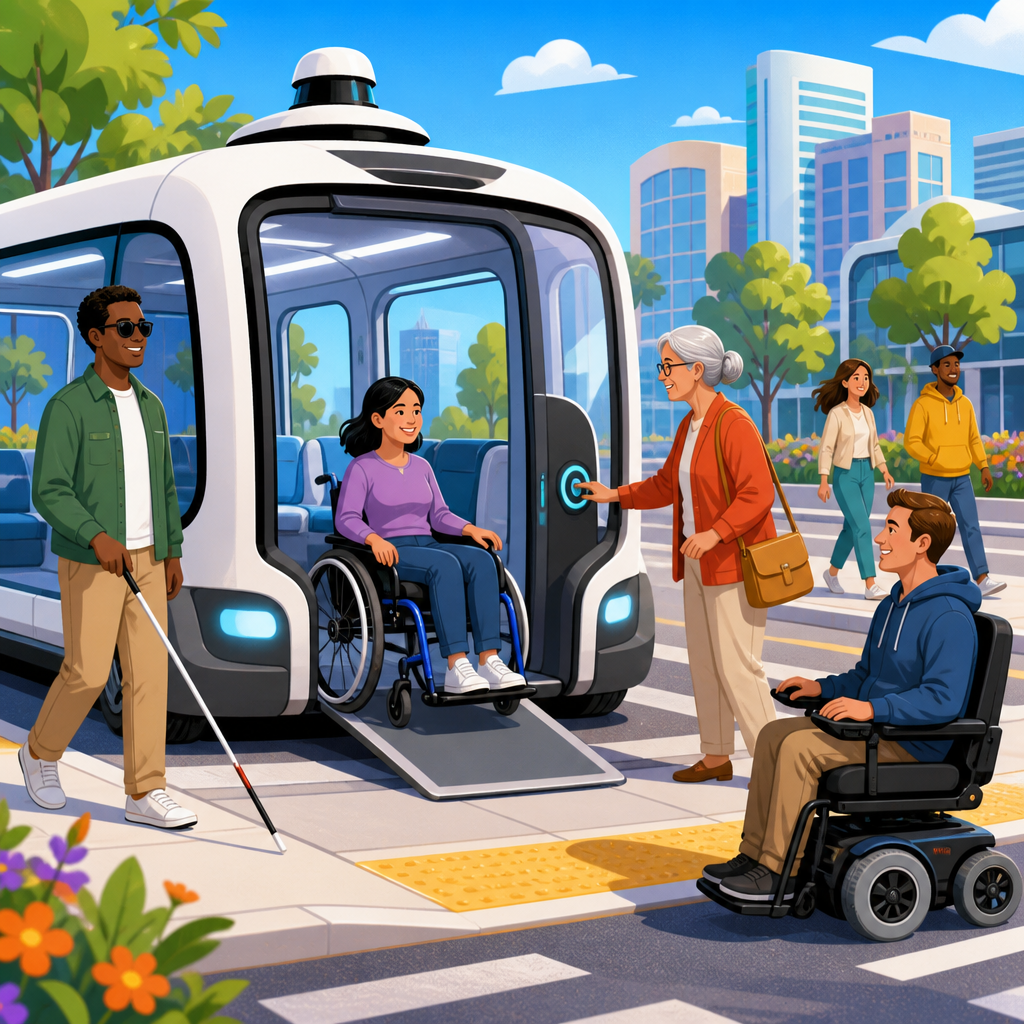
Physical accessibility remains foundational. A driverless vehicle intended for public transportation use may need ramps or lifts, adequate doorway width, maneuvering clearance, wheelchair securement, grab bars, slip-resistant surfaces, and reachable controls. Design teams should consult the ADA Standards for Accessible Design where relevant, Department of Transportation regulations, and U.S. Access Board guidance. Standards written before full automation may not answer every design question, but they establish baseline dimensions and usability expectations that courts and regulators will take seriously.
Accessible vehicle design: from boarding to emergency egress
Accessible autonomous vehicle design begins with the entire trip sequence, not a showroom demo. I use a trip-chain review: discovery, booking, pickup, boarding, securement, ride communication, incident response, drop-off, payment, and complaint resolution. Failure at any step can make the service unusable. For example, a low-floor shuttle with an excellent ramp still fails access if the pickup point is selected by computer vision at an uncurbed location with broken pavement that blocks wheelchair approach.
Inside the vehicle, multimodal communication is essential. Visual displays should be paired with speech output; speech prompts should be paired with captions or text; haptic cues can support both. Controls must be operable without fine motor precision, with sufficient contrast and predictable placement. Riders with cognitive disabilities benefit from plain-language instructions, limited steps, and consistent sequencing. Riders with low vision need tactile landmarks and interfaces compatible with screen readers where personal devices are used as part of the trip experience.
Emergency scenarios deserve much more attention than they usually receive in pilot programs. If an autonomous vehicle stops unexpectedly, who explains what happened, and through what channel? If remote assistance is the answer, that support must be available in accessible formats, including real-time text and captioned communication where appropriate. Wheelchair users must be able to exit safely during power loss or roadside incidents. DeafBlind riders may require vibration alerts plus remote support methods that work through their devices. The legal and ethical standard is not perfection; it is planning, testing, and mitigating predictable barriers before they become exclusionary events.
| Design area | Common accessibility risk | Practical mitigation |
|---|---|---|
| Trip booking | App fails screen reader, map-only pickup selection | WCAG-conformant flows, address entry, voice and text alternatives |
| Boarding | Ramp slope too steep or curb gap too large | Accessible stop design, tested ramp deployment, fallback pickup rules |
| In-ride communication | Audio-only safety messages exclude Deaf riders | Redundant visual, text, caption, and haptic alerts |
| Securement | Independent wheelchair travel not possible | User-tested securement systems and trained remote assistance |
| Incident response | No accessible way to contact support or evacuate | 24/7 accessible support, emergency procedures, manual overrides |
Digital interfaces, remote assistance, and the hidden accessibility stack
Many autonomous transportation programs fail first in software. An accessible vehicle connected to an inaccessible app is still an inaccessible service. Booking platforms should align with WCAG 2.2 success criteria, support screen readers on iOS and Android, preserve focus order, avoid gesture-only actions, and provide error recovery that does not rely on color alone. Authentication flows need alternatives to inaccessible CAPTCHAs and timeouts that can be extended. Payment systems should work with keyboard navigation and mobile assistive technology.
Remote assistance is often described as the human backup for edge cases, but it can also become a new barrier layer. If a rider must contact a remote agent to open the ramp, report a missed pickup, confirm a service animal, or navigate a temporary street closure, that communication channel has to be robust and accessible. In practice, this means phone, text, in-app chat, relay-compatible workflows, trained agents, and logging that captures access failures without forcing riders to repeat the story to multiple teams. Every additional handoff increases drop-off risk.
Data systems also matter. Accessibility complaints should be categorized separately from generic customer service issues so operators can identify patterns such as repeated curb access failures at a specific hospital entrance or higher cancellation rates for riders using mobility devices. I have seen programs improve quickly once they tracked denial reasons with precision. Without operational data, organizations tend to treat each incident as isolated and miss systemic discrimination emerging from routing rules, geofenced pickup logic, or fleet allocation policies.
Equity, fleet allocation, and when limited accessible vehicles are not enough
A common industry proposal is to launch with mostly standard autonomous vehicles and a small number of wheelchair-accessible units later. That approach may reduce early capital costs, but it creates serious ADA risk if disabled riders receive slower service, smaller service areas, fewer operating hours, or more trip denials. Equivalent service is measured by the whole rider experience, not by a promise that accessibility is on the roadmap. If an airport robotaxi fleet averages eight-minute pickups for most riders and forty-minute waits for wheelchair users, the disparity is not cured by marketing language about innovation.
Fleet allocation algorithms can silently encode discrimination. If accessible vehicles are held in only one depot, the software may repeatedly prioritize efficiency over equal access, pushing disabled riders to the back of the queue. Similar problems occur when accessible vehicles are removed from service first during peak demand because they are harder to maintain or clean. The remedy is operational, not rhetorical: parity service metrics, minimum accessible fleet availability, and dispatch rules that treat access as a nonnegotiable service constraint.
Geography is another emerging issue. Pilots often begin in dense, affluent districts with smooth sidewalks, strong wireless coverage, and simpler traffic patterns. Yet many disabled riders live or travel in areas with incomplete curb cuts, inconsistent wayfinding, and medical destinations outside the pilot map. A transportation provider should test whether its service design excludes riders by neighborhood, destination type, or disability-related trip pattern. Access cannot be judged only by average performance in ideal corridors.
Safety, sensors, and disability representation in testing
Autonomous systems rely on cameras, lidar, radar, mapping, and machine learning models to understand the environment. Accessibility enters this stack in ways many executives initially underestimate. A perception system must reliably detect wheelchair users, walkers, canes, service animals, signaled pickups from riders with limited dexterity, and boarding maneuvers that differ from standard passenger behavior. If training and validation data underrepresent disabled pedestrians and riders, the system may perform poorly in exactly the situations where careful recognition matters most.
Testing must include disabled people as participants, not just abstractions in requirements documents. That means compensated user research, varied body types and mobility devices, different communication needs, and realistic trip purposes such as dialysis appointments, school arrivals, and nighttime returns. It also means auditing edge cases. Can the vehicle identify a person transferring slowly from a wheelchair? Will it wait long enough? Does it misclassify a folded mobility aid as luggage? Can curbside sensors distinguish a rider who needs ramp deployment from a pedestrian simply passing by?
Standards and guidance are still evolving, but organizations should already be applying safety cases, human factors engineering, and documented validation protocols. NHTSA’s Automated Driving Systems guidance, ISO 26262 functional safety principles, and broader systems-engineering discipline provide useful structure even where they do not answer disability-specific questions directly. The practical rule is straightforward: if a foreseeable access barrier affects safety, it belongs in hazard analysis, test design, and release gates.
Complaints, enforcement, and what organizations should do now
When access fails, riders need a clear remedy. ADA rights in practice depend on simple complaint channels, timely investigation, corrective action, and records that show whether the provider learns from incidents. Public entities should have ADA coordinators and grievance procedures. Private providers should still maintain dedicated accessibility escalation paths, written policies, and staff training. Regulators, procurement officials, and plaintiffs’ lawyers will look closely at whether the organization knew about recurring barriers and how quickly it responded.
This hub topic also connects to procurement and contracting. Cities and transit agencies should write accessibility requirements into requests for proposals, pilot agreements, data-sharing terms, and performance dashboards. Vendors should not be allowed to treat accessibility defects as cosmetic backlog items. Contracts can require WCAG conformance reports, independent testing, accessible vehicle ratios, response-time parity, and incident disclosure. These tools matter because many rights disputes are shaped long before a rider ever takes a trip.
The most effective next step is disciplined accessibility governance. Build cross-functional ownership across legal, engineering, operations, safety, procurement, and customer support. Test with disabled users early and repeatedly. Measure parity, not just overall satisfaction. Publish clear accommodation policies. Review physical stops as carefully as software releases. Driverless transportation can expand independence for millions of people, but only if accessibility is engineered into the service from the first pilot to full deployment. Use this hub to audit your program, strengthen your policies, and make autonomous mobility genuinely usable for everyone.
Frequently Asked Questions
How does the ADA apply to driverless transportation and autonomous vehicle design?
The ADA applies to driverless transportation and autonomous vehicle design in the same basic way it applies to other transportation systems, public services, and public-facing businesses: people with disabilities must have meaningful, equal access. The fact that a vehicle is automated does not remove legal accessibility obligations. If anything, automation raises the stakes, because design choices made in software, hardware, pickup procedures, customer support, payment systems, and safety protocols can either eliminate barriers or hard-code them into an entire fleet.
In practical terms, ADA compliance in this space goes far beyond whether a person can physically enter a vehicle. Accessibility can include wheelchair securement, adequate space for mobility devices, accessible boarding and exit systems, nonvisual and nondiscriminatory interfaces, captioned and audible instructions, compatibility with screen readers, accessible emergency communications, and support for riders with sensory, cognitive, dexterity, speech, or hearing disabilities. It also includes the surrounding service model: how the ride is requested, how a passenger verifies the correct vehicle has arrived, how assistance is provided, how service animals are accommodated, and whether riders with disabilities are charged more or forced into inferior service.
Because autonomous transportation may be offered by public agencies, private companies, or public-private partnerships, the exact legal framework can vary, but the core principle remains consistent: accessibility cannot be an afterthought. A company cannot lawfully create a new transportation system that serves nondisabled riders efficiently while leaving disabled riders dependent on separate, delayed, more expensive, or unavailable alternatives. That is why ADA rights in autonomous mobility are increasingly viewed as a major civil rights issue, not merely a design preference or technical feature list.
What accessibility features should autonomous vehicles and driverless ride services include to respect ADA rights?
Accessible autonomous transportation should be designed as a complete user experience, not just as an accessible vehicle shell. For many riders, the first accessibility barrier appears before the trip even begins. That means booking platforms should work with screen readers, voice controls, keyboard navigation, and alternative input devices. App content should be understandable, time limits should be flexible, and critical instructions should be available in multiple formats, including visual, audible, and plain-language options. Riders should also be able to request accessibility-related accommodations without navigating hidden menus or burdensome verification steps.
At the vehicle level, important features may include ramps or lifts where needed, securement systems for wheelchairs and scooters, adequate interior maneuvering space, reachable controls, visual and audible status updates, tactile indicators, and safe ingress and egress design. Autonomous systems should also be able to identify accessible pickup and drop-off locations rather than stopping in places that create hazards for disabled passengers, such as areas without curb cuts, with obstructed sidewalks, or in active traffic lanes. Interior alerts, route changes, emergency instructions, and arrival notices should be communicated in ways that work for blind, low-vision, Deaf, hard-of-hearing, neurodivergent, and cognitively disabled riders.
Equally important are human support systems. Even in a driverless environment, riders may still need real-time assistance before, during, or after a trip. Accessible customer service should be available through multiple channels, including voice, text, chat, relay-compatible options, and interfaces usable by people with speech disabilities. Policies must also clearly allow service animals and avoid imposing extra wait times, added charges, or inferior routing on disabled users. A truly ADA-conscious autonomous system recognizes that accessibility includes reliability, dignity, independence, and safety at every stage of the ride.
Can a company offer separate accessibility options instead of making its main autonomous transportation service accessible?
As a general principle, the ADA disfavors separate or unequal service when integrated, equivalent access can and should be provided. In the autonomous transportation context, that means a company should not assume it can satisfy accessibility obligations by creating a side program for disabled riders that is slower, harder to book, geographically restricted, more expensive, or functionally inferior to the standard service. Separate services may sometimes play a role, especially during technological transition periods, but they do not automatically satisfy the law if the result is unequal access in practice.
For example, if nondisabled riders can summon a vehicle in minutes through a standard app, but wheelchair users must call a separate number hours in advance, that difference may raise serious ADA concerns. The same is true if riders with disabilities are denied spontaneous travel, offered fewer destinations, subjected to recurring no-show issues, or required to disclose more personal information than other users. Accessibility under the ADA is about actual usability and equal opportunity, not simply about whether a company can point to some alternative pathway that exists on paper.
Courts and regulators often look beyond labels to how a service works in the real world. If an autonomous mobility platform markets itself as convenient, on-demand, and widely available, but those benefits are not genuinely available to disabled riders, the system may be reproducing the very transportation barriers disability law was meant to prevent. The safest and most responsible approach is universal or inclusive design from the start, combined with robust testing and direct engagement with disability communities to confirm that “accessible” service is truly comparable in independence, quality, and timeliness.
What are the biggest legal and design risks if autonomous vehicle developers ignore disability access?
The legal risks are substantial because inaccessible autonomous transportation can trigger discrimination claims under the ADA and potentially under related state or local disability rights laws. Exposure may arise not only from vehicle design, but also from dispatch software, digital interfaces, pickup policies, safety protocols, customer support systems, and contracting arrangements. A company that launches without addressing disability access may face complaints to enforcement agencies, private lawsuits, injunctions, costly retrofits, settlement obligations, negative regulatory attention, and reputational damage that can affect investors, public partnerships, and market adoption.
The design risks are just as serious. When accessibility is postponed, it often becomes more expensive and harder to implement because the original architecture was built around assumptions about “standard” users. In autonomous systems, this problem can spread quickly. If routing logic, sensor training, user authentication, human-machine interfaces, and emergency response workflows are developed without disability input, exclusion becomes embedded across the platform. That can mean a service repeatedly fails to recognize mobility devices, cannot communicate effectively with blind or Deaf riders, or mismanages passenger assistance scenarios in ways that compromise safety and independence.
There is also a strategic risk: companies that ignore accessibility may lose the opportunity to serve a large population of riders who could benefit enormously from well-designed autonomous transportation. People with disabilities are not a niche edge case. They are workers, students, older adults, veterans, caregivers, and community members whose transportation needs are central to economic and social participation. Designing for ADA compliance is not merely about avoiding liability. It is about building a system that is lawful, scalable, trusted, and genuinely usable in the real world.
What should policymakers, transit agencies, and autonomous vehicle companies do now to protect ADA rights as driverless transportation expands?
They should begin by treating accessibility as a foundational requirement at the research, procurement, pilot, deployment, and oversight stages. That means setting clear accessibility benchmarks before systems are launched, not after complaints surface. Public agencies and private operators should require disability impact assessments, accessibility testing, and measurable performance standards covering vehicle access, booking systems, wait times, pickup reliability, communication methods, service animal accommodation, and emergency procedures. Contracts, permits, and public funding arrangements should include enforceable accessibility obligations rather than vague promises of future improvement.
Meaningful engagement with disabled people must also be continuous and compensated. Companies and agencies should work directly with disability advocates, riders, legal experts, and community organizations representing people with mobility, sensory, cognitive, psychiatric, and speech disabilities. Testing should involve real-world use cases, not just showroom demonstrations. It should examine what happens when curb infrastructure is poor, when cellular service drops, when a rider needs help verifying the vehicle, when a wheelchair securement issue arises, or when emergency evacuation instructions must be understood quickly by passengers with different communication needs.
Finally, leaders in this field should adopt the mindset that accessibility is a core measure of innovation. A driverless transportation system is not truly advanced if it excludes the people for whom transportation barriers have historically been the most severe. The ADA’s promise is equal access, equal dignity, and equal participation. As autonomous mobility expands, protecting that promise will require proactive design, transparent accountability, and a clear commitment to ensuring that convenience and independence are not reserved only for riders without disabilities.