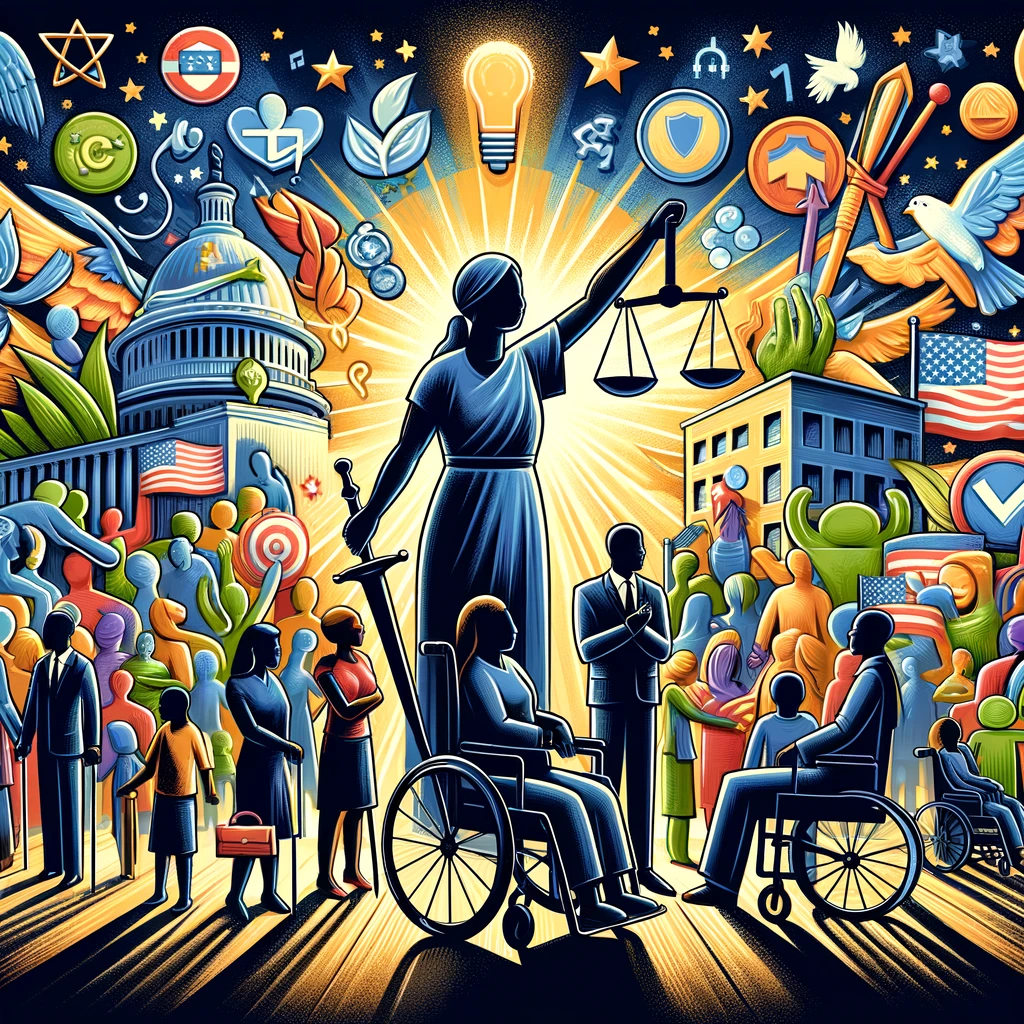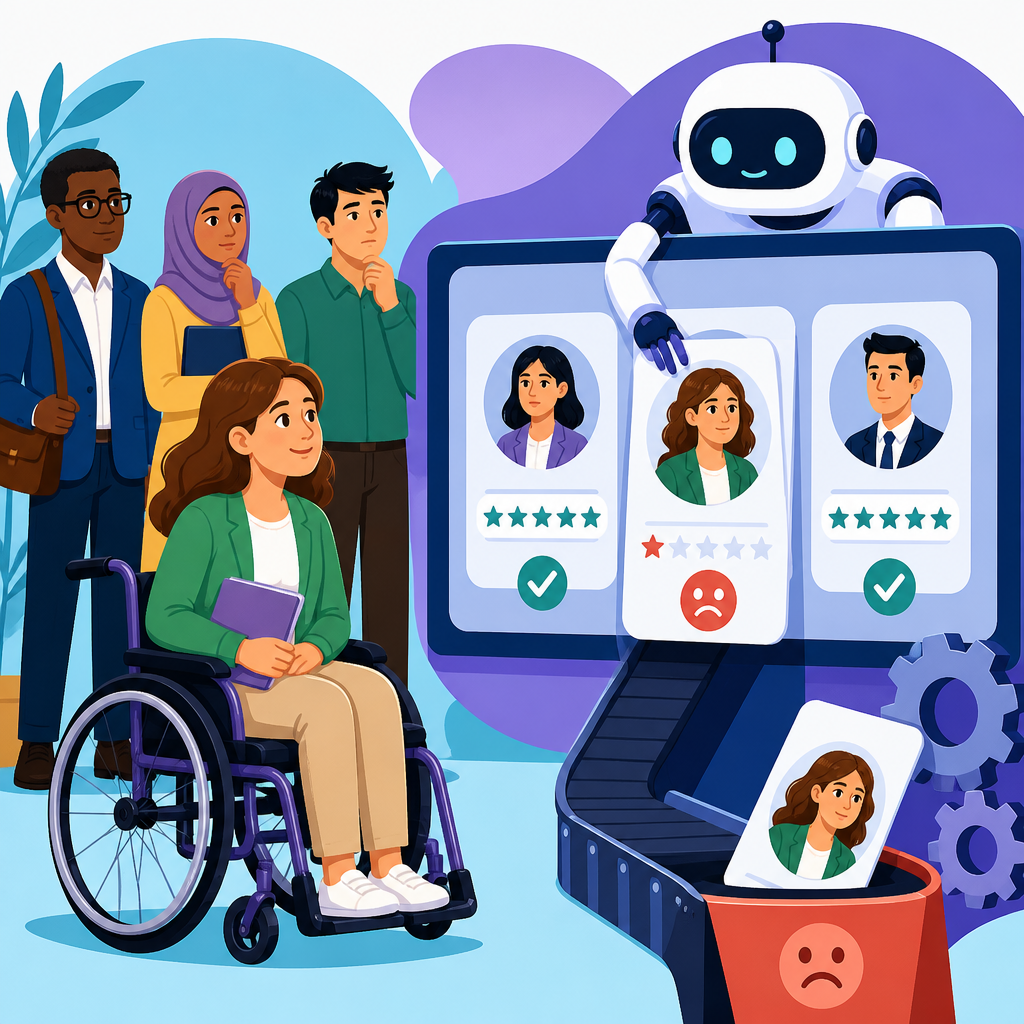
Can AI hiring tools discriminate against disabled applicants? Yes, they can, and regulators, courts, employers, and disability advocates increasingly treat that risk as a present-day civil rights issue rather than a future concern. AI hiring tools include résumé screeners, online assessments, chatbots, video interview analyzers, scheduling systems, and productivity prediction models used to rank, filter, or reject candidates. Disabled applicants include people with physical, sensory, cognitive, psychiatric, neurological, and chronic health conditions, whether visible or nonvisible. When these systems are designed without accessibility, trained on biased data, or used without reasonable accommodations, they can screen out qualified people in ways that conflict with disability law. I have reviewed these systems in workplace compliance projects, and the same pattern appears repeatedly: a tool sold as efficient often embeds assumptions about communication speed, eye contact, typing cadence, test stamina, or uninterrupted work history that do not measure actual job performance.
This matters because hiring is the front door to economic participation, health coverage, and independence. In the United States, the Americans with Disabilities Act, especially Title I, limits disability-based discrimination in employment and requires reasonable accommodation for qualified applicants and employees. Section 503 of the Rehabilitation Act applies to many federal contractors, and state laws may provide broader protection. Recent guidance from the U.S. Equal Employment Opportunity Commission has made clear that algorithmic decision tools do not replace an employer’s obligations. If an employer uses a vendor platform that rejects applicants with speech impairments, penalizes gaps caused by treatment, or times out before a screen-reader user can finish, liability does not vanish because software made the choice. This hub explains how ADA rights work in practice, where AI hiring tools create emerging issues, and what applicants, employers, and advocates should understand now.
How AI hiring tools can create disability discrimination
AI hiring discrimination usually happens through design choices that look neutral until they meet real disabled users. A game-based assessment may reward rapid clicking and visual scanning, which disadvantages applicants with tremors, low vision, migraines, or processing disabilities. A video interview tool may score facial expressiveness, vocal tone, or eye movement, despite weak evidence that those features predict job success. A chatbot may fail to understand atypical speech patterns. A résumé parser may downgrade candidates with nontraditional career paths caused by hospitalization, caregiving, or episodic conditions. In my experience auditing recruiting workflows, the problem is often not a single dramatic barrier but a chain of small frictions that becomes an automatic rejection.
The legal issue is not simply whether software is imperfect. The key question is whether a qualified person is unfairly screened out, denied equal access, or deprived of reasonable accommodation. Under the ADA, employers generally cannot use selection criteria that tend to screen out people with disabilities unless the criteria are job-related and consistent with business necessity. That standard matters. If a call center role truly requires clear spoken communication, measuring speech may be relevant; measuring facial symmetry or gaze persistence is not. If a warehouse role requires lifting twenty pounds, an assessment should test that requirement directly rather than rely on indirect proxies such as game stamina or webcam behavior.
ADA rights in practice during the hiring process
In practice, ADA rights begin before a person clicks apply. Job postings, career sites, assessments, and interview formats should be accessible and should tell applicants how to request accommodations. Employers may ask whether an applicant can perform essential job functions, with or without reasonable accommodation, but they cannot ask disability-related questions before making a conditional offer except in narrow situations. If an employer uses an online test, the applicant may need extra time, an alternative format, a human interview instead of automated scoring, captioning, sign language interpretation, or a keyboard-accessible interface. Those are not favors. They are standard accommodation questions that should be handled promptly and confidentially.
Qualified means the applicant meets the skill, experience, education, and other job-related requirements and can perform the essential functions of the position with or without accommodation. Essential functions are the fundamental duties of the job, not marginal tasks added for convenience. I often see employers overstate essentials in ways that create downstream bias. For example, requiring a driver’s license for a role that involves occasional local travel may exclude blind applicants when rideshare, transit, or reassignment of incidental driving could solve the issue. AI systems amplify these drafting mistakes by applying them at scale to every applicant.
Where employers and vendors get it wrong
Most failures fall into a few recurring categories: inaccessible interfaces, invalid assessments, inadequate accommodation processes, and poor vendor oversight. An inaccessible interface blocks use by people relying on screen readers, captions, voice control, refreshable braille, or alternative input devices. Invalid assessments measure traits that are not tied to job performance. An inadequate accommodation process buries contact information, demands medical detail too early, or cannot pause automated deadlines. Poor vendor oversight happens when employers buy a platform, accept marketing claims about fairness, and never test adverse impact or accessibility. That is a compliance mistake and a governance mistake.
| Risk area | Common failure | Practical fix |
|---|---|---|
| Accessibility | Assessment not usable with screen readers or keyboard navigation | Test against WCAG standards and provide an equivalent alternative |
| Accommodation | No clear way to request extra time or a different format | Place a visible accommodation contact on every hiring step |
| Validation | Tool scores speech, gaze, or speed without proving job relevance | Use validated criteria tied to essential functions only |
| Data bias | Training data reflects past exclusion or attendance assumptions | Audit for disability-related proxy effects and retrain or remove features |
| Oversight | Employer relies on vendor promises and contracts away responsibility | Require audit rights, documentation, and human review procedures |
Video interviewing tools deserve special caution. The EEOC has warned that software assessing speech patterns, facial movements, or other observable characteristics may disadvantage applicants with hearing loss, blindness, cerebral palsy, autism, stutters, PTSD, or other conditions. Separate from civil rights concerns, many industrial-organizational psychologists question whether these signals are valid predictors at all. A polished dashboard can conceal speculative scoring. If an employer cannot explain what the model measures, why it matters to the role, and how an applicant can obtain an alternative assessment, the tool should not be making dispositive decisions.
Accommodation, accessibility, and human review
Reasonable accommodation in AI hiring is often straightforward when planned early. Extra time for timed tests, a text alternative to a voice bot, captioned video content, a compatible interface for assistive technology, or a recruiter who can switch a candidate into a different workflow can preserve equal opportunity without undermining the selection process. The ADA does not require eliminating essential job functions or lowering legitimate standards, but it does require removing unnecessary barriers. That distinction is where many employers either comply well or fail badly.
Accessibility and accommodation are related but not identical. Accessibility means the default system is usable by as many people as possible. Accommodation means an individualized adjustment when the default still creates a barrier. A compliant program needs both. In procurement reviews, I look for WCAG 2.1 AA alignment, keyboard operability, captioning, meaningful error messages, timeout controls, and compatibility testing with common tools like JAWS, NVDA, VoiceOver, ZoomText, and Dragon. I also look for a live escalation path. Human review is essential because applicants often cannot describe a technical barrier within the rigid categories of an automated form, especially under time pressure.
Emerging issues: data, proxies, and automated decision laws
The newest disputes involve indirect disability proxies rather than explicit disability labels. A model may not know a person has multiple sclerosis, depression, or long COVID, yet still infer limitations from attendance patterns, typing rhythm, assessment completion time, medication-related schedule constraints, or fragmented work history. That is why simply removing the disability field from a dataset does not solve discrimination. Proxy discrimination can persist when the model learns from variables correlated with disability. The same concern appears in productivity scoring, return-to-office analytics, and employee monitoring tools that feed internal mobility or promotion systems.
Law and policy are evolving quickly. The EEOC’s technical assistance on disability and software hiring tools is already shaping employer practices. The Department of Justice has also emphasized digital accessibility under the ADA in broader contexts, reinforcing the expectation that online systems be usable. State and local AI laws add another layer. New York City’s law on automated employment decision tools requires bias audits and notices for certain tools, though its scope is not disability-specific. Illinois regulates AI in video interviews. Colorado’s comprehensive consumer privacy and AI governance developments, along with the EU AI Act abroad, are influencing vendor roadmaps even for U.S. employers. None of these frameworks replaces the ADA, but together they are raising the cost of sloppy deployment.
What applicants can do if an AI hiring tool seems unfair
Applicants should document the barrier, request an accommodation quickly, and keep copies of postings, emails, screenshots, error messages, and test instructions. If a system times out before a screen reader user can finish, if a speech analysis bot cannot process a disability-related speech pattern, or if a webcam requirement conflicts with a visual or neurological condition, the applicant should ask for an alternative method tied to the same essential functions. A short written request is usually enough. There is no magic phrasing required, though using terms like reasonable accommodation and alternative assessment can help signal the legal issue clearly.
If the employer refuses, applicants can escalate internally to recruiting leadership or human resources and externally to the EEOC or a state fair employment agency. Deadlines matter, so waiting too long can weaken a claim. Advocates and lawyers often look for patterns: repeated failures to provide alternatives, standardized tests with no accommodation path, or vendor contracts that block meaningful review. Complaints can lead to policy changes even without litigation. The strongest records usually connect the barrier to job relevance. For example, an applicant for a data analyst role can argue that a facial-expression score has no proven relationship to writing SQL queries, building dashboards, or presenting findings.
What compliant employers should do now
Employers should inventory every tool used from sourcing through onboarding, identify where automated ranking or exclusion occurs, and map each step to an accommodation process. Then they should validate job-related criteria, test accessibility, and require vendors to disclose model inputs, validation studies, audit results, retention periods, and human override procedures. Procurement language should include indemnity, cooperation in investigations, and prompt remediation duties, but the employer must still own the decision framework. In mature programs, legal, HR, procurement, IT accessibility, information security, and industrial-organizational psychology all have a role.
Just as important, employers should narrow automation to assistive functions unless they can defend higher-stakes uses with evidence. Scheduling interviews, removing duplicate applications, and helping candidates navigate openings is different from scoring disability-linked behavioral signals. Clear notices, trained recruiters, and fast manual alternatives reduce risk and improve candidate experience for everyone, not only disabled applicants. The central lesson is simple: AI hiring tools can discriminate against disabled applicants when employers treat convenience as proof of fairness. The practical answer is disciplined design, accessibility by default, accommodations on request, and accountable human judgment. If you manage hiring or support job seekers, review your process now and fix barriers before software turns them into routine exclusion.
Frequently Asked Questions
Can AI hiring tools discriminate against disabled applicants?
Yes. AI hiring tools can discriminate against disabled applicants when the systems they use to screen, rank, assess, or reject candidates measure ability in ways that unfairly penalize disability-related traits or fail to account for needed accommodations. This is not just a theoretical concern. Employers now use a wide range of automated tools, including résumé screeners, online games and tests, chatbot-based prescreening, video interview analysis, scheduling systems, and models that predict future performance or attendance. If those tools are designed around assumptions about speech patterns, eye contact, typing speed, facial movements, reaction time, communication style, or uninterrupted work history, they can disadvantage applicants with physical, sensory, cognitive, psychiatric, or chronic health disabilities.
Discrimination can happen in obvious ways, such as an assessment that requires spoken answers from a deaf applicant or a timed test that does not allow extra time for someone with a processing-related disability. It can also happen in less visible ways, such as an algorithm trained on past hiring data that reflects previous bias, a résumé screener that downgrades gaps in employment connected to medical treatment, or a video analysis tool that interprets disability-related affect or movement as a lack of confidence or professionalism. Even a neutral-looking system can create unlawful barriers if it screens out qualified disabled candidates at a higher rate and the employer cannot show that the tool is job-related and consistent with business necessity.
That is why regulators, courts, employers, and disability advocates increasingly treat AI hiring bias as a current civil rights issue. The legal question is usually not whether the employer intended to discriminate, but whether the tool or process denies disabled applicants an equal opportunity to compete for the job and whether reasonable accommodations were available and provided.
What kinds of AI hiring tools create the biggest disability discrimination risks?
The highest-risk tools are often the ones that evaluate behavior, communication, speed, or perceived personality traits instead of directly measuring the essential functions of the job. Video interview analyzers are a major example. Some systems claim to assess enthusiasm, honesty, attention, emotional intelligence, or cultural fit based on facial expressions, voice characteristics, pacing, gaze direction, or body movement. Those features can be deeply unreliable and especially problematic for applicants with autism, speech disabilities, mobility impairments, facial differences, hearing loss, blindness or low vision, neurological conditions, or mental health disabilities. A system may read a disability-related trait as a negative signal even when the applicant can perform the job perfectly well.
Timed online tests and game-based assessments also raise serious concerns. An applicant with dyslexia, ADHD, limited manual dexterity, a traumatic brain injury, or anxiety may need extra time, assistive technology, an alternate interface, or another accommodation. If the system is inflexible, inaccessible, or automatically flags nonstandard performance as low potential, it can function as a disability screen-out tool. Chatbots and automated prescreeners may create problems if they require fast written responses, cannot handle screen readers, or ask questions in ways that indirectly elicit disability-related information before it is legally appropriate.
Résumé screeners and predictive models can be risky too, even though they may seem more objective. They may penalize employment gaps, nontraditional career paths, reduced hours, or missing credentials that resulted from inaccessible workplaces or disability-related interruptions. Scheduling tools and remote proctoring systems can also cause discrimination if they do not allow flexibility for medical appointments, fatigue, assistive devices, interpreters, or alternative communication methods. In short, the greatest risk arises whenever an AI system substitutes generalized proxies for a fair, accessible evaluation of whether the applicant can do the job with or without reasonable accommodation.
Are employers legally responsible if a vendor’s AI hiring software discriminates against disabled candidates?
In most cases, yes. Employers generally cannot avoid their legal obligations by outsourcing part of the hiring process to a technology vendor. If an employer uses a third-party AI tool to make employment decisions, the employer usually remains responsible for ensuring that the process complies with disability discrimination laws and accommodation requirements. That includes evaluating whether the tool is accessible, whether it tends to screen out disabled applicants unfairly, whether accommodations are available, and whether the employer understands how the tool affects candidates with different disabilities.
This matters because vendors often market AI systems as efficient, neutral, or scientifically validated without giving employers enough information to verify those claims. A vendor may promise bias reduction, but if the employer cannot explain what the tool measures, how it was trained, what data it uses, what limitations it has, and how candidates can request accommodations, the employer is exposed to significant legal and practical risk. Courts and enforcement agencies typically focus on the employer’s decision-making process and whether qualified applicants had a meaningful and equal chance to compete.
Good compliance practice requires more than signing a vendor contract. Employers should ask detailed questions about accessibility, accommodation pathways, validation studies, adverse impact testing, human review procedures, data sources, and whether disability-related traits may affect outputs. They should also ensure that applicants are informed when an automated tool is being used and are given a clear way to request an alternative format or assessment. If a vendor’s tool creates barriers, the employer may still be liable, especially if it knew or should have known about the risk and continued using the system anyway.
How can disabled applicants identify and respond to possible discrimination by an AI hiring system?
Disabled applicants often first notice a problem when the application process feels inaccessible, unusually rigid, or strangely disconnected from the actual job. Examples include a required video interview that seems to score facial expressions or eye contact, a chatbot that cannot be used with assistive technology, a test that allows no extra time, a platform that crashes with screen readers, or an automatic rejection after a process that did not seem to evaluate real job skills. Another warning sign is when there is no clear way to request an accommodation or no human contact available to address accessibility concerns.
If an applicant encounters those issues, it can help to document what happened in real time. Useful records include screenshots, confirmation emails, instructions from the employer or vendor, the name of the software platform, error messages, deadlines, accommodation requests, and any responses received. The applicant should request a reasonable accommodation or alternative assessment as clearly and as early as possible if feasible, although failure to do so does not automatically excuse an inaccessible process. In many cases, a simple written request asking for an accessible format, extra time, a non-video option, a human interview, or another modification can create a record that becomes important later.
If the employer refuses, ignores the request, or proceeds with a tool that appears to screen out the applicant because of disability-related characteristics, the applicant may want to speak with an employment lawyer, disability rights organization, legal aid office, or government agency that handles discrimination complaints. The central issue is often whether the applicant was denied an equal opportunity because of an inaccessible tool or a failure to accommodate. Applicants do not need to prove that the software was intentionally biased in a dramatic way. Often the strongest claim is that the hiring process used technology that was not accessible, not properly validated, or not reasonably adaptable for disabled candidates.
What should employers do to reduce the risk of disability discrimination when using AI in hiring?
Employers should start by treating accessibility and disability compliance as core design requirements, not as afterthoughts. Before adopting any AI hiring tool, they should identify exactly what the tool measures and ask whether those measurements are truly necessary for the job. A useful guiding question is simple: does this system evaluate an essential job function, or is it relying on a proxy that may penalize disability? Tools that score eye contact, vocal tone, facial expression, reaction speed, or uninterrupted work history deserve especially close scrutiny because those factors may say little about actual job performance while creating substantial disability risk.
Employers should also conduct meaningful due diligence. That includes reviewing accessibility standards, testing the platform with assistive technologies, examining whether the tool has a disparate impact on disabled applicants, confirming that accommodations can be provided promptly, and requiring vendors to share enough information for a real compliance assessment. Human oversight is essential. Automated outputs should not be treated as final or unchallengeable, especially when a candidate requests an accommodation or when the tool rejects someone based on characteristics that may be disability-related. There should be a clear process for individualized review and for offering alternate assessment methods.
Just as important, employers should communicate transparently with candidates. Applicants should be told when AI or automated systems are part of the hiring process, what general role those tools play, and how to request a reasonable accommodation or accessible alternative. Recruiters, HR staff, and hiring managers should be trained to recognize disability-related risks in automated assessments and to escalate concerns quickly. Regular audits, documentation, and reevaluation are also critical because even a tool that seemed acceptable at launch can become problematic as job requirements, applicant populations, or software features change. The safest and most defensible approach is to use AI as a limited support tool, not as a black-box gatekeeper that silently filters out qualified disabled people.