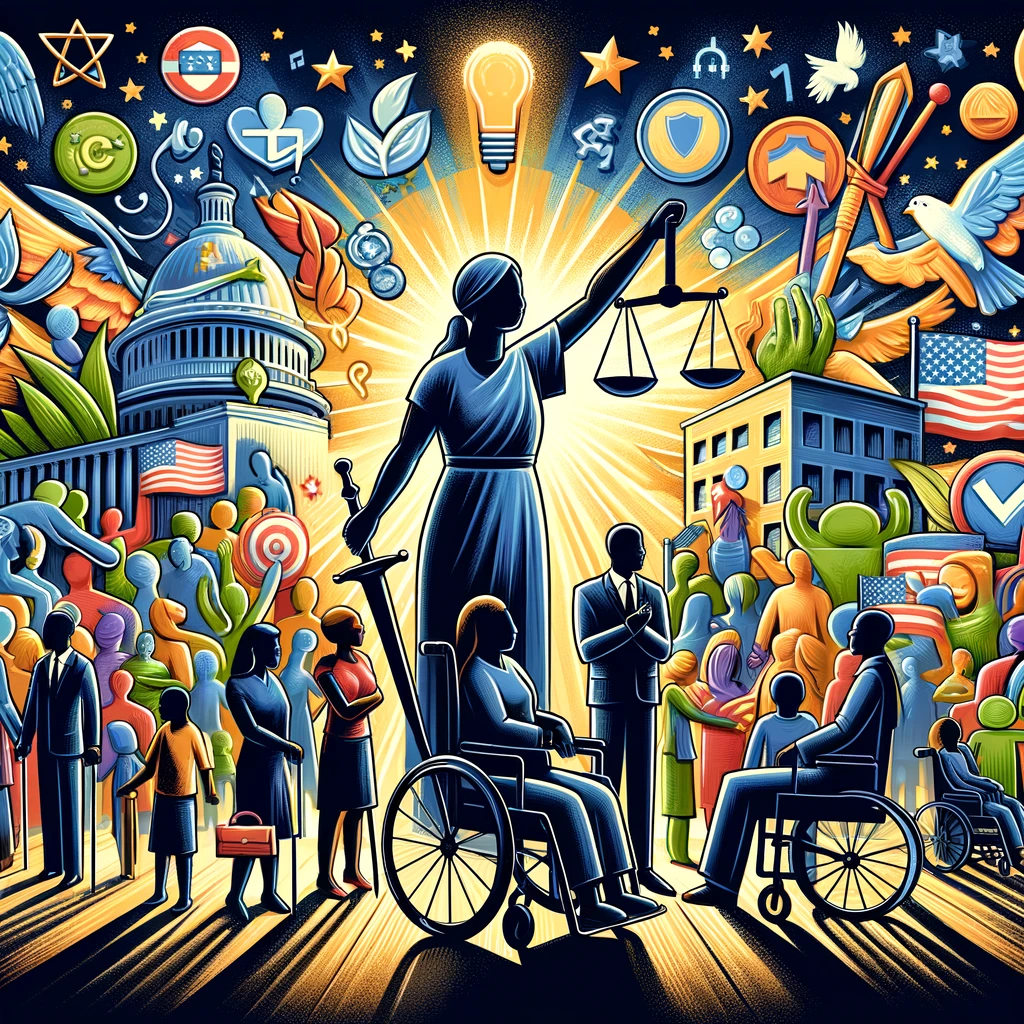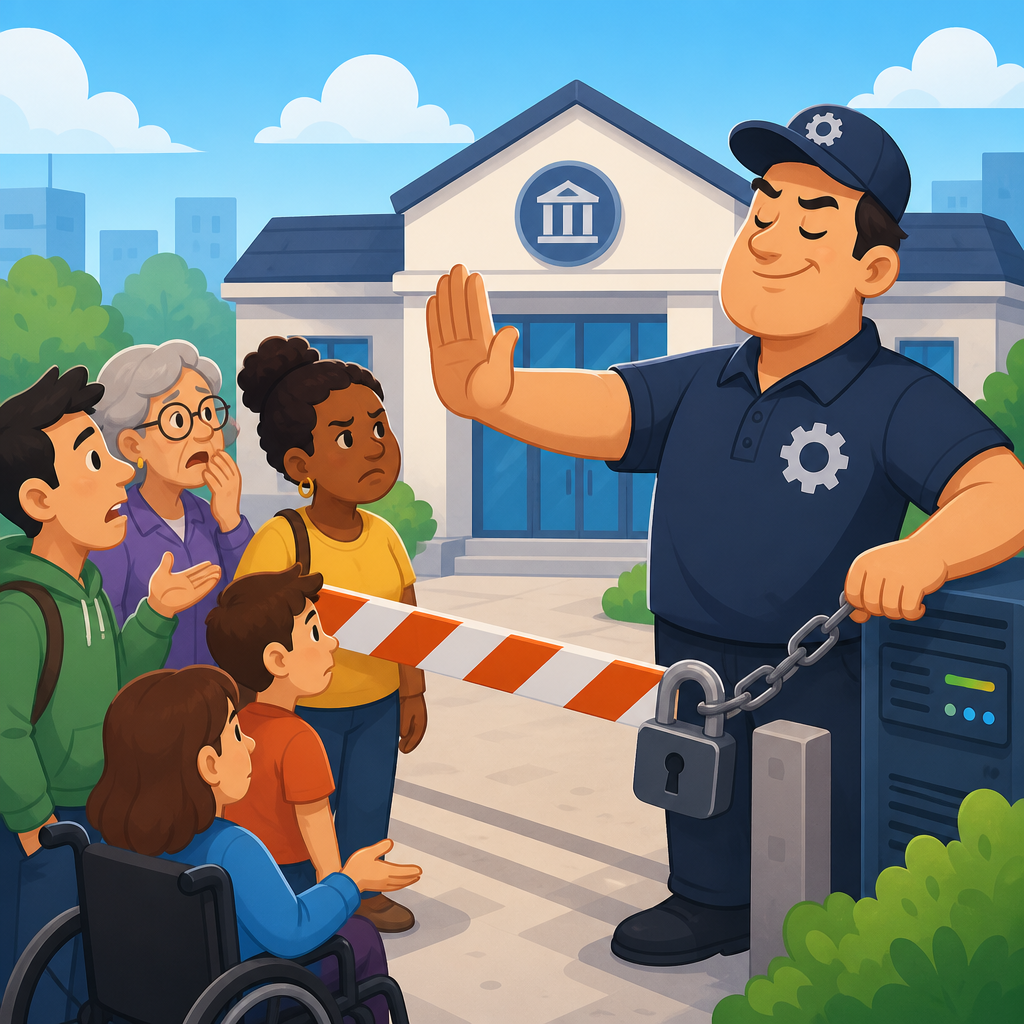
When a third-party vendor blocks access to a public service, the problem is not just technical inconvenience; it can become a civil rights failure with immediate consequences for housing, transportation, education, health care, voting access, and communication with government. In the context of ADA rights in practice and emerging issues, the core question is straightforward: if a city, school, hospital, court system, or transit agency hires an outside company to run a website, kiosk, app, phone tree, payment portal, or document platform, who remains responsible when disabled people cannot use it? The practical answer, based on how accessibility obligations operate in the real world, is that outsourcing the function does not outsource the duty. Public entities and many publicly facing service providers still carry legal and operational responsibility for equal access, and vendors can create serious compliance, financial, and reputational risk when their products shut people out.
This issue matters because modern public service delivery is increasingly mediated by contractors. I have seen agencies replace staffed counters with QR codes, move applications into inaccessible portals, and install kiosks that work well for sighted, dexterous users while excluding blind users, wheelchair users, deaf users, and people with cognitive disabilities. Key terms are important here. A public service is any program, benefit, or activity offered by a government body or, in some contexts, by a covered organization serving the public. A third-party vendor is the outside company that builds or operates the digital or physical access point. Blocking access can mean total exclusion, but it also includes delay, extra burden, privacy loss, forced dependence on others, or inferior alternatives. ADA rights in practice therefore include more than ramps and parking spaces; they now extend deeply into software procurement, digital content, self-service technology, artificial intelligence tools, and hybrid service systems.
Understanding these failures as a hub topic helps readers connect specific issues that often appear separate. A broken screen reader workflow, a video platform without captions, a telehealth app that rejects relay calls, a ride-booking tool with no keyboard navigation, or a benefits portal that times out before a user can complete it all raise the same central rights question. The emerging issues are not abstract. They are showing up in daily operations, contracts, litigation, audits, and public complaints. The rest of this guide explains what happens legally, operationally, and practically when a vendor creates a barrier, how institutions should respond, and where ADA rights are heading next.
Who Is Responsible When a Vendor Creates the Barrier?
The most important principle is that an entity cannot contract away accessibility obligations. If a public agency chooses a vendor platform to deliver a public service, the agency generally remains accountable for ensuring disabled people can access that service in an equally effective way. That principle aligns with long-standing disability law logic: the covered entity is responsible for its programs, services, and activities, even when it uses contractors to perform them. In practical terms, that means a county cannot excuse an inaccessible jury portal by saying the software company built it, and a transit authority cannot defend an unreadable ticketing app by pointing to the app developer.
This distinction matters because organizations often misunderstand the vendor relationship. Procurement teams may assume a contract shifts risk downstream. It rarely does unless the contract includes strong accessibility requirements, testing rights, remediation timelines, indemnity language, and enforcement mechanisms. Even then, the legal complaint from a resident, student, patient, or rider usually lands first on the institution providing the service. Regulators and courts tend to look at who offered the program, who controlled access, and whether the person could actually use it. From an operational standpoint, the agency owns the user experience, even when the code is external.
For readers navigating ADA rights in practice and emerging issues, this is the anchor concept linking every subtopic in this area: public-facing access duties attach to the service itself, not merely to the hardware, software, or vendor branding layered on top of it.
What Access Barriers Look Like in Real Public Services
Vendor-created barriers usually appear in patterns. Websites may fail basic screen reader compatibility because forms lack labels, buttons have no names, error messages are not announced, or PDFs are untagged. Mobile apps may require gestures that cannot be performed with assistive technology. Kiosks may place touch targets too high, offer audio through proprietary headphone jacks, or omit tactile controls. Video visitation platforms used in jails or hospitals may lack captions or interpreter support. Identity verification systems may reject disabled users whose appearance, speech, movement, or documentation does not fit the vendor’s assumptions.
These barriers are not minor usability problems. They can prevent a person from paying a utility bill on time, registering a child for school, applying for a permit, reading a police notice, reserving paratransit, accessing court hearings, or receiving telemedicine. I have repeatedly seen agencies offer a fallback such as “call us for help,” but that often is not equivalent access. Phone lines close early, hold times are long, private information must be disclosed to staff, and urgent deadlines keep running. Equal access means disabled users should not have to accept lesser speed, privacy, dignity, or independence simply because the primary channel was built without them.
| Public service channel | Common vendor barrier | Practical consequence |
|---|---|---|
| Benefits portal | Unlabeled form fields and CAPTCHA without accessible alternative | Application cannot be completed independently |
| Transit ticketing app | Incompatible with screen readers or keyboard navigation | Riders cannot buy fares or plan trips |
| Self-service kiosk | No tactile controls, no speech output, unreachable interface height | Users must rely on strangers or staff |
| Telehealth platform | No live captions or interpreter integration | Medical communication becomes inaccurate or delayed |
| Court or school video portal | Auto-generated captions only, inaccessible shared documents | Users miss critical information and deadlines |
How the ADA Works in Practice When Access Is Blocked
In practice, ADA analysis turns on effective communication, reasonable modification, equal opportunity, and accessible program access. The exact legal route depends on the type of entity involved, but the user-facing issue is consistent: if disabled people are denied meaningful access, the institution has a problem that must be fixed. For state and local government services, program accessibility rules are especially significant because services increasingly move online first. The Department of Justice has reinforced that digital access is not optional when websites, mobile applications, and electronic documents are the main gateway to public programs.
Standards help translate principle into measurable requirements. In digital environments, Web Content Accessibility Guidelines, especially WCAG 2.1 Level AA and increasingly WCAG 2.2 concepts, function as the common benchmark used in settlements, audits, and procurement reviews. They are not the only measure, but they are the clearest technical baseline across web and app design. For kiosks, hardware and software accessibility draw from ADA design concepts, user interface best practices, and platform-specific assistive compatibility requirements. For communications, captioning quality, relay access, plain language, document remediation, and interpreter workflows all matter.
When a vendor blocks access, institutions usually face a sequence of obligations: investigate the barrier quickly, provide an immediate effective alternative, document the issue, push remediation through the vendor, and prevent recurrence. Delay is risky. A city that knows its payment portal is inaccessible but leaves it unchanged for months while charging late fees compounds the discrimination. Temporary workarounds can help, but they do not erase the duty to make the core service accessible.
What Public Entities Should Do Before, During, and After Procurement
The best accessibility response starts before a contract is signed. In my experience, most expensive disputes could have been prevented by stronger procurement discipline. Agencies should define accessibility as a mandatory requirement, not a preference. That means requiring a current accessibility conformance report, usually based on the Voluntary Product Accessibility Template format, asking which WCAG success criteria are fully supported, partially supported, or unsupported, and demanding evidence such as test reports, defect logs, and user testing results. A polished sales deck is not proof.
Contract language must be specific. It should require compliance with defined accessibility standards, ongoing testing after updates, prompt remediation of defects, cooperation with audits, accessible support channels, staff training, and consequences for noncompliance. Agencies should also reserve the right to withhold acceptance, delay launch, or terminate for repeated accessibility failures. Without these terms, accessibility becomes a goodwill request instead of an enforceable deliverable.
After procurement, organizations need governance. Accessibility should be reviewed at design, staging, launch, and update cycles. Named tools such as axe DevTools, WAVE, Accessibility Insights, JAWS, NVDA, VoiceOver, TalkBack, and keyboard-only testing all play useful roles, but no automated scanner is sufficient by itself. Manual testing and disabled user testing are essential because many real barriers involve workflow, comprehension, timing, focus order, caption accuracy, or multimodal interaction patterns that automated checks miss. This is one of the clearest emerging issues in ADA rights practice: accessibility cannot be validated by procurement paperwork alone.
What Individuals Can Do When a Vendor Blocks a Public Service
If you are blocked from a public service, document the barrier immediately. Capture the date, time, page or location, device used, assistive technology used, exact failure point, and any deadline or harm caused. Screenshots, recordings, confirmation emails, and copies of inaccessible documents are valuable. Then notify the public entity providing the service, not just the vendor. Ask for an accessible way to complete the task right away and request confirmation in writing. If the issue involves an urgent need such as benefits, medication, transportation, housing, or a legal deadline, say that clearly.
It also helps to frame the problem in concrete access terms. Instead of only saying a site is “not ADA compliant,” explain the blocked function: “The benefits application submit button is unlabeled in my screen reader, so I cannot complete the application independently.” Specificity tends to produce faster escalation because staff can see the service failure, not just the legal label. If an organization offers a workaround, assess whether it is truly equivalent in speed, privacy, and independence. If not, say so.
Where internal complaint systems exist, use them, but do not assume they are the only path. Disability rights offices, ombuds programs, protection and advocacy agencies, legal aid groups, and relevant federal or state enforcement channels may all matter depending on the service involved. Complaints become stronger when they connect the barrier to an actual public function that was delayed or denied.
Emerging Issues: AI, Security Tools, and Invisible Gatekeeping
The newest accessibility disputes often involve tools marketed as neutral efficiency upgrades. AI chat systems used for public information can fail when they do not support screen readers, plain-language prompts, or text alternatives for visual outputs. Automated identity proofing can block people whose facial differences, mobility devices, speech patterns, or documentation do not fit narrow models. Fraud controls such as timed logouts, puzzle-based verification, and document upload rules routinely hit disabled users first. These systems can create invisible gatekeeping because staff may not realize the exclusion is happening until complaints accumulate.
Another emerging issue is the replacement of staffed options with “digital first” channels. A human counter closes, a call center shrinks, and the app becomes the only practical doorway. When that app is inaccessible, the exclusion is more severe because there is no realistic backup. Public entities should treat service channel consolidation as a high-risk accessibility event requiring formal review. The question is not whether the vendor says the tool is accessible; the question is whether disabled residents can complete the entire task with comparable ease and dignity.
Privacy is also a rights issue. Forcing a blind resident to reveal confidential financial information to a stranger at a kiosk, or requiring a deaf patient to use a family member because a vendor platform cannot integrate interpretation, is not equivalent access. Emerging ADA practice increasingly recognizes that accessibility includes independent use, confidentiality, and reliability, not mere theoretical availability.
Building a Rights-Respecting Access Strategy
The durable solution is a rights-respecting access strategy that treats accessibility as core infrastructure. Public entities should inventory every vendor-dependent service, rank them by risk and importance, test them with disabled users, and create remediation timelines tied to executive oversight. Accessibility coordinators need authority, budgets, and procurement influence. Staff need escalation paths when they discover a barrier. Vendors should be judged on accessibility performance over time, not on one-time promises.
This hub on ADA rights in practice and emerging issues points toward related subtopics: digital accessibility standards, accessible procurement, kiosk design, captioning and effective communication, transportation technology, education platforms, telehealth tools, complaint documentation, and enforcement options. The common thread across all of them is simple. If a third-party vendor blocks access to a public service, the barrier is real, the harm is immediate, and the obligation to fix it remains with the institution delivering the service. Outsourcing can expand capacity, but it never cancels the duty to provide equal access.
For agencies, the main benefit of getting this right is not just reduced legal exposure. It is better service delivery for everyone: clearer systems, fewer support calls, faster completion rates, stronger trust, and more resilient operations. For individuals, the benefit is direct and personal: the ability to use public services independently, privately, and on time. Review your highest-impact services, test the vendor tools people rely on every day, and fix barriers before they become denials of rights.
Frequently Asked Questions
Can a public agency avoid responsibility for accessibility if a third-party vendor runs the website, app, kiosk, or phone system?
No. A public agency generally cannot outsource its legal responsibilities by outsourcing the service itself. If a city, county, school district, public hospital, transit authority, court system, or other government entity hires a private company to operate part of a public-facing service, the obligation to provide equal access does not disappear. From a practical ADA and civil rights perspective, the public body remains responsible for making sure people with disabilities can use the service in a meaningful, timely, and effective way.
This matters because many essential government functions are now delivered through third-party technology: benefits portals, transit ticketing apps, online school systems, remote court appearances, patient scheduling platforms, public meeting livestreams, parking payment systems, utility portals, and automated phone trees. If those tools are inaccessible, the barrier is not merely a bad user experience. It can prevent someone from applying for housing, attending a hearing, refilling medication, receiving emergency information, or communicating with public officials.
In legal and operational terms, agencies are expected to select, manage, and monitor vendors in ways that protect access. That includes accessibility requirements in procurement, testing before launch, remediation timelines, complaint procedures, and backup methods when the technology fails. A vendor may have contractual duties, but the public agency still has the duty to ensure the public service is actually accessible. If the service is public, the responsibility stays public.
Why can an inaccessible vendor system become a civil rights issue instead of just a technical problem?
Because access to public services is often tied to basic rights, independence, and safety. When a third-party platform blocks access, the consequences can be immediate and severe. A blind resident may be unable to pay a water bill online before shutoff. A deaf patient may not be able to use a hospital’s phone-based scheduling system. A wheelchair user may face an unusable transit kiosk. A person with cognitive disabilities may be unable to navigate a benefits portal with confusing timeouts, poor form labels, or inaccessible identity verification steps.
These are not minor inconveniences. They can interfere with housing stability, health care access, school participation, voting-related information, transportation, public benefits, emergency notifications, and communication with the courts or police. When a public function is offered through technology but that technology excludes a protected group of people, the result can be unequal treatment in practice, even if no one intended it.
That is why accessibility failures should be viewed through a civil rights lens. The problem is not simply that a system has bugs; it is that people may be denied equal participation in public life. Public agencies cannot treat disability access as optional quality assurance. They need to treat it as a core compliance, equity, and service-delivery obligation. If the only realistic path to a public benefit is blocked by inaccessible vendor technology, the agency may be creating the digital equivalent of a locked door.
What kinds of third-party accessibility barriers most commonly block access to public services?
The barriers vary by platform, but several patterns appear repeatedly. On websites and apps, common problems include missing alt text, unlabeled form fields, keyboard traps, low color contrast, inaccessible PDFs, broken screen reader navigation, CAPTCHA barriers, time limits that cannot be extended, and identity verification tools that rely on inaccessible visual or audio tasks. These issues can stop users from completing applications, reading notices, uploading documents, or making payments.
On kiosks and physical interfaces, barriers may include touchscreens with no tactile controls, audio output without headphone access, visual content without speech output, unreachable hardware, or interfaces that require gestures or timing some users cannot perform. In transportation, parking, and courthouse settings, that can make basic public access impossible without assistance. If assistance is not immediate or private, the barrier becomes even more serious.
Phone systems and communication tools create another major area of risk. Automated menus may not work well with relay services, speech disabilities, or assistive technologies. Video platforms may lack captioning or screen reader compatibility. Chatbots may be unusable by keyboard. Public meeting software may fail to support interpreters, live captions, or accessible document sharing. Even when each barrier seems small in isolation, the combined effect can prevent someone from completing an essential interaction with government.
What makes these barriers especially important is context. If an inaccessible retail site fails, a customer may shop elsewhere. If an inaccessible public service platform fails, there may be no meaningful alternative. That lack of choice is exactly why public agencies must scrutinize vendor systems before and after deployment.
What should a public agency do if a vendor platform is blocking disabled users from accessing an essential service right now?
The first priority should be immediate access, not delay. If people are being blocked from a public service, the agency should provide an effective alternative right away while the technical problem is being fixed. That may mean staffed phone support, in-person assistance, accessible paper forms, manual processing, extended deadlines, alternative document formats, captioned or interpreted communication, or direct caseworker help. The key is that the alternative must be real, timely, and usable, not theoretical or burdensome.
At the same time, the agency should document the issue, escalate it with the vendor, and impose a remediation process with clear deadlines. Accessibility defects should be treated like critical service failures, especially where health care, housing, education, transportation, courts, or elections are involved. Waiting for a future software update while residents miss appointments, lose benefits, or miss filing deadlines is not an adequate response.
Public agencies should also review whether the problem reflects a deeper procurement or governance failure. Did the contract require accessibility? Was the product tested with assistive technology? Is there an internal accessibility review process? Are complaints tracked and resolved? Are staff trained to recognize accessibility issues instead of dismissing them as individual user problems? A single barrier often reveals a structural weakness in how the agency selects and oversees vendors.
In short, the right response has two tracks: restore access now, and fix the system permanently. Anything less leaves disabled residents paying the price for the agency’s vendor choice.
What rights and practical options do affected users have when a third-party vendor blocks access to a public service?
Affected users often have more options than they realize. The most immediate step is to report the barrier to the public agency itself, not just the vendor. Since the service is public, the agency should be told exactly what function is inaccessible, what assistive technology or access method was used, when the problem occurred, and what consequence it caused, such as a missed deadline, inability to schedule care, or blocked access to records. Specific examples help show that the problem is not abstract; it is interfering with equal access.
Users can also request an accessible alternative or accommodation right away. Depending on the context, that might include a staffed process, accessible documents, deadline extensions, auxiliary aids, alternate communication methods, or direct assistance completing the transaction. If the issue affects something urgent such as medication access, court participation, school enrollment, shelter intake, or transportation, it is important to say so clearly and ask for immediate intervention.
If the agency does not respond appropriately, users may be able to file internal grievances, administrative complaints, or seek legal advice from disability rights organizations, protection and advocacy agencies, or attorneys experienced in ADA and public entity access matters. The exact path depends on the type of agency and service involved, but the core principle remains the same: a public service cannot be made inaccessible simply because a private vendor stands in the middle of the transaction.
From a practical standpoint, users should keep records. Save screenshots, emails, error messages, dates, names of staff contacted, and any deadlines or harms that resulted. That documentation can be important both for getting the immediate issue resolved and for showing an ongoing pattern if the problem continues. Accessibility barriers are easiest to dismiss when they are vague. They are much harder to ignore when they are documented, repeated, and tied to concrete harms in daily life.