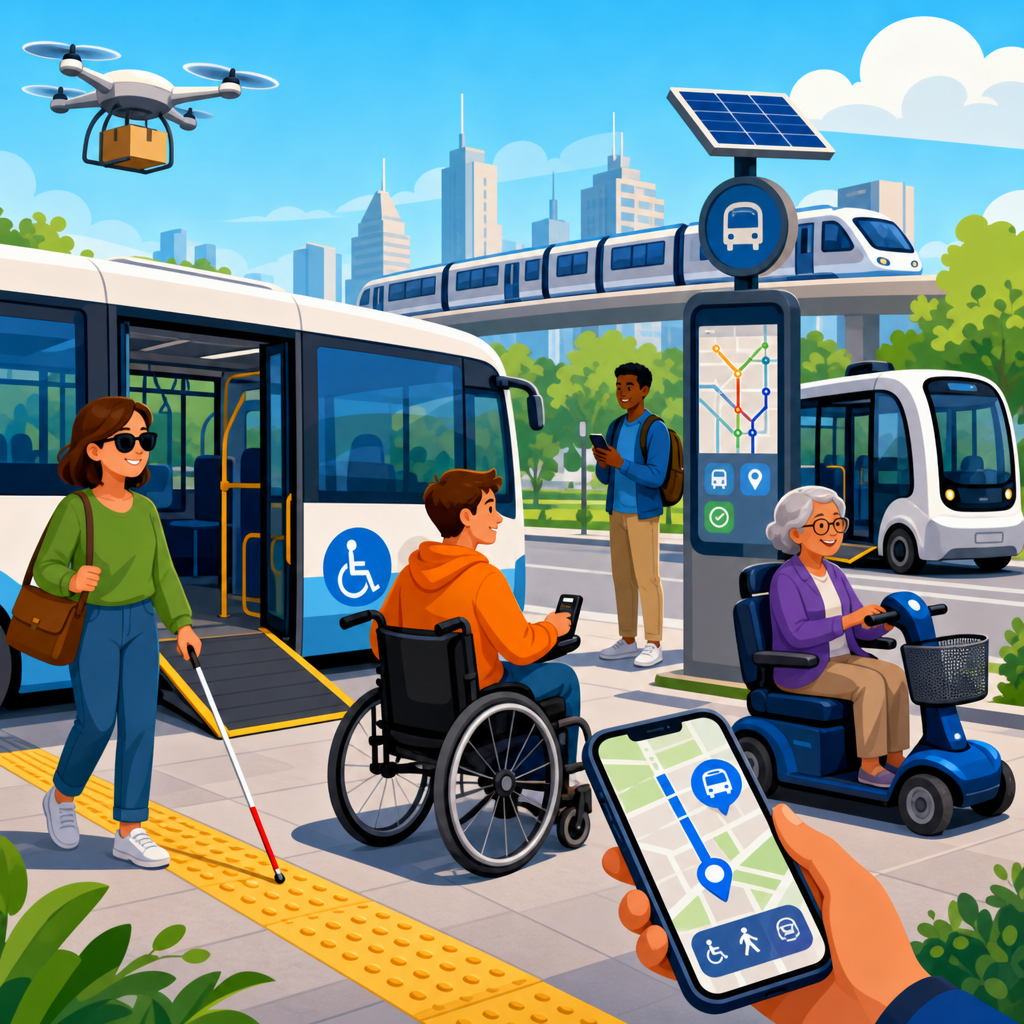
Accessible transportation technology is reshaping how people with disabilities, older adults, and travelers with temporary limitations move through cities, suburbs, and rural corridors. In practical terms, accessible transportation means vehicles, stations, sidewalks, apps, and booking systems designed so people with mobility, sensory, cognitive, or communication needs can travel safely and independently. Technology adds the critical layer that turns compliance into usability: low-floor buses reduce boarding barriers, real-time audio announcements support blind riders, captioned service alerts help deaf riders, and digital trip planners reduce uncertainty that often makes travel inaccessible before a journey even begins.
This topic matters because transportation access determines access to work, education, health care, community life, and emergency services. The World Health Organization estimates that more than 1.3 billion people live with significant disability worldwide, while population aging is increasing demand for inclusive mobility systems. I have worked on digital accessibility reviews for transit information products, and the recurring lesson is straightforward: a route is not truly available if a rider cannot discover it, board it, navigate transfers, or respond to disruptions. A technically compliant system can still fail users if elevator outages are buried in unreadable alerts, if a wheelchair securement area is blocked, or if a paratransit booking interface cannot be used with a screen reader.
Technology for accessible transportation now spans hardware, software, infrastructure, and operations. Key terms include universal design, which aims to make systems usable by the widest range of people without adaptation; assistive technology, which includes devices and software such as screen readers, hearing aids, and powered mobility aids; and mobility as a service, which combines multiple transport modes through a digital platform. As a hub article under technology and accessibility, this page maps the current trends shaping inclusive transportation and explains where each innovation fits. It covers vehicle design, passenger information, on-demand services, data standards, autonomous systems, and implementation realities so readers can navigate the broader landscape with confidence.
Smarter vehicle design is making public transit more usable
The most visible progress in accessible transportation starts with vehicles themselves. Low-floor buses, kneeling suspension systems, bridge plates, wider gangways, contrasting handrails, priority seating layouts, and securement systems for wheelchairs and scooters have moved from specialized features to baseline expectations in many fleets. On rail systems, level boarding is especially important because it reduces dwell time while helping wheelchair users, parents with strollers, and passengers carrying luggage. In my experience reviewing rider complaints, level boarding and reliable ramp deployment consistently produce larger gains in independence than highly marketed but less frequently used premium features.
Technology is also improving the sensory environment inside vehicles. Automated stop announcements linked to GPS support blind and low-vision passengers and reduce the need to ask operators for help. Interior displays with high-contrast text, route progress maps, and disruption information support deaf and hard-of-hearing riders and assist anyone traveling in an unfamiliar area. More agencies are installing induction loops or improving acoustic design around driver barriers so speech remains intelligible. Camera systems help operators monitor securement areas and boarding zones, while predictive maintenance software can flag malfunctioning ramps and lifts before they strand passengers. These changes matter because equipment reliability, not feature checklists, determines whether a rider trusts the system enough to use it repeatedly.
Digital wayfinding and real-time information reduce travel uncertainty
For many riders, the hardest part of a trip is not riding the vehicle but planning and navigating the environment around it. Accessible transportation technology increasingly focuses on digital wayfinding, which includes step-by-step navigation in stations, real-time disruption alerts, elevator and escalator status, platform changes, and geolocated guidance through complex interchanges. Agencies using GTFS and GTFS-Realtime feeds can deliver standardized service data to trip planning tools, while pathways data and station accessibility metadata help riders understand whether a route is actually usable for their needs.
Examples are multiplying. The New York City subway has expanded live elevator status reporting, while Transport for London provides detailed step-free access information that distinguishes between partial and full accessibility rather than treating stations as simply accessible or inaccessible. Bluetooth beacons, QR-coded wayfinding signs, and computer vision pilots are being tested to support indoor navigation where satellite positioning fails. The strongest implementations do three things well: they describe barriers precisely, present alternatives immediately, and deliver information across channels including apps, websites, SMS, phone systems, and on-site signage. That multichannel approach is essential because accessible transportation cannot depend on a single smartphone app or constant data connectivity.
On-demand services and paratransit platforms are becoming more flexible
Paratransit and demand-responsive transport have historically been operationally necessary but often frustrating for riders because of long booking windows, broad pickup times, and limited same-day flexibility. Current technology trends are improving that experience through dynamic scheduling engines, automated dispatch, rider-facing mobile booking, live vehicle tracking, and better integration with fixed-route transit. When implemented carefully, these systems reduce empty vehicle miles, improve on-time performance, and give riders clearer expectations about pickup times.
The change is significant because accessible transportation is not one mode; it is an ecosystem. A rider may use a fixed-route bus for part of the week, a microtransit shuttle for first-mile access, and paratransit for medical trips. Software platforms now attempt to coordinate those modes instead of treating them as separate silos. Agencies and vendors such as Via, Spare, Trapeze, and Routematch have supported scheduling and booking modernization, but technology alone does not guarantee equitable service. If eligibility rules remain rigid, call centers are understaffed, or app interfaces are inaccessible, digital transformation can simply move old barriers into a new interface. The best systems preserve phone booking, support screen readers and voice input, and allow trusted caregivers to assist without taking away rider autonomy.
Current technologies and what they solve
Different accessibility challenges require different tools. The most effective transportation programs match technology to a clearly defined rider problem, then measure whether the tool improves independence, safety, and reliability. The table below summarizes major current technologies, the barriers they address, and their practical impact in transportation systems.
| Technology | Primary accessibility barrier addressed | Practical impact |
|---|---|---|
| Low-floor vehicles and automatic ramps | Boarding barriers for wheelchair users, scooter users, and riders with limited mobility | Faster boarding, fewer missed trips, greater independence |
| GPS-linked audio and visual announcements | Missed stop information for blind, low-vision, deaf, and unfamiliar riders | More confident navigation and fewer operator-dependent interactions |
| Real-time elevator and disruption feeds | Unexpected inaccessible transfers and station barriers | Usable trip planning with alternative routes before travel begins |
| Accessible booking apps with live tracking | Uncertainty in paratransit and demand-responsive services | Shorter perceived wait times and better trip coordination |
| Beacon-based or indoor navigation tools | Wayfinding challenges in large stations and terminals | Safer independent movement through complex environments |
| Predictive maintenance systems | Ramp, lift, and elevator outages | Higher equipment reliability and fewer service failures |
Data standards, interoperability, and inclusive design now drive better outcomes
One of the biggest current trends is that accessible transportation is becoming a data problem as much as a hardware problem. If accessibility information is inconsistent, outdated, or trapped in one vendor system, riders cannot make dependable decisions. Open standards such as GTFS, GTFS-Realtime, and emerging pathway and accessibility extensions help agencies publish machine-readable service information that trip planners, mapping providers, and mobility platforms can reuse. That interoperability is what allows a rider to compare route options, check disruptions, and decide whether a transfer involving elevators is realistic.
Inclusive design practices are equally important. Teams that test products only with nondisabled users routinely miss obvious barriers like unlabeled buttons, impossible gesture controls, poor color contrast, or service messages that say “station inaccessible” without specifying which entrance, platform, or elevator is affected. Mature organizations now include disabled users in discovery, prototyping, usability testing, and post-launch measurement. They align web and app development with WCAG, support native screen-reader patterns on iOS and Android, and write plain-language alerts that answer immediate rider questions. In actual deployments, this user-centered discipline usually produces bigger accessibility gains than adding isolated advanced features after launch.
Autonomous, connected, and electric mobility offer promise but require caution
Autonomous vehicles, connected infrastructure, and electric fleets are frequently presented as the future of accessible transportation, and some of that optimism is justified. Autonomous shuttles could eventually help people who cannot drive because of vision, cognitive, or mobility limitations. Connected curb management systems could reserve pickup zones for paratransit and wheelchair-accessible ride-hailing vehicles. Electric buses often provide smoother acceleration, lower interior noise, and reduced local air pollution, which can benefit riders with respiratory conditions and improve the travel environment overall.
However, these technologies are only advances when accessibility is built in from the start. I have seen pilot programs where sleek interfaces excluded blind users, where remote assistance models assumed clear speech and strong hearing, and where charging-related fleet constraints reduced service reliability in exactly the communities with the fewest alternatives. Autonomous systems also raise difficult questions about securement, human assistance during boarding, machine perception of mobility devices, and emergency evacuation. Standards bodies, transit agencies, and manufacturers are still working through these issues. The practical takeaway is clear: emerging mobility technologies should be judged by whether they improve independent travel in real operating conditions, not by novelty alone.
Implementation challenges determine whether innovation reaches riders
The final trend is organizational rather than technical. Accessible transportation succeeds when procurement, maintenance, policy, training, and community engagement support the technology over time. Agencies need accessibility requirements written into contracts, service-level agreements for ramps and elevators, usable feedback channels, and performance metrics that go beyond ridership totals. Staff training matters as much as devices do; an excellent boarding system fails if operators are not trained to deploy it consistently and respectfully.
Funding and geography also shape outcomes. Dense urban networks can justify sophisticated station navigation and frequent accessible service, while rural providers may need lower-cost tools such as text alerts, call-center integration, and flexible demand-responsive routing. Partnerships with disability organizations improve implementation because they surface practical issues early, from cane-detectable obstacles near kiosks to the way inaccessible detour signage breaks an otherwise usable trip. The most effective agencies treat accessibility as operational quality, not as a legal afterthought. That mindset produces better transportation for everyone because clarity, reliability, and redundancy are universal benefits.
Technology for accessible transportation is advancing from isolated accommodations toward integrated mobility systems that are easier to discover, board, navigate, and trust. The strongest current trends are clear: smarter vehicle design, better real-time information, more flexible on-demand services, stronger data standards, and careful but critical evaluation of autonomous and connected mobility. Across all of them, the defining principle is reliability. Riders need to know that the elevator status is accurate, the ramp will work, the stop announcement will trigger, the booking interface will be usable, and the backup option will be understandable when disruptions occur.
As the hub page for innovative solutions in technology and accessibility, this article provides the framework for exploring the subject in more depth. Each subtopic connects to a larger truth I have seen repeatedly in accessibility work: inclusive transportation is not created by a single device or app. It is created when physical design, digital information, operations, and policy reinforce one another. That integrated approach improves independence for disabled riders and creates a clearer, more resilient system for all passengers.
If you are evaluating accessible transportation technology, start with the rider journey end to end. Audit trip planning, boarding, wayfinding, disruptions, customer support, and maintenance data together, then prioritize the fixes that remove the most uncertainty. That is where technology delivers its real value, and that is where accessible transportation becomes everyday transportation.
Frequently Asked Questions
What does accessible transportation technology include today?
Accessible transportation technology now covers far more than ramps and priority seating. It includes the full network of tools, vehicle features, station design elements, and digital services that help people travel safely and independently. On vehicles, that often means low-floor buses, automated ramps, bridge plates, wheelchair securement systems, audio and visual stop announcements, hearing loop support, wider boarding areas, and driver-assistance systems that improve boarding precision at curbs. In rail and paratransit settings, accessibility technology may also include platform gap detection, real-time elevator status reporting, tactile wayfinding, and communication tools for riders who are deaf, hard of hearing, blind, or have low vision.
Just as important are the digital layers that shape the travel experience before a rider ever arrives. Accessible trip-planning apps, voice-enabled booking tools, screen-reader-compatible websites, text alerts, live vehicle location, and step-free route filters all help users make practical decisions in real time. Current trends show a shift away from treating accessibility as a separate service and toward embedding it into mainstream transportation systems. That means technology is increasingly expected to work across buses, trains, ride services, sidewalks, stations, and payment systems so riders with mobility, sensory, cognitive, or communication needs can plan, book, board, and complete trips with fewer barriers.
How are real-time apps and digital platforms improving transportation accessibility?
Real-time apps and digital platforms are making accessible transportation more usable because they reduce uncertainty, which is often one of the biggest barriers to travel. A rider may be able to use a bus or train in theory, but if they do not know whether the elevator is operating, whether the vehicle has space for a mobility device, whether the stop has an accessible path of travel, or whether service disruptions will require a detour, the trip becomes risky. Modern platforms address this by providing live arrival times, service alerts, elevator and escalator status, occupancy updates, route accessibility details, and in some cases the exact location of accessible boarding points.
These tools are especially valuable when they are designed inclusively. Good accessible apps support screen readers, voice commands, adjustable text size, high-contrast displays, plain language instructions, and multiple ways to receive information such as text, audio, and visual notifications. Another major trend is integrated trip planning, where a rider can compare fixed-route transit, microtransit, paratransit, and accessible ride-hailing options in one place. That kind of integration helps travelers choose the option that best fits their needs instead of forcing them to navigate separate systems. When done well, digital accessibility does not just provide information; it gives riders more confidence, flexibility, and independence.
What are the most important current trends in accessible vehicle and infrastructure design?
One of the biggest current trends is the move toward universal design, where accessibility features are built for broad usability rather than added as afterthoughts. In vehicle design, that includes low-floor entry, faster and more reliable ramp deployment, improved wheelchair spaces, better handrails and contrast markings, larger display screens, clearer audio announcements, and layouts that support people using walkers, canes, strollers, or service animals. Electric buses and newer rail vehicles are also being designed with quieter operation and smoother boarding in mind, though agencies must balance those benefits with pedestrian safety by ensuring that vehicles remain detectable to people with low vision.
On the infrastructure side, agencies are investing more in accessible stations, curb management, and pedestrian connections. That means tactile paving, level boarding, platform-edge warning systems, accessible fare gates, better lighting, wayfinding signage, safer crossings, and sidewalk improvements that connect transit stops to surrounding neighborhoods. Another notable trend is using sensors and predictive maintenance tools to keep accessibility equipment in service. For example, elevators, ramps, and lifts can be monitored so faults are identified earlier and downtime is reduced. This matters because accessibility is only meaningful when the equipment works consistently. The broader shift is from minimum compliance toward reliability, continuity, and dignity across the entire trip.
How is accessible transportation technology helping older adults and people with temporary limitations?
Accessible transportation technology benefits a much wider group than many people realize. Older adults may need clearer information, less walking, more stable boarding, and easier payment systems even if they do not identify as disabled. Travelers with temporary limitations, such as a broken leg, post-surgery recovery, pregnancy-related mobility changes, or heavy luggage, often face many of the same barriers. Technology helps by making travel less physically demanding and more predictable. Features like low-floor vehicles, curb-level boarding, digital wayfinding, voice guidance, real-time arrival updates, and simplified booking systems can reduce stress and make public or shared transportation more practical for everyday use.
This is one reason current accessibility trends increasingly emphasize flexibility and personalization. A rider might need larger text, spoken instructions, extra transfer time, or a route that avoids stairs and steep sidewalks. Modern systems can support those preferences through app settings, rider profiles, and multimodal trip planning tools. In rural and suburban areas, demand-responsive transit and accessible microtransit are also becoming more important because fixed-route options may be limited. When transportation technology is designed inclusively, it expands mobility not only for people with permanent disabilities but also for anyone whose travel needs change over time. That makes the system more resilient, more user-friendly, and more equitable overall.
What challenges still affect accessible transportation technology, and what should agencies focus on next?
Despite meaningful progress, several challenges continue to limit the effectiveness of accessible transportation technology. One major issue is inconsistency. A city may have accessible buses but inaccessible sidewalks leading to stops, or a strong trip-planning app but unreliable elevator maintenance, or digital booking tools that work well for some users but exclude others because of poor screen-reader support or confusing interface design. Fragmentation between agencies, vendors, and service types can also make the rider experience harder than it should be. Affordability, rural service gaps, staff training, and uneven enforcement of accessibility standards remain important concerns as well.
Going forward, agencies should focus on reliability, interoperability, and direct user input. Reliability means keeping lifts, ramps, elevators, and announcements functioning every day, not just installing them once. Interoperability means connecting data across transit, paratransit, ride-hailing, and pedestrian infrastructure so riders can make complete travel decisions. User input is essential because accessibility problems are often missed when systems are designed without regular feedback from disabled riders, older adults, and caregivers. Agencies should also prioritize cybersecurity and privacy in digital systems, expand multilingual and multimodal communication, and measure success through real-world usability rather than checklists alone. The next phase of accessible transportation is not simply adding more technology; it is making sure the technology works together to support safe, independent, and dependable mobility from origin to destination.